Ray Stedman – Praying Together

Read: Matthew 18:18-20

For where two or three gather in my name, there am I with them. Matthew 18:20

The expression of the power of Jesus Christ is never fully seen in an individual Christian, but only in the church as a whole. The simplest form of the church is here described, Where two or three gather in my name. You and I, as individual Christians, cannot fully reflect Jesus Christ. It is only when two or three, or two or three hundred, or two or three thousand are gathered in his name that in a full and complete sense the power which is committed to Jesus Christ, who is above every name which is named, both in this age and in the age to come, is fully manifested in this life. This means we can never fully know Jesus Christ unless we know him in relation to someone else.

In Paul’s great prayer in Ephesians 3, he prays that we may know what is the breadth and length and depth and height, and come to know with all saints the love which is in Jesus Christ (Ephesians 3:17-19). With all saints. We will never know it by ourselves. We can take our Bible and study it by ourselves, we can analyze it and saturate our minds with it and memorize it, but till we begin to share it with other Christians we never grasp what Jesus Christ fully is.

Furthermore, we can never learn how mighty and glorious he is unless we begin to make demands upon his power and his glory, and thus learn that we can never touch bottom. That is the thing that gives meaning to the gatherings of believers today. Where two or three gather in my name, Jesus says, there I am with them. The power of the church does not lie in the numbers that it can gather together. What a mistaken idea it is, that if we can get enough people together to pray, we shall have enough power to correct the things that are wrong in the world and set them right again. Nothing could be further from the truth.

Nor is the power of the church the status which it occupies in a community. We think if we can get so many people who are in positions of authority or leadership or stature in a community, the leaders of civic life, the Mayor, the bankers and those in business, the titans, the tycoons, into our church then we will have enough status that we can wield great power in the minds and hearts of people. How foolish we are. The power of the church does not rest in its numbers, its status, its wealth, its money, its position. The power of the Church of Jesus Christ is stated here. Where two or three gather in my name, there I am with them.


Continue reading Ray Stedman – Praying Together

Words of Hope – Daily Devotional – Incomprehensible

Read: Philippians 4:6-7

The peace of God, which surpasses all understanding. (v. 7)

In my work as a chaplain, I often pray for this peace, especially with families who are anticipating the imminent death of a loved one. It acknowledges our limited human understanding. When we brace for the major shifts that are brought on by death, we can’t possibly wrap our minds around the magnitude of what is unfolding as it is happening. But this passage in Philippians gently reminds us that peace is not something we achieve by cognitive ability. Rather, it is a gift bestowed on us by God who graciously knows that we cannot comprehend the full impact of death. That peace may feel elusive during the long journey of grief, but it can alight on us inexplicably at times as well. And the peace of God is indeed a protective factor, one which will “guard your hearts and your minds in Christ Jesus” (v. 7). It can guard us against the anxiety and even despair that can threaten to overtake us as we cope with the changes that dying and death inevitably bring.

Peace can also equip us as we embark on the search for understanding, asking questions which may or may not produce answers. Why did this happen? How am I supposed to go on? How much longer will I have to live out my days without this loved one? As we continue with prayer and supplication to make our requests known to God (v. 6), may we also be open to receiving the gift of peace.

Prayer:

We long to understand, O God. Sustain us with your peace.

Jessica Bratt Carle

https://woh.org/

Greg Laurie – The Value of a Fender Stratocaster? It Depends.

“But we have this treasure in earthen vessels, that the excellence of the power may be of God and not of us.”—2 Corinthians 4:7

I read about someone who just paid one million dollars for a Fender Stratocaster. Why so much? It was the guitar Bob Dylan played at the 1965 Newport Folk Festival.

The festival was a defining moment for Dylan, who went from playing acoustic to electric. The folk purists saw this as an act of treachery.

That purchase may make a little more sense than the person who paid $380,000 for a burned guitar. That was also a Fender Strat, but it was played by Jimi Hendrix at the Monterey Pop Festival. He played the song “Wild Thing” and then set his guitar on fire!

The value in both of these guitars was in who played them. If I were to play a Strat, it would go down in value. But, get Hendrix or Dylan or Eric Clapton to play it and the value goes up.

The disciples’ greatness was not because of who they were as individuals. It was because of who called and used them.

“This priceless treasure we hold, so to speak, in a common earthenware jar to show that the splendid power of it belongs to God and not to us. We are handicapped on all sides, but we are never frustrated; we are puzzled, but never in despair. We are persecuted, but we never have to stand it alone: We may be knocked down but we are never knocked out!” (2 Corinthians 4:7–9 PHI).


Harvest.org | Greg Laurie

Kids 4 Truth International – God Commands You To Tell Others About Jesus Christ (Part 2)

“And He said unto them, Go ye into all the world, and preach the gospel to every creature.” (Mark 16:15)

If we are obedient Christians, we will follow the command that God has given us in Mark 16:15 to tell others the Good News of Jesus Christ. But this command is not always easy to follow. Sometimes, we are afraid that others may laugh at us. Other times, we don’t know what to say. What are some things we can do that will help us obey this command?

Pray. Before we tell others, we should pray for them. Even though God uses us (no matter how young or old we are) to be witnesses for Him, it is ultimately the Holy Spirit who works in the hearts of those we tell. We can pray that the Holy Spirit will work in the hearts of our friends and neighbors before we give them the Good News. Also, we can pray for ourselves. Jesus promises that He is always with us, so we can pray that we will remember His promise and not be afraid. Jesus also promises that the Holy Spirit will empower us to witness for him (Acts 1:8)!

Prepare. Read your Bible and pick out verses that will help you when you talk, that Jesus Christ died on the cross for the sins of the world, that God raised Jesus from the dead, and that we only need to acknowledge that Jesus is Lord and believe that God raised Him from the dead in order to be saved. You may like to use the Romans Road, or verses that go with the Wordless book. You can write out these verses on a card or underline them in your Bible so that you can find them quickly. Hebrews 4:12 tells us that the Word of God is “powerful and sharper than any two-edged sword”!

Present. Start talking! Maybe you’re playing basketball with some friends and they ask you about why you have to go to church. Or maybe you’ve baked some cookies to take to your neighbor. We talk to people every day; why not talk about Jesus? You may choose to ask them directly, “Do you know Jesus?” Or you may choose to tell them about what you’ve been learning in Sunday School. Remember that Jesus is with you, so you don’t have to worry. And remember to be kind and polite.

If you are telling others the Good News of Jesus Christ, you are obeying God’s command. Your responsibility is simply to tell others; God will “give the increase” (1 Corinthians 3:6)!

God wants us to obey His command, and He will help us to do so!

My Response:

» Am I afraid to tell others about Jesus Christ? Why?

» What can I do to overcome my fears and start obeying God’s command?


http://kids4truth.com/home.aspx

The Navigators – Jerry Bridges – Holiness Day by Day Devotional – Garbage or Leftovers?

Today’s Scripture: Ephesians 2:8

“This is not your own doing; it is the gift of God.”

I believe that human morality, rather than flagrant sin, is the greatest obstacle to the Gospel today. If you ask the average law-abiding person why he expects to go to heaven, the answer will be some form of “because I’ve been good.” And the more religious a person is, the more difficult it is to realize his or her need for the righteousness of Christ.

Have you renounced any confidence in your own religious experience and trusted solely in Christ’s blood and righteousness? Perhaps you grew up in a highly moral and religious family. You’ve always been good and essentially blameless in the eyes of other people. That’s nothing to be ashamed of. But if your hope of eternal life is based on that goodness, your religion has actually become dangerous to you. It will keep you from heaven.

Or you may think your sin is too great to be forgiven. But the blood of Christ can indeed cleanse us from all sin.

All of us have a natural drift toward a performance-based relationship with God. We know we’re saved by grace through faith—not by works (Ephesians 2:8-9), but we somehow get the idea that we earn blessings by our works. After throwing overboard our works as a means to salvation, we want to drag them back on board as a means of maintaining favor with God. Instead of seeing our own righteousness as table scraps to be dumped, we see it as leftovers to be used later to earn answers to prayer.

We need to remind ourselves every day that God’s blessings and answers to prayer come to us not on the basis of our works, but on the basis of the infinite merit of Jesus Christ.


https://www.navigators.org/Home

The Navigators – Leroy Eims – Daily Discipleship Devotional – Obeying God’s Voice

Today’s Scripture: 2 Chronicles 33-36

So he gave them what they asked for, but sent a wasting disease upon them. – Psalm 106:15

Reading the story of the people of God is often like reading the biography of a yo-yo. Finally the string of the yo-yo breaks, and we watch the nation plunge to the bottom and stay there.

Second Chronicles 36 tells us that Zedekiah was twenty-one when he became king, and he did evil in the sight of the Lord. He stiffened his neck and hardened his heart against the Lord God of Israel. And the people and the priests followed his leadership. The record says they transgressed after all the abominations of the heathen and defiled the house of the Lord. When God continued to call them back to Himself, they mocked His messengers and despised His words till there was no remedy. And so we see the destruction of the kingdom of Judah and the city of Jerusalem by the Chaldeans.

If Zedekiah had simply made the Lord his friend, he could have prevented the ruin and saved the land. Because he would not humble himself and make himself the servant of God, he became the slave of his enemies. Multitudes were put to the sword, even in the sanctuary where they fled for refuge. But the sanctuary was ransacked, its treasures seized and carried to Babylon. The temple was burned, the walls of Jerusalem were demolished, and the stately palaces lay in ashes. The people who survived were carried to Babylon, enslaved, impoverished, insulted, and exposed to much misery in the enemy’s land.

What a picture of the person whose heart becomes hard and unyielding toward God. By the Lord’s grace, may we respond to His voice today, break out of the yo-yo syndrome, and walk with Him in daily discipleship.

Prayer

Lord, speak to me today and I will listen to Your voice and obey it. Amen.

To Ponder

The Lord calls to us through His Word, through our conscience, and through providential circumstances. What might He be saying to you today?


https://www.navigators.org/Home

Moody Global Ministries – Today in the Word – GRACE AND FAVORITISM

Read Genesis 25:19–34

In his book Everybody’s Normal Till You Get to Know Them, John Ortberg writes about the tendency we have to exclude other people. He uses the example of the different ways an airline will treat the people in first class compared

to those in coach: “The first-class passengers were served gourmet food on china and crystal by their own flight attendants; those of us in coach ate snacks served in paper bags with plastic wrappers,” Ortberg writes. “The first- class passengers had room to stretch and sleep; those of us in coach were sitting with a proximity usually reserved for engaged couples in the back row of a movie.” Preferential treatment is a common feature of human behavior.

What about God? In today’s passage we learn that God’s plan for Jacob differed from His plan for Esau. Both would become the father of a nation, but the younger brother was to have supremacy. This plan violated cultural norms. In Isaac’s day, the right of inheritance was reserved for the firstborn.

What is the difference between grace and favoritism? The chief difference is that favoritism is based on some perceived advantage inherent in the one who is treated differently. It may be wealth, social status, or simply the fact that the one who is treated as a favorite is part of the same club. Grace is not bestowed on the basis of personal worth. Jacob did not deserve the primary place in God’s plan. Isaac and Rebekah demonstrated favoritism in their attitude toward their sons, preferring the child who shared their own interests. God does not show favoritism, but neither does He treat everyone the same. We are not all granted the same abilities, resources, or opportunities. God showed grace in His promise to Jacob, who had done nothing to deserve it, because of His own plans for His people.

APPLY THE WORD

Favoritism is rooted in selfishness and motivated by self-interest. We play favorites because we derive some benefit from the relationship. Grace is rooted in God’s character and motivated by mercy. It is a blessing bestowed upon the unworthy. In what way can you bless someone who can give you nothing in return as an act of worship for God?

http://www.todayintheword.org

Streams in the Desert for Kids – Heavenly Music

Heavenly Music

Revelation 15:3

We cannot even begin to understand what God is going to do in the future. The book of Revelation gives us a tiny peek into that time. People who are believers will stand beside a sea that looks like glass mixed with fire. These believers will be singing praises to God.

Here is the praise song that they will sing:

Great and marvelous are your deeds,
Lord God Almighty.
Just and true are your ways,
King of the nations.
Who will not fear you, Lord,
and bring glory to your name?
For you alone are holy.
All nations will come
and worship before you,

for your righteous acts have been revealed.
Revelation 15:3–4

On earth and in heaven we get to trust and praise God for who he is and what he has done for us. During good days or bad, peaceful times or stormy ones, God is always good, always in control, always with us.

Dear Lord, It is wonderful to know that we don’t have to wait for heaven or even for good days to sing songs of praise to you. Thank you for saving us. Amen.

Bible Gateway

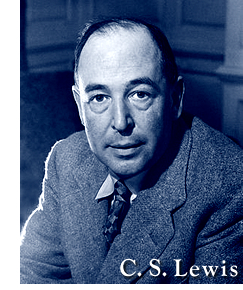
C.S. Lewis  – Today’s Reading – On joy

In speaking of this desire for our own far-off country, which we find in ourselves even now, I feel a certain shyness. I am almost committing an indecency. I am trying to rip open the inconsolable secret in each one of you—the secret which hurts so much that you take your revenge on it by calling it names like Nostalgia and Romanticism and Adolescence: the secret also which pierces with such sweetness that when, in very intimate conversation, the mention of it becomes imminent, we grow awkward and affect to laugh at ourselves: the secret we cannot hide and cannot tell, though we desire to do both. We cannot tell it because it is a desire for something that has never actually appeared in our experience. We cannot hide it because our experience is constantly suggesting it, and we betray ourselves like lovers at the mention of a name. Our commonest expedient is to call it beauty and behave as if that had settled the matter. Wordsworth’s expedient was to identify it with certain moments in his own past. But all this is a cheat. If Wordsworth had gone back to those moments in the past, he would not have found the thing itself, but only the reminder of it; what he remembered would turn out to be itself a remembering. The books or the music in which we thought the beauty was located will betray us if we trust to them; it was not in them, it only came through them, and what came through them was longing. These things—the beauty, the memory of our own past—are good images of what we really desire; but if they are mistaken for the thing itself they turn into dumb idols, breaking the hearts of their worshippers. For they are not the thing itself; they are only the scent of a flower we have not found, the echo of a tune we have not heard, news from a country we have never yet visited. . . .

Apparently, then, our lifelong nostalgia, our longing to be re- united with something in the universe from which we now feel cut off, to be on the inside of some door which we have always seen from the outside, is no mere neurotic fancy, but the truest index of our real situation. And to be at last summoned inside would be both glory and honour beyond all our merits and also the healing of that old ache. . . . The whole man is to drink joy from the fountain of joy.

From The Weight of Glory

Compiled in Words to Live By

BibleGateway

Charles Stanley – Victory Over Weakness

Judges 16:1-31

Parents often try to give their children every advantage in the hope that they’ll become successful adults. As Christians, we especially want to help our kids increase in knowledge of God and His Word, love for Jesus, appreciation for the body of Christ, and the desire to serve the Lord. Children frequently have great enthusiasm for the things of the Lord. But as they grow older, we sometimes see them falling away from the faith.

Samson is an example of such unfortunate drifting. Despite his godly upbringing, sexual temptations eventually became overly attractive to him.

Scripture reveals several occasions where Samson gave in to his lust. For instance, he desired a pagan woman from Timnah, and despite his parents’ warning, he broke God’s command by marrying her (Judg. 14:1-3). A second incident nearly led to his death; he survived only because of his supernatural strength. (Judg. 14:12-20.) Perhaps the most tragic example was his betrayal by Delilah, the ungodly woman he loved. Lust prevented him from seeing her true nature. As a result, Samson was captured and blinded by the Philistines.

Left unchecked, sin will permeate and dominate our lives, while affecting others with its repercussions. The first step toward success is to become aware of our weaknesses. Next, we must admit helplessness to overcome them on our own. Finally, it’s important to acknowledge God’s sufficiency to rescue us. In the end, Samson recognized his need for God and prayed for strength to strike back at the Philistines (Judg. 16:28). If we share Samson’s perspective, we will be able to obey God’s commands and gain victory.

Bible in a Year: Job 39-42


http://www.intouch.org/

Our Daily Bread – Our New Name

Read: Revelation 2:12–17 | Bible in a Year: 2 Chronicles 34–36; John 19:1–22

I will also give that person a white stone with a new name written on it. Revelation 2:17

She called herself a worrier, but when her child was hurt in an accident, she learned how to escape that restricting label. As her child was recovering, she met each week with friends to talk and pray, asking God for help and healing. Through the months as she turned her fears and concerns into prayer, she realized that she was changing from being a worrier to a prayer warrior. She sensed that the Lord was giving her a new name. Her identity in Christ was deepening through the struggle of unwanted heartache.

In Jesus’s letter to the church at Pergamum, the Lord promises to give to the faithful a white stone with a new name on it (Rev. 2:17). Biblical commentators have debated over the meaning, but most agree that this white stone points to our freedom in Christ. In biblical times, juries in a court of law used a white stone for a not-guilty verdict and a black stone for guilty. A white stone also gained the bearer entrance into such events as banquets; likewise, those who receive God’s white stone are welcomed to the heavenly feast. Jesus’s death brings us freedom and new life—and a new name.

Followers of Christ have a brand-new identity.

What new name do you think God might give to you?

May I live out my new identity, sharing Your love and joy. Show me how You have made me into a new creation.

INSIGHT:

In the book of Revelation, the Lord Jesus is referred to as having a “sharp, double-edged sword” (1:16; 2:12). In chapter one, John described this sword as coming out of Jesus’s mouth (v. 16). In today’s passage, Jesus is seen using this sword to fight against and slay His enemies (2:16). In a later vision, John saw Jesus as the “Faithful and True” rider of a white horse (19:11), whose name is “the Word of God,” using the “sharp sword” to conquer the nations (vv. 13–15). Christ, the Word of God (John 1:1–4), will come again to judge this world and will rule it “with an iron scepter” (Rev. 19:11–15).

http://www.odb.org

Ravi Zacharias Ministry – Whence Came the Wish

To fully understand C.S. Lewis’ love for the imaginary—indeed, to understand the man himself—something must be said about the distinctively English world Faery. The world of Faery, which has its roots in Celtic culture, is not so easily categorized. It is not at all the land of delicate fairies that Walt Disney would have us imagine. Nor is it simply imaginary, a story altogether detached and unrelated to the world before us. Faery is, first, a place. It is lush and green like gentle British landscapes and ancient English forests, but forests untamed, willful, and enchanted—”a world, that sometimes overlaps with Britain but is fundamentally Other than it.”(1) Biographer Alan Jacobs hints at the importance of Faery on the imagination of Lewis, and in particular, this “old idea that Faery overlaps our world—that one can, unwillingly and unwittingly, pass from one into the other.”(2) Faery is both beautiful and dangerous, its boundaries unclear. The encounter with Faery and its tales, the “horns of Elfland faintly blowing,” was one that haunted Lewis throughout much of his life.(3)

For Lewis, “the horns of Elfland” were heard and followed and dear, like arrows of Joy shot at him from childhood—through the death of his mother at the fragile age of nine, through the horrid years at boarding school, through the doubt and dismissal of faith and God, through the metaphysical pessimism and the deep layers of secular ice, through a dejected and reluctant conversion, to Narnia, and to the Joy itself.

Of course, this is not to say that the imaginative world in which Lewis lived was one fueled in any sense by Christianity or faith; nor were the imaginary worlds he loved anything one might necessarily call Christian. But it was an imagination nonetheless that shaped the way he viewed the world—until he saw fit to abandon it all. Among other reasons for the distancing of his imagination, a new intellectual movement in psychology was becoming increasingly influential. As Lewis writes, “What we were most concerned about was ‘Fantasy’ or ‘wishful thinking.’… [W]hat, I asked myself, were all my delectable mountains and western gardens but sheer Fantasies?… With the confidence of a boy I decided I had done with all that… And I was never going to be taken in again.”(4) For a long line of atheists like Lewis at this time, the Christian imagination’s possession of beauty and hope could be explained only as wish fulfillment, which lied at the very heart of the Christian religion—even if it was, as some contended, a beautiful, imaginative delusion.

Continue reading Ravi Zacharias Ministry – Whence Came the Wish

John MacArthur – Strength for Today – Integrity Proves God’s Faithfulness

“Then at the end of the days which the king had specified for presenting them, the commander of the officials presented them before Nebuchadnezzar. And the king talked with them, and out of them all not one was found like Daniel, Hananiah, Mishael and Azariah; so they entered the king’s personal service. And as for every matter of wisdom and understanding about which the king consulted them, he found them ten times better than all the magicians and conjurers who were in all his realm” (Daniel 1:18-20).

God always equips you for the tasks He requires of you.

Daniel and the other young men deported in 606 B.C. received three years of intense training under the watchful eye of the commander of King Nebuchadnezzar’s officials. At the conclusion of their training, they were presented to the king for his personal evaluation. The results were impressive indeed. Of all those who were trained, none compared to Daniel, Hananiah, Mishael, and Azariah. Beyond that, they were found to be ten times better than all the wise men in the entire kingdom of Babylon! Consequently, at the age of only seventeen or eighteen, they were made the king’s personal servants.

Why were these young men so superior to their peers? It wasn’t simply their training, because each man had received the same education. The difference was their character and the faithful provisions of their God, who granted them special knowledge, intelligence, and wisdom (v. 17). They were so righteous and wise that even those who did not believe in their God were compelled to acknowledge the quality of their lives. That’s the impact every believer should have on those around them!

God wants you to live the kind of life that silences those who would seek to malign you or your God (1 Peter 2:15), and He has provided every spiritual resource for you to do so (2 Peter 1:3). Therefore, when you live with integrity, you prove to others that God really does accomplish His work in those who love Him.

Suggestions for Prayer

Make a list of spiritual resources that are yours in Christ, then praise Him for each of them.

For Further Study

Read Psalm 119:97-104.

  • What are the psalmist’s attitudes toward God’s Word (His “law”)?
  • What steps did he take to ensure that godliness would be evident in his life?


http://www.gty.org

Wisdom Hunters – A Wise Process Protects From Poor Performance

Then the king said, “Bring me a sword.” So they brought a sword for the king. He then gave an order: “Cut the living child in two and give half to one and half to the other.” 1 Kings 3:24-25

A wise process protects. It protects life; it protects relationships; it protects resources; it protects commitments. The process, on the surface, may not seem smart, but time wins you over with its wisdom. It is tempting to bypass the process. After all, you know what needs to be done, or so you think. It is tempting to barrel ahead into activity because the need is so great and the time seems so short.

But even if you are confident of the needed outcome, continue to trust the process. At the very least, it will involve others who need the process for understanding requirements and support of a new role. For example, your work may require a new position to be filled. Will you fill this role with the first interested warm body or will there be a defined process for the protection of the company and the protection of the one being interviewed? The rule of three is normally a wise process to employ. Interview three legitimate and good candidates with the purpose of selecting one.

During the interview process, you may discover new issues related to what the job really requires. You may even rewrite the job description. Perhaps this process of employee selection needs to include four or five other interviewers. Their perspective and wisdom is invaluable, as you seek to discern the most qualified person for the position. These “people” processes need not be rushed so that everyone is protected from unwise decision-making. Opportunity evokes emotion. Process channels positive energy into better options.

Continue reading Wisdom Hunters – A Wise Process Protects From Poor Performance

Today’s Turning Point with David Jeremiah – Don’t Lose the Joy

Restore to me the joy of Your salvation, and uphold me by Your generous Spirit.

Psalm 51:12

Recommended Reading

Psalm 51

Joy is one of the greatest gifts accompanying our salvation. Professor Lewis Smedes wrote, “You and I were created for joy, and if we miss it, we miss the reason for our existence! Moreover, the reason Jesus Christ lived and died on earth was to restore to us the joy we have lost…. His Spirit comes to us with the power to believe that joy is our birthright because the Lord has made this day for us.”1

The Bible calls it “joy unspeakable and full of glory” (1 Peter 1:8, KJV).

When we allow disobedience to fester in our lives, it depresses our joy. When David sinned against God, he spent a year without joy before confessing his failure and asking for a restoration of joy.

Don’t wait as long as David. The joy of our salvation is too precious to allow sin to rob it away. Confess your wrongdoing; turn from it now with God’s help. He will restore your joy and uphold you with His generous Spirit.

You can be joyful again today!

Joy is the settled assurance that God is in control of all the details of my life, the quiet confidence that ultimately everything is going to be all right, and the determined choice to praise God in all things.

Kay Warren

1Kay Warren, Choose Joy (Grand Rapids: Revell, 2012).

Read-Thru-the-Bible

Psalms 28 – 33

http://www.davidjeremiah.org/

Joyce Meyer – Guard Your Reactions

He who rebukes a scorner heaps upon himself abuse, and he who reproves a wicked man gets for himself bruises. Reprove not a scorner, lest he hate you; reprove a wise man, and he will love you. Give instruction to a wise man and he will be yet wiser….—Proverbs 9:7-9 AMPC

It has been statistically proven that 10 percent of people will never like you, so stop trying to have a perfect record with everyone and start celebrating who you are. A person who knows how to live independently does not allow the moods of other people to alter hers.

A story is told of a Quaker man who knew how to live independently as the valued person God had created Him to be. One night as he was walking down the street with a friend, he stopped at a newsstand to purchase an evening paper. The storekeeper was very sour, rude, and unfriendly. The Quaker man treated him with respect and was quite kind in his dealing with him. He paid for his paper, and he and his friend continued to walk down the street. The friend said to the Quaker, “How could you be so cordial to him with the terrible way he was treating you?” The Quaker man replied, “Oh, he is always that way. Why should I let him determine how I am going to act?”

Lord, help me to not allow others to steal my joy and peace by the things they say and do. I want to be kind and cordial, but I won’t let my mood to be controlled. Amen.

From the book The Confident Woman Devotional: 365 Daily Devotions by Joyce Meyer.

http://www.joycemeyer.org

Girlfriends in God – Grudge, Be Gone

Be kind and compassionate to one another, forgiving each other, just as in Christ God forgave you.

Ephesians 4:32

We hope you are enjoying the Girlfriends in God daily devotions. We (Mary, Sharon, and Gwen) would like to introduce you to some of our special friends. From time-to-time, the Friday devotions will be written by one of our friends in ministry. We call them our Friday Friends. So grab your Bible and a fresh cup of coffee and drink in the words from our Friday Friend, Arlene Pellicane.

Friend to Friend

When my husband James and I were newlyweds, our first fight revolved around teriyaki chicken and broccoli. I was not a good cook. When James got home and asked if he could invite the new neighbor over, I said definitely not. I didn’t have enough food and was nervous enough about the meal without a dinner guest.

Imagine my surprise, irritation, and anger when my new husband invited the neighbor over after I had said no. When the doorbell rang, all angst was forgotten. I was a nice host. But when our guest left, I fussed and fumed, slamming cabinets for dramatic effect. James tackled me like Tigger. Putting his face right up to mine, he smiled and said, “I’m sorry!”

What would you have done? How do you usually respond when a friend or family member does you wrong?

Continue reading Girlfriends in God – Grudge, Be Gone

Campus Crusade for Christ; Bill Bright – You’ve Already Won

“Dear young friends, you belong to God and have already won your fight with those who are against Christ, because there is someone in your hearts who is stronger than any evil teacher in this wicked world” (1 John 4:4).

“I am afraid of Satan,” a young minister once told me.

“You should be afraid of Satan,” I responded, “if you insist on controlling your own life. But not if you are willing to let Christ control your life. The Bible says, ‘Greater is He who is in you than he who is in the world.'”

My friend lived in a city where one of the largest zoos in the world was located.

“What do you do with lions in your city?” I asked.

“We keep them in cages,” he replied.

“You can visit the lion in its cage at the zoo,” I explained, “and it cannot hurt you, even if you are close to the cage. But stay out of that cage, or the lion will make mincemeat out of you.”

Satan is in a “cage.” He was defeated 2,000 years ago when Christ died on the cross for our sins. Victory is now ours. We do not look forward to victory, but we move from victory, the victory of the cross.

Satan has no power except that which God allows him to have. Do not be afraid of him, but do stay away from him. Avoid his every effort to tempt and mislead you. Remember, that choice is up to you.

Bible Reading: I John 2:1-6

TODAY’S ACTION POINT: I will with God’s help, stay out of Satan’s “cage,” choosing rather to enlist God’s indwelling Holy Spirit to fight for me in the supernatural battle against the satanic forces which surround me.


http://www.cru.org

Ray Stedman – Ask, Seek, Knock

Read: Luke 11:5-13

So I say to you: Ask and it will be given to you; seek and you will find; knock and the door will be opened to you. For everyone who asks receives; the one who seeks finds; and to the one who knocks, the door will be opened. Luke 11:9-10

Take careful note of what Jesus says, for he suggests that there are three levels of prayer: ask, seek, and knock. You can remember them, incidentally, if you will take note of the fact that the initial letters spell the word ask, a ask, s seek, k knock. There you have a little formula for prayer. Now mark these three different levels. The circumstances of each are vastly different, but the answer is the same.

The simplest and easiest level, of course, is ask. What he means is that there are certain needs which require a mere asking to be immediately and invariably met, and the range of these needs is far wider than we usually give credit for. For instance, reading through the New Testament, it becomes clear that our need for Christlike attributes lies in this category. If we need love, courage, wisdom, power, patience, they all lie in this realm. Simply ask, that is all, ask, and immediately the answer is given. Is that not what James says, If any man lack wisdom. What? Let him ask of God who giveth to all men liberally and upbraideth not, (James 1:5 KJV). And what? It shall be given. That is all, it shall be given. Let him ask and it shall be given.

A second level of prayer is denoted by this word seek. You cannot think of what it means to seek without seeing that our Lord injects here an element of time. Seeking is not a simple act, it is a process, a series of acts. Jesus says there are areas of life that require more than asking; there must be seeking, searching. Something is lost, hidden from us, and prayer then becomes a search, a plea for insight, for understanding, for an unraveling of the mystery with which we are confronted. Again, the answer is absolutely certain. Seek, and you will find!

Continue reading Ray Stedman – Ask, Seek, Knock

Words of Hope – Daily Devotional – Inseparable

Read: Romans 8:38-39

Neither death nor life . . . will be able to separate us from the love of God. (vv. 38-39)

It’s likely that you’ve heard this passage read at a funeral or memorial service. I remember reciting it aloud in unison with more than a dozen of my cousins at the service for one of my grandfathers. In some ways it felt like our presence and our voices were living proof that death could not separate us from our grandpa; his life and legacy reverberated as our lives continued on. The pain of his death was real, but we were and are still mysteriously bound to him by the God from whose love we can never be severed, neither in life nor in death.

God is the link of love that holds us across the distance of grief. We may not always feel that in convincing ways—there may be times when we feel utterly cut off from our loved ones and even from the sense of God’s love and care. It is in those difficult times that the body of Christ can enfold us, repairing the linkages through the bonds of community so that we might heal enough to experience God’s presence anew. Grief can be isolating and disorienting; thanks be to God that as members of the body of Christ we do not have to tread this path alone. Where in your life right now are there others who are struggling with the loss of loved ones, who might benefit from a simple expression of care?

Prayer:

Lord, assure us that nothing in all creation can separate us from your love.

Jessica Bratt Carle

https://woh.org/