John MacArthur – Strength for Today – Focusing on Scripture and the Lord

“Walk by the Spirit, and you will not carry out the desire of the flesh” (Galatians 5:16).

We must focus on God and His Word as we begin to walk by the Spirit.

Paul’s directive to the Galatians in today’s verse may sound like an impractical platitude. But to the apostle this command was a foundational truth for how all Christians should live their daily lives. The Greek for “walk” could be translated, “keep on continually walking.” Life transpires one day at a time, and believers should routinely take each day one step at a time.

In walking by the Holy Spirit, our chief opposition is our own flesh (Gal. 5:17). Therefore, it is crucial that we possess the scriptural strategy for our spiritual walk and that we know how to practically and effectively carry it out.

The first part of our strategy has to be a daily intake of God’s Word. Psalm 1:2 says that the man who walks on a godly path will “delight . . . in the law of the Lord, and in His law he meditates day and night.” Meditation (patiently and thoroughly reflecting on a passage of Scripture) helps us effectively seal the Word in our hearts so we can obediently apply it and minister it in accordance with God’s Spirit.

Secondly, if we want to walk by the Spirit, we must focus on God and allow Him to renew our minds. The key is found in Paul’s familiar command: “Do not be conformed to this world, but be transformed by the renewing of your mind, that you may prove what the will of God is, that which is good and acceptable and perfect” (Rom. 12:2). The believer who lives that way will undoubtedly walk by the Spirit because he will also be one who worships God “in spirit and truth” (John 4:24). As one Bible teacher so aptly phrased it, “Find me a worshiper of God, and I will show you a stable man with his mind in control, ready to meet the present hour with refreshment from above.”

Suggestions for Prayer

Pray today that the Lord would help you to begin removing everything from your life that is preventing you from worshiping Him wholeheartedly.

For Further Study

Joshua 1:8; Psalm 19:7-8; John 8:31-32; Romans 15:4; 2 Timothy 2:15; and Hebrews 4:12 all refer to God’s Word. Read them and write down all the different things they say about the importance of Scripture.

What should motivate you to have a better intake of the Word?


http://www.gty.org

Wisdom Hunters – Protected by Angels

After this I saw four angels standing at the four corners of the earth, holding back the four winds of the earth to prevent any wind from blowing on the land or on the sea or on any tree. Revelation 7:1

Angels are at our Heavenly Father’s beckoning. They are poised at His prompting to support, protect and care for His children. Jesus could have called on a company of heavenly help, but He resisted and remained in the crucible of the Cross. He had an out for His suffering, however His great love led Him to sacrifice His life, so He could save mankind from sin. God’s angel armies are His agents who minister to our needs, but they may or may not deliver us from harm.

The Lord will deploy His angels to delay judgment in order for the 144,000 Jewish believers in Jesus to be sealed as servants of God. The destruction of the earth is stayed until souls are saved—their white robes cleansed by the blood of the Lamb. The elder explained to John (v. 14) how these Jewish Christians were survivors of the great tribulation—but now they gratefully serve God day and night, before His throne in His temple. God’s angels provide personal protection.

“See that you do not despise one of these little ones. For I tell you that their angels in heaven always see the face of my Father in heaven” (Matthew 18:10).

Your Father in heaven has His angels assigned to your well being. They constantly experience the glory of God, so they can surround you with His glory. Since your angels see the face of the Lord, they are your support to face your difficulties. You have no need to fear, because the God of angel armies stands beside you, in front of you, behind you, above you and below you. You are covered by His host of angels. Thank the Lord of Hosts for His help in your time of need.

Continue reading Wisdom Hunters – Protected by Angels

Today’s Turning Point with David Jeremiah – Thorny Problems

And lest I should be exalted above measure by the abundance of the revelations, a thorn in the flesh was given to me, a messenger of Satan to buffet me, lest I be exalted above measure.

2 Corinthians 12:7

Recommended Reading

2 Corinthians 12:1-10

In his book, My Thorn in the Flesh, Vietnam War veteran Bobby D. Gayton writes about his battle with Post Traumatic Stress Disorder. In his struggle, he identifies with the apostle Paul, who pleaded with the Lord to remove his “thorn,” but God simply said, “My grace is sufficient for you” (2 Corinthians 12:9). For Gayton, PTSD is his thorn in the flesh.

Paul didn’t identify the “thorn” he was battling, but we can sum it up like this: A “thorn in the flesh” is a point of struggle or suffering we’d rather avoid, which God, in His wisdom, allows to go on. He uses it to produce in us a humility that casts our reliance on His all-sufficient grace.

We may not have all our infirmities removed. Yet through our pain and weakness, God’s power and purpose can be revealed. His grace is sufficient. Don’t be discouraged by the struggle. Keep your focus on God and His grace.

The specific purpose of the thorn in the flesh, as Professor F. F. Bruce put it, is to puncture your pride.

  1. T. Kendall

Read-Thru-the-Bible

Daniel 6 – 8


http://www.davidjeremiah.org/

Joyce Meyer – Happiest When Helping

And God is able to bless you abundantly, so that in all things at all times, having all that you need, you will abound in every good work.— 2 Corinthians 9:8 NIV

A study on the principle of the Golden Rule was conducted by Bernard Rimland, director of the Institute for Child Behavior Research. Each person involved in the study was asked to list 10 people he knew best and to label them as happy or not happy. Then they were to go through the list again and label each one as selfish or unselfish. Rimland found that all the people labeled happy were also labeled unselfish. “The happiest people are those who help others,” he concluded.

God gives us the ability and opportunities to help others all throughout the day. When we take the time to be a blessing, it causes us to focus less on what we don’t have, feel grateful for what we do have, and experience a new level of joy in the process. Don’t let a day go by without helping someone.

Prayer of Thanks: Father, I am thankful that You give me opportunities every day to be a blessing to others. You’ve blessed me with so much. I want to use what You have given me to bless someone else today.

From the book The Power of Being Thankful by Joyce Meyer.


http://www.joycemeyer.org

Girlfriends in God – What’s Holding You Back From Moving Forward?

Today’s Truth

The Lord said to him, “Who gave human beings their mouths? Who makes them deaf or mute? Who gives them sight or makes them blind? Is it not I, the Lord? Now go; I will help you speak and will teach you what to say.”

Exodus 4:11-12

Friend to Friend

When I was six years old, I skipped off to first grade with a fresh box of crayons, a crisp green dress with Swiss polka dots sleeves, and a fresh hope that I would be good enough—that someone would at least like me. But first grade only confirmed my fears. I wasn’t good enough after all.

From the time my teacher held up the first spelling flash card, I knew I was in trouble. Back in the day, kindergarten focused on coloring, playing, and napping. But first grade was a whole new ballgame with letters, numbers, and words. First grade had flash cards.

I remember one exercise that makes my palms clammy even today. We lined our miniature wooden chairs up in a row like a choo-choo train. The conductor, Mrs. Morgan, held up a spelling flash card for the lead passenger to identify.

If he or she could not correctly decipher the word on the card, that passenger lost the lead seat and had to go sit in the caboose. I spent most of the first grade in the caboose. I could not spell to save my life.

Continue reading Girlfriends in God – What’s Holding You Back From Moving Forward?

Ray Stedman – Peace With God

Read: Romans 5:1-2

Therefore, since we have been justified through faith, we have peace with God through our Lord Jesus Christ. Romans 5:1

The first thing that you learn as a Christian is that you are justified by faith. To help us understand what that means, the apostle brought in the example of Abraham in chapter four. Before the Law was given, Abraham was justified by faith. He was declared to be acceptable to God. He was God’s friend. Abraham didn’t earn that. He was given that right at the beginning of his relationship with God, when he believed God. That is what faith means. When Abraham believed that God could and would do what he had promised, Abraham was declared the friend of God and he entered into that close relationship with God that characterized his life. That is what it means to be justified by faith. You receive this with no merit on your part, but by faith alone, by believing God’s promise, according to the work of his Son. That is justification.

Then, Paul says, there is a way by which you can test whether you really do believe that and have been justified by faith: Since we have been justified by faith, the sure result is that we have peace with God. As you think about your life and your relationship with God, if you really have believed that God justifies the ungodly, you will have peace with God. You are in the family of God. The war is over. All the conflict between you and God is ended; you are at peace with him.

Continue reading Ray Stedman – Peace With God

Words of Hope – Daily Devotional – Reversed Thunder

Read: Revelation 8:1-5

The prayers of the saints . . . rose . . . and there were peals of thunder. (vv. 4-5)

Eugene Peterson borrowed the words “reversed thunder” for the title of his book about the Revelation of St. John. He took it that in coining this phrase, George Herbert must have had in mind the beginning of Revelation 8, where John is about to first hear the seven trumpets of warning sounded and then see the seven bowls of punishment poured out. The agonized pleas with which the saints have besieged God cannot but bring results; sooner or later their thunderous assault on the gates of heaven is assuredly going to bring a thunderous response. As John puts it, when from the angel’s censer the prayers of the church rise up to the throne of God, hot with indignation at the evils sin has wrought, from the same censer his answering anger will be hurled down upon the wicked world that has fostered them.

In fact it would be wickedly wrong for the church not to pray fervently against such evils. Because for all our efforts to confront these things directly, it’s the words we address to God that bounce back with supernatural force, so that the world will not be able to help hearing them. Praying against evil is like the “slingshot effect” of sending a space probe past one of the outer planets so as to give it the terrific extra impetus by which it will reach its target.

Continue reading Words of Hope – Daily Devotional – Reversed Thunder

Greg Laurie – Why the Rapture Is Important

Then, together with them, we who are still alive and remain on the earth will be caught up in the clouds to meet the Lord in the air. Then we will be with the Lord forever. —1 Thessalonians 4:17

What exactly is the rapture? Mark Hitchcock, an excellent writer on all things prophetic, wrote this outstanding definition: “The rapture of the church is that future event when Jesus Christ will descend from heaven to resurrect the bodies of departed believers and to transform and translate the bodies of living believers immediately into His glorious presence in a moment of time and then escort them to heaven to live with Him forever.” That is very clearly stated, and it’s exactly right.

Some will protest and say, “Wait a second. You can’t find the word rapture anywhere in the Bible.” That all depends what kind of Bible you are reading. If you happen to read a Latin translation, you will find the word rapturo, which is the Latin translation of the original Greek word harpazo.

This word is used thirteen times in the New Testament, including 1 Thessalonians 4:17, which says, “We who are still alive and remain on the earth will be caught up in the clouds to meet the Lord in the air.” The word harpazo is translated “to take forcibly, to snatch, or to catch up.”

Why is it important to know about the rapture? As I have said before, Bible prophecy is not given to scare us but to prepare us.

Paul tells the Thessalonians, “We want you to know what will happen to the believers who have died so you will not grieve like people who have no hope.” Paul is reassuring them that there will be a reunion with loved ones who have died in the Lord. Better yet, when the rapture happens, we will also be united with Jesus.

Knowing about the rapture brings us hope. That is why Paul’s teaching on the rapture ends with the exhortation to “encourage each other with these words.”


Harvest.org | Greg Laurie

Kids 4 Truth International – God Is Everywhere We Go

“Thou compassest my path and my lying down, and art acquainted with all my ways. For there is not a word in my tongue, but, lo, O LORD, thou knowest it altogether. Thou hast beset me behind and before, and laid thine hand upon me. Such knowledge is too wonderful for me; it is high, I cannot attain unto it. Whither shall I go from thy spirit? or whither shall I flee from thy presence?” (Psalm 139:3-7)

“This is the conductor, Brittany. His name is Mr. Ben. He’ll take care of you during your train ride, honey.” Brittany’s dad handed her suitcase to the man with the blue uniform and scruffy mustache. Slowly, she reached up to shake Mr. Ben’s hand, but he was already turning to lead her up the little staircase and into the coach car of the train.

Her dad hugged her good-bye and held onto her shoulders for a second. “Remember what we talked about. Mom and Grandpa and them will be waiting for you at the station. If you need anything during the trip, ask Mr. Ben. He knows where the restrooms and the dining car are.”

Brittany nodded her head.

“You OK?”

Continue reading Kids 4 Truth International – God Is Everywhere We Go

The Navigators – Jerry Bridges – Holiness Day by Day Devotional – The Only Objective Authority

Today’s Scripture: Acts 14:3

“The Lord . . . bore witness to the word of his grace.”

We don’t understand just how the Holy Spirit interacts with our human spirit, but we do know he most often uses his Word. He brings to our mind some Scripture particularly appropriate to the situation. He may do this through a sermon, a Christian book, the encouraging words of a friend, or our own reading or study of Scripture. In my case, since I’ve memorized so many Scriptures over the years, he often brings to my mind a memorized verse.

In Acts 20:32, Paul said to the Ephesian elders, “now I commend you to God and to the word of his grace, which is able to build you up and to give you the inheritance among all those who are sanctified” (Acts 20:32). Earlier in verse 24, Paul had referred to “the Gospel of the grace of God,” the good news of salvation through faith in Christ Jesus. In verse 32, however, as he speaks of “the Word of his grace, which is able to build you up,” the reference is to the ongoing use of Scripture in our daily lives to build us up in the Christian faith. Paul specifically called this “the word of his grace,” the Word through which we come to understand and appropriate God’s grace in our daily lives.

The Bible is not merely a book about God; it is a book from God. “All Scripture is breathed out by God” (2 Timothy 3:16, NIV). The Bible is God’s self-revelation to us all. He wants us to know about himself and his provision for our salvation and our spiritual growth. It is God’s only objective, authoritative communication to us. (Excerpt taken from Transforming Grace)


https://www.navigators.org/Home

The Navigators – Leroy Eims – Daily Discipleship Devotional – Overcoming the World

Today’s Scripture: 2 Peter 1:3-4

For everyone born of God overcomes the world. This is the victory that has overcome the world, even our faith. – 1 John 5:4

Most people have heard about OCD–obsessive compulsive disorder–that can manifest itself in all kinds of phobias. Some people are so afraid of germs and viruses that they can’t even shake hands with people for fear of being contaminated. And that’s a mild case of OCD.

Friend, I’ve seen that happen in the spiritual realm. I’ve seen people get so frightened by the power of the Devil or the dangers all around us in this world that they become immobilized by fear and isolate themselves. Now, it’s certainly true this world is a powerful enemy. We don’t want to be naïve about that. But sometimes it lures us rather than repels us. Just look what happened to Demas. He was one of Paul’s fellow laborers, along with such stalwarts as Mark and Luke. But something happened, and Paul wrote to Timothy, “Demas, because he loved this world, has deserted me” (2 Timothy 4:10). If the pull of the world is powerful enough to cause a colaborer of Paul to leave the cause of Christ and give the rest of his life to living for the world, we’d better watch out!

There are people out there–false prophets–who would lead you astray. But you can overcome them and the lifestyle they propose, not by sealing yourself off from the world, but by staying close to Christ. Remember the words of the apostle John: “The one who is in you is greater than the one who is in the world” (1 John 4:4).

Prayer

Lord, I praise You for Your victory over sin and death–and the world. Amen.

To Ponder

Although we no longer have to fear what the world can do to us, we do have to remain wise to its lures.


https://www.navigators.org/Home

BreakPoint – The Measure of a Man: What’s Missing from the Masculinity Debate

Are we in the midst of a masculinity crisis? Two Christian writers offered very different answers to this question in recent articles. David French at National Review laments a new statistic that shows today’s young men are, physically, the weakest generation in recorded history.

“If you’re the average Millennial male,” he writes, “your dad is stronger than you are. In fact, you may not be stronger than the average Millennial female…The very idea of manual labor is alien to you, and even if you were asked to help, say, build a back porch, the task would exhaust you to the point of uselessness. Welcome to the new, post-masculine reality.”

Chandler Epp replied to French in a guest column at Religion News Service, arguing that the idea of masculinity being equivalent to physical strength is misguided.

“Popular Christian notions of manhood,” he writes, “shame, repel, and ruin too many young boys and men who fail to meet those standards” and who don’t gravitate toward “‘typical’ masculine behaviors.” He concludes, “We must recover the idea that the marker of a true man is his moral strength, not his muscular fitness.”

Now I know personally both Chandler and French, and I have a lot of respect for them both. In fact, they both demonstrate that sort of moral strength Chandler talks about in his piece.

Continue reading BreakPoint – The Measure of a Man: What’s Missing from the Masculinity Debate

Moody Global Ministries – Today in the Word – AN EVIL ORDER

Read ESTHER 3:12–15

In William Shakespeare’s Othello, the character of Iago epitomizes evil. He will do anything to gain power, no matter whom he must destroy. He pretends to be sincere while manipulating others into committing terrible crimes. Iago deceives Othello into believing that his wife, Desdemona, has been unfaithful, a lie that results in their tragic deaths. No matter how destructive his actions, Iago shows no remorse.

Today’s passage reads like a terrible nightmare. Haman, the vain and evil palace advisor, had secured the king’s permission to eliminate the Jewish people. The decree, signed and sealed during the first month, was to be carried out on the thirteenth day of the twelfth month. The Jewish people had eleven months to live.

Within the timespan of a single day, they would be decimated. Note the viciousness of this plan: “destroy, kill and annihilate” (v. 13). The order did not just apply to the leaders of the Jewish people but to everyone: young and old, women and children. And, just as Haman had desired, they would “plunder” the belongings of the Israelites.

The decree was written in every language, delivered to every location, and distributed to every leader. It was sealed by the signet ring that King Xerxes had given to Haman. As the proclamation was delivered to the furthest locations and read in every tongue, shock and fear prevailed.

Meanwhile, Haman had no remorse. Instead, he celebrated: “The king and Haman sat down to drink, but the city of Susa was bewildered” (v. 15). He was willing to pay any price to soothe his own vanity. In eleven months, the Jewish people would be destroyed.

APPLY THE WORD

Many of us have received devastating news—a job layoff, a terrible medical diagnosis, or a betrayal by a friend. Just like Haman’s pronouncement, these are truly horrible events, and God does not ask us to pretend otherwise. But thankfully we can know that devastating news never catches Him off guard. He is still present and still cares for us.


http://www.todayintheword.org

Denison Forum – NEW MISS AMERICA IS A CHRISTIAN

There is much we could discuss in today’s news. Hillary Clinton is being treated for pneumonia after her sudden exit from a 9/11 ceremony in New York City. North Korea’s recent nuclear test is still making headlines. “Sully” was the winner at the North American box office over the weekend. The NFL’s first full Sunday of action produced several surprises (Dallas Cowboys fans are still frustrated this morning by our loss, but that’s another subject).

However, I’d like to focus for a moment on Savvy Shields, who was named Miss America 2017 last night. She is an art major at the University of Arkansas and won the talent competition with her jazz dance. And she is a Christian. She prayed for her fellow contestants before the competition and noted on her Instagram, “God is so much greater than we can imagine.”

It is encouraging when people with beauty, talent, and charisma make their faith public. But here’s the downside: we can mistakenly think we must be successful to be useful to God. Our challenges and failures can discourage us from serving Jesus.

Continue reading Denison Forum – NEW MISS AMERICA IS A CHRISTIAN

Charles Stanley – The God of All Comfort

John 8:1-11

An affliction is a crushing pressure that threatens us with destruction. Our health, peace of mind, or relationships could be in danger from the hardship. We know that God will comfort us when we are sick, but will He be there if we bring the affliction upon ourselves by sinning?

Many believers ask this question, but too often they assume the answer is no. However, the Lord does not condemn us for sin—He has forgotten it. (See Heb. 8:12.) What remains are the consequences of our wrong actions. If we turn to God, He will soothe our soul and guide us safely through the painful fallout. Under His influence, self-inflicted pain is bearable and serves to make faith stronger.

Remember the woman dragged before Jesus by the Pharisees. She had been caught in adultery, which was a clear violation of the Law. The religious leaders were prepared to stone the transgressor to death, but Jesus spoke to her with compassion. Although He in no way condoned her sin, He did recognize that she was already facing consequences for her unwise choices. He forgave her, saying, “Go. From now on sin no more” (John 8:11).

Nothing we do can separate us from the love of God. One way He expresses that love is through the promise of comfort when we hurt, even when the pain is self-inflicted. We can allow shame to chase us away from the Father’s loving arms, convinced He would not give encouragement to one who disobeyed. Or we can believe Scripture, which says He is “the Father of mercies and God of all comfort” (2 Cor. 1:3).

Bible in One Year: Ezekiel 46-48


http://www.intouch.org/

Our Daily Bread — Emergency Prayer

September 11, 2016

Read: Psalm 71:1-12

Bible in a Year: Proverbs 10-12; 2 Corinthians 4

Be my rock of refuge, to which I can always go.—Psalm 71:3

On September 11, 2001, Stanley Praimnath was working on the 81st floor of the World Trade Center South Tower when he saw an airplane flying directly toward him. Stanley prayed a quick prayer as he dove under a desk for protection: “Lord, I can’t do this! You take over!”

The terrible impact of the plane crash trapped Stanley behind a wall of debris. But as he prayed and cried for help, Brian Clark, a worker from another office, heard and responded. Making their way through rubble and darkness, the two found their way down 80 flights of stairs to the ground floor and out.

When encountering terrible threats, David asked God for help. He wanted to be assured of God’s nearness as he faced enemies in battle. In a heartfelt petition David said, “Be my rock of refuge, to which I can always go . . . . Do not be far from me, my God; come quickly, God, to help me” (Ps. 71:3, 12).

We aren’t promised deliverance from every difficult situation we face. But we can be confident that God hears our prayers and will walk alongside us through everything. —Dennis Fisher

Whatever comes my way, please come near to me, Lord, to help. I cannot make it through anything without You. Thank You.

Nearness to God is our conscious security. A child in the dark is comforted by grasping its father’s hand. Charles Haddon Spurgeon

INSIGHT: In every generation, Christ-followers long for others to learn of and experience the greatness of God’s love and mercy. Examining the lyrics of Psalm 71, the first thing we learn is that this anonymous psalmist talks to God. In verse 9, we read, “Do not cast me away when I am old; do not forsake me when my strength is gone.” Verse 18 affirms this: “Even when I am old and gray, do not forsake me, my God.” While many of the psalms sing about God, the writer of Psalm 71 sings a prayer to God. Everything in this psalm directs upward, whether it is the psalmist’s concerns (vv. 2-4), confidence (vv. 5-6), or aspirations (vv. 16-18).


http://www.odb.org

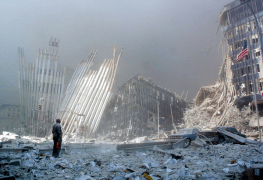
Ravi Zacharias Ministry – On the 15th Anniversary of Sept. 11, 2001:Life, Death, and the Search for God

9-11-flag-at-ground-zero

As some would continue to perpetrate the myth of progress, we live on this fifteenth anniversary of 9/11 under the cloud of a world dramatically changed since that terrible day. Anyone who travels sees and feels what a murderous ideology has done to our world. May we never forget what happened and ever be in pursuit of wisdom and courage to deal with those whose philosophy thrives on hate. Our prayers are for the families that lost a loved one and with gratitude for those who came to the rescue.

Civilization is always threatened by ideologues who embrace the moment and lose sight of the essential value of every human life. Answers will only be found in embracing the God of love and living by his precepts. Loving God and our fellow human beings are the two laws on which all other laws stand.  May God guide our leaders. The Scriptures call us to understand the times and know what to do (see 1 Chronicles 12:32). May we be faithful.

September 11, 2001: Was God Present or Absent?

Every thinking person has at some time raised the question, “Where is God in the midst of suffering?” That question without doubt echoed in millions of minds on September 11, 2001, and continues to do so, fifteen years later. If illustration were argument, an event such as this would give fodder to both sides of the issue—to those who want to establish the complete absence of God and to those who testify that He exists and is involved in the circumstances of our lives. To a watching world, the finest testimonials to the faith of the nation were the crowded churches the following Sunday and the extraordinary national memorial service.

Stepping back from the scene, two starkly different stories from September 11 represent the struggle of the search for God. One story was told by the men of Ladder 6, a company of the New York City Fire Department. Seven firemen were helping a sixty-nine-year-old woman by the name of Josephine down from the 73rd floor of one of the World Trade Center towers. These brave men, already laboring under 110 pounds of equipment on their backs, led Josephine step by step down the staircase. At times, she was ready to give up, but they helped, encouraged, inspired, and assured her she would make it. “They were like angels to me,” she said. She would stop to catch her breath and they would stop with her. She started to shiver with fear and one gave her his jacket. One floor at a time they got her down until, finally, she could walk no more and just sat down on one of the steps of the fourth floor.

They waited with her, coaxing her to stand up and resume walking because they were almost to the ground floor. But she could not move, and they refused to leave her. Suddenly, they heard and felt the floors beneath them give way under the tremendous weight of the collapsing building, and they were hurtled down with terrific force and enveloped in a suffocating cloud of pitch-black smoke. One of them even prayed, “God, if this is it, please let it be quick.”

But as the noise lessened and the smoke began to clear, they found that they had settled over the rubble of the caved-in floors below them. Miraculously, Josephine had refused to go any further at the one point that remained intact as the building fell. All seven firemen plus Josephine were eventually brought into the daylight of safety.

“Had we continued descending when we were pleading with her to keep moving,” they said, “we would have been killed by the crush of the floors above us.” One of them added, “Josephine was like an angel sent from God to stop us so that we could be safe.”

How can we react to a story such as this but to concede that those who were rescued in this way saw the hand of God leading, guiding, and stopping their steps? Yet, not every story ended like Josephine’s. The hearts of thousands of others who lost loved ones may well throb with a different emotion. I think of one young woman who, through weeks of struggle, torn by indecision at the marriage proposal of a young man, finally made her choice during the night. In the pre-dawn hours of the 11th she phoned his office at the World Trade Center from her home in California. Her message awaited him when he arrived at work, with words of love and the welcome news that she would marry him. But at midmorning when she retrieved her own messages, her world was unforgettably changed. The voice she heard was not the voice of a man exultant at the news of her acceptance. Instead, she listened to the terror in his voice as he told her that he loved her with all his heart, but his building had been struck by an airplane and was beginning to crumble before his eyes. No angels dragged him to safety.

Was God near or far? Any time a catastrophic event happens, numerous human-interest stories give God glory, while others give Him blame.

The Problem Is Greater Than We Think

Theologians have an interesting description for this predicament. They call it “the hiddenness of God,” or “divine hiding.” Why does not God make his presence more obvious? Many arguments are offered for why God “hides” in a world that seeks to see Him. The answer is ultimately found in the divine purposes of God. It is not that God has absconded or is absent; it is that there is a divine purpose behind his visibility or invisibility. If one can rightly read the clues, the mystery is opened up in profound ways. Just as evil can be understood only in the light of the ultimate purpose, so also must God’s presence or seeming absence be judged on the basis of his purpose.

Numerous times in the Scriptures, signs were asked from God, and they were given. But in spite of that, trust in God was not automatic. Probably no disciple received more displays of God’s power than the apostle Peter. He was one of only three who witnessed the Transfiguration of Jesus. Jesus had taken his disciples to the top of a mountain where they saw a sight not given to any other human eye. They saw Jesus’s body begin to glow with a whiteness that was almost blinding. Suddenly Moses and Elijah appeared and began to talk with Jesus. Peter asked Jesus if he could build shelters there for the three luminaries, but a voice thundered from the heavens saying, “This is my Son. Listen to Him” (see Luke 9:35). This experience had everything—Sight! Sound! Words! Power! Peter was so overcome that he did not want to go down from the mountain. But Jesus told them it was time to return to the humdrum world of their day-to-day existence.

But there is more. Jesus was trying to help his disciples to understand the frailty He saw in them—their chronic bent to be enchanted every moment. Peter saw the proof of Jesus’s divinity in his transfiguration. He did not doubt after that who Jesus was. Yet, when Jesus was arrested, Peter floundered and even denied that he ever knew Jesus. He was in momentary awe of the miraculous but could not trust God for the future. This failing was also common in Israel’s exodus from Egypt. The people would witness a miracle and follow God with national repentance. But as soon as God seemed to hide for some time, the grumbling and skepticism began. Peter was in momentary awe of the miraculous but could not trust God for the future.

The examples of Israel and of Peter are repeated endlessly in our own experiences. We have a limitless ability to trust God only when it suits our purpose. Rather than allowing God to be God and serving Him for who He is, we actually try to play God and He becomes our subject, expected to do our bidding at our every whim. I do not know of any greater fickleness in the human heart than this. We lie to ourselves after a miraculous event, believing it will have staying power. But the moment another steep hill appears before us, we wonder whether the miracle we witnessed some time back actually happened or was only a delusion. Reality is threatened by this fickleness, and if we do not understand and accept this, we live in an illusionary world of chronic skepticism. Our demand for more information is, in a real sense, a fight against our finitude.

The Solution Must Go Deeper Than We Seek

A subtle delusion keeps us from the real battle. The truth behind our clamor for explanation is that we assume ourselves to be only intellectual entities and thus, if only our intellect can be satisfied, we will be content. One of the most powerful encounters in the Bible is between Jesus and a learned man named Nicodemus. Nicodemus recognized the supernatural character of Jesus and said to Him, “Teacher, no one could do the miracles you are doing unless God is with him” (see John 3:2). That tacit endorsement could have easily elicited a commendation from Jesus. Instead, Jesus challenged Nicodemus that if he wanted to be part of God’s kingdom, he needed to have a new birth. This was not the direction Nicodemus had planned on going, but Jesus knew exactly what He was about. He was telling Nicodemus that it is not the miracle over matter that ultimately has staying power; it is the miracle over the way we think about reality that has eternal ramifications. We are not all intellect, and therefore some need beyond the intellect needs to be met.

But there is a second point I wish to make. We look for God to be something concrete, something we can see or handle or fully explain. This is a fallacy born out of our addiction to the external, and human history has repeatedly challenged that disposition. There are many evidences of God’s miracle-working presence. Incredible stories abound for which there is often no natural interpretation that satisfactorily explains them.

The supernatural is possible. It happens, but it does not lead to the greatest miracle in a life. For you see, anyone can take a miraculous story and explain it a dozen different ways. At best it just proves that there is a power beyond our own. So where does that leave us? What God seeks in every individual is not just companionship based on his intervention, but communion with Him based on his indwelling. That is what makes the difference when a building is collapsing. It is not whether a hand grabs your hand and rescues you from the carnage; it is that no matter what happens, his strength empowers you to rise beyond the devastation.

If humanity was only mind or intellect, evidence from the physical world would be all that mattered. But there is a depth to our being; a spiritual essence that goes deeper than our intellect. We are spiritual beings and God responds to us in spirit. That essence hungers for intimacy.

I would not at all be surprised to learn someday, when the words and thoughts of those who died in the devastation of September 11th are revealed in God’s presence, that many, many of them knew a profound sense of his presence, even when they knew life in its earthly sojourn was coming to an end.

There is at least one profound lesson that I draw from these life and death stories, and it is this: There is an appointed time for each of us when life will meet its end.

Peter Marshall, former chaplain to the United States Senate, told a story, called “Rendezvous in Samara,” of a man who worked as the servant of a wealthy merchant. He had gone into town to shop for the day when suddenly he felt someone brush heavily against his shoulder. Somewhat offended, he turned toward the person who had jostled him and found himself staring into a pair of eyes that spoke death to him. Panicking, he dropped everything and ran home. His master saw him running breathlessly toward the house, and met him on the front steps. “What on earth is the matter?” asked the master. “Oh, sir! Someone in the marketplace rudely brushed me, and when I turned to face him, he looked like the Angel of Death to me. He, too, had a look of shock on his face. It was almost as if he wanted to grab me but then backed away. I am afraid, sir. I don’t want to go back to the market.”

“Saddle one of our horses and ride all day ’til you reach the distant village of Samara,” the master said. “Stay there ’til you get word from me that it is safe for you to return.”

The servant rode off, and the master made his way to the market to find the person who had so frightened his servant. As he wound his way through the crowded streets, he suddenly came face to face with this strange looking individual. “Who are you?” the master said. “Are you the one who just scared my servant?” “Yes, indeed.” “Why did you frighten him?”

“Well, I was truly surprised to see him here. I am the Angel of Death, and I chose to spend the day here before heading to my stop for tonight. You see, it was not so much that I surprised him, as that he surprised me. I did not expect to see him here because I have an appointment with him in Samara tonight.”

We can flee the marketplace, only to find that the quiet village of Samara is where our rendezvous was to be. But, thanks be to God, He seeks to remind us that Samara is not the end, for He has designed us with a hunger for eternal companionship and in communion with Him alone is that hunger fulfilled. That beautiful song “The Lost Chord” ends with the lines: “It may be that only in Heav’n I shall hear the grand Amen.”

By Ravi Zacharias


http://www.rzim.org/

John MacArthur – Strength for Today – The Spirit and God’s Will

“‘“I will put My Spirit within you and cause you to walk in My statutes, and you will be careful to observe My ordinances”’” (Ezekiel 36:27).

The Holy Spirit has always led and will continue to lead believers to know God’s will.

One of the Spirit’s most practical ministries is to help believers know and follow God’s will.

Ezekiel 36:27 plainly indicates that the Spirit has always been available to lead God’s people. And Isaiah reminds us, centuries before Ezekiel’s time, that the Lord “is He who put His Holy Spirit in the midst of them, who caused His glorious arm to go at the right hand of Moses” (Isa. 63:11-12).

The proceedings at the Jerusalem Council in Acts 15 wonderfully illustrate how the Spirit gave guidance to the New Testament church. The Council convened to determine what principles of conduct the Jewish-led early church should place on the many new Gentile converts who were now in the fellowship. After much prayerful discussion, the Council made the all-important decision that it was not necessary to adhere to Moses’ law as a means of salvation.

The Council set down its concise recommendations in a letter that was the result of a Spirit-led consensus among the apostles and elders: “For it seemed good to the Holy Spirit and to us to lay upon you [Gentiles] no greater burden than these essentials” (Acts 15:28). The leaders were confident that their decision was from the mind of the Holy Spirit as reflected in Scripture; therefore they knew it was correct and in accord with God’s will.

Romans 8:14, which says, “For all who are being led by the Spirit of God, these are sons of God,” encourages us that we also can be certain of the Spirit’s guidance. If we are faithful to hear, read, and study the Word, if we strive to obey it, and if we are sensitive to the Holy Spirit, then He will guide us into God’s perfect will for our lives (see Ps. 119:105).

Suggestions for Prayer

If you have an important decision to make, pray that you would have the discernment to know and follow God’s will.

If no major decision faces you now, thank God that the Spirit is always present to provide guidance.

For Further Study

Read Proverbs 3:1-6.

What does this say about the importance of God and His Word in knowing His will?

Memorize verses 5-6.


http://www.gty.org

Wisdom Hunters – Plotting Evil

The LORD said to me, “Son of man, these are the men who are plotting evil and giving wicked advice in this city.”   Ezekiel 11:2

The sun never sets on evil, and alarmingly, there are people as intent on evil actions as there are those committed to good. Like roaches under the cloak of darkness, hideous human hearts are secretly hatching evil schemes. The worst kind of evil is disguised in the robe of religion. They blame their terrorist tirades on a god of their making. They worship an idol of violence at the altar of racism, anger, unforgiveness, and hatred. There is no reasoning with religiously driven people warped in their warring ways. The realities of our world are riddled with religiously motivated people bent on evil. These religious fanatics are, of course, deceived and delusional.

Satan is smiling at these acts of atrocity aimed at innocent people. What better strategy for hell than for people to murder in the name of religion? This plan sends people to hell for eternity and causes others to experience hell on earth. It is a hellish nightmare that is plaguing more and more of the modern world. It is the antithesis of true religion. Unfortunately, engineers of evil are engaged every day in the execution of evil acts. They spend time, money, and energy like an aggressive investor in a business project of monumental proportions. Their return on investment is measured by the evil outcomes of fear, intimidation, violence, mayhem, and murder. However, there is an unseen battle raging that is even more decisive. It is the battle for the souls of men and women.

A person who comes to Christ in confession and repentance does not condemn others who hold different beliefs. Condemnation is for cowards, not for Christ followers. There is no condemnation in Christ Jesus (Romans 8). An individual “in Christ” has new weapons in their arsenal of faith. Hate has been replaced by love. Violence has been replaced by peace. Death has been replaced by life. Retaliation has been replaced by forgiveness. Prayer is the primary weapon in spiritual warfare. A tsunami of prayer will penetrate the pride of those stuck in the sick and seductive talons of terrorism. Heaven’s call is for followers of Jesus Christ to rise up in a powerful proclamation of prayer. We are the Body of Christ. When one member of the body suffers, the entire body suffers. Faith is not isolated; it is committed to the community of faith. Our friends in the faith who suffer under the tyranny of terrorism need our unprecedented prayer support.

Continue reading Wisdom Hunters – Plotting Evil

Joyce Meyer – Holy Fear


Then Jehoshaphat feared, and set himself [determinedly, as his vital need] to seek the Lord; he proclaimed a fast in all Judah. And Judah gathered together to ask help from the Lord; even out of all the cities of Judah they came to seek the Lord [yearning for Him with all their desire]…Did not You, O our God, drive out the inhabitants of this land before Your people Israel and give it forever to the descendants of Abraham Your friend?…O our God, will You not exercise judgment upon them? For we have no might to stand against this great company that is coming against us. We do not know what to do, but our eyes are upon You. – 2 Chronicles 20:3-4,7,12

By the time Jehoshaphat became the king, Judah was a small nation, and the surrounding nations could easily defeat them. We learn that the king brought in many reforms. The Bible records that and then says, After this, the Moabites, the Ammonites, and with them the Meunites came against Jehoshaphat to battle (20:1).

The most “sensible” thing would have been for the king to surrender and to forge some kind of treaty. There was no human way that such a small nation could defeat such large armies. In that context, we read that the king was afraid and why wouldn’t he be? But he didn’t stop with fear.

I want to make this point clear. To feel fear isn’t sin or failure or disobedience. In fact, we do well to think of fear as a warning to us. It’s a shout of danger. But then we must decide what to do with the fear. We can act; we can cringe; we can ignore it. King Jehoshaphat did the right thing: He set himself [determinedly, as his vital need] to seek the Lord (v. 3). He didn’t have answers, and he certainly wasn’t stupid enough to think that his tiny army could defeat his enemies. And that’s an important lesson for us to learn in our battles against Satan. Our enemy is powerful, and if we think we can defeat him by ourselves, we’re foolish and badly mistaken.

Continue reading Joyce Meyer – Holy Fear