Charles Stanley – The Impact of the Cross


Hebrews 2:14-15

A day after the crucifixion, life must have looked hopeless to Jesus’ followers. They’d watched their beloved leader die, and the enemy seemed to have won. Considering the prevalence of evil today, we could make the same assumption. But we’d be wrong because when Christ died on the cross, Satan was defeated.

In Genesis 3:15, the evil one—who had spoken through the serpent—was cursed for his part in Adam and Eve’s sin. Referring to the conflict between the realms of light and darkness, God told Satan, “He shall bruise you on the head, and you shall bruise him on the heel.” This was the Lord’s way of foretelling, “Christ will be victorious over you.”

That’s why the enemy went to such great lengths in both testaments to derail God’s program of redemption, even attempting genocide to prevent Jesus’ arrival or otherwise disrupt the divine agenda (Est. 3:6; Matt. 2:16). Since the devil knows all the prophecies, he was well aware that Jesus Christ, the virgin-born, sinless, incarnate Son of God, came to give His life a ransom for many (Matt. 20:28). This meant that if the Lamb of God died on the cross at Passover, His shed blood would pay mankind’s sin debt in full (Rom. 4:7-8). Satan did want Jesus to die, but at any other time and in any other way. (See Luke 4:29-30.) Yet all his efforts amounted to “nipping on the heel” compared to the deathblow Christ would deliver from the cross.

Satan has lost his power and can in no way tamper with our eternal life. If you believe in Christ, remember: “Greater is He who is in you than he who is in the world” (1 John 4:4).

Bible in One Year: 1 Kings 6-7


http://www.intouch.org/

Our Daily Bread — The Price of Love


Read: Isaiah 53:9–12

Bible in a Year: 1 Samuel 27–29; Luke 13:1–22

He poured out his life unto death.—Isaiah 53:12

Our daughter burst into tears as we waved goodbye to my parents. After visiting us in England, they were starting their long journey back to their home in the US. “I don’t want them to go,” she said. As I comforted her, my husband remarked, “I’m afraid that’s the price of love.”

We might feel the pain of being separated from loved ones, but Jesus felt the ultimate separation when He paid the price of love on the cross. He, who was both human and God, fulfilled Isaiah’s prophecy 700 years after Isaiah gave it when He “bore the sin of many” (Isa. 53:12). In this chapter we see rich pointers to Jesus being the suffering Servant, such as when He was “pierced for our transgressions” (v. 5), which happened when He was nailed to the cross and when one of the soldiers pierced His side (John 19:34), and that “by his wounds we are healed” (Isa. 53:5).

Because of love, Jesus came to earth and was born a baby. Because of love, He received the abuse of the teachers of the law, the crowds, and the soldiers. Because of love, He suffered and died to be the perfect sacrifice, standing in our place before the Father. We live because of love. —Amy Boucher Pye

Lord Jesus Christ, the Lamb of God who takes away our sins, have mercy on us, and help us to extend mercy and love to others. Show us how we might share Your love with others today.

Jesus was the perfect sacrifice who died to give us life.

INSIGHT: Can you think of a time when you thought you would have been willing to do anything for love? Or, by contrast, have you known what it is like to avoid love—for fear of being hurt?  Living eight centuries before Christ, the prophet Isaiah had the hard job of letting the people of Jerusalem know that God loved them too much to let them continue to turn their backs on Him without consequence. Before confronting the idolatries of Ephraim, Assyria, and Egypt, Isaiah described the citizens of Jerusalem and Judea as dearly loved children who had rebelled against their Father (1:2-3). In chapter five it is evident that God cares too much about His people to let them continue embracing the false gods and futile hopes of other nations (vv. 1-7). Woven through Isaiah’s warnings, however, are promises that the painful judgments of God have a merciful purpose. Beyond the consequences, Isaiah sees a future of restoration not just for Jerusalem but also for the whole world (2:1-5). Yet, until the day of Jesus’s resurrection, the means by which God would carry out that rescue was a secret of His love. Mart DeHaan


http://www.odb.org

Joyce Meyer – Your Source of Security

“Let the beloved of the Lord rest secure in him, for he shields him all day long, and the one the Lord loves rests between his shoulders.” —Deuteronomy 33:12 NIV

One way to know whether you really love yourself in a healthy, bal¬anced way or not is to ask yourself whether you are a relatively secure person or whether you struggle with insecurity. Simply put, insecurity is a feeling that you really aren’t “good enough,” or needing others’ approval in order to be confident. It has to do with whether your life is built on the unshakable foundation of God’s love or the faulty founda¬tion of what others think of you.

Your security does not depend on your bank account, your job, the way you look, other people’s opinions of you or even the way others treat you. I know this can be tempting in today’s world, but I urge you not to base your security on your educational or professional achieve¬ments, the labels inside your clothes, your car, or the house you live in. Don’t base it on whether you are married or single, or whether you have children or not. Don’t look for your security anywhere but in Jesus Christ and in Him alone. He is the only one whose opinion matters, and He is the only one who will love you forever and never change His thoughts toward you.

Re-read the scripture for today and be encouraged. You are the beloved of the Lord and you can rest secure in Him.

Love Yourself Today: Start working with God to develop a rock-solid sense of security. He loves you, and through Him you can do whatever you need to do in life.

From the book Love Out Loud by Joyce Meyer.


http://www.joycemeyer.org

Campus Crusade for Christ; Bill Bright – His Rich Storehouse 

“However, Christ has given each of us special abilities – whatever He wants us to have out of His rich storehouse of gifts” (Ephesians 4:7).

Roger and Len read a popular book on spiritual gifts. Instead of being blessed, they were distressed. They came for counsel.

“What is our gift?” they pleaded, as though I had the ability to immediately discern God’s supernatural provision for them.

“First of all,” I explained, “you should not be exercised over the undue emphasis on gifts, which has been of somewhat recent origin. For centuries, until recent times, men did not make a great deal of that particular emphasis in the Word of God.

“The emphasis was on the authority of the Scripture, the lordship of Christ, the fullness of the Holy Spirit. Great servants of God were mightily used as preachers, missionaries, teachers and godly laymen, without ever being made particularly aware that spiritual gifts were something that needed to be emphasized. The feeling was, ‘Whatever God calls me to do, He will enable me to do, if I am willing to surrender my will to Christ, study the Word of God, obey the leading of the Holy Spirit, work hard and trust God to guide me.'”

I gave them my own testimony of how, though I had been a Christian for more than 30 years and God had graciously used my life in many ways – sometimes my preaching, other times my teaching or administrative gifts, or in the area of helps – I quite honestly did not know my spiritual gift nor did I seek to “discover” my gift. I was very content to know, with the apostle Paul, that I could do all things through Christ who strengthened me, who keeps pouring His power into me. I showed them a quotation from a book on gifts, in which a famous Christian leader declared that for 25 years he had believed he had a particular gift but recently had cause to question whether he possessed it, and concluded finally that he did not.

My word to you, then, as to Roger and Len, is not to be distressed if you do not know your gift. Simply continue to walk in faith and obedience, make Christ the Lord of every part of your life, be sure you are filled with the Spirit, and hide the Word of God in your heart daily.

Bible Reading: Ephesians 4:1-6

TODAY’S ACTION POINT:  For the rest of my life I shall seek the Giver and not the gift, depending upon Him to give me the necessary wisdom and ability and whatever else is needed to accomplish the task which He has called me to do. I shall share this concept with other Christians who are confused over the matter of spiritual gifts.


http://www.cru.org

Moody Global Ministries – Today in the Word – RAYING AGAINST TEMPTATION

Read Luke 22:31-46

A segment of the BBC series Human Planet depicts two fishermen harvesting rare goose barnacles from dangerous rocks along Spain’s northern coast. The men are attached to one another by ropes and take turns descending to the base of the rocks between onslaughts of violent waves. As one man gathers barnacles, he depends on the other to shout a warning when a particularly large breaker approaches and to pull him to safety if necessary.

Our calling as Christians often brings us into potentially dangerous situations. We struggle not against flesh and blood—or waves and rocks—but against spiritual forces of evil that seek to destroy our souls (see Eph. 6:12). To survive unhurt, we too must be constantly vigilant, both for ourselves and for others.

Jesus knew the vulnerabilities of His disciples. Earlier He had taught them to pray, “And lead us not into temptation, but deliver us from the evil one” (Matt. 6:13). Now, on the Mount of Olives hours before His death on the cross, He reminded them that they would face a renewed onslaught of spiritual danger for which they must be prayerfully alert.

They failed at watchfulness, however. The evening advanced, and fatigue won. Thankfully, they were not alone. While their prayerful vigilance faltered, Christ’s never does. He is so alert and earnest in His prayers that His anguished sweat was “like drops of blood” as it fell (v. 44). While Peter failed to consider his danger, Jesus was praying for his spiritual safety (vv. 31–32). While the disciples snored, their intercessor was pleading for them.

Temptation presses us, but today’s passage strengthens us. We have been given warning of danger and help to escape it. We have someone who joins us in prayer.

APPLY THE WORD

Puritan theologian John Owen wrote, “Be killing sin, or it will be killing you.” Are you aware of the danger of sin? What sins are particular temptations for you, your family, your church, or your community? Take a few moments today to pray for the Lord’s help to escape these temptations, and be encouraged by the thought that Jesus is praying alongside you.


http://www.todayintheword.org

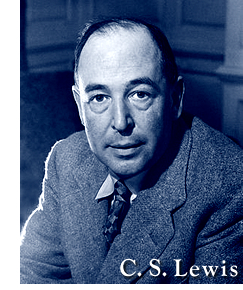
C.S. Lewis Daily – Today’s Reading – On Forgiveness

On forgiveness

I find that when I think I am asking God to forgive me I am often in reality (unless I watch myself very carefully) asking Him to do something quite different. I am asking Him not to forgive me but to excuse me. But there is all the difference in the world between forgiving and excusing. Forgiveness says “Yes, you have done this thing, but I accept your apology, I will never hold it against you and everything between us two will be exactly as it was before.” But excusing says “I see that you couldn’t help it or didn’t mean it, you weren’t really to blame.”. . .

Real forgiveness means looking steadily at the sin, the sin that is left over without any excuse, after all allowances have been made, and seeing it in all its horror, dirt, meanness and malice, and nevertheless being wholly reconciled to the man who has done it.

From The Weight of Glory

Compiled in Words to Live By

The Weight of Glory: And Other Addresses.

Streams in the Desert for Kids – Don’t Fret


Psalm 37:1

What in the world does “fret” mean? Here is a little word that doesn’t have any positive definitions. It means “to worry, to be discontent, to have something be eaten away by something else.” It means, “to torment or irritate or upset someone or yourself.” So when the Bible says not to “fret” it means “quit worrying about it.” That’s not always easy to do, is it?

Here’s another little word with a negative definition: Envy. Envy is a kind of jealousy. The dictionary defines it as the “resentful or unhappy feeling of wanting somebody else’s success, good fortune, qualities, or possessions.” We can envy someone else’s clothes, their looks, their friendships, their talents, or their achievements. For example, when a friend does well on an exam, instead of being happy for her, you feel jealous and you wish it could have been you instead. That’s envy.

The Bible says that we shouldn’t fret about or envy the apparent success of people who do wrong. Do you know someone who got rewarded for cheating? How did it make you feel? Did you fret and feel envious? Unfortunately, fretting and envy don’t change the situation, but they do make us miserable. That’s why the Bible says not to fret or envy. And although people who cheat to get ahead appear to be getting away with it, they’re losers in the long run.

Dear Lord, I admit I have both fretted and been envious. Please help me to be content with doing honest work and to trust you with the rest. Amen.