Charles Stanley –Our God Is Able


Ephesians 3:20-21

Jesus knew firsthand what it meant to have limited financial resources, to have those closest to Him question His actions, and to be rejected by those He sought to serve (Matt. 8:20; Mark 3:21; John 6:66). However, He never allowed such circumstances to control His emotions or dictate His actions. Instead, He chose to trust that the Father was able to carry out His Word.

We are called to follow Christ’s example and believe that God is able to do what He has said. For example, the Bible promises eternal salvation for everyone who requests forgiveness in Jesus’ name (Heb. 7:25). The Son satisfied His Father’s justice by dying on the cross for all of mankind’s sins—from white lies to vile acts. God will pardon everyone who has genuine faith in Jesus, and He makes each believer a new creation in Christ (2 Corinthians 5:17). Regardless of the trouble we have caused or the mistakes we have made, He invites us to draw near in faith and receive the gift of everlasting life.

Having saved us, God says He will establish us in truth (Rom. 16:25); after giving us a firm foundation in Christ, He builds us up in righteousness. Through the ministry of His Spirit and the Word, we start to see things as the Father does and learn what pleases Him (Rom. 12:2).

By believing that God keeps His promises, we will become stronger in our faith and more at peace. Hardships that once would have thrown us off course will lose their power to shake us. Hope will replace discouragement, and trust will overcome doubt. Each time trouble comes, focus your attention on your loving heavenly Father and His ability to care for you.

Bible in One Year: Isaiah 54-57


http://www.intouch.org/

Our Daily Bread — Showing Grace

Read: Colossians 4:2–6

Bible in a Year: Psalms 68–69; Romans 8:1–21

Let your conversation be always full of grace, seasoned with salt, so that you may know how to answer everyone.—Colossians 4:6

The US Masters Golf Tournament began in 1934, and since then only three players have won it two years in a row. On April 10, 2016, it appeared that twenty-two-year-old Jordan Spieth would become the fourth. But he faltered on the last nine holes and finished in a tie for second. Despite his disappointing loss, Spieth was gracious toward tournament champion Danny Willett, congratulating him on his victory and on the birth of his first child, something “more important than golf.”

Writing in The New York Times, Karen Krouse said, “It takes grace to see the big picture so soon after having to sit through a trophy ceremony and watch someone else have his photograph taken.” Krouse continued, “Spieth’s ball-striking was off all week, but his character emerged unscathed.”

Paul urged the followers of Jesus in Colossae to “be wise in the way you act toward outsiders; make the most of every opportunity. Let your conversation be always full of grace, seasoned with salt, so that you may know how to answer everyone” (Col. 4:5–6).

As those who have freely received God’s grace, it is our privilege and calling to demonstrate it in every situation of life—win or lose. —David C. McCasland

Dear Lord, help me by Your Spirit to be gracious and kind to others and to represent You well.

Gracious words are always the right words.

INSIGHT: The grace we have received in Jesus is part of His mission. John’s gospel declares, “The Word became flesh and made his dwelling among us. We have seen his glory, the glory of the one and only Son, who came from the Father, full of grace and truth. . . . We have all received grace in place of grace already given. For the law was given through Moses; grace and truth came through Jesus Christ” (John 1:14, 16-17). He came “full of grace and truth” to bring us “grace in place of grace already given.” This emphasis on grace in the coming of Jesus was in direct contrast to the law of Moses that had become a heavy burden to the people of Israel. By fulfilling that law, Jesus provided us not only with the grace of salvation, but He also gave us what we need to live every day in Him.

How does knowing we have freely received God’s grace challenge us to show grace to others?

http://www.odb.org


Streams in the Desert for Kids – Shout for Joy

Isaiah 24:15, The Message

When your favorite team wins a huge victory, you just can’t help shouting for joy. When you are given an important award, you jump up and down in happiness. When you get a gift you have been wanting for a long time, you want to tell all your friends about it. You want to broadcast the good news.

When we take the time to think about all God has done for us, there is so much good stuff that we could certainly shout for joy about it. What has God done for you that could make you jump for joy? Has he healed a grandparent from a scary illness? Has he given your mom or dad a job or a better job? Has he helped you improve your grades or your basketball game when you prayed and asked him?

Even if he hasn’t done any of those things for you, he has made a way for you to go to heaven with him. Also remember that in tough situations, God is doing good things. He loves you even when you act ugly. When you are sick, he may use it to help you rest or to encourage someone else who is ill. Maybe you don’t feel like yelling out loud to God in all situations, but look for reasons to praise him. Something about giving thanks and praise to God out loud makes us feel better.

Dear Lord, As the writer of Isaiah said, “All praise to the Righteous One!” You are my God, and you are mighty. Thank you for loving me. Amen.

Joyce Meyer – Be an Example

But now I write to you not to associate with anyone who bears the name of [Christian] brother if he is known to be guilty of immorality or greed, or is an idolater [whose soul is devoted to any object that usurps the place of God], or is a person with a foul tongue [railing, abusing, reviling, slandering], or is a drunkard or a swindler or a robber. [No] you must not so much as eat with such a person.- 1 Corinthians 5:11

The apostle Paul told the Corinthians not to associate with a believer who had a foul tongue, which included gossiping and criticizing. In order to be a good example to people who are sinning, you must be careful not to do the negative things they do or to say the hurtful things they say. You don’t want to give the impression that you think you are better than they are, but you must lovingly, humbly, and gently decline to be involved in conversation and in other behaviors you know are displeasing to God.

Don’t be passive and let other people infect you with their bad attitudes and evil conversation, but instead make a decision to be a good influence on them.

Power Thought: I will not gossip, criticize, or spread rumors about others.

From the book the book Power Thoughts Devotional by Joyce Meyer


http://www.joycemeyer.org

Campus Crusade for Christ; Bill Bright – To Seek and To Save

“For the Son of man is come to seek and to save that which was lost” (Luke 19:10, KJV).

The Word of God clearly teaches that He wants His children to live supernaturally, especially in the area of living holy lives and bearing much fruit since that is the reason our Lord Jesus Christ came to this world.

Through the years I have prayed that my life and the ministry of Campus Crusade for Christ would be characterized by the supernatural. I have prayed that God would work in and through us in such a mighty way that all who see the results of our efforts would know that God alone was responsible, and give Him all the glory.

Now as I look back – marveling at God’s miraculous working in our behalf – I remember earlier days which were also characterized by praise and glory to God, even though I was not privileged then to speak to millions or even thousands. At one point in our ministry, about the only understanding supportive listener I could find was my wife.

Vonette and I used to live mostly for material pleasures. But soon after our marriage we made a full commitment of our lives to the Lord. Now it is our desire (1) to live holy lives, controlled and empowered by the Holy Spirit (2) to be effective witnesses for Christ, and (3) to help fulfill the Great Commission in our generation to the end that we may continue the ministry which our Lord began as He came to “seek and to save the lost.”

Bible Reading: Luke 19:1-9

TODAY’S ACTION POINT: I determine to bring my priorities in line with those of my Lord and Savior, who came to seek and to save the lost and to encourage others to do the same.


http://www.cru.org

Moody Global Ministries – Today in the Word – GOD TURNS DARKNESS INTO LIGHT

Read 2 SAMUEL 22:26-37

Writing in The Pursuit of God, A. W. Tozer said: “On our part there must be surrender to the Spirit of God, for His work it is to show us the Father and the Son. If we co-operate with Him in loving obedience God will manifest Himself to us, and that manifestation will be the difference between a nominal Christian life and a life radiant with the light of His face.”

The “light of God’s face” is one way of speaking about His favor or blessing. Today’s passage is a powerful reminder that the Lord is on the side of His people! This psalm of praise dates from late in King David’s life and is also recorded in Psalm 18. Reflecting on his life, the king rejoiced in God’s loving faithfulness to him.

Specifically, David exulted that God was his “lamp” (vv. 29–30), meaning that God was his ongoing source of knowledge, wisdom, hope, and blessing. Against all odds, the Lord can turn “darkness into light” or make it possible for a single warrior to “advance against a troop.” As David wrote elsewhere, “The Lord is my light and my salvation—whom shall I fear? The Lord is the stronghold of my life— of whom shall I be afraid?” (Ps. 27:1).

The rest of this passage also focuses on God’s character. He is faithful, blameless, pure, and perfect. He loves to save the humble and humble the proud. When the wicked think they are devious enough to outsmart Him, He proves no one can. His Word is flawless. He is our shield, protector, and Rock. As needed, He provides strength, stability, confidence, security, and success. He paves “a broad path for my feet” (v. 37), the righteous, obedient path where we find His guidance and protection.

APPLY THE WORD

Hannah’s prayer in 1 Samuel 2 and David’s here form narrative “bookends” for the historical books of 1 and 2 Samuel. Read both passages and notice the similar theological points and key themes. In what ways do these prayers help us understand and interpret all the history in between? How can they shape your own prayers?


http://www.todayintheword.org

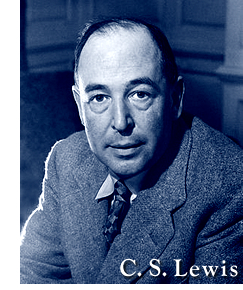
C.S. Lewis Daily – Today’s Reading

On love

I will never laugh at anyone for grieving over a loved beast. I think God wants us to love Him more, not to love creatures (even animals) less. We love everything in one way too much (i.e., at the expense of our love for Him), but in another way we love every- thing too little.

No person, animal, flower, or even pebble has ever been loved too much—i.e., more than every one of God’s works deserves.

From The Collected Letters of C.S. Lewis, Volume III

Compiled in Words to Live By, The Collected Letters of C. S. Lewis