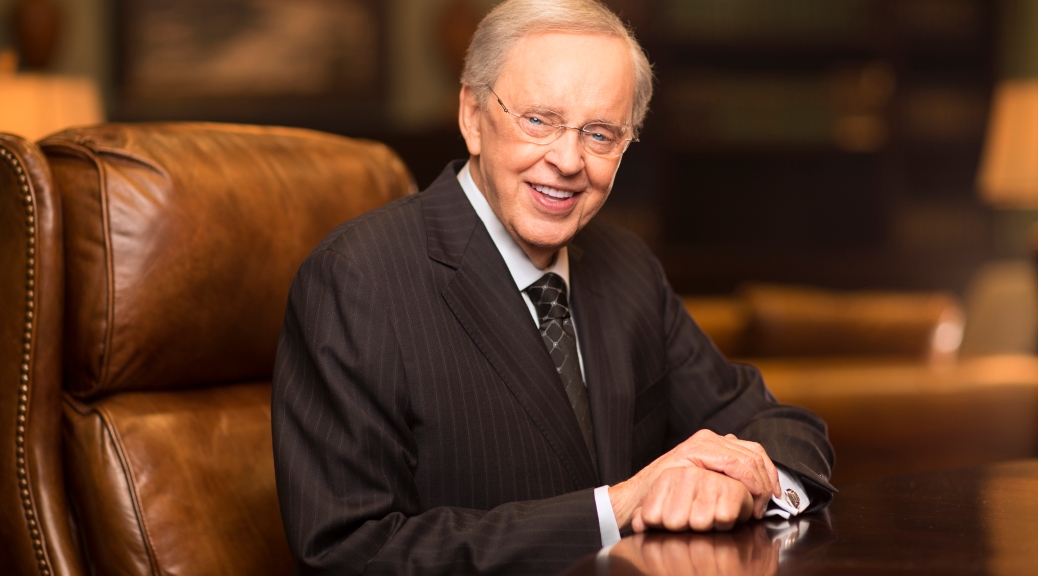
Charles Stanley – Is Your Faith Genuine?


Matthew 7:13-27

During my first pastorate in the mountains of North Carolina, I traveled throughout the area meeting people, telling them about the Lord, and inviting them to church. They all claimed to believe in Jesus even though many had no interest in church or the Bible and their lives showed no evidence of salvation. I feared that whatever faith they had would not take them to heaven.

Believing in vain is probably more common in the church than we’d care to admit. Some people assume they are Christians simply because they were raised in a Christian family or have attended church since childhood. Sometimes they merely believe the facts about Jesus in the same way that they’re confident George Washington existed.

However, there are also many people who deliberately limit what they believe about Christ and His Word. They don’t want a faith that requires them to forsake their sins and change their lifestyle. If asked what they believe, they may respond that their faith is a private matter.

Other people have been led to think they are saved because of an experience. They may have heard a nebulous invitation to make Jesus a part of their life, or perhaps an encounter at a conference made them feel close to God.

Today’s passage is a sobering warning. How can we be certain that our faith is genuine and our salvation is sure? Jesus said the proof lies in our obedience to God’s Word. If we are in Christ, then as He works to conform us to His image, the evidence will be displayed in our character, conduct, and conversation.

Bible in One Year: 2 Kings 4-6


http://www.intouch.org/

Our Daily Bread — Seeing the Light


Bible in a Year:2 Samuel 16–18; Luke 17:20–37

On those living in the land of deep darkness a light has dawned.

Isaiah 9:2

Today’s Scripture & Insight:Matthew 4:12–25

On the streets of Los Angeles, a homeless man struggling with addictions stepped into The Midnight Mission and asked for help. Thus began Brian’s long road to recovery.

In the process Brian rediscovered his love for music. Eventually he joined Street Symphony—a group of music professionals with a heart for the homeless. They asked Brian to perform a solo from Handel’s Messiah known as “The People That Walked in Darkness.” In words written by the prophet Isaiah during a dark period of Israel’s history, he sang, “The people that walked in darkness have seen a great light: they that dwell in the land of the shadow of death, upon them hath the light shined” (Isaiah 9:2 kjv). A music critic for The New Yorker magazine wrote that Brian “made the text sound as though it had been taken from his own life.”

The gospel writer Matthew quoted that same passage. Called by Jesus from a life of cheating his fellow Israelites, Matthew describes how Jesus fulfilled Isaiah’s prophecy by taking His salvation “beyond the Jordan” to “Galilee of the Gentiles” (Matthew 4:13–15).

Who would have believed one of Caesar’s tax collector thugs (see Matthew 9:9), a street addict like Brian, or people like us would get a chance to show the difference between light and darkness in our own lives?

By Mart DeHaan

Today’s Reflection

How has the light of Christ affected you? In what ways are you reflecting it to others?


http://www.odb.org

Ravi Zacharias Ministry – The Sting Of Death

At a late night dinner in Colombo last month, my colleague and I were hosted by a loving young Sri Lankan couple and their cricket-loving lad. Conversation, calamari, caramel custard, and coffee was enjoyed well into midnight at the Cinnamon Grand—a delightful combo that’s etched forever into our memories.

My visits to Colombo have always been heart-warming. Lovely people, luscious land, and languid mood. But there’s so much more to this people and to this place that fascinates me. Thirty brutal years of sweat, blood, and tears. Thirty years of an ugly civil war. Thirty years of fear, hurt, and pain. Thirty years of despair that ended in 2009.

In my visits, I’ve had the privilege of interacting with young and old Sri Lankans: those who have been in the thick of all that transpired in those thirty ghastly years. I’ve also spoken to the ones born during that era, growing up in the midst of impending danger, in the very heart of chaos, in the hearing and sight of bomb blasts. And I have also been honoured to know the likes of our young cricket-loving host, born in an era of peace—or so we thought. The innocence in my little friend’s face, the aspirations in his heart to be a national cricketer in the Sri Lankan squad, and the light in his eyes at the dessert counter are all still fresh in my eyes. I was so happy that this little child didn’t have to go through what his parents did.

But all of this came crashing down when I learned that the tenure of peace was just a mere, ten years.

The Cinnamon Grand was one of the eight blast sites. Across this priceless jewel in the Indian Ocean, on Resurrection day, eight sites were chosen for destruction, the majority of which were churches. On the very day that the worldwide church celebrates the joyous triumph of life over death and good over evil, bomb blasts and killings, conspiracy and treachery, sorrow and pain, agony and mourning made a mockery of God’s gift of forgiveness and salvation to all of humankind. Almost three hundred were killed and about five hundred more injured.

Continue reading Ravi Zacharias Ministry – The Sting Of Death

Joyce Meyer – On-Purpose Thinking


But certain individuals have missed the mark on this very matter [and] have wandered away into vain arguments and discussions and purposeless talk. — 1 Timothy 1:6 (AMPC)

Adapted from the resource Power Thoughts Devotional – by Joyce Meyer

The Bible teaches us that our words have power and we get exactly what we speak. Along with that, our thoughts affect our moods and attitudes. In other words, your attitude in life affects your altitude in life, meaning your attitude determines how far you can go in life—how far you can go in pursuing your dreams, relationships, business, etc.

Your thoughts and my thoughts will determine the kind of lives we will have in the future. And you don’t have to think about and focus on whatever falls into your head. You can think things on purpose. Sometimes, it is good to just sit down and have a think session. And then it’s good to have a confession session. After almost 40 years of knowing these things, I still have to practice them daily. Be determined to maintain good thoughts.

Prayer Starter: Lord, I want to be more purposeful with my thoughts and words. Holy Spirit, please help me today and every day to be more conscious about what I choose to think and say. Help me to line up my thoughts with Your Word. In Jesus’ Name, Amen.


http://www.joycemeyer.org

Campus Crusade for Christ; Bill Bright – Abounding Therein


“As ye have therefore received Christ Jesus the Lord, so walk ye in Him: Rooted and built up in Him, and established in the faith, as ye have been taught, abounding therein with thanksgiving. Beware lest any man spoil you through philosophy and vain deceit, after the tradition of men, after the rudiments of the world, and not after Christ” (Colossians 2:6-8, KJV). 

Some years ago, while speaking at the University of Houston, I was told about a brilliant philosophy major. He was much older than most of the other students, having spent many years in the military before he returned to do graduate work.

He was so gifted, so brilliant, so knowledgeable that even the professors were impressed by his ability to comprehend quickly and to debate rationally. He was an atheist, and he had a way of embarrassing the Christians who tried to witness to him.

During one of my visits to the university, I was asked to talk with him about Christ. We sat in a booth in the student center, contrasting his philosophy of life with the Word of God. It was an unusual dialogue. He successfully monopolized the conversation with his philosophy of unbelief in God.

At every opportunity, I would remind him that God loved him and offered a wonderful plan for his life. I showed him various passages of Scripture concerning the person of Jesus Christ (John 1, Colossians 1, Hebrews 1). He seemed to ignore everything I said; there appeared to be no communication between us whatsoever.

A couple of hours passed, and it was getting late. I felt that I was wasting my time and there was no need to continue the discussion. He agreed to call it a day. A friend and staff member who was with me suggested to this student that we would be glad to drop him off at his home on the way to my hotel.

As we got into the car, his first words were, “Everything you said tonight hit me right in the heart. I want to receive Christ. Tell me how I can do it right now.” Even though I had not sensed it during our conversation, the Holy Spirit – who really does care – had been speaking to his heart through the truth of God’s Word which I had shared with him.

Bible Reading: Colossians 2:1-10

TODAY’S ACTION POINT:  I will not depend upon my own wisdom, my personality or even my training to share Christ effectively with others, but I will commit myself to talk about Him wherever I go, depending upon the Holy Spirit to empower me and speak through me to the needs of others.


http://www.cru.org

Max Lucado – Move the Stone


Listen to Today’s Devotion

Standing in a cemetery,  Jesus issued a command, “Move the stone.”

There was no singing at the funeral Jesus attended.  Mourning.  Weeping.  Wailing.  People shuffled about aimlessly, their eyes full of fear.  The foreboding news reminded them of their own fate.  Another prisoner had been marched from death row to the gallows.  Lazarus was dead.

And Jesus wept—not for the dead but for the living.  He wept not for the one in the cave of death but for those in the cave of fear.  He wept for those who, though alive, were dead.  He wept for those who, though free, were prisoners, held captive by their fear of death.

Stones have never stood in God’s way.  They didn’t in Bethany two thousand years ago.  And stones don’t stand in His way today.  He called Lazarus out of the grave of death.  And He calls us out of the grave of fear.

Read more Six Hours One Friday

For more inspirational messages please visit Max Lucado.

Home

Denison Forum – Chip and Joanna Gaines make the ‘Time 100’: Three ways the church can change the world

Joanna and Chip Gaines made the Time 100 this year.

Tim Tebow’s article about them applauds “the genuine passion they have for making a difference in people’s lives.” He adds, “They are also grounded in a strong faith, which keeps them focused on what truly matters in life.”

Any time followers of Jesus make the news because of their cultural relevance, the kingdom advances and God is glorified. As we noted yesterday, Christians across history have made an amazing difference in our world. From women’s rights to the Scientific Revolution, educational excellence, modern medicine, and the abolition of slavery, believers have played a crucial role in human flourishing.

However, it seems that many today see the church as less relevant than Christians. Far less, in fact.

How many religious Americans go to church?

Last Sunday, most churches experienced their highest attendance of the year. Next Sunday, many of these congregations will see half the numbers they witnessed on Easter.

Our culture has already moved past the holiday considered by Christian tradition to be the highest and holiest day of the year. Except for references to Sunday’s tragedy in Sri Lanka and post-Easter sales in stores, the day seems to be over.

Of course, the risen Christ is just as alive and just as relevant today as when he first rose from the dead. But his church seems to be less so.

According to Gallup, church membership in America is down from 70 percent in 1999 to 50 percent today. One factor is the rise of the “nones”: the number of Americans who say they have no religious affiliation has grown from 10 percent in 1998 to 23 percent today.

Continue reading Denison Forum – Chip and Joanna Gaines make the ‘Time 100’: Three ways the church can change the world

Charles Stanley – Solving Problems Through Prayer


2 Chronicles 20:1-32

Problems are an inevitable part of life whether a person is saved or not. The difference is that once a man or woman becomes a believer, the Father strengthens His child to face every difficulty.

Our omniscient and omnipotent God is greater than any problem. He knows our future circumstances and equips our heart and mind to withstand the coming trial. The moment we encounter a problem, we can turn to His omnipotence. He promised to meet believers’ needs and, therefore, is under His own divine obligation to give guidance and direction. Our first response should always be to call out “Father!” and pray. Immediately, two things take place: The problem’s growth is stunted, and God’s child is reminded of the unique position given those who trust in the sovereign Lord.

God always provides when we face problems. However, that doesn’t mean we should be sitting back and waiting for Him to work out the details. His provision may require an act of faith from us in order to reach a resolution. Experience and Scripture tell us that His solutions are always best, but human strength may falter when we hear what He asks of us in response to our prayers. Thankfully, He also offers the courage to act at the right moment.

Long before a crisis arises or a solution is needed, a wise believer will be seeking God in prayer. In trouble-free times, we can build a foundation of trust and communion with Him that can withstand any hardship. Problems are unavoidable, but as we seek our Father in prayer, He is faithful to deal with our difficulties.

Bible in One Year: 2 Kings 1-3


http://www.intouch.org/

Our Daily Bread — Second-Wind Strength


Bible in a Year:2 Samuel 14–15; Luke 17:1–19

Come to me, all you who are weary and burdened, and I will give you rest.

Matthew 11:28

Today’s Scripture & Insight:Isaiah 40:27–31

At the age of fifty-four I entered the Milwaukee marathon with two goals—to finish the race and to do it under five hours. My time would have been amazing if the second 13.1 miles went as well as the first. But the race was grueling, and the second-wind strength I’d hoped for never came. By the time I made it to the finish line, my steady stride had morphed into a painful walk.

Footraces aren’t the only things that require second-wind strength—life’s race does too. To endure, tired, weary people need God’s help. Isaiah 40:27–31 beautifully weds poetry and prophecy to comfort and motivate people who need strength to keep going. Timeless words remind fatigued and discouraged people that the Lord isn’t detached or uncaring (v. 27), that our plight doesn’t escape His notice. These words breathe comfort and assurance, and remind us of God’s limitless power and bottomless knowledge (v. 28).

The second-wind strength described in verses 29–31 is just right for us—whether we’re in the throes of raising and providing for our families, struggling through life under the weight of physical or financial burdens, or discouraged by relational tensions or spiritual challenges. Such is the strength that awaits those who—through meditating on the Scriptures and prayer—wait upon the Lord.

By Arthur Jackson

Today’s Reflection

When have life circumstances taken the wind out of you? In what particular area do you need God’s strength today?


http://www.odb.org

Ravi Zacharias Ministry – Presente


In the 70s and 80s when death squads were operating in countries of South and Central America, a liturgy emerged in the church by which Christians dramatically enacted faith amidst the pervasive fear perpetuated by the imagination of the nation state. Where death squads spread fear by “disappearing” those bodies that stood in their way, the church saw the resurrection of Christ and his own fatally wounded and “disappeared” body as a dramatic counter-narrative of resistance. Thus, at the liturgy, someone would read out the names of those killed or disappeared, and for each name someone would call out from within the congregation, presente, “Here!”

My work brings me face to face with many who would meet this liturgical act with a dismissal of some sort. It might be a hostile dismissal or simply one expressing doubt or dismay. Like words of comfort at a difficult funeral, while the sentiment might be needed, it will not undo what has been done. Here, the objection from a place of cynicism is not unlike the one from sorrow: The death squads were hardly deterred by this communal act of rallying around a consoling word. Bodies were—and are—still disappearing. These names were the names of people actually lost. On this, determined atheists, material humanists, and despairing Christians might agree: In a heartbreakingly real sense, the disappeared were most definitely not presente.

We might think similarly when we consider the Holocaust or the Rwandan genocide or Easter church bombings—or any number of stories of the displaced or tragically lost that sadly do not make their way into our attention spans or news feeds. It is not hard to tend to the imagination that tells us that the “disappeared” belong to a group that will never stop growing. It is an imagination that seems sympathetic and human, and in some important ways it is. The nameless lives wasted, violently cut short, are buried and gone. But whether confessed in sorrow or cynicism, the assumption behind this imagination is that the dead can be buried once and for all and forgotten.

What the churches facing the death squads seemed to understand better than most of us is that Easter proclaims something entirely to the contrary. The violence and death that made Jesus “disappear” did not stand. He would not be buried once and for all and forgotten. In the aftermath of another bloody Easter Sunday, I suspect our Sri Lankan brothers and sisters hold the same conviction. The resurrected presence of the once disappeared Jesus proclaims many things to this wounded world, but this is perhaps the most shocking of all. The cultural notion that human value can be extinguished by death and violence was irreversibly shifted by Easter. The pervasive imagination that insists there are some lives that are expendable was upended by the shocking return of the one they tried to silence. The injustice and apathy that perpetuate this imagination stand vehemently convicted. The gospel of the resurrection proclaims that God holds on to the lives of all the departed, that injustice and apathy will not have the last word, and the dead and disappeared are never forgotten.

In my own liturgical tradition, during the season of Lent as the church prepares for the feast of Easter, there is a practice called “burying the hallelujahs.” We refrain from saying hallelujah during Lent, hallelujah being an ultimate expression of rejoicing that means “God be praised.” For the forty days of Lent we are invited instead to remember our deaths, to call to mind our need, our sin, our apathy, our complicit disinterest in the disappearance of others. During Lent, we fast as a means of preparing ourselves for the promise that hunger itself will one day be satisfied. We mourn with the world, with the church far and wide, and we challenge ourselves to sit with those struggling under silencing injustice and violence, with those we forget and treat as if expendable. Last Lent, as we learned of the deadly bombings that targeted Coptic Christian churches on Palm Sunday, I was thankful for the burying of our hallelujahs and a ready language to lament with brothers and sisters I will never meet but with whom I grieved. Lent reminds us that God was buried and that we, too, will be buried, that death comes before life, and that before there is rejoicing, Jesus grieves with those who grieve. We don’t bury the hallelujahs in cynicism or despair. We bury them because this is precisely where Easter itself begins: in grief and darkness with those easily overlooked, with those disappearing and those disappeared. For Jesus himself was one of them.

When Mary arrived at the tomb on Easter morning only to be told that the body of Jesus body was missing, she was distraught at his disappearance. She at first could not see resurrection; she saw emptiness. I imagine her grief was not unlike the mothers of missing sons during the reign of the death squads or the mothers and fathers of Alexandria and Tanta who lost children in worship on Palm Sunday last year. It was not enough that they violently killed him; they disappeared him.

But then the body of the resurrected Jesus was suddenly standing before her. The one who leaves no human soul in nameless and forgotten oblivion spoke Mary’s name aloud and she realized that he was there. Presente. In the midst of her devastating encounter with darkness, he is there in the midst of it. And his presence undoes the fixtures of fear and violence that continue to say there are some bodies that don’t matter, showing us not only how to die but how to rise and how to live. This darkness shall not overcome. Not in Golgotha. Not in South America. Not in Sri Lanka. Presente.


Jill Carattini is managing editor of A Slice of Infinity at Ravi Zacharias International Ministries in Atlanta, Georgia.


http://www.rzim.org/

Joyce Meyer – Decide to Be Second


Be devoted to one another with [authentic] brotherly affection [as members of one family], give preference to one another in honor. — Romans 12:10 (AMP)

Adapted from the resource New Day, New You Devotional – by Joyce Meyer

Giving preference to others requires a willingness to adapt and adjust. It means to allow another to go first or to have the best of something. We show preference when we give someone else the best cut of meat on the platter instead of keeping it back for ourselves. We show preference when we allow someone with fewer groceries in his cart than we have in ours to go in front of us at the supermarket checkout counter, or when we are waiting in line to use a public restroom and someone behind us in line is pregnant or elderly and we choose to let that individual go ahead of us.

Each time we show preference, we have to make a mental adjustment. We were planning to be first, but we decide to be second. We are in a hurry, but we decide to wait on someone else who seems to have a greater need. A person is not yet rooted and grounded in love until they have learned to show preference to others (see Ephesians 3:17). Don’t just learn to adjust, but learn to do it with a good attitude. Learning to do these things is learning to walk in love.

Prayer Starter: Father, help me to truly show preference to other people today with a good attitude. Help me to humble myself and love others the way You do. In Jesus’ Name, Amen.


http://www.joycemeyer.org

Campus Crusade for Christ; Bill Bright – We Need the Word


“And you will need the helmet of salvation and the sword of the Spirit – which is the Word of God” (Ephesians 6:17).

In my own life, as I have come to know God better and to live more fully in the power and control of the Holy Spirit, my daily devotional Bible reading and study is not a duty or a chore, but a blessing; not an imposition on my time, but an invitation to fellowship in the closest of all ways with our holy, heavenly Father and our wonderful Savior and Lord.

Remember, God delights to have fellowship with us. The success of our studying God’s Word and of prayer is not to be determined by some emotional experience which we may have (though this frequently will be our experience), but by the realization that God is pleased that we want to know Him enough to spend time with Him in Bible study and prayer.

Here are some important, practical suggestions for your individual devotional reading and study of the Bible:

  1. Begin with a prayer. Ask the Holy Spirit to give you an understanding of God’s Word.
  2. Keep a Bible study notebook.
  3. Read the text slowly and carefully; then reread and take notes.
  4. Find out the true meaning of the text. Ask yourself:
    (a) Who or what is the main subject?
    (b) Of whom or what is the writer speaking?
    (c) What is the key verse?
    (d) What does the passage teach you about Jesus Christ?
    (e) Does it bring to light personal sin that you need to confess and forsake?
    (f) Does it contain a command for you to obey?
    (g) Does it give a promise you can claim?
  5. List practical applications, commands, promises.
  6. Memorize the Scriptures – particularly key verses.
  7. Obey the commands and follow the instructions you learn in God’s Word.

Bible Reading: II Timothy 3:14-17

TODAY’S ACTION POINT:  With His help, I will begin to make time in God’s Word – quality time – a priority in my life.


http://www.cru.org

Max Lucado – The Sparkle of Eternity


Listen to Today’s Devotion

The fifth chapter of Mark tells the story of a synagogue leader who reached the point where desperation exceeded dignity.  He begged Jesus to heal his dying daughter.  And Jesus did, with a look on his face that said, Come here. I’ve got a secret.

I’ve seen that sparkle of eternity in the eyes of a cancer patient who said, “I’m ready to go.”  I saw it at a funeral.  The widower didn’t weep like the others.  “Don’t worry about me,” he said.  “I know where she is.”  Peace where there should be pain.  Hope defying despair.  That’s what that look says.  It is a look that knows the answer to the question asked by every mortal:  Does death have the last word?  I can see Jesus wink as he answers, “Not on your life.”

Read more Six Hours One Friday

For more inspirational messages please visit Max Lucado.

Home

Denison Forum – Baptist pastor grieves for Notre Dame burning: How to prove that every day is Easter

Pastor Harry Richard grieved as he watched flames consume Notre Dame Cathedral in Paris. Just two weeks earlier, his church in Louisiana was set ablaze. It was one of three predominantly black churches in his area that were intentionally burned down, according to police.

But the Baptist minister sensed the Lord at work: “I think that God is using these moments to bring us closer together as a world. This is God’s hand on our lives to make us realize that we are all connected in some form or fashion.”

Meanwhile, Islamic militants are being blamed this morning for the Easter bombings in Sri Lanka that killed at least 290 people. Devastating floods have left millions in Iran facing a humanitarian crisis. And the CDC says this flu season is now the longest in a decade.

The news reminds us every day that we need the redemptive work of the risen Christ every day. Unfortunately, our secular culture is less convinced than ever that Jesus is relevant today.

How can we show the world that every day is Easter?

Imagine a world without Easter

John S. Dickerson’s latest book is titled Jesus Skeptic: A Journalist Explores the Credibility and Impact of Christianity. As with his other work, Dickerson’s insights are extremely insightful and relevant.

He states that a ten-year investigation led him to conclude: “My generation of Americans—those born in the 1980s and younger—have been largely denied the truth about Christianity’s influence and record on social justice.”

For instance, Dickerson notes that nine of the ten best nations on earth for women’s rights, according to the World Economic Forum, have majority Christian populations. Followers of Jesus such as Isaac Newton, Johannes Kepler, and Blaise Pascal also played an essential role in launching the Scientific Revolution.

This tradition continues with Dr. Francis S. Collins, leader of the Human Genome Project and now head of the National Institutes of Health. He states: “God can be found in the cathedral or in the laboratory. By investigating God’s majestic and awesome creation, science can actually be a means of worship.”

Schools, medicine, and slavery

Dickerson also notes that “nearly every leading university in the world was founded by Christians.” He cites the fact that the first nine colleges in the US were founded by Christians. He also found that each of the top ten universities in the world, according to the Center for World University Rankings, was begun by Christians.

Christians “planted the seeds of modern medicine” as well. Dickerson references Edward Jenner (the father of immunology), Florence Nightingale (the founder of modern nursing), and Johns Hopkins (whose bequest founded one of the most innovative hospitals in modern medicine). He adds that the top ten hospitals in the US, as ranked by U.S. News & World Report, were all founded by Christians.

And Dickerson reports that Christians played an essential role in ending slavery in most parts of the world. In fact, he could not find a single abolitionist in the US who was not a follower of Jesus. And, of course, there is the example of William Wilberforce in the UK.

None of this would have happened without Easter.

Making every day Easter

Here’s our challenge: convincing the culture that Jesus’ resurrection is as relevant to our present and future as it was to our past. This calling requires us to be as engaged in human rights, scientific and medical progress, advancing educational excellence, and ending racial discrimination as the Christians who came before us.

In addition, it is vital that we live in ways that contradict the caricature our critics have drawn of us. Consider two imperatives.

One: Respect those who do not respect our Lord.

When pagans in Ephesus started a riot against Christians in their city, an official scolded the crowd: “You have brought these men here who are neither sacrilegious nor blasphemers of our goddess” (Acts 19:37). We are to defend our faith boldly, but we are to do so “with gentleness and respect” (1 Peter 3:15). The more people criticize us, the more they need our Lord.

Two: Be joyful in a joyless world.

Solomon observed: “Everyone should eat and drink and take pleasure in all his toil—this is God’s gift to man” (Ecclesiastes 3:13). If I do not find joy in the vocation to which God has called me, I dishonor the One who has assigned it to me. William Barclay was right: “A gloomy Christian is a contradiction in terms.”

“Death is strong, but life is stronger”

Phillips Brooks: “Tomb, thou shalt not hold him longer; death is strong, but life is stronger. Stronger than the dark, the light; stronger than the wrong, the right.”

When Christians are relevant, gracious, and joyful followers of the risen Christ, the world will know: He is risen, indeed.


Denison Forum

Charles Stanley – Going Home


Revelation 21:1-21

The longer we live as Christians, the more we should feel like strangers in this world. Something within us recognizes that we’re outsiders here, and we yearn for that day when Jesus opens the door of heaven and welcomes us home. Although everything that God has prepared for us is beyond our comprehension, John helps us catch a glimpse by describing the contrast between what we know in this world and what it will be like in heaven.

God will dwell among us. Throughout history, no human being could see God, but that barrier won’t remain, because sin will be eradicated in us. Since we will be completely righteous forever, we will no longer have to continually fight off unholy urges.

Sin’s consequences will pass away. All the suffering that has afflicted us will end. There will be no more tears, death, mourning, or pain. That is when we will discover firsthand the truth of Psalm 16:11: “In Your presence is fullness of joy; in Your right hand there are pleasures forever.”

Our new home will be glorious. Jesus assured His disciples He was going to prepare a place for them in His Father’s house (John 14:2-3). The location is the New Jerusalem, and since it’s a cube 1,500 miles on a side (Revelation 21:16), there’ll be plenty of room for every believer. That remarkable place radiates the brilliance of God’s glory like a large multi-faceted diamond—John compared its beauty to a bride who’s adorned for her husband on their wedding day.

Fix a mental image of John’s description in your mind. In those moments when this life disappoints you, remember that you’re not home yet.

Bible in One Year: 1 Kings 13-14


http://www.intouch.org/

Our Daily Bread — In the Moment


Bible in a Year:2 Samuel 3–5; Luke 14:25–35

The reason my Father loves me is that I lay down my life . . . . No one takes it from me, but I lay it down of my own accord.

John 10:17–18

Today’s Scripture & Insight:Luke 23:32–46

The ambulance door was about to close—with me on the inside. Outside, my son was on the phone to my wife. From my concussed fog, I called his name. As he recalls the moment, I slowly said, “Tell your mom I love her very much.”

Apparently I thought this might be goodbye, and I wanted those to be my parting words. In the moment, that’s what mattered most to me.

As Jesus endured His darkest moment, He didn’t merely tell us He loved us; He showed it in specific ways. He showed it to the mocking soldiers who had just nailed Him to a cross: “Father, forgive them, for they do not know what they are doing” (Luke 23:34). He gave hope to a criminal crucified with Him: “Today you will be with me in paradise” (v. 43). Nearing the end, He looked at His mother. “Here is your son,” He said to her, and to His close friend John He said, “Here is your mother” (John 19:26–27). Then, as His life slipped from Him, Jesus’s last act of love was to trust His Father: “Into your hands I commit my spirit” (Luke 23:46).

Jesus purposefully chose the cross in order to show His obedience to His Father—and the depth of His love for us. To the very end, He showed us His relentless love.

By Tim Gustafson

Today’s Reflection

What matters most to you? How do love and obedience fit together?


http://www.odb.org

Ravi Zacharias Ministry – Scars of New Creation

One of the most terrifying and deeply troubling news stories for me of the past few years has been one that has escaped broad notice by the Western media. It is the story of extreme and widespread violence against women in Eastern Congo. Raped and tortured by warring factions in their country, women are the victims of the most horrific crimes. As one journalist reported, “Many have been so sadistically attacked from the inside out, butchered by bayonets and assaulted with chunks of wood, that their reproductive and digestive systems are beyond repair.”(1) They bear their wounds in their own bodies, permanent scars of violence and oppression.

In this holiest week for Christians around the world, the broken and wounded body of Jesus is commemorated in services of Maundy Thursday and Good Friday. The broken body and spilled blood of Jesus is remembered in the symbols of bread and wine on Maundy Thursday, and in the black draping of curtains and cloths on Good Friday. Jesus suffered violence in his own body, just as many do around the world today.

Even as Christian mourning turns to joy with Easter resurrection celebrations, it is important to note that Jesus bore the wounds of violence and oppression in his body—even after his resurrection. When he appeared to his disciples, according to John’s gospel, Jesus showed them “both his hands and his side” as a means by which to identify himself to them. Indeed, the text tells us that once the disciples took in these visible wounds “they rejoiced when they saw the Lord” (John 20:20).

The resurrection body of Jesus contained the scars from nail and sword, and these scars identified Jesus to his followers. And yet, the wounds of Jesus took on new significance in light of his resurrection. While still reminders of the violence of crucifixion his wound-marked resurrection body demonstrates God’s power over evil and death.

Continue reading Ravi Zacharias Ministry – Scars of New Creation

Joyce Meyer – Only God Can Truly Satisfy


My soul yearns for you in the night; my spirit within me earnestly seeks you. For when your judgments are in the earth, the inhabitants of the world learn righteousness. — Isaiah 26:9

Adapted from the resource Ending Your Day Right Devotional – by Joyce Meyer

Nothing can satisfy your longing for God except communion and fellowship with Him. The apostle John wrote, And the world passes away and disappears, and with it the forbidden cravings (the passionate desires, the lust) of it; but he who does the will of God and carries out His purposes in his life abides (remains) forever (1 John 2:17 AMPC).

The world makes it easy for you to fill your ears with all kinds of things that drown out the voice of God and push Him far into the background of your life. However, the day comes for every person when only God remains. Everything else in life eventually passes away; when it does, God will still be there. Seek God earnestly today, and He will abide in you.

Prayer Starter: Father, I desire a deeper, closer relationship with You. Help me to make You a priority today and every day. In Jesus’ Name, Amen.


http://www.joycemeyer.org

Campus Crusade for Christ; Bill Bright – Source of Joy 


“So you became our followers and the Lord’s; for you received our message with joy from the Holy Spirit in spite of the trials and sorrows it brought you” (1 Thessalonians 1:6).

Mary was so radiant it was as though she had swallowed a light bulb. Wherever she went, there was the radiance of the Lord’s presence about her. She literally bubbled over with joy, and whenever she talked about the Lord her words came so quickly they practically tumbled over each other. She was an exciting, contagious person to be around, and many nonbelievers inquired of her, “Why are you so happy? What makes you so different?”

To which, of course, she would always respond by telling them about our wonderful Lord and how He had filled her heart with His joy.

The verse for today clearly indicates that joy comes from the Holy Spirit, who came into this world to glorify Christ. We are told in Galatians also that the fruit of the Spirit is joy, among other things.

When we are filled with the Spirit and thus growing in the fruit of the Spirit – which includes joy – then we will express that joy by singing and making melody in our hearts to the Lord. A happy heart inevitably will be reflected in a joyful countenance.

“I presume everybody has known someone whose life was just radiant,” R. A. Torrey said. “Joy beamed out of their eyes; joy bubbled over their lips; joy seemed to fairly run from their fingertips. The gladdest thing on earth is to have a real God.”

In the words of an unknown poet:

“If you live close to God and His infinite grace,
You don’t have to tell; it shows on your face.”

Bible Reading: Nehemiah 8:9-12

TODAY’S ACTION POINT:  I will not expect to find joy in things, or even in other people primarily, but rather in the source of all joy – God’s Holy Spirit. With His help, I will share His supernatural joy wherever I go.


http://www.cru.org

Max Lucado – God vs. Death


Listen to Today’s Devotion

Death is the bully on the block of life.  “Your time is coming,” he taunts.  Oh, we try to prove him wrong.  We jog.  We diet.  But we know that we will only, at best, postpone it.  That is why you should never face him alone.  That is why you need a big brother.

Take heart from these words,  “Since the children have flesh and blood, he too shared in their humanity that by his death he might destroy him who holds the power of death—that is, the devil—and free those who all their lives were held in slavery by their fear of death” (Hebrews 2:14-16).

Yes, the Christian can face the bully nose to nose and claim the promise that echoed in the empty tomb. My death is not final!

Read more Six Hours One Friday

For more inspirational messages please visit Max Lucado.


Home