
Upwords; Max Lucado –Doused with the Love of God


Listen to Today’s Devotion

“The love of God has been poured out in our hearts by the Holy Spirit who was given to us” (Romans 5:5). Note the preposition of. The Holy Spirit pours the love of God into our hearts, not love for God. God hands a bucket of love to the Spirit and instructs, “Douse their hearts.”


There are moments when the Spirit enchants us with sweet rhapsody. You belong to the Father. Signed, sealed, and soon-to-be delivered. Been a while since you heard him whisper words of assurance? Then tell him. He’s listening to you, and he’s speaking for you. Romans 8:26 says, “The Spirit comes to the aid of our weakness” Weak bodies, weak wills, weakened resolves. Whether we are feeble of the soul or body or both, how good to know it’s not up to us. Verse 26 of Romans 8 says, “The Spirit himself is pleading for us.”

The secret to saving America

The secret to saving America

David Kupelian explores how to fight the good fight without losing your soul

“… become blameless and harmless, children of God without blemish in the midst of a crooked and perverse generation, among whom ye are seen as lights in the world …” –Philippians 2:15

The United States of America is in the throes of a full-scale revolution. The new administration, which openly promises to transform America, rewrite her Constitution and “reimagine” all of her bedrock institutions, is being heralded by a shockingly totalitarian censorship campaign targeting everyone in opposition, from Donald J. Trump on down.

But this revolution is not new. For decades, our nation has been under covert, slow-motion assault by what we cryptically call “the far Left,” a religious-political movement fundamentally at war with both Christianity and America.

From the sexual revolution and the “marriage-is-legalized-rape” radical feminists of the 1960s, to today’s open love affair with socialism, sexual anarchy, abortion, identity politics, radical environmentalism and “defunding the police,” the Left has relentlessly pursued its goal, as Barack Obama put it, of “fundamentally transforming the United States of America.”

And though President Trump fought mightily against this tide for four years, tirelessly pursuing a pro-life, pro-religious freedom, pro-Constitution, pro-America agenda, as of today the revolutionaries are wildly ascendent.

Consider that in the past year the radical Left – with whose cause Big Media, Big Tech, Big Education, Big Hollywood and the entire Democratic Party totally identify – has succeeded in:

* indicting the freest, most welcoming and least racist nation on earth as irredeemably racist;

* inciting violent Marxist revolutionaries to riot, vandalize, loot and burn America’s major cities;

* abandoning their former “safe, legal and rare” stance on abortion in favor of wanton celebration of late-term abortion up to the moment of birth and beyond;

* encouraging innocent children to irreversibly ruin their lives by chemically (and sometimes surgically) “transitioning” to the opposite sex – a scientific impossibility;

* using the COVID pandemic as a cover for imposing unprecedented totalitarian control over Americans; and

gaslighting an entire nation by perpetrating the most wide-ranging, egregious and in-your-face election fraud in U.S. history while pretending disenfranchised American voters who simply want a fair and impartial investigation are the crazy ones, “trying to steal the election from Joe Biden.”

And that’s just for starters.

As America’s once-great middle class becomes crushed through endless COVID lockdowns, a wealthy and privileged globalist elite is not only growing ever richer and more powerful, but also strategically deploying COVID as a pretext for engineering what they call a “Great Reset” of the world – replacing capitalism with socialism. This is neither conspiracy theory nor partisan conjecture; the “Reset” movement’s leaders openly brag about it.

‘Evil in high places’

What Americans are beholding as the new year unfolds is more than just a host of extremely daunting circumstances brought about by corrupt, misguided and power-hungry people in leadership positions. Something else seems to be at work.

Consider that the well-intentioned but naïve liberal leaders of yesteryear are almost nowhere to be found. In their place are politicians, academics and media personalities whose breathtaking level of dishonestly and delusion (they talk earnestly about men becoming pregnant, they liken Trump to Hitler and they pretend the corrupt and shockingly senile Joe Biden is qualified to be president) suggests a surreal, dystopian, darkly spiritual dimension to the current troubled era.

In truth, Americans today are confronted with a maniacal revolutionary movement emanating from a full-bore rebellion against God Almighty and the essential foundation stones of Western Judeo-Christian civilization – from biblical morality, to “unalienable” individual rights, to equal justice under the law, to the color-blind society championed by Rev. Martin Luther King Jr., to the sacredness of children in the womb. After all, each of these priceless principles emanates directly from a deep recognition that human beings are created in the image of God – Imago Dei – and are therefore precious and of inestimable value.

Ironically, although atheist Karl Marx famously attacked religion and particularly Christianity as the “opium of the people,” he himself concocted the ultimate religious opiate: Marxism.

For although the fantasy-world promise of socialism was a “classless” society wherein all people are equal and cared for, in the real world, corrupt leftist-elite politicians like Joe Biden, Kamala Harris, Nancy Pelosi and Chuck Schumer are so dishonest and desperately addicted to power, their consciences so seared by decades of lying, that they retain zero capacity for genuinely caring about the “poor and disadvantaged.” It’s all an act.

Rather, the religion they preach – Marxism, socialism, progressivism, whatever the label – is just an opiate they cynically dispense to pacify and distract the masses, while they grow ever more wealthy, powerful and privileged, but inwardly ever more ugly, corrupt and self-deceived.

So now comes the big question: With such genuine wickedness openly manifesting in “the land of the free,” so much that it evokes the Apostle Paul’s admonitions about “powers and principalities” and “spiritual wickedness in high places,” what can good Americans do about the precarious state of their country? During this time of genuine tribulation and even persecution, how should moral, right-thinking Americans, who work hard, love their country, honor its history and obey its laws – and who don’t pretend there are dozens of new genders and that America is a despicable racist hellhole – now respond?

‘Uniquely blessed by God’

First, remember that our current time isn’t uniquely burdened by evil and misfortune. When Jesus Christ walked the earth two millennia ago, He and His Jewish countrymen lived under harsh Roman occupation, “individual rights” (including the right to vote) didn’t exist and most people were “poor and disadvantaged.” And then there was leprosy. Moreover, to make sure the rabble always knew who was in charge, the Romans routinely crucified people along the roadsides – escaped slaves, criminals and other “lowlifes,” and especially those they regarded as any sort of threat to Roman rule.

The intervening centuries have all too often presented equally daunting circumstances. While today’s coronavirus pandemic has taken several hundred thousand American lives, 14th century Europe had to contend with the Black Plague, which killed some 25 to 50 million people – and no treatments or vaccines. Then there have been the countless wars, the costliest being World War II with over 70 million deaths, including over 400,000 Americans. Indeed, the 20th century was the bloodiest in all of human history, dominated as it was by the ever-metastasizing Marxist cancer, which consumed an appalling 100-200 million lives.

Truth is, the human race is so regularly mired in intractable crises, one could reasonably conclude that crisis and chaos are the norm for humans, with societal peace and prosperity but rare and cherished aberrations.

And that may be the point: America has historically constituted one of those few extraordinary “cherished aberrations,” a nation uniquely blessed by God.

America was blessed by wise founders who crafted a magnificent Constitution to be the template for a government based on individual rights and ordered liberty, not the rule of kings and potentates. Blessed with a population willing to sacrifice 600,000 lives in a war that ended up expunging the evil of slavery. Blessed with an admirably resilient Judeo-Christian culture and a population genuinely in love with their country. Blessed with extraordinary natural resources, including more oil than Saudi Arabia. Blessed with unparalleled freedom and prosperity that to this day attract more immigrants to our shores than any other country in the world, by far.

Therefore, when they see their beloved country being stolen, defiled and “fundamentally transformed” as it is right now, right-thinking Americans feel compelled to defend her. But how?

First and most immediate: November’s election was a freak show featuring hands-down the most massive amount of voter fraud in Americans’ lifetimes. If the various states that permitted and encouraged election fraud – such as Pennsylvania, Georgia, Michigan, Wisconsin and others – aren’t compelled to play by the rules, America will never again be a unified, peaceful nation – ever. So that is job one.

Even setting aside the outrageous election abuses, the major news media and tech monopolies pre-rigged November’s contest long before Election Day by continually portraying Donald Trump as a Hitlerian, mentally ill traitor while casting the demented and spectacularly corrupt Joe Biden as a moral paragon and guarantor of national healing.

They all knew better, but they did it anyway.

However, a corrupt news establishment, a rigged election process, a radicalized Democratic Party and out-of-control Big Tech information gatekeepers are not our only problems.

America’s colleges and universities have become Marxist indoctrination centers. Our public elementary, middle and high schools teach our children that America is a racist nation. Even preschoolers are herded into public libraries where demonically possessed men pretending to be women – some of them convicted sex-offenders – are allowed to beguile, indoctrinate and corrupt these children’s tender little minds, while their clueless parents smile and nervously laugh.

Summarizing America’s current spiritual state, Los Angeles mega-pastor John MacArthur recently told Fox News’ Laura Ingraham: “America’s in a moral free fall. … You murder the babies in the womb. If they survive the womb, you try to seduce them into transgender sexual deviation when they’re young. If they survive that, you corrupt them with a godless education. If they survive that, you have divorce in the family. And if they grow to be adults, we drown them in a sea of pornography. This is a nation so far down in the sewer of immorality and wickedness that nothing surprises me.”

MacArthur is right, of course. Which means even if Trump had managed to remain in office for another four years and continued to turbocharge the U.S. economy as he did previously, America would remain in a state of “moral free fall.”

Try this thought experiment: Recall how Brett Kavanaugh’s nomination for a seat on the U.S. Supreme Court led to hordes of screaming people wildly pounding on the doors of the Supreme Court building, an epic mob scene reminiscent of something out of the French Revolution. And that was just over a nomination! Imagine what would happen if those rioters’ worst fears – the outlawing of abortion – actually came to pass. What if the Supreme Court actually repealed Roe v. Wade, or – to take the hypothetical even further – suppose the states actually amended the U.S. Constitution with a Human Life Amendment, outlawing abortion throughout the nation.

It would be a great day, of course – except America would be in a state of war, her streets unsafe, mass hysteria dominating public life every single day.

I think you get the picture. America has become a very broken nation, with millions of people utterly captive to bizarre, deceitful and deadly beliefs.

Thus, while we work and litigate and demonstrate and persuade and donate and pray for a turnaround on all the current battlefields – from election integrity to media corruption to abortion – what America really needs is indeed a revolution. But not a Marxist one.

Toward national revival

First, a word of warning to hotheads: Whereas civil disobedience in the manner of the Civil Rights Movement demonstrators of the 1960s can be a powerful force for good, awakening the conscience of a nation and bringing about truly positive change, angry and violent rebellion is not only counterproductive, it is precisely what the maniacal, power-obsessed Left wants.

That’s right. Although they will never admit it, it’s what they desire most of all. Why? Because it would enable them to point to “rightwing, white-supremacist extremists and terrorists” and say, “See! We told you all along that white-nationalist Trump-supporting fascists were the real problem!”

This is precisely why the left is forever fabricating and publicizing a never-ending array of “hate-crime” hoaxes, because they serve to validate their deranged narrative that conservatives, Republicans and Trump supporters are the real criminals, fascists and terrorists, and must be throttled at all costs. The left dreams of an unhinged, violent “rightwing” rebellion, as such would serve only to vindicate them and give them a lock on the power they crave.

As events unfold in the new year and beyond, bold strategies will emerge for restoring our nation, and patriotic right-thinking Americans will surely pursue them. Members of Congress and all state legislators will play pivotal roles, especially with regard to asuring free and fair elections, as will governors and mayors and indeed all elected office holders. Traditionally minded citizens will pursue parallel institutions to protect their children as well as their own wellbeing and sanity, from alternative educational modalities (homeschooling and private Christians schools) to alternative news media. Indeed, the American samizdat (that’s what the “underground” press, the only source of truthful news, was called in the former Soviet empire) must flourish, although it will have to endure more censorship and abuse as they perform their vital role of investigating corruption and truthfully keeping Americans informed.

In every area of life, Americans will have to bear up with grace and dignity in fighting the good fight. Citizens, the ultimate sovereigns in America’s unique constitutional system, who may be tempted to “drop out of politics” must do the opposite – vigorously exercising their sacred rights of voting, free speech, free association, freedom of worship, and to “petition the government for a redress of grievances” in every legal and moral way.

One final all-important point: Unlike virtually all other nations, the essence of America is not a common ethnicity but a common spirit – a grateful, liberty-loving, generous, essentially Christian spirit, which needs to burn more brightly now in America than ever.

Indeed, no real and lasting recovery is possible for America without a genuine spiritual revival. And each of us can and must play a key part in this revival. How? While we’re engaged on every battlefront – committed to work creatively and effectively, to educate and persuade, to enlighten and awaken, and to outthink and outmaneuver the demented Left – each of us needs, as Christ commanded, to “Let [our] light … shine before men,” always praying we can wage the battle righteously. And even praying for our enemies.

Christianity has historically grown during times of persecution, not only in numbers but in depth and sincerity. America’s coming days promise to be very tough ones, with much persecution directed toward those who dare speak the Truth. But if good people stand up for what is right, for their nation, for what is legal and proper and moral and good – and if they do it with faith in Almighty God that He may be glorified and His will ultimately triumph – they absolutely cannot lose.

“And we know that all things work together for good to them that love God, to them who are the called according to his purpose.” – Romans 8:28
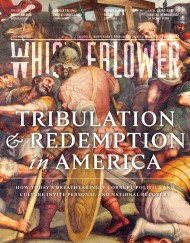


Editor’s note: The preceding is the lead-off story in the current issue of Whistleblower magazine, compiled and edited monthly by David Kupelian. If you would like to explore this subject more deeply, read “TRIBULATION AND REDEMPTION IN AMERICA: How today’s breathtakingly corrupt politics and culture invite personal and national recovery.” 


Source: The secret to saving America

In Touch Ministries; Charles Stanley – The Influence of Our Convictions


Daniel 1

Although our circles of influence vary in size, we all have the power to affect people at home, in church, or in the world. The fact is, our life is always on display, whether we’re aware of it or not.

Daniel didn’t set out to impress others, but his convictions had an effect on everyone who came in contact with him— from lowly servants to kings of empires. He clung to the truth of the Scriptures. When he was taken to Babylon’s royal court, he “made up his mind” not to defile himself with the king’s food (Dan. 1:8), because he knew that eating meat offered to idols was forbidden by the Mosaic law.

The important thing to notice is that Daniel’s convictions, not his environment, determined his behavior. One can always find some reason to give in, but being sure of our beliefs ahead of time can help us stand firm in obedience to God. Although the world may mock our values, people actually lose respect for us when we waffle and yield to temptation. What’s worse, our witness for Christ is damaged.

Conviction about God’s truth is like an anchor holding you steady in the waves of temptation and the winds of opinion. Don’t underestimate your obedience to the Lord—it can powerfully influence others.

Bible in One Year: Numbers 26-27


http://www.intouch.org/

Our Daily Bread — Desperate Solutions


Bible in a Year:

You did not . . . have regard for the One who planned it long ago.

Isaiah 22:11

Today’s Scripture & Insight: Isaiah 22:8–13

In the late sixteenth century, William of Orange intentionally flooded much of his nation’s land. The Dutch monarch resorted to such a drastic measure in an attempt to drive out the invading Spaniards. It didn’t work, and a vast swath of prime farmland was lost to the sea. “Desperate times call for desperate measures,” they say.

In Isaiah’s day, Jerusalem turned to desperate measures when the Assyrian army threatened them. Creating a water storage system to endure the siege, the people also tore down houses to shore up the city walls. Such tactics may have been prudent, but they neglected the most important step. “You built a reservoir between the two walls for the water of the Old Pool,” God said, “but you did not look to the One who made it, or have regard for the One who planned it long ago” (Isaiah 22:11).

We aren’t likely to encounter a literal army outside our homes today. “The batterings always come in commonplace ways and through commonplace people,” said Oswald Chambers. Yet, such “batterings” are genuine threats. Thankfully, they also bring with them God’s invitation to turn to Him first for what we need.

When life’s irritations and interruptions come, will we see them as opportunities to turn to God? Or will we seek our own desperate solutions?

By:  Tim Gustafson

Sign in to track your progress!

SIGN IN

Reflect & Pray

What ordinary threats do you face today? What do you need to face them?

Today, loving God, I turn to You first with all of my challenges, large and small.

Download Forty Days of Praying the Word at go.odb.org/40-days.


http://www.odb.org

Grace to You; John MacArthur – God’s Unfailing Love


“The one who does not love does not know God, for God is love” (1 John 4:8).

God’s love is unconditional and righteous.

We hear a lot today about love from books, magazines, TV, and movies. If you didn’t know any better, you’d think that our society is the most loving on earth. Much of the “love,” though, is nothing more than lust masquerading as love, or selfishness disguised as kindness. But today’s verse tells us that “God is love”; the character of God defines love. To clear up any confusion about love, we need only to look at who God is. And then, of course, we need to seek to love others as God loves us.

First, God’s love is unconditional and unrequited. “God demonstrates His own love toward us, in that while we were yet sinners, Christ died for us” (Rom. 5:8). God loved us when we were sinners, when we had no righteousness and we didn’t—and couldn’t—love Him back. God doesn’t love us because we deserve it or because we love Him, but because it’s His nature to love.

God’s love doesn’t mean He winks at sin, though. Just as earthly fathers discipline sinning children, “those whom the Lord loves He disciplines, and He scourges every son whom He receives” (Heb. 12:6). True love doesn’t indulge unrighteousness, it confronts it. This kind of tough love isn’t always fun, but it’s for the best: “All discipline for the moment seems not to be joyful, but sorrowful; yet to those who have been trained by it, afterwards it yields the peaceful fruit of righteousness” (v. 11).

We’ll study God’s love more in the next lesson, but now it’s only natural to examine how we ourselves are doing in demonstrating love. Is our love unconditional, or do we withhold love from those who hurt us? Do we love only those who love us back? Jesus says, “If you love those who love you, what credit is that to you? For even sinners love those who love them” (Luke 6:32). Loving those who love us is easy. Christ loved those at enmity with Him, and He expects us to love our enemies too.

Suggestions for Prayer

Thank God for His great love toward us and for its greatest manifestation in the Person of Christ.

For Further Study

First John has much to say about God’s love for us and our love for Him and others. Read the entire book, noting each instance of the word love.

From Strength for Today by John MacArthur Copyright © 1997. Used by permission of Crossway Books, a division of Good News Publishers, Wheaton, IL 60187, www.crossway.com.

Additional Resources

The complete MacArthur New Testament Commentary series


http://www.gty.org/

Joyce Meyer – Receive God’s Gifts


If you are willing and obedient, you shall eat the good of the land.

— Isaiah 1:19 (AMPC)

Adapted from the resource Starting Your Day Right – by Joyce Meyer

What good is it to have a glass of water if we won’t drink it? Our thirst won’t be quenched until we do. Jesus said, “If anyone is thirsty, let them come to Me and drink!” (see John 7:37). He said that if we have any kind of need, we are to ask Him for what we want, and then receive it. The good things of God are available to those who simply surrender themselves to Him and accept His blessings and mercy.

People often beg God for forgiveness but forget to say, “I receive that forgiveness right now; I believe I am forgiven.” Mercy is a free gift. You can’t earn it, you can’t deserve it, and you can’t buy it. The only thing you can do is receive it. Just humble yourself, accept God’s forgiveness, and move forward knowing that you’re made right with Him, and He loves you.

Prayer Starter: Father, thank You so much for making Your mercy, forgiveness and grace freely available to me. Please help me not to panic, but to remember and intentionally receive Your blessings today. Thank You, Jesus! In Jesus’ name, amen.


http://www.joycemeyer.org

Truth for Life; Alistair Begg – Dwelling in God’s Presence


Isaac settled at Beer-lahai-roi.

 Genesis 25:11

Hagar had once found deliverance there, and Ishmael had drunk from the water so graciously revealed by the God who lives and sees the sons of men; but that was a merely casual visit, such as unbelievers pay to the Lord in times of need, when it suits them. They cry to Him in trouble but forsake Him in prosperity. Isaac dwelt there and made the well of the living and all-seeing God his constant source of supply.

The usual tenor of a man’s life, the dwelling of his soul, is the true test of his state. Perhaps the providential visitation experienced by Hagar struck Isaac’s mind and led him to revere the place. Its mystical name endeared it to him; his frequent musings at its brim at evening made him familiar with the well. Meeting Rebecca there had made his spirit feel at home near the spot; but best of all, the fact that there he enjoyed fellowship with the living God had made him select that hallowed ground for his dwelling.

Let us learn to live in the presence of the living God; let us ask the Holy Spirit that this day, and every other day, we may sense, ”God, You see me.” May the Lord be as a well to us, delightful, comforting, unfailing, springing up unto eternal life. The bottle of the creature cracks and dries up, but the well of the Creator never fails; happy is he who dwells at the well and as a result has abundant and constant supplies at hand.

The Lord has been a sure helper to others: His name is Shaddai, God All-sufficient. Our hearts have often had most delightful communion with Him; through Him our soul has found her glorious Husband, the Lord Jesus; and in Him this day we live and move and have our being. Let us, then, dwell in closest fellowship with Him. Glorious Lord, constrain us, that we may never leave You but dwell by the well of the living God.


One-Year Bible Reading Plan


http://www.truthforlife.org

Kids4Truth Clubs Daily Devotional – God Deserves the First and Best


“And it came to pass, when Pharaoh would hardly let us go, that the LORD slew all the firstborn in the land of Egypt, both the firstborn of man, and the firstborn of beast: therefore I sacrifice to the LORD all that openeth the matrix, being males; but all the firstborn of my children I redeem.” (Exodus 13:15)

When the Pharaoh – the supreme ruler of Egypt – was oppressing the Jews and refusing to let them leave Egypt, God gave him many chances to change his mind. But eventually God was done giving second chances to Pharaoh, and He told the Hebrews put lamb’s blood on their doorposts. This act of faith would protect the Hebrews from the Lord’s judgment that would visit the land of Egypt. The Bible tells us that since the Egyptians did not have the blood on their doorposts the firstborn Egyptian sons and animals died. But right next door in Goshen where the Hebrews lived, all the Hebrew firstborns were safe because they believed God and obeyed His command.

After the Hebrews left Egypt (“the exodus”), God told them that from then on He wanted the first of everything. That meant that if they had a cow, the first calf would be sacrificed to the Lord. If they had a sheep, the first lamb belonged to God. This was to be a constant reminder throughout the years that God had gone to great lengths to rescue the Hebrews from Egyptian slavery. These “firsts” came to symbolize the best or most important, which God deserved.

Even though we no longer sacrifice calves or lambs, God still deserves the best that we have. Whether it is the talents He has given to us or some money that we earn, God deserves the first and the best. Every boy or girl, man or woman who has trusted in Jesus for rescue from sin owes his or her soul to the Lord. Because of the gratitude in our hearts for this amazing gift of salvation we should give God the first and the best!

Because God has rescued us, He deserves our best

My Response:
» Do I keep the first and best for myself and give God the “leftovers”?

Read in browser »


Home Page

Denison Forum – Miracles in Nepal and ice in Dallas: Trusting our challenges to the sovereignty of God


A Nepali Christian named Suroj Shakya faced a life-threatening decision. His mother, Gita, had been diagnosed with a painful, paralyzing spinal growth. Doctors advised a risky, potentially lethal surgery. Her husband, a Buddhist priest, refused to pay his Christian wife’s expenses. Doctors gave Suroj two days to decide whether to let his mother live in terrible pain or risk her death.

The nineteen-year-old was alone in Singapore and did not know what to do, so he called out to the Lord in prayer. Then he heard a knock at the door. It was a group of local church members who wanted to pray for his mother. After they prayed for twenty minutes, God gave Gita a miracle.

She stood up. Then she kicked out with her left foot, which she had not been able to move for years. She found that she could move her left arm as well. She began weeping and praising God.

Doctors didn’t believe Gita was the same woman. Her husband did not believe his wife had been healed without surgery until he saw that she had no scars. Then, along with his son, Suman, he became a Christian.

Suroj is now a forty-one-year-old church elder. He tells the Christian Post that such stories happen often in Nepal, which has one of the fastest-growing Christian populations in the world.

“An unstoppable force in the Muslim world” 

God’s omnipotence is not confined to Nepal. My friends, Tom and JoAnn Doyle, recently published Women Who Risk: Secret Agents for Jesus in the Muslim World, a gripping account of New Testament Christianity in one of the most difficult cultures to follow Jesus.

They note that “an astounding number of women from Muslim communities” are risking their lives to make Jesus their Lord. In turn, they write, “these new believers are transforming the Middle East. When Muslim women find Jesus and give their lives to him, they not only enjoy new freedom in Christ but also become an unstoppable force in the Muslim world.”

I encourage you to read their empowering book and then pray for those who are being empowered by Jesus to lead a genuine spiritual revolution in the Muslim world. What finite humans cannot do, our omnipotent Lord can.

I am witnessing another reminder of divine omnipotence and human frailty as I write today’s Daily Article. In Dallas, we are dealing with the worst winter weather in decades. Texas is the leading energy-producing state in the nation, but we are struggling with power. Janet and I had four hours of electricity at our house on Monday and three on Tuesday. We don’t know what to expect today.


“My power is made perfect in weakness” 

Human frailty can be deeply frustrating.

Our local news is covering the anger many feel toward our energy providers who are not providing energy in this weather crisis. Evangelical leaders are continuing to respond with anger and disappointment to reports of Ravi Zacharias‘ horrific sexual abuses.

Each day’s news reminds us that “all have sinned and fall short of the glory of God” (Romans 3:23). Paul spoke for us all when he admitted, “Nothing good dwells in me, that is, in my flesh. For I have the desire to do what is right, but not the ability to carry it out” (Romans 7:18).

But here’s the good news: God can redeem our frailty by using it to lead us to depend on his omnipotence.

Paul told of the time when “a thorn was given me in the flesh” (2 Corinthians 12:7). Theologians have long speculated on the nature of this “thorn,” suggesting that the apostle suffered from migraine headaches, epilepsy, or an eye disease. Paul responded as we would: “Three times I pleaded with the Lord about this, that it should leave me” (v. 8).

Here is how God responded: “He said to me, ‘My grace is sufficient for you, for my power is made perfect in weakness’” (v. 9a). Through this experience the apostle learned, “Therefore I will boast all the more gladly of my weaknesses, so that the power of Christ may rest upon me. For the sake of Christ, then, I am content with weaknesses, insults, hardships, persecutions, and calamities. For when I am weak, then I am strong” (vv. 9b–10).

The power to finish well 

Where we begin the race is not nearly as important as where we finish it. Michael McDowell started last Sunday’s Daytona 500 in seventeenth place, but when the race was over, he had won. It was his first career NASCAR Cup Series win in his fourteenth season.

By contrast, the latest SpaceX test flight went well until the rocket crashed when it returned to earth. The person narrating the flight said, “We’ve just got to work on that landing a little bit.”

To finish your race well, run in the power of Jesus. Admit that you cannot defeat sin and Satan in your strength. If Ravi Zacharias could fall, so can we. If Paul had to say, “When I am weak, I am strong,” so do we. If the greatest missionary, evangelist, and theologian in Christian history needed the power of Jesus “made perfect in weakness,” so do we.

Now name your “thorn in the flesh,” the temptation or trial you are facing today. Give it to Jesus. Ask him to heal it or strengthen you to bear it. Pray for him to redeem it by drawing you into greater dependence on your Lord.

Seek God’s strength for finishing well, and you will finish well.


Eric Liddell’s “full surrender” 

This Sunday marks the seventy-sixth anniversary of the death of Eric Liddell in a Japanese prison camp in China. Liddell was a champion runner who set a world record in the four hundred meters at the 1924 Olympics. His refusal to run on Sunday drew global attention to his faith and became the subject of the Academy Award-winning film, Chariots of Fire.

After the Olympics, Liddell became a missionary in China, where he met and married his wife, Florence. After the Japanese invaded China, he sent his family to safety in Canada, but he remained behind to minister. The Japanese incarcerated him in a concentration camp, where he worked selflessly as a teacher, prisoner representative, and volunteer carrying loads for weaker prisoners. He developed headaches from a massive brain tumor, but he never complained.

Just before he died, Eric Liddell turned to a friend and said, “It’s full surrender.” Then he drifted into a coma from which he never recovered.

He finished well. If we will do what he did, so will we.

What do you need to surrender to Jesus today?


Denison Forum

Upwords; Max Lucado –No Fear of Falling


Listen to Today’s Devotion

Your Father has no intention of letting you fall. You can’t see him, but he is present. He is “able to keep you from falling and to present you before his glory without fault and with unspeakable joy” (Jude 24). Drink deeply from this truth. Does God want you living in fear? No! Just the opposite. “The Spirit we received,” according to Romans 8:15-16 “does not make us slaves again to fear; it makes us children of God. With that Spirit we cry out, ‘Father.’ And the Spirit himself joins with our spirits to say we are God’s children.”

What an intriguing statement. Deep within you God’s Spirit confirms with your spirit that you belong to him. Beneath the vitals of the heart, God’s Spirit whispers, “You’re mine. I bought you, and I sealed you, and no one can take you.” Isn’t that great news!

Read more Begin Again


For more inspirational messages please visit Max Lucado.

In Touch Ministries; Charles Stanley – The Fruitful Giver


2 Corinthians 9:6-15

Have you ever had the chance to visit Israel? There is a stark contrast between the Jordan River and the Dead Sea. The banks of the Jordan are surrounded by trees and greenery, but very little grows in the vicinity of the Dead Sea because there’s no outlet—water can only evaporate. This process leaves salt minerals behind and makes the water so salty that it’s unfit to nourish the land, which is dry and barren.

Christians are to be like rivers, not stagnant lakes. The blessings God gives us are to be shared instead of hoarded. This applies to every area of life, including our financial resources. As God’s provision flows in to bless us, He wants us to extend the blessing to those who are in need. The result is a fruitful life centered on glorifying the Lord and building His kingdom.

We never have to fear that we will run out of resources, because the Lord promises to take care of us (Matt. 6:31-33). Believers can trust Him to provide both the means to live and enough extra so we can be generous with others. Best of all, God will increase our righteousness and use us to supply the needs of fellow believers, who will thank and glorify God because of our obedience (2 Corinthians 9:10-13).

Bible in One Year: Numbers 23-25


http://www.intouch.org/

Our Daily Bread — Thinking Differently


Bible in a Year:

Do not conform to the pattern of this world.

Romans 12:2


Today’s Scripture & Insight: Romans 12:1–3

During college, I spent a good chunk of a summer in Venezuela. The food was astounding, the people delightful, the weather and hospitality beautiful. Within the first day or two, however, I recognized that my views on time management weren’t shared by my new friends. If we planned to have lunch at noon, this meant anywhere between 12:00 and 1:00 p.m. The same for meetings or travel: timeframes were approximations without rigid punctuality. I learned that my idea of “being on time” was far more culturally formed than I’d realized.

All of us are shaped by the cultural values that surround us, usually without us ever noticing. Paul calls this cultural force the “world” (Romans 12:2). Here, “world” doesn’t mean the physical universe, but rather refers to the ways of thinking pervading our existence. It refers to the unquestioned assumptions and guiding ideals handed to us simply because we live in a particular place and time.

Paul warns us to be vigilant to “not conform to the pattern of this world.” Instead, we must be “transformed by the renewing of [our] mind” (v. 2). Rather than passively taking on the ways of thinking and believing that engulf us, we’re called to actively pursue God’s way of thinking and to learn how to understand His “good, pleasing and perfect will” (v. 2). May we learn to follow God rather than every other voice.

By:  Winn Collier

Sign in to track your progress!

SIGN IN

Reflect & Pray

How would you describe the values and assumptions that surround you? What would it look like for you to not conform to the world’s ways and to instead follow Jesus’ ways?

God, I don’t even recognize my assumptions and values most of the time. Help me to live out Your truth and Your mind in it all.


http://www.odb.org

Grace to You; John MacArthur – The Joy of Pleasing God


“The blameless in their walk are [God’s] delight” (Prov. 11:20).

Your love for God brings Him joy.

Our focus so far this month has been on the joy we experience in knowing and serving Christ. Before we turn our attention to the theme of godliness, I want you to consider two additional aspects of joy: the joy of pleasing God, and how to lose your joy. Pleasing God is our topic for today.

Perhaps you haven’t given much thought to how you can bring joy to God, but Scripture mentions several ways. Luke 15:7, for example, says, “There will be more joy in heaven over one sinner who repents, than over ninety-nine righteous persons who need no repentance.” Verse 10 adds, “There is joy in the presence of the angels of God over one sinner who repents.” Repentance brings joy to God.

Faith is another source of joy for God. Hebrews 11:6 says, “Without faith it is impossible to please Him.” That’s the negative side of a positive principle: when you trust God, He is pleased.

In addition to repentance and faith, prayer also brings God joy. Proverbs 15:8 says, “The sacrifice of the wicked is an abomination to the Lord, but the prayer of the upright is His delight.”

Righteous living is another source of joy to God, as David acknowledges in 1 Chronicles 29:17: “I know, O my God, that Thou triest the heart and delightest in uprightness.” Solomon added that those who walk blamelessly are God’s delight (Prov. 11:20).

Repentance, faith, prayer, and righteous living all please God because they are expressions of love. That’s the over-arching principle. Whenever you express your love to Him—whether by words of praise or acts of obedience—you bring Him joy.

Doesn’t it thrill you to know that the God of the universe delights in you? It should! Let that realization motivate you to find as many ways as possible to bring Him joy today.

Suggestions for Prayer

  • Thank God for the privilege of bringing Him joy.
  • Thank Him for His grace, which enables you to love Him and to express your love in repentance, faith, prayer, and righteous living (cf. 1 John 4:19).

For Further Study

Read 1 Kings 3:3-15.

  • What did Solomon request of God?
  • What was God’s response?

Additional Resources


http://www.gty.org/

Joyce Meyer – Doing the Word


But be doers of the Word [obey the message], and not merely listeners to it, betraying yourselves [into deception by reasoning contrary to the Truth].

— James 1:22 (AMPC)

Adapted from the resource Battlefield of the Mind – by Joyce Meyer

As a Christian, for a long time I didn’t understand that believers could know what God wanted them to do and then deliberately say no. Now, I’m not talking about those who completely turn their backs on Jesus and want nothing to do with salvation. I’m talking about those who disobey God in the seemingly little things and don’t seem to be concerned about it at all.

In verses 23 and 24, James goes on to say that if we only listen to the Word but don’t obey it, it’s like looking at our reflection in a mirror and then going away and forgetting what we saw. But a doer of the Word, he says, is like one who looks carefully into the faultless law, the [law] of liberty, and is faithful to it and perseveres in looking into it, being not a heedless listener who forgets but an active doer [who obeys], he shall be blessed in his doing (his life of obedience) (See James 1:25 AMPC).

Whenever Christians are faced with God’s Word, and it calls them to action but they refuse to obey, their own human reasoning is often the cause. They’ve deceived themselves into believing something other than the truth. It’s as if they think they are smarter than God.

I’ve met people who seem to think that God always wants them to feel good, and if something happens that makes them feel bad, they don’t believe it’s God’s will for them. Or they dismiss what they read in the Bible by saying, “That doesn’t make sense.”

One woman, referring to Paul’s instruction to “be unceasing in prayer” (1 Thessalonians 5:17), said that verse kept coming to her every time she prayed.

“What do you think that means?” I asked her.

“Oh, I think it means that day in and day out, we are to pray when we feel a need or when we want something.”

Her words shocked me. “What about fellowship with the Lord?” I asked. “Isn’t that a good reason? Or maybe God just wants you to spend time reading His Word and praying about what you read.”

“I have too many things to do,” she said. “That’s fine for people who like to sit and read and pray for hours every day, but that’s not the way for me.”

In our brief conversation, I learned that her decisions about obeying God’s Word depended on whether or not it was convenient for her lifestyle. When she read things in the Bible that didn’t fit with the way she lived, she explained it to herself in such a way that she convinced herself God didn’t expect her to do that.

In contrast, I remember a very dignified woman who had been a member of a traditional church most of her life. She often spoke of the noise and confusion in charismatic churches (although she’d never been to one). Then she visited one of the services where I spoke, and her heart was changed. “I couldn’t believe that God would ask me to do something like clap my hands or sing loudly or even shout. But when I saw the joy on the faces of those in the congregation and heard you quote the Bible verse that commands us to clap our hands and shout, what else could I do? That was God speaking to me.”

She had exactly the right attitude. She didn’t try to reason it out, or wonder why God had told her to take that kind of action. She believed His Word and simply obeyed, and as a result, she had a new kind of joy that she would never have experienced otherwise.

When the Bible speaks about obeying the Lord, it’s not a suggestion. His Word doesn’t ask, “Would you like to obey?” God commands us to take action by being a doer of His Word, and when we are obedient, He’s promised that we’ll be blessed.

Prayer Starter: Father, thank You for the instructions in Your Word. I may not always like what I read, and sometimes it’s difficult to follow You without hesitating, so please help me to trust You with what I don’t understand, and to stay obedient no matter what. Thank You for the wisdom to know how to apply Your Word to my life, for the strength to carry it out, and for the ability to honor You in every moment. In Jesus’ name, amen.


http://www.joycemeyer.org

Truth for Life; Alistair Begg – The College of Contentment


For I have learned in whatever situation I am to be content.

 Philippians 4:11

These words show us that contentment is not a natural propensity of man. Weeds grow easily. Covetousness, discontent, and murmuring are as natural to man as thorns are to the soil. We do not need to sow thistles and brambles; they come up naturally enough, because they are indigenous to earth. And so we do not need to teach men to complain; they complain fast enough without any education.

But the precious things of the earth must be cultivated. In order to have wheat, we must plow and sow; if we want flowers, there must be the garden, and all the gardener’s care.

Now, contentment is one of the flowers of heaven, and if we would have it, it must be cultivated; it will not grow in us by nature. It is the new nature alone that can produce it, and even then we must be specially careful and watchful that we maintain and cultivate the grace that God has sown in us. Paul says, “I have learned . . . to be content,” as much as to say he did not know how at one time. It cost him some pains to discover that great truth. No doubt he sometimes thought he had learned, and then broke down. And when at last he had attained to it and could say, “I have learned in whatsoever situation I am to be content,” he was an old, gray-headed man, upon the borders of the grave–a poor prisoner shut up in Nero’s dungeon at Rome.

We might well be willing to endure Paul’s infirmities and share the cold dungeon with him, if we also might by some means attain to his good stature. Do not indulge the notion that you can be contented with learning or learn without discipline. It is not a power that may be exercised naturally but a science to be acquired gradually. We know this from experience. Christian, hush that murmur, even though it is natural, and continue as a diligent pupil in the College of Contentment.


One-Year Bible Reading Plan


http://www.truthforlife.org

Kids4Truth Clubs Daily Devotional – God Heals Broken Hearts


“He healeth the broken in heart, and bindeth up their wounds.” (Psalm 147:3)

What is a “broken heart”? Have you ever had one? We use the expression when we talk about the deepest kind of grief a heart can feel. Broken hearts are often caused by a hurtful change in a relationship with another person. If someone you love dies, or if you have to say good-bye to a friend, or if someone close to you does something to hurt you deeply, you might say that you have a broken heart. But those are just the surface causes for a broken heart. Do you know what really causes broken hearts? All of the grief, death, and sadness we experience came into our world as the result of human sin.

Jesus’ heart was broken once too. Psalm 69:20 looks ahead to the time when Jesus died on the cross for our sins. “Reproach hath broken my heart; and I am full of heaviness.” Jesus’ heart was not broken because of His own sin; He never sinned. It was broken because of ours. All the sins of the whole world were laid on Him when He suffered and died. During those hours on the cross, He endured the awful wrath of God the Father in our place. The precious relationship Jesus had with His Father, closer and more satisfying than anything we could know, was broken while He bore our sin.

Does your God understand what your broken heart feels like? He not only understands, but He also knows how to heal it. Through Jesus Christ’s suffering and death on the cross, He made a way for you to come directly to Him with your broken heart. Your grief may be the result of your own sin or someone else’s. Or it may be the result of sin’s effects on our fallen world. Whatever the cause, God promises to gently care for your hurting heart.

The God whose heart was broken for sin will heal your broken heart.

My Response:
» Have I brought my broken heart to God for healing?

The post God Heals Broken Hearts appeared first on EquipU Online Library.

Read in browser »


Home Page

Denison Forum – Tim Keller’s cancer update: Hopeful lessons in hard places


Bestselling author and pastor Tim Keller recently shared an update on his battle with pancreatic cancer. As a result of the prayers of many and his chemotherapy treatments, he has seen a “significant decrease in [the] size and number of tumors.” He stated, “I still have cancer, but this is excellent news,” and added, “What the future holds I do not know, but we will continue to trust his plan and allow him to shepherd us along his chosen path.”

Keller especially learned to trust God in hard places when he was battling thyroid cancer a few years ago. He explained, “It was both an intellectual and emotional experience: You’re facing death, you’re not sure you’re going to get over the cancer. And the rigorous intellectual process of going through all the alternative explanations for how the Christian Church started. Except the resurrection, none of them are even tenable. It was quite an experience.”

That experience inspired his bestseller, The Reason for God: Belief in an Age of Skepticism, enabling millions of people to profit from his pain and make his hope their own.

Beware “contempt for misfortune” 

We can learn from the pain of others, or we can ignore it to our loss.

Following former President Trump’s impeachment by the House and acquittal by the Senate, 58 percent of Americans say he should have been convicted. This number reflects the sharp partisan divide in our nation: 88 percent of Democrats agreed, as did only 14 percent of Republicans.

People in other countries probably watched news of the proceedings with the same detachment Americans watch the political travails of other countries. Brexit, for instance, was of passing interest to me but compellingly urgent to the British. By contrast, the below-zero temperatures we are battling in Texas are undoubtedly more urgent for me than for those in the UK.

It is human nature to care less about problems that don’t affect us than those that do. In reading through the book of Job, I recently found this remarkable observation: “In the thought of one who is at ease there is contempt for misfortune” (Job 12:5a). This is true of us all.


A lesson for every church and ministry 

However, if we fail to learn from the challenges of others, we are far more likely to fail when we meet similar challenges ourselves. The verse we just cited continues to warn us that misfortune “is ready for those whose feet slip” (v. 5b). No exceptions or qualifications are noted.

This fact is especially relevant in light of the unfolding scandal involving Ravi Zacharias and the ministry he founded. Yesterday, we identified three ways we should respond personally to disclosures that the world-famous apologist engaged in horrific acts of sexual abuse.

Today, let’s focus on a key lesson we need to learn for the sake of our churches, ministries, and cultural influence: we must respond immediately and objectively to claims of impropriety. 

David French’s article on Ravi Zacharias International Ministries (RZIM) and its response to allegations against their founder is heartbreaking. It describes a pattern of denial on the part of the board and other ministry leaders. At times, those who sought to investigate charges against Zacharias were reportedly ostracized and marginalized.

Tragically, such a response is unsurprising. Zacharias had built an international reputation for brilliance and integrity. Those who felt they knew him best deceived themselves into believing that they knew him better than those who brought allegations against him. We have seen the same pattern repeated in churches and ministries across denominational lines and around the world.

How Jesus taught us to handle conflict 

This is why Jesus’ four-stage prescription for resolving conflict is so vital.

First, “If your brother sins against you, go and tell him his fault, between you and him alone” (Matthew 18:15). We are not permitted to speak about people before we speak to them. When we become aware of an issue, we are to go directly to the person. (In instances of abuse, a person may not feel safe confronting their abuser. If you have suffered abuse, please report it to a counselor or other trusted professional.)

Second, “If he does not listen, take one or two others along with you, that every charge may be established by the evidence of two or three witnesses” (v. 16). This step requires investigation by objective parties and must be thorough.

Third, “If he refuses to listen to them, tell it to the church” (v. 17a). This step requires public exposure of the issue and a call for repentance and resolution.

Fourth, “If he refuses to listen even to the church, let him be to you as a Gentile and a tax collector” (v. 17b). This step requires excluding the person from the church or ministry.


Practical questions we must answer now 

Let’s apply Jesus’ prescription by asking some practical questions:

  • Does your church or ministry have a system whereby employees and others can safely report allegations of abuse or other improprieties?
  • Are the electronic devices of your leaders and employees open to screening at any time? (This was a major problem with RZIM.) I recommend Covenant Eyesfor technology accountability; it is important that your church or ministry utilizes a system for transparency.
  • What commitments to personal integrity do you require of your leaders? For example, are they permitted to be alone with a person who is not their spouse or family? Are their calendars accountable to others?
  • Is someone in your church or ministry holding leaders accountable for personal integrity? As the great Howard Hendricks warned, sin thrives in isolation. Mark Turman, our senior fellow for leadership, recommends giving the leaders of your church permission to interview the pastor’s spouse two to three times a year regarding the pastor’s health. These and other regular steps are vital for leaders and those they lead.
  • Are your leaders accountable and transparent with regard to their use of ministry funds? Travel? Personal finances?
  • Are your church or ministry members praying regularly for the spiritual health of their leaders?

I often note that God redeems all he allows. One way he wants to redeem the Ravi Zacharias scandal is by using it to lead churches and ministries around the world to greater accountability and integrity.

But the time to act is now. Once a scandal erupts, it will be too late to prevent it.

Let’s close with this declaration by the psalmist to the king of his day: “You have loved righteousness and hated wickedness. Therefore God, your God, has anointed you with the oil of gladness beyond your companions” (Psalm 45:7).

May Christians everywhere be able to say the same of their leaders, to the glory of God.


Denison Forum

Upwords; Max Lucado –The Seal of the Spirit


Listen to Today’s Devotion

God never promises the absence of distress on your new-beginning journey, but he does promise the assuring presence of his Holy Spirit. The Holy Spirit invisibly, yet indispensably, serves as a rudder for the ship of your soul, keeping you afloat and on track. This is no solo journey that you’re on. The Spirit seals you. To protect a letter, you seal the envelope. Sealing declares ownership and secures contents.


When you accepted Christ, God sealed you with the Spirit. Ephesians 1:13 says, “When you believed, you were marked in him with a seal, the promised Holy Spirit.” When hell’s interlopers come seeking you to snatch you from God, the seal turns them away. He bought you, he owns you, he protects you. God paid too high a price to leave you unguarded. You have the promise and presence of the Holy Spirit.


http://www.maxlucado.com

A Layman’s Guide to Penumbral Reasoning – American Thinker

.


A Layman’s Guide to Penumbral Reasoning


For over 50 years, constitutional scholars, and Supreme Court justices in particular, have used “penumbral reasoning” as one means to explain rulings expanding the Constitution of the United States.  Law schools describe it as “reasoning by interpolation.”  To put that in graphic terms, if you’re drawing a graph on paper, reasoning by interpolation allows you to extend the line off of the paper.  I’m not a constitutional scholar, but I don’t think that’s necessary to see that this can lead to a very dark place.

In legal terms, when a justice says they’re using penumbral reasoning, they’re admitting that the next thing they say is not actually written in the Constitution.  They’re using it as an interpretive instrument to claim that if the Founders were alive today, “They would put what I’m about to rule in the Constitution.”

Penumbras have been debated in legal papers for many years.  But in 1965, Justice William O. Douglas used penumbral reasoning in the majority opinion of Griswold v. Connecticut to declare that a right to privacy exists in the Constitution — even though it’s not written anywhere.  He then used this newly discovered “right” to find that a ban on contraceptives was therefore unconstitutional.  A right to privacy seems like a logical inclusion in the constitution.  But rather than five justices declaring it a right, why didn’t we add it to the Constitution with an amendment?  It couldn’t have been that difficult to get ¾ of the population to agree that they wanted privacy.  With an amendment, we could have avoided all the resulting controversy.

Instead, justices have been exploring the limits of penumbral logic ever since.  That’s how they “discovered” that a right to abortion is included in the Constitution.  They’ve become the test pilots, taking us for a ride while they “push the envelope” — only we don’t get a parachute.

To understand it better, let’s take a look at what a penumbra is.  The dictionary definition of a penumbra is the lighter area around the edge of a shadow.  When a legal scholar uses it, they’re saying that they see something emanating from the shadows of the Constitution — it’s there, even though it’s not written.  It’s a natural outgrowth of, or inherent in, something that is written.  Here’s the way I understand it: If you have a few drinks, squint your eyes, and look sideways, you can kinda sorta imagine what the Founders would write, even though they didn’t write it.  It’s perfectly straightforward.  The justices are saying that they can read the minds of political giants that have been dead for hundreds of years.  How humble of them.

The Supreme Court decided that the Supreme Court can declare that the Constitution means something it doesn’t say — without concurrence of the citizenry.  Isn’t that a bit like a king granting himself unlimited power over the serfs, and then saying it’s legal because the king gave himself the authority to write the rules?  What could possibly go wrong?

Maybe we can understand what could go wrong by looking at the application of penumbral reasoning to other legal venues.  How do you think a penumbral argument would go in a civil case?  Let me illustrate: You hire a builder to construct a new home for your family.  You enter into a contract with the builder to construct a single-family dwelling with three bedrooms.  But, by the time the home is completed, you’ve added another baby to the family.  You inform the builder that he’s in breach of the contract because you now need a four-bedroom home.  You file a lawsuit.  In court, you argue that the contract should have evolved with changing circumstances.  The requirement for a four-bedroom home was always there — as a penumbra, emanating from the requirement for a single-family dwelling.  How do you think this lawsuit will turn out?

Penumbral reasoning is absurd for contract law, and it’s also absurd for constitutional law.  If the words don’t have concrete meanings, the documents they are written on become meaningless.  Just because an argument originated with a scholar doesn’t make it any less asinine.  It just proves that Ivy League credentials do not bestow wisdom.

Let’s look at what this type of interpretation has led to. It started innocuously enough.  The justices used it to grant us a constitutional right to privacy.  That doesn’t seem like a bad thing.  Who could argue with that?  However, it did put us on the proverbial “slippery slope.”  Now that the Supreme Court has granted itself the authority to “read between the lines” of the Constitution, they’ve started finding other stuff.  Now they’ve discovered that we have a constitutional right to contraceptionabortion, and same-sex marriage.  I’m not arguing that any of these things are good or bad.  I’m saying that they should have been debated by the citizenry, not nine Supreme Court justices.

What about the argument that the Constitution needs to evolve with the changing needs of our society?  Of course, it does.  But the use of penumbral arguments is an arrogation of power from the people to robed overlords.  It’s also a lazy man’s method of achieving constitutional changes without selling them to his fellow citizens.

The correct way to evolve the Constitution is through the amendment process.  Yes, it’s difficult and time consuming — and that’s a feature, not a bug.  By requiring broad buy-in, public debate is driven and consensus is achieved — or not.  With consensus, future controversy is minimized.

Is it possible that Roe v. Wade was not an example of the Constitution evolving with society, but rather of the Supreme Court dragging society towards their worldview?  How different would our debates about abortion be if ¾ of the citizenry had agreed on the legality of the practice in 1973?  If you answer, “But we would have never gotten it passed,” then you’ve just made my point.


By John Green


John Green is a political refugee from Minnesota, now residing in Star, Idaho. He is a retired engineer with over 40 years of experience in the areas of product development, quality assurance, organizational development, and corporate strategic planning. He can be reached at greenjeg@gmail.com.


Source: A Layman’s Guide to Penumbral Reasoning – American Thinker

In Touch Ministries; Charles Stanley – God’s Guidance for Finances


Malachi 3:7-12

When God created the heavens and earth, He carried out His plan with purpose. Nothing was haphazard, late, or uncertain. The same could be said regarding His plans for each of His children. Every aspect of our life, including our finances, is under His watchful eye and providential care. But despite His perfect record of faithfulness, money is one of the most difficult things for us to entrust to Him. We foolishly think that we can do a better job of handling our money than the omniscient, all-powerful God.

In Malachi’s time, the Jews had stopped trusting the Lord. One indication of the people’s distrust was their failure to give the tithes required by biblical law. God accused them of robbing Him, and they were suffering financial hardship as a result.

Sometimes Christians find that believing the Lord for salvation is easy, and yet they doubt He’ll keep His promise when it comes to money. Our willingness to give God the first portion of our income or resources is a test of our trust in Him. And the truth is, we can fully rely on Him because He promises to meet all of our needs (Phil. 4:19). Take a step of obedience today, and discover how faithful God is.

Bible in One Year: Numbers 20-22


http://www.intouch.org/