Our Daily Bread – Wedded to Love


Love never fails. 1 Corinthians 13:8

Today’s Scripture

1 Corinthians 13:4-13

Listen to Today’s Devotional

Apple LinkSpotify Link

Today’s Insights

In 1 Corinthians 13, the well-known chapter of love so often recited at weddings, Paul defines love not as an emotion but as an action (vv. 4-8). These verses call to mind the fruit of the Spirit listed in Galatians 5:22-23, also written by Paul. We can’t love as the apostle calls us to love without a relationship with Jesus and the work of the Spirit in our lives. This is the process of sanctification, whereby we grow to become more like God. Paul compares it to becoming an adult and leaving our childish ways behind (1 Corinthians 13:11-12). Just as we need to do today, the Corinthian church needed to learn to love as Christ called them to love and to use their gifts to serve others (see ch. 12). Spiritual gifts are temporary (13:8-12) and will disappear (v. 10), but “faith, hope and love” will remain and “the greatest of these is love” (v. 13).

Today’s Devotional

At Meredith’s wedding, her mother read a beautiful Scripture from 1 Corinthians. Often called “the love chapter” of the Bible, the thirteenth chapter sounded perfect for the occasion. “Love is patient, love is kind. It does not envy, it does not boast, it is not proud” (v. 4). Listening, I wondered if modern brides and grooms knew what prompted the apostle’s stirring words. Paul wasn’t writing a love poem. The apostle penned a plea to a divided church in an effort to heal its raging divisions.

Simply put, the church at Corinth “was a mess,” says scholar Douglas A. Campbell. Seething problems included incest, prostitution, and rivalry among leaders. Lawsuits between members weren’t uncommon. Worship was often chaotic—with those speaking in tongues competing to be heard first, and others prophesying to look impressive (see 1 Corinthians 14).

Underlying this chaos, says Campbell, was “a basic failure in relating to one another in love.” To show the more excellent way, Paul preached love because “love never fails. But where there are prophecies, they will cease; where there are tongues, they will be stilled; where there is knowledge, it will pass away” (13:8).

Paul’s loving reminders can certainly encourage a wedding party. May they also inspire all of us to live out love and kindness too.

Reflect & Pray

How do you show kindness and love in your relationships? How do you show love in the body of Christ?


Your love never fails, loving God, so please guide me in relating to all with the excellence of love.


What is love? Discover how love serves as the foundation of all spiritual gifts. 


http://www.odb.org

Joyce Meyer – Healing in His Wings

But unto you who revere and worshipfully fear My name shall the Sun of Righteousness arise with healing in His wings and His beams, and you shall go forth and gambol, like calves [released] from the stall and leap for joy.

Malachi 4:2 (AMPC)

Around our world, horrible crimes and unspeakable acts happen every day to women and children who are powerless to stop them. Every act affects the life of a precious person, created in God’s image. Many women are hurt, wounded little girls trapped inside adult bodies, afraid to come out for fear of being hurt more.

I understand the feelings of these women. I was sexually abused by my father for many years. I also suffered abuse at the hands of other men throughout the first 25 years of my life. I developed a hardened attitude toward all men and adopted a harsh, hard manner.

But I want everyone to know that, through God’s Word and the help of the Holy Spirit, I was healed in my spirit, emotions, mind, will, and personality. It was a process that unfolded over several years, and I have enough firsthand experience to highly recommend God’s ways of restoration and healing rather than the world’s ways. It is much better to let God heal you than to spend your life being bitter about the past.

Prayer of the Day: Lord, I rejoice today that You did not leave me to heal myself. I worship You alone, and I receive from You all the healing and grace that I need for this day, amen.


http://www.joycemeyer.org

Denison Forum – The ACTS 17 Collective is introducing tech leaders to Jesus


San Francisco has long been one of America’s most irreligious cities, with Silicon Valley at the center of that resistance to faith. For most of the last decade, roughly half of tech workers identified as either atheist or agnostic. Yet, that resistance to God—and the gospel in particular—has begun to soften in recent years.

Christians have always been present within the tech industry but, for a time, most felt the need to keep their faith private lest it make them an oddity at best and a pariah at worst. Or at least that was the perception. Believers like Trae and Michelle Stephens felt a greater degree of comfort living out their faith than most, though even they recall often feeling like the “token Christians in the room” when among their peers.

That feeling is part of what led the couple to help start the ACTS 17 Collective last year.

ACTS 17 is both an acronym—Acknowledging Christ in Technology and Society—as well as a callout to the passage in Acts where Paul shares the gospel at the Areopagus. Their hope is to take a similar approach in reaching out to the intelligentsia of their day, and God has been using them to do just that.

 “The powerful need Jesus just as much”

As Michelle Stephens notes, the group’s mission to target the wealthy and influential within the tech industry may seem like “a somewhat counterintuitive Christian calling” to many. In an interview with Emma Goldberg of the New York Times, Stephens describes how “We are always taught as Christians to serve the meek, the lowly, the marginalized . . . I think we’ve realized that, if anything, the rich, the wealthy, the powerful need Jesus just as much.”

To that end, the Collective says they are “redefining success for those who define the culture.” And their approach matches that ambition well.

Through events centered on high-profile, Christian speakers who appeal to the tech community—even if some are controversial—the group has built an environment that often appeals more to those who are looking to network with the elite of their industry than to those who are looking to know more about Jesus. And the Stephens are fine with that:

“After an ACTS 17 event, all we would like is for folks in attendance to take a next step in their faith journey. Maybe they’d never heard of Jesus, and a next step is reading the Bible.”

They understand that, for many, the very notion that some of the industry leaders they respect could be Christians is a novel concept. As such, expecting them to jump right into attending church and declaring Jesus to be Lord is relatively unrealistic. So, instead, they meet people where they are, offering something of value in exchange for the chance to tell them about Christ.

It’s an exchange that many in the tech world seem happy to make, and the early results have been promising.

In addition to events in Silicon Valley, seventeen other cities in the US have shown interest in hosting the group. Yet they have also engaged with nations beyond America’s borders, holding two events last November in Abu Dhabi and Dubai about how the Christian faith can impact career planning, as well as how it impacts their views on AI and national defense.

However, regardless of the nature of the topic or the location in which it’s given, the basic approach of using their expertise and gifting to earn the right to share the gospel remains the same. And that approach demonstrates an important lesson for each of us today.

Satan is fine with us making the world a better place

People come to Jesus for a variety of reasons. For some, he’s a great moral teacher who espouses the kind of ethic they want to see in their own lives and the culture at large. Jordan Peterson has made headlines in recent years for largely adopting this approach to the Bible, yet he seems to stop short of seeing Christ’s sacrificial death as the literal path to salvation.

Those who see Christ’s message to the poor and needy as the central pillar of the gospel make a similar mistake. While social justice movements have done a great deal to point out our society’s longstanding sins and call believers to action, it can be tempting for that message to become more prominent than our innate need for Jesus to save us. Yes, we are called to pursue justice and help those in need, but in Christ’s name and power rather than our own.

As Skye Jethani described on a recent Denison Forum Podcast, the ethical principles and social actions to which Christ calls us do not have to be either/or concepts.

Jesus did come to set a moral example for us to follow and he did teach us to care for the poor and the needy. But our first priority needs to be seeking the kingdom of God and his righteousness, as it’s only then that we will have our priorities properly aligned to fulfill the rest of his calling for our lives (Matthew 6:33).

As Christians, it can be easy to get our priorities out of line, particularly when there’s a cause we care deeply about. But while people can come to Jesus from various places and with various goals in mind, our presentation of the gospel must center on Christ above everything else.

Social justice, personal advancement, or becoming a better person can be helpful and worthy steps along that path, but we can’t stop there if we want to get to salvation. At the end of the day, a gospel that doesn’t end with the call to recognize Jesus as Lord is not the gospel—no matter how similar it may be to aspects of the message he taught.

Satan is fine with us making the world a better place, and even doing so in the name of Christ, so long as we stop short of recognizing Jesus as Lord.

So how well are your priorities aligned today? When you think about Christ’s call for your life, is knowing him as your savior and Lord at the top of your list?

Helping others to know Jesus as Lord is far more difficult if he isn’t your Lord first. Make sure he is today.

Quote of the day:

“What comes into our minds when we think about God is the most important thing about us.” — A.W. Tozer

Our latest website articles:


Denison Forum

Days of Praise – Lifelong Love


by Henry M. Morris, Ph.D.

“Live joyfully with the wife whom thou lovest all the days of the life of thy vanity, which he hath given thee under the sun, all the days of thy vanity: for that is thy portion in this life, and in thy labour which thou takest under the sun.” (Ecclesiastes 9:9)

The above wise advice was written by King Solomon in his later years after many years of searching for happiness through intellectualism, worldly pleasures, riches, and power and finding that all of it was mere “vanity and vexation of spirit” (Ecclesiastes 1:14).

Solomon had 700 wives, all of whom were “princesses” and thus were marriages at least partially for purposes of prestige and politics. But various references in his book of Proverbs suggest that these were more a problem than a help. It is interesting that the Bible only records one son, Rehoboam, and two daughters.

That one son was born a year before Solomon became king, while he was still very young, and Naamah (Rehoboam’s mother) was thus very likely the only wife he really loved (compare 1 Kings 11:42; 14:21), as described so beautifully in his Song of Solomon, which Solomon himself called his “Song of Songs.”

So, it seems poignant and significant that near the end of his life Solomon counsels young men to cultivate that special love “with the wife whom thou lovest all the days of the life of thy vanity.” (Note also Proverbs 5:18-19.) The Bible very seldom refers to romantic love or marital love (nearly always biblical love is agape love), so this rare reference to romantic love (as between a young bride and bridegroom) is especially noteworthy. The admonition to “live joyfully” is from a word usually translated “alive,” so his advice was to keep that young marital love alive and fresh all through life! HMM


https://www.icr.org/articles/type/6

My Utmost for His Highest by Oswald Chambers – The Discipline of Darkness


What I tell you in the dark, speak in the daylight. — Matthew 10:27

At times, God puts us into the shadow of his hand, holding us in darkness so that we might be still and learn to listen. Songbirds are taught to sing in the dark; we are taught to hear our Lord.

Are you in the dark right now, confused about your circumstances or your life with God? If you are, keep quiet: darkness is the time to listen. If you talk in the dark, you will talk in the wrong mood. Don’t consult other people about your problem; don’t seek the answers in a book. Other people’s voices and opinions will drown out what God is trying to tell you. Listen to God in the dark, and he will give you a precious message for someone else when you get back into the light.

After every time of darkness, there comes a mixture of delight and humiliation. There is delight at finally hearing God, and humiliation at how long it took to listen. “How slow I’ve been in understanding!” you’ll say. “And yet, God has been saying it all these days and weeks.” If you feel only delight, it is doubtful you have heard him at all.

Learn to welcome the humiliation as a gift: it is God’s way of teaching you how to listen better in the future. If you do, you will develop the softness of heart that always hears God now.

Leviticus 15-16; Matthew 27:1-26

Wisdom from Oswald

The life of Abraham is an illustration of two things: of unreserved surrender to God, and of God’s complete possession of a child of His for His own highest end.Not Knowing Whither, 901 R


https://utmost.org/

Billy Graham – The Mystery of His Love

I have loved thee with an everlasting love . . .

—Jeremiah 31:3

No human experience can fully illustrate the imputed righteousness of God, as conceived by His infinite love. It is a mystery—incomprehensible and inexplicable. Like the mystery of the sun’s heat and light, we cannot measure it or explain it, and yet we could not live without it. Writing of the mystery of completed righteousness, Paul said, “We speak the wisdom of God in a mystery, even the hidden wisdom, which God ordained before the world unto our glory. . . . But as it is written, Eye hath not seen, nor ear heard, neither have entered into the heart of man, the things which God hath prepared for them that love Him” (1 Corinthians 2:7, 9). What God has wrought in us is wonderful. But His work has just begun. He has a wonderful, exciting, thrilling future for all of His believing children.

Take a couple minutes to see how much God loves you.

Prayer for the day

My finite mind cannot grasp all there is in store for those of us who love You—but this does not take away the joy and expectation all Your love has prepared—everlastingly!


https://billygraham.org/

Guideposts – Devotions for Women – Giving Thanks for God’s Love

Rend your heart and not your garments. Return to the Lord your God, for he is gracious and compassionate, slow to anger and abounding in love, and he relents from sending calamity.—Joel 2:13 (NIV)

Valentine’s Day is a day for celebrating love of every type: romantic, love of family, platonic love and God’s love for each of us. On this special day, pause to thank Him for all the love in your life.

Lord, on this Valentine’s Day, I am in awe of the depth of Your love. May my heart be filled with gratitude and my actions be a reflection of Your love.


https://guideposts.org/daily-devotions/devotions-for-women/devotions-for-faith-prayer-devotions-for-women/

Every Man Ministry – Kenny Luck – True Love Sacrifices

Consider it pure joy, my brothers and sisters, whenever you face trials of many kinds, because you know that the testing of your faith produces perseverance. Let perseverance finish its work so that you may be mature and complete, not lacking anything.  James 1:2–4

Rome, 269 AD. Dark, brutal—especially for the outlawed and hunted sect of religious “fanatics” called Christianus. They gather in secret to worship their forbidden God for fear of persecution. Amidst this bleak backdrop comes a Roman bishop named Valentinus—helper of the sick and poor, consoler of the brokenhearted. (Several St. Valentine stories exist, but all share similar traits as Valentinus.)

For his defiance of Roman laws against proselytizing about the Nazarene, he is placed under arrest in the home of an aristocrat named Asterius. Valentinus is asked to lay hands on Asterius’ blind daughter, Julia, and she is healed—Asterius accepts Christ, is baptized along with his entire household, and Valentinus is freed. Julia—now growing in her faith—writes letters to Valentinus, expressing her thanks (and thus, the first “Valentine’s” are written). However, on February 14, 269 Valentinus is beheaded for refusing to renounce his faith.

That’s not your grandma’s version of Valentine’s Day. No sweet love notes, flowers, or cupids. Instead, a hero of the faith martyred for standing up for the one true God. God’s man embraces love—but not the diffused and confused love that the world offers. We embrace the tough love of the cross—rugged, battered, bloodied, and resilient. In dark times and in light, we remember saints such as Valentinus—commonly known as St. Valentine—as models of the type of love Jesus calls us to: sacrificial and courageous and enduring.

Then we endure some more. Is there happiness? Hopefully some. Is there joy? In abundance. When we choose Jesus over the world’s twisted versions of love, we then internalize that love and are able to authentically model it. We become the light not hidden under a bushel. This Valentine’s Day, let His light shine through you into the darkness.

Father, let me remember the faith of Valentinus and remember the true meaning of Valentine’s Day.


Every Man Ministries

The Abandonment Of Truth Comes With A Painfully High Cost 


The 21st century is different from all other generations, at least in this way: We are living in the first era of an international attempt to suppress moral knowledge. I refer to the widespread cultural abandonment of belief in “natural law.”

In the classroom, through the media, in our entertainment and via rigidly enforced corporate policies, accommodation of clear moral truth is being squelched with unrelenting pressure. America’s founders (and thought leaders throughout history) often referred to our knowledge of right and wrong as “natural law.” Phrases like “self-evident truth,” “higher law” or “the laws of nature and nature’s God”—these were terms used to describe the awareness of right or wrong known to all people.

The Ubiquity And Source Of Moral Knowledge

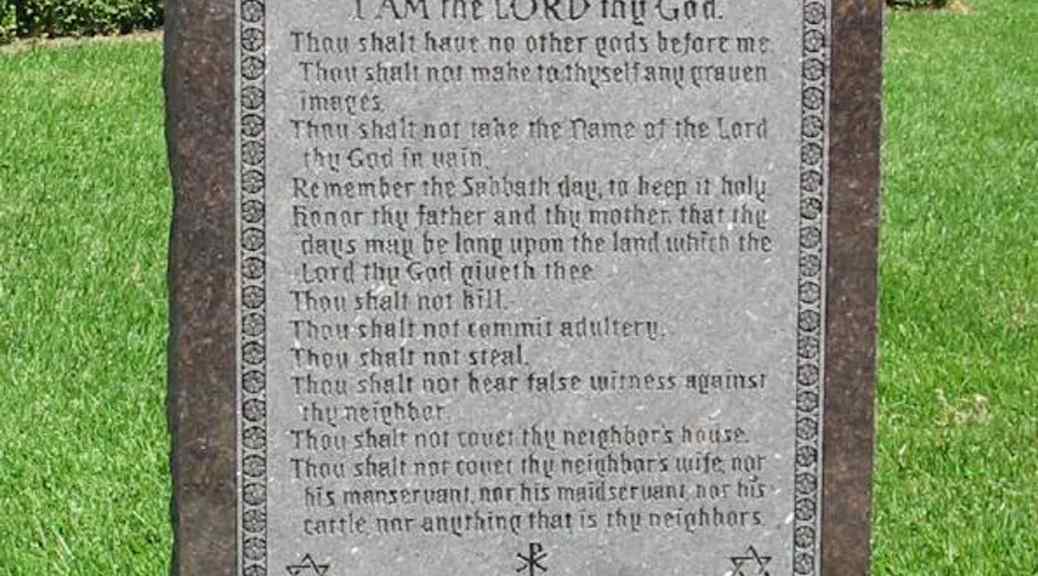
Natural law doesn’t mean that people always do what is right. But deep down, in our conscience, people really do know what’s right. This has been amply documented by many scholars, persuasively arguing that humans are a species uniquely hard wired with the ability to know right from wrong. In his 1943 classic “The Abolition of Man,” C.S. Lewis documents precepts of the moral codes held by major cultures throughout history, all of which strongly echo the Ten Commandments in Exodus 20.

Face it, we are moral creatures. And no scientific theory can account for why humans are born knowing right from wrong. The Bible points out the moral awareness universally embedded within us. Romans 2:14-15 states, “When Gentiles, who do not have the law, by nature do the things in the law, these, although not having the law, are a law to themselves, who show the work of the law written in their hearts.”

Romans 3 and 1 Peter 4 speak of the “oracles of God,” which were entrusted to the Jewish people. But because knowledge of right and wrong is known to all people, we are accountable to our Creator. We should do right because in our heart of hearts, we actually know what is right.

Activists for secularism, for abortion, and for the promotion of homosexuality and transgenderism fight the recognition of objective morality. All of these groups pressure professional societies, academics and legal professionals to side with them in their opposition against natural law. LGBTQ activists deem any disagreement with their message an act of violence on par with physical assault. Their lobbying of major corporations to make policies more accepting of LGBTQ demands has been very successful.

The Torture Of Gender Confusion

This widespread abandoning of morality not only gravely undermines our (currently) protected rights regarding freedom of religious expression and the freedom to share the Gospel, it also endangers people’s well-being and eternal souls. The cultural call to sexual license and gender fluidity is not the innocuous path to personal freedom our society is being led to believe. Abandonment of known truth comes with a painfully high cost.

While I was attending graduate school in the early 1990s, one of the jobs I worked was as assistant manager of a Christian bookstore. Ministry opportunities seemed to walk through the door daily, and one unforgettable person we met was Russ. He would come to the bookstore many times each week, and he struggled with many things. Physical abuse that went back to childhood had taken a severe toll on this young man.

For Russ, the peace of Christ and a stable spiritual walk seemed elusive. One day he informed us that from then on, he was to be called “Courtney.” The real answer to his problems, he was convinced, was to become a woman. Shortly after, Russ told us that he was now living with people who truly loved him—but only as “Courtney.” He let us know that his new community had a different understanding of Scripture than we had been sharing. His visits to our store became less common.

There is desire in every heart for love and acceptance that only Jesus can fill. It was clear that this young man was seeking fulfillment in some very unhealthy places. At one point, “Courtney” expressed desire to permanently return to being Russ, but the pressure to conform to the standards of the alternative community was intense. The last time we ever saw Russ, my wife and I begged him to seek counseling.

The newspaper headline reported that Russ’s death was an unsolved case. Whether or not he was murdered, committed suicide, or died accidentally was never known.

But in the gender-fluid climate of the 21st century, this is certain: Christians who tried to help Russ would today be accused of hate crimes for refusing to encourage the dark, destructive identity of “Courtney.” For trying to help this young man trust God’s design for his life, we would be guilty of “misgendering.” We had taken Russ into our homes, our lives and our hearts. But progressives today would say that the Christian truth we offered amounted to acts of violence.

Morality Unobscured By Cultural Spin

Because there is a universal witness of God written on every heart, Romans 1:20 contains some sobering words: “They are without excuse.” Before the Almighty, we are accountable. Perhaps this accountability to God—and not just to ourselves—is why many in our culture wish there were no natural moral law. This is certainly what John 3:19 indicates: “Men loved darkness rather than light, because their deeds were evil.”

We have all done things we know are wrong. This is called sin. By breaking the known moral law, we are guilty before the Lawgiver. How sad it would be if the story ended there.

Thankfully, though John’s Gospel contains the indictment of man’s love for sin, in this same chapter, verse 16 records God’s intervention to save us from our guilt: “For God so loved the world that He gave His only begotten Son, that whoever believes in Him should not perish but have everlasting life.” The most morally correct and wise thing anyone will ever do is to respond in faith and obedience.


Source: The Abandonment Of Truth Comes With A Painfully High Cost – Harbinger’s Daily

Our Daily Bread – Never Overlooked by God

The Lord make his face shine on you. Numbers 6:25

Today’s Scripture

Numbers 6:22-27

Listen to Today’s Devotional

Apple LinkSpotify Link

Today’s Insights

In showering the people with His favor, God instructed the high priest to bestow on them the blessing found in Numbers 6:24-26. “The Lord make his face shine on you” (v. 25) is rendered “the Lord smile on you” in the New Living Translation. God smiling and turning “his face toward you” (v. 26) expresses the idea that the people have God’s special attention and approval. This benediction, pronounced by many pastors at the end of church services today, affirms that God provides for and protects His people, assuring us of His presence, pardon, and peace. The Hebrew concept of peace (shalom) is all-embracing and includes the concepts of completeness, security, health, wealth, tranquility, contentment, friendship, and peace with God and humanity.

Today’s Devotional

“Sometimes I just feel so . . . invisible.” The word hung in the air as Joanie talked to her friend. Her husband had left for another woman, leaving Joanie with young children still at home. “I gave him my best years,” she confided. “And now I don’t know if anyone would really see me or take the time to actually know me.”

“I’m so sorry,” her friend responded. “My dad walked out when I was six, and it was hard for us, especially Mom. But she said this thing when she tucked me in at night that I never forgot: ‘God never closes His eyes.’ When I was older, she explained she was trying to teach me that God loved me and watched over me always, even while I slept.”

The Bible presents words God gave Moses to share with His people during a challenging time, when they were wandering in Sinai’s desert: “The Lord bless you and keep you; the Lord make his face shine on you and be gracious to you; the Lord turn his face toward you and give you peace” (Numbers 6:24-26). The blessing was to be spoken by the priests over the people.

Even in life’s wildernesses—those places where we wonder if anyone sees us or truly understands—God is faithful. God’s favor—His shining face and enduring love—is always turned toward those who love Him, even when we can’t feel Him because of our pain. No one is invisible to God.

Reflect & Pray

How does it comfort you to know that God truly sees you? Who can you share that comfort with today?

Thank You, Father, for seeing me, knowing me, and loving me. Please help me to turn my face to You always!

Hear more from James Banks on how God sees our needs and hears our prayers.


http://www.odb.org

Joyce Meyer – Healing in His Wings


But unto you who revere and worshipfully fear My name shall the Sun of Righteousness arise with healing in His wings and His beams, and you shall go forth and gambol, like calves [released] from the stall and leap for joy.

Malachi 4:2 (AMPC)

Around our world, horrible crimes and unspeakable acts happen every day to women and children who are powerless to stop them. Every act affects the life of a precious person, created in God’s image. Many women are hurt, wounded little girls trapped inside adult bodies, afraid to come out for fear of being hurt more.

I understand the feelings of these women. I was sexually abused by my father for many years. I also suffered abuse at the hands of other men throughout the first 25 years of my life. I developed a hardened attitude toward all men and adopted a harsh, hard manner.

But I want everyone to know that, through God’s Word and the help of the Holy Spirit, I was healed in my spirit, emotions, mind, will, and personality. It was a process that unfolded over several years, and I have enough firsthand experience to highly recommend God’s ways of restoration and healing rather than the world’s ways. It is much better to let God heal you than to spend your life being bitter about the past.

Prayer of the Day: Lord, I rejoice today that You did not leave me to heal myself. I worship You alone, and I receive from You all the healing and grace that I need for this day, amen.


http://www.joycemeyer.org

Denison Forum – Ukraine peace talks and an asteroid that could strike Earth


“It is in the face of death that the riddle of a human existence grows most acute”

President Trump announced on Truth Social yesterday that he had “a lengthy and highly productive phone call with President Vladimir Putin of Russia” as they discussed ending the war in Ukraine. Ukrainian President Volodymyr Zelensky later said he had also spoken with Mr. Trump about a “lasting, reliable peace.”

According to Mr. Trump, a meeting is being set up for tomorrow at an annual security conference in Munich, with talks led by Vice President JD Vance and Secretary of State Marco Rubio.

If a just end could be found to this horrific war, millions in Ukraine and Russia would obviously be spared further violence. However, unless you live in those nations, you are probably reading this news more out of general interest than existential engagement.

By contrast, this ABC News headline is guaranteed to catch everyone’s eye: “Chances of asteroid striking Earth in the next decade has nearly doubled, NASA says.” The asteroid, discovered just after Christmas, could strike our planet on December 22, 2032. The rock measures as much as a football field in diameter. If it were to directly hit a city, millions could die. There’s no way to be sure you and I won’t be in that number.

Here’s the part the headline leaves out, however: the odds of being impacted by the asteroid have only risen from 1.3 percent to 2.1 percent. But still, you’d rather they be 0 percent, as would I.

Why our unconscious “behaves as if immortal”

Over the next seven years, we’ll have plenty more to worry about, from the threat of a bird flu pandemic to fears of nuclear war, annihilation by AI, and who knows what threats we don’t yet know. We didn’t know about the COVID-19 pandemic until we did, and it caused life expectancy to drop across the US.

According to Sigmund Freud, “Our unconscious does not believe in its own death; it behaves as if immortal.” Tragically, the COVID-19 pandemic made the fact of our mortality both real and terrifying for millions. “Death anxiety” rose significantly during this time, which is understandable given the horrific way many victims died alone in isolation wards, separated from family and friends.

However, according to researchers, humans fear the way we die less than what happens when we die: “The origin of death anxiety is fear of annihilation, the struggle of a living being with nothingness.” I would have thought that our death anxiety would be related to the pain of physical death, separation from loved ones, or grief that our earthly lives are coming to an end too soon. But studies clearly indicate that “humans are afraid of losing themselves and becoming nothing.” This is why, in Freud’s words, our unconscious “behaves as if immortal.”

“He bears in himself an eternal seed”

A perceptive essay produced by the Second Vatican Council in 1965 agrees with the research I cited:

It is in the face of death that the riddle of a human existence grows most acute. Not only is man tormented by pain and the advancing deterioration of his body, but even more so by a dread of perpetual extinction. He rightly follows the intuition of his heart when he abhors and repudiates the utter ruin and total disappearance of his own person.

The essay explains why this is so:

He rebels against death because he bears in himself an eternal seed which cannot be reduced to sheer matter. All the endeavors of technology, though useful in the extreme, cannot calm his anxiety; for prolongation of biological life is unable to satisfy that desire for higher life which is inescapably lodged in his breast.

This longing for a “higher life” is an example of what sociologist Peter Berger called “signals of transcendence,” which are dimensions of our lives that point to realities that transcend us. C. S. Lewis observed, “If we find ourselves with a desire that nothing in this world can satisfy, the most probable explanation is that we were made for another world.”

And so, paradoxically, the death anxiety that prompts us to read about a potential asteroid collision, the possibility of a bird flu pandemic, or the threats of nuclear war or AI annihilation is itself evidence that this fallen and fearful world is not all there is. We instinctively do not want our lives to end because, unlike every other species in creation, we were made for endless life.

Here’s the good news: For followers of Jesus, that life has already begun.

The part of John 3:16 people miss

Christians often say that a person who trusts in Christ will receive eternal life when they die, but this is not so. The most famous verse in the Bible contains an often-overlooked dimension: “God so loved the world, that he gave his only Son, that whoever believes in him should not perish but have eternal life” (John 3:16, my emphasis).

Christians receive “eternal life” the moment we trust Christ as our Savior. His eternal Spirit moves into our lives in that instant (1 Corinthians 3:16), making us the children of God (John 1:12), “and if children, then heirs—heirs of God and fellow heirs with Christ” (Romans 8:17).

This is why Jesus could say so adamantly, “Everyone who lives and believes in me shall never die” (John 11:26, my emphasis). Physical death for us is merely the door through which we step into the eternal presence of God. When we take our last breath here, we take our first breath there. When we close our eyes here, we open them there.

The fact that we already have eternal life is the antidote to the fear of annihilation that is instinctual to our fallen natures. It empowers us to serve Jesus at any cost to ourselves, knowing that the worst that can happen to us leads instantly to the best that can happen to us: “For me to live is Christ, and to die is gain” (Philippians 1:21).

This assurance infuses us with peace in the face of peril, constituting a powerful witness to those without such peace. For example, John Wesley was so impressed by Moravian missionaries who sang in worship through a terrifying storm that their astounding calm became a significant step on the path to his own conversion.

Ronald Reagan observed,

“Evil is powerless if the good are unafraid.”

Will you be “unafraid” today?

Our latest website articles:

Quote for the day:

“Success is not final, failure is not fatal; it is the courage to continue that counts.” —Winston Churchill


Denison Forum

Days of Praise – God Our Habitation


by Henry M. Morris, Ph.D.

“LORD, thou hast been our dwelling place in all generations.” (Psalm 90:1)

These are the tremendous opening words of the oldest psalm in the book of Psalms called, in its superscript, the “prayer of Moses the man of God.” Moses must have written it shortly before his death as he looked out over the promised land and realized that he himself would never live there (Deuteronomy 34:4-5). It did not really matter though, for he had lived in many places and none of them were really his home. He lived for a brief while in a basket on the river as a baby, then in a queen’s palace, then 40 years in Midian, and 40 more years wandering in the wilderness.

Furthermore, he meditated on the men of God of previous generations (after all, he had compiled all their ancient records in the book of Genesis) and found that they, too, like the apostle Paul 1,500 years later, had “no certain dwellingplace” (1 Corinthians 4:11). Adam was expelled from the garden; Noah lived for a year in an Ark on a worldwide sea and lived the rest of his life in a devastated earth; Abraham, Isaac, and Jacob lived in tents in Canaan, and their descendants lived as slaves in Egypt.

Yet wherever they were, the Lord was with them. He was their dwelling place, and this was Moses’ first thought as he composed his great prayer. He also had written down “the blessing, wherewith Moses the man of God blessed the children of Israel before his death” (Deuteronomy 33:1). Its climax was this great assurance: “The eternal God is thy refuge, and underneath are the everlasting arms” (v. 27). The “refuge” of this promise is the same Hebrew word as “dwelling place” in our text.

We, like they, are “strangers and pilgrims on the earth” (Hebrews 11:13), but “underneath are the everlasting arms.” Where the Lord is—there home is! HMM


https://www.icr.org/articles/type/6

My Utmost for His Highest by Oswald Chambers – The Devotion of Listening


Then Samuel said, “Speak, for your servant is listening.” — 1 Samuel 3:10

Am I hearing what God is saying? Perhaps I’ve listened well to one of his commands, but I’ve turned a deaf ear to the rest. This is how I show God that I don’t love or respect him: I act like I can’t hear him, even though he is speaking to me clearly. Samuel deliberately turned his attention to God, and assured God that his ears were open.

Jesus said, “You are my friends if you do what I command” (John 15:14). Am I being a friend to the Lord, or am I disobeying his commands? If I’d been listening, I wouldn’t have consciously disobeyed. Most of us don’t care enough to listen. Our Lord might as well have said nothing at all.

The goal of my spiritual life is to be so closely identified with Jesus Christ that I always hear God and I know that he always hears me (John 17). When I am identified with the Lord like this, my ears are attuned to his voice at every moment and in every situation. A lily, a tree, the words of one of his servants: all may convey God’s message. If I haven’t cultivated this devotion of listening, his voice comes through to me only at certain times. Most of the time, caught up in serving or in my convictions, I pretend I’m too busy to listen. Serving is a good thing, but if it drowns out God’s voice, I know my devotion is running in the wrong direction.

Have I heard God’s voice today, or have I become deaf to him?

Leviticus 14; Matthew 26:51-75


Wisdom from Oswald

Crises reveal character. When we are put to the test the hidden resources of our character are revealed exactly. Disciples Indeed, 393 R


https://utmost.org/

Billy Graham – Chosen by God


. . . you have been chosen by God who has given you this new kind of life . . .

—Colossians 3:12 (TLB)

Modern writers depict the pessimism of our time and many of them throw up their hands in despair and say, “There is no answer to man’s dilemma.” Hemingway once said, “I live in a vacuum that is as lonely as a radio tube when the batteries are dead, and there is no current to plug into.” Eugene O’Neill in “Long Day’s Journey Into Night” typifies the philosophical attitude of our day. He says, “Life’s only meaning is death.” I say to Hemingway and to O’Neill, who have already gone on, “There is more to life than death.” There is more to life than a radio tube that needs a place to plug into. Jesus taught us the dignity and importance of being a person. God put us on this earth for a purpose, and our purpose is fellowship with God and to glorify God.

What is the meaning of life? Watch Billy Graham’s sermon to find out more.

Prayer for the day

Loving Father, Your love for me transcends the hopelessness of this life and gives me the purpose I so desperately need.


https://billygraham.org/

Guideposts – Devotions for Women – Release Your Control


Trust in the Lord with all your heart and lean not on your own understanding; in all your ways submit to him, and he will make your paths straight.—Proverbs 3:5–6 (NIV)

Do you try to control your circumstances, forgetting that it is God who shapes your journey? This verse is a reminder to put aside your own understanding and desires and completely trust in Him. When you follow His guidance, He promises to lead you on the right path, even if it differs from your original plan.

Dear Lord, I need Your divine wisdom to guide me. Make my paths straight and lead me toward Your purpose for my life.


https://guideposts.org/daily-devotions/devotions-for-women/devotions-for-faith-prayer-devotions-for-women/

Every Man Ministry – Kenny Luck – The Binary Fallacy


Let every man be quick to listen but slow to use his tongue, and slow to lose his temper. For man’s temper is never the means of achieving God’s true goodness.  ––James 1:19, esv

A binary fallacy is the idea or precept that there are only two options in any given argument or situation. For example, let’s say you’ve been going to a certain church for several years and have observed a solid track record of biblically sound preaching from your pastor. However, on one particular Sunday he kind of “misses it” on a couple of points. (Everyone has an off day, right?) As you are leaving church you overhear someone say, “This is my first time here, and I will never come back because that guy is a terrible preacher.” Well, he’s not a terrible preacher, and neither is he perfect. But those aren’t the only options.

Or, let’s say you are in a political discussion with a friend whose political views are the opposite of yours. And he says, “They (the party you belong to) only cares about retaining power, and will lie to keep it.”

Is it possible that every single politician in the party to which you do not belong is a dishonest, power-greedy person? Before you answer, think about this: some folks on the other side of the aisle think that about the politicians in your party. But both views can’t be wrong, can they? Yes, they can! That’s an example of a binary fallacy. Statistically speaking (and taking emotion out of the equation), what are the odds that 100% of all the elected officials from the opposite party are bad eggs? (Hint: zero.)

God’s men don’t buy into binary fallacies. Does it mean that when you hear falsehoods or unbiblical points of view, you shouldn’t challenge them? No, you should. But as our moms used to say, “It’s not what you say, it’s how you say it.” Disagreeing respectfully with someone is not “caving in” to their point of view. But we enter dangerous waters when we assume that everything coming out of a person’s mouth is false just because they aren’t part of our tribe (or party, or denomination, or region, etc.).

Man of God, we need to be both thoughtful and bold when confronting fallacies. We find that balance by studying the deeds and words of Jesus, and getting to know the Bible. And we need to keep in mind that only the Holy Spirit has a corner on the truth. Our challenge is to put on the mind of Christ before we type that response on Facebook (1 Corinthians 2:16), or (literally) count to 10 before responding to someone who says something that triggers us.

We can be confident in the fact that we worship a God of light—in Him there is no shifting shadow (James 1:17). How reassuring to know that when we ask for His wisdom, He is generous in giving it!

Father, help me always seek Your truth, especially when it comes to judging situations and circumstances.


Every Man Ministries

Our Daily Bread – Our Plans and God’s Plans


“Neither are your ways my ways,” declares the Lord. Isaiah 55:8

Today’s Scripture

Isaiah 55:8-12

Listen to Today’s Devotional

Apple LinkSpotify Link

Today’s Insights

The book of Isaiah is the first of the five books referred to as the Major Prophets, so named because of their length, not their importance. The other Major Prophets are Jeremiah, Lamentations, Ezekiel, and Daniel. Isaiah is the sixth longest book of the Bible, and two other prophetical books—Jeremiah and Ezekiel—are even longer. Isaiah contains many prophecies related to divine judgment and many others about the coming Messiah. J. A. Martin in The Bible Knowledge Commentary points out: “Isaiah had a lofty view of God. The Lord is seen as the Initiator of events in history. He is apart from and greater than His Creation; yet He is involved in the affairs of that Creation. Whether in his dealings with sin or his promise of redemption, Isaiah portrays God’s greatness as above all that he has created.”

Discover more from the book of Isaiah.

Today’s Devotional

Many years ago, my husband decided to take a trip to Africa with a group of people from his church. At the last minute, the group was prevented from going on its journey. Everyone was disappointed, but the money they’d collected for airfare, lodging, and food was donated to the people they’d tried to visit. The people used it to construct a building that would shelter victims of abuse.

Recently, at a prayer breakfast, my husband met someone who lived in the village he’d almost traveled to so many years ago. This person was a teacher who said he walked by the building every day. He confirmed that God had used it to provide for the most vulnerable people in the area.

Our plans and desires don’t always match what God has in mind. For His “thoughts are not [our] thoughts, neither are [our] ways [His] ways” (Isaiah 55:8). God’s ways aren’t just different from ours; His ways are “higher” and better because what He does is consistent with who He is (v. 9). This truth gives us hope when our efforts to serve Him don’t turn out the way we’d planned.

It might be years before we’re able to look back and trace God’s influence through certain situations. For now, though, as we continue to reach out to the world in His name, we can remember that God is always powerfully at work (v. 11).

Reflect & Pray

When have you felt disappointed with an experience? How might God use this to teach you something about Himself?


Dear God, You’re the all-knowing one. When I don’t understand what’s happening, please help me to trust You.

We can trust God to nourish us better than anything else can. Discover more by reading Better than Money Can Buy.


http://www.odb.org

Joyce Meyer – The Why Question


He will not fear bad news; his heart is steadfast, trusting [confidently relying on and believing] in the Lord.

Psalm 112:7 (AMP)

When we find ourselves in the midst of a struggle or adversity, we often ask God, “Why? Why is this happening to me?”

Let’s imagine, for one moment, that God actually answered that question. Would His explanation change anything? The effects of the situation would still be with you. What would you have learned?

When we ask God that question, what we’re really asking is, “God, do You love me? Will You take care of me in my sorrow and pain? You won’t leave me alone, will You?” Is it possible that we ask for explanations because we’re afraid God doesn’t truly care about us?

Instead, we can learn to say, “Lord, I believe. I don’t understand, and I’ll probably never grasp all the reasons bad things happen, but I know for certain that You love me, You are good, and You are with me—always.”

Prayer of the Day: Lord, I trust in Your love and goodness. Even when I don’t understand, I know You are always with me. Strengthen my faith in You through every struggle. I love You, amen.


http://www.joycemeyer.org

Denison Forum – A longtime Israeli friend’s perspective on the Gaza hostages


Three viewpoints and “the core truth of our existence”

Hamas stated Monday that it would postpone the release of three hostages scheduled to be freed this weekend to protest delays in deliveries of humanitarian goods. President Trump then warned Hamas to release all its Gaza hostages by Saturday or “all hell is going to break out.”

Yesterday, Israeli Prime Minister Benjamin Netanyahu joined Mr. Trump’s demand: “If Hamas does not return our hostages by Saturday noon, the cease-fire will end and the IDF will resume intense fighting until the final defeat of Hamas.”

Yesterday, I was privileged to meet one of my longtime Israeli friends for lunch. He and I have led more than thirty study tours in the Holy Land together over the years and have been together often in the States. He is currently in the US on a speaking tour. I asked him for his thoughts on the hostage crisis and, as usual, his perspective was both brilliant and enlightening.

What’s more, I found his thoughts relevant to an even larger context that touches us all. To make this point, let’s put my friend’s response into a larger cultural context.

How Hamas views the hostages

What we have learned about Hamas from the hostages that have been released thus far confirms US Secretary of State Marco Rubio’s assessment: “This is an evil organization. Hamas is evil. It’s pure evil. These are monsters. These are savages. That’s a group that needs to be eradicated.”

Making his point, last Saturday Hamas released what the Associated Press describes as “three gaunt, frail-looking Israeli hostages.” Gideon Saar, Israel’s foreign minister, said they “look like Holocaust survivors.” A doctor reported that one was returned “in a severe nutritional state.”

A mother whose son is still being held by Hamas learned from military sources that he is receiving very little food and no medical care for multiple injuries, including an eye injury that has left him partially blinded. He has been bound for much of the time and tortured.

“It was not easy to hear,” she said. “I must say that I even fainted.”

How Hamas views the Palestinians

Twelve days after Hamas’ October 7 invasion, their leader Khaled Mashal suggested that to achieve the dream of Israel’s destruction, millions of Palestinians might have to die. They use their schools to radicalize the people, turning them into terrorists against the Jewish state. They steal humanitarian aid, sell it to the population, then use the money to finance terrorist recruitment.

According to NATO, Hamas has been using the Palestinians in Gaza as human shields since 2007. They fire rockets, artillery, and mortars from civilian areas, locate military infrastructures in schools, hospitals, and mosques, and use civilians and hostages to protect themselves. The terrorists have built hundreds of miles of tunnels under civilian structures to hide, transport, and shield their soldiers and munitions while refusing to allow civilians to use them for protection.

As I have written, Hamas exists not to serve Palestinians in Gaza but to eradicate Israel. In its view, the deaths of Palestinian civilians are a means to this end. They view Muslim casualties as “martyrs” who will be rewarded in heaven and use their plight to marshal Arab nations and the larger world against Israel.

How Israelis view the hostages

By contrast, as my friend explained yesterday, Israelis view the hostages as vital to their nation and its future for three reasons.

First, many of them know some of the hostages or someone in their extended families. Israel is a tiny country. In my many visits over the years, I have been consistently surprised at how interconnected their society is. For many, the hostages’ plight is deeply personal.

Second, some of the hostages are Israeli military personnel. For Israel to abandon them would say to the entire IDF, “If you fight for us and you are captured, we won’t come for you.” As my friend noted, this would undermine the viability of the army. For a small nation surrounded by enemies that seek its destruction, the IDF is vital to its survival and its future.

Third, many of the hostages are Israeli civilians. For Israel to abandon them would say to the rest of the population, “If terrorists take you hostage in the future, we won’t try to get you back.” Such a threat would understandably cause many to abandon the nation.

This is why Israel has historically been willing to trade huge numbers of Palestinian prisoners for a few hostages, and why they are doing the same again now. And it is why the IDF has been so careful to protect the hostages while trying to eradicate the terrorists who hide behind them.

Such an approach to the hostages severely restricts Israel’s military and its governmental leaders. But it is foundational to the nation’s ethos and future.

How God views you

Here’s why I found my friend’s explanation to be relevant even beyond Israel: Our Father loves us even more passionately than Israel loves its hostages (1 John 4:8). In fact, he loves us even though we treat Jesus as Hamas treats the Jews. Our sins tortured and murdered God’s Son (Isaiah 53:6Romans 5:8). Even when we trust him as our Savior, our sins grieve his Spirit deeply (Ephesians 4:30).

And yet, as St. Augustine famously observed, God loves each of us as if there were only one of us.

If you were the only person who had ever sinned, the only soul held hostage by Satan, Jesus would have died just to liberate you. His Father loves you right now as much as he loved you when he sent his Son to die in your place (John 17:232 Corinthians 5:21). As Timothy Keller observed, “The gospel is that Jesus Christ came to earth, lived the life we should have lived, and died the death we should have died.”

Henri Nouwen therefore claimed:

“Being the Beloved constitutes the core truth of our existence.”

Do you agree?

Our latest website articles:

Quote for the day:

“Come and see the victories of the cross. Christ’s wounds are your healings, his agonies your repose, his conflicts your conquests, his groans your songs, his pains your ease, his shame your glory, his death your life, his sufferings your salvation.” —Matthew Henry


Denison Forum