Our Daily Bread – The Treasure Christ Offers


God has given us eternal life, and this life is in his Son. 1 John 5:11

Today’s Scripture

1 John 5:6-13

Listen to Today’s Devotional

Apple LinkSpotify Link

Today’s Devotional

Michael Sparks walked into a thrift store and bought a souvenir copy of the US Declaration of Independence for $2.48. Later, as he looked closely at his parchment copy, he felt there was something unusual about it. So he had it assessed by experts, who told him it was one of now thirty-six remaining copies of two hundred commissioned by John Quincy Adams in 1820. Sparks then sold his rare copy of the Declaration for $477,650!

While the acquisition of this treasure for such a small price is astounding, there’s a treasure that’s infinitely better. As a child, I found out about a priceless, matchless, and eternal treasure that didn’t cost me a cent. But I didn’t find it at a thrift store.

My parents revealed to me that a man named Jesus had purchased this gift by giving His life on the cross as a sacrifice for my sins. They then told me this gift was called salvation. It promised the treasure of an abundant “life . . . to the full” on earth (John 10:10) and an “eternal life . . . in [God’s] Son” with Jesus (1 John 5:11). I accepted that gift by faith.

It’s amazing to find an earthly treasure at low cost, but that can’t compare with the eternal treasure Christ offers at no cost. This treasure offered to each person is received as we “believe in the name of the Son of God”—Jesus (v. 13).

Reflect & Pray

What does it mean for you to trust Jesus as your Savior? How can you tell others about this great treasure?

Thank You, Jesus, for paying the price for my salvation. It’s a treasure I could never purchase on my own.

Learn more about having a personal relationship with God.

Today’s Insights

John says, “I write these things to you who believe in the name of the Son of God so that you may know that you have eternal life” (1 John 5:13). This echoes the purpose of his gospel: “Jesus performed many other signs in the presence of his disciples, which are not recorded in this book. But these are written that you may believe that Jesus is the Messiah, the Son of God, and that by believing you may have life in his name” (John 20:30-31). Faith in Christ not only saves us from judgment but gives us abundant and eternal life. John uses the word life more than forty times in his gospel, most dramatically in the shepherd parable: “I have come that they may have life, and have it to the full. I am the good shepherd. The good shepherd lays down his life for the sheep” (10:10-11). Jesus gave up His life to make eternal life possible for us.


http://www.odb.org

Joyce Meyer – Thoughts Lead to Attitudes


But they continued to sin against him, rebelling in the wilderness against the Most High.

Psalm 78:17 (NIV)

If you read all of Psalm 78, you will see that the Israelites had a bad attitude as they made their journey through the wilderness toward the Promised Land. I am certain that their bad attitudes started with negative thoughts. Thoughts lead to words, and words lead to emotional moods, attitudes, and actions. We know that the Israelites’ bad attitudes caused them to complain and speak negatively to and about their leaders, Moses and Aaron, which ultimately led to total rebellion.

We are wise to remember that our thoughts are the raw materials for our attitudes. If we think loving thoughts toward people, we will have an attitude of love toward them, and we will speak kindly and lovingly toward them. We will also express our love for them through our actions. This example of love and kindness is positive, but the same principle applies to negative thoughts, words, and attitudes.

In any situation, you can have a good attitude or a bad one, and it will begin with your thoughts. Choose positive thoughts today!

Prayer of the Day: Lord, help me choose to think godly thoughts so I will have godly attitudes.


http://www.joycemeyer.org

Denison Forum – A record-low percentage of citizens are proud to be American


Is national pride a problem?

Detailing the degree to which Americans are less proud to be American has become something of an annual tradition around this time of year. And in keeping with that trend, a recent poll found that a record-low 58 percent of US adults are either extremely (41 percent) or very (17 percent) proud to be American.

While those numbers represent a fairly significant drop, even from recent years, the downward trajectory doesn’t change the fact that nearly four out of five Americans are at least moderately proud to be a citizen of this country. Moreover, nine out of ten hold at least some measure of pride in that status. When we think about the state of our culture, it would be a mistake to let the 10 percent who hold no such pride outweigh the 90 percent who do.

At the same time, it’s worth noting that younger generations tend to be quite a bit more moderate in their pride for the nation than their elders.

As the Gallop report notes, “These changes have occurred mostly over the past decade, and have done so amid greater pessimism about the economic prospects for young people, widespread dissatisfaction with the state of the nation, greater ideological divides between parties, unfavorable images of both parties, and intense rancor during the Trump and Biden administrations.”

In short, fear and anger have become the default setting for far too many people, and it makes sense that those without a longer history of what it’s like to live in America would be more impacted by those feelings.

It may be tempting to dismiss many of these concerns, but the dissatisfaction points to some very real problems in our country. I would argue that the good still far outweighs the bad, but that doesn’t mean we should overlook these issues. As I wrote when discussing this trend a few years ago:

America’s flaws should not blind us to the blessings that come from living here. At the same time, those blessings should not blind us to the work that still needs to be done.

So, with that context in mind, how should we see the decline in national pride among many Americans? And is the trend a problem to correct or a symptom of something more?

For an answer, let’s look back to a time when national pride wasn’t a concern because there wasn’t yet a nation to be proud of.

“An inverted American revolution”

One of the most enduring images from America’s founding is the woodcarving of a snake chopped up into eight pieces with the caption “JOIN, or DIE.” Benjamin Franklin originally used the picture in 1754 to try to unite the colonies in the buildup to the French and Indian War.

Franklin hoped it would inspire them to join together in creating a united government—one still under the authority of the British at that point—to face a threat none of them could defeat on their own. While he would have to wait about twenty years to see that desire become a reality, the image played a crucial role in uniting the colonies against England and in securing the independence we celebrate today.

However, our need for such unity is just as real now as it was nearly 250 years ago.

As Bari Weiss notes:

Today there are those who tell us that we are not, in fact, a single people, but rather disparate tribes whose identities put us at odds with one another forever. They’ve divided us not into colonies or states or physical territories, but into identity groups and political factions vying for power and control . . . The effect of these illiberal ideologies is the same: They have sliced up the snake once more. From the one: many. An inverted American revolution.

Just as at our nation’s founding, each of us has a role to play in deciding whether America will be one or many. And, as Christians, we are uniquely positioned to help ensure it’s the former rather than the latter.

Christian or American?

As citizens of heaven before we’re citizens of America—or any other nation for that matter—our perspective on the culture and the country should be filtered through the lens of God’s word. As a result, where America lines up with Scripture, we can and should be proud to be Americans. Where it has deviated from God’s truth, we should be ready and willing to hold it accountable.

Moreover, our national pride doesn’t have to waver based on how well the country is doing because our identity as individuals is based first and foremost on our relationship with the Lord. It gets a lot easier to see America objectively and to recognize its faults without losing sight of its blessings when being an American is not the foundation of who we are.

That is a rare gift we can share with the rest of this nation, but only if that’s truly how we live.

So, as you celebrate America’s independence today, do you do so as a Christian living in America or as an American who happens to be a Christian?

Both our faith and our nation are important parts of who we are and how God has called us to serve him. But only one of those identities can be the bedrock of our lives.

Which are you today?

Quote of the day:

“We are a sometimes great, sometimes loathsome, eternally imperfect nation built on a set of ideas that are so fundamentally superior to anything else civilization has come up with that they’ve been copied and pasted across the globe.” —Isaac Saul (you can read the full article from which this quote comes here)

Our latest website resources:


Denison Forum

Days of Praise – The Law of Liberty


by Henry M. Morris, Ph.D.

“So speak ye, and so do, as they that shall be judged by the law of liberty.” (James 2:12)

On Independence Day, Americans should give thanks to the Author of liberty that we have been privileged to live in this “sweet land of liberty,” where we can worship God freely in accord with His Word. Liberty is not license, however, and the essence of the American system is liberty under law. Fundamentally, that law is “the law of nature and of nature’s God”—the natural laws of God’s world and the revealed laws of God’s Word. Within that framework we do have liberty—but not liberty to defy either the physical law of gravity or the spiritual “law of liberty.” The latter is formulated in Scripture and has been applied over the centuries in the English common law and later in our system of constitutional law, both of which are based on Scripture.

Some today, seeking license rather than liberty, might recoil at the very idea of “the law of liberty,” calling it an oxymoron, or contradiction in terms. But Jesus said that only “the truth shall make you free” (John 8:32). “Sin is the transgression of the law” (1 John 3:4), and “sin, when it is finished, bringeth forth death” (James 1:15), not freedom!

No one can be saved by the law, but those who are saved—by grace through faith in Christ—will love God’s law, for it is “holy, and just, and good” (Romans 7:12). We should say with the psalmist, “So shall I keep thy law continually for ever and ever. And I will walk at liberty: for I seek thy precepts” (Psalm 119:44-45).

There is, indeed, a law of liberty, and whoever will walk in real liberty will find it only in God’s law of life, through His revealed Word. For “whoso looketh into the perfect law of liberty, and continueth therein, he being not a forgetful hearer, but a doer of the work, this man shall be blessed in his deed” (James 1:25). HMM


https://www.icr.org/articles/type/6

My Utmost for His Highest by Oswald Chambers – One of God’s Great Don’ts


Do not fret—it leads only to evil. —Psalm 37:8

Fretting is wicked if you are a child of God. When you fret, you place concern for yourself at the center of your life. It’s one thing to tell yourself not to worry, and a very different thing to be unable to worry because your disposition won’t allow it. A disposition founded on Jesus Christ doesn’t worry because it rests in perfect confidence in the Father.

“Rest in the Lord, and wait patiently for him” (Psalm 37:7 kjv). We think of resting in the Lord as easy. It is easy—that is, until the nest is upset, until we find ourselves living, as so many are today, in tumult and anguish. Can we hear God telling us “Don’t fret” then? If this “don’t” doesn’t work then, it will never work. This “don’t” must work in days of perplexity as well as in days of peace. It must work in your particular case, or it will work in no one’s case. Resting in the Lord doesn’t depend on external circumstances at all but on your relationship to him.

Fretting always ends in sin. We imagine that a little anxiety and worry are an indication of how wise we are; they are really an indication of how wicked we are. Fretting springs from a determination to get our own way. Our Lord never worried and he was never anxious, because he wasn’t out to realize his own ideas. He was out to realize his Father’s ideas: “I have come down from heaven not to do my will but to do the will of him who sent me” (John 6:38).

All our worry is caused by calculating without God. Have you been propping up that stupid soul of yours with the idea that your circumstances are too much for God? Put your anxiousness away, and dwell in the shadow of the Almighty. Deliberately tell God that you will not worry. Pray to him, “Lord, I take you into my calculations as the biggest factor now.”

Job 28-29; Acts 13:1-25

Wisdom from Oswald

We are not to preach the doing of good things; good deeds are not to be preached, they are to be performed.So Send I You, 1330 L


https://utmost.org/

Billy Graham – Religious Freedom


Fear God and honor the government.

—1 Peter 2:17 (TLB)

On this Independence Day we should be on our knees thanking God for all He has given us. The United States is a country in which everyone has an equal opportunity. Thank God for a country where there is no caste or class to keep a man from going to the top. If a man has a will to work and study, he can go ahead regardless of his background. In addition, thank God, He has given us freedom of religion. Whatever you may believe, no one can close your church because your religion does not coincide with his. A few people meeting in a small, out-of-the-way shack, worshiping God as they believe in Him, have the same right to religious freedom as the people who worship God in the great cathedrals on the avenues of our greatest cities.

Prayer for the day

Thank You, God, for allowing me to live in the greatest, grandest, and most free land the world has ever known.


https://billygraham.org/

Guideposts – Devotions for Women – Celebrate Freedom and Love


Live as free people, but do not use your freedom as a cover-up for evil; live as God’s slaves. Show proper respect to everyone, love the family of believers, fear God…—1 Peter 2:16–17 (NIV)

As you celebrate the Fourth of July, remember that the true essence of freedom is a call to live as God’s devoted servant. Today, let the fireworks ignite an appreciation for your spiritual growth and remind you that the highest form of freedom is in serving Him and loving others.

Lord, help us use our freedom wisely to spread Your love and serve You faithfully.


https://guideposts.org/daily-devotions/devotions-for-women/devotions-for-faith-prayer-devotions-for-women/

July 4th – Independence

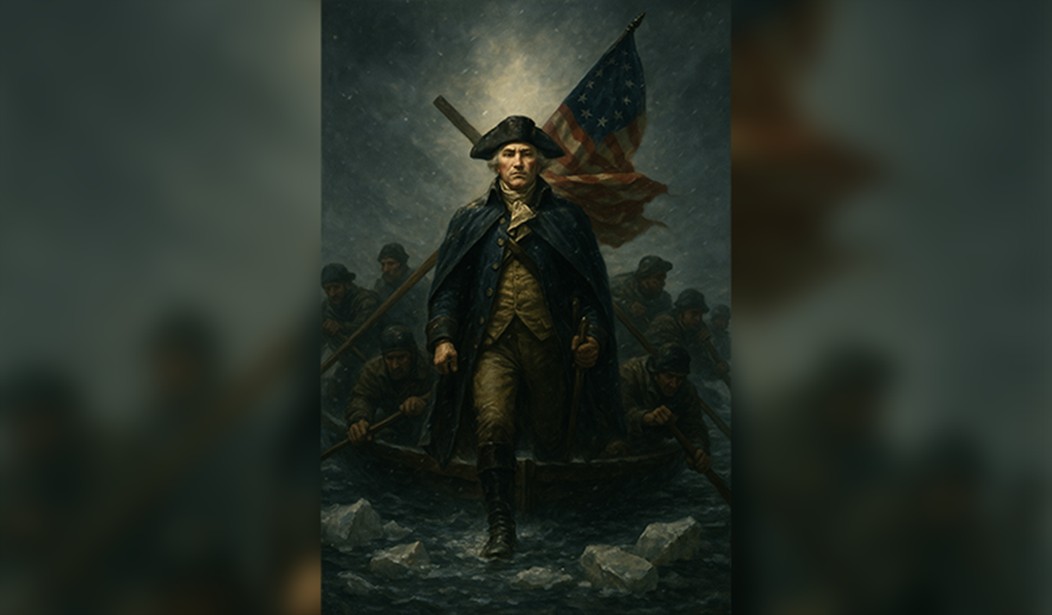
Washington’s Cross: The Retreat, the River, and the Republic

On July 4th, Americans celebrate independence. But we rarely ask: Who carried the weight of  that word when it meant nothing more than hope scrawled on parchment? In 1776, the  Revolution was not yet a republic. It was a retreat.

George Washington stood in the breach—not just as general, but as a man who bore the full  weight of a collapsing cause. His army was disbanding. The Congress was in flight. The enemy  was closing in. And yet, through those first desperate months, Washington held the line—often  by sheer force of will. The cross he carried was not only military—it was national and moral.

Defeat after defeat dogged the early months of the war. The British stormed New York. The  Continental Army staggered through New Jersey. Morale was near collapse. Men deserted.  Supplies vanished. And yet, Washington never surrendered—not to the British, not to fear, and  not to the easier path of blaming others.

The retreat across New Jersey is often remembered as tactical survival. But it was more than that.  It was symbolic. Washington, a man of wealth and stature, was being emptied—stripped of  certainty, stripped of glory. And still he pressed on, carrying the soul of a nation in exile.

Then came the river. The Delaware—icy, black, and swollen—stood between ruin and a second  chance. In the dead of night, on December 25th, 1776, Washington led his weary men across. It  was not merely a military maneuver. It was a baptism of the Revolution. From retreat to resolve.

That crossing was not a solitary moment of courage, but the culmination of a deeper calling.  Washington was no mere tactician. He was a man who believed in the hand of Providence. Again  and again in his writings, he invoked divine favor as an anchor. He did not fight for power. He  fought because he believed liberty was not man’s invention, but God’s intention.

Victory at Trenton. Momentum at Princeton. But even those triumphs were not final. The war  dragged on. Temptations abounded—temptations to seize control, to crown himself, to become  what the Revolution was fighting against. Washington resisted them all.

And then, at the end, he did something no conqueror had ever done: he gave power back. He  surrendered his sword to Congress. He walked away. And then, years later, when his nation  called him again—this time not to fight but to govern—he accepted, reluctantly, dutifully. He  became the first president not by ambition, but by necessity.

In doing so, he did more than lead. He showed the world what leadership in a republic looks like:  restraint, dignity, humility, and purpose.

The Fourth of July is not just about the signing of a document. It is about the forging of a people.  That forging happened through fire—through retreat, river, and ultimately, renewal.

Washington’s greatness was not in his genius or his charm, but in his calling. He accepted the  weight of history and bore it with resolve. He believed this new republic was not just a political  experiment, but a destined one. One that required character. One that demanded sacrifice.

We live now in the inheritance of that cross. Our republic survives not just because of systems,  but because one man was willing to walk through darkness carrying a nation’s hope on his back.

So as the fireworks light the sky, let us remember the retreat. Let us remember the river. And  above all, let us remember the man who made the republic possible—not by force, but by faith.


Robert Orlando | Jul 04, 2025

Source: Washington’s Cross: The Retreat, the River, and the Republic