Denison Forum – Coast Guard swimmer rescues 165 in deadly Texas floods


Shortly after I published yesterday’s Daily Article, Camp Mystic confirmed that at least twenty-seven campers and counselors were killed in flash floods last Friday, with ten children and one counselor still missing. As of this morning, the death toll across the area has now climbed to at least 104 people. The massive search continues for survivors and victims.

We are continuing to see tragic stories of those lost, such as Chloe Childress, a recent high school graduate who was set to attend the University of Texas at Austin this fall. She was co-president of her school’s honor council, ran varsity cross country, and founded a club devoted to helping senior citizens. Her death is a devastating loss to all who knew her and to the world she would have served so well.

In other heartbreaking news, the bodies of two sisters from Dallas, ages thirteen and eleven, were found fifteen miles from where their cabin was swept into the river. Their hands were locked together. They are just two of so many stories so grievous that our minds and hearts feel overwhelmed with unspeakable sorrow.

At the same time, heroic stories are emerging as well.

  • Emma Foltz of Alexandria, Louisiana, has been a counselor at Camp Mystic for three years and helped evacuate fourteen of her campers to safety.
  • Jonathan McComb, who lost his wife and children in a 2015 flood in Wimberly, Texas, is one of hundreds of volunteers helping search for victims.
  • Petty Officer Scott Ruskan, a Coast Guard swimmer, rescued 165 people at Camp Mystic.

So, here’s the question: If they did all they could do to rescue victims, why didn’t our omnipotent God do all his power enables him to do to prevent this tragedy from happening?

“Deceive yourself no longer”

The Bible says of our Lord, “You make springs gush forth in the valleys; they flow between the hills” (Psalm 104:10). Not only does God make the waters, but he can still control them today. The Savior who calmed the stormy Sea of Galilee could have done the same on the Guadalupe River last Friday (Mark 4:39).

Christians believe our Father to be all-loving, all-knowing, and all-powerful. When tragedy strikes, we need ways to trust him when we don’t understand his ways.

Here’s what we must not do: we must not settle for easy answers to innocent suffering. They are not only the wrong answers—they are the opposite of the hope we need today.

Secularists who consider faith in God irrelevant or outdated will obviously dismiss the question. Others will reject Christianity or deny God’s omniscience or his omnipotence.

However, in the face of tragedy, most of us do not question God’s existence, knowledge, or power, so we are left to question his love.

We love people enough to do all we can to help them, especially at times like this. If God does not follow suit, it must be because he does not love them enough to do so—or so we fear. We would never say this out loud, but it is the whispered doubt at the back of our grieving hearts.

I have often quoted C. S. Lewis’s response to the death of his wife from cancer:

Not that I am (I think) in much danger of ceasing to believe in God. The real danger is of coming to believe such dreadful things about him. The conclusion I dread is not “So there’s no God after all,” but “So this is what God’s really like. Deceive yourself no longer.”

Three pathways to faith

If we deny God’s love, power, or knowledge, we “solve” our problem by creating a greater problem. Rather than settling for easy answers that offer no hope, let’s consider three pathways to faith today.

The first is rational:

  • If God is the Supreme Being (cf. Revelation 4:8), circumstances cannot make him less or more than he is; in either case, he would no longer be unchangingly supreme (Malachi 3:6). Therefore, nothing that happened last Friday can make him any less the omnipotent, omniscient, omnibenevolent King of the universe.
  • If we are finite and fallen, our minds by definition cannot understand his mind and ways (Isaiah 55:8–9).
  • Because he is all-loving, all-knowing, and all-powerful, his character requires him to redeem all he allows (cf. Romans 8:28). We may never understand such redemption on this side of eternity, but one day we will “fully know” what we only know in part today (1 Corinthians 13:12).
  • If we allow the question of innocent suffering to drive us from God, we turn from the Source we need when we need him most. The greater our pain, the more we need our Great Physician.

The second is practical: The Bible does not always tell us all we want to know, but it does tell us what we need to know. For those who are suffering, understanding why last Friday’s tragedy occurred may be less relevant than responding to it in practical ways. By praying for them and helping financially and in other ways, we become an instrument of the grace they need. And the more we serve God, the closer we draw to him and find the hope and help of his Spirit.

The third is intuitive: All relationships require a commitment that transcends the evidence and becomes self-validating. If we choose to believe that God is who we hope him to be and trust him with our questions, doubts, and pain, we experience his presence in such a transforming way that “the peace of God, which surpasses all understanding, will guard your hearts and your minds in Christ Jesus” (Philippians 4:7).

(For more, please see the podcast I recorded yesterday with Dr. Mark Turman, “Why does God allow disasters like the Texas Hill Country floods?”)

“Beauty for brokenness, hope for despair”

Let’s close with this: Many of you have your own stories of unexplained suffering, as do I. If you have chosen to continue believing in the God who believes in you, you can now “comfort those who are in any affliction, with the comfort with which we ourselves are comforted by God” (2 Corinthians 1:4).

If you live where the floods have devastated so many, you know your mission field. If you do not, you nonetheless know someone who needs the sustaining grace you have experienced. You can now be the hands and feet of Jesus in the broken world he died to save.

The British songwriter Graham Kendrick prayed:

Beauty for brokenness
Hope for despair
Lord, in your suffering world
This is our prayer
Bread for the children
Justice, joy, peace
Sunrise to sunset
Your kingdom increase!

Will you help answer his prayer today?

Quote for the day:

“Peace isn’t a place to arrive at but a person to abide in.” —Ann Voskamp

Our latest website resources:


Denison Forum

Days of Praise – The Light of the Word


by Henry M. Morris, Ph.D.

“Thy word is a lamp unto my feet, and a light unto my path.” (Psalm 119:105)

As the sun provides physical light for the world, so Jesus Christ is spiritually “the light of the world” (John 8:12). However, we clearly can see His light only through the light holder, the lamp, as it were, of His written Word. The Word, therefore, is a lamp and, since it contains and reveals the light, is also a light in its own right. Without the Holy Scriptures, this world would lie in the deepest darkness, but “the entrance of thy words giveth light” (Psalm 119:130).

The Lord Jesus Christ is the living Word, and “without him was not any thing made that was made. In him was life; and the life was the light of men. And the light shineth in darkness; and the darkness comprehended it not” (John 1:3-5). Although He “was the true Light, which lighteth every man that cometh into the world” (John 1:9), when He Himself came into the world, those who were made by Him refused to receive Him. “Men loved darkness rather than light, because their deeds were evil” (John 3:19).

Just so, although the written Word has come into the world, the world does not receive it, either. The lamp and the light of the written Word have been in the world (in complete and final form) for 1,900 years, but people still reject and ridicule it, and the world still lies in darkness. Nevertheless, for those who receive it, there is wonderful light. “Then Jesus said unto them, Yet a little while is the light with you. Walk while ye have the light, lest darkness come upon you: for he that walketh in darkness knoweth not whither he goeth. While ye have light, believe in the light, that ye may be the children of light” (John 12:35-36).

God’s Word always brings light. His first spoken Word was “Let there be light” (Genesis 1:3), and wherever He speaks, God sees the light, and it is good! HMM


https://www.icr.org/articles/type/6

My Utmost for His Highest by Oswald Chambers – The Will to Loyalty


Choose for yourselves this day whom you will serve. —Joshua 24:15

I can’t give up my will; I must exercise it. Will is the whole person active. I must will to obey, and I must will to receive God’s Spirit. When God gives me a vision of what should be, the question is never what he will do but what I will do.

Has the Lord been putting some big decisions before you? The best thing to do, as you consider your course of action, is to think back on what you did when you first were saved or realized some truth. Do you remember how easy it was to give allegiance to God? Recall those moments now as the Spirit of God brings new possibilities before you, asking you to be loyal to him.

Serving the Lord is a deliberate choice, not something you drift into. Everything else is put on hold until you choose. The decision is between you and God; you must not “consult any human being” (Galatians 1:16). With every new crossroads, other people’s ability to understand your specific situation diminishes, and that is where the strain comes in. God allows the opinions of his children to continue to matter to you, and yet you are brought more and more to a place where others can’t understand the steps you’re taking. What God is doing with you isn’t their business—but neither is it yours. You have no business trying to find out where God is leading you. The only thing God will explain to you is himself.

Profess to God, “I will be loyal.” The moment you choose to be loyal to Jesus Christ, you become a witness against your own selfishness and self-interest. Will to be loyal—and give other people proper credit for being loyal, too.

Job 36-37; Acts 15:22-41

Wisdom from Oswald

I have no right to say I believe in God unless I order my life as under His all-seeing Eye.Disciples Indeed, 385 L


https://utmost.org/

Billy Graham – Released From Selfishness


He must increase, but I must decrease.

—John 3:30

Self-centeredness is the basic cause of much of our distress in life. Hypochondria, a mental disorder which is accompanied by melancholy and depression, is often caused by self-pity and self-centeredness. Most of us suffer from spiritual nearsightedness. Our interests, our loves, and our energies are too often focused upon ourselves. Jesus underscored the fact that His disciples were to live outflowingly rather than selfishly. To the rich young ruler He said, “If thou wilt be perfect, go and sell that thou hast, and give to the poor, and thou shalt have treasure in heaven” (Matthew 19:21). It wasn’t the giving away of his goods that Jesus demanded, particularly, but that he be released from selfishness, and its devastating effect on his personality and life.

Prayer for the day

Teach me to so completely open my heart to You that there will be no room for self. Cleanse me, Lord, of all selfish thoughts and deeds.


https://billygraham.org/

Guideposts – Devotions for Women – Choose Peace


Remind the people to be subject to rulers and authorities, to be obedient, to be ready to do whatever is good, to slander no one, to be peaceable and considerate, and always to be gentle toward everyone.—Titus 3:1–2 (NIV)

In the face of injustice, your instinct might be to seek revenge, but God calls you to a higher path. He urges you to be peaceful, considerate, and gentle. As the Christian author Max Lucado said, “Conflict is inevitable, but combat is optional.” Choose to respond to conflict with God’s love.

Lord, give me the wisdom to respond to conflict with compassionate understanding.


https://guideposts.org/daily-devotions/devotions-for-women/devotions-for-faith-prayer-devotions-for-women/

Our Daily Bread – Growing Up in God


Present yourself to God as one approved. 2 Timothy 2:15

Today’s Scripture

2 Timothy 2:14-16, 22-26

Listen to Today’s Devotional

Apple LinkSpotify Link

Today’s Devotional

In her early years as a Christian author, Gayle often received winsome gifts from her publisher. Bouquets of flowers, chocolates, boxes of herbal teas. All lovely. But over time, her publisher began to send gifts with lasting value. A one-year Bible, devotionals, and prayer journals. As she used them, Gayle became a more mature believer—less distracted by frilly gifts and more committed to using her life to lead others to Christ.

This approach recalls Timothy’s growth under the mentoring of the apostle Paul. Stressing spiritual maturity, Paul advised, “Do your best to present yourself to God as one approved, a worker who does not need to be ashamed and who correctly handles the word of truth” (2 Timothy 2:15).

Then Paul added, “Avoid godless chatter, because those who indulge in it will become more and more ungodly” (v. 16). He added, “Flee the evil desires of youth . . . . Don’t have anything to do with foolish and stupid arguments. . . . And the Lord’s servant must not be quarrelsome but must be kind to everyone, able to teach, not resentful” (vv. 22-24).

Paul’s wise advice offers believers one other key benefit. Even opponents of Christ, when they see our mature choices in Him, may “come to their senses and escape from the trap of the devil” (v. 26). So “growing up” in God has eternal outcomes beyond ourselves. Let’s not wait, therefore, to grow up in our faith. Others will benefit as well.

Reflect & Pray

Where is your faith immature? How can you “grow up” spiritually?

Wise God, please grow my spiritual maturity in You.

For further study, read Going the Distance—Spiritual Disciplines.

Today’s Insights

The name Timothy (which means “honoring God”) is the compound form of the Greek words timē (honor) and theos (God). From what’s recorded of Timothy in Scripture, he lived up to his name. He’s first mentioned in Act 16, where it’s noted that he was a disciple with a good reputation (v. 2). Paul recruited him as a member of his ministry team (vv. 3-5). Timothy’s path to belief in Jesus and maturity and usefulness began under the tutelage of his grandmother Lois and his mother Eunice (2 Timothy 1:5; 3:15). Paul mentions Timothy in many of his letters, including these accolades in Philippians 2: “I have no one else like him, who will show genuine concern for your welfare. . . . But you know that Timothy has proved himself, because as a son with his father he has served with me in the work of the gospel” (vv. 20, 22). As we grow in our relationship with Christ, others will benefit.


http://www.odb.org

Joyce Meyer – You Have All the Faith You Need


Then the disciples came to Jesus and asked privately, Why could we not drive [the demon] out? He said to them, Because of the littleness of your faith [that is, your lack of firmly relying trust]. For truly I say to you, if you have faith [that is living] like a grain of mustard seed, you can say to this mountain, Move from here to yonder place, and it will move; and nothing will be impossible to you.

Matthew 17:19-20 (AMPC)

I sometimes hear people say, “I just don’t have enough faith for that.” The truth is we all have the faith we need to do whatever God’s will is for us, but the key to success is where we place that faith. If you put your faith in yourself or in other people, you will be disappointed. But if you put it in God, you will be amazed at what He can do through you.

Remember: With men, this is impossible, but all things are possible with God (Matthew 19:26 AMPC).

Prayer of the Day: Father God, please help me to place my faith fully in You. I trust that with Your power, all things are possible. Strengthen my belief in Your ability to work through me, amen.


http://www.joycemeyer.org

Denison Forum – “Alligator Alcatraz” and the power of deterrence


My family and I visited Alcatraz Island off the California coast a number of years ago while on vacation. One of the reasons the prison there was considered impervious to escape was that the guards told inmates that the waters surrounding the island were filled with man-eating sharks. (This turns out not to be true, but that’s another story.)

Here we find an example of the purported power of deterrence.

Another is “Alligator Alcatraz,” the immigration detention center built on an airstrip in the Florida Everglades. The center opened this week and was toured by President Trump. The $450 million, one-thousand-bed facility of trailers and tents is the largest of its kind.

Surrounded by the wetlands of the Big Cypress National Preserve next to Everglades National Park, the facility is almost dead center between the east and west coasts of Florida. The Trump administration sees the surrounding wildlife, including alligators and pythons, as a natural barrier stopping migrants from being able to escape.

The nearly twenty-five-thousand-acre site is not pristine wetlands—it’s a one-runway airplane facility called the Dade-Collier Training and Transition Airport. Environmentalists nonetheless oppose the project because of alleged impacts on wildlife such as the endangered Florida panther. Immigration advocates and Democrats similarly oppose Alligator Alcatraz because they claim it is deliberately cruel to detainees.

When deterrence doesn’t work

Deterrence is just one way societies attempt to prevent crime and respond to criminals. The others:

  • Retribution: repaying a person’s bad deeds in kind
  • Incapacitation: incarcerating them
  • Rehabilitation: helping them to change.

Criminologists say deterrence is ineffective because most people don’t expect to be caught if they break the law, and don’t know what their punishment will be if they are caught. This, however, would not seem to be a problem with Alligator Alcatraz—the detainees are already “caught” and know the punishment, in the form of alligators and snakes, if they try to escape.

The swamp around the center would seem to function like a moat around a castle, but in reverse—rather than keeping people out, it is intended to keep people in.

Whatever comes of the Florida detention center, we can focus on a spiritual principle that transcends this debate and applies to all of us, all of the time.

Termites of the soul

The Bible emphatically teaches that “all wrongdoing is sin” (1 John 5:17) and that “sin when it is fully grown brings forth death.” (James 1:15) As Paul famously warned, “The wages of sin is death.” (Romans 6:23) If a lost person does not repent of their sin and turn to Christ as Savior, this death becomes eternal. (Revelation 20:15)

Like alligators and snakes we do not see until they attack, the consequences of sin are unseen until they manifest themselves in our lives. They are like termites that crawl into houses from the soil and damage them from within. By the time their presence is visible, the consequences are devastating.

Or consider cancer as another analogy: it always starts small and grows, eventually manifesting as tumors and otherwise disrupting our bodies. By that time, the disease is already far progressed.

This is why the old maxim bears repeating: Sin will always take you further than you wanted to go, keep you longer than you wanted to stay, and cost you more than you wanted to pay.

However, convincing a secularized culture that there are alligators and snakes waiting for their next sin is a tall order. Many do not believe “sin” exists to begin with. Others believe the lie that its consequences will not apply to them until they do. And then it is often too late to avoid the pain they inevitably bring.

Sinners in the hands of an angry God?

There was a day when preachers could warn sinners of their sins and gain a hearing. “Sinners in the Hands of an Angry God” was one of the most powerful and persuasive sermons of the colonial era, in large part because Jonathan Edwards’ hearers believed both in sins and in an angry God who would punish them.

Today, such talk is dismissed as outdated, irrelevant, judgmental, and even dangerous to our “post-truth” culture.

How then are Bible-believing Christians to help our broken society avoid the swamps that surround our souls?

Paul taught, “The natural person does not accept the things of the Spirit of God, for they are folly to him, and he is not able to understand them because they are spiritually discerned.” (1 Corinthians 2:14) Making things worse, “the god of this world has blinded the minds of the unbelievers, to keep them from seeing the light of the gospel of the glory of Christ, who is the image of God.” (2 Corinthians 4:4)

This is why “we do not wrestle against flesh and blood, but against the rulers, against the authorities, against the cosmic powers over this present darkness, against the spiritual forces of evil in the heavenly places.” (Ephesians 6:12) Consequently, “praying at all times in the Spirit” is vital. (v. 18, my emphasis) “In the Spirit” means “in connection with the Spirit” or under his leading.

He knows the spiritual condition of the person for whom we are praying far better than we can. He knows what they need to hear, see, feel, and experience to be led from the deception of sin to the joy of salvation. He is already working on their hearts right now, convicting them of sin and seeking to draw them to Christ. (cf. John 16:8)

No greater gift we can give

Our job is to pray for them as the Spirit leads us, then be ready to answer our prayers as he leads.

We are not on trial, seeking to win a verdict for ourselves. Rather, Jesus is on trial, and we are called by the Spirit to the witness stand to testify as he directs us. He alone can win the trial and the soul of the “jury.”

Our job is to be faithful and obedient.

So, let me ask you to pray right now by name for someone who, to your knowledge, is spiritually lost. Pray for the Spirit to lead your prayers, then intercede as you sense his direction. Ask him to use you to answer your prayers in any way he wishes.

And stay ready to be used.

You and I cannot give our lost friends a greater gift than to pray and work for their eternal salvation.

If they only knew the spiritual alligators and snakes threatening their souls, wouldn’t they agree?


Denison Forum

Days of Praise – The Truth


by Henry M. Morris, Ph.D.

“And they shall turn away their ears from the truth, and shall be turned unto fables.” (2 Timothy 4:4)

This is the last of 11 occurrences of “the truth” in Paul’s two letters to Timothy. He was not writing about the importance of being truthful in general but about a specific body of factual information concerning Jesus Christ and its vital importance. Thus, “the truth” was a very important theme in both of Paul’s letters to this young pastor—and, by implication, to all God-called pastors.

Paul first speaks of “the knowledge of the truth” required for salvation (1 Timothy 2:4), then of his own teaching as “the truth in Christ” (1 Timothy 2:7), then of “the church of the living God” as “the pillar and ground of the truth” (1 Timothy 3:15), and of Christians as those who “believe and know the truth” (1 Timothy 4:3). He stresses the importance of studying the Bible as “the word of truth” (2 Timothy 2:15) and also that true repentance requires “the acknowledging of the truth” (2 Timothy 2:25).

Paul also warns of false and covetous teachers who are “destitute of the truth” (1 Timothy 6:5) and who therefore “concerning the truth have erred” (2 Timothy 2:18). There will even be false prophets who “resist the truth” and are “reprobate concerning the faith” (2 Timothy 3:8).

As a result of the teachings of these false teachers, there will be many so-called seekers of truth who are “ever learning” yet who seem “never able to come to the knowledge of the truth” (2 Timothy 3:7). The reason they never find the truth is because they “turn away their ears from the truth, and shall be turned unto fables” (2 Timothy 4:4).

The fact is that Jesus said, “I am…the truth” and also that “thy word is truth” (John 14:6; 17:17). For any who would say with Pilate “What is truth?” (John 18:38), there is the definitive answer! HMM


https://www.icr.org/articles/type/6

My Utmost for His Highest by Oswald Chambers – All Noble Things Are Difficult


Small is the gate and narrow the road that leads to life, and only a few find it. —Matthew 7:14

If we are going to live as disciples of Jesus Christ, we have to remember that all noble things are difficult. The Christian life is gloriously difficult, but the difficulty does not make us faint and cave in; it rallies us to overcome. Do I so appreciate the salvation of Jesus Christ that I give my utmost for his highest?

God saves humanity by his sovereign grace through the atonement. He works in us “to will and to act in order to fulfill his good purpose” (Philippians 2:13). Our responsibility is to work out our salvation in practical living. If we begin to do what God commands, and to do it on the basis of the redemption, we will discover that we have all the strength and resources we need to succeed. If we fail, it’s because we haven’t practiced; we haven’t developed the habit of obeying God. When a crisis comes along, it reveals our level of preparedness. If we’ve been practicing in our daily life what God has put into us by his Spirit, then in a crisis our own nature will stand alongside the grace of God to support us.

Thank God he does give us difficult things to do! His salvation is a joyous thing, but it is also heroic and holy. It tests us for all we are worth. Jesus is “bringing many sons and daughters to glory” (Hebrews 2:10), and God will not shield us from the requirements of a son or a daughter. God’s grace never produces cowards or weaklings; it produces men and women with a strong family likeness to Jesus Christ. It takes a tremendous amount of discipline to live the noble life of a disciple of Jesus. It is always necessary to make an effort to be noble.

Job 34-35; Acts 15:1-21

Wisdom from Oswald

It is impossible to read too much, but always keep before you why you read. Remember that “the need to receive, recognize, and rely on the Holy Spirit” is before all else.Approved Unto God, 11 L


https://utmost.org/

Billy Graham – Our Many Blessings

Yea, the Lord shall give that which is good; and our land shall yield her increase.

—Psalm 85:12

The great economic and material prosperity we are enjoying in the United States today is a gift of God’s hand. The Bible tells us that the very goodness of God should lead us to repentance. All of these material blessings are gifts from God, given in order that we might humble ourselves, fall upon our knees before Him, and call upon His name. We should thank God, too, for the spiritual blessings that are beyond the power of the human tongue to describe.

Here in North America we still have freedom of worship. In many parts of the world believers cannot assemble together; they cannot speak of their religious convictions because of totalitarian power. Here in North America we have Bibles everywhere. We have the opportunity to preach. God has blessed us with a thousand and one spiritual blessings. In days of uncertainty and confusion, such as we are now passing through, these are gifts that go beyond our power to understand; and yet they are gifts of God that become ours when we receive His Son as our Savior and Lord.

Prayer for the day

Almighty God, I thank You for all the blessings You shower upon this land—and I would thank You especially for my freedom to worship You and read my Bible, without fear of persecution.


https://billygraham.org/

Guideposts – Devotions for Women – Empowered by His Might


Finally, be strong in the Lord and in his mighty power.—Ephesians 6:10 (NIV)

As Dr. Norman Vincent Peale said, “Believe in yourself! Have faith in your abilities!” When you doubt your abilities, remember that the strength of the Lord shines brightest. His might is a steadfast power that remains constant. Lean into His strength. Let His might be your refuge.

Lord, in moments of weakness, let me find strength in You.


https://guideposts.org/daily-devotions/devotions-for-women/devotions-for-faith-prayer-devotions-for-women/

Our Daily Bread – The Treasure Christ Offers


God has given us eternal life, and this life is in his Son. 1 John 5:11

Today’s Scripture

1 John 5:6-13

Listen to Today’s Devotional

Apple LinkSpotify Link

Today’s Devotional

Michael Sparks walked into a thrift store and bought a souvenir copy of the US Declaration of Independence for $2.48. Later, as he looked closely at his parchment copy, he felt there was something unusual about it. So he had it assessed by experts, who told him it was one of now thirty-six remaining copies of two hundred commissioned by John Quincy Adams in 1820. Sparks then sold his rare copy of the Declaration for $477,650!

While the acquisition of this treasure for such a small price is astounding, there’s a treasure that’s infinitely better. As a child, I found out about a priceless, matchless, and eternal treasure that didn’t cost me a cent. But I didn’t find it at a thrift store.

My parents revealed to me that a man named Jesus had purchased this gift by giving His life on the cross as a sacrifice for my sins. They then told me this gift was called salvation. It promised the treasure of an abundant “life . . . to the full” on earth (John 10:10) and an “eternal life . . . in [God’s] Son” with Jesus (1 John 5:11). I accepted that gift by faith.

It’s amazing to find an earthly treasure at low cost, but that can’t compare with the eternal treasure Christ offers at no cost. This treasure offered to each person is received as we “believe in the name of the Son of God”—Jesus (v. 13).

Reflect & Pray

What does it mean for you to trust Jesus as your Savior? How can you tell others about this great treasure?

Thank You, Jesus, for paying the price for my salvation. It’s a treasure I could never purchase on my own.

Learn more about having a personal relationship with God.

Today’s Insights

John says, “I write these things to you who believe in the name of the Son of God so that you may know that you have eternal life” (1 John 5:13). This echoes the purpose of his gospel: “Jesus performed many other signs in the presence of his disciples, which are not recorded in this book. But these are written that you may believe that Jesus is the Messiah, the Son of God, and that by believing you may have life in his name” (John 20:30-31). Faith in Christ not only saves us from judgment but gives us abundant and eternal life. John uses the word life more than forty times in his gospel, most dramatically in the shepherd parable: “I have come that they may have life, and have it to the full. I am the good shepherd. The good shepherd lays down his life for the sheep” (10:10-11). Jesus gave up His life to make eternal life possible for us.


http://www.odb.org

Joyce Meyer – Thoughts Lead to Attitudes


But they continued to sin against him, rebelling in the wilderness against the Most High.

Psalm 78:17 (NIV)

If you read all of Psalm 78, you will see that the Israelites had a bad attitude as they made their journey through the wilderness toward the Promised Land. I am certain that their bad attitudes started with negative thoughts. Thoughts lead to words, and words lead to emotional moods, attitudes, and actions. We know that the Israelites’ bad attitudes caused them to complain and speak negatively to and about their leaders, Moses and Aaron, which ultimately led to total rebellion.

We are wise to remember that our thoughts are the raw materials for our attitudes. If we think loving thoughts toward people, we will have an attitude of love toward them, and we will speak kindly and lovingly toward them. We will also express our love for them through our actions. This example of love and kindness is positive, but the same principle applies to negative thoughts, words, and attitudes.

In any situation, you can have a good attitude or a bad one, and it will begin with your thoughts. Choose positive thoughts today!

Prayer of the Day: Lord, help me choose to think godly thoughts so I will have godly attitudes.


http://www.joycemeyer.org

Denison Forum – A record-low percentage of citizens are proud to be American


Is national pride a problem?

Detailing the degree to which Americans are less proud to be American has become something of an annual tradition around this time of year. And in keeping with that trend, a recent poll found that a record-low 58 percent of US adults are either extremely (41 percent) or very (17 percent) proud to be American.

While those numbers represent a fairly significant drop, even from recent years, the downward trajectory doesn’t change the fact that nearly four out of five Americans are at least moderately proud to be a citizen of this country. Moreover, nine out of ten hold at least some measure of pride in that status. When we think about the state of our culture, it would be a mistake to let the 10 percent who hold no such pride outweigh the 90 percent who do.

At the same time, it’s worth noting that younger generations tend to be quite a bit more moderate in their pride for the nation than their elders.

As the Gallop report notes, “These changes have occurred mostly over the past decade, and have done so amid greater pessimism about the economic prospects for young people, widespread dissatisfaction with the state of the nation, greater ideological divides between parties, unfavorable images of both parties, and intense rancor during the Trump and Biden administrations.”

In short, fear and anger have become the default setting for far too many people, and it makes sense that those without a longer history of what it’s like to live in America would be more impacted by those feelings.

It may be tempting to dismiss many of these concerns, but the dissatisfaction points to some very real problems in our country. I would argue that the good still far outweighs the bad, but that doesn’t mean we should overlook these issues. As I wrote when discussing this trend a few years ago:

America’s flaws should not blind us to the blessings that come from living here. At the same time, those blessings should not blind us to the work that still needs to be done.

So, with that context in mind, how should we see the decline in national pride among many Americans? And is the trend a problem to correct or a symptom of something more?

For an answer, let’s look back to a time when national pride wasn’t a concern because there wasn’t yet a nation to be proud of.

“An inverted American revolution”

One of the most enduring images from America’s founding is the woodcarving of a snake chopped up into eight pieces with the caption “JOIN, or DIE.” Benjamin Franklin originally used the picture in 1754 to try to unite the colonies in the buildup to the French and Indian War.

Franklin hoped it would inspire them to join together in creating a united government—one still under the authority of the British at that point—to face a threat none of them could defeat on their own. While he would have to wait about twenty years to see that desire become a reality, the image played a crucial role in uniting the colonies against England and in securing the independence we celebrate today.

However, our need for such unity is just as real now as it was nearly 250 years ago.

As Bari Weiss notes:

Today there are those who tell us that we are not, in fact, a single people, but rather disparate tribes whose identities put us at odds with one another forever. They’ve divided us not into colonies or states or physical territories, but into identity groups and political factions vying for power and control . . . The effect of these illiberal ideologies is the same: They have sliced up the snake once more. From the one: many. An inverted American revolution.

Just as at our nation’s founding, each of us has a role to play in deciding whether America will be one or many. And, as Christians, we are uniquely positioned to help ensure it’s the former rather than the latter.

Christian or American?

As citizens of heaven before we’re citizens of America—or any other nation for that matter—our perspective on the culture and the country should be filtered through the lens of God’s word. As a result, where America lines up with Scripture, we can and should be proud to be Americans. Where it has deviated from God’s truth, we should be ready and willing to hold it accountable.

Moreover, our national pride doesn’t have to waver based on how well the country is doing because our identity as individuals is based first and foremost on our relationship with the Lord. It gets a lot easier to see America objectively and to recognize its faults without losing sight of its blessings when being an American is not the foundation of who we are.

That is a rare gift we can share with the rest of this nation, but only if that’s truly how we live.

So, as you celebrate America’s independence today, do you do so as a Christian living in America or as an American who happens to be a Christian?

Both our faith and our nation are important parts of who we are and how God has called us to serve him. But only one of those identities can be the bedrock of our lives.

Which are you today?

Quote of the day:

“We are a sometimes great, sometimes loathsome, eternally imperfect nation built on a set of ideas that are so fundamentally superior to anything else civilization has come up with that they’ve been copied and pasted across the globe.” —Isaac Saul (you can read the full article from which this quote comes here)

Our latest website resources:


Denison Forum

Days of Praise – The Law of Liberty


by Henry M. Morris, Ph.D.

“So speak ye, and so do, as they that shall be judged by the law of liberty.” (James 2:12)

On Independence Day, Americans should give thanks to the Author of liberty that we have been privileged to live in this “sweet land of liberty,” where we can worship God freely in accord with His Word. Liberty is not license, however, and the essence of the American system is liberty under law. Fundamentally, that law is “the law of nature and of nature’s God”—the natural laws of God’s world and the revealed laws of God’s Word. Within that framework we do have liberty—but not liberty to defy either the physical law of gravity or the spiritual “law of liberty.” The latter is formulated in Scripture and has been applied over the centuries in the English common law and later in our system of constitutional law, both of which are based on Scripture.

Some today, seeking license rather than liberty, might recoil at the very idea of “the law of liberty,” calling it an oxymoron, or contradiction in terms. But Jesus said that only “the truth shall make you free” (John 8:32). “Sin is the transgression of the law” (1 John 3:4), and “sin, when it is finished, bringeth forth death” (James 1:15), not freedom!

No one can be saved by the law, but those who are saved—by grace through faith in Christ—will love God’s law, for it is “holy, and just, and good” (Romans 7:12). We should say with the psalmist, “So shall I keep thy law continually for ever and ever. And I will walk at liberty: for I seek thy precepts” (Psalm 119:44-45).

There is, indeed, a law of liberty, and whoever will walk in real liberty will find it only in God’s law of life, through His revealed Word. For “whoso looketh into the perfect law of liberty, and continueth therein, he being not a forgetful hearer, but a doer of the work, this man shall be blessed in his deed” (James 1:25). HMM


https://www.icr.org/articles/type/6

My Utmost for His Highest by Oswald Chambers – One of God’s Great Don’ts


Do not fret—it leads only to evil. —Psalm 37:8

Fretting is wicked if you are a child of God. When you fret, you place concern for yourself at the center of your life. It’s one thing to tell yourself not to worry, and a very different thing to be unable to worry because your disposition won’t allow it. A disposition founded on Jesus Christ doesn’t worry because it rests in perfect confidence in the Father.

“Rest in the Lord, and wait patiently for him” (Psalm 37:7 kjv). We think of resting in the Lord as easy. It is easy—that is, until the nest is upset, until we find ourselves living, as so many are today, in tumult and anguish. Can we hear God telling us “Don’t fret” then? If this “don’t” doesn’t work then, it will never work. This “don’t” must work in days of perplexity as well as in days of peace. It must work in your particular case, or it will work in no one’s case. Resting in the Lord doesn’t depend on external circumstances at all but on your relationship to him.

Fretting always ends in sin. We imagine that a little anxiety and worry are an indication of how wise we are; they are really an indication of how wicked we are. Fretting springs from a determination to get our own way. Our Lord never worried and he was never anxious, because he wasn’t out to realize his own ideas. He was out to realize his Father’s ideas: “I have come down from heaven not to do my will but to do the will of him who sent me” (John 6:38).

All our worry is caused by calculating without God. Have you been propping up that stupid soul of yours with the idea that your circumstances are too much for God? Put your anxiousness away, and dwell in the shadow of the Almighty. Deliberately tell God that you will not worry. Pray to him, “Lord, I take you into my calculations as the biggest factor now.”

Job 28-29; Acts 13:1-25

Wisdom from Oswald

We are not to preach the doing of good things; good deeds are not to be preached, they are to be performed.So Send I You, 1330 L


https://utmost.org/

Billy Graham – Religious Freedom


Fear God and honor the government.

—1 Peter 2:17 (TLB)

On this Independence Day we should be on our knees thanking God for all He has given us. The United States is a country in which everyone has an equal opportunity. Thank God for a country where there is no caste or class to keep a man from going to the top. If a man has a will to work and study, he can go ahead regardless of his background. In addition, thank God, He has given us freedom of religion. Whatever you may believe, no one can close your church because your religion does not coincide with his. A few people meeting in a small, out-of-the-way shack, worshiping God as they believe in Him, have the same right to religious freedom as the people who worship God in the great cathedrals on the avenues of our greatest cities.

Prayer for the day

Thank You, God, for allowing me to live in the greatest, grandest, and most free land the world has ever known.


https://billygraham.org/

Guideposts – Devotions for Women – Celebrate Freedom and Love


Live as free people, but do not use your freedom as a cover-up for evil; live as God’s slaves. Show proper respect to everyone, love the family of believers, fear God…—1 Peter 2:16–17 (NIV)

As you celebrate the Fourth of July, remember that the true essence of freedom is a call to live as God’s devoted servant. Today, let the fireworks ignite an appreciation for your spiritual growth and remind you that the highest form of freedom is in serving Him and loving others.

Lord, help us use our freedom wisely to spread Your love and serve You faithfully.


https://guideposts.org/daily-devotions/devotions-for-women/devotions-for-faith-prayer-devotions-for-women/

July 4th – Independence

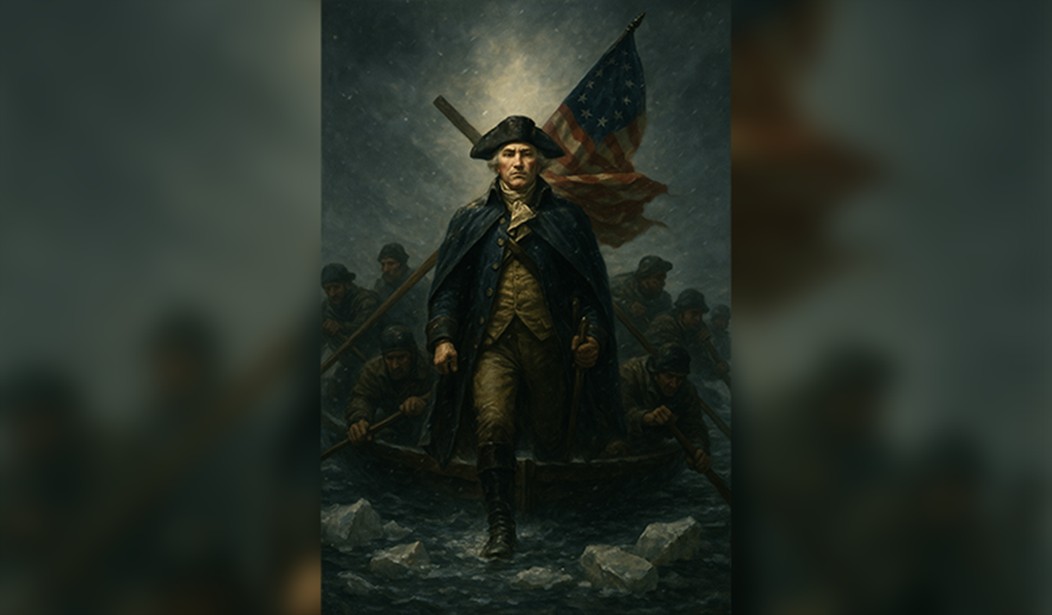
Washington’s Cross: The Retreat, the River, and the Republic

On July 4th, Americans celebrate independence. But we rarely ask: Who carried the weight of  that word when it meant nothing more than hope scrawled on parchment? In 1776, the  Revolution was not yet a republic. It was a retreat.

George Washington stood in the breach—not just as general, but as a man who bore the full  weight of a collapsing cause. His army was disbanding. The Congress was in flight. The enemy  was closing in. And yet, through those first desperate months, Washington held the line—often  by sheer force of will. The cross he carried was not only military—it was national and moral.

Defeat after defeat dogged the early months of the war. The British stormed New York. The  Continental Army staggered through New Jersey. Morale was near collapse. Men deserted.  Supplies vanished. And yet, Washington never surrendered—not to the British, not to fear, and  not to the easier path of blaming others.

The retreat across New Jersey is often remembered as tactical survival. But it was more than that.  It was symbolic. Washington, a man of wealth and stature, was being emptied—stripped of  certainty, stripped of glory. And still he pressed on, carrying the soul of a nation in exile.

Then came the river. The Delaware—icy, black, and swollen—stood between ruin and a second  chance. In the dead of night, on December 25th, 1776, Washington led his weary men across. It  was not merely a military maneuver. It was a baptism of the Revolution. From retreat to resolve.

That crossing was not a solitary moment of courage, but the culmination of a deeper calling.  Washington was no mere tactician. He was a man who believed in the hand of Providence. Again  and again in his writings, he invoked divine favor as an anchor. He did not fight for power. He  fought because he believed liberty was not man’s invention, but God’s intention.

Victory at Trenton. Momentum at Princeton. But even those triumphs were not final. The war  dragged on. Temptations abounded—temptations to seize control, to crown himself, to become  what the Revolution was fighting against. Washington resisted them all.

And then, at the end, he did something no conqueror had ever done: he gave power back. He  surrendered his sword to Congress. He walked away. And then, years later, when his nation  called him again—this time not to fight but to govern—he accepted, reluctantly, dutifully. He  became the first president not by ambition, but by necessity.

In doing so, he did more than lead. He showed the world what leadership in a republic looks like:  restraint, dignity, humility, and purpose.

The Fourth of July is not just about the signing of a document. It is about the forging of a people.  That forging happened through fire—through retreat, river, and ultimately, renewal.

Washington’s greatness was not in his genius or his charm, but in his calling. He accepted the  weight of history and bore it with resolve. He believed this new republic was not just a political  experiment, but a destined one. One that required character. One that demanded sacrifice.

We live now in the inheritance of that cross. Our republic survives not just because of systems,  but because one man was willing to walk through darkness carrying a nation’s hope on his back.

So as the fireworks light the sky, let us remember the retreat. Let us remember the river. And  above all, let us remember the man who made the republic possible—not by force, but by faith.


Robert Orlando | Jul 04, 2025

Source: Washington’s Cross: The Retreat, the River, and the Republic