Denison Forum – Israel targets Hamas leaders in military strikes on Qatar


The corruption of Hamas and Amy Coney Barrett on the power of the law

An Israeli air strike on Doha, Qatar, killed five members of Hamas and a member of Qatar’s Internal Security Force yesterday. The strike took place shortly after Hamas claimed responsibility for a shooting that killed six people at a bus stop in Jerusalem on Monday.

Hamas leaders were gathered in Qatar to discuss a US proposal for a ceasefire in Gaza. However, the New York Times also reports that the attack “targeted a residential headquarters where a number of senior Hamas politicians lived.”

Here’s a question worth considering: Why were Hamas leaders living in a residence more than a thousand miles from the Gaza Strip they presumably serve?

And here’s what many people don’t know: Many of Hamas’s leaders living abroad are billionaires. According to the Telegraph, those living in Qatar do so in “five-star luxury.” This while, according to the United Nations, 65 percent of the Palestinians in Gaza live below the poverty line.

This disparity exists because Hamas is a dictatorship. After it came to power in Gaza in 2007, there have been no more elections.

Its terrorist leaders could therefore stage a horrific invasion of Israel on Oct. 7 with no accountability to the people of Gaza. They can profit personally while impoverishing the population. They can hide themselves and their soldiers and weapons behind civilian shields because they view the people as a means to their ends.

In fact, they want Israeli soldiers to harm Gazan civilians in order to turn public opinion against Israel and advance Hamas.

“A government of laws, not of men”

By contrast, as John Adams noted, the United States is “a government of laws, not of men.”

Americans elect the president by national vote, the Senate by statewide vote, and the House of Representatives by district vote. These leaders then enact laws intended to serve the common good. If we disagree, we can elect leaders who will revise or rescind such laws, as has been done often in our history.

But what about holding our leaders accountable to the laws of the land? James Madison noted: “In framing a government which is to be administered by men over men, the great difficulty lies in this: You must first enable the government to control the governed; and in the next place oblige it to control itself.”

To enable such control, the Founders devised another layer of accountability, creating an unelected Supreme Court whose sole job is to interpret the Constitution and other laws as written and hold leaders and their actions accountable to them.

Amy Coney Barrett’s new book

These reflections have been on my mind in light of yesterday’s publication of Listening to the Law: Reflections on the Court and Constitution by Supreme Court associate justice Amy Coney Barrett. Her book is both readable and deeply fascinating, with behind-the-scenes descriptions of the actual work of the Court as well as her explanation of its function.

She states that the Court’s story cannot be separated from the US Constitution, “which is both its birth certificate and life’s work.” Accordingly, she writes:

We judges don’t dispense justice solely as we see it; instead, we’re constrained by law adopted through the democratic process. We exercise authority that the people have given us and resolve disputes according to the ground rules that the people have prescribed. . . .

In our system, a judge must abide by the rules set by the American people, both in the Constitution and legislation. . . . The guiding principle in every case is what the law requires, not what aligns with the judge’s own concept of justice.

Justice Barrett cites the death penalty as a personal example. A number of years ago, she co-authored an academic article “expressing a moral objection to capital punishment.” Then, soon after her appointment, the Court considered a death sentence imposed on Dzhokhar Tsarnaev, one of the Boston Marathon bombers. She joined the Court’s holding that Tsarnaev’s death sentence was valid. As she notes,

That was not the only course open to me. Given my view of capital punishment, I could have looked for ways to slant the law in favor of defendants facing the death penalty. There were, after all, plausible arguments going Tsarnaev’s way—the court of appeals agreed with him, as did three of my colleagues in dissent. Had I voted in favor of Tsarnaev, no one would have known that I did it because I objected to the death penalty rather than because I concluded that Tsarnaev had the better of the argument.

But that would have been a dereliction of duty. . . . My office doesn’t entitle me to align the legal system with my moral or policy views. Swearing to apply the law faithfully means deciding each case based on my best judgment about what the law is, not what it should be.

As she explains, judges are “referees, not kings, because they decide whether people have played by the rules rather than what the rules should be.”

“The hallmark of a life of holiness”

As Justice Barrett’s book and the corruption of Hamas officials both illustrate, a government of laws rather than of men is enormously preferrable to the reverse. However, such laws are of course created and enforced by people. And people, including the Founders, are obviously fallen and flawed. (Consider that the large majority of those who signed the Declaration of Independence, with its assertion that “all men are created equal,” were slaveowners at the time.)

This is why fallen people need wisdom beyond our own. It is why we need the laws of God and the power of God by which to obey them. The good news is that, as I noted yesterday, the same Holy Spirit who inspired the word of God now guides us to interpret it and empowers us to obey it.

The key is wanting such guidance and power. It is wanting to live by a higher standard than anything humans can produce. It is seeking the holiness only a holy God can manifest in us, measuring ourselves by the “fruit” of his Spirit in our lives (Galatians 5:22–23) and paying any price to settle for nothing less.

Br. Lucas Hall of the Society of St. John the Evangelist in Boston notes:

We might not be able to see over the horizon, but the pitched battle between good and evil that happens within the very mundane, day-to-day aspects of our lives is one we can take up again and again. The call to continue that work is the hallmark of a life of holiness. It may cost us everything: our lives, our understanding, our sense of clarity; and that offering is holy enough.

Will you seek such a “life of holiness” today?

Quote for the day:

“When you open your Bible, God opens his mouth.” —Mark Batterson

Our latest website resources:


Denison Forum

Days of Praise – The Imperatives of Redemption


by Henry M. Morris, Ph.D.

“From that time forth began Jesus to shew unto his disciples, how that he must go unto Jerusalem, and suffer many things of the elders and chief priests and scribes, and be killed, and be raised again the third day.” (Matthew 16:21)

The little word “must” (Greek deon) conveys urgency and necessity and is frequently used in connection with the redemptive work of the Lord Jesus Christ. When He was just a lad, He told His parents in the temple, “I must be about my Father’s business” (Luke 2:49).

But then the first time this key auxiliary verb is found in the New Testament is in the comprehensive prophetic statement of His mission, as given to His disciples in our text. He must go to Jerusalem to suffer, and die, and be raised the third day. As He was moving toward that climactic event, “he said unto them, I must preach the kingdom of God to other cities also: for therefore am I sent” (Luke 4:43). Furthermore, “I must work the works of him that sent me, while it is day: the night cometh, when no man can work” (John 9:4).

He had much preaching and much work to do in that brief three-year interim in world history. But then He must die! And why must He die? Because “the scriptures must be fulfilled” (Mark 14:49). “These are the words which I spake unto you…that all things must be fulfilled, which were written in the law of Moses, and in the prophets, and in the psalms, concerning me” (Luke 24:44). And how must He die? “As Moses lifted up the serpent in the wilderness, even so must the Son of man be lifted up” (John 3:14). But then, of course, “he must rise again from the dead” (John 20:9).

To what purpose must He be lifted up on the cross to die and then be raised again? Why, because “there is none other name under heaven given among men, whereby we must be saved” (Acts 4:12). HMM


https://www.icr.org/articles/type/6

My Utmost for His Highest by Oswald Chambers – Worshipping as the Occasion Arises


I saw you while you were still under the fig tree. — John 1:48

We imagine that we’ll rise to the occasion when a big crisis comes along. But a big crisis only reveals what we’re made of; it doesn’t put anything new into us. Are you telling yourself that you’ll do what’s necessary if God gives the call? You won’t—not unless you’re already rising to the occasion. You have to be the real thing with God before the big event, in the workshop of your private life with him.

Every day, God is giving you small, seemingly insignificant things to do, things which may go entirely unnoticed by the world. If you don’t believe God has engineered these things and therefore you aren’t using them as opportunities for worship, you’ll be revealed as unfit when the crisis comes. Crises always reveal character.

A private worshipping relationship with God is the great essential of spiritual fitness. The time will come when you have to step out from “under the fig tree”—out from your sheltered, private place—and go forth into the glare and the crowd. If you haven’t been worshipping in private, as the occasion arises, you’ll find you have no value to God in the outside world. But if you have been worshipping in private, you will be ready when God sends you out, because in the unseen life—the life no one saw but God—you’ve become perfectly fit. When the strain arrives, God will know he can rely on you.

Do you think you have no time for worshipping or praying or reading the Bible? Do you say to yourself, “I can’t be expected to live a worshipful life in the circumstances I’m in right now; my opportunity hasn’t come yet. When it does, of course I’ll be ready”? You won’t be. If you haven’t been worshipping where you are right now, as the occasion arises, then in the crisis you’ll be useless to yourself and an enormous hindrance to those around you. The workshop of the disciple’s life is the hidden, personal time spent worshipping God.

Proverbs 8-9; 2 Corinthians 3

Wisdom from Oswald

The place for the comforter is not that of one who preaches, but of the comrade who says nothing, but prays to God about the matter. The biggest thing you can do for those who are suffering is not to talk platitudes, not to ask questions, but to get into contact with God, and the “greater works” will be done by prayer (see John 14:12–13). Baffled to Fight Better, 56 R


https://utmost.org/

Billy Graham – Dream Great Dreams


Be thou faithful unto death . . .

—Revelation 2:10

In our day much of the world believes little or nothing. People are broad but shallow. Agnosticism, anxiety, emptiness, meaninglessness, have gripped much of the world—and even the church. Our youth are desperately searching for a purpose and a meaning in their lives. They are searching for fulfillment which they are not finding in sex and drugs. By contrast, our Pilgrim forebears stand as shining examples of men who were narrow but deep, certain of what they believed, unswerving in their loyalty, and passionately dedicated to the God they trusted, and for whom they would willingly have died. I say to you, more than 350 years after the Pilgrim Fathers landed in the New World: Dream great dreams, embrace great principles, renew your hope, but above all, like them, believe in the Christ who alone can give total meaning and an ultimate goal to your life. “For in Him we live and move and have our being.”

Prayer for the day

May I always be faithful to my belief in You, Lord Jesus Christ. Where there is despair, use me to bring Your hope.


https://billygraham.org/

Guideposts – Devotions for Women – Teach Us to Pray


One day Jesus was praying in a certain place. When he finished, one of his disciples said to him, “Lord, teach us to pray, just as John taught his disciples.”—Luke 11:1 (NIV)

Prayer is a heartfelt dialogue with your Heavenly Father. Jesus Himself demonstrated the significance of prayer, often retreating to tranquil places to talk with His Father. As you focus on your prayer life, ask Jesus to lead you. Let Him instruct you to pray with faith and honesty.

Lord, I am Your child, eager to learn all You have to teach me from our time together.


https://guideposts.org/daily-devotions/devotions-for-women/devotions-for-faith-prayer-devotions-for-women/

Our Daily Bread – Unashamed for Jesus


Do not be ashamed of the testimony about our Lord. 2 Timothy 1:8

Today’s Scripture

2 Timothy 1:6-12

Listen to Today’s Devotional

Apple LinkSpotify Link

Today’s Devotional

Before he was martyred for his steadfast faith in Jesus, an African minister whose name has not been preserved penned “A Martyr’s Prayer.” This profound message from another era has become known as “The Fellowship of the Unashamed.”

This pastor’s words present a challenge to all believers in Jesus—a challenge that echoes the words of the apostle Paul, who wrote in his letter to his young friend Timothy: “Do not be ashamed of the testimony about our Lord” (2 Timothy 1:8) because the Holy Spirit gives us “power, love and self-discipline” (v. 7).

Here, in part, is what that faithful African pastor wrote: “I am part of the fellowship of the unashamed. The decision has been made. I am a disciple of [Jesus] and I won’t back up, let up, slow down, back away, or be still. My past is redeemed. My present makes sense. My future is secure. . . . I live by faith, lean on His presence, walk by patience, lift by prayer, and labor by the Holy Spirit’s power.”

Both Timothy and that pastor faced difficulties we may never experience, but their words challenge us to stand strong when our faith is tested. We can remain unashamed because God “is able to guard what [we] have entrusted to him” (v. 12)—our lives and our future.

Reflect & Pray

What gives you courage to be unashamed for Christ? How can you follow the examples of others who were unashamed of the gospel?

Dear God, You promised that the Holy Spirit gives us power. Please help me to stand up for You and be unashamed in all kinds of situations.

Dive deeper into the wisdom shared in 1 and 2 Timothy.

Today’s Insights

In 2 Timothy 1:6-14, Paul’s advice to Timothy was in no way arrogant, nor was it given flippantly. He wrote out of his own deep suffering. In fact, he was imprisoned at that moment and understood that he’d soon be executed. “The time for my departure is near,” he wrote (2 Timothy 4:6). And yet the apostle was forward-looking. Just as Jesus gave instructions to His disciples the night before His crucifixion, so too Paul focused on developing the faith and ministry of his younger protégé Timothy, who would carry on the work. “Fan into flame the gift of God,” he urged him (1:6). “Join with me in suffering for the gospel, by the power of God” (v. 8). Paul didn’t fear death because he anticipated “the appearing of our Savior, Christ Jesus, who has destroyed death and has brought life and immortality to light through the gospel” (v. 10). We can also stand strong when our faith is tested.


http://www.odb.org

Joyce Meyer – Enjoy the Journey


We have sinned, even as our ancestors did; we have done wrong and acted wickedly. When our ancestors were in Egypt, they gave no thought to your miracles; they did not remember your many kindnesses, and they rebelled by the sea, the Red Sea.

Psalm 106:6-7 (NIV)

Today’s scriptures represent only two verses of many in Psalm 106 that remind us of how the Israelites behaved as God led them out of Egypt toward the Promised Land. Among acting out other bad attitudes, including complaining and rebellion, they became self-centered and demanding. This warns us of the dangers of a greedy heart, because such a heart is never satisfied—and that is an unsafe spiritual condition.

Although God had led the Israelites out of bondage in Egypt and had destroyed Pharaoh and his army, who were chasing after them, the Israelites were not satisfied (Psalm 106:8–25). No matter how much He provided for them, they always wanted more. They were on the way to the Promised Land, but they were not enjoying the journey. Many times, we have the same problem.

If people are not careful, they can waste their entire lives wanting what they do not have. No matter what their place in life, they always want something else. They keep murmuring and grumbling to God about what they want. When He gives it to them, they start complaining again because they want something more.

The Israelites eventually got what they asked for, but they were not ready to handle it. Ask God to give you a heart that is satisfied and content at every point along your life’s journey and one that is able to handle increase when it comes. Instead of complaining, learn to enjoy where you are on the way to where you are going.

Prayer of the Day: Father, thank You for leading me into a good place. Help me to stop complaining and instead, enjoy the journey. Teach me to be content and grateful for every gift You give me.


http://www.joycemeyer.org

Denison Forum – “Brutally savage” Russian airstrike kills more than 20 in Ukraine


More than twenty people were killed in a Russian attack on a village in eastern Ukraine this morning. Ukrainian President Volodymyr Zelensky posted on X: “A brutally savage Russian airstrike with an aerial bomb on the rural settlement of Yarova in the Donetsk region. Directly on people. Ordinary civilians. At the very moment when pensions were being disbursed.” His post showed horrific footage of bodies strewn across the ground.

When I saw the news, I admit that it felt like “more of the same.” This terrible war has been going on for more than three years. I have never been to Ukraine and don’t know that I know anyone directly affected by this tragic news.

And yet, far more people died in this morning’s airstrike than were killed in an attack on a bus depot in Jerusalem yesterday, a tragedy that I used to lead the Daily Article and have continued to grieve. My response comes from the fact that I have many friends in Israel, having led dozens of study tours there, and love the land and its people deeply.

Here’s my guess: many in our culture likely viewed the latter as I viewed the former, seeing another attack on Jews in Israel as irrelevant to their lives. Or even worse, they saw the victims of the Palestinian attackers as the villains and the attackers as the victims.

 “One of the fruits of the Oct. 7 attack”

One-sided media narratives against the Jewish state have been regularly debunked, but they persist, drowning out reporting that disagrees. As a result, 60 percent of young adults told a recent survey that they favor Hamas (which has been designated a terrorist organization by at least eight nations and the European Union) over Israel.

In addition, recent moves by various governments to recognize a Palestinian state have strengthened Hamas, whose leaders are calling them “one of the fruits of the Oct. 7 attack.”

The rise of antisemitism is tragically on display in America as well. According to the American Jewish Committee, attacks on Jews in our country “have reached shocking levels, affecting American Jewish behavior and sense of security like we haven’t witnessed before.” As just one example, a man speaking Hebrew was assaulted recently at the Santa Monica Pier, part of what officials are calling a “deplorable escalation of antisemitism across southern California.”

What explains this escalation?

The “Marvelization of reality”

Paul Miller is professor of the practice of international affairs at Georgetown University. A veteran of the war in Afghanistan, he served as a member of the National Security Council under Presidents George W. Bush and Barack Obama. In a recent article for The Dispatch, he explains “the problem with framing the Israel-Hamas conflict as one between the powerful and the powerless.”

Dr. Miller perceptively describes the process through which the left came to view Israel as:

  • A powerful overlord, with the Palestinians as the heroic resistance.
  • A “settler-colonial” state, with the Palestinians as indigenous rebels.
  • And “white,” with the Palestinians as their “nonwhite” victims.

As he shows, all three claims are spurious.

  • Israel became powerful by defending itself from nations seeking its annihilation. This does not make it an “overlord” or evil by definition.
  • It is not a settler-colonial state: it began resettling the land under the Ottoman and British empires and did not erase or replace the people already living in Palestine. In fact, the Arab population of historic Palestine grew from 1.4 million in 1948 to 7.4 million today.
  • Israel isn’t white or European; an equal number of Israeli citizens are descendants of immigrants from Asia and Africa as from Europe; 20 percent of its population is Arab.

However, as Dr. Miller explains, none of this matters to Israel’s critics. In what he calls the “Marvelization of reality” whereby “we expect reality to conform to the story arcs of fiction,” there’s the protagonist (the Palestinians), the goal (statehood and liberation), and the villain (Israel).

In a complex world, we crave simplicity, with white hats for the good guys and black hats for the bad guys. And to much of America these days, Israel wears the black hat.

From active participants to passive consumers

This “Marvelization of reality” is relevant beyond Israel in ways that speak to our national future.

As author and educator Neil Postman warned in Amusing Ourselves to Death: Public Discourse in the Age of Show Business, the television age turned us from active participants in society into passive consumers of entertaining sound bites. Digital technology exacerbates this trajectory, since we can now watch whatever we want for as long as it entertains us.

Since there is far too much content available for us to consume, we filter it by preconceived biases. And since we don’t produce the content we consume, we are at the mercy of those who do.

This is massively significant for our post-Christian society, which has no objective filter by which to discern truth from falsehood and, in fact, rejects the existence of objective truth itself. But it is just as significant for Christians in such a society.

We can be as secular as our secular friends. According to research by George Barna, about half of those who attend evangelical churches say there is no absolute moral truth and believe people can earn salvation through good works. Only four in ten believe humans are born into sin and need salvation in Christ. We can be swayed by entertainment that normalizes extramarital and same-sex sexual relations. We can evaluate political news through our partisan biases. We can measure success by cultural popularity rather than biblical obedience.

“He will guide you into all the truth”

I can claim that the answer is to view secular culture through the prism of the Bible, but skeptics will assert that this is just as biased as viewing the Bible through the prism of secular culture. After all, the Bible is a book like any other book, subjectively written by flawed people using words that must be subjectively interpreted by flawed people, or so they will say.

Here’s the difference: The Spirit who inspired these words can give us the discernment we need to understand and obey them.

Jesus promised that, in ways no secular person can understand, the Holy Spirit “will teach you all things and bring to your remembrance all that I have said to you” (John 14:26). Accordingly, “his anointing teaches you about everything, and is true, and is no lie” (1 John 2:27).

Because he literally lives in you (1 Corinthians 3:16), the Spirit can speak to your mind and influence your spirit in ways no one else can. If you “keep in step with the Spirit” (Galatians 5:25), “he will guide you into all the truth” (John 16:13). As the book of Acts and a plethora of spiritual awakenings across history show, he can empower and direct God’s people to impact their broken culture in transformative ways.

But he can guide only those who will follow. Would the Spirit say you are “in step” with him right now?

If not, why not?

Quote for the day:

“When we have the Holy Spirit, we have all that is needed to be all that God desires us to be.” —A. W. Tozer

Our latest website resources:


Denison Forum

Days of Praise – Pray or Sing


by Brian Thomas, Ph.D.

“Is any among you afflicted? let him pray. Is any merry? let him sing psalms.” (James 5:13)

Now here we find a plain lesson. It may even apply to every moment in life. When we feel up, then praise the Lord with song! When we feel down, then take the painful issue to the Lord. Though the instruction is simple, doing it daily is challenging. But we are directed to practice it.

James’ admonition to pray lies among many similar pointers. For example, “Pray without ceasing” (1 Thessalonians 5:17). Yes, this means carrying on a constant conversation with the Lord, from waking to sleeping. Even the psalms we sing are prayers themselves. “Oh that men would praise the LORD for his goodness” (Psalm 107:15)!

One way those without the Holy Spirit handle affliction is with complaining. Even Christians who “are after the flesh [and thus] do mind the things of the flesh” (Romans 8:5) complain as we did when we were “under the elements of the world” (Galatians 4:3). When we instead pray, we do “all things without murmurings and disputings” (Philippians 2:14) and thereby “shine as lights in the world” (Philippians 2:15).

And what a light we shine when we sing aloud to the Lord! Paul wrote we should speak “to yourselves in psalms and hymns and spiritual songs, singing and making melody in your heart to the Lord” (Ephesians 5:19).

How can believers find themselves singing and praying more often? Memorize and practice singing a favorite hymn or other worshipful song to the Lord. Sing it when times are good! When times are hard, recognize complaints as a lack of trust in the Father, tell Him the issue, and then trust Him again. BDT


https://www.icr.org/articles/type/6

My Utmost for His Highest by Oswald Chambers – Determinedly Discipline Other Things


We take captive every thought to make it obedient to Christ. And we will be ready to punish every act of disobedience. — 2 Corinthians 10:5–6

These verses point to the strenuous nature of Christian discipleship. Paul writes that he takes every thought captive, knowing that “every act of disobedience” to Christ will be punished. So much Christian activity today has never been disciplined in the way Paul describes; it has simply sprung into being on impulse. In our Lord’s life, every project was disciplined according to the will of his Father. There was not a single impulsive movement of the Son’s own will apart from his Father’s: “Whatever the Father does the Son also does” (John 5:19).

Think how different we are from the example set by Jesus. We start projects because we’ve had a vivid religious experience and felt the thrill of inspiration, not because we’re living in obedience to God’s will. We’d rather take impulsive action than be imprisoned and disciplined to obey Christ, because we overvalue practical work. Meanwhile, disciples who aren’t caught up in busywork and who do bring every project into captivity for the Lord are criticized and told they’re not sincere about God or souls.

True sincerity is found in obeying God, not in obeying the inclination to serve him; obeying an inclination is born of an undisciplined human nature. It’s inconceivable yet true that many Christians are motivated to work for God by their own human nature, a nature which has never been spiritualized by determined discipline.

We are prone to forgetting that, as Christians, we must be committed to Jesus Christ not only for salvation but for his point of view. We must commit ourselves to Jesus Christ’s view of God, of the world, of sin, and of the devil. When we do, we will understand that we have a responsibility to renew our minds, so that they may be transformed and brought into complete captivity for him.

Proverbs 6-7; 2 Corinthians 2

Wisdom from Oswald

The main characteristic which is the proof of the indwelling Spirit is an amazing tenderness in personal dealing, and a blazing truthfulness with regard to God’s Word.Disciples Indeed, 386 R


https://utmost.org/

Billy Graham – Science & Faith


He . . . has given you a full understanding of the truth.

—1 Corinthians 1:5 (TLB)

There is never any conflict between true science and our Christian faith. It is my own feeling that when all of the truth is known, it will be found that the Genesis story is a wonderfully accurate record of what took place when the world was created. This may be a telescoped record, giving only major points, but I believe it is scientifically accurate. To discard the Bible because we do not understand everything in it, or in the world, would be a foolish thing to do. Let me also suggest that teachers should confine themselves to those areas in which they are qualified. I have known unbelievers to attack the Christian faith through their teaching, even when they did not have the remotest idea of what true Christianity is. For instance, one does not send an art critic to write up a football game, or a sports writer to evaluate a painting. Ask God to give you the wisdom to keep things in their proper perspective, and—above all—faithfully read your Bible and pray every day. If you do, God will give you the faith and wisdom you need to meet any problem.

Prayer for the day

Father, each day as I read the Bible You reveal to me more of the reality of Your love and wisdom. I delight in Your Word!


https://billygraham.org/

Guideposts – Devotions for Women – The Power in Vulnerability


In the same way, the Spirit helps us in our weakness. We do not know what we ought to pray for, but the Spirit himself intercedes for us through wordless groans.—Romans 8:26 (NIV)

When the language escapes you, and you’re uncertain about how to articulate your prayers, have faith that the Spirit is advocating for you. He comprehends your deepest sorrows, your silent apprehensions, and your loftiest dreams. He converts your soundless sighs into prayers that resonate with the heart of God.

God, I’m grateful that when I am at my most vulnerable, the Spirit is with me, fortifying me and presenting my needs before You.


https://guideposts.org/daily-devotions/devotions-for-women/devotions-for-faith-prayer-devotions-for-women/

God Warned Us!

God Warned Against Calling Good Evil And Evil Good—And That Warning Still Stands Today

By Tony Perkins September 8, 2025

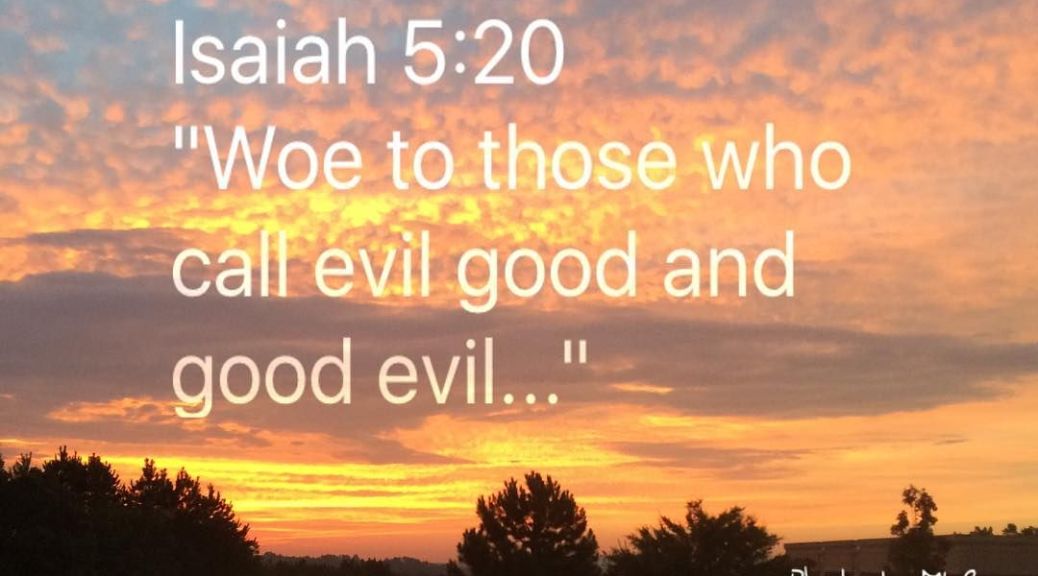
The prophet Isaiah warned a wayward nation: “Woe to those who call evil good, and good evil; who put darkness for light, and light for darkness.” Right was condemned as wrong, and what darkened the soul was repackaged as enlightenment. Isaiah cautioned that rejecting God’s Word would bring devastation. The warning still stands.

Two developments this past week expose the warning’s timeliness. For years, activists in media and government have advanced a gender ideology that tells even children they can choose an identity opposite of their biological reality. That confusion is not benign. In Minneapolis, a gunman opened fire during a school Mass at Annunciation Catholic Church, killing two children and injuring many others. Police identified the attacker as Robert Westman, who identified as transgender and, in notes posted before the attack, expressed regret and anger about “being trans” and deep confusion about identity.

This is not isolated. Recall the Covenant School massacre in Nashville, and now we have Minneapolis — both carried out by individuals who identified as transgender. The point is not to stigmatize anyone; it is to confront a reality our culture keeps trying to deny: ideas have consequences and masquerading a lie as the truth can be deadly. Yet rather than pause to reassess the narrative, legacy outlets scolded themselves for “misgendering.” NBC News even issued a correction after its initial report used what it called the wrong pronoun when referring to Westman as “he.” “She used female pronouns,” NBC sycophantically stated. This, despite law enforcement identifying the killer as male.

What a commentary on the press. Apologizing for mistakenly telling the truth reflects a deeper malady: trading evil for good and darkness for light. And when this deception is celebrated, children suffer. A civilization cannot protect what it refuses to name, and language becomes a veil for violence.

Still, the media is not the fountainhead of this confusion; they are its amplifiers. The deeper problem is philosophical. If truth is now established by feelings, then law must enforce the feelings. That brings us to this week’s Senate Foreign Relations Committee hearing. Virginia Senator Tim Kaine (D) berated a State Department nominee for affirming the American principle that our rights come from God, not government — calling that view “very, very troubling,” and likening it to the ideology of Iran’s theocracy. Think about that: the creed of the Declaration recast as dangerous and akin to the rule of the Ayatollahs.

Our Founders knew better. Thomas Jefferson wrote that we are “endowed by our Creator with certain unalienable Rights.” Alexander Hamilton insisted the “sacred rights of mankind” are “written, as with a sunbeam, by the hand of the Divinity itself” and cannot be erased by mortal power. Governments secure rights; they do not invent them. And when government presumes to redefine reality — whether human nature or human rights — it imperils the very people it claims to protect.

So here is the choice: return to first principles — truth over ideology, reality over rhetoric, the Creator over the state — or keep stumbling in the dark while calling it light. For the sake of our children and our country, choose the true light — and live by it.


Source: God Warned Against Calling Good Evil And Evil Good—And That Warning Still Stands Today – Harbinger’s Daily

Our Daily Bread – Embracing Christ’s Truth


Jesus answered, “I am the way and the truth and the life.” John 14:6

Today’s Scripture

John 14:1-7

Listen to Today’s Devotional

Apple LinkSpotify Link

Today’s Devotional

When my friend Connor takes pictures on his old film camera, he doesn’t bother to find attractive lighting or airbrush blemishes or crop out anything unsightly. His photos are startlingly raw. They stand out in my social media feed next to heavily edited photos of gorgeous people and places. Though unconventional, his work is beautiful because it communicates truth about how things really are.

We all long for what’s real, but sometimes the truth isn’t attractive to us. Close to the time of His death, Jesus declared, “I am . . . the truth” (John 14:6). His disciples were wondering how they could get to the Father’s house that Jesus spoke so longingly about (vv. 2-3). They failed to see that Jesus standing in front of them was the answer. They struggled to understand that He would bring victory through His own sacrifice.

Isaiah prophesied that the coming Messiah would have no beauty or majesty, “nothing in his appearance that we should desire him” (Isaiah 53:2). Much of what Jesus said was so challenging and unexpected that it turned religious people against Him (John 11:45-48). Yet He gave an open invitation to know the truth and find real life. “If you really know me,” said Jesus, “you will know my Father as well” (John 14:7). In the midst of an airbrushed and unrealistic world, we can embrace that beautiful, raw truth today!

Reflect & Pray

When and why have you sought superficial beauty instead of truth? How can you embrace Jesus’ words more and more?


Dear Jesus, I choose to follow You as the source of all truth.


Watch this video to see how Jesus is the way!

Today’s Insights

In John 13-17, we encounter a scene best viewed with reverence and awe. These chapters contain Christ’s final instructions to His disciples before His arrest and crucifixion. Immediately after Judas had departed to betray Christ, Jesus said, “Now the Son of Man is glorified and God is glorified in him” (13:31). The reality of His violent death for us was the pivot point of Christ’s entire mission. At first, the disciples couldn’t accept this. The crucifixion brought the rawest truth they would absorb. Yet His death was essential to providing restoration to our heavenly Father. Jesus promised, “My Father’s house has many rooms; if that were not so, would I have told you that I am going there to prepare a place for you?” His words “I will come back and take you to be with me” (14:2-3) convey the culmination of that raw truth—eternal joy with our Father.


http://www.odb.org

Joyce Meyer – God Opens Doors


…These are the words of him who is holy and true, who holds the key of David. What he opens no one can shut, and what he shuts no one can open.

Revelation 3:7 (NIV)

Trusting God to open the right doors and close the wrong ones for us brings much peace into our lives. I’ve tried pushing open a door I wanted to walk through, and the only result was frustration because it didn’t work. However, I have learned to trust God not only to open the right doors for me, but also to close the wrong ones.

When God opens a door for you, He makes things easy. When He closes a door, it is very difficult to continue trying to do what you have been doing. I have enjoyed many open doors in my life and ministry, but I have also had to learn that when God closes one, I need to walk away from it and trust Him for what is next.

God always has bigger and better plans for us if we will follow His lead. We don’t usually do the same thing all of our lives, because God promotes the faithful. Perhaps you are trying to hang on to something that God is finished with. If you will let it go, you will see that a new door will open and it will lead to something better than what you were trying to hold on to. God is faithful, and you can put all of your trust in Him.

Prayer of the Day: Father, I want to trust You to open right doors for me and close wrong ones. Help me recognize what You are doing in my life and follow Your guidance. In Jesus’ name, amen.


http://www.joycemeyer.org

Denison Forum – At least six killed by terrorists at bus stop in Jerusalem


At least six people were murdered and dozens were wounded when terrorists opened fire on civilians at a bus stop in Jerusalem this morning. The two attackers were killed at the scene; Hamas praised the shooting by “two Palestinian resistance fighters.”

This tragedy is especially personal for me on two levels. One is that I have led more than thirty study tours to Israel and love the country and its people. The other is that Ramot Junction, the site of the attack, is located at one of the main entry points to Jerusalem. I have traveled by it many times over the years and know that what happened there could have happened to me and to my fellow travelers.

In other news, Russia launched its largest attack on Ukraine over the weekend since the war began. At least four people were killed, including a two-month-old baby and the child’s mother. Dozens more were injured.

“I am the captain of my soul”

Queen Elizabeth II died on this day in 2022 at the age of ninety-six. Even though she was the longest-reigning monarch in British history, death found her as it will us all (unless Christ returns first).

Our very human fear of that moment is not just the threat of pain and suffering but also our innate dread of the unknown. We fear walking into a dark room or a dark forest, much less a dark future.

So we ignore the fact of human mortality when we can. I didn’t want to write about today’s tragic news from Jerusalem and Ukraine any more than you wanted to read about it. We euphemize death (people don’t die anymore, they merely “pass on”) and we seek to extend our lives through medical means.

When we fear death, we make this world our home and fight tooth and nail to stay here as long as we can. We measure success by temporal standards and drive ourselves to achieve it. And we go through life claiming, “I am the master of my fate: I am the captain of my soul.”

Therein lies the issue I want to address today.

Liberalism failed because it succeeded

Patrick J. Deneen is a political science professor at the University of Notre Dame. In his masterful book Why Liberalism Failed, he describes “liberalism” (from the Latin liber, meaning “free”) as a view that “conceived humans as rights-bearing individuals who could fashion and pursue for themselves their own version of the good life.” Over the centuries of its ascent, this view has led many of its followers to jettison everything that constrains individual freedom, including religious dogma, societal mores, and legal strictures.

Whether the topic is abortion, same-sex marriage, euthanasia, or a host of other cultural issues, Western culture has “evolved” to a place of existential freedom in the quest for a temporal utopia.

How is this working for us?

Professor Deneen notes that “some 70 percent of Americans believe that their country is moving in the wrong direction,” while “every institution of government shows declining levels of public trust by the citizenry.” After documenting a plethora of other social ills, he concludes, “Nearly every one of the promises that were made by the architects and creators of liberalism has been shattered.”

Then he draws this surprising lesson: “Liberalism has failed—not because it fell short, but because it was true to itself.” By removing barriers and constraints on human behavior built by religious teaching and legal structures, it has freed us to be our fallen selves. And when my “will to power” collides with yours, conflicts abound, terrorists attack, wars are launched, and the weak are oppressed by the strong.

Being freed from “lifelong slavery”

What is the solution?

The Bible teaches that Jesus died to “destroy the one who has the power of death, that is, the devil, and deliver those who through fear of death were subject to lifelong slavery” (Hebrews 2:14–15). We are enslaved to our fear of death unless we are set free by a power greater than death. And no other person in human history demonstrated such power except Jesus Christ.

Muslims venerate the tomb of the Prophet Muhammad in Medina. I have been to the tomb of Baháu’lláh, the founder of the Bahá’í faith, and visited the graves of some of our culture’s greatest heroes, from George Washington and Thomas Jefferson to Winston Churchill and Sir Isaac Newton. None rose physically from the tomb. Even Lazarus and others whom Jesus raised from the dead eventually died again.

Only Jesus demonstrated the power to defeat the grave. Therefore, only he can give that power to us. When we receive the gift of eternal life that he offers all who trust in him, we are freed from “lifelong slavery” to death.

But there’s a downside to the upside.

Those of us who trust in Christ as our Lord know we will “never die” (John 3:16). But we can therefore feel free to pursue whatever we want in this life, secure in the knowledge that Jesus will forgive our sins when we confess them and that nothing we do in this world can keep us from the world to come. We can even believe that our religious activities will earn God’s favor and blessing on the non-religious areas of our lives.

All of this is but a spiritual expression of our fallen “will to power.” Such a compartmentalized way of life makes Jesus a means to our ends. By seeking what we want, we forfeit what he wants for us. This grieves our Father and impoverishes us since the will of an all-knowing, all-loving God is by definition better for us than ours.

“You lead, I follow”

The solution is the simple but transforming decision to “submit yourselves therefore to God” (James 4:7), to “humble yourselves, therefore, under the mighty hand of God” (1 Peter 5:6) and to pray with Jesus, “Not my will, but yours, be done” (Luke 22:42).

In the words of a dear friend whose business and cultural influence spans the globe, it is to pray all through the day, “You lead, I follow.”

Dwight Moody counseled,

“Let God have your life; he can do more with it than you can.”

Do you agree?

Quote for the day:

“Carry the cross patiently, and with perfect submission; and in the end it shall carry you.” —Thomas à Kempis (1380–1471)

Our latest website resources:


Denison Forum

Days of Praise – Great and Precious Promises


by Henry M. Morris, Ph.D.

“Whereby are given unto us exceeding great and precious promises: that by these ye might be partakers of the divine nature, having escaped the corruption that is in the world through lust.” (2 Peter 1:4)

Scripture is full of promises, more than 2,800 in the Old Testament and more than 1,000 in the New. The first of these exceeding great and precious promises was the protevangelium (“first gospel”) of Genesis 3:15. Immediately after the fall of Adam and Eve through the temptation of Satan, God promised the coming Seed of the woman, the Savior: “And I will put enmity between thee and the woman, and between thy seed and her seed; [He] shall bruise thy head, and thou shalt bruise his heel.”

The first New Testament promise, significantly, is this same primeval promise, now made far more specific: “And she shall bring forth a son, and thou shalt call his name JESUS for he shall save his people from their sins” (Matthew 1:21).

The last promise of the Old Testament speaks of a second coming of “Elijah the prophet,” who will “turn the heart of the fathers to the children, and the heart of the children to their fathers” (Malachi 4:5-6). Then, the final promise of the Bible is the wonderful assurance of Christ concerning His glorious second coming: “Surely I come quickly” (Revelation 22:20).

Sandwiched between these great and precious promises are over 3,800 other promises. Some of these are in the form of promised warnings to the sinner but are promises nonetheless. Most promises, however, are to the obedient follower of God, and we know that “he is faithful that promised” (Hebrews 10:23). “For all the promises of God in him are yea, and in him Amen, unto the glory of God by us” (2 Corinthians 1:20). HMM


https://www.icr.org/articles/type/6

My Utmost for His Highest by Oswald Chambers – Determinedly Demolish Some Things


Demolish arguments and every pretension that sets itself up against the knowledge of God. —  2 Corinthians 10:5

Deliverance from sin isn’t deliverance from human nature. There are certain things in human nature, such as prejudice, which the Christian has to destroy by neglect; we have to flat-out refuse to give these things air. Other things we have to hand over to God, then stand still and witness the power of his salvation.

But there are also things which have to be destroyed by violence—by drawing on the divine strength imparted to us by God’s Spirit. Any theory or idea that raises itself up against the knowledge of God has to be determinedly demolished, not through fleshly effort or compromise but by drawing on his power. “The weapons we fight with are not the weapons of the world. On the contrary, they have divine power to demolish strongholds” (2 Corinthians 10:4).

Only when God has altered our disposition and we have entered into the experience of sanctification can this fight begin. Our fight isn’t against sin. We can never fight against sin; sin is Jesus Christ’s domain, and he deals with it through redemption. The war we must fight is the war of turning our natural life into a spiritual life. This is never easily done, nor does God intend it to be easily done. It’s done only through a series of moral choices. God doesn’t make us holy in the sense of instantly giving us a good character. He makes us holy in the sense of imparting innocence. It’s up to us to turn that innocence into holy character by a series of moral choices.

These choices are continually in conflict with the entrenched habits of our natural lives—the pretensions and arguments that raise themselves up against the knowledge of God. We can refuse to make the moral choice, knowing that if we do, we’ll be of no account in his kingdom. Or we can determinedly demolish every pretension, and let Jesus bring us to glory.

Proverbs 3-5; 2 Corinthians 1

Wisdom from Oswald

We must keep ourselves in touch, not with theories, but with people, and never get out of touch with human beings, if we are going to use the word of God skilfully amongst them. Workmen of God, 1341 L


https://utmost.org/

Billy Graham – Be Honest with God


God loveth a cheerful giver.

—2 Corinthians 9:7

The greatest blessing of giving is not on the financial side of the ledger but on the spiritual side. You receive a sense of being honest with God. You receive a consciousness that you are in partnership with God—that you are doing something constructive—that you are working with Him to reach the world for Jesus Christ. You are also enabled to hold on to this world’s goods loosely because the eternal values are always in view. How do you give? Is it liberally and cheerfully? Or is it sparingly and grudgingly? If you have been giving God the leftovers of your substance and your life, you have been missing the true joy and blessing of Christian giving and living.

Prayer for the day

Forgive me, almighty God, for so often giving You the leftovers. In my heart I know I can never outgive You.


https://billygraham.org/

Guideposts – Devotions for Women – God, Our Rescuer


For he will deliver the needy who cry out, the afflicted who have no one to help.—Psalm 72:12 (NIV)

God hears the cries of your heart and is ready to provide solace. Anchor your trust in His vow to uplift those who are in distress and enduring pain. Your faith serves as a lighthouse, encouraging others to turn to God in their darkest times, shining the hope that resides only in Him.

Lord, I am grateful beyond words for You being my Savior. Guide me to place unwavering trust in You.


https://guideposts.org/daily-devotions/devotions-for-women/devotions-for-faith-prayer-devotions-for-women/