All posts by broboinhawaii

Bible believing christian worshiping God in Hawaii and Pennsylvania

Joyce Meyer – To the Lord our God belong mercy and loving-kindness and forgiveness….

— Daniel 9:9 (AMPC)

There are many instances in the Old Testament of God’s anger when His people, the Israelites, would complain, disobey, and worship idols and false gods. But the amazing thing is how quickly God completely forgave them—He restored all of His benefits to them as soon as they turned back to Him.

Perhaps today you feel that God is angry with you. He is not! God is ready and willing to forgive your sins. He understands your weaknesses. He knows that we all, at times, succumb to temptations and wrong behavior, but He is a compassionate, loving Father who has provided for our forgiveness in Christ. All we need to do is ask and receive!

The very fact that we cannot do everything right is why God sent Jesus to pay the price for our redemption. God is not angry with you. Choose to accept and walk in His forgiveness today!

Prayer Starter: Lord, thank you for forgiving me and help me accept and walk in Your forgiveness today.

http://www.joycemeyer.org

Truth for Life; Alistair Begg –Abide in Me

Abide in me.

John 15:4

Communion with Christ is a certain cure for every ill. Whether it be the woodworm of sadness or the smothering impact of earthly treasure, close fellowship with the Lord Jesus will take bitterness from the one and excess from the other. Live near to Jesus, Christian, and it is a matter of secondary importance whether you live on the mountain of honor or in the valley of humiliation. Living near to Jesus, you are covered with the wings of God, and underneath you are the everlasting arms.

Let nothing keep you from that hallowed communion that is the unique privilege of a life hidden in Christ. Do not be content with the occasional meeting, but always seek to retain His company, for only in His presence will you find either comfort or safety. Jesus should not be for us a friend who calls us now and then, but one with whom we are in constant touch.

You have a difficult road before you: Make sure, pilgrim, that you do not go without your guide. You have to pass through the fiery furnace; do not enter unless, like Shadrach, Meshach, and Abednego, you have the Son of God to be your companion. You have to storm the walls of your corrupt heart: Do not attempt it until, like Joshua, you have seen the Captain of the Lord’s host, with His sword drawn in His hand. When you meet with many temptations, do not rest upon the arm of flesh. In every case, in every condition, you will need Jesus, but most of all when the iron gates of death shall open to you.

Keep close to the Captain of your salvation, lean upon His strength, ask Him to refresh you by His Spirit, and you will stand before Him at the end, without spot or blemish and at peace. Seeing you have lived with Him, and lived in Him here, you will abide with Him forever.

Devotional material is taken from Morning and Evening, written by C. H. Spurgeon, revised and updated by Alistair Begg. 

http://www.truthforlife.org

Kids4Truth Clubs Daily Devotional – God Is Big

“It is he [God] that sitteth upon the circle of the earth, and the inhabitants thereof are as grasshoppers.” (Isaiah 40:22a

When was the last time you were outside playing and you spotted a grasshopper or a cricket? Grasshoppers are a little bigger than crickets, but they are still so small that we can actually pick them up and hold them right in the palms of our hands.

Did you know that the Bible compares us to grasshoppers?

Isaiah 40:22 describes the inhabitants of the world (those who live in the world) “as grasshoppers” because they are so small compared to God.

This verse is using a metaphor (a word picture) to help us imagine the really big differences between us and God. Sometimes we get caught up with the things that happen in our lives, and our problems or things that make us happy seem really big. We start to forget that God is bigger than our problems and that God is better than anything or anyone else.

But this verse helps to remind us of what is real in the “big picture.” If we could back up from our lives and zoom out, out, out, like we were in a jet plane, or even a space station, and looking back down at Earth, we would be reminded that God’s universe is very big, and that we are very tiny compared to it. There are over six billion other people on Earth, each with his own set of talents and wishes and temptations and trials.

God can see the “big picture.” When He looks down on us, it is almost like we are a bunch of little grasshoppers hopping and buzzing around, doing our own business, thinking of our own small little lives. He knows each of us individually. He sees us and thinks about us, even when we let other things crowd Him out of our minds and we forget to think of Him.

Isaiah 40:22 reminds us that God is greater than we are! Just imagine yourself as a jumpy little grasshopper that God could cup in the palm of His hand.

Jesus said in John 10:29, “My Father, which gave them to me, is greater than all; and no man is able to pluck them out of my Father’s hand.”

“Them” in that verse is the people who have trusted Jesus as their Savior. No one is able to take them out of God’s hand! What a wonderful, protective, loving, and mighty God is the God of the Bible! He is greater than any trial or temptation that comes into our lives. He is stronger than wars or hurricanes or death. He is better than any other god we might be tempted to worship. He is mightier than any enemy who might try to scare us.

The next time you see a grasshopper or cricket, let it remind you of the “big picture”: If you have asked Jesus to be your Saviour, God holds you in His hand like that. He is a whole lot bigger than you are! God will hold you gently in His hand, and He will never let you go. He loves you too much.

God is truly greater than all of us.

My Response:
» Do I forget the “big picture” sometimes and imagine that God is only a small part of my life?
» How can I show that I believe God is bigger than my problems?

» How can I show that I believe God is better than the things that steal my attention away from Him?

Denison Forum – How a young Christian killed in Ukraine “still speaks” to our future

Anatoly was a twenty-six-year-old member of Irpin Bible Church, northwest of Kyiv, Ukraine. Note that he “was.”

An IT professional in a local company, he also served in his church’s media ministry. When the Russian invasion began on February 24, Anatoly evacuated his wife and other family members to safety. Then he courageously returned last Friday to join his church’s skeleton crew.

As a young mother and her two children fled Russian shelling, Anatoly volunteered to carry her suitcase across Irpin’s collapsed bridge. All four died when a Russian bombshell landed in the middle of their would-be humanitarian corridor.

As with Abel of old, “through his faith, though he died, he still speaks” (Hebrews 11:4). 

What is he saying to us?

Boy dropped from burning apartment building

Anatoly is just one of the hundreds if not thousands of Ukrainians killed so far in Vladimir Putin’s illegal and immoral invasion of their country. Why, then, did I want to tell his story this morning? Why did you choose to read it?

Here’s some good news: A three-year-old boy was dropped from the window of a burning apartment building in New Jersey Monday morning and caught by first responders. And some tragic news: a New Jersey man was swept out to sea while swimming off a beach in Hawaii last Saturday. And some more tragic news: an eleven-year-old girl died after falling under a moving school bus in Colorado last Thursday.

How did these stories make you feel?

I told each of them to make the same point: there is something in us that rejoices with those who rejoice and weeps with those who weep (Romans 12:15). This is part of our identity as beings made in the image of a God (Genesis 1:27) who loves each of us as if there were only one of us (St. Augustine). Each person is therefore someone of infinite worth to our Creator, not a means to the ends of a nation or its rulers.

This fact is vital to understanding the larger significance of the war in Ukraine for America’s future and American Christians today.

The future of our cultural freedom

US intelligence officials testified at a congressional hearing Tuesday that Putin is likely to escalate the conflict in Ukraine with no concern for civilian casualties, viewing his invasion as a “war he cannot afford to lose.”

Yesterday, we began discussing the fact that Russia’s invasion represents a “new Cold War” pitting the autocratic regimes of Russia and China against the individual freedom ethic espoused by Democratic nations of the West. Putin’s invasion is just one example of the degree to which he sees democracy as impeding his tsarist vision for Russia.

In response, I noted that America’s founders clearly linked freedom with morality and morality with religion.

They were right. 

As the Bible notes, we are all “pinched off from a piece of clay” (Job 33:6). As a result, “All have sinned and fall short of the glory of God” (Romans 3:23). It is therefore crucial that Christians embody and share with others the good news of God’s transforming grace (2 Corinthians 5:17).

Said bluntly, the future of our cultural freedom depends on the degree to which we embrace our spiritual freedom in Christ (cf. Galatians 5:1; John 8:31–32). In a day when American society is more opposed to Christian truth and morality than ever before, this fact is more crucial than ever before.

What percent of Americans elected our president?

The more secular our democracy becomes, the weaker our democracy becomes.

Princeton University scholar Allen C. Guelzo, in reviewing political scientist Jan-Werner Müller’s book Democracy Rules, cites Müller’s argument that “democracy has a deep philosophical affinity with relativism.” This is because our democracy rests on the two pillars of freedom (of speech, assembly, and association) and equality (of all citizens as equal political participants).

As a result, we make decisions based on popular voting, not objective truths, and trust that a free media will hold our leaders and institutions accountable.

But what happens when fewer and fewer of us participate in our democracy? (Kevin D. Williamson notes that Joe Biden was elected president by only 24.6 percent of all Americans.) 

What happens when the Americans who do vote are increasingly uninformed about the issues we face? And what happens when the people and the media they trust increasingly insist on tolerance over truth and seek personal and partisan advancement over the common good?

In The Republic, Plato warned that democracy is inherently flawed: freedom is supreme, but laws are not obeyed and chaos results. Leaders pander to the wants of the people whose support they require. A few people take advantage and accumulate great wealth. To restore order and put down the rich, the people then vote a tyrant into power and democracy ends.

Is this our future?

A difference that will echo in eternity

The last world war united Americans in defense of freedom and democracy with a sacrificial ethic and resolve of character that enabled us to defeat the greatest enemies our nation had ever faced. I am praying that the “new Cold War” will unite us once again in the same cause and evoke from us the same character.

And I am praying that America’s Christians will lead the way by surrendering daily to Christ as our King (Matthew 6:33; Ephesians 5:18) and then advancing his kingdom through our gracious witness, godly influence, and sacrificial faith (Ephesians 4:15).

In this day of global social media and connectivity, a single courageous Christian like Anatoly can make global headlines and a global impact. As with Isaiah of old, a single committed believer can use his or her influence to make a difference that will echo in eternity.

In answering his Lord’s call, the prophet cried, “Here I am! Send me” (Isaiah 6:8). 

What will you say to your Lord today?

NOTE: One very practical way we can be the presence of Christ to those suffering in this conflict is to care for refugees as Jesus cares for us. For more, please see our website article, “As 2 million Ukrainian refugees flee, how will you welcome the refugee next door?“

Denison Forum

In Touch Ministries; Charles Stanley – Carry the Light

The good news of salvation can bring light into the darkness of a person’s life.

2 Corinthians 4:1-6

Think about light and darkness and the way they affect your ability to see. In the dark, we have no sense of direction or courage to move forward, but in the light, everything is clear. In a very real sense, this perspective holds true in the spiritual realm as well. Those who dwell in spiritual darkness cannot perceive realities about God. 

Thankfully, the Lord has the power to help us discern truth. Jesus said, “I am the Light of the world; the one who follows Me will not walk in the darkness, but will have the Light of life” (John 8:12). That’s why the phrase “the light of the gospel of the glory of Christ” is the perfect description of the message of salvation (2 Cor. 4:4). It’s the good news that can transfer someone from spiritual darkness to light (Colossians 1:13). 

Those who have trusted Jesus as Savior are now “children of light” (Ephesians 5:8). God calls each of us to carry the gospel to an unbelieving world that cannot see in the dark. It’s important for our lifestyle to be distinct from the darkness around us. In your daily interactions, are you a light bearer who points the way to Christ?  

Bible in One Year: Joshua 10-12 

http://www.intouch.org/

Our Daily Bread — Our True Identity

Bible in a Year:

Jesus said . . . , “Don’t be afraid; from now on you will fish for people.”

Luke 5:10

Today’s Scripture & Insight:

Luke 5:1–11

First, the man selected a tackle box. Standing in his town’s small bait shop, he then filled a shopping cart with hooks, lures, bobbers, line, and weights. Finally, he added live bait and selected a new rod and reel. “Ever fished before?” the shop owner asked. The man said no. “Better add this,” said the owner. It was a first-aid kit. The man agreed and paid, then headed off to a day of not catching a thing—except snags on his fingers from his hooks and gear.

That wasn’t Simon Peter’s problem. An experienced fisherman, he was surprised one dawn when Jesus told him to push his boat into deep water and “let down the nets for a catch” (Luke 5:4). Despite a long night of catching nothing, Simon and his crew let down their nets and “caught such a large number of fish that their nets began to break.” In fact, his two boats started to sink from the haul (v. 6).

Seeing this, Simon Peter “fell at Jesus’ knees,” urging Him to “go away from me, Lord; I am a sinful man!” (v. 8). Jesus, however, knew Simon’s true identity. He told His disciple, “From now on you will fish for people.” Hearing that, Simon “left everything and followed” Christ (vv. 10–11). When we follow Him, He helps us learn who we are and what we’re called to do as His own.

By:  Patricia Raybon

Reflect & Pray

Outside of Jesus, what’s your identity or role in life? When you follow Him, how does your identity change?

Father, when I struggle to know my true identity, remind me to follow You to discover in You my true self.

http://www.odb.org

Grace to You; John MacArthur – Realizing the Need for Seriousness

“Let your laughter be turned into mourning, and your joy to gloom” (James 4:9b).

The humble individual will come to see that sin is not a laughing matter.

Humor has always had a place in popular culture. But in recent decades a more worldly side to humor has emerged. Situation comedies dominate the list of top-rated TV shows, but many are far from what’s really best for people to view. The shows’ contents so often pander to the immoral and tend to put down scriptural values. Meanwhile, the world also runs headlong after activities that stress fun and self-indulgence. Most people just want to enjoy life and not take anything too seriously.

God’s Word acknowledges that there is a proper time and place for joy and laughter: “a time to weep, and a time to laugh; a time to mourn, and a time to dance” (Eccles. 3:4). The psalmist tells of one appropriate time for laughter and happiness: “When the Lord brought back the captive ones of Zion, we were like those who dream. Then our mouth was filled with laughter, and our tongue with joyful shouting” (Ps. 126:1-2).

But the Lord requires that anyone who would have a relationship with Him must begin on a sober, serious, humble note. In today’s Scripture, James urges sinners to exchange worldly laughter and frivolity for godly mourning and gloom over their sin. The laughter spoken of here is the kind that indicates a leisurely indulging in human desires and pleasures. It pictures people who give no serious thought to God, to life, death, sin, judgment, or God’s demands for holiness. Without mincing words, it is the laughter of fools who reject God, not that of the humble who pursue Him.

James’s message is that saving faith and proper humility consist of a serious, heartfelt separation from the folly of worldliness as well as a genuine sorrow over sin. If these characteristics are present in your life, it is fairly safe evidence that you are one of the humble (see 1 John 2:15-17).

Suggestions for Prayer

Seek forgiveness for any thoughts and actions that have kept you from a serious attitude in your walk with God.

For Further Study

Read 1 John 2:15-17.

  • Think of several examples under each of the categories of worldliness in verse 16. Which of these are problems for you?
  • What steps can you take, with God’s help, to overcome them?

From Strength for Today by John MacArthur 

http://www.gty.org/

Joyce Meyer – Our Responsibility, God’s Responsibility

So do not worry or be anxious about tomorrow, for tomorrow will have worries and anxieties of its own. Sufficient for each day is its own trouble.

— Matthew 6:34 (AMPC)

Every believer has the responsibility to live right, to be a doer of the Word, and not just a hearer. Motivated by the reverential fear of the Lord, we can learn to live carefully and begin to make a difference in the world we live in. You and I need to be careful about what we allow into our spirits and how we live our lives. Proverbs 4:23 says to guard our heart with all diligence because out of it flows the springs of life. I believe we should have a careful attitude about how we live not a casual or a careless one. We need to be careful about what we watch, what we listen to, what we think about, and who our friends are.

I’m not saying we need to live according to the strict and demanding dictates of man. I had a very legalistic relationship with God for years and was miserable, so the last thing I want to do is teach legalism. What I am saying is that we shouldn’t compromise. We should recognize our responsibility as Christians to live our lives in such a way that unbelievers will be attracted to God by our behavior.

James 4:17 (AMPC) says, …any person who knows what is right to do but does not do it, to him it is sin. In other words, if we are convicted that something is wrong, then we must not do it—even if we see a hundred other people doing it and getting by with it. They may seem to be getting by with it, but sooner or later, we will all reap what we sow.

We know that worry and anxiety are not characteristics of a godly Christian. Yet so many Christians worry. You can choose to worry, or you can reject worry and choose to live with joy and peace. Most people don’t want to hear that message, and they seem to find an odd comfort in thinking that worrying is beyond their control. It is not. Worry is a really is a choice and it is a sin against God.

As long as I’ve been in the church, I don’t think I’ve ever heard anyone make that statement. But it is sin. It is calling God a liar. It is saying that God is not sufficiently able to take care of you and provide for your needs. Faith says, “God can do it.” Worry says, “God isn’t able to help me.”

When you worry, you not only call God a liar, but you have also allowed the devil to fill your mind with anxious thoughts. The more you focus on the problems, the larger they become. You start to fret and may even end up in despair.

Think of the words of the great apostle: I have strength for all things in Christ Who empowers me [I am ready for anything and equal to anything through Him Who infuses inner strength into me; I am self-sufficient in Christ’s sufficiency] (Philippians 4:13 AMPC) Or think of the words from the psalmist: Commit your way to the Lord [roll and repose each care of your load on Him]; trust (lean on, rely on, and be confident) also in Him and He will bring it to pass (Psalm 37:5 AMPC).

Jesus told His disciples not to be anxious and, as quoted above, not to worry about tomorrow. But He did more than teach those words; He lived them out: And Jesus replied to him, Foxes have holes and the birds of the air have lodging places, but the Son of Man has nowhere to lay His head (Matthew 8:20 AMPC). That wasn’t a complaint but a simple fact of life. Jesus trusted His Father’s provision for Him even when He didn’t know where He would sleep or what He would eat.

Jesus taught that we are not to worry about anything in life. He wasn’t speaking about planning and thinking ahead. He was saying that some people never act because fear holds them back. They can always tell you ten things that can go wrong with every plan. Jesus wants us to live a stress-free life. If you are worrying about what might happen, you’re hindering God from working in your life.

I heard about a couple whose daughter was diagnosed with a serious illness that wasn’t covered by insurance. The parents were struggling to pay all the medical bills. Not knowing what else to do, they both went into their bedroom for a lengthy time of prayer. Afterward the husband said, “It was really quite simple. I am God’s servant. My responsibility is to serve my Master. His responsibility is to take care of me.”

The next day, the doctors told them that their daughter was eligible to be part of an experimental surgery and all expenses would be paid. The wife smiled and said, “God is responsible, isn’t He?” What a testimony to their faith and trust in God who remains faithful and responsible at all times and in all things. God is no respecter of persons. What He does for one, He will do for another (see Romans 2:11). I encourage you to stop worrying and start trusting in Him.

Prayer Starter: Lord God, I know that worry is a sin against You. In the name of Jesus, help me overcome all anxieties and worry, and enable me to trust You to provide for every need I have.

http://www.joycemeyer.org

Truth for Life; Alistair Begg –Faith in Times of Sorrow

She called his name Ben-oni [son of sorrow]; but his father called him Benjamin [son of my right hand].

Genesis 35:18

To every matter there is a bright as well as a dark side. Rachel was overwhelmed with the sorrow of her own travail and death; Jacob, while mourning the loss of his wife, could see the mercy of the child’s birth. It is good for us if, while the flesh mourns over trials, our faith triumphs in divine faithfulness. Samson’s lion yielded honey, and so will our adversities, if rightly considered. The stormy sea feeds multitudes with its fish; the wild wood blooms with beautiful flowers; the stormy wind sweeps away disease, and the biting frost loosens the soil. Dark clouds distill bright drops, and black earth grows lovely flowers. A vein of good is to be found in every mine of evil. Sad hearts have peculiar skill in discovering the most disadvantageous point of view from which to gaze upon a trial; if there were only one swamp in the world, they would soon be up to their necks in it, and if there were only one lion in the desert they would hear it roar.

About us all there is a tinge of this wretched folly, and we are apt, at times, like Jacob, to cry, “All these things are against me.” Faith’s way of walking is to cast all care upon the Lord, and then to anticipate good results from the worst calamities. Like Gideon’s men, she does not fret over the broken pitcher but rejoices that the lamp shines with even more brilliance. Out of the rough oyster-shell of difficulty she extracts the rare pearl of honor, and from the deep ocean-caves of distress she discovers the priceless coral of experience. When her flood of prosperity ebbs, she finds treasures hidden in the sands; and when her sun of delight goes down, she turns her telescope of hope to the starry promises of heaven. When death itself appears, faith points to the light of resurrection beyond the grave, thus making our dying Ben-oni to be our living Benjamin.

Devotional material is taken from Morning and Evening, written by C. H. Spurgeon, revised and updated by Alistair Begg. 

http://www.truthforlife.org

Kids4Truth Clubs Daily Devotional – God Is Our Guide

“For this God is our God forever and forever: he will be our guide even unto death.” (Psalm 48:14)

For her twelfth birthday, Julie wanted to go on a real adventure. Her dad decided to take her whitewater rafting. Dad and Julie got onto a bus with rafts piled on top of it. Everyone on the bus was excited as they rode to the river. Julie could see that some parts of the river were calm, but there were some really strong rapids. When she and her dad got off the bus and they walked down to the bank of the river, she could see there were huge boulders in the middle of it. Suddenly, Julie started wondering what she had been thinking when she said she wanted an adventurous birthday. Maybe this wasn’t such a great idea, after all! She was shaking a little as Dad helped her get her lifejacket on and handed her a paddle.

But she felt better when a man with a Starbucks ball cap gathered some of them together and started explaining what they were going to do. He told the group that his name was Rob, and that he was going to be their guide for the day. He said that there are different categories of whitewater rapids. In the rating system they used, “1” meant “barely moving,” and “6” meant “Niagara Falls.” Julie blinked and swallowed hard. She had not planned to go rafting on anything like Niagara Falls! She was a little comforted to hear Rob say that the river they were going on was only a “3” or “4.”

Rob showed Julie and her group where and how they should sit in the raft, and then he jumped in the back. They traveled down the river, bouncing through rapids and dodging boulders. Rob would shout simple instructions as they moved along; they paddled when he said “Paddle” and rested when he said “Rest.” Julie could tell that they were sticking to the most exciting part of the river–where the action was. She also noticed that Rob was not only paddling with his oar, but he was also using his oar as a rudder. He used it to steer their raft around the boulders, through the peaceful waters, and over the rough rapids. Julie decided she trusted Rob. She smiled when she saw that he had somehow managed to keep his Starbucks cap on the whole time! Rob had guided people down this same river for years, and he knew how to get them down the river safely. And not only was he going to get them safely back on shore, but he was also going to take them right through the most exciting rapids and give them the best possible journey.

Life is a little like that river. Have you ever stopped to think that God is an expert Guide? Sometimes things go along smoothly. Things are good with your family and friends. God is guiding you through the smooth times. But the life of a Christian will not always be easy. A full life, with lots of the best kind of adventure, is going to have really rough times.

No matter what is happening right now, God is the most trustworthy Guide you could ever have. He is all-knowing. He sees everything and knows how to handle everything. He is all-powerful. He is absolute control of any circumstance that you face in your life, and He can protect you during anything you have to go through. He is faithful. He will not leave you to take care of yourself if you count on Him for His help. You can ask Him to guide you and give you wisdom through both the smooth and the rough places in your life. Depend on God to be your Guide. He is more than worthy of your trust.

God is a faithful and dependable Guide Who deserves our trust.

My Response:
» Do I lean on myself instead of asking God for wisdom and help?
» When I am in trouble, do I look to God as the only perfect Guide?

Denison Forum – Why the “new Cold War” affects every American Christian

UN High Commissioner for Refugees Filippo Grandi announced this morning that two million people have now fled Ukraine as conditions worsen by the day. How did you react to this news?

I fear that you and I are becoming accustomed to this unfolding tragedy and thus inured to the suffering we see in our daily headlines. This is understandable, as humans can withstand only so much bad news.

In this sense, Ukraine may be turning into another version of the coronavirus pandemic. We learned yesterday that the global COVID-19 death toll has passed six million. If one of the six million was someone close to you, I suspect you feel very differently about this report than those who have been spared such tragedy (so far).

Humans naturally filter the news through the lens of personal self-interest. For example, when I saw a headline about a “giant spider” infestation spreading across the southern US, I scanned the article to learn whether these insects are poisonous or not. (They are, but their bite is so tiny that they are reportedly not much of a threat to humans.) I did the same with news about a COVID-19 roadmap for the future, new DNA tests to detect diseases, and a report that women who visit a crisis pregnancy center are less likely to get an abortion.

Since, like you, I engage the culture through the prism of personal relevance, an article explaining why Russia’s invasion of Ukraine is the beginning of a “new Cold War” that will affect every American caught my immediate attention.

This challenge “will test our nation to its core”

Ukraine and Russia have been engaged in conflict for many centuries. (For the history of their often-fraught relationship, I recommend Mark Legg’s excellent article on our website, “Why does Russia want Ukraine?“).

However, as geopolitical analyst Elliott Abrams explains in an article titled “The New Cold War,” this time is different: “A fully rearmed, aggressive Russia and a rich, aggressive, and technologically advanced China [are telling] us that the international order that has lasted since 1945 must end, and American predominance with it.”

Abrams points to the Vladimir Putin–Xi Jinping joint statement on February 4: “The new inter-State relations between Russia and China are superior to political and military alliances of the Cold War era. Friendship between the two States has no limits, there are no ‘forbidden’ areas of cooperation.” He then comments: “This is a clear announcement of a new alliance meant to go beyond the Cold War—in part by creating a partnership that will lead to a very different outcome this time.”

In Abrams’ opinion, responding to this “new Cold War” is a challenge that “will test our nation to its core.” He believes the US should support Ukrainian resistance against the Russian invaders with money and weapons, then redeploy our European forces east to protect the nations that have borders with Russia and (now) Ukraine.

Next, he believes we should rally our allies across the globe, match China in advanced military technology, modernize and expand our nuclear arsenal, and enhance our energy production to support Europe as it weans itself from Russian energy sources.

According to Abrams, this “new Cold War” is fundamentally a battle between dictatorial autocracy and freedom. For context, he notes that Ronald Reagan “always understood that the Cold War was more than a conflict among states; it was even more fundamentally an ideological conflict between the forces of liberty and the powers that would snuff it out nation by nation until our own was in jeopardy.”

Abrams concludes: “This new struggle has been thrust upon us by Russia and China; there is no escaping it. Strength will be rewarded, and weakness will be punished. The days of easy American preponderance have come to an end; for the next few decades we will have to work hard to keep the global balance of forces from turning against us.”

Why liberty needs God

In such a global conflict between totalitarianism and freedom, you and I have a foundational role to play.

George Washington famously observed in his 1796 Farewell Address: “Of all the dispositions and habits which lead to political prosperity, religion and morality are indispensable supports.” Our first president added that “reason and experience both forbid us to expect that national morality can prevail in exclusion of religious principle.”

Consensual democracy depends upon consensual morality, but as Gen. Washington noted, morality requires religion. C. S. Lewis explained why in Mere Christianity: “You cannot make men good by law; and without good men you cannot have a good society.”

The good news is that “if anyone is in Christ, he is a new creation. The old has passed away; behold, the new has come” (2 Corinthians 5:17). Any of us who turns to Christ as our Savior and surrenders daily to his Spirit (Ephesians 5:18) can manifest his character (Romans 8:29; Galatians 5:22–23) in ways that empower our democracy and enrich the common good.

The bad news is that this new “Cold War” over freedom is coming at the worst time in American history for such holistic faith.

The fastest-growing religious demographic in America is that segment of our population that professes no religion. Gallup announced last year that the percentage of Americans who claim membership in a church, synagogue, or mosque has fallen below 50 percent for the first time in our nation’s history. As I document in my latest book, The Coming Tsunami, our culture brands Christians as outdated, intolerant, oppressive, and dangerous on a level unprecedented in our nation’s history.

As a result, it is imperative that you and I become the change we wish to see. We cannot give what we do not possess or lead others where we will not go. As I noted yesterday, our example as Spirit-empowered Christ-followers can attract our secular culture to the One who is transforming us by his love and grace. But if we are “conformed to this world” (Romans 12:2), why would the world want what we have?

We will continue this vital conversation tomorrow. For today, I invite you to join me in asking God to empower a great movement of believers who say to Jesus every day, “Whatever you ask, whatever it takes, whatever the cost.” Then let’s answer our prayer with our daily, holistic submission to our King.

In The Normal Christian Life, Watchman Nee observed: “Not until the Lordship of Jesus Christ is a settled thing in our hearts can the Spirit really operate effectively in us. He cannot direct our lives effectually until all control of them is committed to him. If we do not give him absolute authority in our lives, he can be present, but he cannot be powerful. The power of the Spirit is stayed.”

Is the Lordship of Jesus Christ a “settled thing” in your heart today?

If not, why not?

Denison Forum

In Touch Ministries; Charles Stanley – Take the Gospel to the World

Only God can save people; our responsibility is to share His message with the world.

Matthew 28:16-20

When a teacher gives an assignment, responsible students take it seriously. They do what’s required, give their best effort, and complete the work in a timely manner. 

Before ascending to heaven, Jesus gave us a commandment—an assignment really—but many Christians are half-hearted about completing the task. Christ told His followers to share the good news about salvation and make disciples of all nations, teaching them to obey His commands. Some believers dedicate themselves to this work, but others are either too busy or too timid to commit in this way. 

The scope of this assignment is global—to all nations. But that doesn’t mean everyone should move to another country. Some believers are called by God to go far from home, but others are called to minister right where they are. The mission field is all around us—in our homes, workplaces, schools, and neighborhoods. 

As Christ’s followers, we have the Holy Spirit residing within us, which means we have His power to fulfill this command. We can’t save anyone, but it’s our responsibility to tell people about the God who can. How will they believe unless they hear (Romans 10:14)?

Bible in One Year: Joshua 7-9

http://www.intouch.org/

Our Daily Bread — Willing to Wait

Bible in a Year:

Be patient, then, brothers and sisters, until the Lord’s coming. See how the farmer waits for the land to yield its valuable crop, patiently waiting for the autumn and spring rains.

James 5:7

Today’s Scripture & Insight:

James 5:7–12

Waiting can be a culprit in stealing our peace. According to computer scientist Ramesh Sitaraman, few things “inspire universal frustration and ire” in internet users as waiting for a sluggish web browser to load. His research says that we’re willing to wait an average of two seconds for an online video to load. After five seconds, the abandonment rate is about twenty-five percent, and after ten seconds, half of the users desert their efforts. We’re certainly an impatient bunch! 

James encouraged believers in Jesus to not abandon Him while they were waiting for His second coming. Christ’s return would motivate them to stand firm in the face of suffering and to love and honor one another (James 5:7–10). James used the example of the farmer to make his point. Like the farmer, who waited patiently for “autumn and spring rains” (v. 7) and for the land to yield its valuable crop, James encouraged believers to be patient under oppression until Jesus returned. And when He returned, He would right every wrong and bring shalom, peace. 

Sometimes, we’re tempted to forsake Jesus while we wait for Him. But as we wait, let’s “keep watch” (Matthew 24:42), remain faithful (25:14–30), and live out His character and ways (Colossians 3:12). Though we don’t know when Jesus will return, let’s wait patiently for Him, as long as it takes.

By:  Marvin Williams

Reflect & Pray

What’s hardest about waiting for Jesus’ return? How’s His return an incentive for living out His character and ways?

Jesus, I’ll wait for You. Though the world is dark and filled with pain, suffering, injustice, and uncertainty, I’ll wait for You. Though I don’t know the day or the time, I’ll wait for You. 

http://www.odb.org

Grace to You; John MacArthur – Denying Yourself

“I prayed to the Lord my God and confessed” (Dan. 9:4).

God will not respond to self-righteous prayers.

In Luke 18 Jesus told a parable to people who were trusting in their own self-righteousness. He said, “Two men went up into the temple to pray, one a Pharisee, and the other a tax-gatherer. The Pharisee stood and was praying thus to himself, ‘God, I thank Thee that I am not like other people: swindlers, unjust, adulterers, or even like this tax-gatherer. I fast twice a week; I pay tithes of all that I get.’

“But the tax-gatherer, standing some distance away, was even unwilling to lift up his eyes to heaven, but was beating his breast, saying, ‘God, be merciful to me, the sinner!’

“I tell you, this man went down to his house justified rather than the other; for everyone who exalts himself shall be humbled, but he who humbles himself shall be exalted” (vv. 10-14).

Apart from God’s mercy we cannot enter into God’s presence. The tax-gatherer knew that and pled for forgiveness. The Pharisee missed the point and went away without forgiveness.

Like the tax-gatherer, Daniel approached God with an attitude of confession and self-denial. He could have reminded God of his years of faithful service while in Babylon, but that didn’t enter his mind. He knew that in himself there was nothing to commend him to God. His only thought was for mercy for himself and his people, that God’s purposes could be realized through them.

As a Christian, you have the wonderful privilege of boldly entering into God’s presence “with a sincere heart in full assurance of faith” (Heb. 10:22). That privilege is rooted in God’s grace through Christ’s sacrifice and leaves no room for presumption or self-righteousness. Always guard your attitude in prayer so that you don’t unwittingly slip into a Pharisaic mentality.

Suggestions for Prayer

Memorize Psalm 117:1-118:1 and recite it often as a hymn of praise to the Lord.

For Further Study

Jesus had much to say about the self-righteous scribes and Pharisees of His day. Read Matthew 23, noting His scathing denunciations of their hypocritical attitudes and practices.

From Drawing Near by John MacArthur 

http://www.gty.org/

Joyce Meyer – Do Something Great with Your Life

I call heaven and earth to witness this day against you that I have set before you life and death, the blessings and the curses; therefore choose life, that you and your descendants may live.

— Deuteronomy 30:19 (AMPC)

I have often pondered why some people do great things with their lives while others do little or nothing at all. I know that the outcome of our lives is dependent not only upon God, but also upon something in us. Each of us must decide whether or not we will reach down deep inside and find the courage to press past fear, mistakes, mistreatment at the hands of others, seeming injustices, and all the challenges life presents. This is not something anyone else can do for us; we must do it ourselves.

I encourage you to take responsibility for your life and its outcome. Be grateful for God’s blessings of the past and believe for even more in the future.

What will you do with what God has given you? God gives everyone equal opportunity—you can choose life or death (see Deuteronomy 30:19). It is your choice, and I believe you will make the right one!

Prayer Starter: Father, I am thankful for the opportunity to do great things for You. I pray that You will help me make the most of each new day and make the choices You would have me make.

http://www.joycemeyer.org

Truth for Life; Alistair Begg –Abide upon the Rock of Ages

It is better to take refuge in the Lord than to trust in man.

Psalm 118:8

No doubt the reader has been tempted to rely upon the things that are seen instead of resting alone upon the invisible God. Christians often look to man for help and advice, and so spoil the noble simplicity of their reliance upon God.

Does this evening’s passage meet the eye of a child of God who is filled with anxiety? Then let us reason with you. You trust in Jesus, and only in Jesus, for your salvation; then why are you troubled? “Because of my great care.” Is it not written, “Cast your burden upon the Lord”? “Do not be anxious about anything, but in everything by prayer and supplication with thanksgiving let your requests be made known to God.”1

Can you trust God for your physical needs? “Ah! I wish I could.” If you cannot trust God with the physical, how dare you trust Him with the spiritual? Can you trust Him for your soul’s redemption, and yet not rely upon Him for a few lesser mercies? Is God not enough for your need, or is His all-sufficiency too narrow for your wants? Do you need another to watch for you when you have Him who sees every secret thing? Is His heart faint? Is His arm weary? If so, seek another God; but if He is infinite, omnipotent, faithful, true, and all-wise, why do you run around seeking another confidence? Why do you scour the earth to find another foundation when this is strong enough to bear all the weight that you can ever build on it?

Christian, do not mix your wine with water; do not tarnish the gold of faith with the dross of human confidence. Wait only upon God, and let your expectation be from Him. Do not covet Jonah’s gourd but rest in Jonah’s God. Let the sandy, shaky foundations be the choice of fools; but you, like one who sees the approaching storm, build for yourself an abiding place upon the Rock of Ages.

1) Philippians 4:6

Devotional material is taken from Morning and Evening, written by C. H. Spurgeon, revised and updated by Alistair Begg.

http://www.truthforlife.org

Kids4Truth Clubs Daily Devotional – God Created Languages

“Therefore is the name of it called Babel; because the LORD did there confound the language of all the earth: and from thence did the LORD scatter them abroad upon the face of all the earth.” ( Genesis 11:9)

Wouldn’t it be easier if everyone spoke the same language? Then we could all understand one another! Missionaries wouldn’t have to learn a foreign language when they left for the mission field, businessmen wouldn’t have to use interpreters when they had a business meeting overseas, and we could travel the world and be able to talk to anyone we wanted!

That may sound like a great plan to us, but God had even better plans. It was God Who created languages, and He did it for a purpose. For hundreds of years after God first created the world, everyone spoke the same language, and everyone could understand everyone else. The people became very wicked, though, and did what was right in their own eyes instead of loving and obeying God. To judge them, God sent a great flood to destroy the whole world. After God rescued Noah and his family from the flood, God gave them a command. They were supposed to multiply (grow the family) and spread out all over the world. In other words, they were supposed to scatter around and fill up the world with their children and grandchildren. Earth would be filled again with people who would know and worship the one true God.

Over the next years, Noah’s family did grow, but they did not move to different parts of the earth like God had commanded. In fact, instead of worshipping God the way He wanted them to worship Him (by obeying his commands, for example), they decided it would be a better idea to worship God by building a tower so high it would reach Him up in heaven. Have you ever heard of “The Tower of Babel”? The grandchildren and great-grandchildren of Noah’s family started building this tower and a city of worship around it.

God was angry at their plans to worship Him however they pleased while disobeying His other commands. They had not scattered around and replenished (re-filled) the different parts of the world. They had not taught their children and grandchildren the right things about God and how He expected to be worshipped.

In the middle of this huge construction project, God brought judgment down on it. He decided to mix up the languages. Can you imagine? Maybe you are on a ladder, working on the tower. You ask your second cousin to pass the hammer and some nails over…and he acts confused. He is not joking, either. He really has no clue what you are saying! He tries to answer you, but his words sound really funny to you, and you don’t know what he means. Now, you have known this guy all your life! He is related to you! And suddenly neither of you can understand what the other is saying?

It did not take long for the people to realize something very different was happening, and that God must have been the One doing it. God confused the languages of the people to help them stop doing things their own way and to help them fulfill his command to go out and replenish all the world. As people walked aimlessly around, trying to find someone who could understand them, they naturally divided into smaller groups according to language. These groups gradually split off from the others and moved to different parts of the world. They finally scattered and became the different nations of people we have today.

Wow! Did you know that God had such a specific purpose in creating languages? God has a purpose for everything He does, even in confusing a bunch of disobedient people thousands of years ago. A God Who can create languages is a powerful God! God’s plans are always designed to work things out for His glory and for His people’s best good. If only we would follow His plans instead of doing things our own way!

God is the sovereign Creator, and He can carry out what He wants done, even if people try to do the opposite.

My Response: » Am I disobeying what God has shown me He wants me to do? » Am I tempted to honor God my own way rather than how He wants to be honored? » Do I need to do a better job remembering that God has a specific purpose in everything He does?

Denison Forum – “We will fight to the last breath”: Why one man’s courage is empowering his nation

There are an estimated 115,000 weddings per day around the world, but one that occurred yesterday is making global headlines this morning. Here’s why: the bride wore fatigues, the groom wore a helmet, and the wedding party carried rifles and RPGs. Their wedding took place next to a military checkpoint in Kyiv, Ukraine.

Kyiv’s mayor attended the ceremony and noted that a week ago, the couple were “normal people” with no plans to carry weapons. Now “they want to defend our city together.” 

This courageous couple is simply following their president’s example. 

Andriy Yermak is head of the Presidential Office of Ukraine. He recently wrote an op-ed for the New York Times in which he stated, “I am writing this appeal from a bunker in the capital, with President Volodymyr Zelensky by my side. For a week, Russian bombs have fallen overhead. Despite the constant barrage of Russian fire, we stand firm and united in our resolve to defeat the invaders. We will fight to the last breath to protect our country.” 

Rep. John Garamendi, a senior member of the House of Representatives armed services committee, spoke with Mr. Zelensky on Saturday and said later, “He knows that he is at the top of the kill list, and he knows that his life is in jeopardy, but he has pushed that aside to lead this nation.” Rep. Garamendi called him “an incredible man of courage and leadership.” 

“The face of Ukrainian resilience” 

An article in the New Yorker by David Remnick is headlined, “Volodymyr Zelensky leads the defense of Ukraine with his voice.” Remnick describes Mr. Zelensky as having “assumed the role of Winston Churchill.” 

Michael Blake, a political philosopher at the University of Washington, notes that “whatever happens in the coming weeks,” the president “will go down as the face of Ukrainian resilience during the Russian invasion of his country.” He contrasts Mr. Zelensky’s everyman story with Vladimir Putin’s carefully cultivated “strongman” persona. In his opinion, Mr. Zelensky’s appeal resides largely in “the most central lesson of democratic politics—that our leaders are no better, morally speaking, than those they lead.” 

In a Western secular sense, Dr. Blake is absolutely correct. America’s founding document, for example, rejects the monarchy of our mother country for the assertion that “all men are created equal.” There’s a reason our presidential candidates appear at state fairs and town hall gatherings across the country. 

When they succeed, we feel that we have all succeeded. If someone can do something, Americans think we can do it. This Western focus on the individual stands in contrast to the stratified cultural classes of Europe, the class-centric ideology of Marxism, the caste system that still exists in many ways in India, and the tsarist and emperor-driven historical narratives of Russia and China. 

Mr. Zelensky is especially emblematic of this anyone-can-be-someone ethos. I wrote a biography of him for our website last Friday in which I chronicled his unlikely rise from improvisational comedy, television, and movie roles to president of his nation. 

“Struggling with all his energy” 

Offering the world a transformational example they can follow is a biblical model as well, but with an important caveat. 

Paul encouraged the Philippians, “What you have learned and received and heard and seen in me—practice these things, and the God of peace will be with you” (Philippians 4:9, my emphasis). It was not enough for the apostle to have taught them what they should practice—he showed them by his personal example that they could do so. 

But here’s what makes the biblical leadership-by-example ethos different from the secular modeling Dr. Blake and others are celebrating with regard to Volodymyr Zelensky’s courageous leadership: Christians know that the most powerful source of character and courage does not lie within us. 

Paul testified, “For this I toil, struggling with all his energy that he powerfully works within me” (Colossians 1:29, my emphasis). He embraced his Father’s assurance, “My grace is sufficient for you, for my power is made perfect in weakness” (2 Corinthians 12:9) and could therefore state, “I can do all things through Christ who strengthens me” (Philippians 4:13 NKJV). 

As we work, God works. As God works, we work. 

“The founder and perfecter of our faith” 

The writer of Hebrews 12 captured this balance perfectly. 

First, he reminded us that “we are surrounded by so great a cloud of witnesses” and encouraged us to emulate them: “Let us also lay aside every weight, and sin which clings so closely, and let us run with endurance the race that is set before us” (v. 1). 

Second, he showed us the power to run our race: “looking to Jesus, the founder and perfecter of our faith, who for the joy that was set before him endured the cross, despising the shame, and is seated at the right hand of the throne of God” (v. 2). 

When we remember what others have done in the power of Christ, we are encouraged to emulate them by making their Source ours and finding in Jesus the strength and hope we need. Then others will follow our example by trusting our Lord as theirs. 

“The thing that tells in the long run” 

As we intercede for Mr. Zelensky, Mr. Yermak, and other courageous Ukrainians, let’s pray not only for their courage, protection, and perseverance. Let’s also pray for God to redeem their suffering by leading them to Jesus and the source of strength they need most. 

Then let’s pray the same for ourselves. I often warn myself and others that self-sufficiency is spiritual suicide. Our greatest need as Christians is to be empowered and transformed every day by Christ (Romans 8:29; Ephesians 5:18). 

Oswald Chambers was right: “The thing that tells in the long run for God and for men is the steady persevering work in the unseen, and the only way to keep the life uncrushed is to live looking to God. Ask God to keep the eyes of your spirit open to the Risen Christ.” 

Are your eyes open to him today?

Denison Forum

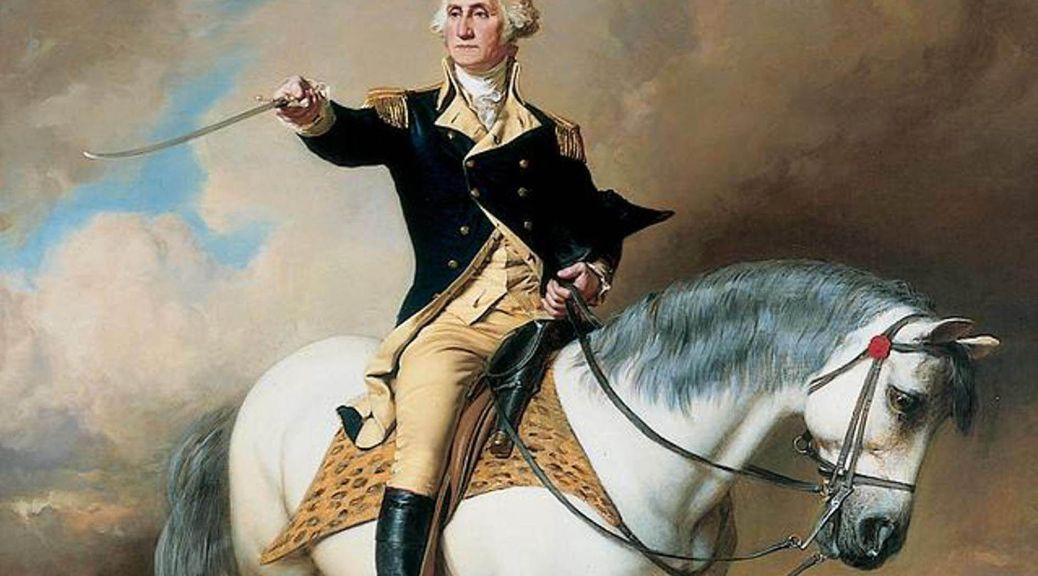
10 facts about George Washington academia and media won’t tell you

What do you know about George Washington? Do you know the real Washington or just the one that liberal academia and media want you to believe?

With Feb. 21 being President’s Day and Feb. 22 being the anniversary of the actual day George Washington was born, I thought there was no better time to honor again what I consider one of the greatest leaders ever born anywhere. I want to give the 10 facts about Washington liberal media and academia won’t tell you. These are also actually 10 reasons I believe everyone should admire Washington, no matter what their political persuasion.

Let me begin by highlighting a few bullets of background for some who might not be as familiar with this pillar of American life beyond the basics, as documented by the University of Virginia and the History Channel.

According to Encyclopedia Virginia and history.com, on Feb. 22, 1732, George Washington was born to a family of middling wealth in Westmoreland County, Virginia, the second son from the second marriage of a colonial plantation owner.

In 1752, at 23 years young, Washington joined the British army and served as a lieutenant in the French and Indian War.

In 1759, Washington married Martha Dandridge Custis, a wealthy widow, and adopted her two children. (She had two other children, but they had passed.)

In 1775, at 43 years old, Washington became the commander in chief of the Continental Army and, in 1783, led America to victory over the British after eight years of war.

As far as his political career, Washington served as a member of the House of Burgesses of Virginia from 1759–1774. He was also a member of the first and second Continental Congresses in 1774 and 1775. But while others were signing the Declaration of Independence, Washington was already on the battlefield fighting for independence. As the president of the Constitutional Convention in 1787, however, Washington was the first signer of the U.S. Constitution.

In 1789, Washington became the first president of the United States of America. He was unanimously elected by the 69 presidential electors to serve his first term from 1789 to 1793. He was then again unanimously elected for his second term from 1793 to 1797. He declined a third term.

Here are my Top 10 reasons why I think everyone should admire George Washington, and why I believe his life is still worthy to reflect today. (These are also the reasons I often cited the Father of America’s words and works among our other founders in my New York Times bestseller, “Black Belt Patriotism: How to Reawaken America.”)

10. When it came to decency, civility and morality, Washington stood for conservative values. He believed in traditional faith, freedom and family, as you’ll read in the following paragraphs. Even as a youth, Washington was a role model for many. At just 14 years of age, young George wrote out in freehand on his own volition, “110 Rules of Civility & Decent Behavior in Company and Conversation.” At age 17, George’s first official job was as surveyor of Culpeper County, Virginia.

9. Washington believed in the power of grit, guns and God. While others were frightened by signing of the Declaration of Independence, Washington was on the front lines battling for its tenets. He faced his fears, endured grave hardships and even stared death in the eyes while helping others to do the same. Who can forget the severe conditions of Valley Forge? And what about the repeated threat of personal injury?

Washington even dodged bullets on several occasions. The University of Virginia documents a few of them: “at Braddock’s Defeat where two horses were shot under him and he had four bullets in his clothes; at the final skirmish of the Forbes expedition, on November 12, 1758, where he rushed between two parties of British who were firing at each other; at Kip’s Bay skirmish on September 15, 1776, where he rashly exposed himself in an attempt to rally the militia; at the battle of Princeton, January 3, 1777; and when making a reconnaissance of the British after the landing at the Head of Elk on August 26, 1777.”

8. Washington wasn’t afraid of public opinion or challenging the status quo. He wasn’t politically correct. As history.com explained, “He struggled with advisers over what sort of image a president should project. He preferred one of dignity and humility and stumbled when encouraged to act out of character or monarchical. … A member of the Virginia planter class, he grew increasingly uncomfortable with the hypocrisy of owning slaves, yet publicly he promoted a gradual abolition of slavery. In his will he requested that his slaves be freed upon Martha’s death.” As far back as 1786, Washington said, “There is not a man living who wishes more sincerely than I do, to see a plan adopted for the abolition of it.”

7. Washington was cool but could be hot-headed – a man of integrity and character yet just as human as the rest of us. He could be stubborn to a fault, and had a dry sense of humor. Again, history.com explained, “Washington possessed that intangible quality of a born leader and had earned a reputation for coolness under fire and as a strict disciplinarian during the French and Indian campaign. … An extraordinary figure in American history and unusually tall at 6′ 3”, Washington was also an ordinary man. He loved cricket and fox-hunting, moved gracefully around a ballroom, was a Freemason and possibly a Deist, and was an astute observer of the darker side of human nature. His favorite foods were pineapples, Brazil nuts (hence the missing teeth from cracking the shells) and Saturday dinners of salt cod. He possessed a wry sense of humor and, like his wife Martha, tried to resist the vanities of public life. Washington could also explode into a rage when vexed in war or political battles. Loyal almost to a fault, he could also be unforgiving and cold when crossed. When Republican Thomas Jefferson admitted to slandering the president in an anonymous newspaper article for his support of Federalist Alexander Hamilton‘s policies, Washington cut Jefferson out of his life. On at least one occasion, Washington’s stubbornness inspired John Adams to refer to him as Old Muttonhead.”

6. Washington didn’t need power and wasn’t greedy. He was a first-class servant leader, who walked what he talked. He believed so firmly in our newly founded but poor republic that he took no pay for his service during the Revolutionary War (besides official expenses). And after eight long years of leading the war and retiring to his peaceful estate at Mt. Vernon, he reenlisted rather than stay retired. It is amazingly commendable – if not astonishing – that Washington came out of military retirement to serve two terms as president. He even had to borrow money to pay off debts and travel to his own inauguration.

5. Washington was passionately patriotic and believed in American Exceptionalism. And he didn’t allow personal obstacles or physical ailments to hinder his service to God, country and family. He wasn’t looking for a free ride or easy road.

Beginning at age17, Washington suffered multiple malaria attacks throughout his life. He even had a case of smallpox and dysentery, and he struggled with depression and hearing loss.

In 1779, during the middle of the Revolutionary War, Washington “feared for his survival,” not from bullets but an abscess of the tonsils. After all he had been through, at 57 years old with his war-torn body and reportedly a single real tooth in his mouth, Washington left behind the comfort of his estate on the edge of the Potomac River and traveled eight days to New York, where he was sworn in as president.

4. Washington was a devoted and traditional family man. In 1759, at 27 years of age, Washington married widow Martha Dandridge Custis. Though Martha and George had no children, he adopted her daughter and son from her former marriage. They also provided personal and financial support to nephews, nieces and other extended family members.

If it’s true that behind every great man is a great woman (and it is, as proof even with my wife, Gena, who does more for me and others than the world will ever know), then Washington’s wife, Martha, is definitely to be credited for part of the power behind the myth of the Father of our Nation. For example, for each of the eight years of the Revolutionary War, Martha came to Washington’s winter encampments (including Valley Forge) to boost his morale as well as that of the other officers.

No doubt Martha struggled to support Washington’s departure as general and president. Imagine how she must have repeatedly worried about him and his welfare over the years on the battlefield. Imagine her relief as he finally came home from eight years of leading the Revolutionary War only to “give him up again” for his country’s service as president. Though Martha refused to attend his inauguration, she stood by her man, living with him at the temporary U.S. capitals of New York and Philadelphia.

Although Martha and George had a strong relationship, there’s no doubt he had a lifelong love interest in the beautiful and intellectually astute Sally Fairfax, the wife of his friend George William Fairfax, whom he had met when he was just 16 years of age. Sally’s father would never allow her to marry someone other than from a wealthy, upper class like her family, and Washington didn’t fit the bill.

Mt. Vernon historians noted how Sally “remained ever faithful to her marriage” and yet “a good friend of Washington and his wife.” In 1773, Sally moved with her husband to England, where he died in 1787. In 1798, just a year before Washington’s death, he wrote Sally, urging her to return to Virginia. He added that nothing could “eradicate from my mind the recollection of those happy moments, the happiest in my life, which I have enjoyed in your company.” Sally never returned and died alone in England in 1811.

George was married to Martha for roughly 40 years. Just prior to her own death in 1802, Martha understandably destroyed nearly all of Washington’s letters to her, though three did survive.

Regarding Sally Fairfax, no man is perfect, and that included George Washington. He himself confessed: “We must take human nature as we find it. Perfection falls not to the share of mortals.” Remembering that was likely the key to his humility, service and mercy to others.

3. Washington highly revered God and religion, often elevating their irreplaceable and invaluable roles in our republic. For example, in 1789, during the same time when the First Amendment was written, then-President Washington signed into law the Northwest Ordinance, which states, “Religion, morality, and knowledge, being necessary to good government and the happiness of mankind, schools and the means of education shall forever be encouraged.”

On Oct. 3, 1789, George Washington issued the First Presidential Thanksgiving Proclamation to God: “a day of public thanksgiving and prayer to be observed by acknowledging, with grateful hearts, the many signal favors of Almighty God.”

Regarding Washington’s often-quoted practice of leaving church services before receiving the Eucharist (Communion), maybe his own struggle was born from his wrestling with his own humanity and immoral thoughts of Sally Fairfax or possibly even the human toll that incurred when leading the war. His refusal to receive the Eucharist doesn’t prove his unbelief in Christ but rather supports it and his reverence for what the Communion elements represented. (That makes more sense to me than Paul F. Boller, respected presidential historian, who wrote in 1963, “It cannot be said that Washington ever experienced any feeling of personal intimacy or communion with his God.”)

For a true reflection of Washington’s genuine Christian faith and intimacy with God, one must-see at Washington’s own Mount Vernon estate the museum’s exhibition display and video (set up within a mini-chapel setting) of how he esteemed and served God and churches – not exactly what you read in today’s public school textbooks or hear in classrooms. What you’ll watch and read there is that he was as passionate a believer in Jesus Christ as most Christians today. If only we taught about his religion what is displayed at the museum, rather than trite comments that he was liberal, a deist and not intimate with his Savior.

2. Washington opposed big government and big-government spending. He led our nation with frugality and self-sacrifice, again, refusing to accept pay as commander in chief of the Continental Army. He was reluctant even to be paid as president, but was convinced by others it would not be a good precedent for future presidents. So, Congress gave Washington $25,000 a year, the largest salary in the U.S. for personal service at the time (2% of the national budget).

It should be noted that being president then didn’t have the thousands of perks that come with the position today, including a free mansion in which to live. For example, after staying for 16 months in New York, George and Martha rented (initial lease was two years) a mansion in Philadelphia (the nation’s capital before D.C.), where they lived from 1790-1797. Washington had to use his salary for both official duties and to maintain his personal affairs.

Much is made today of Washington’s financial fortune (USA Today once labeled him “the big daddy of presidential wealth”), but most overlook that his wealth was largely amassed in the Mount Vernon estate – which he inherited from his elder half-brother in 1761, Martha’s land and slaves inherited from her former husband, and in Washington’s presidential salary that only started after he was 57 years old.

Sure, he had lots of assets, but his liquidity didn’t flow like the wealthy today. Remember, back then, there was no established national banking system. Bartering and oscillating state currencies and commodities were the names of the game (until the 1792 Coinage Act), with the value of land fluctuating sharply based upon weather and crop production. As the Atlantic put it, “Because there was no central banking system and no regulatory framework for commodities, markets were subject to panics in ways unknown today.” Again, consider that at 57 years old, Washington even had to borrow money to pay off debts and to travel to his own inauguration.

1. Washington died like he lived, gracefully and full of grit.

In 1797, after winning the Revolutionary War and serving two presidential terms in office, Washington finally retired to Mount Vernon at 65 years of age, but he would only enjoy his rest for two years.

On Dec. 14, 1799, George Washington died of a severe respiratory sickness. His beloved Martha died only three years later, on May 22, 1802.

In his will, he humbly and simply referred to himself as “George Washington of Mount Vernon, a citizen of the United States, and late President of the same.”

At first, the Washingtons were laid to rest in an inconspicuous unmarked brick tomb at Mounty Vernon. But their final resting place was in a crypt there that bears the title of him whom refused to be king. The engraved words over the tomb make known the title by which people knew Washington best back then – not as president but general.

The inscription reads: “Within this enclosure rest the remains of Gen. George Washington.” And over the door of the inner tomb is inscribed these large words from Jesus Himself in the Gospel of John (11:25): “I am the Resurrection and the Life.”

Washington’s good friend Henry Lee probably summarized his life, leadership and legacy best in the eulogy for our first president: “First in war, first in peace, and first in the hearts of his countrymen.”

And so he remains, or should remain, always. His type of character, integrity and leadership are rare and desperately needed today maybe even more so than they were in our republic’s formation.

During this week we honor President’s Day and Washington’s own birthday, please consider sharing this article’s information on your social media and with those you love so that they can also know the real George Washington.

God, please give the U.S. more men and women like George and Martha Washington.

(For more on the monumental figure of George Washington, I recommend the amazing books, “Sacred Fire,” by Peter Lillback and Jerry Newcombe, and “The Bulletproof George Washington,” by David Barton)


Content created by the WND News Center is available for re-publication 


Chuck Norris honors our 1st president, who ‘believed in the power of grit, guns and God’

Source: 10 facts about Geo. Washington academia and media won’t tell you

In Touch Ministries; Charles Stanley – How to Deal With Sin

We can’t eliminate sin from our life, but we can confess it to the Lord and draw closer to Him.

1 John 1:5-10, 1 John 2:1-6

Christ’s sacrifice on the cross paid for all our sins, but believers are still susceptible to temptation and disobedience. Therefore, we must understand what to do when we yield to our sinful desires. Knowing our struggle, God has graciously given us a way to receive cleansing so we can continue to grow in holiness. We’re to … 

• See sin as God sees it. Our Father is absolutely pure, and to Him, every sin is an offense that violates His law, grieves the Holy Spirit, and belittles Christ’s sacrifice. 

• Take responsibility for it. Trying to soften sin’s heinous nature by calling it a mistake, weakness, or shortcoming is unacceptable. We must acknowledge our guilt and disobedience rather than make excuses or blame others. 

• Confess it. Agreeing with God about our wrongdoing is a blessed privilege because He then washes us clean of the guilt. And what’s more, He empowers us to turn away from that sin in repentance so we can begin walking afresh in holiness.

Although John explained how we are to deal with sin, his main purpose was to encourage us to turn from it and walk in obedience to God. The longer we are Christians, the less sin should characterize our life. 

Bible in One Year: Deuteronomy 1-2 

http://www.intouch.org/