Turning Point; David Jeremiah – God With Us


NEW!Listen Now

Therefore the Lord Himself will give you a sign: Behold, the virgin shall conceive and bear a Son, and shall call His name Immanuel.
Isaiah 7:14

Recommended Reading: Psalm 46:7-11

Greg Livingstone, the missionary giant who died last year, never knew his dad. Nor was his stepfather in his life. Greg was raised in foster homes. But when he found Christ as Savior, he said Jesus took up residence in him. “I had finally been adopted by a Father who would stick with me.”1

There are times you might feel alone, but always know God is with you. He’s immediately accessible to you wherever you go. Jesus was called Immanuel, meaning “God with us.” He has adopted you into His family. He loves you constantly. We certainly need human companionship, but when we don’t have as much fellowship as we need, let’s look to Him.

If you’re feeling alone today, you can talk to God and give Him thanks for never leaving your side.

I must learn the art of taking minute vacations—of slowing down to look at a flower, to chat with a friend, to pat a dog, to smile at a child, to read a few pages from a good book. I need to take more time to reflect, ponder, and enjoy companionship with God.
Greg Livingstone

  1. Greg Livingstone, You’ve Got Libya (Monarch Books, 2014), 52.


https://www.davidjeremiah.org

Our Daily Bread – Life and Death


Death is the destiny of everyone; the living should take this to heart. Ecclesiastes 7:2

Today’s Scripture

Ecclesiastes 7:1-10

Listen to Today’s Devotion

Apple LinkSpotify Link

Today’s Devotion

Besides attending ceremonies and signing policies after taking the oath of office, new US presidents are greeted with a cold reality: They start making their own funeral plans. That way the country will be prepared to celebrate their lives when they die. George H. W. Bush was asked if it was “weird” to be planning his own memorial. He replied, “You kind of get used to it.” Historians will write about their legacies, but presidents get to plan the personal and traditional parts of their services and the ways they will be remembered.

Death is a sobering reality we all must face. King Solomon, who searched for the meaning of life in pleasure, work, and knowledge, and came up empty, said, “It is better to go to a house of mourning than to go to a house of feasting” (Ecclesiastes 7:2). Negative situations give more perspective than happy times. If we face the reality of death, we can better prepare for what comes after. Verse two adds, “Death is the destiny of everyone; the living should take this to heart.” We should ponder it and plan on it.

Preparation comes from receiving forgiveness of sin from Jesus, who died for us and rose again. Everyone dies because death came when the first man, Adam, disobeyed God, and we have followed his ways. But “everyone who belongs to Christ will be given new life” (1 Corinthians 15:22 nlt).

Reflect & Pray

How have you prepared to face death? How do you want to be remembered?

Thank You, saving God, for promising that in Christ all who die will be made alive again.

Today’s Insights

The Teacher in Ecclesiastes (1:1) offers the bleak perspective that for human beings, who are destined to die, attempting to grasp a firm understanding of life’s meaning is futile, like trying to take hold of the wind (v. 14). Yet the Teacher doesn’t conclude that pursuing wisdom is pointless. Chapter 7 emphasizes that some paths in life are “better” than others (vv. 1, 2, 3, 5, 8, 10). Death’s finality (vv. 1-2, 4) clarifies the relative greater value of some things over others—such as a life guided by wisdom instead of foolishness (v. 11). Still, Ecclesiastes contains an unresolved tension: Wisdom has value, yet death erases the permanence of all that’s valuable. The New Testament offers a fuller answer to the questions death raises—insisting that Jesus defeated death’s power through His death and resurrection (1 Corinthians 15:54-57; 2 Timothy 1:10). Through Christ, all of life regains meaning in light of eternity.


http://www.odb.org

Denison Forum – Justice Alito temporarily restores access to abortion pill


Last Friday, a federal appeals court blocked the mailing of mifepristone prescriptions, restricting access to one of the most common means of abortion in the US. On Monday, Justice Samuel Alito temporarily restored broad access to the drug, suspending the lower court’s ruling for one week so the full Supreme Court can consider emergency appeals and decide how to proceed.

Pro-life advocates like me celebrated in 2022 when Roe v. Wade was finally overturned, but we grieve that a majority of Americans still think abortion should be legal in all or most cases. And since the majority of abortions in the US are obtained through medications, if the court’s latest action stands, millions more babies will die.

In our highly secularized, post-Christian culture, it seems like it’s one step forward, two steps back. But there’s an antidote to the discouragement many of us feel.

“Everyone’s obsessed with ‘grandma things’”

I don’t typically read House Beautiful, but their recent headline caught my eye: “Psychologists Explain Why Everyone’s Suddenly Obsessed with ‘Grandma Things.’” Meghan Shouse reports:

From the renewed interest in vintage and antique-inspired design to celebrities openly embracing slower, more traditional pastimes like knitting, gardening, and needlepoint, there’s an unmistakable shift toward a more ‘grandmotherly’ way of living—particularly among young people.

Continue reading Denison Forum – Justice Alito temporarily restores access to abortion pill

Harvest Ministries; Greg Laurie – The Faithful Sower


 Plant your seed in the morning and keep busy all afternoon, for you don’t know if profit will come from one activity or another—or maybe both. 

—Ecclesiastes 11:6 NLT

Scripture:

Ecclesiastes 11:6 

Here’s something amazing to think about. Saul, who would later become the apostle Paul, was doing the work of God’s kingdom before he was even in it. Remember, Saul was one of the early enemies of the Christian faith. He zealously persecuted believers, which led many to flee their homes and move to distant lands—taking the gospel with them.

Had Saul not been so relentless in his persecution of the church, I think the first-century Christians probably would have been content to stay in their little holy huddle in Jerusalem and never leave town. After all, their situation was almost ideal. God had blessed their evangelism efforts in the city, so there were believers all around. They had no need to leave Jerusalem. But because of Saul’s persecution, Christians were forced to spread out. They took the Good News of Jesus to places where it may not have gone otherwise, or at least not as quickly as it did.

Eventually, of course, Saul stopped persecuting believers and became a believer himself. And I think the person who might have had the greatest influence in bringing about his conversion was Stephen, the church’s first martyr. I believe it could have been Stephen’s bold testimony that threw fuel on Saul’s fire because Saul was under the conviction of the Holy Spirit. Stephen didn’t have a long ministry. He never wrote a book of the New Testament. But if his only convert was Saul of Tarsus, then his ministry was profoundly successful.

The same goes for your Christian ministry. You may not reach millions with the gospel. You may not reach thousands. You may not reach hundreds. But you may be the person whom God uses to reach someone who will, in turn, change the world. Or it may be a child you raised in the way of the Lord who reaches someone else, who talks to someone else, and eventually shares the gospel with someone like Saul. So, here’s what you need to realize: It’s not over until it’s over.

Ecclesiastes 11:6 says, “Plant your seed in the morning and keep busy all afternoon, for you don’t know if profit will come from one activity or another—or maybe both” (NLT). You don’t have to know what your spiritual work will yield. All you have to do is seize every opportunity that’s presented to you.

That’s the takeaway from the story of Saul and Stephen. As believers, we need to be faithful in sowing the seed of the Word of God, because we don’t know where that seed will go—in this life, in the next generation, or in the generation after that.

We sow the seed; God takes it from there.


Reflection question: What would sowing the seed of the Word of God look like in your life right now? Discuss this with believers like you on Harvest Discipleship!


Harvest.org | Greg Laurie

Days of Praise – Mercy and Truth


by Henry M. Morris, Ph.D.

“Mercy and truth are met together; righteousness and peace have kissed each other.” (Psalm 85:10)

The words “mercy” (Hebrew checed, also often translated “kindness” or “lovingkindness”) and “truth” (Hebrew emeth) occur more often in Psalms than in any other book. In fact, “mercy” occurs more in Psalms than in all the rest of the Old Testament put together. Though at first these two concepts seem opposed to each other (for how can God’s truth, which abhors sin, be compatible with His mercy, which forgives sin?), nevertheless they are “met together,” for “his salvation,” according to the previous verse, “is nigh them that fear him” (v. 9).

“Mercy and truth” (or “lovingkindness and truth”) are brought together at least 16 times in the Old Testament, including 10 times in the Psalms. And when God’s eternal truth can be united with His loving mercy, both mediated through His holy Word, there is great blessing indeed! “All the paths of the LORD are mercy and truth unto such as keep his covenant and his testimonies” (25:10). “I will worship toward thy holy temple, and praise thy name for thy lovingkindness and for thy truth: for thou hast magnified thy word above all thy name” (138:2). The first time the phrase is found in the Bible is in the prayer of Abraham’s servant thanking God for “his mercy and his truth” (Genesis 24:27).

God’s mercy and truth, of course, are really met together only in Jesus Christ, through whom God can both “be just, and the justifier of him which believeth in Jesus” (Romans 3:26). He is “our peace” (Ephesians 2:14) and is “made unto us . . . righteousness” (1 Corinthians 1:30). He is “the truth” (John 14:6) and will show in the ages to come “the exceeding riches of his grace in his kindness toward us through Christ Jesus” (Ephesians 2:7). HMM


https://www.icr.org/articles/type/6

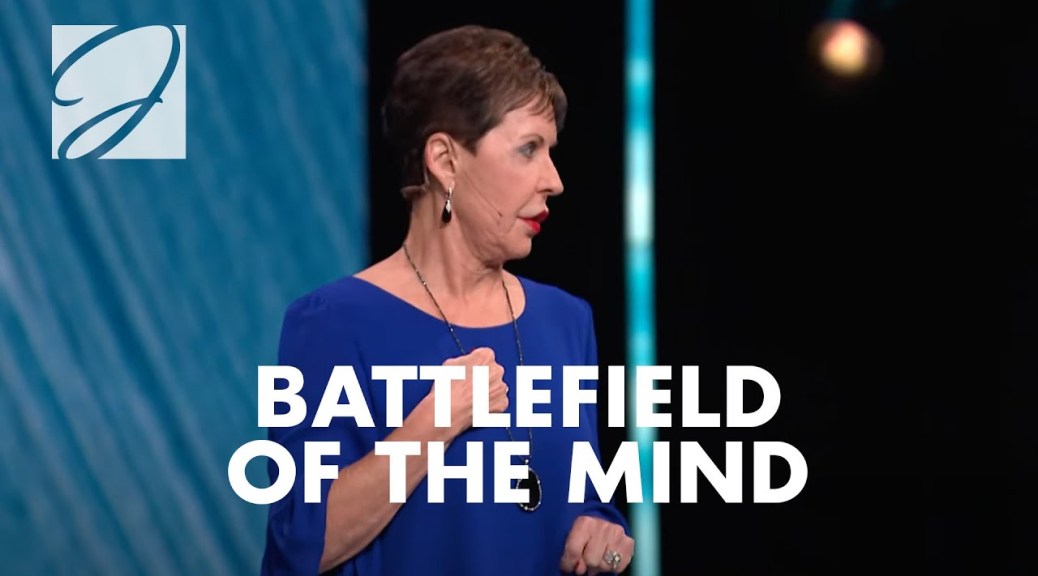
Joyce Meyer – Obey God Even When It Doesn’t Make Sense


Adapted from Battlefield of the Mind

But the natural, nonspiritual man does not accept or welcome or admit into his heart the gifts and teachings and revelations of the Spirit of God, for they are folly (meaningless nonsense) to him; and he is incapable of knowing them (of progressively recognizing, understanding, and becoming better acquainted with them) because they are spiritually discerned and estimated and appreciated.

1 Corinthians 2:14 (AMPC)

Many non-Christians don’t really understand the Gospel. This isn’t a new thing that is unique to our day. When Paul wrote to the Corinthians, he pointed out that the Greeks thought it was foolish. And to the natural mind, it is. God sent Jesus, the sinless One, to earth for the express purpose of dying for wicked, sinful people. To unbelievers that is foolish. The natural man cannot understand the power of the Gospel—it can only be “spiritually discerned.”

Continue reading Joyce Meyer – Obey God Even When It Doesn’t Make Sense

Max Lucado – The Heart of Jesus 


Play

The heart of Jesus was pure. Peter traveled with Jesus for three and a half years, and he described Jesus as a “lamb, unblemished and spotless” (1 Peter 1:19). The heart of Jesus was peaceful. The disciples shouted for fear in the storm, but Jesus slept through it. Peter drew his sword to fight the soldiers, but Jesus lifted his hand to heal.

The heart of Jesus was purposeful. He aimed at one goal—to save humanity from its sin. “The Son of man came to seek and to save the lost” (Luke 19:10). His heart was spiritual. He took his instructions from God. It was his habit to go to worship. He memorized scripture. His times of prayer guided him. John 5:19 says, “The Son does whatever the Father does.” The heart of Jesus was spiritual. Let ours be the same.


Home

Today in the Word – Moody Bible Institute – Be a Blessing


Read Numbers 6

In his groundbreaking book The Blessing, John Trent reveals a startling truth: many people spend their entire lives searching for something they never received as children—a parent’s blessing. The absence of parental blessing creates a wound that affects relationships, self-worth, and spiritual growth for decades. But Trent also discovered this hope: It’s never too late to receive or give a blessing.

Numbers chapter 6 contains perhaps the most beloved blessing in all of Scripture, but it’s surrounded by teachings about consecration. The chapter reveals that God’s blessings flow most powerfully through lives that are consecrated for His purpose.

The chapter begins with instructions for the Nazirite vow—a voluntary commitment to special consecration. Those taking this vow would “abstain from wine and other fermented drink” and “no razor may be used on their head” (vv. 3–5). This wasn’t legalism but love-driven devotion, a desire to draw closer to God through intentional sacrifice.

The Nazirite vow teaches that blessing and consecration are intimately connected. Samson, Samuel, John the Baptist, and the apostle Paul all lived under variations of this vow. God often uses set-apart lives for extraordinary purposes.

But the chapter’s climax comes with the priestly blessing over the Israelites: “The LORD bless you and keep you; the LORD make his face shine on you and be gracious to you; the LORD turn his face toward you and give you peace” (vv. 24–26). Notice the progression: blessing and protection, favor and grace, attention and peace. Each phrase builds upon the previous one, creating a complete picture of God’s comprehensive care. The Lord promises to “put my name on the Israelites, and I will bless them” (v. 27).

Go Deeper

How can you be a conduit of God’s blessing to others? Look for opportunities to speak words of encouragement and divine favor over family, friends, and fellow believers.

Pray with Us

O Lord, how thankful we are for Your blessing, so rich and undeserved, that You grant us love, grace, and peace. Show us today how we can pass on that blessing to someone else.

The LORD bless you and keep you; the LORD make his face shine on you and be gracious to you.Numbers 6:24–25


https://www.moodybible.org/