Is there anything in your life that needs to be removed? Any impediment to the impression of God’s Spirit? We can grieve the Spirit with our angry words and resist the Spirit in our disobedience. We can test or conspire against the Spirit in our plottings. We can even quench the Spirit by having no regard for God’s teachings.
But here’s something that helps us stay in step with the Spirit. It’s in Galatians 5:22: “We know that the fruit of the Spirit is love, joy, peace, patience, kindness, goodness, faithfulness, gentleness, and self-control.” These are indicators on our spiritual dashboards. So whenever we sense them, we know we are walking in the Spirit. Whenever we lack them, we know we are out of step with the Spirit. Keep in step with the Spirit.
Of all emotions, love is the most celebrated in art, literature, and song. There seems to be no end to our appetite for depictions, words or melodies that extol the delights, depths, or devastations of romantic love. Song of Songs describes the love between a man and a woman. In a world that has debased, monetized, and distorted the nature of this relationship, it is a breath of fresh air.
While marriage customs of their day may seem strange to us, we understand the emotion of seeing our beloved from afar. “Like an apple tree among the trees of the forest is my beloved among the young men” (v. 3). Her love stands out among his peers. The passage encourages those who have not tasted love not to get ahead of themselves (v. 7). Love is powerful. In each other’s presence the old has passed away, all things are made new (vv. 11–13).
Are you wondering why this description of romantic love is in the Bible? Consider that after God made Adam, He declared that man shouldn’t be alone (Gen. 2:18). Even the relationship between Christ and the church is described as a marriage (Ephesians 5). Instead of attempting to resolve the tension of this little book by spiritualizing the difficult bits away, we should stop and consider that God gave humans the capacity to experience an emotion as powerful as love. But, like all other emotions, sin has marred love. Our capacity to love can become disordered. Song of Songs shows that this is not what God intended. And the Bible points to the perfect love Christ has for His church, showing us how to love well.
Go Deeper
Are you in a relationship that could be described by the Song of Songs? If so, rejoice. God has given you the capacity to enjoy it. Are you waiting to be in a Song of Songs relationship? Be patient as you trust God to bring you the right one. Extended Reading:
Song of Songs 1-2
Pray with Us
Even though love is often marred by sin in today’s world, You showed us beautiful love in Song of Songs. Even more, Lord Jesus, You gave us Your perfect, eternal love. Teach us to love You more!
Many waters cannot quench love; rivers cannot sweep it away.—Song of Songs 8:7
I serve as president of a small public charity that gives scholarships to undergraduate students. Recently one recipient wrote a letter of thanks, saying: “I am grateful for your investment in my career, and it won’t go to waste.” Then he quoted Proverbs 14:23, “All hard work brings a profit.”
Proverbs and Ecclesiastes are two books of the Bible considered wisdom literature. Both books offer important observations about God and humanity, living with wisdom versus living foolishly. Wisdom can be described as the knowledge it takes to live life skillfully. Having wisdom doesn’t mean you’ll always be profitable, but it does mean that you’ll be able to navigate your way through life’s various situations.
The foundation of wisdom is learning to respect the Lord. Proverbs describes this as the fear of the Lord (v. 7). The phrase does not mean being terrified of God. Rather it means having respect for Him and His ways. Ecclesiastes ties this to obeying God’s commandments (Eccl. 12:13). Neither the Proverbs nor Ecclesiastes make promises the way promises are typically understood. Both agree that failure, difficulty, and frustration are part of the human condition. Wisdom literature does remind us that, in the end, we answer to a God who does not always tell us why He does what He does.
In life, we may work very hard at something and still fail. That does not negate the biblical principle that hard work is good. It also does not negate that in a sinful world hard work does not always produce the fruit we want. Wisdom stands as the bedrock foundation of our confidence. We are to fear the Lord above all else and trust that He alone controls the results of your labor.
Go Deeper
Do you feel like you bear the responsibility for the results of your work? Have you considered that your toiling and striving may be more about yourself than about honoring God? Extended Reading:
Proverbs 1-2
Pray with Us
Lord, thank You for the important principles You revealed in Proverbs and Ecclesiastes. We ask for Your wisdom and knowledge. May we trust You, even when we don’t understand Your ways.
The fear of the LORD is the beginning of knowledge, but fools despise wisdom and instruction.Proverbs 1:7
Driven by powerful winds, the fire raged for days. The historian Tacitus describes a chaotic scene filled with screams and citizens running for their lives. In the end, nearly two-thirds of Rome had been destroyed. The Roman emperor Nero falsely accused believers in Jesus of starting the fire. He hated Christians and selected them to be the scapegoat for the disaster—one that was rumored to have been ordered by Nero himself!
Nehemiah also faced the blistering heat of false accusation. He’d been a servant to the king of Persia but had been allowed to return to Jerusalem with other Israelites to repair its walls (Nehemiah 2:1-10). When the wall was repaired, however, enemies accused the Jews of “planning to rebel” and making Nehemiah “their king” (6:6 nlt). How did they respond to false accusations? By declaring and living out their innocence (v. 8), courageously standing in God’s power (v. 11), and praying fervently to Him (v. 14). Their enemies were ultimately “frightened and humiliated” as they “realized [the wall reconstruction] had been done with the help of . . . God” (v. 16 nlt).
At times, we’ll be falsely accused by others. But as God provides the strength we need, we can forgive our accusers and “live such good lives” that, though “they accuse [us] of doing wrong, they may see [our] good deeds and glorify God” (1 Peter 2:12).
Reflect & Pray
Why are believers in Jesus sometimes falsely accused? How can you live out a courageous faith?
Loving God, thank You for helping me when I’m falsely accused.
Check out this article to learn more about standing firm with the Lord.
Today’s Insights
Nehemiah was serving as cupbearer to King Artaxerxes of Persia when he learned that the Jewish remnant who’d returned to Jerusalem was in trouble. The wall of Jerusalem had been broken, and the gates burned (Nehemiah 1:3). Nehemiah fasted and prayed to God (v. 4), and the king graciously allowed him to return to Jerusalem to rebuild (2:1-6). When Nehemiah arrived and announced his plans, the Jewish leaders replied, “Yes, let’s rebuild the wall!” (v. 18 nlt). Opposition began almost immediately (v. 19), but Nehemiah wasn’t discouraged by the false accusers. He declared, “The God of heaven will give us success” (v. 20). As with Nehemiah, when we trust in God, He’ll give us strength to stand even against those who falsely accuse us.
I sought the Lord, and he answered me and delivered me from all my fears. Those who look to him are radiant, and their faces shall never be ashamed.
Psalm 34:4–5 (ESV)
When a woman has been wounded in her soul, sometimes hurt and pain are not the only things that result. Sometimes, depending on the type of wound, she can end up in shame—ashamed of what has happened to her and even ashamed of who she is. She may think what happened to her is her fault or took place because of something flawed in her.
Shame makes a person feel dirty, unattractive, awkward, devalued, and unlovable. Often shame causes us to feel we are unworthy of having hopes and dreams, and it causes us to lose confidence doing things we would otherwise feel strong and comfortable about doing. It can poison our thoughts, feelings, and decisions to the point that we become withdrawn and hopeless. If I had to summarize briefly what shame does, I would say that it makes us feel like something is wrong with us, though we may not be able to pinpoint exactly what it is.
The things that wound our souls can leave a complicated set of consequences in our lives, and shame is often added to them. Especially in situations of sexual abuse, shame is only one of many results of being violated. I know this from personal experience, and I also know that it is possible to break free from shame completely. It is so important that we learn to do this, because if we don’t, we will not be able to fully enjoy the life Jesus died to give us.
Our own thoughts and feelings can easily keep us trapped in shame, but God’s Word sets us free. Jesus promises in John 8:32 that we will know the truth and the truth will make us free. This means we can be free from everything that holds us captive, including shame.
I want to remind you of two more of God’s promises today as a way of encouraging you to be confident that you do not have to live in shame any longer. God says through Isaiah, Fear not, for you will not be ashamed; be not confounded, for you will not be disgraced; for you will forget the shame of your youth… (Isaiah 54:4 ESV). In case you’re wondering, the word confounded means ashamed, defeated, confused, or overthrown. It also means damned or doomed to punishment. That’s not a good way to feel, but when we are ashamed of who we are, we can easily feel doomed and defeated. God does not want us to feel that way! And in the short Book of Zephaniah, He says, Behold, at that time I will deal with all your oppressors. And I will save the lame and gather the outcast, and I will change their shame into praise and renown in all the earth (3:19 ESV).
God wants you to live a shame-free life, full of faith, confidence, peace, and joy. Stay in His Word and fill your mind with God’s promises, and He will help you leave your shame behind you.
Prayer of the Day: Lord, thank You for Your truth that sets me free. Heal every place of shame in my heart and help me walk boldly in the confidence of Your love, amen.
This proverb arose in the fourteenth century: “Time and tide wait for no man.” Tide suggests the rising and falling of the ocean’s tides. But in early English tide referred to seasons or periods of time (think yuletide referring to Christmas). So the proverb might best be understood as “Time and seasons wait for no man.”
The point of the proverb is obvious: Time is an unrelenting reality that cannot be stopped, delayed, reversed, lengthened, or shortened. As you are reading this devotional, the clock of your life is ticking. You are closer to the completion of your time on earth at this moment than you were when you woke up this morning. So when Paul wrote, “[Redeem] the time,” he was conscious of the precious nature of time. We should take advantage of every day, month, and year and treat them as gifts of God. We should use our time wisely, knowing we will never get back time that has passed.
Prayerfully consider how you can best use the coming year. Once passed, it can never be replaced.
If you die wrong the first time, you cannot come back to die better a second time. Robert Murray M’Cheyne
In ad 155, the early church father Polycarp was threatened with death by fire for his faith in Christ. He replied, “For eighty and six years I have been his servant, and he has done me no wrong. And how can I now blaspheme my king who saved me?” Polycarp’s response can be an inspiration for us when we face extreme trial because of our faith in Jesus, our King.
Just hours before Christ’s death, Peter boldly pledged His allegiance to Him: “I will lay down my life for you” (John 13:37). Jesus, who knew Peter better than Peter knew himself, replied, “Very truly I tell you, before the rooster crows, you will disown me three times!” (v. 38). However, after Jesus’ resurrection, the same one who’d denied Him began to serve Him courageously and would eventually glorify Him through his own death (see 21:16-19).
Are you a Polycarp or a Peter? Most of us, if we’re honest, are more of a Peter with a “courage outage”—a failure to speak or act honorably as a believer in Jesus. Such occasions—whether in a classroom, boardroom, or breakroom—needn’t indelibly define us. When those failures occur, we must prayerfully dust ourselves off and turn to Jesus, the one who died for us and lives for us. He’ll help us be faithful to Him and courageously live for Him daily in difficult places.
Reflect & Pray
When do you need extra doses of courage to stand for Jesus? What do you find helpful in your witness for Him?
Heavenly Father, please give me Your strength to live boldly as a believer in Your Son.
Learn about being on guard against persecution here.
Today’s Insights
In John 13:36-38, Jesus is focused on Simon Peter and his need for courage in the hours and days ahead. The gracious warning He gives to him (v. 38) should’ve gotten the fisherman’s attention, but rather than leaning into the strength of the Master, Peter sought to face those hours in his own strength. Even in the moment when he seemed to be desperately trying to keep his promise to “lay down [his life] for” Christ” (v. 37)—by cutting off the ear of Malchus, servant of the High Priest (John 18:10)—his attempt failed, and he ran away with the other disciples (Mark 14:50). Only in God’s strength can we stand firm and have courage in difficult times and places. Peter would exhibit that courage when confronted by the religious leaders for preaching in Jesus’ name. At that moment, even they had to acknowledge the influence of Christ on His once-fallen, now-restored disciple (Acts 4:13). His influence in our life can also help us face life’s challenges with courageous faith.
I do not cease to give thanks for you, making mention of you in my prayers. [For I always pray to] the God of our Lord Jesus Christ, the Father of glory, that He may grant you a spirit of wisdom and revelation [of insight into mysteries and secrets] in the [deep and intimate] knowledge of Him, by having the eyes of your heart flooded with light, so that you can know and understand the hope to which He has called you, and how rich is His glorious inheritance in the saints (His set-apart ones).
Ephesians 1:16-18 (AMPC)
This section in Ephesians is difficult for many of us to understand. What does Paul mean by the eyes of your heart flooded with light (Ephesians 1:18 AMPC)? I believe he is referring to the mind, because that’s what needs enlightenment. It is with the mind that we grasp God’s truths and hold to them.
Too many of us have difficulty being “flooded with light” because we are distracted with too many other things. The apostle prays for us to have what I call a normal mind—a mind that’s open to the Holy Spirit’s work—so that we may follow God’s plan and live enriched lives.
One way to think about the idea of a normal mind is to look at two of Jesus’ friends, Mary and Martha. Most people know the story of the sisters and the visit Jesus made to their home in Bethany. Martha scurried around, making certain that everything in their home was exactly right, while Mary sat down to listen to Jesus. Luke says Martha was distracted with much serving (Luke 10:40 AMPC), and she complained to Jesus that she needed her sister’s help.
Martha, Martha, you are anxious and troubled about many things (Luke 10:41 AMPC), Jesus told her, and then He commended Mary for having chosen the “good portion.”
As I thought about that incident, I realized it was more than Martha being distracted. I’m sure her mind jumped around, making certain that everything was exactly right. The implication is that even if there had been nothing more to do, Martha wouldn’t have stopped to sit at Jesus’ feet. She was so caught up in busyness that her mind would have searched for something else to do.
The Marthas seem to be in control of our world, don’t they? They are the ones who get things done. When they’re not accomplishing their own goals, they seem to be telling others what they should do. In today’s world of “multitasking,” the Marthas seem to get the awards and the accolades. Some people are busy all the time. They wear their busyness like a badge, as if that makes them more important.
Their busyness can easily distract them from developing a solid relationship with God. They’re the ones who often lack depth of peace and rarely know spiritual contentment. That is, they don’t have what God considers a normal mind. It is not in the condition He would like it to be in.
People who are excessively busy cannot even sleep when they lie down at night. They are either mentally going over the day’s activities or making mental lists of the tasks for the next day.
This isn’t the lifestyle Jesus calls us to. As believers, we are spiritual beings, but we’re also natural. The natural doesn’t understand the spiritual and constantly fights that part of our nature. The Bible makes it clear that the mind and the spirit work together. That’s the principle I call “the mind aiding the spirit.”
For the mind to aid the spirit, we must learn to pull back from all the distractions around us. There will always be demands on our time and energy, and we can always find plenty to do. But if we want to live with the mind of Christ—the one that should be normal for Christians—it means we must learn to imitate Mary. Despite all the clamor and activities going on around her, she was able to sit, relax, and listen to the voice of the Master. That’s how the mind is supposed to work: it should be quiet and under the control of the Spirit. However, we often find that our minds are so set in a wrong direction that they actually hinder the Spirit from helping us, as they should be free to do.
If you realize from this devotion that your mind has been behaving abnormally, ask God to forgive you and teach you what a normal mind is in His kingdom.
Prayer of the Day: Father God, distractions constantly come at me. When I try to pause and focus on You, my mind seems to be filled with dozens of things I need to do. I realize that I truly need only one thing—to focus on You. Please help me push away every distraction and noise so I can hear only Your voice that says, “Come unto Me, and I will give you rest,” amen.
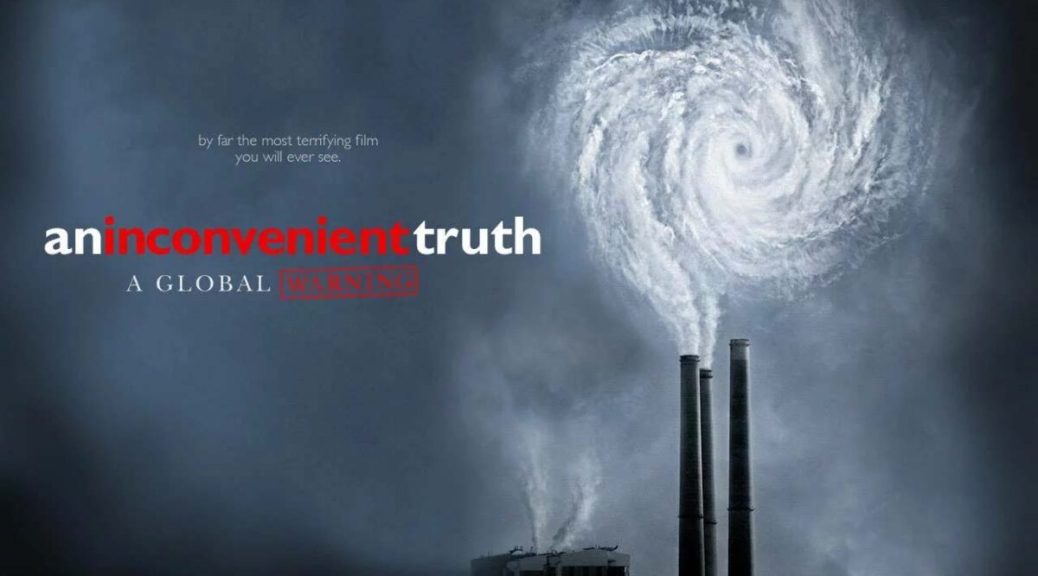
Two decades after Al Gore’s “An Inconvenient Truth” documentary was released, multiple climate predictions have proven largely inaccurate, including forecasts of Mt. Kilimanjaro.
It’s no understatement to say that the 2006 documentary “An Inconvenient Truth” changed the direction of public policy. And in fact, that’s exactly what failed presidential candidate Al Gore intended the film to do. Fortunately for him, he found a willing audience of Hollywood celebrities and left-wing media outlets to uncritically promote his ideology and activism.
Unfortunately for him, 2006 is now far enough in the past that we can test some of the predictions, claims, and statements of fact he makes in that film. So that’s exactly what we did.
At the start of 2026, nearly 20 years after the film hit theaters and helped pave the way for Europe’s delusional “net zero” policies, electric car mandates, and low-flow showerheads, OutKick rewatched “An Incovenient Truth” to see how well it held up over time. Spoiler alert: not particularly well!
The film starts off as a glowing tribute to Al Gore himself, an unsurprising beginning given his obvious ego and hubris. Almost immediately afterward, it jumps straight into the propaganda. He references Hurricane Katrina as an example of more extreme weather events in the modern world. There’s a “Simpsons” video with propaganda of “global warming,” remember, this is pre-rebrand to “climate change,” with a young girl seeing her ice cream cone melt. Gore talks about what got him into this field which is one professor who took some measurements of CO2, then made vague predictions of what would happen if we didn’t make changes.
He says we started measuring CO2 in 1958, which, of course, thoroughly discredits his activism. Assuming the latest estimate is accurate, the earth is billions of years old. It keeps growing by the year, but as of January 2026, it’s 4.54 billion years. Sure, you can estimate CO2 concentrations for part of that past, but not all of it. Or even a sizable percentage of it. And making predictions and assumptions on such limited data is awful science.
But ignoring the past and focusing on the future, one of his most concrete predictions of doom came regarding Mt. Kilimanjaro. In his discussion, he shows pictures of snow on the African mountain from decades ago, then images from the early 2000’s with much less snow. He blames this on global warming, then ominously predicts, “Within the decade there will be no more snows on Kilimanjaro.”
How’d that age?
Gore’s Predictions Prove Woefully Wrong
Well, we’re now two decades removed from this claim, and there continues to be snow on Kilimanjaro. In fact, one story from The Times of London published a few years ago specifically highlighted how wrong Gore’s forecast was. Methley Swai, the owner of a trekking company for Kilimanjaro excursions, told The Times: “Many people have made Kilimanjaro a bucket list priority because of the Al Gore deadline but when they get here they are pleasantly surprised to find lots of snow.”
Sure enough, the story also reported, “There were also abnormally high snowfalls in 2018, which led to the highest recorded growth for the total snow depth on Tanzania’s inactive volcano, an aggregated increase of 1.2m.”
Whoops! We’re not done there!
His next example of declining snow is Glacier National Park. Gore tells a story about how he personally climbed it with his daughter in 1998, then shows pictures of less glacier activity in the mountains. Then, the kicker. A concrete prediction of what would happen to the park.
“Within 15 years this will be the park formerly known as Glacier,” he says, to oohs and aah from the crowd.
Here’s how poorly this prediction has aged. Even CNN was forced to report in 2020 that “Glacier National Park is replacing signs that predicted its glaciers would be gone by 2020,” because unfortunately for Gore and his agenda, there continues to be plenty of glaciers remaining.
Nailed it again, buddy.
He mentions Argentina and Peru as countries where glaciers that are in danger of disappearing. Yet, as you’d expect, there are still glaciers in Argentina and Peru in 2026. In fact, one travelog from 2025 posted photos of the El Pertito Moreno glacier in Argentina, with the comment “Just west of El Calafate, this frozen river is one of the few glaciers in the world still growing.”
Nailed it again buddy.
Gore then uses a graph to show how our climate is warming, though, naturally, it’s purposefully misleading. The warming period he demonstrates in the modern era barely reaches above 0.0, after decades of well below average weather. Essentially, we experienced decades of cooling, as immortalized in a Time magazine cover from the 1970’s warning of global cooling, and the trend reversed. He also claims we can use ice in Antarctica to look back 650,000 years and show CO2 concentration at that point in time That’s nice, but again, doesn’t come close to covering 4.54 billion years of world history. He talks about Ice Ages, with zero acknowledgment that those Ice Ages ended without human intervention.
He uses a prop lift to show that we have the highest CO2 levels yet, and within 50 years, or 2056, he expects the concentration of CO2 will be well over 750ppm, doubling in a matter of decades. It’s currently around 420ppm. When the movie was made, two decades ago, it was 380ppm. At that rate of increase, it would take 185 years from when he made his prediction to reach 750ppm.
Whoops.
Oddly enough, after years of climate “experts” saying that weather isn’t climate, meaning individual weather events or yearly outcomes aren’t representative of changes in climate, Gore repeatedly references record warm temperatures in 2005 as “proof” of global warming. He specifically mentions the number of days over 100 degrees in western US cities to back up his fearmongering. Naturally, these trends have not been consistent. For example, in 2006 when this movie was released, Las Vegas had 86 days when temperatures reached 100 degrees. In 2025, there were 77.
Gore Makes Hurricane Predictions, Drought Predictions, That Prove False
Later on, Gore references hurricanes in the South Atlantic, once again using those as proof of increasing extreme weather, as if we have measurements of all hurricane activity in that ocean for 4.54 billion years. He claims that Katrina is yet more proof, using a graphic to show that it intensified because it went over warmer waters. These extreme storms will become more frequent, he says, because of warming temperatures. There is, of course, no evidence that this has happened. There were 14 hurricanes that made landfall from 2003-2005 in the United States. There were eight that made landfall from 2022-2024 in the United States.
Just this past year, the NOAA predicted an above-average hurricane season in 2025, literally a few months in advance. They were completely wrong, as there was average to below-average activity, with no increase in hurricane strength. Every single time.
Global warming causes more rain, but also more drought, Gore continues. He mentions extreme drought in middle Africa and Lake Chad evaporating to back it up. Here’s what a quick search on Lake Chad reveals today: “Despite historic shrinkage, satellite imagery from 2024 and 2025 indicates the lake has not continued to decline and has shown signs of replenishment since the early 2010s.”
Whoops again!
He highlights the decline of Arctic sea ice, again saying it’s rapidly diminishing. Except, current measurements for 2025-2026 show that sea ice extent is roughly in line with 2012-2013, just barely below the 1980-2010 average. Which is, of course, influenced by the period of colder weather that existed in the 1970’s.
Ironically, Gore then shows himself going on an airplane, after saying this is all the fault of human beings and their activity. Zero awareness.
One of his biggest and most terrifying claims is that the ice sheet covering Greenland is in danger of melting. The audience once again reacts in horror as he shows simulations of oceanic sea rise that would cover much of The Netherlands, San Francisco, Florida, Beijing, Calcultta, Manhattan, and Shanghai in such a catastrophic scenario.
Per the NOAA Arctic report card, here’s how the Greenland ice sheet did in 2024: “The Greenland Ice Sheet lost 55 ± 35 Gt of mass in 2024, the lowest annual ice loss since 2013. This occurred due to above-average snowfall and below-average melting.”
Temperatures didn’t change either. “We report monthly mean air temperatures measured at weather stations in Greenland. Air temperatures observed over the 2024 mass balance year were close to the 1991-2020 average.”
The 2025 report also found that the mass balance in the Greenland Ice Sheet showed “less loss than the 2003-24 annual average. “Above-average snowfall and below-average melt” contributed to “losing less mass this year.”
Additionally, a study published in January 2026 found that “Prudhoe Dome, a 500-meter-thick ice cap on the northwestern Greenland ice sheet, was completely ice-free around 7,100 years ago with temperatures 3-5°C higher than they are today,” per meteorologist Chris Martz. As he explains, it “goes to show that these processes can happen naturally without any anthropogenic influence.”
Gore’s Hypocrisy Is Evident Throughout
As the documentary continues, he brings up the Aral Sea disappearing as a further example of the dangers of human intervention in our climate. Except the Aral Sea dried up in part because “poorly thought-out irrigation strategies introduced by the Soviet Union in the 1960s-70s.” Restoration efforts are underway to undue some of that damage, and as of 2025, “the volume of water in the North Aral has increased by 42%.”
He appeals to authority, saying that peer-reviewed research unequivocally says global warming is factual and not up for dispute. Of course, this has changed over time, with plentiful new research contradicting his claim of consensus. To the point where Gore and his partners had to change their messaging to “climate change” to avoid dealing with many of their predictions not coming true.
Without a hint of irony, he puts up a quote saying: “It’s difficult to get a man to understand something when his salary depends upon him not understanding it.” Precisely the critique leveled at “global warming” scientists who rely on government funding. No problem to solve? No funding. Gore himself benefits from this; no demand for his presentation? No gigantic speaking fees.
He then says it’s dishonest to say we need to make a choice between the economy and the planet, an incredibly inaccurate prediction considering the damage countries like Germany and the United Kingdom have done to their economies by producing less energy to satisfy Gore’s ravings. Literally just this past week, U.S. Energy Secretary Chris Wright made headlines by explaining that Germany has invested “half a trillion” in clean energy, doubled the capacity of their grid, yet produce 20% less electricity than they did before the half trillion dollar investment, and they sell it at three times the price.”
Coincidentally, Gore says “If we do the right thing, then we’re going to create a lot of wealth and a lot of jobs.” Not only has the jobs part been proven false, but the “wealth” that’s been created has mostly gone to people like Gore. Meanwhile, in the real world, California’s “Ivanpah Solar Power Facility,” which cost $2.2 billion to construct, is shutting down after it never met its energy production goals, killed birds and harmed the desert landscape.
Hard to be more wrong than that.
He concludes by putting up a world map showing his travels to show his slideshow, again, completely ignoring the CO2 emitted by his paid travel. There’s more charts, demanding higher mileage per gallon standards, saying that it wouldn’t hurt car manufacturers. Sure enough, car manufacturers have lost billions upon billions chasing his goals, including by building electric cars that aren’t actually less polluting when viewed in totality. Ford has shut down its “Lightning” truck after poor demand, and Porsche sent itself into a tailspin by investing in EV’s, to the point where their CEO was forced to resign in 2025 after damaging the company. As just a few examples.
He then extols the virtues of making choices to individually limit our carbon footprint. Excellent timing, considering his pal Kamala Harris just bought an $8 million mansion in Malibu. Surely a decision made to limit her carbon footprint, and in fear of losing her house to the sea level rise Gore warns about.
“Are you ready to change the way you live?” the documentary asks over the credits. The answer, as demonstrated by Gore and his celebrity pals, is that absolutely none of them are willing to change anything about their lives in order to “solve” climate change. Because they don’t actually believe in it, they just want a cause to signal their virtue. They want something to provide meaning to their lives. Gore gave them that, much in the same way he discusses a single college professor giving him meaning with global warming. The good news is that based on the track record of predictions in the documentary, they have nothing to worry about anyway.
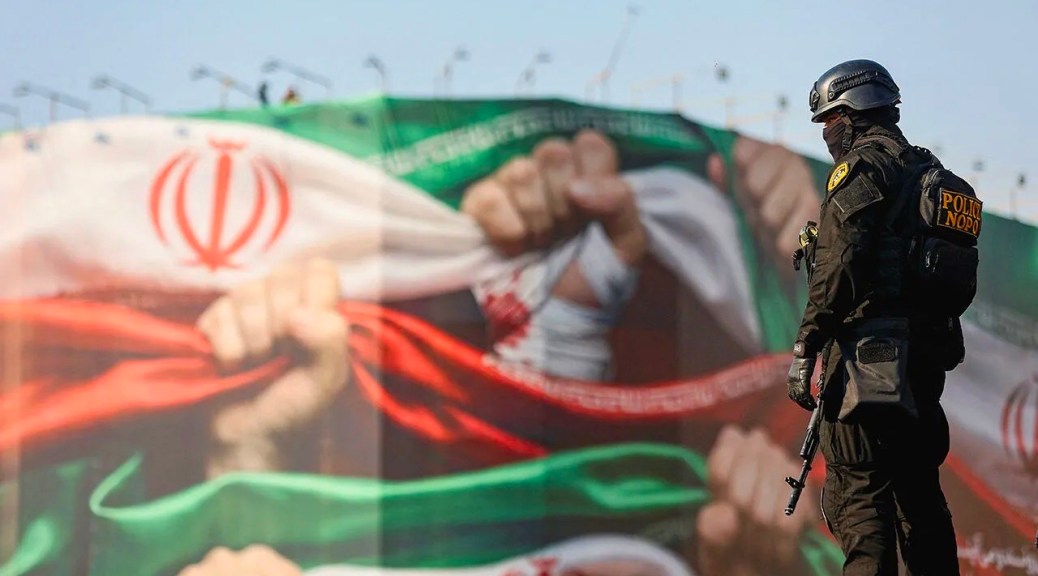
As we enter 2026, we are seeing headlines of courageous men and women standing up at great personal cost to the Iranian regime. We should all be praying for the people of Iran—especially for the many Iranian Christians among them. Pray for freedom, protection, and the gospel to continue spreading.
Iran is not simply a political talking point, but what many, including myself, believe is a land of biblical significance. Iran (ancient Persia) is considered a major player in end times prophecy.
Recent Middle East Conflicts
If you recall, it was in April 2024, that Iran made an unprecedented attack on Israel, firing over 300 drones and missiles toward Israel. With aid from other nations, including the United States, nearly all were intercepted.
Then, in June 2025, Israel initiated Operation Rising Lion, striking dozens of Iranian nuclear and missile facilities to halt uranium weaponization. Key sites were heavily damaged or destroyed.
Iran retaliated with about 100 drones, but the conflict—the Twelve-Day War—ended in a U.S.-mediated ceasefire on June 24.
I believe this is all related to end times prophecy.
Israel, Iran, and Bible Prophecy
While some hold the theological viewpoint that the Church is now God’s chosen people, I disagree. I believe the Jewish people remain His chosen people, and that they play a key role in end times prophecy.
I believe the Bible clearly foretold that Israel would be scattered and regathered—fulfilled on May 14, 1948, and that’s when the prophetic time clock began to tick. It was not just a sign, but a super sign.
Scripture also predicts that in the last days, a great coalition from the north—including Persia (modern-day Iran)—will rise up against Israel (see Ezekiel 38–39). While the Middle East conflicts we’ve seen are not the full fulfillment of that prophecy, it is certainly a foreshadowing.
The Bible has more to say. Not only will the Jews be regathered together in their homeland, but they will be increasingly isolated. That’s happening. The Bible also predicted the rise of anti-Semitism in the end times. That is happening. The Bible also predicts a large nation to the north of Israel, identified in Ezekiel as Magog, will attack her. That has not yet happened. Many scholars believe that Magog is a reference to modern-day Russia. I concur with that view, but no one can say with absolute certainty.
And if Russia is indeed Magog, we should pay attention to its involvement with Iran, as one of the allies of Russia will be Persia (Iran).
What Happens Next?
I believe what has taken place in the Middle East is cause for us to sit up and pay attention.
Let me give you just a quick flyover of end times events chronologically. Number one, I think the next event on the prophetic calendar is the Rapture of the Church. Then, the Antichrist emerges on the scene and the Tribulation period begins. The Tribulation ends with the Second Coming of Christ, and then the Lord establishes the Millennium (the 1,000-year reign of Christ).
This should not make us fearful. Bible prophecy is not given to scare us, but prepare us.
Are You Ready?
Ask yourself today, “Am I ready for the Lord’s return?”
Christ is coming again. This is a wake-up call to get right with God, walk closely with Him, and stay spiritually awake.
Let’s all make sure we’re ready to meet the Lord—because, well, He could come back at any time.
Greg Laurie is an evangelist, author, and the senior pastor of Harvest Riverside.
Do not lay up for yourselves treasures on earth, where moth and rust destroy and where thieves break in and steal; but lay up for yourselves treasures in heaven.
Matthew 6:19-20
In 2013, a hard drive belonging to a man in Wales was accidentally thrown away and ended up in a landfill. The man quickly realized the mistake. But he has been unable to retrieve the hard drive, which contained the digital keys necessary to access his investment in cryptocurrency which, as of today, is worth almost $800 million! Sadly, this is irredeemable by him without the digital keys on the discarded hard drive, and so far, the courts have refused to allow him to dig up the landfill or buy it outright. His treasure remains lost.
Jesus warned His followers about accumulating treasures on earth where moths, rust, and thieves—and lost hard drives—can result in those treasures being destroyed. Instead, He advised accumulating a different kind of treasure—treasures in heaven that will last forever. Since we are citizens of heaven (Philippians 3:20), we should accumulate our treasures there.
Only two things on earth will last forever: souls and the Word of God. Investments made in those will become treasures in heaven.
We must read our Bibles, like men digging for hidden treasure. J. C. Ryle
In his Confessions, Augustine wrestled with how it was possible for God to be in relationship with him. How could the one who created the universe come into something as small and sinful as his heart? But he pleaded with God to make it possible, praying, “The house of my soul is narrow. Enlarge it, so that you may enter it. It’s in ruins! Repair it! It has things in it that would offend your eyes. I confess and know it. But who will cleanse it, or to whom will I cry, but to you?”
Today we know Augustine as Saint Augustine, a revered philosopher and theologian. But he saw himself simply as someone transformed by the wonder of a God who wanted to know him.
In Psalm 119, the psalmist is also in awe of God’s revelation of Himself, particularly through Scripture (v. 18). “You shall enlarge my heart” (v. 32 nkjv), the psalmist celebrated. It’s only because God is graciously willing to enlarge our hearts that we can joyfully walk the path He shows us (v. 45). He turns our hearts away from what is corrupt (vv. 36-37) to the “path of [His] commands,” where we find His infinite “delight” (v. 35).
We are small, and our hearts are fickle. But when we turn our longing hearts to God (vv. 34, 36), He guides us down the paths of joy and true freedom.
Reflect & Pray
How has God “enlarged” Your heart? Where might you need to ask Him to bring growth?
Dear God, thank You for opening my heart to Your greatness. Please enlarge my heart today and every day.
Despite being the creator of the whole universe, God also desires to be in relationship with us. Learn more by watching this video.
Today’s Insights
The image of “walking” is one of Scripture’s most common metaphors for describing someone’s lifestyle—whether in close fellowship with God (see Genesis 5:24; 6:9; Psalm 1:1; 15:1-2) or in opposition to Him (Proverbs 4:14; 1 John 1:6). Psalm 119 begins with this metaphor, emphasizing that “those . . . who walk according to the law of the Lord” are blessed (v. 1). The psalm paints a vivid picture of what it looks like to walk closely with God through immersion in and obedience to Scripture. In verse 32, this imagery intensifies as the psalmist shifts from describing walking to running—suggesting not just steady obedience but an eager pursuit of God’s ways. Unlike those whose feet “rush into evil” (see Proverbs 1:16; 6:18), the psalmist in Psalm 119:32 runs in joyful freedom down the path of God’s commands, liberated by His grace and captivated by His beauty.
Why their rise could be bad news for believers in Iran
Open Doors recently released its updated list of the most dangerous places in the world to be a Christian. The top ten remained largely unchanged, with North Korea, Somalia, and Yemen continuing to hold the top three spots. However, Syria broke onto the list, rising from number eighteen last year to sixth in the latest iteration.
While there are a number of factors that go into Open Doors’ rankings, the primary areas they consider are the extent to which the nation negatively affects a believer’s private life, public life, family, community, and church. Syria ranked high—meaning persecution was rampant—in all five, with the threat of imminent violence tacked on for good measure.
In short, it’s become one of the most dangerous places to live as a Christian, and there are few signs of improvement. However, that is not the case for Syrians in every part of the country. And the reason why could soon prove crucial for their fellow believers in Iran.
Why persecution is rising in Syria
Open Doors notes in their entry on Syria that the pressure Christians face varies by region, with the Northeast generally safer and the greatest pressure coming near the Northwest and in the nation’s two largest cities: Aleppo and Damascus. When the new government took over following the fall of the Assad regime in December of 2024, they met with Christian leaders and pledged to become more moderate than their predecessors. However, that has not been the case.
The government, under the leadership of Ahmad al-Sharaa, instead established Islamic law as the foundation of the transitional constitution. While that should not come as too much of a surprise, and the nation’s leaders appear to still be wrestling with all that should entail, it has opened the door for extremist groups to expand their activities in several parts of the country.
As Jayson Casper describes, Islamist actors in Damascus and Aleppo “have called for conversion to Islam through trucks laden with loudspeakers in Christian neighborhoods” and “placed posters on churches demanding payment of the sharia-mandated jizyah tax (historically levied on non-Muslims) for those who refuse.” The situation is little better in the South, where Christians face the threat of theft and violence as some Muslim groups in the region “believe they have the right to loot non-Muslim properties.”
And while one local pastor remarked that Evangelicals enjoy “ten times” more freedom than they did under Assad, he also noted that the government is not doing enough to combat the extremist elements within the country.
Syrian believers are hardly the only ones to suffer as a result of a negligent government, though. Open Doors notes that “fragile governments” are one of the leading causes of persecution around the world, and that is particularly important to note given what may be on the horizon for their neighbors in Iran.
Is Iran next?
In this week’s edition of The Focus, I discussed the ongoing protests in Iran and why they could very well result in a change of government. While, as of this writing, it’s looking less likely that America will intervene militarily to support the marches, there’s also a chance they won’t need to.
The threat of American missiles has, for the moment, put an end to the government’s attempts to suppress the protests through murder—though mass arrests have continued—and the economic situation that sparked the protests is not going to get better until the sanctions on Iran are removed and the country can once again engage with the rest of the world market.
The UN sanctions—reimposed last September—could go away if Iran allowed inspectors to monitor their nuclear facilities. That would provide some help, but far more pressure has come from the United States. President Trump has been clear for months that Iran will see no relief until it completely dismantles its nuclear and ballistic missile programs, as well as ends their financing of proxies like Hamas and Hezbollah.
Without those programs and proxies, however, the government of Iran would abdicate the vast majority of what power they have left in the region, which is why they have repeatedly stated that they will not comply. As a result, their days as a regional—much less global—power appear to be at an end, whether that end comes through the government being toppled or through agreeing to essentially topple itself to remain in power.
Either way, the country is in for a great deal of change and, as we’ve seen in Syria, that change can create an even more dangerous climate for the country’s Christians. So, how can they prepare? And what lessons can we take from their situation that might apply to our own lives as well?
Finding peace in the Father
Christ’s promise in John 16:33 is one of the most commonly cited verses in Scripture, particularly in contexts where persecution or hard times feel unavoidable. In that passage, he tells his disciples, “I have said these things to you, that in me you may have peace. In the world, you will have tribulation. But take heart; I have overcome the world.”
The “these things” Jesus mentions are in reference to the warning that an hour was coming when his followers would be scattered and abandon him. That’s not exactly something I would find peace in hearing, were I in the disciples’ place. However, the warning was accompanied by the promise that, even when the disciples deserted him, the Father would not (John 16:32).
I’m sure Jesus would have loved to be able to count on his disciples in those final moments before his arrest and crucifixion. He even asked as much of them in the Garden when he requested that they keep watch while he prayed because his soul was “very sorrowful, even to death” (Mark 14:34).
He didn’t need his disciples in those final moments, though, because he had the Father. And the same is true for each of us.
Ideally, when tough times come, you’ll be able to face them with the love and support of friends and family. That’s God’s will for the Body of Christ, but it would be naïve to think that it will always happen that way.
A time will come when people will fail you, just as there are times when you will inevitably fail other people. That’s just part of being human.
When that happens, will you focus on the shortcomings of others or on the presence and faithfulness of your heavenly Father? Jesus was clear that only the latter can grant us peace.
So, whether you find yourself facing persecution on account of your faith or simply going through a rough patch in life, remember that there’s nothing wrong with looking to others for help. It could be that God will bring people into your life or equip those already present with precisely what you need. However, no person can ever take the place of the Lord, and he is the only one who can provide the peace required to remain faithful during those times.
Where do you need that peace today?
Quote of the day:
“Character cannot be developed in ease and quiet. Only through the experience of trial and suffering can the soul be strengthened, vision cleared, ambition inspired, and success achieved.” —Helen Keller
“Pick on someone your own size.” It’s a noble thought, but saying it usually doesn’t work. Bullies don’t become bullies by picking on someone their own size. They target the small, the weak, the vulnerable. They go after the people on whom they can inflict the most damage.
The devil is a spiritual bully, as Jesus suggests in His parable of the sower. “As he scattered it across his field, some of the seed fell on a footpath, and the birds came and ate it” (Mark 4:4 NLT). Several verses later, Jesus explains this part of the parable. “The seed that fell on the footpath represents those who hear the message, only to have Satan come at once and take it away” (verse 15 NLT).
Without question, the devil focuses his attacks on people who are young in the faith. He snatches God’s message away from them before it has a chance to take root in their lives.
You probably remember that when you first put your faith in Christ, the enemy was there to attack you. Maybe the day after you made your commitment to Christ, you started thinking, “Am I really forgiven by God? Has something really happened to me? Maybe I just psyched myself into this.” Or maybe you remember some very strong temptations that came your way right after you became a Christian. He appealed to your sinful nature with something you find extremely attractive just to remind you of what you’re leaving behind.
That’s just one way the devil takes away the seed of God’s message. Another is to confuse or overwhelm new believers with “have to’s.” Those are the voices—from within or without—that say, “If you’re a Christian, you have to do this and this and this. Otherwise, your faith isn’t genuine.”
This is why it’s important for mature Christians to pray for new believers. To come alongside them. To offer perspective, support, and encouragement. To let them know that they’re not alone and that what they’re experiencing isn’t unique to them. We need to shine a light on the enemy’s tactics and help the believers see how he’s trying to rob them of what God has done in their lives.
While we’re doing that, however, mature believers must never lose sight of the fact that the devil does indeed go after bigger targets, too. He’s an equal-opportunity bully. He will attack with a vengeance those who are making a difference in the kingdom, those who are seeking to walk with God, and those who are trying to reach others with the gospel.
When believers step up and say, “Use me, Lord. I want my life to make a difference,” they should brace themselves. The enemy will not take that sitting down. So, they should expect and prepare for opposition. They should also remind themselves that “The Spirit who lives in [them] is greater than the spirit who lives in the world” (1 John 4:4 NLT).
“And he believed in the LORD; and he counted it to him for righteousness.” (Genesis 15:6)
The key New Testament doctrine of imputed righteousness, received through saving faith in the Word of God, is foreshadowed beautifully in the life of Abraham. Because of his strong faith, demonstrated again and again in difficult acts of obedience, Abraham has been called “the father of all them that believe” (Romans 4:11). Our text verse is quoted four times in the New Testament (Romans 4:3, 22; Galatians 3:6; James 2:23) and is made the basis of the great gospel theme of salvation and righteousness. This is obtained not by one’s good works but by imputation and is received through faith in the gracious promises of God through Jesus Christ. “For he hath made him to be sin for us, who knew no sin; that we might be made the righteousness of God in him” (2 Corinthians 5:21).
“Therefore it is of faith, that it might be by grace; to the end the promise might be sure . . . to that also which is of the faith of Abraham; who is the father of us all” (Romans 4:16). Just as “Jerusalem which is above . . . is the mother of us all” (Galatians 4:26), so faithful Abraham is “the father of us all.” Spiritual Jerusalem speaks of salvation by grace rather than by law, and Abraham testifies of righteousness through faith rather than by works. And yet, 12 of the 40 verses of Hebrews 11, the great “faith chapter,” deal with the outward evidences of Abraham’s inner faith.
There is still another reference to Abraham’s spiritual seed: “Know ye therefore that they which are of faith, the same are the children of Abraham” (Galatians 3:7). As Abraham’s spiritual children, therefore, we also ought to believe God’s Word at whatever cost, demonstrating the reality of our faith to the world—as did father Abraham—by obeying God. HMM
Let us not be weary in well doing: for in due season we shall reap, if we faint not.
Galatians 6:9 (KJV)
Do you ever feel like giving up? Perhaps you’re discouraged about your finances or you’re facing problems with your health, your marriage, or your children. Sometimes problems seem so overwhelming that the road ahead seems too steep to climb.
We all go through these times. I’ve wanted to give up and quit many times through the years. But when I realized I had nothing interesting to go back to, I determined to keep pressing on.
Even though continuing to move forward is sometimes painful, it is far better than giving up and sliding backwards. God is doing a good work in you so He can do more for you and through you. So, ask Him to fill you with holy determination tonight and keep moving in the right direction.
Prayer of the Day: Lord, when I feel weary and want to quit, fill me with Your strength and determination. Help me keep pressing forward, trusting You to finish the good work You’ve begun, amen.
I believe we make the mistake the Welsh woman made. She lived many years ago in a remote valley and felt it worth the cost to have electricity installed in her home. Several weeks after the installation, the power company noticed she’d barely used any electricity. A meter reader went to see her. “Is there a problem?” he asked. “Oh no, we’re quite satisfied. Every night we turn on the electric lights to see how to light our lamps.”
We’re prone to do likewise. Depend on God’s Spirit to save us but not sustain us. We turn to him to get us started and then continue in our own strength. It is possible to have the Spirit, but not let the Spirit have us. Scripture urges us “keep in step with the Spirit.” Plug in to his power, and leave the switch turned on.
Have you ever questioned God? When something terrible happens to us, we may wonder if we can ask God hard questions. The short answer is, yes. But we also don’t want to cross into sinfully accusing God. We must ask, Is my question a real question or an accusation? Has God already given me an answer that I just don’t like, or am I genuinely confused about what He is doing?
The first chapter of Job is a case study in tragedy. Job had lost everything: children, wealth, property, status. Yet, Job was known to be a man of God, blameless and upright (Job 1:1). The question is one we all face, why do bad things happen to people who love and follow God?
Job was experiencing unbelievable suffering. But his first step took him to the feet of God. In an attitude of worship, Job reminded himself of two things he knew to be true: people arrived into the world without anything, and they leave without anything (v. 21). Furthermore, God can give blessings and take them away: “The Lord gave and the Lord has taken away; may the name of the Lord be praised” (v. 21).
Note that Job did not accuse God of maliciousness. However, he did express anger at God. He did not withdraw from God because he lost trust in Him. Instead, he took a step closer to the One who controls all things. In this, Job showed us how to suffer. There is little value in charging God with wrongdoing when we face difficulty. Like Job, we don’t have all the facts (Job 42:1–3). However, we should lament to the One who holds the answers, the One who controls all things.
Go Deeper
Are you facing a difficult situation? Have you considered the relative weakness of your power when compared to God’s? While you may not understand what He is doing, that doesn’t change His position or love for you. Extended Reading:
Job 1-2
Pray with Us
Lord, how do we go through the inevitable suffering of this life? In the book of Job, You showed us how. Despite all his trials, anger, and confusion, Job didn’t sin against You. Thank You for Job’s honesty and faith!
In all this, Job did not sin by charging God with wrongdoing.Job 1:22
With mosques ablaze across Iran and protesters on the brink of toppling the Ayatollahs, the outlawing of Islam itself seems imminent. As the protesters openly talk of going back to their ancient religions, the West waits on the sidelines, ready to airdrop its anointed leaders and take charge.
However, the chosen leaders of the West have Islamic backgrounds even as the people of Iran want to shed themselves of Islam and embrace their pre-Islamic past. While one of the chosen leaders, Reza Pahlavi, the son of the Shah of Iran who was deposed in 1979, is cooling his heels in Washington, D.C., hoping to be their appointee, another leader in waiting is the hijab clad Maryam Rajavi of the National Council of Resistance of Iran (NCRI), which purportedly stands for democracy.
Both figures have cultivated support in the corridors of power in the US and Europe, and we can soon expect a hollow, manufactured debate over whether Iran deserves a monarchy or a democracy, one that falsely frames the choice as a binary between Pahlavi and the NCRI, followed by a declaration that the people of Iran have prevailed and made their own choice no matter who among them is planted as the new Iranian ruler.
Historically, the State Department has pursued a policy of supporting manageable Islamic and Marxist dictators around the world. Iran has not escaped these US actions, which first supported the Shah and then the rise of Ayatollah Khomeini.
In 2022, when Iranian women publicly burnt their hijabs in defiance of the Mullahs, the US State Department at first issued statements of support, but in what must be seen as an act of betrayal, it abandoned the women when they started opposing Islam itself. For many years, the annual reports of the State Department’s United States Commission for International Religious Freedom (USCIRF) and the affiliates of the State Department, such as Amnesty International and Human Rights Watch, have also supported Islam by presenting the perpetrators of Islamic oppression as the victims while demonizing the religions of the actual victims of Islam.
If we are to accept their worldview, it would result in the absurdity that the Iranian protesters burning mosques around Iran are the oppressors and violators of religious freedom, while the ayatollahs and their secret police are the victims of human rights violations.
To the east of the protesters, India, as a rising global power and a nation with deep civilizational ties to Iran, has also disappointed by abstaining from actively supporting the protests. The current situation presents a great opportunity for India and the United States to team up and send troops into Iran to protect the protesters.
Unlike the United States, which has faced political hurdles for more than fifty years when it comes to sending troops to other countries, India does not face such problems and can send in troops to complement the US and usher in the era of rekindling Iran’s ancient civilization as a replacement for Islam. As a country that has faced Islamic invasions over the centuries, India also understands how to address underlying tensions.
India’s role would be both strategic and restorative. Culturally, India remains a sanctuary for Zoroastrianism and other ancient traditions that share a common ancestry with Iranian culture. While the dominant religion among Persians is Zoroastrianism, Yazidis and certain Kurdish groups in western and northwestern Iran identify with specific Hindu traditions found in South India. Interaction with these Indian communities could help Iranians rediscover the cultural foundations.
However, the current situation does not instill much confidence as the credentials of NCRI and its leader, Maryam Rajavi, are suspect. Apart from the fact that Maryam Rajavi wears a hijab, revealing her Islamist leanings, her husband, Massoud Rajavi, who disappeared in 2003, was the founder of NCRI and was also the leader of the Islamic Marxist group Mojahedin-e-Khalq.
Like other Marxists, when the members of the NCRI throw around the word
“democracy,” they really mean “Marxist state,” and they use the term “democratic socialism” as an Orwellian euphemism for “the dictatorship of the proletariat.” Needless to say, they see Islam and Communism as natural allies.
As for the Pahlavi family, despite outward appearances and repeated claims that they were secular, they too ensured that Iran would remain an Islamist nation while they were in power. The Constitution of Iran during their reign explicitly stated that the official religion of Iran was Islam according to the “orthodox Ja’fari doctrine of the Ithna ‘Ashariyya” and mandated that the Shah was required to “profess and promote” this faith. The Constitution also mandated that no laws passed by Parliament could be “at variance with the sacred rules of Islam.”
Under the Pahlavi dynasty, the Bahaʼi community, the most populous non-Muslim group in Iran, faced systematic and severe discrimination. Groups like the Hojjatiyeh that carried out targeted attacks against the Baha’i community worked with the Shah’s intelligence agency (SAVAK). The Shah’s foreign policy, too, was based on religious considerations. During the Yom Kippur War, the Shah supported the Arab side, and he consistently supported the Islamic Republic of Pakistan over India.
This is not to say that Reza Pahlavi or Maryam Rajavi must never become part of the administration of Iran. A precondition for them to join the Iranian political mainstream should be that they renounce Islam and embrace one of the pre-Islamic religions so that they are aligned with the people of Iran.
To ensure their honesty, this would ideally include their converting to another religion and ensuring the same for their children and extended families. Even atheism would not be enough, and a conversion would be essential to prevent a member of a future generation from reverting to theocratic rule.
History offers a sobering example in this regard. While the Mughal king Akbar moved away from Islam and started his own religion, he neglected to convert his family members, and it resulted in his son, grandson, and great-grandson perpetrating cruelties on behalf of Islam.
Should the Iranian protesters succeed in their goal of removing Islam, they are sure to inspire other countries like Tajikistan, Kyrgyzstan, and Uzbekistan, and then Turkey. For now, the cynical path pursued by the US State Department of letting the protesters battle the Iranian regime and toppling it, while showing up just in time to reap the rewards by planting its Islamic proxies means that the best case scenario for the world would be for the protesters to succeed in overthrowing the regime after they have completely eliminated all traces of Islam so that Reza Pahlavi or Maryam Rajavi would be forced to follow suit in order to become part of the Iranian political ecosystem.
The protesters are determined and seem close to success this time. Despite severe internet blackouts, reports indicate that the protesters have taken control of some cities, including Abdanan and Malekshahi. Government forces have retreated in many other areas. There are protests even in Qom, the epicenter of Shia Islam. Those who support the freedom of Iranians from the religion forced on them wish the protesters the best and await the day when we can welcome our Iranian sisters and brothers into the global community!
Islam has never served a nation well, and the Persian people have a glorious history to fall back upon. Or, put another way, anything but Islam…
Last year, Deputy Ignacio Diaz died in a crash in Palm Beach County, Florida. A nearby boy Charlie Allsup wanted to do something, so he set up a lemonade stand to raise money for Diaz’s family. When Fox News asked Charlie why he had done this, he replied, “I just saw a need and I just thought that is what Jesus would do. I thought I could help.”6
Our giving to the Lord is just about as simple as that! Have you noticed that many of the biblical characters who did the most are the ones who had the least? The classic example is the widow who gave her two mites in Mark 12:41-44. But think also of people like the widow of Zarephath who gave her bit of bread to Elijah (1 Kings 17:8-16), and Dorcas, the woman of Joppa, who was “full of good works and charitable deeds” (Acts 9:36).
You don’t have to be rich to richly bless others. The Bible tells us to “be rich in good works, ready to give, willing to share” (1 Timothy 6:18). How can you practice that principle today?
Our gifts are not to be measured by the amount we contribute, but by the surplus kept in our own hand. Charles Spurgeon
“Florida Nine-Year-Old Opens Lemonade Stand to Pay Tuition for Fallen Officer’s Son,” Fox News, December 7, 2024.








 DAILY DEVOTIONS, NEWS AND INFORMATION