Tag Archives: Bible

Charles Stanley – Jesus Christ: The Son of God


John 1:1-2

Have you ever heard someone deny that Jesus claimed to be God? Such a statement simply does not make sense. Repeatedly, Jesus placed Himself on equal footing with the Father and the Holy Spirit (John 10:30; John 14:6-14). Scripture gives us a clear picture of Jesus’ eternal, intimate relationship with the heavenly Father.

Why is it important for us to believe this? Because Jesus did something that had never been done before: He enabled men and women to see God in a new way. In Colossians 1:15, Paul explains that Jesus is the “image of the invisible God.” No one has ever looked upon the face of the Almighty. In the Old Testament, some people were confronted with God, but they were never able to look fully upon His glory. In fact, even Moses, who is called a friend of God (Ex. 33:11), could not look directly at Him. At best, Moses had the opportunity to look upon God’s back as He passed by, but never saw His face (Ex. 33:18-23).

The reason Jesus came, however, was to bridge the gap between God’s glory and mankind’s sinful nature. In the original Greek text, the word for “image” is directly related to the English word icon. Just as an icon on your computer screen directs you to the main program, Jesus directs believers to the fullness of God’s glory. As the “icon,” Jesus is the exact, flawless replica of God. Therefore, Jesus could say, “He who has seen Me has seen the Father” (John 14:9).

What has Jesus taught you about the Father? How can you share that insight with someone today?

Bible in One Year: Habakkuk 1-3


Our Daily Bread — Consider the Poor


Read: Matthew 25:31-40

Bible in a Year: Isaiah 3-4; Galatians 6

The righteous care about justice for the poor, but the wicked have no such concern. —Proverbs 29:7

The year was 1780, and Robert Raikes had a burden for the poor, illiterate children in his London neighborhood. He noticed that nothing was being done to help these children, so he set out to make a difference.

He hired some women to set up schools for them on Sunday. Using the Bible as their textbook, the teachers taught the poorest children of London to read and introduced them to the wisdom of the Bible. Soon about 100 children were attending these classes and enjoying lunch in a safe, clean environment. These “Sunday schools,” as they were soon called, eventually touched the lives of thousands of boys and girls. By 1831, Sunday schools in Great Britain reached more than a million children—all because one man understood this truth: “The righteous considers the cause of the poor” (Prov. 29:7 NKJV).

It’s no secret that Jesus cares greatly for those who struggle. In Matthew 25, He suggests that followers of Christ show a readiness for the Lord’s return by helping the hungry to get food, helping the thirsty to get a drink, helping the homeless to find a home, helping the naked to get clothes, and helping the sick or imprisoned to receive comfort (vv. 35-36).

As we bear witness that Christ is in our hearts, we honor our compassionate Savior by considering those on God’s heart. —Dave Branon

Awaken my heart, Lord, to those You care about, including the poor and helpless, the hungry and homeless, the troubled and hopeless in our world.

Open your heart to God to learn compassion, and open your hand to give help.

INSIGHT: Today’s Bible reading is a portion of what is sometimes referred to as the Olivet Discourse, our Lord’s last recorded public sermon before going to the cross. Matthew 24:3 says that Jesus led His disciples to the Mount of Olives, where He delivered this message on the future judgment and the establishment of the kingdom. Jesus spoke to them of tribulation, of the coming of the King, and of the need to have a prepared heart. It’s a sober message, yet one that ends with Jesus calling His followers to a heart of service that reaches out to hurting people with compassion and generosity. Bill Crowder

Alistair Begg – Are You Happy Today?


Happy are you, O Israel! Who is like you, a people saved by the Lord. Deuteronomy 33:29

The person who declares that Christianity makes men miserable is himself an utter stranger to it. It would be strange indeed if it made us wretched; consider to what a position it exalts us!

It makes us sons of God. Do you suppose that God will give all the happiness to His enemies and reserve all the mourning for His own family? Will His foes have laughter and joy, while His home-born children inherit sorrow and wretchedness? Will the sinner, who has no part in Christ, call himself rich in happiness, while we go mourning as if we were penniless beggars? No; we will rejoice in the Lord always and glory in our inheritance, for we “did not receive the spirit of slavery to fall back into fear, but you have received the Spirit of adoption as sons, by whom we cry, ‘Abba! Father!'”1 The rod of discipline must rest upon us in our measure, but it works for us the comfortable fruits of righteousness; and therefore by the help of the divine Comforter, we, a “people saved by the LORD,” will rejoice in the God of our salvation.

We are married to Christ; and will our great Bridegroom permit His spouse to linger in constant grief? Our hearts are knit to Him: We are His members, and though for a while we may suffer as our Head once suffered, yet even now we are blessed with heavenly blessings in Him.

We have the promise of our inheritance in the comforts of the Spirit, which are neither few nor small. Inheritors of joy forever, we have foretastes of our portion. There are streaks of the light of joy to herald our eternal sunrise. Our riches are beyond the sea; our city with firm foundations lies on the other side of the river; gleams of glory from the spirit-world cheer our hearts and urge us onward.

It is truly said of us, “Happy are you, O Israel! Who is like you, a people saved by the LORD.”

1) Romans 8:15

The Family Bible Reading Plan

  • 2 Samuel 23
  • Galatians 3

Devotional material is taken from “Morning and Evening,” written by C.H. Spurgeon, revised and updated by Alistair Begg.

Charles Spurgeon – The mysteries of the brazen serpent


“And as Moses lifted up the serpent in the wilderness, even so must the Son of man be lifted up: That whosoever believeth in him should not perish, but have eternal life.” John 3:14,15

Suggested Further Reading: John 12:20-36

Let each of us who are called to the solemn work of the ministry remember, that we are not called to lift up doctrine, or church governments, or particular denominations; our business is to lift up Christ Jesus and to preach him fully. There may be times when church government is to be discussed, and peculiar doctrines are to be vindicated. God forbid that we should silence any part of truth: but the main work of the ministry—its every day work—is just exhibiting Christ, and crying out to sinners, “Believe, believe, believe on him who is the Lamb of God that taketh away the sins of the world.” And let it be remembered, that if the minister preaches Christ plainly, that is all he has to do; if with affection and prayer he preaches Christ fully, if there were never a soul saved—which I believe would be impossible—he would have done his work, and his Master would say, “Well done.” I have gone away from this hall, after preaching upon various doctrines, and though many have complimented me, foolishly, I have said to myself, “I can but groan that I had such a subject at all.” And at another time, when I have been faltering in my delivery, and committed a thousand blunders in my speech, I have gone away as happy as a prince, because I have said, “I did preach Christ.” There was enough for sinners to be saved by; and if all the papers in the world should abuse me, and all the men in the world should say ‘cry him down’; he will still live and still breathe as long as he feels in himself, “I have preached to sinners, and Christ has been preached to them, so as they could understand and lay hold on him and be saved.”

For meditation: “We would see Jesus” (John 12:21) is not just something to say to the preacher, but something to pray for the preacher (Colossians 4:3,4).

Sermon no. 153

27 September (1857)

John MacArthur – Always Praying


“With all prayer and petition pray at all times” (Eph. 6:18).

Make prayer an ongoing part of your day.

As important as prayer is to your Christian life, you might expect Paul to list it as another piece of spiritual armor, but he doesn’t. Instead, he makes it all-pervasive by instructing us to pray at all times. That’s our spiritual lifeline—the air our spirits breathe. The effectiveness of each piece of armor is directly related to the quality of our prayers.

We see the importance of prayer throughout the New Testament. Jesus instructed His disciples to be on the alert at all times, praying so that they would have strength to face the trials and temptations that lie ahead (Luke 21:36). The apostles devoted themselves to prayer (Acts 6:4), as did godly people like Cornelius (Acts 10:2). Every Christian is to be continually devoted to prayer (Rom. 12:12).

In Philippians 4:6 Paul says, “Be anxious for nothing, but in everything by prayer and supplication with thanksgiving let your requests be made known to God.” He told the Thessalonians to “pray without ceasing” (1 Thess. 5:17) and instructed men everywhere to “pray, lifting up holy hands” (1 Tim. 2:8).

Jesus and Paul not only exhorted believers to pray, but also modeled diligent prayer in their own lives. Jesus often went for extended periods of time alone to pray. Paul wrote often of his own fervent prayers on behalf of others (cf. Col. 1:9; Philem. 4).

As a child, you may have been taught that prayer is reserved for mealtimes, bedtime, or church services. That’s a common misconception many children carry into their adult years. But believers are to be in constant communication with God, which is simply the overflow of seeing all of life from His perspective. Just as you would discuss your everyday experiences and feelings with a close friend, so you’re to discuss them with God.

God loves you and wants to share your every joy, sorrow, victory, and defeat. Be conscious of His presence today and take advantage of the sweet communion He offers.

Suggestions for Prayer

  • Thank God that He’s always available to hear your prayers.
  • Ask Him to give you a desire to commune with Him more faithfully.

For Further Study

What do these verses say about the most appropriate times for prayer: Psalm 55:16-17, Daniel 6:10, Luke 6:12, and 1 Timothy 5:5?

Joyce Meyer – The Free Gift of God’s Love


For He foreordained us (destined us, planned in love for us) to be adopted (revealed) as His own children through Jesus Christ, in accordance with the purpose of His will [because it pleased Him and was His kind intent]. – Ephesians 1:5

There is only one thing you can do with a free gift, and that is receive it and be grateful. I urge you to take a step of faith right now and say out loud, “God loves me unconditionally, and I receive His love!” You may have to say it a hundred times a day before it finally sinks in, but when it does, it will be the happiest day of your life.

To know that you are loved by someone is the best and most comforting feeling in the world. God not only loves you, but He also provides other people who will truly love you. When He does provide, be sure to remain thankful for those people. Having people who genuinely love you is one of the most precious gifts in the world.

Take time to thank God for His love and all the people who love you! It is His gift to you and, I believe, one of the most valuable gifts that you will ever receive.

Prayer of Thanks

Father, thank You for the free gift of Your love. I am grateful that You love me unconditionally and You have put people in my life who love me too. I don’t take Your love for granted and, though I can never repay Your love, I want to live my life for You in return.

From the book The Power of Being Thankful by Joyce Meyer.

Campus Crusade for Christ; Bill Bright – Ask What You Will


“If ye abide in Me, and My words abide in you, ye shall ask what ye will, and it shall be done unto you” (John 15:7, KJV).

When Campus Crusade for Christ began at the University of California, Los Angeles, in 1951, our first act was to organize a 24-hour prayer chain. Around the clock, scores of men and women interceded for UCLA students and faculty. God answered prayer in a remarkable way, as His Spirit touched the entire campus.

Thirty-one years later, more than 16,000 full-time and associate staff members of Campus Crusade for Christ in more than 150 countries and protectorates are teaching millions of others the importance of prayer, with revolutionary spiritual results and many millions receiving Christ.

Prayer has always been the breathe, life, vitality, strength and power of the Christian. Beginning with our Lord, who spent much time in prayer, and continuing with the disciples and fruitful, Spirit-filled Christians through the centuries, prayer remains a major emphasis in the life of every believer.

History records no mighty men or women of God whose lives were not characterized by prayer, nor any great spiritual movements, awakenings or revivals that were not preceded by prayer. James 4:2 reminds us, “Ye have not, because ye ask not.”

It is not enough to pray, we must pray according to the Word and will of God. For that reason, understanding and obeying our Scripture assignment for today is crucial. We must abide in Christ and allow His Word to abide in us before we are qualified to pray. God’s Word reminds us, “And this is the confidence that we have in Him, that, if we ask any thing according to His will, He heareth us; And if we know that He hear us, whatsoever we ask, we know that we have the petitions that we desired of Him.” (1 John 5:14,15, KJV).

Bible Reading: Matthew 7:7-11

TODAY’S ACTION POINT: From this day forth I will seek, through the enabling of the Holy Spirit, to abide in Christ and have His Word abide in me. As I discover God’s Will through the diligent study of His Word and the leading of His Holy Spirit, I will pray more intelligently and thus can expect answers to my prayers.

Presidential Prayer Team; J.K. – Promised Change


At a time when Babylon was laying siege on Jerusalem, God called Jeremiah to purchase land in the city. Seemingly without hesitation, Jeremiah trusted God’s word. He bought the field, “signed the deed, sealed it, got witnesses,” and paid his money. He called his disciple to put the deed in an earthenware vessel and keep it safe for what would be many years (Jeremiah 32:9-15).

Call to me and I will answer you, and will tell you great and hidden things that you have not known.

Jeremiah 33:3

Jeremiah was preaching to the deaf ears of Israel and Judah’s kings. They didn’t listen and imprisoned him for speaking truth. But even through that, Jeremiah spoke of the restoration of the nation after their 70 years of captivity. He told of God’s great might…that nothing is too hard for Him (Jeremiah 32:17).

If there ever was a promise that could change your life, it’s today’s verse. The promise was to Jeremiah, but you must know that in the deepest times of sorrow or need, you can call on the One who can handle anything. Believing in Him will open the doors of understanding for you in His Word. Do not hesitate. Stay in Scripture. Then intercede for this nation’s leaders and people…that all deaf ears will hear and many will return to the Lord.

Recommended Reading: Jeremiah 33:1-9

Night Light for Couples –Charlie Wedemeyer


“Our present sufferings are not worth comparing with the glory that will be revealed in us.” Romans 8:18

Life was good for Charlie Wedemeyer. He was married to a beautiful woman, Lucy, had two wonderful children, and was a successful high school teacher and football coach. When he noticed a weakness in his hands, however, he visited a doctor. The doctor told him he had ALS (Lou Gehrig’s disease), that in a few years he would be totally paralyzed, and that eventually he would die. Charlie’s disease worsened in the years that followed.

Time appeared to be running out. Then two things changed his life—he began using a portable respirator, and he became a Christian.

Today, more than twenty years after being diagnosed, Charlie and Lucy have touched thousands of lives during their appearances across the country. He cannot walk, speak, or even breathe on his own, but he chooses not to dwell on his infirmities.

“Pain and suffering are inescapable,” Charlie says through Lucy’s translation. “It’s up to us to decide if we’re going to be miserable or if we’re going to try to make the most of our lives.”

Charlie Wedemeyer is making the most of his. How about you?

Just between us…

  • How would either of us respond if we faced a situation like Charlie’s?
  • So far in life, how much have we been asked to suffer?
  • Who in the Bible suffered from disease or disability yet demonstrated trust in God? (For examples, see 2 Kings 5:1–14; 20:1–6; Matthew 9:27–29; Mark 5:25–29; 10:48–52; and 2 Corinthians 12:7–10.)

Father, thank You for promising to be with us when we suffer. Help us not to complain too much about life’s little hurts, and help us to place our big sorrows in Your tender care. Amen.

From Night Light For Couples, by Dr. James & Shirley Dobson

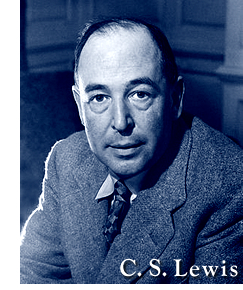
C.S. Lewis Daily – Today’s Reading


TO MR. N. FRIDAMA, who seems to have asked Lewis about the steps in his conversion to Christianity: On the Calvinist doctrine of double predestination.

15 February 1946

I was baptised in the Church of Ireland (same as Anglican). My parents were not notably pious but went regularly to church and took me. My mother died when I was a child.

My Christian faith was first undermined by the attitude taken towards Pagan religion in the notes of modern editors of Latin and Greek poets at school. They always assumed that the ancient religion was pure error: hence, in my mind, the obvious question ‘Why shouldn’t ours be equally false?’ A theosophical Matron at one school helped to break up my early beliefs, and after that a ‘Rationalist’ tutor to whom I went finished the job. I abandoned all belief in Christianity at about the age of 14, though I pretended to believe for fear of my elders. I thus went thro’ the ceremony of Confirmation in total hypocrisy. My beliefs continued to be agnostic, with fluctuation towards pantheism and various other sub-Christian beliefs, till I was about 29.

I was brought back (a.) By Philosophy. I still think [Bishop George] Berkeley’s proof for the existence of God is unanswerable. (b.) By increasing knowledge of medieval literature. It became harder and harder to think that all those great poets and philosophers were wrong. (c.) By the strong influence of 2 writers, the Presbyterian George MacDonald and the Roman Catholic, G.K. Chesterton. (d.) By argument with an Anthroposophist [Owen Barfield]. He failed to convert me to his own views (a kind of Gnosticism) but his attack on my own presuppositions smashed the ordinary pseudo-‘scientific’ world-picture forever.

On Calvinism. Both the statement that our final destination is already settled and the view that it still may be either Heaven or Hell, seem to me to imply the ultimate reality of Time, which I don’t believe in. The controversy is one I can’t join on either side for I think that in the real (Timeless) world it is meaningless. In great haste.

From The Collected Letters of C.S. Lewis, Volume II

Compiled in Yours, Jack

Charles Stanley – Finding Contentment


John 14:1 (NLT)

Too often we let our circumstances determine our attitude. If life is going smoothly, then we feel good about ourselves. But when it gets hard, our mood drops. However, we don’t have to live this way. Like the apostle Paul, we can learn and practice the secret of being content.

Contentment means accepting things the way they are—in other words, not wanting anything to be more or different. This requires developing an “I can through Christ” attitude. It means learning to allow God’s power to come into our weakness so we can accept and adapt to changing circumstances. When we respond to life with that kind of thinking, we move beyond living by feelings to living by faith (2 Corinthians 5:7).

Submission and trust are needed for such a lifestyle. First, we must surrender our will to God’s: In every situation, we are to yield what we want and then accept whatever He allows. Our desire to control events is replaced by reliance on Him. This option becomes more appealing when we realize that the alternative—fighting against our circumstances—brings anxiety and distress. The second step is to trust God to oversee our specific situation. If we believe He is working out His perfect plan for us, then we will experience the joy that comes from trusting Him. Contentment will be ours.

Paul submitted his life to God and trusted Him. He faced insults, rejection, and many difficult trials but was still content. When we surrender control to the Lord and believe He has our best interest at heart, we will experience contentment, too. Who has control in your life?

Bible in One Year: Nahum 1-3

Our Daily Bread — A New Creation


Read: Acts 9:10-22

Bible in a Year: Isaiah 1-2; Galatians 5

If anyone is in Christ, the new creation has come. —2 Corinthians 5:17

Early in my work life I had a coworker who seemed to delight in using God’s name as a profanity. He mercilessly taunted Christians who were new to their faith or who tried to talk with him about Jesus. On the day I left that job to move to another community and a new place of employment, I remember thinking that this man would never become a follower of Jesus.

Two years later I visited my old workplace. He was still there, but never have I witnessed such a dramatic change in a person! This man, so antagonistic to faith, was now a walking, talking example of what it means to be a “new creation” in Christ (2 Cor. 5:17). And now, more than 30 years later, he’s still telling others how Jesus “met him where he was—sin and all.”

It occurs to me that the early Christians must have seen something similar in Paul, their fiery persecutor—a riveting example of what it means to become a new creation (Acts 9:1-22). What great hope both of these lives are to those who think themselves beyond redemption!

Jesus sought Paul and my former coworker—and me. And He continues today to reach the “unreachable” and model for us just how we can reach people too. —Randy Kilgore

Lord, I want to learn to reach out to others and share Your love and forgiveness. Teach me and help me to step out in both faith and trust.For further study, check out Truth with Love: Sharing the Story of Jesus by Ajith Fernando at discoveryseries.org/hp141

No one is beyond the reach of God.

INSIGHT: A true encounter with Jesus always results in change. However, this change is not in merely stopping negative behavior; true change begins to do positive things. Saul immediately “began to preach” (v. 20). J.R. Hudberg

Alistair Begg – God’s Church


He was standing among the myrtle trees in the glen. Zechariah 1:8

The vision in this chapter describes the condition of Israel in Zechariah’s day; but being interpreted in its aspect toward us, it describes the Church of God as we find it now in the world. The Church is compared to a myrtle grove flourishing in a glen.

It is hidden, unobserved, courting no honor and attracting no attention from the careless gazer. The Church, like her Head, has a glory, but it is concealed from carnal eyes, for the time of her breaking forth in all her splendor is not yet here.

The idea of tranquil security is also suggested to us, for the myrtle grove in the glen is still and calm, while the storm sweeps over the mountaintops. Tempests spend their force upon the craggy peaks of the Alps, but down where the stream flows that makes glad the city of our God, the myrtles flourish by still waters and are unshaken by the impetuous wind. How great is the inward tranquillity of God’s Church! Even when opposed and persecuted, she has a peace that the world does not give and that, therefore, it cannot take away: The peace of God that passes all understanding keeps the hearts and minds of God’s people.

Doesn’t the metaphor forcefully picture the peaceful, perpetual growth of the saints? The myrtle does not shed her leaves-she is always green; and the church in her worst time still has a blessed covering of grace about her; indeed, she has sometimes exhibited most vegetation when her winter has been sharpest. She has prospered most when her adversities have been most severe.

Hence the text hints at victory. The myrtle is the emblem of peace and a significant token of triumph. The brows of conquerors were wreathed with myrtle and with laurel; and isn’t the church always victorious? Isn’t every Christian more than a conqueror through Him who loved him? Living in peace, don’t the saints fall asleep in the arms of victory?

The Family Bible Reading Plan

  • 2 Samuel 22
  • Galatians 2

Devotional material is taken from “Morning and Evening,” written by C.H. Spurgeon, revised and updated by Alistair Begg.

Charles Spurgeon – His name—the Counsellor


“For unto us a child is born, unto us a son is given; and the government shall be upon his shoulder: and his name shall be called Wonderful, Counsellor.” Isaiah 9:6

Suggested Further Reading: Proverbs 8 (which was read earlier in the same service)

Tried child of God, your daughter is sick; your gold has melted in the fire; you are sick yourself, and your heart is sad. Christ counsels you, and he says, “Cast thy burden upon the Lord, he will sustain thee; he will never suffer the righteous to be moved.” Young man, you that are seeking to be great in this world, Christ counsels you this morning. “Seekest thou great things for thyself? Seek them not.” I shall never forget my early years. I was ambitious; I was seeking to go to college, to leave my poor people in the wilderness that I might become something great; and as I was walking that text came with power to my heart; “Seekest thou great things for thyself? Seek them not.” I suppose about forty pounds a year was the sum total of my income, and I was thinking how I should make both ends meet, and whether it would not be a great deal better for me to resign my charge and seek something for the bettering of myself, and so forth. But this text ran in my ears, “Seekest thou great things for thyself? Seek them not.” “Lord,” said I, “I will follow thy counsel and not my own devices;” and I have never had cause to regret it. Always take the Lord for your guide, and you shall never go amiss. Backslider! You that have a name to live, and are dead, or nearly dead, Christ gives you counsel. “I counsel thee to buy of me, gold tried in the fire and white raiment, that thou mayest be clothed.” And sinner! You that are far from God, Christ gives you counsel. “Come unto me, all ye that are weary and heavy laden, and I will give you rest.” Depend on it, it is loving counsel. Take it.

For meditation: God has promised to guide his children and to keep an eye on them (Psalm 32:8). His guidance has a sure foundation and a great advantage over the thoughts and intentions of men (Psalm 33:10,11). We can seek his guidance right where we are; isn’t it strange that we can so often go to him last of all?

Sermon no. 215

26 September (1858)


John MacArthur – Satan Opposes God’s Word


“Take . . . the sword of the Spirit, which is the word of God” (Eph. 6:17).

Despite Satanic opposition, God’s Word will accomplish its work in His people.

In Matthew 13 Jesus tells the parable of the sower and the seed: “Behold, the sower went out to sow; and as he sowed, some seeds fell beside the road, and the birds came and ate them up. And others fell upon the rocky places, where they did not have much soil; and immediately they sprang up. . . . But when the sun had risen, they were scorched; and because they had no root, they withered away. And others fell among the thorns, and the thorns came up and choked them out. And others fell on the good soil, and yielded a crop” (vv. 3-8).

Jesus went on to explain that the seed is the truth of God’s Word. Satan and his demonic forces can snatch it away from those who hear it yet don’t understand what it means. They can bring affliction and persecution against those who have an emotional commitment only, thereby causing them to lose heart and fall away. In some cases they choke out the Word with worry and the deceitfulness of riches (vv. 19-22).

But truly repentant sinners receive and nurture the gospel truth, just as prepared soil receives and nurtures seed. They hear it, understand it, receive it, and produce spiritual fruit (v. 23).

Proclaiming the gospel is an important aspect of taking the sword of the Spirit (Eph. 6:17). As you do, others are saved and join God’s army. But be warned: Satan never gives up territory without a fight. Some of the people you witness to will forget what you tell them. Others will refuse to turn from worldly influences. Still others may respond emotionally, but without a genuine commitment to serving Christ and forsaking sin.

Those spiritual battles should compel you to bathe your evangelism in prayer and undergird it with a clear gospel presentation. If people understand precisely what it means to receive Christ, and if their hearts are prepared by the Holy Spirit, they’ll not be so easily victimized by satanic opposition.

Suggestions for Prayer

Ask the Lord to give you an opportunity to share Christ with someone today, or to encourage a struggling believer.

For Further Study

Read 1 Thessalonians 3:1-8.

  • What was Paul’s concern for the Thessalonian believers?
  • What did he do to eliminate his concern?

Joyce Meyer – Ready Minds


Now these [Jews] were better disposed and more noble than those in Thessalonica, for they were entirely ready and accepted and welcomed the message [concerning the attainment through Christ of eternal salvation in the kingdom of God] with inclination of mind and eagerness, searching and examining the Scriptures daily to see if these things were so. – Acts 17:11

One of my much-published writer friends taught a series of classes at a writers’ conference on beginning writing. He wanted to reach people who felt God had called them to write and show them how to get their articles and books published.

At the beginning, he asked the attendees how long they had been writing and if they had ever published. Two women, who sat in the front row, said they had both been writing for almost twelve years, but had not yet published anything.

At the end of the first lecture, my friend overheard one of the women say to the other, “Oh, we know all of that. We don’t need to come back to this class.”

They may have already known the things he was teaching, but there was no evidence they had applied what they knew. He also commented that the most eager students in the classroom were those who had already begun to publish. They wanted to learn and improve. Only people who are humble enough to continue learning will ever succeed.

That incident makes me think of an event in the book of Acts. The apostles Paul and Silas preached in Thessalonica, and the people tried to kill them, so believers helped them flee. From there, they went to the city of Berea. Luke records that the people there were fair in their thinking. They received the message “with all readiness,” or, as I like to say, they had ready minds.

That means those were people who were open to God—they were willing to hear what God said, no matter whether it was good news or bad.

If I asked any group of Christians, “Are you ready-minded?” they would immediately say that they were. That’s what we assume being a Christian means—ready, open, willing to hear God, and to be obedient to what He says.

For many people, being ready-minded means that they are ready and open if the message is what they want to hear. If it’s not what they want to hear, they don’t try to kill the messengers like the Thessalonians, but they say, “Oh, we know all of that,” and stop listening. What does it really mean to be ready-minded? It means being willing to turn away from every lie and deception that Satan offers. It means being willing to say, “I was wrong.” It means that instead of listening only for what we want to hear, we listen for what we need to hear.

To be ready-minded means we discern the source of the voice. We love to hear words that make us feel good and encourage us, but we don’t like words that make us aware of our shortcomings. In Satan’s battle for our minds, one of his tricks is to convince us that a message isn’t important or that we already know it. He may even say that the message is not correct, and by doing so, he prevents us from hearing what we really need in order to gain our own freedom.

For example, a pastor preached a sermon against gossip one day. He aimed his message at one woman—who delighted in telling people tales about others. What she didn’t know, she allowed her imagination to fill in. At the end of the service, she said to the pastor, “That was an excellent message. A lot of people in this church need to hear that.”

The pastor said she wasn’t being sarcastic or hypocritical. She simply didn’t get the message. She didn’t have that ready mind—the mind that was open to receive a message of grace and help from God. It never occurred to her that she needed the message. To have a ready mind is not always easy. In fact, the more seriously the Holy Spirit wants to deal with us, the more Satan tries to convince us that we already “know all that” or it’s not something we need to hear.

Lord Jesus, please give me a ready mind. Enable me to hear You clearly and easily. Enable me to say, “Yes, Lord,” no matter what Your Spirit has to say to me. I want to have a ready mind that pleases You in everything. I ask this in Your name. Amen.

From the book Battlefield of the Mind Devotional by Joyce Meyer.

 

Campus Crusade for Christ; Bill Bright – His Word Remains Forever


“Heaven and earth will disappear, but my words remain forever” (Matthew 24:35).

In a day of change and turmoil, the promise is made that the word of God will stand forever. The significance of that guarantee is monumental, incredible. It is not just that a book shall remain in print; rather, it is that the multitudinous truths contained in that book likewise will remain in effect steadfast and true.

Long after heaven and earth have passed away God’s holy Word will continue to endure.

That should mean much to you and me in our daily walk. God’s promise, “All things work together for good,” to the believer is just as true today as it was when it was written centuries ago.

In fact, every one of the promises in the Word of God – including the 365 referred to in this daily devotional – is bona fide, guaranteed by the God of the universe, the Creator of all things. That alone should strengthen our faith to know that we can trust him supremely with our lives and everything concerned with them.

When all else fails, when hope is almost gone, we can come back to the Word of God, which is “quick and powerful and sharper than a two-edged sword.” It will have the answer for every problem, every burden, every need we face.

Bible Reading: Matthew 24:36-42

TODAY’S ACTION POINT: I will place my complete confidence in God’s unchanging Word and will rest upon His faithful promises to all believers for supernatural living.


Presidential Prayer Team; C.H. – Son Revolution


The Earth is approximately 93 million miles from the sun. It travels in a path around the sun once every 365.265 days. This orbit creates the seasons as the planet travels in an ellipse both toward and away from the center of the solar system.

We always pray for you…that the name of our Lord Jesus may be glorified in you.

II Thessalonians 1:11-12

While the Earth revolves around the sun, you are to model your prayers around the Son. In today’s passage, Paul prays for the church in Thessalonica to be worthy of His calling and for Him to be glorified. In other words, Paul prays for the Thessalonians’ lives to revolve around Jesus. This is good advice, too, for modern day believers.

Are you the center of all your appeals to the Lord? If you want God to hear your prayers and be moved to action, make Christ the focal point of your requests. Ask for His purposes to be carried out through you and for God to be glorified through you. Seek to have His mindset and to be sensitive to His Spirit. Then pray for His will be done in the lives of all Americans, especially those in government offices.

Recommended Reading: I Peter 4:1-11

Greg Laurie –False Alarms and Idiot Lights


“Therefore a man shall leave his father and mother and be joined to his wife, and they shall become one flesh.” —Genesis 2:24

Our smoke alarm went off the other night at 4:00 A.M. I jumped out of bed and was ready to take action. Turns out the unit malfunctioned. (Why does it always go off at 4:00 A.M. and not P.M.?)

Because of incidents like this, we tend to tune out alarms. Who even looks when a car alarm goes off in a parking structure? We assume it’s just someone trying to find their car.

One alarm you do not want to ignore is the fuel light in your car. If you do, you will come to a complete stop. You can’t run on fumes.

Many marriages today are “running on empty.” They have not taken hold of the power that’s available; they’re not operating by the principles given in the User’s Manual. Remember, God invented marriage. And there is a right and wrong way to do it.

Happy, strong, and lasting marriages don’t happen by accident. Marriage is something that to be good and fulfilling takes the right ingredients. It is the result of effort on the part of the partners involved.

Marriage is not so much finding the right person as it is being the right person. But all of this is to be done with God’s help. A strong and happy marriage is the result of obedience to God and His Word and laying aside this world’s distorted “take it or leave it” concept of marriage.

If we want to have the closest thing to “heaven on earth” apart from Christ’s return—if we want a marriage and family that succeeds, we must do it as He tells us to.

It’s all in the “User’s Manual of Life,” the Bible.

Streams in the Desert for Kids – The Living One


Revelation 1:18

Have you ever been to a funeral? They are very sad times. There is a finality to funerals that is difficult for us to understand. One moment the person we love is with us on earth, and the next he or she is gone. A funeral is a way for us to say goodbye to that person. We know that we will meet him or her again in heaven, but it’s still hard without him or her here on earth. We won’t be able to make any more memories with that person. We won’t be able to laugh with him or her about a funny joke. Death is the end of everything we know here on earth. We will all die someday and leave our life here behind.

But there is one person who lives forever. Christ died on the cross, but three days later he burst the chains of death and rose victoriously. Christ conquered death and lives in heaven, at the right hand of God the Father. And Christ also lives within us, working within your heart to bring his kingdom to earth. Because Christ lives, we don’t have to fear death. We don’t have to worry when our loved ones pass away. Someday we will all share in Christ’s eternal, heavenly glory!

Dear Lord, The best news of all is that you are alive today and that you love me. I know that someday I’ll be able to see you and everyone I love here on earth! Amen.