Tag Archives: Bible

Joyce Meyer – Life-Energizing Thoughts


Strip yourselves of your former nature [put off and discard your old unrenewed self] which characterized your previous manner of life and becomes corrupt through lusts and desires that spring from delusion; and be constantly renewed in the spirit of your mind [having a fresh mental and spiritual attitude], and put on the new nature (the regenerate self) created in God’s image, [Godlike] in true righteousness and holiness. – Ephesians 4:22-24

The way to put off your old life and put on the new, enjoyable life that God offers us is by renewing your mind and attitude daily. “Daily” sounds daunting, doesn’t it? Don’t you wish scripture said, “Do this once and you will enjoy victory the rest of your life”? However, it doesn’t say that, and if we truly want to live life to the fullest and enjoy each moment of it, we will need to form a habit of thinking life-energizing thoughts instead of life-draining ones.

One of the simplest ways to practice this is by thinking about what you do have instead of what you don’t have. Be grateful for every blessing, no matter how tiny and insignificant it may seem.

God loves you so much and He has an amazing plan for your life! He does not play favorites, doing good things for one person and not another. No matter how bad life has been until now, it can change. Always remember you can overcome evil with good (see Romans 12:21). The darkness cannot overtake the light as long as we keep the light on.

Turn the light on in your mind by filling it with positive, hope-filled, thankful, thoughts based on God’s Word. As you do this, you will experience godly energy filling your soul. It will be in your words, your attitudes, and your actions. Everything in life is connected to the mind, and it is there that you win or lose the battle for having the life you always wanted

Campus Crusade for Christ; Bill Bright – Happy Are the Mourners


“Blessed are they that mourn for they shall be comforted” (Matthew 5:4).

During my days of agnosticism and early inquiry into the Christian faith, I was not aware of my sin. I had come to believe that Jesus Christ was the Son of God, that He died on the cross for the sins of man but somehow it had not dawned on me that I was that bad. My life-style was not much different from that of the average church member. And, though my life was far from exemplary, in my own estimation I was a pretty decent fellow. As a matter of fact, I had some problems with all the talk about the cross and the shedding of blood. It seemed offensive to my aesthetic nature.

I was willing to believe that Jesus was the greatest influence, the greatest teacher, the greatest leader, the greatest example that man had ever known. And if He had to die on the cross to make a point, I did not think it was important enough to be made an issue. In fact, the thing that was really important to me was the fact that according to the Bible and the historical evidence, Jesus lived a very wonderful life dedicated to helping others. Then one day – I shall never forget the time and place, though I have forgotten the exact passage – as I read the Bible I was suddenly gripped with the necessity of Christ dying on the cross for my sins. I finally realized that without the shedding of blood there is no forgiveness of sin, that I had fallen short of the glory of God and that I deserved death. I realized that there is nothing in me that merited His love, His grace, His forgiveness, His cleansing. I found myself on my knees in tears, deeply conscious of my unworthiness and, for the first time in my life, understood the true meaning of the cross and the reason He shed His blood for me.

Soon after I was elected to the board of deacons of my church and was called upon to serve communion. I shall never forget that experience. I found myself weeping as I served the wafers representing His broken body and the grape juice representing His blood that was shed for the sins of all men, for my sins, because now his death on the cross meant everything to me. A hymn, which had once been offensive to me, now became one of my favorites: “what can wash away my sin? Nothing but the blood of Jesus.” I believe that this is what Jesus had in mind when He said, “Blessed are they that mourn for they shall be comforted.”

Bible Reading: Jeremiah 31:10-14

TODAY’S ACTION POINT: I will not ignore my sins but will mourn over them by confessing, repenting, and, through the discipline of spiritual breathing, walking constantly in the light as a model of the supernatural life.

Presidential Prayer Team; G.C. – Tree Talk


Trees tell you a lovely story of how faith is passed from generation to generation through prayer. In the life cycle of a tree, a seed falls to the ground. When nourished with water and sunshine, it sprouts into a sapling that eventually matures and produces seeds of its own. In time, that same tree declines and dies, falling to the ground and creating a cushion of compost for new seeds. On and on the cycle goes – much like the one in today’s verse.

Faith that dwelt first in your grandmother Lois and your mother Eunice and now, I am sure, dwells in you.

II Timothy 1:5

Timothy was charged with taking the apostle Paul’s letters from place to place, establishing God’s church of believers on Earth. Training for this important service didn’t come from a degree in ministry. His character was formed in his family tree. His mother and grandmother lived lives of faith and their prayers flew to God’s heart, providing nourishment for their little man to root and grow.

Today, take your place in the life cycle of faith. Pray for tomorrow’s believers in your family and in America, and live a life worthy to be emulated. Then you will offer the branch of faith in God to the next generation.

Recommended Reading: Psalm 78:1-7

Night Light for Couples – Two Sides of Passion


The wife’s body does not belong to her alone but also to her husband. In the same way, her husband’s body does not belong to him alone but also to his wife. 1 Corinthians 7:4

T here’s a basic difference between women and men that marriage partners need to understand: Women tend to give sex to get intimacy, while men tend to give intimacy to get sex.

Many men, for example, can separate the act of intercourse from the relationship and feel some measure of physical satisfaction. Not so for most women. More relationally inclined, they often feel exploited when sexual relations are not accompanied by tenderness, caring, and romantic love.

Solutions? The man who wants an exciting sexual experience with his wife should focus on the other twenty‐three and a half hours in the day. He should compliment her, tell her that he cares, and make her feel special in a hundred different ways. Turning the coin over, the wife must understand that her husband is more visually oriented and easily stimulated than she is. She should make herself as attractive to him as she can.

With a little unselfish forethought, each can learn to satisfy the other. In our experience, responding to these basic differences opens the door for genuine passion in marriage.

Just between us…

  • Do you agree that men and women approach sex differently?
  • Do we understand each other’s feelings about sex and intimacy?
  • Why do you think God created these differences in men and women?
  • What can I do specifically to make sex more appealing to you?

Lord, help us to hold our differences about sexual attraction in high regard— never hindering where we could help, never ignoring or criticizing where we could cherish and honor. Thank You that we can give ourselves to each other so completely. Amen.

From Night Light For Couples, by Dr. James & Shirley Dobson

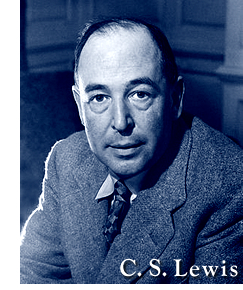
C.S. Lewis Daily – Today’s Reading


There are three ways of taking the command to turn the other cheek. One is the Pacifist interpretation; it means what it says and imposes a duty of nonresistance on all men in all circumstances. Another is the minimising interpretation; it does not mean what it says but is merely an orientally hyperbolical way of saying that you should put up with a lot and be placable. Both you and I agree in rejecting this view. The conflict is therefore between the Pacifist interpretation and a third one which I am now going to propound. I think the text means exactly what it says, but with an understood reservation in favour of those obviously exceptional cases which every hearer would naturally assume to be exceptions without being told. . . . . That is, insofar as the only relevant factors in the case are an injury to me by my neighbour and a desire on my part to retaliate, then I hold that Christianity commands the absolute mortification of that desire. No quarter whatever is given to the voice within us which says, “He’s done it to me, so I’ll do the same to him.”

From The Weight of Glory

Compiled in A Year with C.S. Lewis

Charles Stanley – Speaking Through Disappointments


Numbers 14:17-24

Often we become so focused on something or someone that we’re unable to hear the Lord. In those times, one of God’s most effective yet painful methods of getting our attention is through disappointments. But oh, how we dislike this approach!

Disappointment is one of the ways God spoke dramatically to the nation of Israel. In Numbers 14, He directed His people into the Promised Land. However, fear invaded their hearts and they were scared of the inhabitants, so they refused to enter. As a result, the Lord told the Israelites they’d “by no means see the land” for 40 years, until after the death of the generation that had been too fearful to enter (Numbers 14:23).

The postponement was so disheartening that they decided to change their minds. Sadly, though, it was too late; God had already settled the issue. And the people were distraught with grief because of what they had missed.

At that moment, when they were in the throes of their disappointment, do you think God had their attention? Absolutely. The next time He gave Israel a command, don’t you imagine they listened a bit more intently?

Tragically, failure is rather common in such situations. Instead of looking to God when disappointments occur, we are quick to blame circumstances, other people, fate, or even the enemy.

We are hesitant to believe that our loving Father could be responsible for our frustrations. Yet He is willing to use disappointments to realign our thoughts and plans with His. Consider the difficulties you have faced—might the Lord have been trying to say something in the midst of them?

Bible in One Year: Ezekiel 29-31

Our Daily Bread — Love Locks


Read: Ephesians 4:29-5:2

Bible in a Year: Psalms 146-147; 1 Corinthians 15:1-28

Walk in the way of love, just as Christ loved us and gave himself up for us. —Ephesians 5:2

“Love Locks” is a growing phenomenon. Thousands of people in love have attached these love padlocks to bridges, gates, and fences around the world, including France, China, Austria, Czech Republic, Serbia, Spain, Mexico, and Northern Ireland. Couples engrave their names on a padlock and then attach it in a public place to symbolize their everlasting love. Authorities of some landmarks frown upon them because of the danger they can cause if too many are attached. Some think they are acts of vandalism, while others view them as beautiful art and a picture of committed love.

The Lord showed us true “everlasting love” in a public place. He displayed His love on the cross when He gave His life to provide forgiveness of sin. And He continues to show us His love on a daily basis. Salvation is not only a promise that we’ll have eternity with God, but it is also a daily experience of forgiveness, assurance, provision, and grace in our relationship with Him. Jesus’ love for us is the basis of Paul’s challenge to “walk in the way of love” toward others (Eph. 5:2).

The love of our Father enables us to be patient and kind. In His Son He has given us the ultimate example and means of loving one another—forever. —Anne Cetas

In what ways have you learned to love others? What action could you take today to grow in love?

Jesus shows us how to love.

INSIGHT: The church at Ephesus was blessed with strong leadership. It was founded by the apostle Paul (Acts 18-19), who spent no less than 3 years there teaching those who came to Christ and reaching out with the gospel to those who did not know the Savior (20:20,31). He also provided direction and instruction to the elders of that church when he returned to Jerusalem following his third missionary journey (vv. 18-35). Additionally, Paul sent Timothy to Ephesus to instruct them concerning false teachers and to keep them from stumbling spiritually (1 Tim. 1:3-4). Finally, tradition says that the apostle John spent his final years serving in the church at Ephesus. What a rich tradition of leadership for this church. Bill Crowder

Alistair Begg – Being Consistent and Useful To God


Woe to me, that I sojourn in Meshech, that I dwell among the tents of Kedar! Psalm 120:5

As a Christian you have to live in the middle of an ungodly world, and it is of little use for you to cry, “Woe to me.” Jesus did not pray that you should be taken out of the world, and what He did not pray for, you need not desire. It is far better to meet the difficulty in the Lord’s strength and by doing so to glorify Him. The enemy is always watching for inconsistency in your conduct; therefore be very holy. Remember that the eyes of all are on you, and that more is expected from you than from other men. Strive to give no occasion for blame. Let your goodness be the only fault they can discover in you. Like Daniel, compel them to say of you, “We shall not find any ground for complaint against this Daniel unless we find it in connection with the law of his God.”1

Seek to be useful as well as consistent. Perhaps you think, “If I were in a more favorable position I could serve the Lord’s cause, but I cannot do any good where I am.” The worse the people are among whom you live, the more they need your exertions; if they are crooked, all the more need for you to set them straight; and if they are perverse, they need you to turn their proud hearts to the truth. Where should the doctor spend his time if not among the sick? Where is honor to be won by the soldier but in the center of the battle? And when you are weary of the strife and sin that meets you on every hand, consider that all the saints have endured the same trial. They were not carried on couches to heaven, and you should not expect to travel more easily than they. They had to risk their lives on the battlefield, and you will not be crowned until you also have endured hardship as a good soldier of Jesus Christ. Therefore, stand firm in the faith, be courageous, be strong!

1) Daniel 6:5

The Family Bible Reading Plan

  • 1 Samuel 29, 30
  • 1 Corinthians 10

Devotional material is taken from “Morning and Evening,” written by C.H. Spurgeon, revised and updated by Alistair Begg.

Charles Spurgeon – The new heart


“A new heart also will I give you, and a new spirit will I put within you: and I will take away the stony heart out of your flesh, and I will give you an heart of flesh.” Ezekiel 36:26

Suggested Further Reading: Matthew 9:10-17

The promise is that he will give us new hearts and right spirits. Human nature is too far gone ever to be mended. It is not a house that is a little out of repair, with here and there a slate blown from the roof, and here and there a piece of plaster broken down from the ceiling. No, it is rotten throughout, the very foundations have been eroded; there is not a single timber in it which has not been eaten by the worm, from its uppermost roof to its lowest foundation; there is no soundness in it; it is all rottenness and ready to fall. God does not attempt to mend; he does not shore up the walls, and repaint the door; he does not garnish and beautify, but he determines that the old house shall be entirely swept away, and that he will build a new one. It is too far gone, I say, to be mended. If it were only a little out of repair, it might be mended. If only a wheel or two of that great thing called “manhood” were out of repair, then he who made man might put the whole to rights; he might put a new cog where it had been broken off, and another wheel where it had gone to ruin and the machine might work anew. But no, the whole of it is out of repair; there is not one lever which is not broken; not one axle which is not disturbed; not one of the wheels which act upon the others. The whole head is sick, and the whole heart is faint. From the sole of the foot, to the crown of the head, it is all wounds and bruises and putrefying sores. The Lord, therefore, does not attempt the repairing of this thing.

For meditation: The only cure for man’s sinful condition is a heart transplant carried out by the Great Physician (Romans 2:28,29).

Sermon no. 212

5 September (1858)


John MacArthur – Overcoming Satanic Opposition


“Be strong in the Lord, and in the strength of His might . . . . For our struggle is not against flesh and blood, but against the rulers, against the powers, against the world forces of this darkness, against the spiritual forces of wickedness in the heavenly places” (Eph. 6:10, 12).

Spiritual warfare can be intense, but God’s grace enables you to prevail against Satan’s attacks.

Through the ages Satan has accused, besieged, and battered believers in an effort to prevent them from living to the glory of God. He attempts to snatch the gospel message from a person’s heart even before salvation occurs (Matt. 13:19). He bombards believers with false doctrine, trying to confuse and distract them from biblical truth (Eph. 4:14).

Martin Luther reported that his conflict with Satan became so intense that at one point it was as if he could see him. In anger over Satan’s incessant attacks, Luther picked up his inkwell and threw it at him. It hit the wall with a resounding crash, splattering ink throughout the room. The stains remained for many years, reminding all who saw them of how vivid spiritual conflict can be.

You may not have experienced anything like the intensity of Martin Luther’s conflict, but spiritual warfare is just as real for you as it was for him. You are in mortal combat with Satan and his evil forces. That’s why Paul said, “Our struggle is not against flesh and blood, but against . . . spiritual forces of wickedness in the heavenly places” (Eph. 6:12).

“Struggle” in that verse speaks of life-and-death, hand-to-hand combat—the kind Jesus Himself experienced while on earth. He met opposition and persecution at every turn. The same was true of Paul and the other apostles as they dealt with Jewish religionists, heathens, sorcerers, and demon-possessed people who tried in vain to thwart their missionary efforts.

Satan’s onslaughts may seem overwhelming at times, but don’t be discouraged. See them for what they are: a defeated foe’s last-ditch efforts to inflict damage on the conquering army. The Lord will strengthen and protect you, just as He has protected all believers before you.

Suggestions for Prayer

Praise God for being your protector and the source of spiritual victory.

For Further Study

Read Acts 4:1-22.

  • What kind of opposition did Peter and John face?
  • How did they respond to the Jewish Council’s order not to preach the gospel?

Campus Crusade for Christ; Bill Bright – The Mind of Christ


“For who hath known the mind of the Lord, that he may instruct Him? But we must have the mind of Christ” (1 Corinthians 2:16, KJV).

The first thing I do when I awaken each morning is to kneel before my Lord in humility, meditate upon His attributes, and praise, worship and adore Him.

The last thing I do before I go to bed at night is to kneel in prayer, to praise, worship and give thanks to Him. Thus, my first thoughts are automatically of Him when I awaken, because all night long my subconscious mind has been meditating on Him.

Every morning of every day, I acknowledge His lordship. I gladly surrender control of my life to Him acknowledging my dependence upon Him. Then, by faith, I claim His mind and His wisdom for direction in every detail of my life. I trust Him to influence and control my attitudes, my motives, my desires, my thoughts and my actions.

In different words and ways, I remind Him that I am a suit of clothes for Him and that He can do anything He wants in and through me. I invite Him to walk around in my body. I ask Him to think with my mind, to love with my heart, to speak with my lips, to lead me wherever He wants me to go, to seek and save the lost through me.

We should study the Word of God daily and diligently, determining as an act of the will to pattern our lives according to His commands and His example. We begin to experience the reality and the availability of the mind of Christ when we literally saturate our minds with His thoughts and spend much time meditating upon His Word.

Bible Reading: I Corinthians 2:9-15

TODAY’S ACTION POINT: Consciously and deliberately I will begin each day by inviting Christ to walk around in my body, think with my mind, love with my heart, speak with my lips and continue to “seek and save the lost” through me.

Presidential Prayer Team; H.L.M. – Breath of Life


The prophet Ezekiel was 30 years old when he began experiencing visions from God. At that time, Israel needed hope and was spiritually “dead” as a nation. So Jehovah gave Ezekiel the vision of the dry bones as a sign of restoration. Now picture Ezekiel standing in the middle of the field preaching God’s Word to piles of bones – and watching the bones reassemble into human form as the Lord breathed life into them so they’d stand on their feet as a great army!

I will give you a new heart, and a new spirit I will put within you.

Ezekiel 36:26

America’s churches and their attendees often appear to look like a heap of dry, lifeless bones, making little impact in this broken world. Yet if God can restore dried, shrunken bodies to life, then He can enliven Christians to change the hearts of this nation’s leaders and citizens through their bold witness and persistent prayers.

Breathe in God’s presence and dare to be revived as you seek Him and read His Word every day. Let go of hopelessness and doubt. Ask Him to fill the hearts of your family, neighbors and all Americans with a new spirit – His Holy Spirit.

Recommended Reading: Psalm 51:10-19

Greg Laurie – What Would You Like Your Last Words to Be?


“He who testifies to these things says, ‘Surely I am coming quickly.’ Amen. Even so, come, Lord Jesus!”

—Revelation 22:20

A person’s last words often provide a glimpse into their character. They reveal what a person valued most. Some parting comments are thoughtful; others spontaneous; others surprising.

On March 14, 1883, the day Karl Marx died, his housekeeper came to him and said, “Tell me your last words, and I will write them down!” Marx replied, “Go on, get out! Last words are for fools who haven’t said enough!”

  • Groucho Marx’s last words were, “Die, my dear? Why, that’s the last thing I’ll do!”
  • Nostradamus predicted the future correctly: “Tomorrow, I shall no longer be here.”
  • Pablo Picasso said, “Drink to me. Drink to my health. You know I can’t drink any more.
  • The Roman emperor Julian, having attempted to reverse the official endorsement of Christianity by the Roman Empire, gave his last words: “You have won, O’ Galilean!”

The words of men of faith are far different.

When Stephen, who was being stoned to death, was dying, his last words were, “Look, I see the heavens opened and the Son of Man standing at the right hand of God” (Acts 7:56). Then Stephen said, “Lord, do not charge them with this sin.” Young Stephen—so like Jesus, who from Calvary said, “Father, forgive them for they know not what they do.”

  • John Wesley said, “The best of all is: God is with us!”
  • D.L. Moody: “I see earth receding, and heaven is opening. God is calling me.”
  • F.B. Meyer requested, “Read me something from the Bible—something brave and triumphant!”

Here are the last recorded words of Jesus: “Surely I am coming quickly” (Revelation 22). The apostle John, overwhelmed, offers a prayer: “Amen. Even so, come, Lord Jesus!” The word Amen means “So be it!” Or as Saint Paul said, “Let it be.” (Saint Paul McCartney, that is.)

What would you like your last words to be?

Night Light for Couples – What’s Your Motive?


“I belong to my lover, and his desire is for me.” Song of Songs 7:10

Let’s face it: Sex is a topic on the mind of just about every husband and wife. (Some wives claim their husbands think of nothing else!) The physical union of man and woman is one of the most pleasurable and meaningful aspects of marriage. Yet when a couple engages in sex for the wrong reasons, intercourse quickly loses its significance and can become an empty obligation. The late Dr. David Hernandez once offered some common, “non-loving” motives for sex:

  • To fulfill one’s marital duty,
  • To repay or secure a favor,
  • As a conquest,
  • As a substitute for verbal communication,
  • To overcome feelings of inferiority,
  • As an enticement for emotional love,
  • As a defense against anxiety and tension,
  • As a form of self‐gratification without seeking to satisfy the other.

God designed sex as an intimate expression of love between husband and wife. Anything that fails to meet that standard leaves one partner feeling unsatisfied and exploited.

Just between us…

  • When was the last time you thought about making love?
  • Does your motive for sex ever fall into any of the above categories?
  • Have you ever felt sexually “used” by me?
  • How can we move from “having sex” toward “making love”?

Heavenly Father, You have blessed our union with sexual expression. Bless us with emotional and sexual intimacy as well. Thank You for the pleasure and wonder of married lovemaking. Amen.

From Night Light For Couples, by Dr. James & Shirley Dobson

Streams in the Desert for Kids – I Trust You


Psalm 37:5

“Stop struggling,” the lifeguard yelled at the drowning victim. “I can’t help you if you try to save yourself. Relax!” The young boy finally relaxed, and in a minute the lifeguard had him ashore and to safety. There are some situations where struggling and trying to fix things ourselves only gets us in deeper trouble. God knows that, so he says, “Give me your troubles and your struggles.” That means that when we tell Jesus about our problems, we can relax and let him carry them. We don’t have to worry about them anymore. Most struggles we have in life will pass after a while, so there’s no point worrying about them. We might just as well give them to Jesus.

It might take a while to see God doing anything about what we’ve given to him. He takes time to answer our prayers in just the right way. And even when we can’t see God doing anything, he is. So if you feel like you are drowning in trouble and questions and sadness, call for the lifeguard—Jesus—to see how he comes to your rescue.

Dear Lord, Sometimes I feel like I’m drowning in problems and sorrows. Come rescue me, and I will let you carry me and my troubles to a safe place. Amen.

Charles Stanley – Delight Yourself in the Lord


Isaiah 61:10-11

The word delight means “to gain great pleasure, satisfaction, and happiness.” Wouldn’t you like those to be the words that describe your relationship with God—one where both you and He enjoy time spent in each other’s presence? If that sounds good to you, then I have great news. God also wants that kind of delightful friendship, which develops through commitment, trust, and patience.

  • First, a believer must commit his or her ways to God. This means that we invite the Lord to examine our desires and intentions—and change whatever does not fit His purpose or advance His plan for our life.
  • Second, a believer must trust God. Who is more worthy of our faith than the Father, who gave Jesus Christ to save wicked sinners? The One who would not spare His only Son will certainly provide all that His children need (Rom. 8:32).
  • Third, a believer must rest in God. When we fret about an issue or something that we consider necessary, we are neither committing ourselves to the Lord nor trusting in Him. Because our human viewpoint is extremely limited, waiting patiently rarely proves easy. God, however, has infinite wisdom and knows when circumstances and timing are perfectly aligned for His will to be done.

A growing relationship with the Lord is not drudgery, though it can be hard work. But the effort is a labor of love, because humans are designed to derive joy and fulfillment from being in God’s presence. The greatest pleasure we can experience in life is walking hand in hand with a Father who adores us.

Bible in One Year: Ezekiel 26-28

Our Daily Bread — People Power


Read: Ephesians 4:7-16

Bible in a Year: Psalms 143-145; 1 Corinthians 14:21-40

The whole body . . . grows and builds itself up in love, as each part does its work. —Ephesians 4:16

A man was boarding a train in Perth, Australia, when he slipped and his leg got caught in the gap between the train carriage and the station platform. Dozens of passengers quickly came to his rescue. They used their sheer might to tilt the train away from the platform, and the trapped man was freed! The train service’s spokesman, David Hynes, said in an interview, “Everyone sort of pitched in. It was people power that saved someone from possibly quite serious injury.”

In Ephesians 4, we read that people power is God’s plan for building up His family. He has given each of us a special gift of His grace (v. 7) for the specific purpose that “the whole body, joined and held together by every supporting ligament, grows and builds itself up in love, as each part does its work” (v. 16).

Every person has a job to do in God’s family; there are no spectators. In God’s family we weep and laugh together. We bear each other’s burdens. We pray for and encourage one another. We challenge and help each other to turn from sin. Show us, Father, our part in helping Your family today. —Poh Fang Chia

Are you a spectator or a participant? What gifts do you have? In what ways can God use you to help others grow closer to Him?

We need each other to get to where God wants us to go.

INSIGHT: The various types of spiritual gifts are listed in Romans 12:6-8, 1 Corinthians 12:7-30, Ephesians 4:11, and 1 Peter 4:10-11. That no two lists are identical would suggest that each list is not exhaustive. God intends that we use these grace gifts to serve, instruct, encourage, edify, equip, and empower the church so as to glorify Him (1 Cor. 14:4-5,26,31; Eph. 4:12; 1 Peter 4:10-11). In Ephesians 4, Paul highlights the teaching gifts that help build up and mature the church (vv. 11-16). Apostles, prophets, evangelists, and pastor-teachers are gifted in proclaiming and teaching the Word of God. Sim Kay Tee


Ravi Zacharias Ministry – For the Weak


After fifteen years and nearly seventeen thousand miles, an unlikely fleet was set to make port on the beaches of Britain. On January 29, 1992, three massive containers on a cargo ship from Hong Kong crashed into the Pacific Ocean during a storm. The containers were filled with brightly colored bathtub toys bound for the United States. Instead, twenty-nine thousand little plastic ducks, frogs, beavers, and turtles began a journey that would be carefully monitored by children, oceanographers, environmentalists, and newscasters alike.

After 23 years, the tiny bobbing friends have traveled past Japan and back to Alaska, drifted deliberately down the Bering Strait and past the length of Greenland, and carefully floated down the eastern coastline of the United States. They have persevered through storms that would have left boats and crews in dire straits. They patiently endured four years frozen in ice as they crossed the Arctic Ocean. They have arrived at various intervals on various shores, faded and tattered by sun and surf, some with animal bites and barnacles to show for the journey. But each smiling plastic face seems to return with an ironic confession: the smallest vessels on tumultuous seas are not necessarily the most vulnerable.

Life is certainly far more than an attempt to keep our heads above water, and yet at times it feels a suited metaphor. Like tiny rubber ducks in an oceanic bathtub, we are tossed about the rocks of fear and anger, pulled under by currents of despair and disappointment, and broken at times by the journey. Human fragility is often as startlingly obvious as the image of a bath toy in the Bering Strait. We are at times almost averse to this fragility, whether seen in ourselves or in others. Fighting to keep afloat in an unpredictable sea, we take on distracting cargo and build defensive walls—anything that makes us feel less like tiny vessels lost at sea and more like giant ships passing in the night.

But metaphors of strength can be misleading, and vulnerability is often fearfully misunderstood. Though we may be reluctant to hear it, there is one tradition that clearly puts forth the story of a fragile and fleeting humanity. Jesus spoke readily of his own death and wept at the grave of a friend. The apostle Paul wrote of our bodies as “jars of clay,” words hastening back the image of David who lamented that he had become like “broken pottery.” Yet even well beyond the fragile images of humanity given in Scripture, the vulnerability of a God-man comes into focus and redefines all of our terms. The image of Jesus on the cross further turns our understanding of fragility on its head, challenges every discomfort with brokenness, and redirects our associations of weak and strong. In these images of Christ we discover a vulnerability of God that makes our greatest images of strength seem somehow childish. In his cruciform journey, God uses the weak to shame the strong, a suffering Son to meet the wounds of creation, and the vulnerable image of a broken savior who comes near.

The Christian profession is that it is by the Cross which we live, by a seemingly weak vessel, that we are brought home. Christ is not promised as a religious escape raft for the hard realities of this world. On the contrary, he calls to us in our weakness and reminds us that it is not unfamiliar to him. Through tumultuous waters, he beckons us to see there is potential in fragility, mercy in affliction, life beyond and within the journey that currently consumes us. Something like the image of tiny ducks arriving after an unlikely voyage, the journey of a soul to the cross is one in which Christ redirects our thoughts on vulnerability, the weak and the strong. And along the way, God is aware of every last and fragile vessel, going after even one that is lost, longing to gather us unto himself like a hen bringing together thousands of chicks under her wings.

Jill Carattini is managing editor of A Slice of Infinity at Ravi Zacharias International Ministries in Atlanta, Georgia.

Alistair Begg – Sick with Sin


“I will; be clean.” Mark 1:41

The primeval darkness heard God say, “Let there be light,” and immediately there was light. The word of the Lord Jesus is equal in majesty to that ancient word of power. Redemption, like creation, has its word of might. Jesus speaks, and it is done. Leprosy yielded to no human remedies, but it fled at once at the Lord’s “I will.” The disease exhibited no hopeful signs or tokens of recovery; nature contributed nothing to its own healing. But the unaided word effected the entire work on the spot and forever. The sinner is in a more miserable plight than the leper; let him imitate his example and go to Jesus, “imploring him and kneeling [say] to him . . .” Let him exercise what little faith he has, even though it should go no further than “If you will, you can make me clean.”

There need be no doubt as to the result of the application. Jesus heals all who come and casts out none. In reading the narrative in which our morning’s text occurs, it is worthy of careful consideration that Jesus touched the leper. This unclean person had broken through the regulations of the ceremonial law and pressed into the house, but Jesus, far from chiding him, broke through the law Himself in order to meet him. He made an interchange with the leper, for while He cleansed him, He contracted by that touch a Levitical defilement.

Even so Jesus Christ was made sin for us, although in Himself He knew no sin, that we might be made the righteousness of God in Him. If only poor sinners would go to Jesus, believing in the power of His blessed substitutionary work, they would soon learn the power of His gracious touch. The hand that multiplied the loaves, that saved sinking Peter, that upholds afflicted saints, that crowns believers-that same hand will touch every seeking sinner and in a moment make him clean. The love of Jesus is the source of salvation. He loves, He looks, He touches us, and we live.

The Family Bible Reading Plan

  • 1 Samuel 28
  • 1 Corinthians 9

Devotional material is taken from “Morning and Evening,” written by C.H. Spurgeon, revised and updated by Alistair Begg.

Charles Spurgeon – Christ triumphant


“And having spoiled principalities and powers, he made a shew of them openly, triumphing over them in it.” Colossians 2:15

Suggested Further Reading: Isaiah 63:1-6

I might describe the mighty pictures at the end of the procession; for in the old Roman triumph, the deeds of the conqueror were all depicted in paintings. The towns he had taken, the rivers he had passed, the provinces he had subdued, the battles he had fought, were represented in pictures and exposed to the view of the people, who with great festivity and rejoicing, accompanied him in throngs, or beheld from the windows of their houses, and filled the air with their acclamations and applauses. I might present to you first of all the picture of hell’s dungeons blown to atoms. Satan had prepared deep in the depths of darkness a prison-house for God’s elect; but Christ has not left one stone upon another. On the picture I see the chains broken in pieces, the prison doors burnt with fire, and all the depths shaken to their foundations. On another picture I see heaven open to all believers; I see the gates that were fast shut heaved open by the golden lever of Christ’s atonement. I see another picture, the grave despoiled; I behold Jesus in it, slumbering for awhile, and then rolling away the stone and rising to immortality and glory. But we cannot stay to describe these mighty pictures of the victories of his love. We know that the time shall come when the triumphant procession shall cease, when the last of his redeemed shall have entered into the city of happiness and of joy, and when with the shout of a trumpet heard for the last time, he shall ascend to heaven, and take his people up to reign with God, even our Father, for ever and ever, world without end.

For meditation: The victory and triumph (or victory parade) are Christ’s alone; if you are a Christian, your part in his victory procession is to be found in 2 Corinthians 2:14.

Sermon no. 273

4 September (1859)