Tag Archives: Bible

Charles Stanley – Accepting Criticism


Proverbs 10:17-18

Nobody likes criticism. It’s often unsolicited and rarely fun. Many times, we reject our critic’s words because of the harsh spirit in which they are spoken.

Yet God can take even a wrong attitude, bad timing, or harsh tone of voice and still tell us something we need to hear. That’s why we are wise to pay attention when someone critiques us. Invited or not, criticism forces us to examine ourselves and take notice of weak areas. This helps us discover who we really are and avoid unnecessary mistakes. If we fail to listen, our potential for mental, emotional, and spiritual growth is limited.

While not all opinions are valid, it’s important to respond well and evaluate criticism correctly. First, do not immediately reject the comment, blame the person, or defend yourself. Instead, consider what was said and ask God if He’s trying to tell you something. Then, thank the person for his interest in your growth, and explain that you’ll reflect on his observation. If he was sincere, he’ll be appreciative, but if his intentions were negative, this will disarm him. Next, evaluate the criticism and determine what exactly is under scrutiny—your beliefs, your character, your behavior, or God? Finally, view this as an opportunity for growth, and, if necessary, apologize to the person you’ve offended.

Jesus died on the cross for our sake, so we as believers are certain of His approval. When we remember this, the disapproval of others will take on less significance and cause less hurt. Then, as we learn to respond correctly, we will be blessed to find ourselves growing.

Bible in One Year: Jeremiah 4-5

Our Daily Bread — Batter in the Bowl


Read: Ruth 2:1-12

Bible in a Year: Psalms 77-78; Romans 10

Please let me glean . . . after the reapers among the sheaves. —Ruth 2:7

My daughter and I consider brownies to be one of the seven wonders of the culinary world. One day, as we were mixing the ingredients of our favorite chocolate treat, my daughter asked if I would leave some batter in the bowl after pouring most of it into the baking pan. She wanted to enjoy what was left over. I smiled and agreed. Then, I told her, “That’s called gleaning, you know, and it didn’t start with brownies.”

As we enjoyed the remnants of our baking project, I explained that Ruth had gathered leftover grain in order to feed herself and her mother-in-law Naomi (Ruth 2:2-3). Because both of their husbands had died, the women had returned to Naomi’s homeland. There Ruth met a wealthy landowner named Boaz. She asked him, “Please let me glean . . . after the reapers among the sheaves” (v. 7). He willingly consented and instructed his workers to purposely let grain fall for her (v. 16).

Like Boaz, who provided for Ruth from the bounty of his fields, God provides for us out of His abundance. His resources are infinite, and He lets blessings fall for our benefit. He willingly provides us with physical and spiritual nourishment. Every good gift we receive comes from Him. —Jennifer Benson Schuldt

Dear God, thank You for the blessings I enjoy! You minister to Your children out of Your limitless abundance. I worship You as my provider.

Our greatest needs cannot exceed God’s great resources.

INSIGHT: God commanded His people to be generous and to allow the poor to gather food from their lands at harvest time (Lev. 19:9-10; Deut. 24:19-22). God is the defender, protector, and provider of the poor, the helpless, and the oppressed (Deut. 10:17-19; Ps. 9:9-10; 146:5-9). Sim Kay Tee

Alistair Begg – The City of God


The city has no need of sun or moon to shine on it. Revelation 21:23

Further on, in the better world, the residents are not dependent upon creature comforts. They do not need new clothes; their white robes never wear out, nor do they become soiled or tattered. They don’t need medicine to heal diseases, for no one will ever say, “I am sick.” They do not need sleep to restore their strength-they do not rest by day or night as they praise God in His temple. They do not need social relationships to grant comfort, and whatever happiness they may derive from association with their fellows is not essential to their bliss, for the presence of Jesus is enough for their largest desires. They do not need teachers there; they doubtless commune with one another concerning the things of God, but they do not need to be instructed; they will all be taught of the Lord.

We receive donations at the King’s gate, but they feast at the table itself. Here we lean upon the friendly arm, but there they lean upon the Beloved and upon Him alone. Here we need the help of our companions, but there they find all they need in Christ Jesus. Here we look to the food that perishes and to the clothing that decays before the moth, but there they find everything in God. We use the bucket to fetch water from the well, but there they drink from the fountainhead and put their lips down to the living water. Now the angels bring us blessings, but then we will not need messengers from heaven. They do not need angels there to bring their love-notes from God because they see Him face to face. What a blessed time it will be when having moved beyond every secondary cause we rest upon the bare arm of God! What a glorious hour when God, and not His creatures-the Lord, and not His works-will be our daily joy! Our souls will then have attained the perfection of bliss.

The Family Bible Reading Plan

  • Ruth 2
  • Acts 27

Devotional material is taken from “Morning and Evening,” written by C.H. Spurgeon, revised and updated by Alistair Begg.

Charles Spurgeon – Love thy neighbour


“Thou shalt love thy neighbour as thyself.” Matthew 19:19

Suggested Further Reading: Romans 12:6-13

Remember that man’s good requires that you should be kind to your fellow creatures. The best way for you to make the world better is to be kind yourself. Are you a preacher? Preach in a surly way, and in a surly tone to your church; a pretty church you will make of it before long! Are you a Sunday-school teacher? Teach your children with a frown on your face; a fine lot they will learn! Are you a master? Do you hold family prayer? Get in a passion with your servants, and say, “Let us pray.” A vast amount of devotion you will develop in such a manner as that. Are you a warder of a gaol, and have prisoners under you? Abuse them and ill-treat them, and then send the chaplain to them. A fine preparation for the reception of the word of God! You have poor around you; you wish to see them elevated, you say. You are always grumbling about the poverty of their dwellings, and the meanness of their tastes. Go and make a great stir at them all—a fine way that would be to improve them! Now, just wash your face of that black frown, and buy a little of the essence of summer somewhere, and put it on your face; and have a smile on your lip, and say, “I love you. I am no cant, but I love you, and as far as I can I will prove my love to you. What can I do for you? Can I help you over a stile? Can I give you any assistance, or speak a kind word to you? Perhaps I could look after your little daughter. Can I fetch the doctor to your wife now she is ill?” All these kind things would be making the world a little better.

For meditation: The effectiveness of what we say and do can depend to a large extent on how we say and do it (1 Corinthians 13:1-3). Faith, virtue, knowledge, temperance, patience and godliness are to be supplemented by brotherly kindness and love (2 Peter 1:5-7).

Sermon no. 145

9 August (1857)

John MacArthur – Faith Without Love


“If I have all faith, so as to remove mountains, but do not have love, I am nothing” (1 Cor. 13:2).

Loveless faith is useless faith.

In Matthew 17:19 the disciples came to Jesus wanting to know why they couldn’t cast a demonic spirit from a child. Jesus responded, “Because of the littleness of your faith; for truly I say to you, if you have faith as a mustard seed, you shall say to this mountain, ‘Move from here to there,’ and it shall move; and nothing shall be impossible to you” (v. 20). He repeated the same principle in Matthew 21:21: “Truly I say to you, if you have faith, and do not doubt, you shall . . . say to this mountain [the Mount of Olives], ‘Be taken up and cast into the sea,’ [and] it shall happen.”

Those passages have puzzled many people because they’ve never seen anyone move a mountain. But Jesus wasn’t speaking literally. Moving mountains would cause all kinds of ecological problems and would be a pointless miracle. The expression “able to move mountains” was a common figure of speech in that day, meaning “to surmount great obstacles.” Jesus was speaking of those who have the gift of faith—who can move the hand of God through unwavering prayer.

The gift of faith is the ability to believe that God will act according to His will, no matter the circumstances. People with that gift are prayer warriors and tend to stand as rocks when others around them are falling apart. They see God’s power and purposes at work and trust Him even when others doubt.

But, says Paul, even if you have such faith, if you don’t have love, you are nothing. That’s a harsh rebuke, but it places the emphasis where it belongs: on our motives. The Corinthians’ motives were evident in their selfish pursuit of the showy gifts.

What motivates you? Remember, without love it doesn’t matter what gifts you have, how eloquent your speech is, what you know, or what you believe. Only love can validate your service to Christ.

Suggestions for Prayer

Ask God for a greater capacity to trust Him, and the motivation to pray more fervently.

For Further Study

Read Hebrews 11, drawing from the examples of the people of great faith mentioned there.

Joyce Meyer – Express Your Faith


Because if you acknowledge and confess with your lips that Jesus is Lord and in your heart believe (adhere to, trust in, and rely on the truth) that God raised Him from the dead, you will be saved. For with the heart a person believes (adheres to, trusts in, and relies on Christ) and so is justified (declared righteous, acceptable to God), and with the mouth he confesses (declares openly and speaks out freely his faith) and confirms [his] salvation.- Romans 10:9-10

This is a very important principle that we are in danger of missing. We are saved by faith, but James said that faith without works is dead. I can believe in my heart that God is worthy of worship; but if I don’t take action to worship Him, it doesn’t do much good. I can say I believe in tithing; but if I don’t tithe, it won’t help me financially.

Be bold—take some action and be expressive in your praise and worship. A lot of people even refuse to talk about God. They say, “Religion is a private thing.” I cannot find anyone in the Bible who met Jesus and kept it private.

When we are excited about praising and worshiping Him, it is difficult to have no outward expression. When He fills our hearts, the good news about Him comes out of our mouths.

Campus Crusade for Christ; Bill Bright – True Spiritual Life


“Only the Holy Spirit gives eternal life. Those born only once, with physical birth, will never receive this gift. But now I have told you how to get this true spiritual life” (John 6:63).

A businessman called to ask if he could bring one of his associates to talk to me about receiving Christ. As the three of us talked together, it became apparent that the businessman who arranged the meeting was not a Christian either. So after his friend had received Christ, I asked him if he believed that Jesus Christ was the Son of God.

“Yes,” he said.

“Do you believe that He died for your sins?”

“Of course.”

“Have you ever received Him into you life as your Savior and Lord?”

“No,” he said, “I haven’t.”

“Wouldn’t you like to do so?”

“Yes,” he said, “I would. But I have been waiting for that peculiar time when God would speak to me in a very emotional way.”

He explained that this was the way his mother had become a Christian, and he felt that this was the way he should become a Christian, too.

Once again I reviewed very simply the plan of salvation, explaining that only the Holy Spirit gives eternal life and there may or may not be an emotional experience accompanying the moment of salvation. I explained that salvation is a gift of God, which we receive by faith on the basis of His promise.

So together we prayed, and though I had explained that he should not expect any emotional experience, God graciously touched him in a very dramatic way emotionally, contrary to my own experience and that of the majority of people with whom I counsel and pray.

Bible Reading: John 6:60-65

TODAY’S ACTION POINT: Realizing that no one can enter the kingdom of God apart from a spiritual birth, I will today pray for many opportunities to share the good news of God’s love and forgiveness in Christ with others.

Presidential Prayer Team; J.K. – “S” Words


The “S’s” have it! Sin, servitude, supplication, salvation, security, and sin again. That is the story of the people of Israel in the time of the judges. They “did what was evil in the sight of the Lord” and were overpowered by their enemies because of their sin. (Judges 4:1) After years of oppression, they cried out to God for help. In His mercy, the Lord raised up judges who would save the people and allow peace for some years. Once the judge died, the people turned back to sin.

They forgot the Lord their God.

Judges 3:7

Deborah was a wife, a prophet chosen by God, Israel’s fourth judge and a leader in battle – all but the first very unusual for a woman. At a time when men faltered, she was faithful to God and advised His people, inspiring them to hope in their true deliverer. And, as He often did, the Lord caused the enemy to be defeated.

You are called to be strong in your faith, to seek God in times of trouble, and to know He will save you and keep you secure. But He expects you to be faithful to Him. Encourage those around you. Intercede for this nation – that it not give in to sin but serve God with courage and faithfulness.

Recommended Reading: Psalm 62:5-12

Night Light for Couples – The Single Man


“Pity the man who falls and has no one to help him up!” Ecclesiastes 4:10

Contrary to conventional wisdom, the single man often has a rough go of life. He is far more likely than an unmarried female to be an alcoholic, drug user, or convicted criminal. He is less responsible about his driving habits, finances, and personal appearance. (Check with your auto insurance agent, bank officer, or neighbor with college‐age sons if you doubt this statement.)

There are millions of exceptions, of course, but statistically speaking, an unmarried young man is at risk for many antisocial behaviors. Yet when he falls in love, marries, and begins to care for, protect, and support his wife, he becomes a mainstay of social order. His selfish impulses are inhibited. His sexual passions are channeled. He discovers a sense of pride in his family. He learns why, on average, a married man lives a longer and happier life than his single counterpart.

God knew what He was doing when He designed the institution of marriage. It’s a smart husband who recognizes this and lovingly cultivates his relationship with his wife.

Just between us…

  • Do you feel you changed after we married?
  • Do you ever miss being single? Why?
  • How has being married to me benefited your life?
  • How can I help you feel more joy in our marriage and pride in our family?

(husband) Dear God, thank You for Your gift to me of marriage. Thank You for my lovely spouse and for Your daily blessing on our relationship and our home. May I never take Your generosity for granted or Your holy purposes lightly. Amen.

From Night Light For Couples, by Dr. James & Shirley Dobson

C.S. Lewis Daily – Today’s Reading


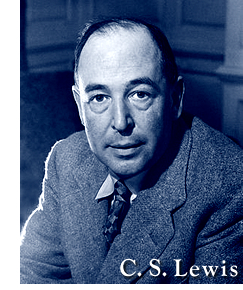
TO EDWARD LOFSTROM: On what Lewis attempted in the Chronicles of Narnia; on the character of the man Jesus—his tenderness, ferocity, and even humor; and on the need to do one’s duty while having patience with God.

16 January 1959

  1. I am afraid I don’t know the answer to your question about books of Christian instruction for children. Most of those I have seen—but I haven’t seen many—seem to me namby-pamby and ‘sissie’ and calculated to nauseate any child worth his salt. Of course I have tried to do what I can for children—in a mythical and fantastic form by my seven ‘Narnian’ fairy tales. They work well with some children but not with others. Sorry this looks like salesman- ship: but honestly if I knew anything else I’d mention it.
  2. Of course. ‘Gentle Jesus’, my elbow! The most striking thing about Our Lord is the union of great ferocity with extreme tenderness. (Remember Pascal? ‘I do not admire the extreme of one virtue unless you show me at the same time the extreme of the opposite virtue. One shows one’s greatness not by being at an extremity but by being simultaneously at two extremities and filling all the space between.’)

Add to this that He is also a supreme ironist, dialectician, and (occasionally) humourist. So go on! You are on the right track now: getting to the real Man behind all the plaster dolls that have been substituted for Him. This is the appearance in Human form of the God who made the Tiger and the Lamb, the avalanche and the rose. He’ll frighten and puzzle you: but the real Christ can be loved and admired as the doll can’t.

  1. ‘For him who is haunted by the smell of invisible roses the cure is work’ (MacDonald). If we feel we have talents that don’t find expression in our ordinary duties and recreations, I think we must just go on doing the ordinary things as well as we can. If God wants to use these suspected talents, He will: in His own time and way. At all costs one must keep clear of all the witchdoctors and their patent cures—as you say yourself.

From The Collected Letters of C.S. Lewis, Volume III

Compiled in Yours, Jack

Charles Stanley – Conquering Fear


Psalm 63:1-11

Each of us will experience moments of apprehension. Denial or trying to hide from it will do no good. When you feel fear begin to rise in you, ask yourself the following questions: Where does it come from? (You know it isn’t from God.) Has God ever failed me in the past? Does He promise to meet all of my needs? Does He keep His promises?

If we read the Bible, we’ll find countless stories of God’s faithfulness. For example, the apostle Paul lived through hardship, persecution, pain, and all kinds of terrible circumstances, yet he was able to make the bold declaration that God weaves it all together for the good of His followers (Romans 8:28). This testifies to the fact that for those who trust in Him, God turns every difficulty, loss, and separation into something good.

Whatever we read in Scripture—whether a story about Abraham, David, Job, Isaiah, Jonah, John, Paul, or others—we see God’s constant love and care for His people. His Word is a lamp that will give us clear guidance when circumstances are bleak. It offers the best direction we will ever find. When we meditate upon it, pray over it, grapple with it, and incorporate it into our life, His light chases away the darkness. The psalms, in particular, are helpful in dealing with fear.

God, the sovereign ruler of this universe, is in control of your life. Don’t make the mistake of thinking He isn’t, simply because He does not operate according to your will and schedule. If you read your Bible and meditate on it, you will find genuine strength in His promises.

Bible in One Year: Jeremiah 1-3

Our Daily Bread — Unpredictable


Read: Psalm 46

Bible in a Year: Psalms 74-76; Romans 9:16-33

Be still, and know that I am God; I will be exalted among the nations, I will be exalted in the earth! —Psalm 46:10

In the 2003 US Women’s Open, the relatively unknown Hilary Lunke secured the greatest prize in women’s golf—and a place in history. Not only did she win the US Open in an 18-hole playoff, but it was also her only professional victory. Her surprising and inspiring win underscores the fact that one of the most exciting things about sports is its unpredictability.

The unpredictability of life is not always so thrilling, however. We devise and strategize. We make plans, projections, and proposals about what we would like to see happen in life, but often they are little more than our best guess. We have no idea what a year, a month, a week, or even a day might bring. So we pray and plan, and then we trust the God who knows fully and completely what we can never predict. That is why I love the promise of Psalm 46:10: “Be still, and know that I am God; I will be exalted among the nations, I will be exalted in the earth!”

Life is unpredictable. There are countless things I can never know with certainty. What I can know, however, is that there is a God who knows all and loves me deeply. And by knowing Him, I can “be still”—I can be at peace. —Bill Crowder

What plans do I need to surrender to God today?For further study, read It’s Not Fair: Trusting God When Life Doesn’t Make Sense at discoveryseries.org/q0719

God’s care is the certainty we take into life’s uncertainties.

INSIGHT: Today’s psalm contains the much-loved and often-quoted words of verse 10: “Be still, and know that I am God.” But it is interesting to note the context of these words. The psalmist opens by celebrating the help of God in times of trouble (vv. 1-3) and then shows how strong the city of God is because God is there (vv. 4-7). In verses 8-9 the psalmist describes the strength of the Lord in terms of His power over war and desolation, and in verse 10 he proclaims that God will be “exalted among the nations.” In the midst of upheaval, whether natural or man-made, God is our stability. J.R. Hudberg

Ravi Zacharias Ministry – The Bird Still Sings


BY RAVI ZACHARIAS

Years ago I read a powerful essay by my favorite essayist, F.W. Boreham, called “The Candle and The Bird.” With his brilliant sweep of knowledge of God’s working in history, Boreham traces how revivals have spread from continent to continent, how when the brilliant flame of God’s moving in the hearts of people seemed to be dying out in one place there would be a fresh spark igniting a God-breathed revival elsewhere. From Germany through Zinzendorf to England through Wesley and Whitfield to Wales and Scotland, and then to the Evangelical Awakening in America, it is fascinating to see how God has done His work through times and seasons and locations. Boreham distinguishes between extinguishing a candle and chasing away a bird: when you extinguish a candle, the light goes out; when you chase away a bird, it sings its song from another bough. Hence, his title “The Candle and The Bird”—a beautiful metaphor.

In America now it is fashionable to mock the bird of evangelicalism and try to silence it. But the song is being sung on other boughs and historic movements are taking place. In China, Korea, and the Middle East, places where once the gospel’s saving message seemed to be extinguished, churches are packed with hungry hearts, the youth listening to the gospel message with rapt attention. In countries where there was once hostility, crowds fill the auditoriums. In Romania, where to believe in God was once to put one’s life at risk, ten thousand filled the auditorium in which I spoke. From senators and other political leaders there we heard of the dark days of the past and of the shining hope of the future. We prayed in chambers once inhabited by a tyrant and were told this was probably the first time a prayer had been publicly uttered. They have witnessed what Christ-less lives can birth, shattering their countries and their hopes. They can now see that the only possible hope for transforming a heart is Jesus Christ.

But mistakes were made across history and we still have not learned. When the gospel was first taken into places like India and China in the 18th and 19th centuries, it often came on the wings of western political expansionism and the so-called “gunboat diplomacy.” That incongruous combination spelt disaster for both groups. Political imperialism soon lost out, and with it went the missionary effort, seen as being in cahoots with political demagoguery. In a staggering change, now the agents of demagoguery are carrying a different message, basically, “We in America have evicted Christian values and beliefs. We have replaced them with naturalistic assumptions. Mores and the sacred are things of the past. We have silenced those voices … and so must you; if you don’t, you will forfeit all the monetary support we would otherwise give you.” Yes, that is what is happening, and rather than being an influence for good in the world, America is becoming a purveyor of ungodliness.

What those with this monetary “gun-to-the-head” attitude don’t realize is that other countries have seen through this hollowness, and what was once a respected nation is now viewed as a valueless paper machine sinking because it has lost its faith and values. They know it. They say it. They remind us of the emptiness of freedom without responsibility. We are too blind to admit that our gradual collapse has come walking in lockstep with our irreligious handmaiden, toward our disintegration. Jesus cautioned us about such scandalous blindness.

But there is good news. The very nations that evicted “gunboat” missions are now receiving the message of Jesus without the gunboat. Those giving heed to the gunboat of naturalism will accept the gunboat’s benefits but reject the naturalism it insists on because they have already been there and know why they were sinking and in need of assistance. I have had sheiks and mullahs tell me, “Please don’t stop coming; we need you here. We need Christians here.” Those were the very words to me a few years ago from the now assassinated Chief of Intelligence in Syria. He knew the healing balm of Jesus Christ was needed and as we left him, the church leader with me expressed his amazement at hearing such an admission. It just could not be made in public.

The church in China is the fastest growing church in the world. One professor in China told a Christian colleague, a friend of mine, “Stop criticizing Marxism…. It left the souls of the people empty, which is why they are listening to you now.” I can just hear a generation from now someone telling the next generation of preachers in America, “Stop criticizing naturalism. It has left the souls of people empty, which is why they are listening to you now.”

Ironically, in a powerful piece published some years ago in his very popular column in England, self-proclaimed atheist Matthew Parris said that after he had revisited Malawi where he had grown up, he was convinced against his ideological commitment to atheism that what Africa needs is not more aid but the gospel of Jesus Christ, which alone changes hearts. He admitted to speaking with a schizoid struggle, yet he strongly believed that the only hope for Africa was the Evangel: the gospel of Jesus Christ. He ended his article in The Times of December 27, 2008, “Removing Christian evangelism from the African equation may leave the continent at the mercy of a malign fusion of Nike, the witch doctor, the mobile phone and the machete.” That, from an atheist is profoundly powerful.

The bird is singing from different boughs … it is not silent. In a twist, down the road our rabid atheism here may one day awaken society to what it has squandered. Yes, it can happen that the bird will start singing again in Washington, New York, Los Angeles, and throughout this land. You would be amazed at the letters we get expressing the disillusionment of people from within their own worldview without values and without God. One professor in California told me that when he was young, he was a radical activist for all the causes that challenged our shared meanings of the past. Now in his veteran years he deeply regrets that wrongheaded life of his youth.

The bird still sings its songs. We hear it and see it as we travel—and I would be remiss if I did not say “many thanks to all our supporters” who make it possible for our team to get to these places.

The words of Arthur Hugh Clough say it well:

For while the tired waves, vainly breaking,

Seem here no painful inch to gain,

Far back, through creeks and inlets making,

Comes silent, flooding in, the main.

And not by eastern windows only,

When daylight comes, comes in the light;

In front the sun climbs slow, how slowly!

But westward, look, the land is bright!

The mockery will not have the last laugh. You see, dancing on the grave of an extinguished Christianity is farcical at best. Because the grave is empty. And the one who knows the way out of the grave sits in the heavens and laughs.

Charles Spurgeon – Righteous hatred


“Ye that love the Lord, hate evil.” Psalm 97:10

Suggested Further Reading: Genesis 39

With regard to some sins, if thou wouldst avoid them, take one piece of advice—run away from them. Sins of lust especially are never to be fought with, except after Joseph’s way; and you know what Joseph did—he ran away. A French philosopher said, “Fly, fly, Telemaque; there remains no way of conquest but by flight.” The true soldiers of Christ’s cross will stand foot to foot with any sin in the world except this; but here they turn their backs and fly, and then they become conquerors. “Flee fornication,” said one of old, and there was wisdom in the counsel; there is no way of overcoming it but by flight. If the temptation attack thee, shut thine eye and stop thy ear, and away, away from it; for thou art only safe when thou art beyond sight and earshot. “Ye that love the Lord, hate evil;” and endeavour with all your might to resist and overcome it in yourselves. Once again, ye that love the Lord, if ye would keep from sin, seek always to have a fresh anointing of the Holy Spirit, never trust yourselves a single day without having a fresh renewal of your piety before you go forth to the day’s duties. We are never safe unless we are in the Lord’s hands. No Christian, be he who he may, or what he may, though he be renowned for his piety and prayerfulness, can exist a day without falling into great sin unless the Holy Spirit shall be his protector. Old master Dyer says, “Lock up your hearts by prayer every morning, and give God the key, so that nothing can get in; and then when thou unlockest thy heart at night, there will be a sweet fragrance and perfume of love, joy, and holiness.”

For meditation: There are two sides to victory over temptation—resisting the flesh and yielding to the Spirit (Galatians 5:16). Sometimes the emphasis will be to flee, sometimes to follow, sometimes to fight (1 Timothy 6:11-12), but neither side will be effective without the other.

Sermon no. 208

8 August (1858)

Joyce Meyer – Wisdom and Revelation


I keep asking that the God of our Lord Jesus Christ, the glorious Father, may give you the Spirit of wisdom and revelation, so that you may know him better. I pray that the eyes of your heart may be enlightened in order that you may know the hope to which he has called you, the riches of his glorious inheritance in his holy people, and his incomparably great power for us who believe. – Ephesians 1:17–19 NIV

Rather than focus on negative things in life, the Bible teaches us to see good things in Christ with the “eyes of your heart.” Ephesians 1:17–19 says that the Spirit of wisdom and revelation are important so we may:

Have knowledge of God, or know God Himself. This is not knowledge gained through education, but revelation.

Know the hope of our calling, the eternal plan of God and how we fit into it. We can be thankful that God has called us to be His sons and daughters, and as such, we have an inheritance.

Know that revelation knowledge of God’s power is available to us. We can do anything God asks us to do because of the greatness of His power.

Give thanks today that you can know God, have hope, and live in His power!

Prayer of Thanks

I thank You, Father, that You have given me hope in Christ Jesus. Today, I will focus on the good things in my life and listen for Your voice. Thank You that You lead and guide me in the wisdom and revelation of Your Word and Your Holy Spirit.

Presidential Prayer Team; – Take the Time


In 1789, George Washington delivered the “Thanksgiving Proclamation.” In addition to giving thanks, the day was set aside “that we may unite in most humbly offering our prayers and supplications to the great Lord and Ruler of Nations, and beseech Him to pardon our national and other transgressions.” Washington was a national leader who understood the power of prayer. Perhaps this was because of another leader who passionately interceded for his people.

I lay prostrate before the Lord these forty days and forty nights because the Lord had said he would destroy you.

Deuteronomy 9:25

In Deuteronomy 9, the Israelites were about to cross the Jordan to fight for their promised land. Moses’ speech encouraged them that God would fight on their behalf, but also reminded them of how he interceded with God when they had sinned against Him. He stood in-between God and the Israelites to plead their case and defend them.

Moses was a leader who interceded regularly for others – and God listened. His prayers made a difference for the Israelites. When was the last time you truly interceded with God for someone or for the nation? Today, take the time, as much as is needed, to earnestly pray…and if you don’t know where or how to start, ask God for help (Romans 8:26).

Recommended Reading: I Timothy 2:1-8

Greg Laurie – Jesus, the Friend of Sinners


“God blesses you when people mock you and persecute you and lie about you and say all sorts of evil things against you because you are My followers. Be happy about it! Be very glad! For a great reward awaits you in heaven.”—Matthew 5:11–12

How was Jesus known when He walked this earth?

He was known as “the friend of sinners.” We might think that sounds like a compliment now, but it wasn’t meant as a compliment then.

Some members of the Jewish leadership establishment were appalled that Jesus would hang out with sinners.

No, He never compromised—this was our holy God in the flesh. But He loved these outcasts, this off-scouring of society, and they knew that He loved them. They were drawn by that love just like moths are drawn to a Coleman lantern in the middle of the wilderness.

We need to love people in the same way. Since we’re going to be persecuted, let’s be persecuted for the right reasons. Not for being self-righteous but for being righteous.

Night Light for Couples – Decisions, Decisions


“The head of every man is Christ, and the head of the woman is man, and the head of Christ is God.” 1 Corinthians 11:3

Among the most controversial Scriptures are those relating to a wife’s obligation to “submit” to a husband’s leadership. This principle offends many women. Furthermore, it places power in the hands of men who sometimes misuse it. And yet, there it is, time and again: “The husband is head of the wife.” Those words can’t be brushed aside by those who rely on Scripture as their infallible guide. But what does this “headship” really mean?

The Bible makes it clear that the husband is to be the leader in his home, yet he has no right to run roughshod over the opinions and feelings of his wife. He is to love her as Christ loved the church (Ephesians 5:25) and to serve her unselfishly and compassionately. A man should include his wife in making mutually satisfying decisions, always working to incorporate her perspectives and seeking compromise when possible. In situations where they simply cannot find common ground, Scripture gives the man the prerogative—and responsibility—to choose and lead. Yet in this case, he must be more sensitive and considerate than ever, bearing in mind that he will ultimately answer to God not only for his choices, but for his treatment of his wife.

Just between us…

  • (husband) How would you rate my leadership as your husband?
  • Does our decision‐making process fit the biblical model? (wife)
  • How do you feel about your role as “leader in the home”?
  • (husband) Am I sensitive to your feelings regarding decisions?

Heavenly Father, in Your divine plan for marriage You have asked the husband to lead and the wife to submit, and we want so much to obey You. We come humbly now, asking for Your wisdom and help to do so. Amen.

From Night Light For Couples, by Dr. James & Shirley Dobson

C.S. Lewis Daily – Today’s Reading


On goodness

Good and evil both increase at compound interest. That is why the little decisions you and I make every day are of such infinite importance. The smallest good act today is the capture of a strategic point from which, a few months later, you may be able to go on to victories you never dreamed of. An apparently trivial indulgence in lust or anger today is the loss of a ridge or railway line or bridgehead from which the enemy may launch an attack otherwise impossible.

From Mere Christianity

Compiled in Words to Live By

Streams in the Desert for Kids – Watch Out!


Habbakuk 2:1

In Bible times, one of the main defenses of the cities was a wall that extended around the perimeter of the town. Along the wall were watchtowers where watchmen stood guard. It was their duty to “watch” everything that went on both inside and outside the city. They were vital to the city because they were the first to spot messengers, visitors, good news, and approaching danger. When a watchman saw danger, he blew a horn to sound an alarm. The gates could be closed to keep out the enemy. If an important visitor was coming to the city, then the watchman would quickly alert the right people.

Ezekiel, one of the great prophets of the Bible, had quite a bit to say about the responsibility of a watchman. He said, “But if the watchman sees war coming and doesn’t blow the trumpet, warning the people, and war comes and takes anyone off, I’ll hold the watchman responsible for the bloodshed of any unwarned sinner” (Ezekiel 33:6, The Message).

We are watchmen too. It is our job as Christians to watch for God’s happenings and to tell people there is an enemy who wants to destroy our souls. The Bible says Satan roams around looking for someone to destroy. So we need to always be on the lookout for the good and the bad. When you tell others about what God is doing or to beware of approaching danger, then pray that they will listen.

Dear Lord, Help me to be a faithful watchman for my friends. There is so much bad stuff we can get into—stuff that can destroy us. I know the Devil would like us to go that direction, but I also know you are stronger than he is. Please help me to see the things you are doing and share those as well. Amen.