Tag Archives: christianity

Charles Spurgeon – Substitution


“For he hath made him to be sin for us, who knew no sin; that we might be made the righteousness of God in him.” 2 Corinthians 5:21

Suggested Further Reading: 1 Peter 2:18-25

Of this God in Christ, our text says that he knew no sin. It does not say that he did not sin; that we know: but it says more than that; he did not know sin; he knew not what sin was. He saw it in others, but he did not know it by experience. He was a perfect stranger to it. It is not barely said, that he did not take sin into his heart, but he did not know it. It was no acquantance of his. He was the acquaintance of grief; but he was not the acquaintance of sin. He knew no sin of any kind,—no sin of thought, no sin of birth, no original, no actual transgression; no sin of lip, or of hand, did ever Christ commit. He was pure, perfect, spotless; like his own divinity, without spot or blemish, or any such thing. This gracious person, is he who is spoken of in the text. He was a person utterly incapable of committing anything that was wrong. It has been asserted lately, by some ill-judged one, that Christ was capable of sin. I think it was Irving who started some such idea, that if Christ was not capable of sinning, he could not have been capable of virtue. “For,” say they, “if a man must necessarily be good, there is no virtue in his goodness.” Away with their ridiculous nonsense! Is not God necessarily good? And who dares deny that God is virtuous? Are not the glorified spirits in heaven necessarily pure? And yet are they not holy because of that very necessity? Are not the angels, now that they are confirmed, necessarily faultless? And shall any one dare to deny angelic virtue! The thing is not true; it needs no freedom in order to create virtue. Freedom and virtue generally go together; but necessity and virtue are as much brother and sister as freedom and virtue. Jesus Christ was not capable of sin.

For meditation: It would have been awful for the sinless Christ to suffer just for one sin of one man. But for him to suffer for all the sins of a countless multitude past, present and future must have been appalling beyond all imagination. How God must hate sin! How he must love poor sinners! Did Christ die for you (Galatians 2:20)?

Sermon nos. 141-142

19 July (1857)

John MacArthur – Receiving Compassion


“You once were not a people, but now you are the people of God; you had not received mercy, but now you have received mercy” (1 Pet. 2:10).

Because of God’s compassion, He withholds the just punishment of your sin.

Hosea had a unique role among the prophets. God used him and his adulterous wife, Gomer, as living illustrations of His love for unfaithful Israel. When Gomer gave birth to a daughter, the Lord told Hosea to name her Lo-ruhamah, which means “No mercy,” because His mercy for Israel would soon come to an end. When Gomer later gave birth to a son, the Lord said to call him Lo-ammi, which means “Not mine,” for He no longer considered Israel His people. Yet He offered this hope, saying, “It will come about that, in the place where it is said to them, ‘You are not My people,’ it will be said to them, ‘You are the sons of the living God'” (Hos. 1:10).

In our Scripture for today, Peter applied that Old Testament text to the New Testament church, just as Paul did in Romans 9:25-26: “I will call those who were not My people, ‘My people,’ and her who was not beloved, ‘Beloved.’ And it shall be that in the place where it was said to them, ‘You are not My people,’ there they shall be called sons of the living God.” God rejected unbelieving Israel, but extended His compassion to anyone willing to trust in Christ. It is particularly true that Gentiles in the church were once not the people of God, but now have received mercy and are God’s beloved children.

God’s mercy includes His general providential care for all mankind, but Hosea, Peter, and Paul were speaking of His special compassion—first in salvation, then in daily blessings—for those who belong to Him. By it He withholds the punishment we deserve for our sins and grants us His lovingkindness instead.

As you reflect on God’s mercy in your own life, let Psalm 136:1 be the song of your heart: “O give thanks unto the Lord; for he is good: for his mercy endureth forever” (KJV).

Suggestions for Prayer

Memorize Psalm 59:16-17. Recite it often in praise to the Lord.

For Further Study

What do these verses teach about God’s mercy: Psalm 103:11, 2 Corinthians 1:3, and Titus 3:5?

Joyce Meyer – Quick to Forgive


Be gentle and forbearing with one another and, if one has a difference (a grievance or complaint) against another, readily pardoning each other; even as the Lord has [freely] forgiven you, so must you also [forgive]. – 1 Colossians 3:13

The world is filled with pain and hurting people; and my experience has been that hurting people hurt others. The devil works overtime among God’s people to bring offense, strife, and disharmony, but we can be thankful that God gives us a tool to disappoint and defeat the devil: We can be quick to forgive.

Forgiveness closes the door to Satan’s attack so that he cannot gain a foothold that might eventually become a stronghold. It can prevent or end strife in our relationships with others. No wonder Scripture tells us over and over that we are to forgive those who hurt or offend us. Jesus made forgiveness a lifestyle, and He taught us to do the same. This is essential to living a joy-filled life.

Prayer of Thanks Father, I am so thankful for the forgiveness You have given me through Jesus and for the grace to be able to forgive others. Regardless of what others have done to hurt or offend me, today I choose to forgive those who have caused me pain. Thank You for helping me to live out that forgiveness each new day.


Campus Crusade for Christ; Bill Bright – All Things for Our Good


“And we know that all that happens to us is working for our good if we love God and are fitting into His plans” (Romans 8:28).

I waited and prayed in the chapel at the Loma Linda Hospital. My beloved wife, Vonette, had been in major surgery for four hours. Three weeks before, while I was in Brazil, she had gone to our doctor for a physical examination and he had informed her that she had a large growth that could be malignant.

Though he wanted to operate at once, the doctor agreed at Vonette’s insistence to wait until I returned from a tour of several Latin American countries. Vonette called to give me the doctor’s report while I was in Rio de Janerio. Naturally I wanted to return home at once. However, she assured me that she would be all right and encouraged me not to interrupt the meetings since they had the potential of ultimately helping to train hundreds of thousands of Christians to help reach millions for our Lord throughout all of Latin America (which they have subsequently done through a great Here’s Life movement in each of these countries).

We prayed together over the telephone, praising God for His faithfulness to us in the past. As an expression of our faith and an act of obedience to His holy, inspired Word, we thanked Him for this opportunity to trust Him, even though at the moment it seemed very difficult. Then as we praised and gave thanks to the Lord, His supernatural peace flooded our hearts. God always honors faith and obedience.

During the following weeks we continued to praise and thank God as we both continued to speak and witness for Him personally and at many meetings, recognizing that we are His servants, and that the Master is responsible for the welfare of His servants.

After the surgery the doctors assured us that the operation was a success and that there was no malignancy. We continue to thank and praise the Lord for His goodness to us. We know that, if we love God, all things really do work out together for our good regardless of the circumstances and regardless of the outcome. Why did God allow us to go through this experience? In order that we would be reminded of His faithfulness and learn to love, trust and obey Him.

Bible Reading: Romans 8:29-34

TODAY’S ACTION POINT: Since I love God and am fitting into His plans, I will, by faith, count all things as working together for my good today and will thank God and praise Him in obedience to His command. I will encourage others to do the same, to trust and obey God as an expression of the supernatural life.


Presidential Prayer Team; G.C. – Name It!


In her book One Thousand Gifts, Ann Voskamp undertakes naming God’s gifts in her life. At first you might think, “Yeah, yeah, I’ve done that positive thinking stuff.” However, “naming” God’s gifts is actually acknowledging His presence in the specific moments of your life where you discern His handiwork.

Because he holds fast to me in love, I will deliver him; I will protect him, because he knows my name.

Psalm 91:14

Jacob, a man in the Old Testament, was one that recognized God’s presence. He named a place “Peniel” because he said he’d seen God face to face there. He came upon another place he interpreted as “God’s camp” and called it “Mahanaim.” There was a time Jacob believed he spoke with God and he named that place “Bethel.” Ironically, after all that naming, God renamed Jacob “Israel,” meaning “triumphant with God.”

Where do you see God at work today? Can you name it? Maybe you can identify the place of “Hope for America,” or specify the place of “Provision” for needs in your neighborhood. As you intentionally spotlight God’s work, you cannot help but see more of Him. And in naming His acts, you will find more than a thousand gifts of freedom and life to share with others.

Recommended Reading: Isaiah 26:8-13

Night Light for Couples – The Power of Prayer


By Shirley Dobson

“The prayer of a righteous man is powerful and effective.” James 5:16

I’ll never forget the evening that Jim and I, exhausted after a long day, collapsed into bed without completing our usual practice of praying about many things, but especially for our children. We were almost asleep when I remembered.

“Jim,” I said, “we haven’t prayed for our kids yet today. Don’t you think we should talk to the Lord?”

It wasn’t easy, but we crawled out of bed, got on our knees, and offered yet another prayer for our children’s well‐being.

Later we learned that at the exact moment we were praying, a strange‐looking man sought by the police tried to get into the parked car where our daughter, Danae, and a girlfriend were sharing a fast‐food meal. By the grace of God, the door was locked, and Danae was able to start the car quickly and escape.

Never underestimate the power of prayer. When your petition is also for God’s will, it will bring you closer to the heavenly Father, who loves you unconditionally.

Just between us…

  • Can you share a personal example of the power of prayer?
  • As a couple, do we usually rely on prayer and God’s power, or do we usually try to solve our problems ourselves?
  • Who among our friends and family needs prayer right now?
  • How can I pray for you tonight?

Lord, thank You for the awesome power You make available to us through prayer. May all our requests honor You and help release Your best in our relationship. Amen.

From Night Light For Couples, by Dr. James & Shirley Dobson

Charles Stanley – Forgiving the Undeserving


Ephesians 4:30-32

When I tell people who have been ill-treated that full healing requires forgiving their abuser, many will argue, “You don’t understand the hurt I’ve endured.” They’re right. But a bitter spirit, like cancer, penetrates every part of our life. Anger and resentment are symptoms that cannot be pushed away and ignored. They spill out, harming relationships and leading to risky decisions.

Withholding forgiveness may feel as if we’re punishing the offender. But people cannot take revenge on one another without destroying themselves. That’s why the Lord calls us to follow His example of extending grace to all (Eph. 4:32). Since God has pardoned us so generously, we shouldn’t withhold forgiveness from others. When someone hurts us, we may feel that person doesn’t deserve pardon, but neither are we deserving of Jesus’ sacrifice on the cross.

Crucifixion was slow and agonizing, but Jesus’ worst torment occurred when the sin of the world was laid on Him and His Father turned away (Matt. 27:46). Still, as the crowd cast lots for His garments, Jesus gave us the best possible example of forgiveness by saying, “Father, forgive them; for they do not know what they are doing” (Luke 23:34). I may not know your pain, but I assure you that Jesus does. With His infinite love and gentleness, He’ll help you overcome hurt, anger, and bitterness.

Forgiveness is a choice—an act of service to the Lord, a witness to the person who inflicted our pain, and a necessary step in our healing. No matter how terrible the acts committed against us were, God requires that we show mercy. For our good and His glory, He wants us to give up the “right” to punish those who hurt us.

Bible in One Year: Ecclesiastes 5-8

Our Daily Bread — My Way


Read: 2 Kings 5:1-15

Bible in a Year: Psalms 20-22; Acts 21:1-17

Now I know that there is no God in all the earth, except in Israel. —2 Kings 5:15

Two small boys were playing a complicated game with sticks and string. After a few minutes the older boy turned to his friend and said crossly, “You’re not doing it properly. This is my game, and we play it my way. You can’t play anymore!” The desire to have things our own way starts young!

Naaman was a person who was accustomed to having things his way. He was commander of the army of the king of Syria. But Naaman also had an incurable disease. One day his wife’s servant girl, who had been captured from the land of Israel, suggested that he seek healing from Elisha, the prophet of God. Naaman was desperate enough to do this, but he wanted the prophet to come to him. He expected to be treated with great ceremony and respect. So when Elisha simply sent a message that he should bathe seven times in the Jordan River, Naaman was furious! He refused (2 Kings 5:10-12). Only when he finally humbled himself and did it God’s way was he cured (vv. 13-14).

We’ve probably all had times when we’ve said “I’ll do it my way” to God. But His way is always the best way. So let’s ask God to give us humble hearts that willingly choose His way, not our own. —Marion Stroud

Father, forgive me for my pride and for so often thinking I know best. Give me a humble heart that is willing to follow Your way in everything.

Humility is to make a right estimate of one’s self. Charles Spurgeon

INSIGHT: In Luke 4:27 Jesus referred to the healing of Naaman: “And many lepers were in Israel in the time of Elisha the prophet, and none of them was cleansed except Naaman the Syrian.” His words are a reminder that God’s concern and compassion are not limited to His chosen people, Israel, but extend to both Jew and Gentile.

Alistair Begg – Help the Stragglers


They shall set out last, standard by standard. Numbers 2:31

The camp of Dan brought up the rear when the armies of Israel were on the march. The Danites occupied the hindmost place, but their position wasn’t important, since they were as truly part of the company as were the foremost tribes. They followed the same fiery cloudy pillar, ate of the same manna, drank of the same spiritual rock, and journeyed to the same inheritance. Come, my heart, cheer up, even though last and least; it is your privilege to be in the army and to fare as they fare who lead the expedition. Someone must be at the rear in honor and esteem, someone must do menial work for Jesus, and why shouldn’t it be me? In a poor village among an ignorant peasantry or in a back street among degraded sinners, I will work on and take my assigned place at the rear.

The Danites occupied a very useful place. Stragglers have to be picked up on the march, and lost property has to be gathered from the field. Fiery spirits may dash forward over untrodden paths to learn fresh truth and win more souls to Jesus; but some of a more conservative spirit may be well engaged in reminding the church of her ancient faith and restoring her fainting sons. Every position has its duties, and the slowly moving children of God will find their peculiar state one in which they may be eminently a blessing to the whole company.

The rear guard is a place of danger. There are foes behind us as well as before us. Attacks may come from any quarter. We read that Amalek fell upon Israel and slew some who were at the rear. The experienced Christian will find much work for his weapons in aiding those poor doubting, desponding, wavering souls who are slowest in faith, knowledge, and joy. These must not be left unaided, and therefore let it be the business of well-taught saints to bear their standards among the rear guard. My soul, watch tenderly to help the stragglers today.

Devotional material is taken from “Morning and Evening,” written by C.H. Spurgeon, revised and updated by Alistair Begg.

Charles Spurgeon – A lecture for little-faith


“We are bound to thank God always for you, brethren, as it is meet, because that your faith groweth exceedingly, and the charity of every one of you all toward each other aboundeth.” 2 Thessalonians 1:3

Suggested Further Reading: Matthew 17:14-21

When faith commences in the soul it is simply looking unto Jesus, and perhaps even then there are so many clouds of doubts, and so much dimness of the eye, that we have need for the light of the Spirit to shine upon the cross before we are able even so much as to see it. When faith grows a little, it rises from looking to Christ to coming to Christ. He who stood afar off and looked to the cross, by-and-by plucks up courage, and getting heart to himself, he runneth up to the cross; or perhaps he doth not run, but hath to be drawn before he can so much as creep thither, and even then it is with a limping gait that he draweth nigh to Christ the Saviour. But that done, faith goeth a little farther: it layeth hold on Christ; it begins to see him in his excellency, and appropriates him in some degree, conceives him to be a real Christ and a real Saviour, and is convinced of his suitability. And when it hath done as much as that, it goeth further; it leaneth on Christ; it leaneth on its Beloved; casteth all the burden of its cares, sorrows, and griefs upon that blessed shoulder, and permitteth all its sins to be swallowed up in the great red sea of the Saviour’s blood. And faith can then go further still; for having seen and run towards him, and laid hold upon him, and having leaned upon him, faith in the next place puts in a humble, but a sure and certain claim to all that Christ is and all that he has wrought; and then, trusting alone in this, appropriating all this to itself, faith mounteth to full assurance; and out of heaven there is no state more rapturous and blessed.

For meditation: How would you describe the state of your faith? Do you want to grow in faith (Luke 17:5)?

Sermon no. 205

18 July (1858)

John MacArthur – Illuminated by the Spirit


“That you may proclaim the excellencies of Him who has called you out of darkness into His marvelous light” (1 Pet. 2:9).

God has granted you the ability to understand the truth and live accordingly.

In the natural realm, darkness can be a debilitating and frightening thing. The story is told of a missionary who was on board ship one dark night when suddenly he was awakened by the frantic cry of “Man overboard!” Immediately he arose from his bunk, grabbed the portable lamp from its bracket, and held it at the window of his cabin.

He couldn’t see anything, but the next morning he was told that the flash of his lamp through the porthole emitted just enough light to enable those on deck to see the missing man clinging to a rope. They rescued him seconds before his strength would have given out. The light had shone just in time to save the man’s life.

In the spiritual realm, darkness is even more devastating because it represents sin with all its disastrous consequences. First John 1:5-6 says, “God is light, and in Him there is no darkness at all. If we say that we have fellowship with Him and yet walk in the darkness, we lie and do not practice the truth.”

Unbelievers are characterized as children of darkness. They are enslaved to Satan, the prince of darkness, who blinds their minds so they don’t see the light of Christ’s glorious gospel (2 Cor. 4:4). They love darkness and reject light because they don’t want their evil deeds to be exposed (John 3:19-20).

Christians, however, have been called out of darkness into God’s marvelous light (1 Pet. 2:9). That refers to God’s taking the initiative to save us. As an unredeemed sinner, you could never have turned from darkness on your own because you had neither the ability nor the desire to do so. God had to grant you saving grace and the illumination of His Spirit so you could recognize truth and respond accordingly.

That blessed privilege is known only to Christians. What a joy—not only to recognize God’s truth, but also to walk in it daily!

Suggestions for Prayer

Thank God for illuminating your mind and enabling you to see spiritual truth. Pray diligently for others to be so illuminated.

For Further Study

Read 1 John 1:5—2:11. Contrast the children of darkness with the children of light.

Campus Crusade for Christ; Bill Bright – Worthy of Trust


“What is faith? It is the confident assurance that something we want is going to happen. It is the certainty that what we hope for is waiting for us, even though we cannot see it up ahead” (Hebrews 11:1).

Frequently, individuals make gifts of property or stocks and bonds to the ministry of Campus Crusade for Christ. I am notified by our legal department that the papers have been received, confirming our ownership. Then, on the basis of their word, I consider the value and the potential sale of these properties in light of our budget for this worldwide ministry.

Can you imagine? I make decisions involving literally millions of dollars based upon a word or a memo. I do not see the stocks and bonds. I do not visit the property. I do not even see the papers. But I can take the word of my associates, whom I have learned to trust, and, predicated on their recommendations, I can determine how many missionaries we can send to the field.

That is what faith is all about. I have faith in my beloved colleagues because they have demonstrated themselves to be trustworthy. How much more should I have faith in our loving, holy, gracious, God and Father who has demonstrated His faithfulness and trustworthiness innumerable times? How much more should I believe His holy, inspired Word – His many promises?

However, God’s promises do not become reality unless we act upon them, claiming them in faith, any more than the word of my associates would be of any value unless I acted upon that information.

Vast resources of heaven are available to us. We appropriate them by faith. Consider the following illustration: Suppose I have $1,000 in the bank. I go to the bank with a check for $100 in my hand. I hand it to the teller, get on my knees and begin to beseech the teller to cash my check for $100. This would seem unusual to the teller and to all who might observe me for that is not the way to cash a check. Rather, I place it before the teller with the assurance that I have ten times the amount of the check on deposit and therefore without any hesitancy can expect my check to be cashed.

So it is with the bank of heaven. I know that the promises of God are faithful and true. God does not lie. God is worthy of my trust and, therefore, whatever He promises, He will perform if only I will trust and obey him.

Bible Reading: Psalm 11:89-96

TODAY’S ACTION POINT: Today I will claim the promises of God by faith with the joyful assurance that whatever God promises, He is faithful to perform. I will claim His supernatural resources for supernatural living.

Presidential Prayer Team C.P. ; – Freedom to Worship


American patriot Patrick Henry said, “It cannot be emphasized too strongly or too often that this great nation was founded not by religionists, but by Christians; not on religions, but on the gospel of Jesus Christ. For that reason alone, people of other faiths have been afforded freedom of worship here.”

Let the favor of the Lord our God be upon us, and establish the work of our hands upon us.

Psalm 90:17

Many Americans give God credit for the abundance the United States has known. As its laws become more in direct opposition to what the Bible teaches, they may believe this nation will see hard times. Consider this verse. “Unless the Lord builds the house, those who build it labor in vain. Unless the Lord watches over the city, the watchman stays awake in vain.” (Psalm 127:1) If difficult times are ahead for America, remember James’s insight that the test of your faith produces steadfastness, enabling you to be complete, lacking nothing (James 1:3-4).

Love God and yield yourself to His purposes…then, during times of trouble, trust Him to work all things for your good (Romans 8:28). As the people of this nation worship freely, pray for all to turn to the God of the Bible so that His love and favor may be established in their lives.

Recommended Reading: James 1:2-18

Greg Laurie – Mortimer Mouse?


“‘As for Mephibosheth,’ said the king, ‘he shall eat at my table like one of the king’s sons.'” —2 Samuel 9:11

Maybe you have had some serious setbacks in life. As a child, you were mistreated, neglected, abused, or even forgotten. You, like so many kids today, were just left to yourself. Maybe people haven’t given you much hope; you’ve been written off by your parents and teachers.

The Bible tells the story of a young man named Mephibosheth, who literally was dropped in life (2 Samuel 9). His grandfather was King Saul and his father was Prince Jonathan. After they had been killed in battle, in her haste to hide him, his nurse dropped little Mephibosheth, who was only five, and as a result he lost the use of his legs.

She feared that the king-elect, David, would seek him out and kill him, as was the custom of kings of that time. But later King David, who ascended to the throne, sought Mephibosheth out and welcomed him as a member of his own family to live in the palace.

It reminds us of how Jesus reached out to us and calls us to be a part of His family. I have some good news for you today! God specializes in taking people who have been “dropped in life” and picking them back up again!

I read about how as a young man Walt Disney was fired from a newspaper. When Disney asked why, they responded, “Walt, you’re not creative enough. You never have any new ideas. We’re sorry, but we’re going to have to let you go.” Disney got dropped in life.

So, he moved to California, borrowed $500 and started a graphic arts company. Shortly after, he came up with a little character he named Mortimer Mouse, later to become Mickey Mouse, and the rest is history.

You can’t control what happens to you in life. But you have everything to say about how you react. Perhaps that setback in life can help you move forward like never before.

Night Light for Couples – No Appointment Needed


“Evening, morning and noon I cry out in distress, and he hears my voice.” Psalm 55:17

Would you ever visit your doctor unannounced and expect him to be available to see you? Can you imagine taking a spur‐of‐the‐moment trip to the White House and immediately being ushered into the Oval Office to meet the president?

Of course you can’t. You would need an appointment first—and a very good reason for being there! Yet, amazingly, you can “drop in” on someone far more important than the president of the United States. And you can expect that He will push aside all other business to talk with you.

Our heavenly Father yearns to have a personal, loving relationship with you. What an incredible concept that is! The King of the universe—the Creator of all heaven and earth, who has no needs and no shortcomings—cares about what we think and feel. That is almost incomprehensible. He wants to spend time with you, hear about your struggles and successes, encourage you, and share His glorious plans for you. Prayer is a wonderful privilege—a chance for direct communication with our Creator. No matter how busy He may be, He always has time in His schedule for you.

Just between us…

  • What keeps us from praying more?
  • Do you sometimes feel that the Lord is not listening when you pray?
  • What specific prayer has the Lord answered for us over the years?
  • How can we work toward a more vibrant prayer life together?

Heavenly Father, how grateful we are that we can talk to You! And how blessed we are that You listen and care! Thank You, loving Lord. Graciously receive even the longings in our hearts that find no words today. Amen.

From Night Light For Couples, by Dr. James & Shirley Dobson

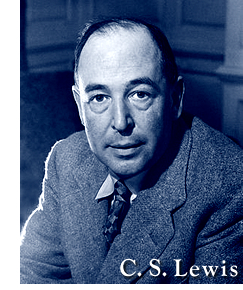
C.S. Lewis Daily – Today’s Reading


We begin to notice, besides our particular sinful acts, our sinfulness; begin to be alarmed not only about what we do, but about what we are. This may sound rather difficult, so I will try to make it clear from my own case. When I come to my evening prayers and try to reckon up the sins of the day, nine times out of ten the most obvious one is some sin against charity; I have sulked or snapped or sneered or snubbed or stormed. And the excuse that immediately springs to my mind is that the provocation was so sudden and unexpected; I was caught off my guard, I had not time to collect myself. Now that may be an extenuating circumstance as regards those particular acts: they would obviously be worse if they had been deliberate and premeditated. On the other hand, surely what a man does when he is taken off his guard is the best evidence for what sort of a man he is? Surely what pops out before the man has time to put on a disguise is the truth? If there are rats in a cellar you are most likely to see them if you go in very suddenly. But the suddenness does not create the rats: it only prevents them from hiding. In the same way the suddenness of the provocation does not make me an ill-tempered man; it only shows me what an ill-tempered man I am. The rats are always there in the cellar, but if you go in shouting and noisily they will have taken cover before you switch on the light.

From Mere Christianity

Compiled in A Year with C.S. Lewis

Streams in the Desert for Kids – Water in a Pile


Joshua 3:13

The Jordan River was at flood stage. So did his people worry when God said, “Have the priests pick up the Ark of the Covenant and walk into the water”? Did the priests wonder if they could hold onto the Ark in the swirling water? Did they think they would be swept away and lose their lives? No matter, God told them what would happen when they did what he said. They had to have enough faith to put their feet in the water. And that’s when the miracle happened. Somewhere way up stream the waters were cut off and piled up. Even more miraculous, the ground in the river bed was dry. The priests walked to the middle of the river and stood there until all the people crossed over into the Promised Land.

When God is the architect, we are the workers, using our hands, our feet, our faith to help our heavenly Father. God directed the priests. Because they had bold faith, they followed directions. And God’s people passed safely, understanding his faithfulness and power.

As you carry your load, remember you have the living God with you. You are working for him. So be bold in your faith. Who knows what he will accomplish with it!

Dear Lord, I’m not sure what you can accomplish with me. But you are the master planner. Help me have enough faith to work for you through troubles. Amen.

Charles Stanley – Developing Faith Through Adversity


2 Corinthians 11:23-30

It doesn’t seem fair, does it? Paul spent the second half of his life serving Christ, and yet he experienced continual suffering. Why would God let one of His most faithful servants go through so much pain? This isn’t a question just about Paul; it’s an issue we face today. In our minds, the Lord should protect His loyal followers from hardships, but He doesn’t necessarily do so.

Maybe our reasoning is backwards. We think faithful Christians don’t deserve to suffer, but from God’s perspective, suffering is what produces faithful Christians. If we all had lives of ease without opposition, trials, or pain, we’d never really know God, because we’d never need Him. Like it or not, adversity teaches us more about the Lord than simply reading the Bible ever will.

I’m not saying we don’t need to know Scripture; that’s our foundation for faith. But if what we believe is never tested by adversity, it remains head knowledge. How will we ever know that God can be trusted in the midst of trouble if we’ve never been challenged by hardship? The Lord gives us opportunities to apply scriptural truths to the difficulties facing us, and in the process, we find Him faithful. For example, how would Paul ever have known the strength of Christ if he had never been weakened by persecution, pain, and adversity?

Depending on your response, trials can be God’s greatest means of building faith or an avenue to discouragement and self-pity. If you’ll believe what Scripture says and apply its principles to your situation, your trust in God will grow, and your faith will be strengthened through adversity.

Bible in One Year: Ecclesiastes 1-4

Our Daily Bread — Tears of a Teen


Read: Romans 9:1-5

Bible in a Year: Psalms 18-19; Acts 20:17-38

I have great sorrow and continual grief in my heart. —Romans 9:2

As I sat with four teenagers and a 20-something homeless man at a soup kitchen in Alaska, I was touched by the teens’ compassion for him. They listened as he talked about what he believed and then they gently presented the gospel to him—lovingly offering him hope in Jesus. Sadly, the man refused to seriously consider the gospel.

As we were leaving, one of the girls, Grace, expressed through her tears how much she didn’t want the man to die without knowing Jesus. From the heart, she grieved for this young man who, at least at this point, was rejecting the love of the Savior.

The tears of this teen remind me of the apostle Paul who served the Lord humbly and had great sorrow in his heart for his countrymen, desiring that they trust in Christ (Rom. 9:1-5). Paul’s compassion and concern must have brought him to tears on many occasions.

If we care enough for others who have not yet accepted God’s gift of forgiveness through Christ, we will find ways to share with them. With the confidence of our own faith and with tears of compassion, let’s take the good news to those who need to know the Savior. —Dave Branon

Is there someone you need to talk to about Jesus today?

Sharing the gospel is one person telling another good news.

INSIGHT: The book of Romans is unique in Paul’s New Testament writings. While the rest of his letters are to those with whom he had an existing relationship (either individuals or churches), Romans is written to a group of people that Paul has not yet met. This may explain some of the deep theological themes that he covers. Although Paul was hoping to visit the Christians in Rome in person, one of the reasons he wrote this letter was to ensure they had a solid foundation of belief.

Ravi Zacharias Ministry –  How Should We Pray?


Huckleberry Finn first heard about prayer from Miss Watson, who told him that prayer was something you did everyday and that you’d get what you asked for. So he tried three or four times praying for hooks to complete his fishing line, but when he still didn’t get what he asked for decided that “No, there ain’t nothing in it.”

Prayer is a curious activity. It is one we seem, at times, regardless of belief or creed, almost inclined naturally toward, while other times, like Huck, almost as naturally conclude we either can’t make it work or conclude there ain’t nothing in it.

One day Jesus was praying in a certain place, and when he finished, one of his disciples asked him to teach them how to pray. Jesus said to them, “When you pray, say:

‘Father, hallowed be your name.

Your kingdom come.

Give us each day our daily bread.

And forgive us our sins,

for we ourselves forgive everyone indebted to us.

And do not bring us to the time of trial.’”(1)

The Lord’s Prayer, which Christian’s around the world still hold and practice today, comes out of this context—that is, out of a plea for help with prayer and out of the praying of Jesus himself. It is not just the good advice Jesus had to offer about praying; it is his praying. In fact, giving his followers this prayer, Jesus, like John, was following a common rabbinic pattern. When a rabbi taught a prayer, he would use it to teach his disciples the most distinctive, concise, essential elements of his own theological teachings. Thus, disciples would learn to pray as their teacher prayed, and from then on, when a disciple’s prayer was heard, it would sound like that of his teacher’s prayers, bearing his own mark and posture before God.

As this suggests, when Christians pray the Lord’s Prayer today, it is simultaneously an offering of the voice of Jesus, a declaration of belonging to him, and a pronunciation of the lessons he wanted his followers most to know and to hold near.

Somewhat different than fishing hooks, the prayer for daily bread is foundational; a literal need. News of world food shortages, urban food deserts, the prevalence of malnourishment, and volatile food prices remind us with repetition that cries for basic provision are appropriate and necessary. Fifteenth century theologian Martin Luther spoke of the prayer for daily bread as the plea for “everything included in the necessities and nourishment for our bodies such as food, drink, clothing, shoes, house, farm, fields, livestock, money, property, an upright spouse, upright children, upright members of the household, upright and faithful rulers, good government, good weather, peace, health, decency, honor, good friends, faithful neighbors, and the like.”(2) In other words, bread is not merely the private concern of those who need something to eat. It is far broader than this, including far more than bread, and far more than isolated individuals before God. Our daily bread is something friends, neighbors, communities, economic situations, and governments affect collectively. Christ’s prayer for daily bread, then, is a prayer for food and clothing, but also for good neighbors, good rulers, and good conscience as we face need and want and hope in unison together.

As such, a prayer for daily bread can be a reminder that we do not live in a vacuum before God or the world. Rather, we live in communities where we are responsible for one another. So if we pray for daily bread, like Jesus, we pray for God’s care and provision. But subsequently, we are praying against the things in life that prevent God’s provisions for our neighbors as much as for ourselves. This may well be corruption or systems of social injustice; it may also be our own hardened hearts, fearful dispositions, or a self-consumed and consuming living. When our neighbor prays for daily bread, our neighbor prays for our help, in the hands of the one who provides all things.

To pray the words Jesus invited us to pray means we pray out of the same paradox in which Jesus prayed himself. He was both the Son who knew he would need the Father’s provision to get through the days before him and the Son who poured out his life for the crowds and individuals that needed him. Praying for daily bread, we are simultaneously the wealthy who can respond in gratitude for all that God has given us and the impoverished who cry out for the daily bread we need and the God who sustains all things. We are both the rich and the poor, the trespasser and the one trespassed against, united to our neighbors in ways we are constantly invited to imagine. We join ancient ancestors who prayed for physical nourishment in the desert, and with them know that we are still hungry. In difficult days, in plentiful days, the invitation of Christian prayer is the invitation of the Spirit to join in a united cry—”Give us this day our daily bread”—placed before the bread of life who comes to give life to the world.

Jill Carattini is managing editor of A Slice of Infinity at Ravi Zacharias International Ministries in Atlanta, Georgia.

(1) Luke 11:1-4.

(2) Martin Luther, “The Small Catechism,” The Book of Concord, 357.