Tag Archives: christianity

Charles Stanley – The Godly Quality of Generosity


Proverbs 11:24-25

When I was a child, I lived with my mother in a single-room home. She made just enough money for food, clothing, and rent. Most Saturdays, this one boy would come to the door and ask, “Do y’all have anything to eat?” I’d look in the icebox and see perhaps a piece of fruit or a few eggs and a little bacon, and not much else. But my mother always found some food for that boy.

Generosity is an attitude of sharing gladly whatever we might have, regardless of wealth. Scripture reveals liberality is an attribute of God (see Deut. 28:12 and Eph. 3:20). And as part of His transformative plan for believers, the Father desires that we develop a generous spirit.

A bighearted approach to our time and material goods starts by giving ourselves to God. When we accept that He owns everything, we can hold our small share with an open hand. But the choice to nurture generosity is based on our trust. Instead of adding figures to see what little amount might safely be set aside for charity, Christians should give sacrificially by faith. Hebrews 13:16 (NIV) tells us, “Do not forget to do good and to share with others, for with such sacrifices God is pleased.” The Lord responds by supplying enough to cover the gift and our own need (Luke 6:38). Only through giving do we learn that we can never outgive God.

Some believers choose selfishness and rebellion, but God promised a form of poverty—whether financial, emotional, or spiritual—to those who do. Instead, make a decision today to cultivate a generous spirit for the Lord.

Bible in One Year: Hosea 10-14

Our Daily Bread — Lessons in Suffering


Read: 2 Corinthians 11:21-30

Bible in a Year: Ecclesiastes 1-3; 2 Corinthians 11:16-33

If I must boast, I will boast of the things that show my weakness. —2 Corinthians 11:30

The close-up image on the giant screen was big and sharp, so we could see the deep cuts on the man’s body. A soldier beat him while an angry crowd laughed at the man whose face was now covered with blood. The scenes appeared so real that, in the silence of the open-air theater, I cringed and grimaced as if I could feel the pain myself. But this was only a film reenactment of Jesus’ suffering for us.

Reminding us of Jesus’ suffering, Peter wrote, “To this you were called, because Christ suffered for you, leaving you an example, that you should follow in his steps” (1 Peter 2:21). While suffering comes in different forms and intensity, it is to be expected. Ours may not be as intense as that experienced by Paul, who for the sake of Christ was beaten with rods, stoned, and shipwrecked. He was attacked by bandits, and he endured hunger and thirst (2 Cor. 11:24-27). Likewise, we may not suffer like those who endure severe persecution in cultures where Christianity is not welcomed.

In some form or another, however, suffering will come our way as we deny ourselves, endure harassment, bear insults, or refuse to engage in activities that do not honor the Lord. Even exercising patience, avoiding revenge, and forgiving others in order to foster good relationships are forms of following in His steps.

Whenever we encounter suffering, may we remember what Jesus endured for us. —Lawrence Darmani

What have you learned about God through your trials?

The school of suffering teaches us lessons that we could learn in no other classroom.

INSIGHT: Today’s passage lists the trials that Paul suffered in service for the gospel. Most of us have not experienced the persecution that Paul faced. But for him, suffering was a small price to pay. In fact, it was an honor for him to suffer because of the gospel (v. 30). Because Christ suffered for us, suffering for Him is a privilege. J.R. Hudberg

Alistair Begg – Freedom


For freedom Christ has set us free. Galatians 5:1

This “freedom” is established in heaven’s charter-the Bible. Here is a choice passage, believer: “When you pass through the waters, I will be with you.”1 Here is another: “The mountains may depart and the hills be removed, but my steadfast love shall not depart from you.”2

These Scriptures set you free in believing. You are a welcome guest at this table of promises. Scripture is a never-failing treasury filled with boundless stores of grace. It is the bank of heaven; you may draw from it as much as you wish, without any hindrance.

Come in faith; you are welcome to all the covenant blessings. There is not a promise in the Word that will be withheld. In the deepest tribulations let this freedom comfort you; overwhelmed by waves of distress let it cheer you; when sorrows surround you let it be your solace. This is your Father’s love-token; you are free in it at all times.

You are also given free access to the throne of grace. It is the believer’s privilege to have access at all times to his heavenly Father. Whatever our desires, our difficulties, our wants, we are at liberty to spread them all before Him. It does not matter how much we may have sinned, we can ask and expect pardon. No matter how poor we are, we may plead His promise that He will provide everything we need. We have permission to approach His throne at all times-in midnight’s darkest hour or in noontide’s most burning heat.

Exercise your right, believer, and enjoy this privilege. You are set free to all that is treasured up in Christ-wisdom, righteousness, sanctification, and redemption. It does not matter what your need is, for there is abundant supply in Christ, and it is there for you. What a “freedom” is yours! Freedom from condemnation, freedom to the promises, freedom to the throne of grace, and at last freedom to enter heaven!

1) Isaiah 43:2

2) Isaiah 54:10

The Family Bible Reading Plan

  • 2 Samuel 15
  • 2 Corinthians 8

Devotional material is taken from “Morning and Evening,” written by C.H. Spurgeon, revised and updated by Alistair Begg.

Charles Spurgeon – His name — Wonderful


“His name shall be called Wonderful.” Isaiah 9:6

Suggested Further Reading: Luke 1:26-35

It is just the simple name that he deserves. They that know him best will say that the word does not overstrain his merits, but rather falls infinitely short of his glorious deserving. His name is called Wonderful. And mark, it does not merely say, that God has given him the name of Wonderful—though that is implied; but “his name shall be called” so. It shall be; it is at this time called Wonderful by all his believing people, and it shall be. As long as the moon endures, there shall be found men, and angels, and glorified spirits, who shall always call him by his right name. “His name shall be called Wonderful.” I find that this name may bear two or three interpretations. The word is sometimes in Scripture translated “marvellous.” Jesus Christ may be called marvellous; and a learned German interpreter says, that without doubt, the meaning of miraculous is also wrapt up in it. Christ is the marvel of marvels, the miracle of miracles. “His name shall be called Miraculous,” for he is more than a man, he is God’s highest miracle. “Great is the mystery of godliness; God was manifest in the flesh.” It may also mean separated, or distinguished. And Jesus Christ may well be called this; for as Saul was distinguished from all men, being head and shoulders taller than they, so is Christ distinguished above all men; he is anointed with the oil of gladness above his fellows, and in his character, and in his acts, he is infinitely separated from all comparison with any of the sons of men. “Thou art fairer than the children of men; grace is poured into thy lips.” He is “the chief among ten thousand and altogether lovely.” “His name shall be called the Separated One,” the distinguished one, the noble one, set apart from the common race of mankind.

For meditation: It is not possible to exaggerate when we speak of the Lord Jesus Christ—the one who is to be called Saviour, Son and Sinless (Luke 1:31-35)—no less than “God with us” (Matthew 1:21-23).

Sermon no. 214

19 September (1858)

John MacArthur – Extinguishing Satan’s Fiery Darts


“In addition to all, [take] up the shield of faith with which you will be able to extinguish all the flaming missiles of the evil one” (Eph. 6:16).

Don’t elevate Satan’s will above God’s will in your life.

In Ephesians 6:13 Paul characterizes Satan as “the evil one” who attacks believers with flaming missiles. The Greek word translated “evil one” literally means “bad,” “vile,” or “wretched.” All are apt descriptions of the archenemy of our souls, who seeks to maim and destroy us spiritually.

The term “flaming missiles” pictures one of the Roman weapons of Paul’s day: arrows that had pitch-soaked cotton material affixed to their tips. In battle they were set on fire and shot at the enemy. As the arrow hit its target, flaming pitch spread onto clothing and other flammable surfaces. Under such attacks a Roman soldier without a shield was in a perilous situation indeed.

Satan’s flaming arrows come in many forms: solicitations to impurity, selfishness, doubt, fear, disappointment, greed, vanity, covetousness, and the like. But whatever the specific form, all are seducing temptations aimed at eliciting ungodly responses.

Your faith protects you from such attacks when you elevate God’s will above Satan’s in your life. When tempted by Satan, Jesus responded by saying in effect, “I will not violate my Father’s will by yielding to your devious schemes. In His own time He will feed Me, anoint Me as Messiah, and give Me the kingdoms of the world. I will not elevate your will and timing above His” (Matt. 4:1-11).

Jesus could have created food. He is the Messiah and the sovereign Lord over the kingdoms of the world. But He trusted the Father and yielded to His will, even though it meant personal discomfort and, eventually, the cross. When Satan saw that Jesus’ trust in the Father was unshakable, he left Him (v. 11). That’s the power of faith.

I pray you will show similar strength in times of testing. Satan will flee from you if you “resist him, firm in your faith” (1 Pet. 5:9).

Suggestions for Prayer

Praise Jesus for His sinless character and His example of how to triumph over temptation.

For Further Study

Memorize James 4:7 as a reminder of the importance of resisting Satan.

Joyce Meyer – Spirit-Led Persistence


Then what am I to do? I will pray with my spirit [by the Holy Spirit that is within me], but I will also pray [intelligently] with my mind and understanding. – 1 Corinthians 14:15

I really want to encourage you to pray persistent, persevering prayers by the leading of the Holy Spirit—not mere repetitious prayers that do not come from your heart, but prayers that refuse to give up. It is possible to use your mouth to speak words of prayer that have no meaning behind them at all, and those prayers are nothing but dead works. I could quote the entire Lord’s Prayer while I am thinking about something else, and that would not bless God or do me any good, but if I am sincere and pray from my heart, God hears and works in my behalf.

Lip service doesn’t do anything for God or accomplish anything in our lives, so even when we pray about the same thing over and over again, we need to be careful not to fall into meaningless repetition. Instead, we need to allow the Holy Spirit to lead us in a fresh way, even when we are addressing a subject about which we have prayed for a long time. Sometimes He will lead us to be diligent and persistent about a matter, but there is a difference between Spirit-led persistence and repetition.

Words spoken in prayer that are not connected to our hearts are words without power. When we pray we should focus and concentrate on what we are saying. We should never merely verbalize things we have memorized while our hearts are far from God. The earnest (heartfelt, continued) prayer of a righteous man avails much and makes tremendous power available (see James 5:16).

Campus Crusade for Christ; Bill Bright – How to Find Your Life


“For anyone who keeps his life for himself shall lose it; and anyone who loses his life for Me shall find it again” (Matthew 16:25).

From all outward appearances Tom and Mary were the ideal couple. They lived in a beautiful mansion. They possessed several fine cars – more than they needed. Both of them dressed elegantly and they entertained lavishly. They were the life of the party and everything seemed too good to be true. And it was.

Beneath the facade they were miserable creatures, though outwardly they seemed to be loving and considerate of each other. I soon learned that they had great resentments and deep-seated antagonisms toward each other. Their quarrels had become more frequent, sometimes exploding into temper tantrums, and sometimes resulting in physical abuse. They had tried in a number of ways to find happiness and fulfillment, including several around-the-world trips. But the harder they had tried, the more miserable they had become.

It was in this context that I shared with them the importance of surrendering their lives to Christ and inviting Him to be their Savior. I counseled them to lose themselves, as His representatives, in bringing happiness into the lives of others.

Receiving Christ was not so hard for them to do . They both realized they were sinners and needed as Savior. But they had lived such selfish lives for so long that it was not easy for them to begin to consider others as the Scripture admonishes. After a time they did begin to work with elderly people in convalescent homes and with prisoners through the ministry of the local church. On occasion, they gave their testimony at the skid row mission.

With the passing of time, the miracle happened and that illusive goal of happiness, fulfillment and satisfaction became a reality. In losing their lives they truly found them in service to others in the name of Christ. They found the abundant life which He promised and for which they had sought so long.

God’s loyalty has been proven over and over again. In reviewing my own experiences, and in observing the lives of many others, I have become aware that the individual who seeks happiness never finds it, but the one who is committed to taking happiness to others always finds it. And he also finds meaning, purpose, joy and peace in the process.

Bible Reading: Matthew 16:24-27

TODAY’S ACTION POINT: I am determined to experience the reality of this promise by surrendering the control of my life to Him and demonstrating my commitment through serving others.

Presidential Prayer Team; H.L.M. – All of You


Actress Candace Cameron Bure, known best for playing D.J. in the television series Full House, has never tried to hide her faith in Hollywood. “For me, my faith is who I am and I carry that with me wherever I go,” she says. “I don’t think of it in terms of ‘I have to live it out, or act this way or that.’ I’m just myself.”

May the God of hope fill you with all joy and peace in believing.

Romans 15:13

When Bure appeared on Dancing with the Stars, she found parallels between performing on the show and her faith. Bure’s partner, Mark Ballas, asked her to give 100 percent all of the time, even during rehearsals. For an actress who was used to doing that only when the camera was filming, the request proved a challenge. Bure said, “I thought, ‘Wow, isn’t that like our Christian walk?’ It’s so easy to say, ‘God, I’m giving you 50 to 80 percent,’ and that’s pretty good. But the Bible says God wants all of you, 100 percent of the time – the good stuff and bad stuff, too.”

As you spend time with the Lord, remember to thank Him for those who are shining lights for Him in American culture. Pray also for boldness and courage for those Christian leaders serving in Washington D.C.

Recommended Reading: Colossians 1:1-8

Greg Laurie – The Clock of Life Is Ticking


“So teach us to number our days, that we may gain a heart of wisdom.”—Psalm 90:12

It seems the older you get, the faster time goes.

When I was in elementary school, time seemed to crawl at a snail’s pace. Now, not only do years go by quickly, but so do entire decades!

I read an interesting thing about what “time” it is in your life, depending on your age.

If you are 15, the time is 10:25 A.M.

20, the time is 11:34 A.M.

25, the time is 12:42 P.M.

30, the time is 1:51 P.M.

35, the time is 3:00 P.M.

40, the time is 4:08 P.M.

45, the time is 5:15 P.M.

50, the time is 6:25 P.M.

55, the time is 7:34 P.M.

60, the time is 8:42 P.M.

65, the time is 9:51 P.M.

70, the time is 11:00 P.M.

I don’t know where that puts you, but for me it’s about 8:45 P.M.

That’s sad, because I go to bed around 10:00!

Seriously, time is passing by so quickly. Let’s take the counsel of Scripture: “Teach us to number our days, that we may gain a heart of wisdom.”

What “time” is it for you, and what would you like to do before “midnight”?

Night Light for Couples – Unsung Heroes


“Yours, O Lord, is the kingdom…. Wealth and honor come from you.” 1 Chronicles 29:11–12

As a society, we are inclined to honor heroes and high achievers. We award a Purple Heart to soldiers wounded in action. We admire All‐Americans who excel in college football, basketball, or baseball. We celebrate winners of the Nobel Peace Prize. We applaud students who graduate magna cum laude. We fawn over movie stars at the Academy Awards. But who takes time to honor the wives and husbands who diligently fulfill their responsibilities each day? Who cares about these unsung heroes who give of themselves, sacrificing for their children or caring for each other? Most often, the only cheering section for such couples is themselves—but when one partner doesn’t seem to notice, it’s pretty tough for the other to feel valued or motivated.

Scripture is clear regarding this matter. The apostle Paul says, “Honor one another above yourselves” (Romans 12:10). There’s no better place to apply this verse than in your home—with the husband or wife sitting next to you.

Just between us…

  • What do you think honoring each other means in the context of marriage?
  • Do you feel “honored” by me?
  • Do you know, without a doubt, that I hold you in highest esteem?

When in our marriage have you most felt this way? When have you not?

Dear Lord, in our rush to admire and celebrate the achievements of others, help us to remember the loving life partner right beside us who most deserves our appreciation and respect. Open our eyes to simple but meaningful ways we can show honor. Amen.

From Night Light For Couples, by Dr. James & Shirley Dobson

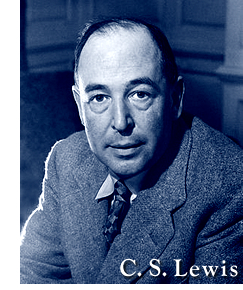
C.S. Lewis Daily – Today’s Reading


When I attempted . . . . to describe our spiritual longings, I was omitting one of their most curious characteristics. We usually notice it just as the moment of vision dies away, as the music ends, or as the land- scape loses the celestial light. . . . . For a few minutes we have had the illusion of belonging to that world. Now we wake to find that it is no such thing. We have been mere spectators. Beauty has smiled, but not to welcome us; her face was turned in our direction, but not to see us. We have not been accepted, welcomed, or taken into the dance. We may go when we please, we may stay if we can: “Nobody marks us.” A scientist may reply that since most of the things we call beautiful are inanimate, it is not very surprising that they take no notice of us. That, of course, is true. It is not the physical objects that I am speaking of, but that indescribable something of which they become for a moment the messengers. And part of the bitterness which mixes with the sweetness of that message is due to the fact that it so seldom seems to be a message intended for us, but rather something we have overheard. By bitterness I mean pain, not resentment. We should hardly dare to ask that any notice be taken of ourselves. But we pine. The sense that in this universe we are treated as strangers, the longing to be acknowledged, to meet with some response, to bridge some chasm that yawns between us and reality, is part of our inconsolable secret. And surely, from this point of view, the promise of glory, in the sense described, becomes highly relevant to our deep desire. For glory means good report with God, acceptance by God, response, acknowledgement, and welcome into the heart of things. The door on which we have been knocking all our lives will open at last.

From The Weight of Glory

Compiled in a Year with C.S. Lewis

Streams in the Desert for Kids – I Know for Sure


Hebrews 11:1

Mark was a young boy whose grandmother told him he could ask for one thing for his birthday from a catalogue. Mark spent the next few days pouring over the catalogue, looking at all the different things he could ask for. Should he ask for a new ski coat or new running shoes? Should he ask for a new book or a DVD? Should he ask for new swimming gear for the summer or a video game?

It took a long time, but Mark finally decided. He wrote a letter to his grandmother telling her that he wanted a brand new swim suit that he could use at her cottage on the lake that summer. He went to the mailbox to mail his letter, but instead of letting it go he held onto the end of it. He stood there for quite a while, thinking, Did I really ask for what I wanted most? Should I think some more about what to ask for? Maybe I want a red swim suit instead of the green one. Did my grandmother really mean it when she told me to ask for a present?

Finally, Mark pulled the letter out of the box and put it in his pocket and went home to worry about it some more. Guess what? He didn’t get a gift from his grandmother until he finally made up his mind to let the letter go. Then soon there was a package from her with his gift inside.

Having faith in God is something like that. If we trust God completely, we tell him what we need then we let it go. We go on about our business and see what he will do for us. That is what it means to be certain about what we do not see.

Dear Lord, I’m going to ask for something I really need. Then I’m going to let go and wait to see what you will do. Amen.

Charles Stanley – The God to Whom We Pray


Nehemiah 1:1-11

Nehemiah demonstrates power in prayer. As a servant to King Artaxerxes of Persia, he had no right to request leave to rebuild Jerusalem’s walls, much less to requisition materials and protection. Yet knowing the nature of the God he served, Nehemiah did not hesitate to act boldly and ask the king for what was needed.

His prayer began, “I beseech You, O lord God of heaven” (Neh. 1:5). Lord, when it appears in all capital letters, denotes the word Jehovah (a form of Yahweh, the Hebrew name for God). It means “God who is eternal in His being”—conveying that everything everywhere is in His presence. So, when God makes a promise, He knows how He will keep it. That is why Nehemiah called Him “the awesome God who preserves the covenant.” He knew God was committed to bringing repentant Israelites back to their homeland to dwell in His presence (Neh. 1:9).

Another Hebrew name used to refer to God, Elohim, is translated “He who is absolutely sovereign.” If He spoke the world into being, then He is certainly more than able to provide Nehemiah with supplies, some time off from work, and favor from the Persian king.

There are many other names for God, such as Adonai (“master”), Jehovah-Jireh (“provider”), and Jehovah-Rapha (“healer”). Since the Hebrew language is precise, it can help us to better know who He is—when we need solace, we call upon the God of comfort; in our confusion, we have the God who teaches. Just as knowing one’s audience affects which words we choose to speak, the way we view God impacts how we pray.

Bible in One Year: Hosea 6-9

Our Daily Bread — 2 A.M. Friends


Read: Colossians 4:2-15

Bible in a Year: Proverbs 30-31; 2 Corinthians 11:1-15

He is always wrestling in prayer for you, that you may stand firm in all the will of God, mature and fully assured. —Colossians 4:12

A friend told me about a group of people who share a strong bond of faith in Christ. One of them, a 93-year-old woman, said, “I feel like I can call any of you at 2 a.m., and I don’t even have to apologize if I feel the need for any type of assistance.” Whether the need is prayer, practical help, or someone to be there during a time of need, these friends are unconditionally committed to each other.

The same sense of commitment shines through Paul’s letter to the followers of Jesus in Colossae. Writing from prison in Rome, Paul says he is sending Tychicus and Onesimus to encourage them (Col. 4:7-9). Aristarchus, Mark, and Justus send their greetings (vv.10-11). And Epaphras is “always wrestling in prayer for you, that you may stand firm in all the will of God, mature and fully assured” (v. 12). These are bold assurances of practical help and deep-seated love.

Are you part of a “2 a.m. group”? If so, give thanks for the faithfulness of friends. If not, ask the Lord to connect you with another person with whom you can share a commitment to pray and care. I suspect it will soon grow to include others. Share the love of Christ with one another.

Anything. Anytime. Anywhere. All in Jesus’ name! —David McCasland

Jesus, thank You for friends who demonstrate Your love to me. Help me to do the same for them and those around me. Most of all, thank You for being the friend who sticks closer than a brother.Share this prayer from our Facebook page with your friends: facebook.com/ourdailybread

Greater love has no one than this: to lay down one’s life for one’s friends. Jesus

INSIGHT: Paul wrote the book of Colossians to the church at Colossae, which apparently was a sister church to the church at Laodicea about 10 miles away (Col. 2:1). The Colossian church appears to have been founded by Paul’s colleague Epaphras (1:7) and was also the home church of Philemon and his redeemed slave, Onesimus (4:9; see Philem. 1:2). Bill Crowder

Ravi Zacharias Ministry – Scandalous Dining


We typically fill our parties with people similar to ourselves. We invite into our homes those we work with, play with, or otherwise have something in common with. We celebrate with fellow graduates, entertain people from our neighborhoods, and open our doors to four year-olds when our own is turning four. Psychologists concur: we socialize with those in our circles because we have some ring of similarity that connects us.

The man in the parable of the great banquet is no different. The story is told in Luke chapter 14 of an affluent master of ceremonies who had invited a great number of people like himself to a meal. The list was likely distinguished; the guests were no doubt as prosperous socially as they were financially. Jesus sets the story at a critical time for all involved. The invitations had long been sent out and accepted. Places were now set; the table was now prepared. All was ready. Accordingly, the owner of the house sent his servant to bring in the guests. But none would come.

Anthropologists characterize the culture of Jesus’s day as an “honor/shame” society, where one’s quality of life was directly affected by the amount of honor or shame socially attributed to him or her. The public eye was paramount; every interaction either furthered or diminished one’s standing, honor, and regard in the eyes of the world.

Thus, in this parable, the master of the banquet had just been deliberately and publicly shamed. He was pushed to the margins of society and treated with the force of contempt. Hearers of this parable would have been waiting with baited breath to hear how this man would attempt to reclaim his honor. But scandalously, in fact, the master of the feast did not attempt to reverse his public shame. Altogether curiously, he embraced it.

Turning to the slave, the owner of the house appointed the servant with a new task: “Go out quickly into the streets and lanes of the city, and the poor and maimed and lame and blind bring in here.”(1) Returning, the servant reported, “Lord it has all occurred as you ordered, and still there is room.” So the owner of the house responded again, “Go out into the waves and hedges and compel them to come in, that my house may be filled.”

The slave is told to do what he must to compel the masses to come, liberating the blind, the lame, and the excluded of their social status and stigma with an invitation to dine with none other than the master. It is a staggering portrayal of a God who is shamed by the rejection of his people, and yet continues to respond with lavish grace and scandalous invitation into his presence. The owner of the house has opened wide the doors. The feast is ready—and there is yet room.

The longing to belong in the right circles is a desire that touches us all. Even so, one only has to watch a group of kids on playground to see how easily our desire to belong is corrupted by our need to exclude: the inner circle is not inner if there are no outsiders. Lines of honor and shame are futile if the majority is not on the wrong side. But in this story, God scandalously breaks these lines of demarcation and stratification. The Father forever challenges the notion that his house will be filled only with the rich or the righteous or those without shame.

The banquet is ready and there is a call to fill the house with the lost and unworthy, the homeless, the blind, the outsiders and the out-of-place. The invitation Jesus presents is wide enough to scour the darkest of hedges and the depths of the city streets. Whether we find ourselves outside of the circle because we have rejected him or at the table communing with his guests, it is a thought to digest: the kingdom of God is like a great banquet. God’s compulsion is our nourishment. The feast is ready and there is still room.

Jill Carattini is managing editor of A Slice of Infinity at Ravi Zacharias International Ministries in Atlanta, Georgia.

(1) Luke 14:21.

Alistair Begg – Two Things


If we live by the Spirit, let us also walk by the Spirit. Galatians 5:25

The two most important things in our Christian journey are the life of faith and the walk of faith. The person who grasps this is not far from being a master in experimental [experiential] theology, for they are vital points to a Christian. You will never find true faith unaccompanied by true godliness; on the other hand, you will never discover a truly holy life that does not have at its root a living faith relying upon the righteousness of Christ.

Woe to those who seek the one without the other! There are some who cultivate faith and forget holiness; these may be very high in orthodoxy, but they shall be very deep in condemnation, for they hold the truth in unrighteousness! There are others who have strained after a holy life but have denied the faith, like the Pharisees of old, of whom the Master said they were “whitewashed tombs.”1 We must have faith, for this is the foundation; we must have holiness of life, for this is the superstructure.

What use is the mere foundation of a building to a man on the day of tempest? Can he hide himself in it? He needs a house to cover him as well as a foundation for that house. Even so we need the superstructure of spiritual life if we want comfort in the day of doubt. But do not seek a holy life without faith, for that would be to erect a house that can provide no permanent shelter because it has no foundation on a rock. Let faith and life be put together, and like the two supports of an archway, they will make our devotion endure. Like light and heat streaming from the same sun, they are full of blessing. Like the two pillars of the temple, they are for glory and for beauty. They are two streams from the fountain of grace, two lamps lit with holy fire, two olive trees watered by heavenly care.

Lord, give us today life internally, and it will reveal itself externally to Your glory.

1) Matthew 23:27

The Family Bible Reading Plan

  • 2 Samuel 14
  • 2 Corinthians 7

Devotional material is taken from “Morning and Evening,” written by C.H. Spurgeon, revised and updated by Alistair Begg

Charles Spurgeon – Who can tell?


“Who can tell if God will turn and repent, and turn away from his fierce anger, that we perish not?” Jonah 3:9

Suggested Further Reading: Psalm 39

I remember many who have passed from the land of the living and have gone to another world—and some how suddenly, how rapidly! I have been startled at it often myself. I have seen some here on the Sabbath, and by the Tuesday or by the Thursday the message has come, “On what day can you bury such and such a one?” “Bury her!” “Yes, sir, bury her, she is gone;” and I have said, “How strange it seems that she should be dead who so lately was living in our midst!” Forty days is a long lease compared with that which you have any reason to conclude that God has bestowed on you. But what if it were forty years, how short a time even then. If you will but look with the eye of wisdom, how rapidly our years revolve. Are you not startled even now to see the withered leaf in your path? It was but yesterday that the fresh green buds were seen. It seems but a month ago since first we saw the wheat starting up from the ground, and now the harvest is over and gone and many of the birds have disappeared and the tints of autumn are succeeding the verdure of summer. Years seem but months now and months but days, and days pass so rapidly that they flit like shadows before us. O! men and women, if we could but measure life it is but a span, and in a time how short, how brief, every one of us must appear before his God. The shortness of time should help to arouse us.

For meditation: Time seems to speed up the older we get! In contrast the unbeliever will discover in eternity that time has ground to a terrible halt.

Sermon no. 275

18 September (1859)

John MacArthur – Trusting God


“In addition to all, taking up the shield of faith with which you will be able to extinguish all the flaming missiles of the evil one” (Eph. 6:16).

Intense spiritual warfare calls for intense trust in God.

An on-duty Roman soldier was always dressed for battle but didn’t employ his shield, helmet, and sword until the fighting started. But we as Christians must be ready for battle at all times because our enemy is relentless. We can’t afford to overlook a single piece of armor or slip into complacency or neglect.

In that regard, Ephesians 6:16 says in effect, “Now that you’ve prepared for battle by girding your loins with truth, protecting your vital organs with the breastplate of righteousness, and securing your feet with the gospel of peace, don’t forget to take up your shield.”

Two types of shields were commonly used by Roman soldiers. One was a small, lightweight, round shield that was strapped to the soldier’s left forearm and used to parry blows during hand-to-hand combat. The other, which Paul refers to here, was a large shield measuring about four-and- a-half-feet high and two-and-a-half-feet wide. It was made of sturdy wood covered with metal and a thick layer of oil- treated leather. The metal deflected arrows while the oily leather extinguished the fiery pitch that arrows were commonly swabbed with. That type of shield was ideal for full-body protection.

In the initial stages of a battle, the front-line soldiers knelt behind their large shields to protect themselves and provide a defense barrier for the troops behind them who were firing offensive weapons. The goal was to inch their way forward as a human wall until they could engage the enemy in hand-to-hand combat.

As a believer, the shield that protects you is your faith in God. If you never question His character, power, or Word, you’ll never fall victim to Satan’s attacks. That doesn’t mean he won’t beseige you—but when he does, his assaults will be ineffective.

Suggestions for Prayer

Faith is a precious gift from God (Phil. 1:29). Thank Him for it and ask for wisdom to apply it properly when spiritual struggles come (James 1:5).

For Further Study

Read Romans 8:31-39.

  • Meditate on the victory you have in Christ.
  • What effect should that have on your daily living?

Joyce Meyer – Making Healthy Choices


And out of the ground the Lord God made to grow every tree that is pleasant to the sight or to be desired—good (suitable, pleasant) for food. – Genesis 2:9

Learn to do everything you do for God’s glory, including eating. Look at your dinner plate and ask if what you are about to eat is mostly what God created for you. Don’t view eating as a secular event that has nothing to do with your relationship with God. Don’t forget that God put Adam and Eve in the Garden of Eden and told them what they could eat. If eating had nothing to do with their walk with Him, He probably would not have mentioned food.

Make good choices! Each time you choose good healthy foods, you are choosing life, which is God’s gift to you. He wants you to look great and feel great, and you can, if you keep in mind that your body is the temple of God and the fuel you put into it determines how it will operate and for how long.


Campus Crusade for Christ; Bill Bright – Are You Bearing Fruit


“By this is My Father glorified, that you bear much fruit, and so prove to be My disciples” (John 15:8, NAS).

Early in my Christian life, I had little faith as I prayed for one person, who by God’s grace received Christ. The more I understood the attributes of God and experienced His blessing on my witness for Him, the more I could trust Him.

As our Campus Crusade for Christ staff grew in number and we trained more and more students and laymen, we began to pray for millions to receive Christ. God honored our faith and prayers with millions of recorded decisions for our Savior in more than 150 countries of the world.

Now that we are helping to train millions of Christians on every major continent, associated with thousands of churches of all denominations and various other Christian organizations, I have the faith to pray for a billion souls to receive Christ. As I have come to know our Lord Jesus Christ better, I have learned to trust Him more. I now believe that He will do great and mighty things through me and through others as we live by faith the supernatural Christian life. Faith is like a muscle; it grows with exercise. The more we see God do in and through the lives of His children, the more we expect Him to do. Please note God does not change – He is the same yesterday, today and forever. We are the ones who change as we mature in faith.

How do you know that you are a true disciple? That you are glorifying God? By bearing much fruit. But what kind of fruit? The fruit of your holy life and the fruit of your Spirit-anointed lips must be in balance.

Some Christians concentrate on Bible study and prayer, seeking to honor God. Others concentrate on much Christian activity. Every time the church door opens, they are there. Yet neither type of person is experiencing God’s best.

Remember, we glorify God when we bear much fruit. Too many Christians are satisfied with modest efforts and modest results. Yet the better we know God and the more we are acquainted with His Word, the more we have fellowship with Him and grasp His vision and His burden for all people throughout the world.

Bible Reading: John 15:4, 5, 12

TODAY’S ACTION POINT: I determine through the enabling of the Holy Spirit, that I will glorify God by bearing much fruit through both the witness of my life and the witness of my lips.