Tag Archives: human-rights

Ravi Zacharias Ministry – Hunger and Thirst

Experts mark the absence of desire as a sign of dis-ease. This lack of desire or enjoyment in what was formerly pleasurable or enjoyable is one of the chief symptoms of depression. For example, distress can be so great for an individual that she cannot eat. The typical desire for preparing and eating food disappears under great duress. During those times, individuals can have an abundance of food, but no desire to eat or feelings of hunger.

Of course, there are other times where out of a matter of principle, for special focus or discipline, one might routinely abstain. Ironically, desire often increases and can feel all-consuming when one willingly chooses to abstain. And perhaps this heightened focus hints at the experience of those who deal with deprivation and near-starvation. Despite not having any means to satisfy real hunger, the gnawing pangs for food grow louder and louder.

The experience of hunger and its absence serves to illustrate the complicated nature of human desire—desire that is often unwieldy and seemingly beyond one’s control. Coping with our innate desires is hard enough, but then there are societal values and pressures that blur the line between genuine need and want. Regardless, desire alerts us to a deep hunger or longing that resides at the core of human beings. These longings often reveal a restlessness even where there is abundance.

Arguments from desire are often invoked as evidence for the existence of God. The argument states that every natural, innate desire in us corresponds to some real object that can satisfy that desire. But within humans exists a desire which nothing in time, nothing on earth, and no creature can satisfy. Therefore, something exists that is more than time, earth, and creatures to satisfy this desire. This “real object” is the being people call “God” or “a life with God forever.” Indeed, Saint Augustine, who was no stranger to unwieldy desire, confessed that “Thou awakest us to delight in Thy praise; Thou has made us for thyself and our heart is restless until it repose in Thee.”(1)

Continue reading Ravi Zacharias Ministry – Hunger and Thirst

Joyce Meyer – See the Good in People


Love bears up under anything and everything that comes, is ever ready to believe the best of every person… — 1 Corinthians 13:7 (AMPC)

Adapted from the resource My Time with God Devotional – by Joyce Meyer

God is reminding me today to look for the good in everyone I meet. I have no difficulty locating what is wrong with people, and in fact, I sometimes seem to be an expert at it!

I don’t like being that way and am thankful that in Christ, I can choose another way of living. If you struggle with this, then you can too.

Jesus has given us a new nature (see 2 Corinthians 5:17), and we can purpose to live out of it and actually learn to treat people the way Jesus would.

I am asking for the “gift of awareness.” I want to be aware of what is right and good about people and not merely what is wrong with them. I don’t want to try and take the speck out of my brother’s eye when I have a log in my own (see Matthew 7:4).

Let’s make this year one of believing the best of everyone we know. It will help us have more joy, and we will enjoy the people in our lives much more than ever before.

Prayer Starter: Dear Jesus, I long to be like You and see people the way You do. Help me take the time to really get to know people and not merely judge them at first glance. In Jesus’ Name, Amen.


http://www.joycemeyer.org

Campus Crusade for Christ; Bill Bright – How to Skip Judgment

“Now I say that each believer should confess his sins to God when he is aware of them, while there is time to be forgiven. Judgment will not touch him if he does” (Psalm 32:6).

Mary had rebelled against the preaching of her Nazarene father, a godly pastor. She lived with her boy friend in open defiance of her biblical teaching. Now, God was disciplining her because of disobedience. She was miserable, filled with hate and resentment, when a mutual friend brought her to my office for counsel.

I shared with Mary that just as a loving father disciplines a disobedient child, so God in His love for us disciplines us when we are disobedient. Actually, “child training” would be a more accurate way of describing what God does for us when we are disobedient.

Like Mary, many Christians unnecessarily go through all kinds of adversity: financial, emotional, marital and family problems, and even physical illness. More often than not, God is trying to get their attention. But because they refuse to listen and obey Him, they are disciplined and their misery continues.

Beware, of course, that you do not assume that every time friends or loved ones have difficult experiences, they are being disciplined by God because of disobedience. It may well be that God is working in their lives as He did in Job’s not because of disobedience but to help them mature and become more fruitful and effective witnesses or models of His grace to others.

When you personally, like Mary, are going through adversity, however, and problems continue to plague your life, you would do well to look into the mirror of God’s Word. Ask the Holy Spirit to show you if there is any unconfessed sin in your life. If there is, be quick to turn to the Lord, confess your sins and receive His forgiveness and cleansing in order to avoid further chastening.

Bible Reading:Psalm 32:1-5

TODAY’S ACTION POINT: I will write down on paper, for my own personal information only, any known weakness, sin or sins that are plaguing me today. I will confess that sin, or those sins, and receive by faith God’s forgiveness and cleansing. (If you are continuing to breathe spiritually, you will not allow sins to accumulate, for the moment you become aware of sin you confess it to the Lord and keep on walking in the light as He is in the light.)


http://www.cru.org

Max Lucado – Seeing Jesus in the Storm


Listen to Today’s Devotion

Peter and his fellow storm riders knew they were in trouble.  According to Matthew 14:24, “But the boat was now in the middle of the sea, tossed by the waves, for the wind was contrary.”  About 4:00 a.m. the unspeakable happened.  They spotted someone walking on the water.  “‘A ghost!’ they said, crying out in terror.”

They didn’t expect Jesus to come to them this way.  Neither do we.  We expect to find Jesus in morning devotionals, church suppers, and meditation.  We never expect to see him in a storm.  But that’s where he does his finest work, for it is in storms that he has our keenest attention.  He said.  “Take courage.  I am here!”  Look over your shoulder, friend, that’s God following you.  Look into the storm, friend, that’s Christ coming toward you.

Read more Fearless

For more inspirational messages please visit Max Lucado.

Home

Denison Forum – Ronald McDonald depicted as ‘McJesus’ on a cross

Christians in Israel are protesting a sculpture in a museum depicting Ronald McDonald as “McJesus.” The artwork displays the clown crucified on a wooden cross. It is part of an exhibition called “Sacred Goods,” which is intended to highlight ways our faith is dominated by the consumer culture.

Christians have been demonstrating in front of the Haifa Museum of the Arts, demanding that it remove the artwork. In response, the museum posted signs at the exhibit entrance warning that it contains content some might find disturbing.

As usual, relational challenges are dominating the news.

Citing security concerns, House Speaker Nancy Pelosi has asked President Trump to reschedule his State of the Union address or deliver it in writing if the government remains shut down. The spouses of Jeff Bezos and Lauren Sanchez reportedly knew about their affair for months before it was made public. And The Bachelor‘s Colton Underwood has told reporters that gymnast Aly Raisman was his “first love” and “worst heartbreak.”

Are your friends really your friends?

Relational health is more important to our health than we might imagine.

Think of those you consider to be friends. Studies show that only 34 percent to 53 percent feel the same way about you.

This is important for obvious reasons related to honesty and psychological well-being, but also to physical health. Research indicates that those with stronger social relationships are 50 percent more likely to live longer.

A new report further documents the link between relational health and physical health. It shows that international students moving to an unfamiliar socio-cultural context can experience significant anxiety. That’s not news. But this is: such anxiety is correlated to systemic inflammation in their bodies, which can lead to cardiovascular disease and poor overall health.

Why am I afraid to tell you who I am?

Our greatest desire is to be fully known and fully loved. But our culture teaches us that the two are adversaries. The more you know me, the less you will love me. The more you love me, the less you know me.

Continue reading Denison Forum – Ronald McDonald depicted as ‘McJesus’ on a cross

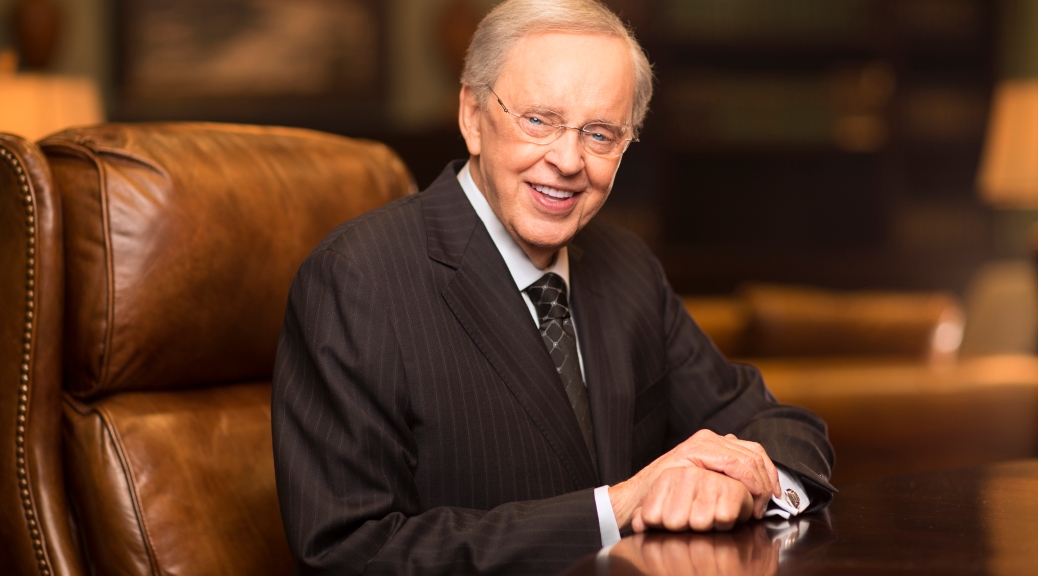
Charles Stanley – Developing a Vibrant Faith


Acts 9:1-6

The apostle Paul had a strong commitment to know and serve Jesus Christ. His passion and love for the Lord was obvious—Jesus was always central in his thinking, whether he was working as a tentmaker, preaching to the crowd, or even sitting in prison. What fueled his love for the Savior?

Paul’s conversion experience on the road to Damascus was a motivating force in his life. Grateful for the gift of grace he had received at salvation, the apostle told many people about his encounter with the resurrected Christ and its impact on him. We, too, have a story to tell of God’s mercy, both in saving us and in giving us new life in Him.

Paul’s zeal also came from his firm conviction that the gospel message was true and available to everyone (John 3:16). On the cross, Jesus took all our sins—past, present, and future—upon Himself (1 Pet. 2:24). He suffered our punishment so that we might receive forgiveness and be brought into a right relationship with God. Through faith in Christ, we’ve been born again, and the indwelling Holy Spirit helps us every day (John 14:26). The more we understand what Jesus has accomplished on our behalf, the greater will be our passion to share the gospel.

Developing a vibrant faith requires time and energy plus a commitment to obey the Lord. Regularly studying the Bible will strengthen your beliefs and give you courage to speak. Caring about the spiritual welfare of others will move you into action. Do you have a passion to serve Jesus wherever He leads?

Bible in One Year: Exodus 1-3


http://www.intouch.org/

Our Daily Bread — Sharing More Than Stuff


Bible in a Year:Genesis 39–40; Matthew 11

Your people will be my people and your God my God.

Ruth 1:16

Today’s Scripture & Insight:Ruth 1:11-18

“But I don’t want to share!” wailed my youngest child, brokenhearted that he would have to part with even one of his many LEGO pieces. I rolled my eyes at his immaturity, but truthfully, this attitude is not limited to children. How much of my own life, and really all of human experience, is marked by a stubborn resistance to freely and generously give to others?

As believers in Jesus, we’re called to share our very lives with one another. Ruth did just that with her mother-in-law, Naomi. As a destitute widow, Naomi had little to offer Ruth. And yet Ruth connected her own life to her mother-in-law’s, vowing that they would press on together and that not even death would separate them. She said to Naomi, “Your people will be my people and your God my God” (Ruth 1:16). She freely and generously gave to the older woman—showing love and compassion.

While sharing our lives in this way can be difficult, we should remember the fruit of such generosity. Ruth shared her life with Naomi, but later she bore a son, the grandfather of King David. Jesus shared His very life with us, but was then exalted and now reigns at the right hand of the Father in heaven. As we generously share with one another, we can be confident that we will experience greater life still!

By Peter Chin

Today’s Reflection

Jesus, as we share our lives with others, may we reflect Your loving heart.

Welcome to Peter Chin! Meet all our authors at odb.org/all-authors.


http://www.odb.org

Ravi Zacharias Ministry – A Crutch or a Cross

In Mere Apologetics, Alister McGrath points out that “one of the most familiar criticisms of Christianity is that it offers consolation to life’s losers.”(1) Believers are often caricatured as being somewhat weak and naïve—the kind of people who need their faith as a “crutch” just to get them through life. In new atheist literature, this depiction is often contrasted with the image of a hardier intellectual atheist who has no need for such infantile, yet comforting, nonsense. This type of portrayal may resonate with some, but does it really make sense?(2)

Firstly, it is helpful to define what we mean by a “crutch.” In a medical setting, the word obviously means an implement used by people for support when they are injured. The analogy implies, therefore, that those who need one are somehow deficient or wounded. In a sense, it is fairly obvious that the most vulnerable might need support, but as the agnostic John Humphrys points out, “Don’t we all? Some use booze rather than the Bible.”(3) As this suggests, it is not so much a question of whether you have one, but it is more of a question of what your particular crutch is. This is an important point to make, as people rely on all kinds of things for their comfort or self-esteem, ranging from material possessions, money, food, and aesthetics to cigarettes, drugs, alcohol, and sex. Rather than being viewed as signs of weakness, many of these are even considered to be relatively normal in society, provided they don’t turn into the more destructive behavior associated with strong addiction. Nevertheless, many of these only offer a short-term release from the struggles of life and they sometimes only cover up deeper problems that a person might be suffering from. To suggest, therefore, that atheists are somehow stronger than believers is to deny the darker side of humanity, which is only too apparent if we look at the world around us. As McGrath explains:

“[I]f you have a broken leg, you need a crutch. If you’re ill you need medicine. That’s just the way things are. The Christian understanding of human nature is that we are damaged, wounded and disabled by sin. That’s just the way things are.“(4)

Continue reading Ravi Zacharias Ministry – A Crutch or a Cross

Joyce Meyer – Take Responsibility


Apply your heart to instruction and your ear to words of knowledge. — Proverbs 23:12

Adapted from the resource Love Out Loud Devotional – by Joyce Meyer

any times in my meetings, someone has asked me to pray for physical healing. I do pray for people, but I also know that many times what people really need is to take personal responsibility for their health and well-being.

Often, their physical problems can be solved by improving their health—eating better, exercising, drinking more water, getting enough sleep at night, or taking time for leisure, recreation, and relaxation.

In what specific areas do you need to take responsibility to improve the quality of your life?

Prayer Starter: Father, help me to take at least one step today towards better health. My body is the temple of Your Holy Spirit (see 1 Corinthians 6:19), and I want to take care of this gift You have given me. In Jesus’ name, I pray. Amen


http://www.joycemeyer.org

Campus Crusade for Christ; Bill Bright – The Supernatural Power of Praise


“With Jesus’ help we will continually offer our sacrifice of praise to God by telling others of the glory of His name. Don’t forget to do good and to share what you have with those in need, for such sacrifices are very pleasing to Him” (Hebrews 13:15,16).

Sometimes, in my busy schedule which takes me from country to country and continent to continent, my body is weary, my mind is fatigued, and if I am not careful, my heart will grow cold. I have learned to meditate on the many blessings of God and to praise Him as an act of the will. As I do so, my heart begins to warm and I sense the presence of God.

The psalmist often catalogued the blessings of God and found new reason to praise Him. I would like to share with you several reasons why I believe praise of God is so important in the life of the believer.

1) God is truly worthy of praise.

2) Praise draws us closer to God.

3) All who praise God are blessed.

4) Praise is contagious.

5) Satan’s power is broken when we praise God.

6) Praise is a witness to carnal Christians and non-Christians.

7) Praise opens our hearts and minds to receive God’s message.

8) Praise is a form of sacrifice.

9) Praise makes for a more joyful life.

10) Praise enhances human relationships.

11) Praise is a supernatural expression of faith.

A further elaboration of the benefits and power of praise is found in my book Believing God for the Impossible. An entire chapter is devoted to this exciting subject.

With the promise of His blessings, so clearly delineated by the psalmist, comes the privilege and responsibility of offering up sacrifices of praise, and this leads to a supernatural life made possible by the indwelling Holy Spirit.

Bible Reading:Jeremiah 33:9-14

TODAY’S ACTION POINT I will look deliberately today for reasons to praise my heavenly Father, knowing that I will find many. Whether I feel like it or not, I will praise Him throughout the day, seek to do good and to share His love with others, knowing that such sacrifices are pleasing to Him.


http://www.cru.org

Max Lucado – God’s Heart for Hurting Parents


Listen to Today’s Devotion

Jairus heard two voices and had to choose which one to heed.  The first from the servants in Luke 8:49,  “Your daughter is dead.”  The second from Jesus in verse 50, “Don’t be afraid.”

We need to know what Jesus will do when we entrust our kids to him.  In the story of Jairus, Jesus united the household.  In verse 51 “he let only Peter, John, James, and the girl’s father and mother go inside with him.”  Next, he banished unbelief…the scoffers.  “He put them all outside, took her by the hand and called, saying, ‘Little girl, arise.’”

God has a heart for hurting parents.  After all, God himself is a father.  Keep giving your child to God, and in the right time and the right way, God will give your child back to you.

Read more Fearless

For more inspirational messages please visit Max Lucado.

Home

Denison Forum – Does new Gillette ad insult men?

Thirty years ago, Gillette made famous the tagline, “The Best A Man Can Get.” The company launched the slogan at Super Bowl XXIII in January 1989, kicking off an $80 million campaign in nineteen North American and European nations. The slogan was translated into fourteen languages.

Procter & Gamble acquired Gillette in 2005 and continued to use its iconic tagline. This week, the company released a new ad calling on men to reject bullying and sexism. “The Best a Man Can Be” is the theme.

Reaction has been overwhelmingly negative. The ad currently has more than twice as many dislikes as likes. Critics say it insults men and is filled with stereotypes. And, as Forbes notes, consumers are skeptical of profit-motivated companies telling them how to behave.

Is “traditional masculine ideology” the problem?

The Gillette ad is just the latest skirmish in a growing battle over masculinity in America. The facts are alarming:

In response, the American Psychological Association recently released “Guidelines for the Psychological Practice with Boys and Men.” The APA’s publication is founded on the postmodern belief that “masculinities are constructed based on social, cultural, and contextual norms.”

According to the APA, “It is critical to acknowledge that gender is a non-binary construct.” In other words, we are not simply men or women–gender is “fluid” and determined by a host of factors, only one of which is a person’s biological sex at birth. As a result, the APA wants to help men “create their own concepts of what it means to be male.”

The APA identifies the problem as “traditional masculinity ideology,” which it characterizes as “anti-femininity, achievement, eschewal of the appearance of weakness, and adventure, risk, and violence.”

The Colson Center’s John Stonestreet responds: “That’s not how I define traditional masculinity. Anti-femininity? Violence? That sounds like being a jerk.”

He’s right.

“It is not good that the man should be alone”

David French notes in National Review that “grown men are the solution, not the problem.” He calls on men to shape their inherent aggression, sense of adventure, and default physical strength for virtuous ends.

In his view, we need more fathers to raise sons with discipline, respect, and encouragement. I encourage you to read his thoughtful analysis in its entirety.

While I agree with French, I’d like to point to a biblical balance vital to the well-being of all people.

On one hand, “the Lord God took the man and put him in the garden of Eden to work it and keep it” (Genesis 2:15). Work and keep translate Hebrew words meaning to improve and guard. Men were created to produce and protect, to work and provide.

On the other hand, men were not intended to be self-sufficient. Immediately after creating the first man, God created the first woman, explaining: “It is not good that the man should be alone; I will make him a helper fit for him” (v. 18). To fulfill their life purpose, men need women, other men, and especially their Father.

“One thing a clenched fist cannot do”

Self-reliance is a destructive illusion. “No man is an island” is not just a poem–it’s a fact.

As I have often noted, self-sufficiency is spiritual suicide. It cuts us off from the only true source of abundant life (John 10:10).

Frederick Buechner: “To do for yourself the best that you have it in you to do–to grit your teeth and clench your fists in order to survive the world at its harshest and worst–is, by that very act, to be unable to let something be done for you and in you that is more wonderful still. The trouble with steeling yourself against the harshness of reality is that the same steel that secures your life against being destroyed secures your life also against being opened up and transformed by the holy power that life comes from.”

Buechner adds that “the one thing a clenched fist cannot do is accept, even from [God] himself, a helping hand.”

How to become “the best a man can be”

Jesus Christ was the perfect male.

He was strong enough to drive money changers from the temple (Matthew 21:12) but gentle enough to embrace children (Matthew 19:13-15). He was courageous enough to confront the corrupt leaders of his nation (Matthew 23) but compassionate enough to weep for them (Luke 19:41).

Now he is praying for us (Romans 8:34) as his Spirit works to transform us into his character (v. 29). He is ready to help every man become “the best a man can be.” And every woman to become the best she can be as well.

Nick Foles is proof. The Philadelphia Eagles quarterback is anyone’s definition of a “true man.” He has set NFL passing records, been named Offensive Most Valuable Player in the Pro Bowl, and won last year’s Super Bowl, where he was the game’s Most Valuable Player.

He wore his WWJD bracelet in the championship game. More than 100 million people saw his faith on display. I noticed the bracelet on his wrist again during last Sunday’s playoff game with the Saints. Foles plans to become a student pastor when he retires from football one day.

Let’s ask “What would Jesus do?” all through this day. Then let’s ask him to help us do it. We will be our best and the people we serve will be blessed, to the glory of God.


Denison Forum

 

Charles Stanley – God Is My Keeper


Psalm 121:7-8

God is sovereign, and He is also good. Knowing this, many believers struggle to understand why painful things happen in life. They wonder, Why wouldn’t the Lord stop me from experiencing such heartache?

The question deepens when we read a Bible passage like Psalm 121:7-8: “The Lord will protect you from all evil; He will keep your soul. The Lord will guard your going out and your coming in from this time forth and forever.” Many people interpret this to mean that God will keep them from difficulty. But what the words say is that He promises to keep their soul.

The Lord allows pain in our life. Sometimes He even orchestrates it. God understands the hurt, but He also looks into the deeper meaning of the situation. Trials often strengthen our faith, make us more like Jesus, and give us compassion for others. At times, God may even use difficulties to keep us from becoming complacent in our spiritual walk. With His help, we profit immensely more from walking through the pain than from avoiding it. When our heavenly Father knows it is best, He doesn’t keep us from the pain; instead, He enables us to endure the hardship by giving us wisdom and strength. And when we get to the other side, we can often see—with profound thankfulness—how His loving and gracious hand guided us through the whole situation.

We have tremendous hope, knowing that God will keep us through the most difficult times. Reread Psalm 121, and ask the Lord to remind you of its truths when painful situations arise in your life.

Bible in One Year: Genesis 49-50


http://www.intouch.org/

Our Daily Bread — A Song in the Night


Bible in a Year:Genesis 36–38; Matthew 10:21–42

If we hope for what we do not yet have, we wait for it patiently.

Romans 8:25

Today’s Scripture & Insight:Psalm 42:1-11

My father’s life was one of longing. He longed for wholeness, even as Parkinson’s disease gradually crippled more and more of his mind and body. He longed for peace, but was tormented by the deep pain of depression. He longed to feel loved and cherished, but often felt utterly alone.

He found himself less alone when he read the words of Psalm 42, his favorite psalm. Like him, the psalmist knew a desperate longing, an unquenched thirst for healing (vv. 1–2). Like him, the psalmist knew a sadness that felt like it never went away (v. 3), leaving times of pure joy merely a distant memory (v. 6). Like my dad, as consuming waves of chaos and pain swept over him (v. 7), the psalmist felt abandoned by God and asked, “Why?” (v. 9).

And as the words of the psalm washed over him, assuring him he was not alone, my father felt the beginnings of a quiet peace enter in alongside his pain. He heard a tender voice surrounding him, a voice assuring him that even though he had no answers, even though the waves still crashed over him, still he was dearly loved (v. 8).

And somehow hearing that quiet song of love in the night was enough. Enough for my dad to quietly cling to glimmers of hope, love, and joy. And enough for him to wait patiently for the day when all his longings would finally be satisfied (vv. 5, 11).

By Monica Brands

Today’s Reflection

Lord, we know that You have carried all our suffering and will one day turn it around into resurrection life. Still, there is so much healing that we wait and long for. As we wait for that morning, help us to rest in Your song of love in the night.


http://www.odb.org

Ravi Zacharias Ministry – Insight for the Blind

Thomas Kuhn’s The Structure of Scientific Revolutions (1962) popularized the concept of “a paradigm shift” in the realm of scientific thought. While many of us may not be familiar with Kuhn or his book, we have likely experienced the duck/rabbit optical illusion used by Kuhn to demonstrate the way in which a paradigm shift could cause one to see the same information in an entirely different way. Kuhn described a paradigm shift as that which opens up new approaches to understanding that would never have been considered valid before.

The word “epiphany” offers another way to speak about paradigm shifts. To have an epiphany is to have the proverbial light bulb go off in one’s head, as a new idea changes the way in which one sees or understands information. The lights are “switched on” when understanding comes. The English word epiphany comes from a Greek word meaning “manifestation or appearance.” An epiphany is that “a-ha” moment that comes as a result of new vision—of blindness being turned to sight. It is, to borrow from Kuhn’s description, an experience of a paradigmatic shift in view. An epiphany thus reorients, reorders, or transforms our view from one way of looking at the world to another.

In the Christian tradition, the season of Epiphany is a season for new sight, new vision, and paradigm shifts. The season commemorates the arrival of the foreign magi at the birthplace of Jesus. Magi (not three kings of the orient as sung in the famous hymn) were a caste of wise men specializing in astrology, medicine, and natural science.(1) As the Gospel of Matthew records it, these wise men “saw his star in the east,” and recognized that this young child was worthy of worship as King.(2)

Continue reading Ravi Zacharias Ministry – Insight for the Blind

Joyce Meyer – Friendship Makes Us Bold


Let us then with confidence draw near to the throne of grace, that we may receive mercy and find grace to help in time of need. — Hebrews 4:16

Adapted from the resource Hearing from God Each Morning Devotional – by Joyce Meyer

When we begin to understand our friendship with God and see ourselves as His friends, our prayers become more Spirit-led, more faith-filled, and much bolder.

Jesus told a story in Luke 11, immediately after He taught His disciples to pray using what we call the “Lord’s Prayer.” We can surmise that He was using the story to illustrate His lesson on prayer.

He said: Which of you who has a friend will go to him at midnight and will say to him, Friend, lend me three loaves [of bread], for a friend of mine who is on a journey has just come, and I have nothing to put before him; and he from within will answer, Do not disturb me; the door is now closed, and my children are with me in bed; I cannot get up and supply you [with anything]? I tell you, although he will not get up and supply him anything because he is his friend, yet because of his shameless persistence and insistence he will get up and give him as much as he needs (Luke 11:5–8 AMPC).

Notice that the man who needs bread gets it only “because of his shameless persistence and insistence.”

We will only “shamelessly persist” with our friends—because friendship makes us bold, and the more we grow and progress in our friendship with God, the bolder and more confident we can be as we approach Him.

Prayer Starter: Lord, Help me to love You and talk to You as a close friend. When I feel like there’s a wall between us, remind me that I can come boldly before your throne of grace and ask for help in my time of need (see Hebrews 4:16). In Jesus’ Name, Amen.


http://www.joycemeyer.org

Campus Crusade for Christ; Bill Bright – Your Paths Made Plain


“Trust in the Lord with all thine heart; and lean not unto thine own understanding. In all thy ways acknowledge Him, and He shall direct thy paths” (Proverbs 3:5,6, KJV).

A young seminary graduate came to see me while he was investigating various possibilities of Christian service. In particular, he had come to discuss the ministry of Campus Crusade.

“In what way do you expect God to reveal His place of service for you?” I asked him.

“I’m following the ‘closed-door policy,'” he replied.” A few months ago I began to investigate several opportunities for Christian service. The Lord has now closed the door on all but two, one of which is Campus Crusade. If the door to accept a call to a particular church closes, I’ll know that God wants me in Campus Crusade.”

Many sincere Christians follow this method – often with most unsatisfactory and frustrating results. God does sometimes use closed doors in the life of a Spirit-controlled Christian, as the apostle Paul experienced on different occasions, but generally one does not discover God’s perfect will through a careless “hit-or-miss” attitude that ignores a careful evaluation of all the issues.

Such an approach is illogical because it allows elements of chance to influence a decision rather than a careful, intelligent, prayerful evaluation of all the factors involved. It is unscriptural in that it fails to employ the God-given faculties of reason that are controlled by the Holy Spirit.

Why not follow the “open-door policy” of Proverbs 3:5,6, trusting God for His clear direction? This is God’s provision for supernatural living.

Bible Reading:Psalm 37:3-7

TODAY’S ACTION POINT: In every decision today, whether small or large matters, joyfully and with anticipation I will trust in the Lord with all my heart, knowing that He will direct my path to supernatural living. I will encourage others also to trust in the Lord.

http://www.cru.org

Max Lucado – Entrust Your Kids to Christ


Listen to Today’s Devotion

Fear turns some parents into paranoid prison guards who monitor every minute, check the background of every friend.  A family with no breathing room suffocates a child.  On the other hand, fear can also create permissive parents.  Fearing that their child will feel too confined or fenced in, they are high on hugs and low on discipline.  They don’t realize that appropriate discipline is an expression of love.

Permissive parents. Paranoid parents.  How can we avoid the extremes?  We pray.  Jesus’ big message to moms and dads?  Bring your children to me.  Pray that your children have a profound sense of place in this world and a heavenly place in the next.  Parents, we can entrust our kids to Christ.

Read more Fearless

For more inspirational messages please visit Max Lucado.

Home

Denison Forum – When is the next royal baby due?

Meghan Markle is having twins, or she’s not. Her baby will be named Victoria, or it will be named Diana, or Albert, or Philip. Her sister-in-law is pregnant with her fourth child, or not.

Now we have more “news”: Meghan is due in late April or early May. Or so we’re told.

Expect much fake news about the royal family in the coming months. And about nearly everything else in the news as well.

Unsurprisingly, only 45 percent of Americans say they trust the mass media. Like nearly everything else today, our opinions fall into political categories: 76 percent of Democrats say they trust the media, while only 21 percent of Republicans and 42 percent of Independents agree.

Fake news can be used to inflame or suppress social conflict. It undermines trust in the media and in government. Fake news aimed at senior adults is such a problem that the FBI has created a web page designed to protect seniors against this threat.

In an age that declares all truth to be subjective, we should not be surprised when our “news” is subjective. This is not just a problem for today–it is an issue that affects eternity.

But in the chaos of our times, there’s a path to the unchanging truth we need today.

What ideology caused 100 million deaths in the 20th century?

According to Pew Research Center, 80 percent of Americans believe in God. That’s the good news.

Continue reading Denison Forum – When is the next royal baby due?

Charles Stanley – Assurance for Trials


Psalm 121:1-6

Trials will surface in our life. Thankfully, though, we can rely on our Father to help in times of need, as today’s passage from Psalm 121 assures us.

“I will lift up my eyes to the mountains; from where shall my help come? My help comes from the LORD, who made heaven and earth” (vv. 1-2). When frightened about dangers and difficulties that might befall him, the psalmist knew where to turn for help. Similarly, when we encounter uncertainty, fears, or trials, our sovereign Lord will sustain us (Psalm 103:19)—even when others let us down or our own strength fails.

“He who keeps you will not slumber” (Psalm 121:3). With billions of people in the world, it is difficult to comprehend how the Lord could possibly know every detail of our lives—or why He would care enough to number all the hairs on our heads. But this passage confirms that God is alert to every aspect of each life and attentive to our every need.

“The Lord is your keeper” (v. 5). In Hebrew, the word for “keep” comes from the same root as “guard” and “protect.” We use this term when parents ask a trusted person to keep their child while they are away temporarily. The childcare provider is expected to protect and provide for needs. God promises to keep His children, which means that He will defend us, give us what we need, grow us into His likeness, and guard us from evil.

Without these promises, the world could seem dangerous and lonely. But we can face unknowns and difficult times with confidence, knowing that the Lord will keep us and help us.

Bible in One Year: Genesis 46-48


http://www.intouch.org/