Tag Archives: human-rights

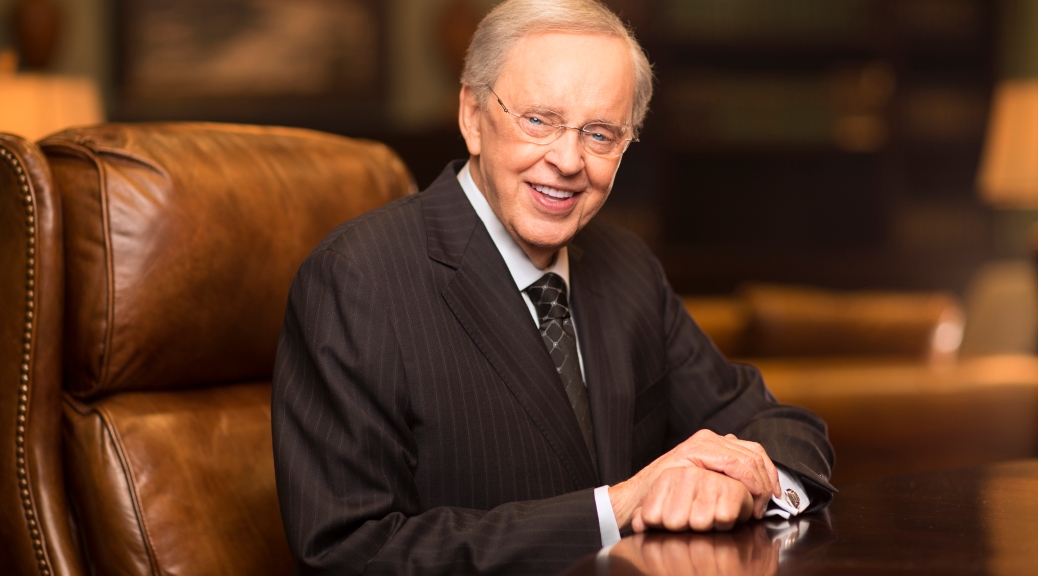
Charles Stanley – What Is Heaven Like?


Revelation 21:1-27

Heaven is the believer’s future home, and we’ve all wondered what it’s like. But the Bible gives us only a glimpse. Even if God revealed more in Scripture, we’d be incapable of comprehending it. As earthly creatures, we lack the experience or frame of reference needed to understand the eternal realities of that dimension.

Desiring to know more about heaven, some people have sought information outside of the Bible, often in books written by people who claim to have gone there. However, the only legitimate source of facts about heaven is God’s Word—nothing else can be depended upon to have a sure foundation in truth.

When Paul was caught up to the third heaven, he “heard inexpressible words, which a man is not permitted to speak” (2 Corinthians 12:4). None of his letters include any details of his experience. God also entrusted the apostle John with a vision of heaven, but human language is inadequate to convey the realities of that otherworldly realm.

Although we may not be able to visualize everything John describes, we can all relate to what he says about those things that are absent in heaven: There will be no more tears, death, mourning, or pain (Revelation 21:4). What’s more, we will never become stressed, exhausted, frustrated, angry, or sick, because our new bodies will be imperishable, sinless, and powerful (1 Corinthians 15:42-43). Heaven is a perfect environment with no sin or sinners in it. And best of all, God will dwell among us.

Bible in One Year: 2 Corinthians 1-4


http://www.intouch.org/

Our Daily Bread — The Flip Side of Love


Bible in a Year:

  • Ezekiel 42–44
  • 1 John 1

Grace, mercy and peace from God the Father and from Jesus Christ, the Father’s Son, will be with us in truth and love.

2 John 1:3

Today’s Scripture & Insight:2 John 1:1–11

The Roman inns during the time of Christ had a reputation so bad that rabbis wouldn’t even permit cattle to be left at them. Faced with such bad conditions, traveling Christians usually sought out other believers for hospitality.

Among those early travelers were false teachers who denied that Jesus was the Messiah. This is why the letter of 2 John tells its readers there is a time to refuse to extend hospitality. John had said in a previous letter that these false teachers were “antichrist—denying the Father and the Son” (1 John 2:22). In 2 John he elaborated on this, telling his readers that whoever believes Jesus is the Messiah “has both the Father and the Son” (v. 9).

Then he warned, “If anyone comes to you and does not bring this teaching, do not take them into your house or welcome them” (v. 10). To extend hospitality to someone preaching a false gospel would actually help keep people separated from God.

John’s second letter shows us a “flip side” of God’s love. We serve a God who welcomes everyone with open arms. But genuine love won’t enable those who deceitfully harm themselves and others. God wraps His arms around those who come to Him in repentance, but He never embraces a lie.

By: Tim Gustafson

Reflect & Pray

How can you reflect God’s love in your relationships today? What issues might you need to confront in your own life or in the lives of others?

Father, You love us in Your truth. Help us extend that love to others with the unwavering grace that comes only from Your Spirit.


http://www.odb.org

Ravi Zacharias Ministry – A Mysterious Safety


Someone told me recently that he wondered if humans only truly ever pray when we are in the midst of despair. Despite creed or confession, is it only when we have no other excuses to offer, no other comfort to hide behind, no more façades to uphold, that we are most likely to bow in exhaustion and be real with God and ourselves? “For most of us,” writes C.S. Lewis, “the prayer in Gethsemane is the only model.” In our distress, we stand before God as we truly are—creatures in need hope and mercy.

The words within the ancient Hebrew story of Jonah that are of most interest to me are words that in some ways seem not to fit in the story at all.(1) Interrupting a narrative that quickly draws in its hearers, a narrative about Jonah, the text very fleetingly pauses to bring us the voice of Jonah himself before returning again to the narrative. The eight lines come in the form of a distraught and despairing, though poetic prayer. And while it is true that the poem could be omitted without affecting the coherence of the story, the deliberate jaunt in the narrative text seems to provide a moment of significant commentary to the whole. The eight verses of poetry not only mark an abrupt shift in the tone of the text, but also in the attitude of its main character. The poetic words of the prophet, spoken as a cry of deliverance, arise from the belly of the great fish—a stirring image reminiscent of another despairing soul’s question: Where can I flee from your presence? If I make my bed in Sheol, you are there. If I settle on the far side of the sea, even there your hand will guide me.

Jonah’s eloquent prayer for deliverance stands out in a book that is detailed with his egotistic mantras and glaring self-deceptions. By his own actions, Jonah finds himself in darkness, and yet it is in the dark that he speaks most honestly to God. The story is vaguely familiar to many hearers, and yet memory often seems to minimize the distress that broke Jonah’s silence with God. The popular notion that Jonah went straight from the side of the ship into the mouth of the fish is not supported by either the narrative as a whole or Jonah’s prayer. As one suggests, “[Jonah] was half drowned before he was swallowed. If he was still conscious, sheer dread would have caused him to faint—notice that there is no mention of the fish in his prayer. He can hardly have known what caused the change from wet darkness to an even greater dry darkness. When he did regain consciousness, it would have taken some time to realize that the all-enveloping darkness was not that of Sheol but of a mysterious safety.”(2)

When I think of the prayers I have offered in my deepest despair, the despair is always memorable, palpable even. And yet so is the sense that I was not yelling into an altogether empty darkness, that my voice was not alone, but that in this pained and enveloping darkness somehow the veil between creator and creature was parted. In the mysterious safety of the fish, Jonah seems to attest to the link between prayer and desperation; but more so, he attests to a God who hears in the void, whether the darkness is self-inflicted or thrown upon us like a violent sea. Likewise, the prophet reminds us of what is all too often our ironic refusal to face the face of a God who is equally present in the light of the ordinary. In prayer and desperation, Jonah saw himself without pretense. If only momentarily, the drowning prophet clung to a truth more secure than comfort and able than his alternatives: “Salvation belongs to the LORD.”

Sadly, Jonah’s distracted theology returned not long after the prayer was finished and his life was spewed back into normalcy. For many of us, it is a familiar tale. Honest words offered in despair remain with God in the darkness where we once cried out, the return of familiarity convincing us of a God more comfortably and safely remote. But if Jonah leaves us with a thought in the dark, it is the presence of options. Which view of God do you prefer? Which veil? Which distance? Which safety?

Once convinced there was a place he could flee from God’s presence, the prophet, sinking further into the depths of the sea, realized he was mercifully mistaken.


Jill Carattini is managing editor of A Slice of Infinity at Ravi Zacharias International Ministries in Atlanta, Georgia.


(1) See Jonah 2:2-10.
(2) H.L. Ellison, “Jonah,” The Expositors Bible Commentary, ed. Frank E. Gaebelein (Grand Rapids: Zondervan, 1985), 374.

Read in browser »

http://www.rzim.org/

Joyce Meyer – Keep Your Promises


…but who honors those who fear the Lord; who swears to his own hurt and does not change; who does not put out his money at interest and does not take a bribe against the innocent. He who does these things shall never be moved. — Psalm 15:4-5

Adapted from the resource Starting Your Day Right Devotional

There are times when I make a commitment to do something that later I regret. Then I try to figure out some way to get out of doing what I said I would do. I argue, “God, surely You don’t want me to do this thing and miss this other great opportunity.”

The only thing the Lord ever says to me is, “You gave your word, Joyce. Be a woman of integrity, and I will bless you.” If we are people of integrity, God will bring other good opportunities around another time with even more blessings.

Prayer Starter: Father, help me to always be a person of integrity. Help me to honor You by keeping my word and doing what I say I’ll do. In Jesus’ Name, Amen.


http://www.joycemeyer.org

Campus Crusade for Christ; Bill Bright – He Gives Richly


“Tell those who are rich not to be proud and not to trust in their money, which will soon be gone, but their pride and trust should be in the living God who always richly gives us all we need for our enjoyment” (1 Timothy 6:17).

Arthur S. DeMoss was a gifted and godly businessman. He had built one of the most successful businesses of its kind in America and in the process had amassed a huge fortune of an estimated half a billion dollars. Then suddenly an economic recession began and stock in his company plummeted. He lost $360 million in a period of only four months – an average of $3 million a day – more than anybody had ever lost in such a short time. One would have thought he would have been devastated. Instead, in order to avoid decreasing his Christian giving, he (personally) borrowed funds, at an incredibly high rate of interest, to enable him to increase his giving. As we talked together during that period, he was rejoicing in the Lord.

“The Lord gave me everything I have,” he said. “It all belongs to Him and if He wants to take it away that’s His business. I don’t lose any sleep. I still have a wonderful family and my life-style remains unchanged. I am prepared to do anything that God wants me to do. If He takes away everything I own and wants me to go to the mission field, I’m ready to do it. All He needs to do is tell me.”

Art had his trust completely in the Lord and not in his vast fortune. God honored his faith and obedience and ultimately restored all that he had lost and much more. Art has gone to be with the Lord, but his fortune is still being used for the glory of God.

Paul’s answer to the believers of his day is just as appropriate to the believers of our time. No person should be unduly impressed with his wealth and look down with pride and arrogance on those whom he considers to be inferior. Riches are uncertain because they can be taken away from us. In the personal emergencies of life one cannot depend upon material possessions for strength and comfort. In times of tragedy – the loss of a loved one, a financial reversal, or some other disappointment – material possessions do not insure peace. Our trust must be in the living God who is able to supply all of our needs and do for us what riches cannot do.

Bible Reading: 1 Timothy 6:6-16

TODAY’S ACTION POINT:> I will not take the blessing of God for granted and will not place my trust in any earthy possession. My confidence will be in Him who is the source of the supernatural life.


http://www.cru.org

Max Lucado – You Are Free to Go


Listen to Today’s Devotion

GUARD:             “You’re free to go!”

BARRABAS:     ”Wh…what?”

GUARD:             “They took the Nazarene instead of you!”

It happened so fast.  One minute Barabbas was in his cell on death row playing tic-tac-toe on the dirt walls. The next, he’s squinting his eyes at the bright sun. In many ways Barabbas stands for us; a prisoner freed because someone he’d never seen took his place.  Someone tossed him a life preserver and he grabbed it; no questions asked.

I can’t imagine him pulling some of our stunts.  We take our free gift of God’s grace and try to earn it or pay for it ourselves instead of simply saying, “thank you”, and accepting it.  Barabbas may not have understood mercy and he surely didn’t deserve it, but he wasn’t about to refuse it.  We, too, are prisoners with no chance for appeal.  Why some prefer to stay in prison while the cell door has been unlocked is a mystery worth pondering!

Read more No Wonder They Call Him Savior: Experiencing the Truth of the Cross

For more inspirational messages please visit Max Lucado.


Home

Denison Forum – From ‘Christmas Parade’ to ‘Winter Parade’: Two ways to experience the power of Christ this Christmas season

Charleston, West Virginia, has held an old-fashioned downtown Christmas Parade for many years. In early October, the city’s official Facebook page announced: “The Charleston Winter Parade will begin at the corner of the Kanawha Boulevard and Capitol Street.”

Their recently elected mayor made the change to signal that their city was a place for people of all faiths and cultures. However, that is not how many residents saw her decision. City council members learned about the name change when everyone else did. Then they began hearing from constituents who were upset.

On the third day after the mayor’s announcement, she changed her position and the Christmas Parade was back on.

A “Capitol Holiday Tree” and “Merry Coffee” cups

Divisions over Christmas seem to be escalating as our culture’s secularism escalates.

Here are two examples in the news: Wisconsin Gov. Tony Evers has renamed the state’s Christmas tree the “Capitol Holiday Tree.” And Starbucks recently unveiled new seasonal cups for the holidays, none of which uses the word Christmas.

Two of them say “Merry Coffee.” Each cup’s sleeve displays the words, “We wish you a merry coffee.” (A Starbucks spokesman noted that the company still offers a “Christmas blend” and that their stores will be decorated during the holidays with Christmas colors and candy cane ribbon.)

It is a cultural fact that secularism and relativism go hand in hand. In order to move away from historic religious truth and orthodox morality, secularists must begin by redefining truth and morality as personal and subjective. Once they convince us that “truth” is what we believe it to be, the way is clear to rename and redefine those religious beliefs and practices they find objectionable.

But, as John Adams wisely noted, “Facts are stubborn things; and whatever may be our wishes, our inclinations, or the dictates of our passions, they cannot alter the state of facts and evidence.”

Shootings, storms, and suffering

Today’s news reminds us of our need for the unchanging Christmas truth that God has entered our broken world (Philippians 2:6–8) and is present with us still today (Matthew 28:20).

A Sunday early-morning shooting in New Orleans’ French Quarter wounded nearly a dozen people. Yesterday morning, a shooting in a Chicago suburb killed one person and injured several others.

Continue reading Denison Forum – From ‘Christmas Parade’ to ‘Winter Parade’: Two ways to experience the power of Christ this Christmas season

Charles Stanley –A Place Called Heaven


John 14:1-3

If you asked a dozen people what they know about heaven, you’d probably get all sorts of answers. Even Christians have various ideas about what it is, where it’s located, and what it will be like. Some people imagine heaven to be an ethereal, dream-like place where the inhabitants are vaporous spirits—but this is contrary to what the Bible teaches.

Put simply, heaven is the home of God. Separate from and beyond creation, it’s an entirely different realm of existence. But it is a literal place with form and substance, and it contains the holy city. The apostle John had a vision of this place, and what he saw is recorded for us in chapters 21 and 22 of Revelation. A wall with foundation stones and gates surrounds the city, which has a street, a river, God’s throne, and the tree of life. All of these are material objects, although they far exceed anything of earthly substance.

Jesus told His disciples that He was going away to prepare a place for them in His Father’s house. He also said He’d return to take them there so they could be with Him forever. Then they watched as His resurrected body ascended from the earth and returned to heaven (Acts 1:9). He is still there today in His physical body, sitting at the right hand of the Father’s throne.

When Christ returns, He will resurrect Christians who have died, transform the bodies of believers who are still alive, and take us all back to the eternal home He has prepared for all His followers. Only then will we finally understand what heaven is.

Bible in One Year: 1 Corinthians 14-16


http://www.intouch.org/


Our Daily Bread — Is There Hope?


Bible in a Year:

  • Ezekiel 40–41
  • 2 Peter 3

If God is for us, who can be against us?

Romans 8:31

Today’s Scripture & Insight:Romans 8:31–39

Edward Payson (1783–1827) led an extremely difficult life. The death of his younger brother shook him to the core. He struggled with bipolar disorder, and he was affected by extreme migraine headaches for days. If this wasn’t enough, a fall from a horse led to paralysis of his arm, and he almost died from tuberculosis! Surprisingly, his response wasn’t one of despair and hopelessness. His friends said that before Edward passed away, his joy was intense. How could that be?

In his letter to the believers in Rome, the apostle Paul expressed his complete confidence in the reality of God’s love regardless of circumstances. He asked with boldness, “If God is for us, who can be against us?” (Romans 8:31). If God gave His very own Son, Jesus, to save us, then He will provide everything we need to finish this life well. Paul listed seven seemingly unbearable situations that he himself faced: trouble, hardship, persecution, famine, nakedness, danger, and the sword (v. 35). He didn’t imply that Christ’s love would stop bad things from happening. But Paul said that “in all these things we are more than conquerors through him who loved us” (v. 37).

Through the uncertainty of this world, God can be trusted completely, knowing that nothing, absolutely nothing, “will be able to separate us from the love of God that is in Christ Jesus our Lord” (v. 39).

By: Estera Pirosca Escobar

Reflect & Pray

When you face seemingly hopeless situations, how do you typically respond? What promise of God can you cling to, knowing He is faithful?

Faithful Father, thank You for Your Son’s sacrifice so that I can have eternal life. Thank You that, no matter how gray life may seem, I can trust in Your promises.

To learn more about living with the difficulties, visit bit.ly/2wXd3Jj.


http://www.odb.org

Streams in the Desert for Kids -In God’s Time


Genesis 21:2

Did you ever notice that God doesn’t seem to be in a hurry? Often it seems as if he waits until the last moment to answer our prayers. God had promised Abraham that he would make a great nation out of him, but Abraham had no children. How was he to become a great nation if he had no son? It was thirty years from the time God first promised Abraham a son until he held his little boy, Isaac. Later, Isaac’s son Jacob had twelve sons, and the children started multiplying. After many years they formed a nation—the nation of Israel.

What is your family praying about? Is there something you’ve waited and waited for? Don’t give up. Keep praying, and God will answer in his time, which is always perfect.

When Isaac was finally born, there was much happiness in Abraham and Sarah’s house. God’s promise was worth the wait. And it will be for you too. When Jesus finally answers your prayer, you’ll be smiling.

Dear Lord, I’m looking forward to that happy day when you answer my prayer. Amen.


Joyce Meyer – Trust in Him


Do all things without grumbling and faultfinding and complaining [against God] and questioning and doubting [among yourselves]. — Philippians 2:14 (AMPC)

Adapted from the resource Power Thoughts Devotional – by Joyce Meyer

The scripture above tells us not to complain against God. Since God is our Father, our Provider, and the One Who watches over us, when we complain about anything, we are basically saying we don’t like what God is doing and we don’t trust His leadership in our lives. Even if what is happening in our circumstances is not something God is doing, it is something He can fix if we will trust Him to do so.

We can judge by our words if we are thankful and appreciative of God’s goodness or if we are discontent. If we truly trust God, then we won’t murmur and complain, but instead we will voice our thankfulness to Him for working in our lives and giving us the strength to do whatever we need to do while we are waiting.

Prayer Starter: Father, thank You for the good things You are doing in my life. Please help me to trust You in everything…the good and the bad. Help me to always be thankful—in my thoughts and through the words I speak. In Jesus’ Name, Amen.


http://www.joycemeyer.org

Campus Crusade for Christ; Bill Bright – Strength and Peace


“He will give His people strength. He will bless them with peace” (Psalm 29:11).

Scott, a professing atheist with the morals of an alley cat, insisted that he had peace in his heart. Though rare, it is possible for people to harden their hearts so much that God ceases to draw them to Himself, and they experience a counterfeit peace.

The psalmist, of course, is talking about a different kind of peace. Ocean voyagers in the storm are at peace because they know the ship is sound and the pilot is skillful. In the same way, we as believers are at peace because we serve God who gives His people strength and blesses them with peace.

“His people,” of course, refers to those who have placed their trust and faith in His Son, Jesus Christ, as Lord and Savior. None other may claim such a wonderful promise.

Significantly, “strength” comes before “peace.” This is God’s strength: “Who would certainly fail without it. Then this very same strength results in peace, God’s peace “that passes all understanding.”

God’s strength enables us to contend with the powers of darkness, within the world and within our own natural depravity.

Peace, the great blessing of the gospel is two-fold:

  1. Peace with God through Christ, and
  2. Peace of mind.

Strength and peace to live the abundant, supernatural life is available to all His people. You may claim your share today by faith.

Bible Reading: Psalm 71:9-16

TODAY’S ACTION POINT: Those two great blessings, strength and peace, will be mine today in direct proportion to my faith and trust in Him, who is my peace.


Charles Stanley –Clinging to God’s Promises


Luke 24:13-49

The Bible is a gold mine of promises for believers. During any season, but especially in hard times, God’s promises provide an anchor for our soul. They give us hope and enable us to be courageous and bold when facing challenges.

But many individuals do not rely on God’s assurances. There are two reasons for this. First, some people are unaware of His promises. Second, others simply do not believe them to be true. A lot of believers can quote Scripture, but when they face a daunting trial—like a job loss or frightening diagnosis—their confidence wavers and doubt prevails.

If we are unaware of all that Scripture promises, we can’t make ourselves believe. But the more we learn and pray and talk with God, the stronger our faith grows, and this is a gift from almighty God. Luke 24 documents two times that people came face to face with Jesus Christ but failed to recognize Him. He had to open their spiritual eyes before they could truly see. The same is true of us: Faith is impossible without the Holy Spirit.

Jesus gives believers assurance of protection, hope, eternal security, counsel, and guidance in the Scriptures. Do you trust Him?

As you read Scripture, ask the Holy Spirit to point out applicable promises for your life. Study, memorize, meditate on, and claim these truths. Then, when trials arise, you’ll have an anchor to keep you steady. Divine promises won’t necessarily take away the pain of difficult circumstances, but the God who has promised to be with you can be trusted to do all He says He’ll do.

Bible in One Year: 1 Corinthians 11-13


http://www.intouch.org/

Our Daily Bread — Carefully Crafted


Bible in a Year:

  • Ezekiel 37–39
  • 2 Peter 2

Christ himself gave the apostles, the prophets, the evangelists, the pastors and teachers, to equip his people.

Ephesians 4:11–12

Today’s Scripture & Insight:Ephesians 4:11–14

In a YouTube video, Alan Glustoff, a cheese farmer in Goshen, New York, described his process for aging cheese, a process that adds to a cheese’s flavor and texture. Before it can be sent out to a market, each block of cheese remains on a shelf in an underground cave for six to twelve months. In this humid environment the cheese is carefully tended. “We do our best to give it the right environment to thrive . . . [and] to develop to its truest potential,” Glustoff explained.

Glustoff’s passion for developing the potential of the cheese he produces reminded me of God’s passion for developing the “truest potential” of His children so they will become fruitful and mature. In Ephesians 4, the apostle Paul describes the people involved in this process: apostles, prophets, evangelists, pastors, and teachers (v. 11). People with these gifts help to stimulate the growth of each believer as well as to encourage acts of service (the “works” mentioned in verse 12). The goal is that we “become mature, attaining to the whole measure of the fullness of Christ” (v. 13).

Spiritual growth comes about through the power of the Holy Spirit as we submit to His maturing process. As we follow the guidance of the people He places in our lives, we become more effective as He sends us out to serve.

By: Linda Washington

Reflect & Pray

Who has been most influential to your spiritual growth? In what ways have you been challenged to grow? How can you encourage the growth of someone else?

Loving God, I’m grateful for the tender way You help me to grow.


http://www.odb.org

Joyce Meyer – Let Your Mess Become Your Message


And we all, with unveiled face, beholding the glory of the Lord, are being transformed into the same image from one degree of glory to another. For this comes from the Lord who is the Spirit. — 2 Corinthians 3:18

Adapted from the resource New Day, New You Devotional – by Joyce Meyer

I encourage people to let go of their past, but never to run from it. The only way to gain victory over the pain of our past is to let God walk us back through that doorway of pain and into victory. No one can achieve victory for us; we have to work out our own salvation. Paul explained this truth in his letter to the Philippian church, saying:

Therefore, my dear ones . . . work out (cultivate, carry out to the goal, and fully complete) your own salvation with reverence and awe and trembling (self-distrust, with serious caution, tenderness of conscience, watchfulness against temptation, timidly shrinking from whatever might offend God and discredit the name of Christ). [Not in your own strength] for it is God Who is all the while effectually at work in you [energizing and creating in you the power and desire], both to will and to work for His good pleasure and satisfaction and delight (Philippians 2:12-13 AMPC.)

We have to let God take us through things and let Him work in us so our mess becomes our message. Difficult things that we have endured in our past prepare us for God’s blessings in our future.

Prayer Starter: Father, You are the only One Who can take what I’ve been through and work it out for my good. Help me to continually draw closer to You and deal with the painful areas of my life that You want to heal. In Jesus’ Name, Amen.


http://www.joycemeyer.org

Campus Crusade for Christ; Bill Bright – Peace and Joy


“Always be full of joy in the Lord; I say it again, rejoice! Let everyone see that you are unselfish and considerate in all you do. Remember that the Lord is coming soon. Don’t worry about anything; instead, pray about everything; tell God your needs and don’t forget to thank Him for His answers. If you do this you will experience God’s peace, which is far more wonderful than the human mind can understand. His peace will keep your thoughts and your hearts quiet and at rest as you trust in Christ Jesus” (Philippians 4:4-7).

Don and Ann wanted with all their hearts to please the Lord and worked at being victorious Christians. They diligently kept their quiet time and memorized Scripture, and they were faithful in church attendance. They did everything right. But as they said, “Even though we’ve claimed the fullness of the Holy Spirit by faith and tried to understand and apply identification truths [in which they sought to identify themselves with Christ, his crucifixion, burial and resurrection,] we just don’t seem to be enjoying the Christian life. There’s something missing.”

“In Philippians 4,” I told them, “you will find a surefire spiritual formula for victory in the Christian life. Just allow the Holy Spirit to make this passage a reality to you and apply the following as He enables you:

As an act of your will, decide that you’re going to be full of the joy of the Lord. You are the one who decides whether you’re going to rejoice or be discouraged and sad. Demonstrate before all men an unselfish, considerate attitude. Remember that the Lord can come at any moment, and be prepared.

Do not worry about anything.
Pray about everything.
Thank Him in faith for His answers.”

The results of practicing these steps is the most priceless and wonderful experience one can know, the supernatural peace of God that cannot be purchased or acquired in any other way. In order to succeed in this formula for supernatural living, of course, you must already be studying the Word of God, applying its truths to your life daily, living in the power of the Holy Spirit and sharing your faith in Christ with others.

Bible Reading: Isaiah 12:1-5

TODAY’S ACTION POINT: Today, as an act of my will, I shall claim the supernatural resources of God by faith and continue to experience and share the abundant life which is the heritage of all who trust and obey Him


http://www.cru.org

Charles Stanley – The Wages of Sin


Romans 6:21-23

God sent His Son to take our punishment by dying in our place. Unless believers understand this provision, they will doubt their salvation. We can’t be good enough to earn heaven. All are born with a corrupted nature; therefore, we will at times sin, no matter how hard we try not to. The Bible compares our attempts at righteous deeds to filthy rags (Isa. 64:6).

On its own, mankind has but one option with regard to sin: to die in it and spend eternity separated from God. But the Father so loved the world that He chose to punish His Son in our place (John 3:16). It was a severe price to pay. Holy God cannot look upon the squalor of sin, so when Jesus became sin for all mankind, the Father had to turn away (2 Cor. 5:21). The physical suffering of crucifixion was terrible, but nothing compared to Jesus’ wrenching horror when the Father left Him. The devastated Messiah cried out, “My God, My God, why have You forsaken Me?” (Mark 15:34).

Jesus accepted separation from the Father so we wouldn’t have to. When Paul said that the wages of sin was death, he was referring to eternal separation from God (Rom. 6:23). As believers, we are saved and forever reconciled with the Lord because of what Jesus has done.

The Savior took our place and accepted humanity’s punishment for sin. He and the Father have done the hard work of salvation so that you and I can live a life of peace, freedom, and hope and never be separated from our Creator. If you believe that Jesus Christ—the Son of God— died for your sins, then you too are saved.

Bible in One Year: 1 Corinthians 7-10


http://www.intouch.org/

Our Daily Bread — Hazardous Materials


Bible in a Year:

  • Ezekiel 35–36
  • 2 Peter 1

See, this [live coal] has touched your lips; your guilt is taken away and your sin atoned for.

Isaiah 6:7

Today’s Scripture & Insight:Isaiah 6:1–10

The sound of a siren increased to an ear-piercing level as an emergency vehicle sped by my car. Its flashing lights glared through my windshield, illuminating the words “hazardous materials” printed on the side of the truck. Later, I learned it had been racing to a science laboratory where a 400-gallon container of sulfuric acid had begun to leak. Emergency workers had to contain the substance immediately because of its ability to damage whatever it came in contact with.

As I thought about this news story, I wondered what would happen if sirens blared every time a harsh or critical word “leaked” out of my mouth? Sadly, it might become rather noisy around our house.

The prophet Isaiah shared this sense of awareness about his sin. When he saw God’s glory in a vision, he was overcome by his unworthiness. He recognized that he was “a man of unclean lips” living with people who shared the same problem (Isaiah 6:5). What happened next gives me hope. An angel touched his lips with a red-hot coal, explaining, “your guilt is taken away and your sin atoned for” (v. 7).

We have moment-by-moment choices to make with our words—both written and spoken. Will they be “hazardous” material, or will we allow God’s glory to convict us and His grace to heal us so we can honor Him with everything we express?

By: Jennifer Benson Schuldt

Reflect & Pray

Why do our words have such a powerful effect on others? How might God want to change your speech?

Dear God, help me to see how my words affect other people. Show me how to encourage them.


http://www.odb.org

Ravi Zacharias Ministry – ‘Tis the Season of Enough


Black Friday is the name Americans have given the day after Thanksgiving, though the concept has caught on in Canada and Europe. It is called “black” because store-keepers know it as the time of year when sales move further into the black and farther into profit margins. “Cyber Monday” is a clever addition to the frenzied consumer holiday, luring black Friday shoppers and their less adventurous counterparts to continue their purchasing online. Whether in-store or online, steep sales and loud advertisements evoke both buyer and seller competition and make for frenzied scenes. Those who watch as bystanders still sense the fervor that begins on Black Friday and continues in a hectic race until Christmas. When everyone around you seems to be running, standing still is easier said than done.

Each year the commencement of the Christmas shopping season overshadows the commencement of a far quieter season. The season of Advent (which begins on December 1 this year) signals the coming of Christmas for Christians, though not in the way that Black Friday signals the coming of the same. “Advent is about the spirituality of emptiness,” writes Joan Chittister, “of enough-ness, of stripped-down fullness of soul.” It is a far cry from the hustle of the holidays that is a race for storing things up. Speed-hoarding through the days of Christmas preparation, Christmas itself even becomes somewhat anticlimactic. “Long before December 25th everyone is worn out,” said C.S. Lewis more than fifty years ago, “physically worn out by weeks of daily struggle in overcrowded shops, mentally worn out by the effort to remember all the right recipients and to think out suitable gifts for them. They are in no trim for merry-making… They look far more as if there had been a long illness in the house.”(1) Quite the opposite, Advent is a season meant to slow us down, to open windows of awareness and health, to trigger consciousness. It is about finding the kind of quiet mystery and the sort of expectant emptiness that can offer a place for the fullness of God as an infant among us.

Of course, for even the quietest of hearts, this God who becomes human, the incarnate Christ, is still a disruptive mystery. But mystery, like beauty and truth, is well worth stillness, wonder, and contemplation. And this mystery—the gift of a God who steps into the world he created—is rich enough to make the most distracted souls stop and wait. As H.G. Wells said of Jesus, “He was like some terrible moral huntsman digging mankind out of the snug burrows in which they had lived hitherto.”(2) “Let anyone with ears listen!” said Jesus repeatedly throughout his life on earth. “But to what will I compare this generation?” he added. “It is like children sitting in the market-places and calling to one another, We played the flute for you, and you did not dance; we wailed, and you did not mourn.’”(3) You and I can open our minds to hear the great and unsearchable things we do not know, things like the Incarnation that we may never fully understand but are always compelled to encounter further. Or we can look for all of Christmas to correspond with societal whims and unconscious distractions, cultural debates about what we call or don’t call the season, arguments about public billboards and private mangers.

Christ will come regardless. The hope of Advent is that it is always possible to make room for him. Etty Hillesum, a young Jewish woman who composed a remarkable series of journals in the darkest years of Nazi occupation before she died in Auschwitz, wrote, “[S]ometimes the most important thing in a whole day is the rest we take between two deep breaths, or the turning inwards in prayer for five short minutes.”(4) Advent can be this simple; the invitation of Christ this simple. Let anyone with ears open them. Contemplating Christmas need not mean Christmas wars or lists and budgets, endless labor, fretful commotion, canned happiness.

Advent, after all, is about the riches of being empty-handed and crying “Enough.” Enough stuff. Enough chaos. Enough injustice and hatred. Enough death and despair. This is a disruptively countercultural posture: empty-handed, so that we can fully hold the mystery before us and nothing less; empty-handed, like the God who came down from heaven without riches or power, but meek and small—full, expectant, and enough.


Jill Carattini is managing editor of A Slice of Infinity at Ravi Zacharias International Ministries in Atlanta, Georgia.


(1) C.S. Lewis, God in the Dock (Grand Rapids: Eerdmans, 2001), 305.
(2) Herbert George Wells, The Outline of History: being a plain history of life and mankind (New York: MacMillan, 1921), 505.
(3) Matthew 11:15-17.
(4) Etty Hillesum, An Interrupted Life: The Diaries 1941-1943 (New York: Henry Holt & Company, 1983), 93.

Read in browser »

http://www.rzim.org/

Joyce Meyer – Living Life on Purpose


Therefore do not be foolish, but understand what the will of the Lord is. — Ephesians 5:17

Adapted from the resource My Time with God Devotional – by Joyce Meyer

Are you living the life you truly want to live? If not, is it because you allow your life to rule you instead of you ruling it? When God placed Adam and Eve in the Garden of Eden, He instructed them to subdue it and be fruitful. God has given us a free will, and He wants us to use it to choose His will for us. When we make choices according to the will of God, He empowers us to live a life that is truly amazing.

What do you want to accomplish today? Pray, make a plan, stay focused, and go for it! Put your time into what you want to do and don’t let circumstances and people derail you. Fight for yourself! Fight for your right to follow your heart instead of being controlled by outside forces.

Be determined; be strong. Don’t be vague and thoughtless, but have a plan and work your plan. God, through Christ, has provided a way for us to live an amazing life, but we need to continually make choices that agree with God. You have one life to live, so live it fully and refuse to drift along, letting other people and circumstances make your decisions for you.

Prayer Starter: Father, show me Your will for me and help me be courageous enough to make choices that agree with You. I want the life that You want for me! In Jesus’ Name, Amen.


http://www.joycemeyer.org