Tag Archives: human-rights

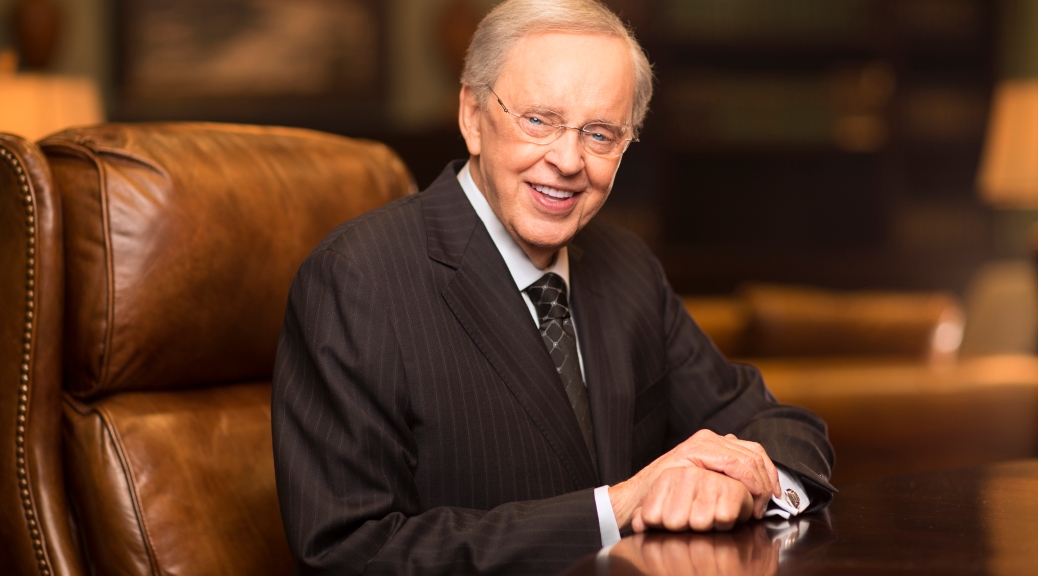
Charles Stanley – The Spirit and Our Walk


Galatians 5:16-26

Have you ever felt like quitting the Christian life?  Perhaps you have tried to be the kind of person you think God wants you to be: You’ve established a consistent quiet time with the Lord, during which you read the Bible and pray. But still you seem to have one struggle after another. So you think that you might be missing something—or that maybe this life isn’t all it’s cracked up to be. Let this be a comfort: Many believers, myself included, have toiled through periods of defeat.

The key to living a life of joy, peace, and victory is found in Galatians 5. Notice that I did not say a life without conflict or one free of temptation, trial, or heartache. Those are part of the human condition. But we can triumph through the power of the Holy Spirit.

In fact, today’s passage makes clear how vital it is for believers to live a Spirit-filled life. When a person trusts Jesus Christ as Savior, he or she is saved and steps from darkness into light. But believers do not then just stand around. As followers of Christ, we fall in step with the Holy Spirit, who helps us to stay on our feet when we are wobbly, to move uphill without tiring, and to stand again after we have fallen. We rely upon Him as our Guide, Comforter, and source of strength.

Does getting through a defeat feel more like crawling than walking? Thankfully, the Holy Spirit is right with you, and He has all the encouragement and power necessary to get you on your feet again. Our journey with Christ can’t be lived alone—rely upon God’s Spirit to escort you each step of the way.

Bible in One Year: Romans 1-3


http://www.intouch.org/

Our Daily Bread — The Older Brother


Bible in a Year:

[They] muttered, “This man welcomes sinners and eats with them.”

Luke 15:2

Today’s Scripture & Insight:Luke 15:11–13; 17–24

Author Henri Nouwen recalls his visit to a museum in St. Petersburg, Russia, where he spent hours reflecting on Rembrandt’s portrayal of the prodigal son. As the day wore on, changes in the natural lighting from a nearby window left Nouwen with the impression that he was seeing as many different paintings as there were changes of light. Each seemed to reveal something else about a father’s love for his broken son.

Nouwen describes how, at about four o’clock, three figures in the painting appeared to “step forward.” One was the older son who resented his father’s willingness to roll out the red carpet for the homecoming of his younger brother, the prodigal. After all, hadn’t he squandered so much of the family fortune, causing them pain and embarrassment in the process? (Luke 15:28–30).

The other two figures reminded Nouwen of the religious leaders who were present as Jesus told His parable. They were the ones who muttered in the background about the sinners Jesus was attracting (vv. 1–2).

Nouwen saw himself in all of them—in the wasted life of his youngest son, in the condemning older brother and religious leaders, and in a Father’s heart that’s big enough for anyone and everyone.

What about us? Can we see ourselves anywhere in Rembrandt’s painting? In some way, every story Jesus told is about us.

By: Mart DeHaan

Reflect & Pray

How might you reflect again on the story Jesus told and on the Rembrandt painting? As the light changes, where do you find yourself?

Father, help me to see myself for how much You love me.  


http://www.odb.org

Ravi Zacharias Ministry – The Scene of Miracle


Middlemarch is the epic novel by Mary Anne Evans, better known by her male penname George Eliot. The work is considered one of the most significant novels of the Victorian period and a masterpiece of English fiction. Rather than following a grand hero, Eliot explores a number of themes in a series of interlocking narratives, telling the stories of ordinary characters intertwined in the intricate details of life and community. Eliot’s focus is the ordinary, and in fact her lament—in the form of 700 pages of detail—is that we not only so often fail to see it, but fail to see that there is really no such thing. There is neither ordinary human pain nor ordinary human living. “If we had a keen vision and feeling of all ordinary human life,” she writes, “it would be like hearing the grass grow and the squirrel’s heartbeat, and we should die of that roar which lies on the other side of silence. As it is, the quickest of us walk about well wadded with stupidity.”(1)

The world Eliot saw around her is not unlike our own in its capacity to silence the dissonance of details, the frequency of pain, the roar of life in its most minute and yet extraordinary forms. We silence the wild roar of the ordinary and divert our attention to magnitudes more willing to fit into our control. The largest tasks and decisions are given more credence, the biggest lives and events of history most studied and admired, and the greatest powers and influences feared or revered most. And on the contrary, the ordinary acts we undermine, the most common and chronic angst we manage to mask, and the most simple and monotonous events we silence or stop seeing altogether. But have we judged correctly?

Artists often work at pulling back the curtain on these places we have wadded out of sight and sound, showing glimpses of life easily missed, pulling off the disguises that hide sad or mortal wounds, drawing our attention to all that is deemed mundane and obscure. Their subject is often the ordinary, but it is for the sake of the extraordinary, even the holy. Nowhere does Eliot articulate this more clearly than in her defense of the ordinary scenes depicted in early Dutch painting. “Do not impose on us any aesthetic rules which shall banish those old women scrapping carrots with their work-worn hands….It is so needful we should remember their existence, else we may happen to leave them quite out of our religion and philosophy, and flame lofty theories which only fit a world of extremes.”(2) For the artist, ordinary life, ordinary hardship, ordinary sorrow is precisely the scene of our need for God, and remarkably, the scene of God and miracle.

In this sense, maybe, the psalmist and prophets and ancient storytellers are all struggling artists, closing the infinite distance between the grandeur of God and an ordinary humanity in which God mysteriously wills to dwell. What are human beings that You are mindful of them? Mortals that You care for them?

The parables Jesus tells are also richly artistic, theological pauses upon the ordinary. Presented to people who often find themselves beyond the need for stories, whether puffed up with wealth and self-importance, or engorged with religion and knowledge, his stories stop us. Jesus seems acutely aware that the religious and the non-religious, the self-assured and the easily distracted often dance around idols of magnitude, diverting their eyes from the ordinary. And yet his very life proclaims the magnitude of the overlooked. The ordinary is precisely the place that God chose to visit—and not as a man of magnitude.

Whatever one’s philosophy or worldview, attention to the ordinary will be a gift, rooting bodies in this mysterious place, awing these bodies to the miraculous. It is far too easy to miss the world as it really is, to hold a philosophy in hand and mind that cannot hold the weight of ordinary life. While Jesus’s own disciples bickered over the most significant seats in the kingdom, they were put off by a unwanted woman at a well, they overlooked a sick woman reaching out for the fringe of Christ’s robe, and they tried to silence a suffering man making noise in an attempt to get Jesus’s attention—all ordinary scenes which became the place of miracle. Even in a religion where the last are proclaimed first, where the servant, the suffering, and the crucified are lifted highest, the story of the widow’s coin is still easily forgotten, the obscure faces Jesus asked the world to remember easily overlooked. How telling that the call to remember the great acts of God in history is itself a call to remember the many acts of life we mistakenly at times see as less great. For the ordinary is filled with a God who chooses to visit.


Jill Carattini is managing editor of A Slice of Infinity at Ravi Zacharias International Ministries in Atlanta, Georgia.


(1) George Eliot, Middlemarch, (London: Penguin, 1994), 194.
(2) George Eliot, Adam Bede (London, Penguin, 1980), 224.


Read in browser »

http://www.rzim.org/

Joyce Meyer – Three Things That Help Me Forgive


And whenever you stand praying, forgive, if you have anything against anyone, so that your Father also who is in heaven may forgive you your trespasses. — Mark 11:25

Adapted from the resource Trusting God Day by Day – by Joyce Meyer

The first thing that really helps me forgive is to remember this: God forgives me for much more than I will ever have to forgive others for. We may not do what others have done to us, but then again we may do things that are worse. In God’s Kingdom, sin does not come in sizes like small, medium, and large; sin is just sin! Do yourself a favor and forgive quickly and freely (without expectation or stipulation). The longer you hold a grudge, the more difficult it is to let it go.

The second thing that helps me forgive is to think of God’s mercy. Mercy is the most beautiful gift we can give or receive. It cannot be earned and is not deserved—otherwise, it wouldn’t be mercy. I like to think of mercy as looking beyond what was done wrong and on to why it was done. Many times people do a hurtful thing and don’t know why they are doing it, or they may not even realize they are doing it. I was hurt so badly in my childhood that I in turn frequently hurt others with my harsh words and attitudes. But I did not realize I was being harsh; because life had been so hard and painful for me, that harshness had become part of me.

The third thing that helps me forgive others is to remember that if I stay angry, I am giving Satan a foothold in my life (see Eph. 4:26–27). When I forgive, I am keeping Satan from gaining an advantage over me (see 2 Cor. 2:10–11). If I don’t forgive, I am poisoning my own soul with bitterness that will surely work its way out in some kind of bad behavior or attitude. One of the most valuable things I have learned is that I am doing myself a favor when I forgive.

Prayer Starter: Thank You, Father, for Your mercy and forgiveness. Help me, in turn, to forgive those who have hurt me and release any bitterness and resentment. In Jesus’ Name, Amen.


http://www.joycemeyer.org

Campus Crusade for Christ; Bill Bright – Mighty Weapons


“I use God’s mighty weapons, not those made by men, to knock down the devil’s strongholds. These weapons can break down every proud argument against God and every wall that can be built to keep men from finding Him. With these weapons I can capture rebels and bring them back to God, and change them into men whose hearts’ desire is obedience to Christ” (2 Corinthians 10:4,5).

Joe came to share with me how his leader in a particular Christian organization had been most unfair to him. He was being relieved of his responsibilities and replaced by another who, in his opinion, was not nearly as well qualified. As we talked it became apparent that Satan easily could sabotage the ministry.

After listening to Joe’s grievances for some time, seeking to know the truth of the matter, I inquired as to his walk with God. “Is there any sin in your life? Do you know for sure that you’re filled with the Holy Spirit?” Then I brought the other party into private conference and inquired as to his relationship with God. “Is there any sin in your life? Do you know for sure that you’re filled with the Holy Spirit?” Both assured me that they were filled with the Spirit and that they genuinely desired to know and do the will of God. I was convinced that they were both sincere.

How then could two men without sin in their lives and who claimed to be filled with the Holy Spirit be at such odds? I sought further truth. In the meantime, we brought to bear the weapons of prayer and the Word of God. God says that when brothers are at odds we should claim in prayer the release of His supernatural wisdom to resolve the matter, and, finally, claim by faith that Satan will be routed, that all of his influence will be overcome.

The counseling required several hours. I talked to one individual, then the other, then both of them together. Finally, we were on our knees praising God and then embracing each other, and the men genuinely felt that their relationship with each other and with the Lord had been fully restored. Satan had lost another battle. Another miracle had happened. Another tragedy had been averted and the Body of Christ had been spared another scandal.

What are those weapons? A holy life, the Holy Spirit, prayer, the Word of God, faith, truth – these are the weapons of God for supernatural warfare. Learn how to use them for His glory.

Bible Reading: Ephesians 6:10-17

TODAY’S ACTION POINT: Whenever Satan attacks me, or I observe conflicts in the Body of Christ due to his influence, I will seek to defeat him by using God’s mighty weapons and will teach other Christians how to apply them in times of spiritual battle


http://www.cru.org

Max Lucado – A Heartfelt Cry to God


Listen to Today’s Devotion

When my eldest daughter was 13 years old, she flubbed her piano piece at a recital.  The silence in the auditorium was broken only by the pounding of her parents’ hearts.  She hurried off the stage, threw her arms around me and buried her face in my shirt.  “Oh, Daddy.”  That was enough for me.  At that moment I’d have given her the moon.  All she said was, “Oh Daddy!”

Prayer starts here.  Prayer begins with an honest and heartfelt, “Oh Daddy!”  Jesus invites us to approach God the way a child approaches his or her daddy.

Here’s my challenge for you!  Every day for four weeks, pray four minutes.  Then get ready to connect with God like never before!


Read more Before Amen: The Power of a Simple Prayer

For more inspirational messages please visit Max Lucado.


Home

Denison Forum – School district forces females to share locker room with biological males who identify as ‘girls’: Three biblical imperatives

A school district in Illinois has voted to allow biological males who identify as girls unrestricted access to the female locker room. Privacy stalls are available, but transgender students will no longer be required to use them.

One student was in tears after the ruling, telling reporters she felt “uncomfortable, my privacy’s being invaded, as I am a swimmer. I do change multiple times, naked, in front of other students in the locker room. I understand that the board has an obligation to all students, but I was hoping that they would go about this in a different way that would also accommodate students such as myself.

Robin Williams was right: “Words and ideas can change the world.” And not always for the better.

Yesterday we discussed God’s call to choose courage when our culture rejects biblical truth and morality. Today, let’s think together about some practical ways we can respond biblically to such opposition.

Ephesians 6 reminds us that “we do not wrestle against flesh and blood, but against the rulers, against the authorities, against the cosmic powers over this present darkness, against the spiritual forces of evil in the heavenly places” (v. 12).

Using Paul’s military metaphor, let’s consider three imperatives.

One: Remember what is at stake

It’s tempting to accept society’s relativistic narrative that truth is individual and subjective, that evangelical opposition to unbiblical morality is a matter of personal preference rather than a reflection of objective reality.

Nothing could be further from the truth.

Continue reading Denison Forum – School district forces females to share locker room with biological males who identify as ‘girls’: Three biblical imperatives

Charles Stanley – Comebacks After Setbacks


1 John 1:5-9

Whether you have recently become a believer or have followed Christ for many years, you’ve undoubtedly discovered that the Christian life is a series of highs and lows. The truth is, we are never ultimately defeated because Christ overcame sin and death for us on the cross. Yet Scripture still warns us not to yield to the sinful desires of our flesh, conform to this world’s evil system, or fall for the schemes and lies of the devil.

Since we are not totally free from the corrupt influences in and around us, the Lord has provided a way for us to come back and be restored. It is called confession, and it involves humbling ourselves, telling God what we have done, and agreeing with Him that it is wrong. Then God promises to forgive and cleanse us so that we might be restored to fellowship with Him (1 John 1:9). The good news is that we are not alone in this battle with sin.

  • We have God’s Holy Spirit, by whom we put to death the deeds of the flesh (Rom. 8:13).
    We have God’s Word, by which we grow in respect to salvation (1 Pet. 2:2).
    We have God’s grace, which instructs us to deny ungodliness and worldly desires and live righteously (Titus 2:11-12).
    We have God’s promise that He will complete the good work He has begun in us (Phil. 1:6).

When you sin, think of confession not as a dreaded duty but as a gracious gift of God. Take advantage of this privilege without shame, knowing that restoration is on the other side.

Bible in One Year: Acts 27-28


http://www.intouch.org/

Our Daily Bread — Beautifully Burdened


Bible in a Year:

My yoke is easy and my burden is light.

Matthew 11:30

Today’s Scripture & Insight:Matthew 11:28–30

I awoke to pitch darkness. I hadn’t slept more than thirty minutes and my heart sensed that sleep wouldn’t return soon. A friend’s husband lay in the hospital, having received the dreaded news, “The cancer is back—in the brain and spine now.” My whole being hurt for my friends. What a heavy load! And yet, somehow my spirit was lifted through my sacred vigil of prayer. You might say I felt beautifully burdened for them. How could this be?

In Matthew 11:28–30, Jesus promises rest for our weary souls. Strangely, His rest comes as we bend under His yoke and embrace His burden. He clarifies in verse 30, “For my yoke is easy and my burden is light.” When we allow Jesus to lift our burden from our backs and then tether ourselves to Jesus’s yoke, we become harnessed with Him, in step with Him and all He allows. When we bend under His burden, we share in His sufferings, which ultimately allows us to share in His comfort as well (2 Corinthians 1:5).

My concern for my friends was a heavy burden. Yet I felt grateful that God would allow me to carry them in prayer. Gradually I ebbed back to sleep and awoke—still beautifully burdened but now under the easy yoke and light load of walking with Jesus.

By: Elisa Morgan

Reflect & Pray

What are you carrying today? How will you give that burden to Jesus?

Dear Jesus, please take my heavy load and lay upon me Your beautiful burden for this world.


http://www.odb.org

Ravi Zacharias Ministry – A Different Category

The parable of the prodigal son in Luke 15 is a familiar story for many. In fact, some of us are so familiar with it that we might even fail to see the rich contours of grace presented in its narrative. Familiarity with the story assumes its central figure to be a son who leads a wasteful and extravagant life. But a careful reading presents the multi-faceted contours of God’s extravagant display of grace towards all wayward sons and daughters.

Jesus presents this story as a crowd of tax-collectors, sinners, and religious leaders gathers around him. “A certain man had two sons,” Jesus begins. The younger of the man’s two sons insists on having his share of the inheritance, which the father grants though the request violated the Jewish custom that allotted upon the death of the father a third of the inheritance to the youngest son.(1) With wasteful extravagance, the son squanders this inheritance and finds himself desperately poor, living among pigs, ravenous for the pods on which they feed. “But when he came to his senses” the text tells us, he reasons that even his father’s hired men have plenty to eat. Hoping to be accepted as a mere slave, he makes his way home. “And while he was still a long way off, his father saw him, and felt compassion for him, and ran and embraced him” (Luke 15:20).

This statement reveals the first contour of God’s grace—it is a prodigal, or wastefully extravagant, grace. The prodigal nature of the father’s grace compels him to keep looking for his son—he saw him while he was still a long way off. And despite being disowned by his son, the father feels compassion for him. With wasteful abandon, the father picks up his long garments, exposing his legs and customarily shaming himself, and runs to his son to embrace him and welcome him home. The father orders a grand party for this son who has been found, “who was dead and has begun to live,” brought to life by the rich, prodigal grace, both unexpected and undeserved.

But the prodigal nature of the father’s grace is also a disruptive grace, offending any sense of fairness or justice. It seems unjust, for example, that such an extravagant party was thrown for such a reckless, rebellious son. It seems equally unjust that the dutiful, older brother was not celebrated in the same way as his wayward, younger sibling. Clearly, the prodigal nature of the father’s grace disrupts because of how it is given—prodigally and seemingly wastefully.

The older brother in Jesus’s story provocatively gives voice to this sense of outrage.(2) The text tells us that “he was not willing to go into the celebration. The older brother does not understand why his duty has not been similarly rewarded. For so many years, I have been serving you and I have never neglected a command of yours; and yet you have never given me a kid, that I might be merry with my friends. But when this son of yours came, who has devoured your wealth with harlots; you killed the fattened calf for him(Luke 15:29-30). We can hear the implicit cry, “It’s not fair!” Not only is he angry because he thinks he has not been treated fairly, but he is also angry over how the father demonstrates grace towards his younger brother. Yet, the older brother fails to hear the entreaty of his gracious father both to come in to the celebration and to recognize that “all that is mine is yours.” The grace that is given freely and lavishly towards sinners is the same grace given to those who do not see their need for it and take that grace for granted.

Continue reading Ravi Zacharias Ministry – A Different Category

Joyce Meyer – Prayer as the First Option, Not the Last Resort


For everyone who asks receives, and the one who seeks finds, and to the one who knocks it will be opened. — Matthew 7:8

Adapted from the resource The Power of Being Thankful Devotional – by Joyce Meyer

One day I woke up with a throbbing headache. I walked around with that miserable headache almost all day, telling everybody I met about how terrible I felt—until I finally realized that I had complained most of the day and had never taken the time to simply pray and ask God to take the pain away.

Unfortunately, that response is rather typical for some of us. We complain about our problems and spend a majority of our time trying to figure out what we can do to solve them. We often do everything except the one thing we are told to do in the Word of God: ask, that we may receive and our joy may be full (see John 16:24).

Thankfully, God wants to provide for our every need. We have the awesome privilege of “asking and receiving,” and we should always pray as a first response to every situation.

Prayer Starter: Thank You, Father, that I can bring every single need to You. Help me to always view prayer as my first option, knowing You delight in taking care of me. In Jesus’ Name, Amen.


http://www.joycemeyer.org

Campus Crusade for Christ; Bill Bright – Able to Keep Promises


“He was completely sure that God was well able to do anything He promised” (Romans 4:21).

Occasionally, I hear people say, “Bill Bright is a man of great faith.” The statement is made because our ministry is involved with millions of Christians from many thousands of churches of all denominations and other Christian organizations in gargantuan undertakings – massive worldwide programs of evangelism and discipleship in which we have, by faith, trusted God for the salvation of at least one billion additional souls for Christ and His kingdom.

As a new Christian, I trusted God for one soul, then six, then ten souls; then hundreds, thousands, millions. And now, after more than 35 years of witnessing His mighty, miraculous power and blessing in response to faith, I am praying and believing God for a billion souls for Christ by the year 2000.

These goals are not built on careless presumptions or figures plucked out of the air in some kind of mystical, emotional, spiritual experience, but they are based upon my confidence in the sovereignty, holiness, love, wisdom, power and grace of the omnipotent God whom I serve and upon His gracious blessings on past efforts that have been undertaken for His glory and praise. No credit should be given to me or to the ministry of which I am a part, but only to the one in whom I place my faith.

Faith must have an object, and the object of my faith is God and His inspired Word. The right view of God generates faith. Faith is like a muscle; it grows with exercise. The more we see God accomplish in and through our lives, the more we can be assured that He will accomplish as we trust and obey Him more.

Bible Reading: Romans 4:13-20

TODAY’S ACTION POINT: I will place my faith in God alone – not in myself or in other men’s efforts or abilities – and I will encourage others to trust God, too


http://www.cru.org

Max Lucado – Approach God As a Beloved Child


Listen to Today’s Devotion

Jesus invites us to approach God the way a child approaches his or her daddy!  And how do children approach their daddies?

When a five-year-old spots his father in the parking lot, how does he react?  “Yippee!” was screamed by a redheaded boy wearing a Batman backpack.  “Pop!”  Over here!  Push me!”—yelled a boy wearing a Boston Red Sox cap who scooted straight to the swings.

Here’s what I didn’t hear:  “Father, it is most gracious of thee to drive thy car to my place of education. Please know of my deep gratitude for your benevolence.  For thou art splendid in thy attentive care and diligent in thy dedication.”

I heard kids who were happy to see their dad and eager to speak to him!  God invites us to approach Him in the same manner. What a relief!

For more inspirational messages please visit Max Lucado.


Home

Denison Forum – New York State prevents churches from making employment decisions based on pro-life commitments: Answering God’s call to courage

Imagine a day when your church cannot refuse to hire a person to lead your congregation’s ministry for expectant mothers on the basis of that person’s pro-choice agenda.

Or a day when a staff member at your church cannot be disciplined for encouraging others to have an abortion.

If your church is in New York State, that day has come.

Why Senate Bill 660 is so important

New York Governor Andrew Cuomo signed Senate Bill 660 recently. It specifies that an employer shall not “discriminate nor take any retaliatory personnel action” against employees with respect to their beliefs and choices regarding abortion. The bill makes no exceptions for religious organizations.

The Alliance Defending Freedom (ADF) states that the bill “requires all employers—including churches, religious schools, faith-based pregnancy care centers, and religious nonprofits—to disavow their beliefs about abortion, contraception, and sexual morality by forcing them to hire and employ those who refuse to abide by the organizations’ statements of faith.”

As a result, faith-based hospitals in New York State cannot require future or existing employees to abide by their pro-life commitments. Nor can faith-based schools or businesses. Nor can churches.

Two versions of “discrimination”

What do we do when two versions of “discrimination” collide?

Pro-choice advocates believe that pro-life employers discriminate against them by refusing to hire pro-choice employees. They ask you to imagine being told by a pro-life CEO that you cannot work at his engineering firm because you believe abortion should be the decision of the mother rather than the government.

By contrast, pro-life advocates believe that the State of New York discriminates against pro-life employers by forcing them to consider candidates who reject the employer’s commitment to life. They ask you to imagine being the CEO of a Baptist hospital who must hire a pro-choice advocate to lead your pregnancy center.

The logic of the pro-choice position

Each side in this culture war is convinced that its logic should prevail.

In Roe v. Wade, the Supreme Court declared that it “need not resolve the difficult question of when life begins,” claiming that “the judiciary, at this point in the development of man’s knowledge, is not in a position to speculate as to the answer.” The Court therefore chose to give the mother whose body supports the fetus the right to decide whether or not to abort that fetus.

Such logic extends to the claim that pro-choice advocates are not forcing anyone to choose an abortion. Rather, they say they are working to preserve the mother’s “reproductive rights.” They believe that she, not the government, is in the best position to make such a determination.

Over the years, I’ve heard from people who say they are personally opposed to abortion but do not believe it is the government’s right to make this decision for others. They would say they are “pro-choice” but not “pro-abortion.”

The logic of the pro-life position

By contrast, pro-life advocates are convinced that life begins at conception. We cite clear biblical teachings as well as strong scientific evidence for the humanity of the so-called fetus in his or her mother’s womb.

We agree with the American Declaration of Independence that every person possesses “unalienable rights” to “Life, Liberty and the pursuit of Happiness.” We therefore believe that the mother’s right to choose should not take precedence over her child’s right to live.

While pro-choice advocates claim that such a position discriminates against the mother, we counter that their position discriminates against the child. The mother may be required to bring a child to term, enduring several months of significant challenges in the process, but her child will then have an entire life to live. If she aborts her child, ending the challenges posed by her temporary pregnancy, her decision is obviously permanent for her child.

And we note that when a child is born, it simply moves from inside his or her mother’s body to outside of it. In New York State, that child can be aborted just moments before his or her birth. By what logic is the intrinsic nature of a baby different when it shifts location?

“Be strong and courageous”

I have taken us down this road today to make a point: Despite the logic of the pro-life position, which I consider to be far superior to that of pro-choice advocates, our society is reaching a tipping point with regard to religious freedom on this issue. If current trends continue, Christians will pay an escalatingly high price for affirming biblical morality on abortion. We are facing similar pressure on LGBTQ issues and euthanasia.

I plan to focus tomorrow on practical ways we can respond biblically to such pressure. For today, let’s decide that we want to.

As Joshua prepared to lead God’s people into an uncharted land and future, the Lord said to him: “Be strong and courageous. Do not be frightened, and do not be dismayed, for the Lord your God is with you wherever you go” (Joshua 1:9).

Note that this word came to Joshua before he began facing Canaanite enemies. The Lord called him to choose courage before he needed courage.

This is because courage does not earn the provision of God—it positions us to receive it. If we will not go into battle, we cannot experience the presence and power of God in the battle.

Is there any price you won’t pay to follow Jesus?

NOTE: Due to requests for print-friendly, text-only versions of The Daily Article, we will now include a link to a downloadable PDF of every Daily Article. Please feel free to save and print these, then share them with your friends, family, church, or community. Today’s Daily Article may be downloaded here, but note the “Download PDF” link below, which is where you may download future Daily Articles.


Denison Forum

Charles Stanley –Having a Rich Prayer Life


Ephesians 3:17-21

Prayer is an amazing privilege because it involves conversation with our heavenly Father. Yet, if we are honest, there are times when it seems more like a duty than a joy.  This is especially true if we reduce our prayers to a formula or routine, which can deaden our desire to talk to God.

In today’s passage, Paul’s prayer is just the opposite—it is full of life, spiritual truths, and love for his Lord. He asked God to do a great spiritual work in the Ephesians’ lives and, by extension, in ours as well:

To gain a greater comprehension of Christ’s love for us. Although it’s beyond our ability to fully grasp the vastness of our Savior’s love, Paul prays that we will be so firmly rooted and grounded in this truth that we will become controlled by it and “filled up to all the fullness of God” (v. 19). Experiencing Jesus’ love motivates us to obediently live for Christ and enables us to care deeply for others.

To be strengthened with the Lord’s supernatural power. Paul both praises God’s matchless power and invites it into our hearts. The most important battles take place inside us—in our minds, wills, and emotions—and Paul wants to ensure that the power of the Holy Spirit will be at work in our lives. When we welcome His authority, God can use us in meaningful ways, and what’s more, we will exhibit the life of Jesus in fuller measure.

Although physical and material needs are important, the apostle’s prayers more often focused on the spiritual welfare of others. That is a good example for us to follow as well.

Bible in One Year: Acts 27-28


http://www.intouch.org/

Our Daily Bread — Fruitful to the End


Bible in a Year:

They will still bear fruit in old age, they will stay fresh and green.

Psalm 92:14

Today’s Scripture & Insight:Psalm 92:12–15

Although Lenore Dunlop was ninety-four years young, her mind was sharp, her smile was bright, and her contagious love for Jesus was felt by many. It wasn’t uncommon to find her in the company of the youth of our church; her presence and participation were sources of joy and encouragement. Lenore’s life was so vibrant that her death caught us off guard. Like a powerful runner, she sprinted across life’s finish line. Her energy and zeal were such that, just days before her death, she completed a sixteen-week course that focused on taking the message of Jesus to the peoples of the world.

The fruitful, God-honoring life of Lenore illustrates what’s seen in Psalm 92:12–15. This psalm describes the budding, blossoming, and fruit-bearing of those whose lives are rooted in a right relationship with God (vv. 12–13). The two trees pictured were valued for their fruit and wood, respectively; with these the psalmist captures a sense of vitality, prosperity, and usefulness. When we see in our lives the budding and blossoming fruit of loving, sharing, helping, and leading others to Christ, we should rejoice.

Even for those who may be labeled “senior” or “seasoned,” it’s never too late to take root and bear fruit. Lenore’s life was deeply rooted in God through Jesus and testifies to this and to God’s goodness (v. 15). Ours can too.

By: Arthur Jackson

Reflect & Pray

How does your life reflect the fruit found in a growing relationship with Jesus? What can you add or eliminate to help you grow?

Father, give me the strength to bear fruit that clearly demonstrates that my life is rooted in the life of Jesus, Your Son.


http://www.odb.org

Campus Crusade for Christ; Bill Bright – God Uses Sorrow for Good


“For God sometimes uses sorrow in our lives to help us turn away from sin and seek eternal life. We should never regret his sending it. But the sorrow of the man who is not a Christian is not the sorrow of true repentance and does not prevent eternal death.” (II Corinthians 7:10).

Frank often referred to himself proudly as a self-made man. He bragged that in his youth he had been so poor he didn’t have two nickels to rub together. Now his real estate holdings and various business enterprises were worth tens of millions of dollars. He was a pillar in the community, able to give generously to civic and philanthropic causes.  His philosophy was that there was no God, and every man had to make it on his own. He laughed at the weaklings who needed the crutch of church.

Then his world began to fall apart. His only son was sent to prison for pushing drugs. His daughter had an automobile accident that left her partially paralyzed for life; and his wife, whom he had largely ignored for years, announced she was in love with someone else and demanded a divorce. Meanwhile, because he had become lax in his business dealings, one of his partners embezzled several million dollars from him.

By this time, he was devastated, and, therefore, was open to spiritual counsel. After the Holy Spirit showed him his spirit of pride and selfishness, he opened his heart to Christ and the miracle took place. Now, he frequently quotes this passage: “God sometimes uses sorrow in our lives to help us turn away from sin and seek eternal life.”

Though his son is still in prison, and his daughter still paralyzed, he and his wife are reconciling, and his heart is filled with joy and thanksgiving to God. He is no longer a proud, “successful” businessman, but a humble child of God, a servant who discovered the hard way that everyone needs God.

For every Frank there are hundreds of others experiencing heartache and tragedy who have not repented. Yet, God offers to all men and women the priceless gift of abundant and supernatural life.

Bible Reading: Proverbs 28:12-14

TODAY’S ACTION POINT: I shall seek to live the full, abundant, supernatural life, walking in faith and obedience, so that God will not find it necessary to discipline me in order to bless me.


http://www.cru.org

Max Lucado – Our Prayers Are Not Graded


Listen to Today’s Devotion

Jesus downplayed the importance of words in prayers.  We tend to do the opposite.  The more words the better!  We emphasize the appropriate prayer language, the latest prayer trend, the holiest prayer terminology.  Against all this emphasis on syllables and rituals, Jesus says in Matthew 6:7, “Don’t ramble like heathens who talk a lot.”

There’s no panel of angelic judges with numbered cards.  “Wow, Lucado, that prayer was a ten.  God will certainly hear you!”  or… “Oh, Lucado, you scored a two this morning.  Go home and practice.”

Prayers aren’t graded according to style.  If prayer depends on how I pray, I’m sunk.  But if the power of prayer depends on the One who hears the prayer, then I have hope.

Read more Before Amen: The Power of a Simple Prayer

For more inspirational messages please visit Max Lucado.


Home

Denison Forum – Pete Buttigieg now leads in New Hampshire: Biblical responses to the popularity of the first openly gay presidential candidate

Pete Buttigieg has “surged to a 10-point lead in New Hampshire’s first-in-the-nation presidential primary,” according to a poll released yesterday. The New York Times reports that he also holds a “commanding lead” in Iowa’s presidential caucuses.

Buttigieg is a graduate of Harvard and studied at Oxford as a Rhodes scholar. He served in the military in Afghanistan, reportedly speaks eight languages, plays the guitar and piano, and is active in the Episcopal Church. His debate performances have displayed his obvious intelligence and grasp of policy detail. In many ways, he seems an ideal fit for many Democratic voters.

Buttigieg is also gay and is married to his husband, Chasten. An LGBTQ advocacy magazine named him one of fifty “trailblazing individuals who actively ensure society remains moving toward equality, acceptance and dignity for all queer people.” In their view, he is “reshaping politics and driving the religious right crazy in the process.”

How our society has changed on same-sex marriage

As the leader of a nonpartisan ministry, my purpose today is not to endorse or criticize Mr. Buttigieg as a politician. Rather, it is to note the degree to which his popularity highlights our society’s acceptance of homosexuality.

In 2004, 60 percent of Americans opposed same-sex marriage, while only 31 percent were in favor. Today, the numbers are reversed: 61 percent support same-sex marriage, while 31 percent oppose it.

By contrast, only 32 percent of non-evangelical Americans have “warm feelings” toward white evangelical Christians, the group most identified for its opposition to same-sex marriage.

A recent essay in the Wall Street Journal notes that 44 percent of Americans aged eighteen to twenty-nine say they identify with no religion; one of the reasons most cited by “nones” for their antipathy is that they “don’t like the positions churches take on political/social issues.” The author, a college professor, adds that some of the “issues” his students object to most often have to do with “women’s reproductive rights and non-heteronormative sexuality, especially same-sex marriage and transgender rights.”

A group of clergy prayed for a Planned Parenthood clinic

My purpose today is not to debate biblical teachings on same-sex relationships (for more here, please see my article, “How does same-sex marriage affect you?” (PDF) and chapters three and four in my book, The State of Our Nation: 7 Critical Issues).

Rather, I’d like to focus today on the confusion wrought in the culture by the conflicting signals Christians are sending on this issue.

Pete Buttigieg and his husband were married in the Episcopal Church. The Evangelical Lutheran Church of America, the Presbyterian Church USA, and the United Church of Christ are among other American denominations that either endorse or permit same-sex weddings. By contrast, most Baptist, Catholic, Anglican, and Pentecostal churches in America forbid same-sex weddings, as do the Presbyterian Church of America and many Methodist congregations.

Continue reading Denison Forum – Pete Buttigieg now leads in New Hampshire: Biblical responses to the popularity of the first openly gay presidential candidate

Charles Stanley – Improving Our Prayers


Ephesians 3:14-16

Are you satisfied with your prayer life? I don’t know too many people who would answer yes to that question, because most of us know that we fall short in this discipline. Even the most mature believers recognize their need for improvement, and one of the best methods for doing that is examining scriptural prayers and using them as a model.

Several of Paul’s prayers are recorded in his epistles, and they supply wonderful insights about different ways to pray. In today’s passage, we see two foundations for prayer.

A Humble Attitude. Paul’s physical posture of bending his knees served as a reminder of his submissive position before the heavenly Father. He knew there was nothing in himself that would cause the Lord to hear and respond. He had access to the throne of God only through his relationship with Jesus Christ. Paul did not make himself the center of the conversation but focused on the Lord and the church for whom he was interceding.

A Focus on God. The foundation of Paul’s prayer life was the Trinity. The apostle understood that God the Father adopts all believers worldwide into His family for eternity; that there are glorious riches found in God the Son; and that God the Holy Spirit has limitless power. The requests Paul made for the Ephesians were based on almighty God’s matchless abilities, resources, and power.

Although we can confidently approach the Lord’s throne of grace, we must always remember that we are but humble servants, and He is our exalted God.

Bible in One Year: Acts 23-24


http://www.intouch.org/