Tag Archives: Jesus

Charles Stanley – Quieting Your Soul


Psalm 131:1-2

As this season of Advent begins, it is wise to reexamine our hearts with regards to prayer. Do you hurry through your quiet time so you can get to other things? If so, consider the values Jesus modeled for us in His practice of setting apart time to spend with His Father.

Solitude. Though the Lord was constantly surrounded by people as He tended to their needs, He also understood His own need for seclusion. Often, after an intense period of ministry, He would retreat from the crowds—and even His disciples—to pray in private.

Safeguarded time.No matter what else was going on, Jesus made it a point to protect periods of time so He could rest in the Spirit, focus on His relation- ship with the Father, and build up His physical and emotional strength. Even when people were clamoring for Him, Jesus made it a priority to safeguard this time, knowing that His ministry would flow from it.

Stillness. What does it means to be still? Psalm 46:10 calls us to stillness with these words: “Cease striving and know that I am God.” To learn this perpetual inner peace, periodically stop everything you’re doing, and simply let your soul become aware of the Holy Spirit’s presence. In today’s reading, David described it as the state of a “weaned child” who is at perfect rest and happy just to be in his mother’s arms.

If you make these a priority, you will reap tremendous benefits. Doing so may seem challenging. But when you quiet your heart before the Lord, you’ll discover how much you need the peace of His presence. It is a priceless gift.

Bible in One Year: 1 Corinthians 7-10

Our Daily Bread — The Low Point


Read: Psalm 40

Bible in a Year: Ezekiel 35-36; 2 Peter 1

You are my help and my deliverer. —Psalm 40:17

  1. S. Lewis and his older brother, Warren (Warnie), endured several terms at Wynyard, an English boarding school for boys. The headmaster was a cruel man who made life unbearable for everyone there. Decades later, Warnie wrote in his understated dry wit, “I am now sixty-four and a bit, and have never yet been in a situation in which I have not had the consolation of reflecting that at any rate I was better off than I was at Wynyard.” Most of us can recall a similar dark and difficult time in our lives and be grateful that we’re better off now than we were then.

Psalm 40:1-5 records a low point of David’s life when he cried out to the Lord who rescued him. God brought him up from “the slimy pit” and “the mud and mire” and set his feet on a rock (v. 2). “He put a new song in my mouth,” David says, “a hymn of praise to our God” (v. 3).

But deliverance from depression and despair are seldom one-time events. Psalm 40 continues with David’s renewed plea for God’s mercy, lovingkindness, and truth to deliver him from his own sin and the threats of his enemies (vv. 11-14).

Along with David, we can say at every low point, “I am poor and needy; may the Lord think of me. You are my help and my deliverer” (v. 17). —David McCasland

How does recalling a low point in your life encourage you to trust God for His help today?

Share with us in the comments section below or on our Facebook page, facebook.com/ourdailybread

The One who holds the universe will never let you down.

Alistair Begg – Approaching Rebuke


You shall not go around as a slanderer among your people…you shall reason frankly with your neighbor, lest you incur sin because of him. Leviticus 19:16-17

Slander emits a threefold poison, for it injures the teller, the hearer, and the person who is being slandered. Whether the report is true or false, we are by this precept of God’s Word forbidden to spread it.

The reputations of the Lord’s people should be very precious in our sight, and we should regard it as shameful to help the devil dishonor the church and the name of the Lord. Some tongues need a bridle rather than a spur.

Many rejoice in putting down their brothers and sisters, as if in doing so they raised themselves. Noah’s wise sons cast a covering over their father, and the one who exposed him earned a fearful curse.

We may ourselves one of these dark days need leniency and silence from our family; let us offer it cheerfully to those who require it now. Let this be our family motto, and our personal bond: Speak evil of no man.

The Holy Spirit, however, permits us to censure sin and prescribes the way in which we are to do it. It must be done by rebuking our brother to his face, not by talking behind his back.

This approach is manly, brotherly, Christlike, and under God’s blessing will be useful.

Do we shy away from it? Then we must lay the greater stress upon our conscience and commit ourselves to the responsibility, in case by tolerating sin in our friend we become partakers of it.

Hundreds have been saved from gross sins by the timely, wise, affectionate warnings of faithful friends and family. Our Lord Jesus has set us a gracious example of how to deal with erring friends in His warning given to Peter, the prayer with which He preceded it, and the gentle way in which He endured Peter’s boastful denial that he needed such a caution.

The Family Bible Reading Plan

  • 1 Chronicles 26, 27
  • 2 Peter 1

Devotional material is taken from “Morning and Evening,” written by C.H. Spurgeon, revised and updated by Alistair Begg.

Charles Spurgeon – The warning neglected


“He heard the sound of the trumpet, and took not warning; his blood shall be upon him.” Ezekiel 33:5

Suggested Further Reading: Haggai 1:1-6

Men have got time. It is the want of will, not want of way. You have time, sir, have you not, despite all your business, to spend in pleasure? You have time to read your newspaper—have you not time to read your Bible? You have time to sing a song—have you no time to pray a prayer? Why, you know when farmer Brown met farmer Smith in the market one day, he said to him, “Farmer Smith, I can’t think how it is you find time for hunting. Why, man, what with sowing and mowing and reaping and ploughing, and all that, my time is so fully occupied on my farm, that I have no time for hunting.” “Ah,” said he, “Brown, if you liked hunting as much as I do, if you could not find time, you’d make it.” And so it is with religion, the reason why men cannot find time for it is, because they do not like it well enough. If they liked it, they would find time. And besides, what time does it want? What time does it require? Can I not pray to God over my ledger? Can I not snatch a text at my breakfast, and think over it all day? May I not even when I am busy in the affairs of the world, be thinking of my soul, and casting myself upon a Redeemer’s blood and atonement? It wants no time. There may be some time required; some time for my private devotions, and for communion with Christ, but when I grow in grace, I shall think it right to have more and more time, the more I can possibly get, the happier I shall be, and I shall never make the excuse that I have not time.

For meditation: How much time do you make to spend alone with God each day? What do you do with him for the rest of the day? (Colossians 3:23).

Sermon no. 165

29 November (1857)

John MacArthur – Conquering in Conflict


“By faith the walls of Jericho fell down, after they had been encircled for seven days” (Heb. 11:30).

Faith is the key to spiritual conquest.

Forty years had lapsed since the Israelites refused to enter the Promised Land. That unbelieving generation had perished in the wilderness. Now Joshua was leading a new generation into the land. The first obstacle they faced was Jericho—a well- fortified city that was near the mouth of the Jordan River.

Some city walls of that day were wide enough at the top to allow two chariots to ride side-by-side. That was probably true of Jericho because of its strategic location. That, coupled with the caliber of its army, made the city virtually impregnable— especially to unsophisticated Israelites, who lacked military training.

But what is impossible for man is easy for God. And the stage was set for Him to demonstrate His power and for the Israelites to demonstrate their faith and humility.

One can only imagine how embarrassed the Hebrew people felt as they marched around Jericho once a day for six days. That certainly is not your typical military strategy. But on the seventh day, after marching around the city seven times with the priests blowing their rams’ horns, the priests gave one final blast, the people all shouted out loud, and the walls of the city collapsed (Josh. 6:20). Faith had reduced a formidable obstacle to a crumbled ruin.

Can you identify some spiritual obstacles you’ve faced recently? How did you handle them? You’ll always have them to deal with in your Christian walk, but don’t fret. See them as opportunities to exercise faith and see God’s power on display in your life. Continue to trust the Lord and demonstrate your faith by courageously doing what He has called you to do.

Suggestions for Prayer

Ask God to help you humbly trust in God’s power when you face spiritual conflicts.

For Further Study

Read about the conquest of Jericho in Joshua 6:1-21. Note each occasion where the people obeyed one of Joshua’s commands without hesitation.

Joyce Meyer – Draw the Line


So the king said to me, Why do you look sad, since you are not sick? . . .Then I was very much afraid. . . . The king said to me, For what do you ask? So I prayed to the God of heaven.—Nehemiah 2:2-4

When a boss demands so much of an employee that it is ruining her home life, her spiritual life, and perhaps her health, she is not being rebellious if she confronts the boss and states plainly what she can and cannot do. She actually would incur guilt if she did not.

God expects a person to put her marriage, her family, her home, her spiritual life, and her health before her job. If she loses her job as a result of proper confrontation, God will help her get a better one. It is sad when a person lives in so much fear of the loss of money and reputation that she allows herself to lose her health, the respect of her family, and a good relationship with God. It is sad to have the approval of someone, such as a boss, but to be out of the will of God. If you have been allowing someone to control you, you should ask yourself what price you are paying to have that person’s approval. Don’t play the games you have to play in order to have everyone’s approval.

Lord, when it comes to doing Your will, I trust You to help me to draw the line and stand for the right values. I will stand with You. Amen.

From the book The Confident Woman Devotional: 365 Daily Devotions by Joyce Meyer.

Campus Crusade for Christ; Bill Bright – Just as He Promised


“God, who called you to become His child, will do all this for you, just as He promised” (1 Thessalonians 5:24).

Have you ever substituted your own name in a promise like that? I have, and the result is staggering, overwhelming. “God, who called Bill Bright to become His child, will do all this for me, just as He promised.”

Include your name in the verse, and the effect will be the same for you. It is incredible that before the very foundation of the world God chose and called you and me to become His children. His foreknowledge makes possible many of the mysteries we puzzle over today.

Your sanctification (setting apart) – and mine – depends upon God, and since He has begun a good work in us, He will see it through to completion. God requires holiness (another word for sanctification) and He is the resource upon whom we may call for accomplishment of that requirement.

While it is true we will never be completely and totally holy in this life, it is equally true that provision is made for us to be holy. Every moment that you and I are under the control of God’s Holy Spirit, is a moment that we are holy! Looked at in that light, the task of acquiring holiness does not seem so impossible to attain.

The principle is clear: God never gives a command without the enablement to obey it.

Bible Reading: 2 Thessalonians 3:3-5

TODAY’S ACTION POINT: I will see myself as a child of God, the beneficiary of His multitudinous blessings, capable of living a supernatural life and bearing fruit for His glory through His enablement

Presidential Prayer Team; C.P. – No Timidity


It’s no secret that America’s religious freedom is deteriorating. As the country splits down the middle, one side cries tolerance – yet some can’t tolerate people who think they are right to serve God. The culture’s effort to be respectful of others’ beliefs has come at a cost. Several Christian Americans are now more afraid than ever to offend or cause an uproar for stating their opinion on a social or political issue.

Give thanks to the Lord, call upon his name, make known his deeds among the peoples.

Isaiah 12:4

Today’s verse calls for a public declaring of who God is. Jesus said, “For whoever is ashamed of me and of my words, of him will the Son of Man be ashamed when he comes in his glory and the glory of the Father and of the holy angels” (Luke 9:26).

What of God’s deeds do you appreciate? Ask Him for wisdom and boldness to make these things known. Pray that God’s people will declare His Word and not be timid when it comes to stating their view in the public square. Finally, intercede for the leaders and citizens of this nation who have yet to call upon the name of the Lord.

Recommended Reading: II Corinthians 4:7-18

Night Light for Couples – Divorce and Kids


“And a husband must not divorce his wife.” 1 Corinthians 7:11

The daughter in Sunday’s the “Dear Daddy” story described the trauma of her father’s deserting their family as like being in a car wreck. That is the impact divorce typically has on children. It is devastating! For more than twenty‐five years, California psychologist Judith Wallerstein has tracked hundreds of children of divorce from childhood to adulthood. She’s found that the distress young children experience after a divorce remains with them throughout their lives, making it more difficult for them to cope with challenges. “Unlike the adult experience,” Wallerstein says, “the child’s suffering does not reach its peak at the breakup and then level off. The effect of the parents’ divorce is played and replayed throughout the first three decades of the children’s lives.” Harvard University psychiatrist Armand Nicholi says that the pain of divorce is worse for children five years later than at the time the family disintegrates. He also links interruption of parent‐child relationships with an escalation in psychiatric problems for children.

The next time the idea of divorce enters your thoughts, consider the consequences of such an act on the most vulnerable members of your family. Research shows that time doesn’t heal those wounds.

Just between us…

  • Do you agree with the statements of these mental health professionals?
  • If your parents divorced, what was your experience during and after the breakup?
  • What would happen to our kids (or future children) if wedivorced?

Father, we thank You for the tender lives You’ve placed in our care. We resolve never to harm them through the violence of divorce. Strengthen and bless this commitment in our thoughts and actions each day. Amen.

From Night Light For Couples, by Dr. James & Shirley Dobson


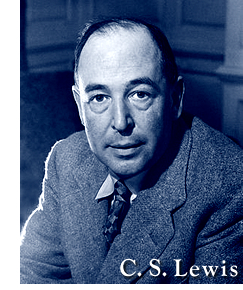
C.S. Lewis Daily – Today’s Reading


On perfection

The command Be ye perfect is not idealistic gas. Nor is it a command to do the impossible. He is going to make us into creatures that can obey that command. He said (in the Bible) that we were “gods” and He is going to make good His words. If we let Him—for we can prevent Him, if we choose—He will make the feeblest and filthiest of us into a god or goddess, a dazzling, radiant, immortal creature, pulsating all through with such energy and joy and wisdom and love as we cannot now imagine, a bright stainless mirror which reflects back to God perfectly (though, of course, on a smaller scale) His own boundless power and delight and goodness. The process will be long and in parts very painful; but that is what we are in for. Nothing less. He meant what He said.

From Mere Christianity

Compiled in Words to Live By

Charles Stanley – The Blessings of God


2 Peter 1:1-4

When we place our trust in God, we can be assured that He provides for all of our needs. Here are a few of our blessings we receive from the Lord:

Forgiveness. When you place your trust in Jesus Christ, your sin is washed away. This refers not only to all previous sin but also to the sin you have not yet committed (Eph. 1:7).

Freedom.Christianity is the only religion in the world that offers freedom from a works-based righteousness. This means that we do not have to earn the Lord’s favor. He loves us perfectly and has made provision for our complete salvation through His Son. All we have to do is accept this loving gift of grace (John 8:36).

Union with God. We don’t worship a distant deity; we praise a loving Father who knows every detail of our lives. Ephesians 1:13 reveals that we are “sealed in Him with the Holy Spirit.” This means we are forever joined to the Father. Read Ephesians 1:1-14 closely and count all the times that the apostle Paul uses the phrase “in Him”—you will see the great emphasis he placed on his relationship with Christ.

Eternal Life. If you have been sealed in God, then you are forever bound with Him. He has you in His grip, and nothing can pull you away (John 10:28-29).

Money is fleeting, yet it is the god to which many people bow. The Lord has riches of greater worth for you. Whether you are wealthy or not, do not let your material possessions keep you from accepting your riches in Christ. There is surely more value in what God has to offer.

Bible in One Year: 1 Corinthians 4-6

Our Daily Bread — Seeing Ourselves


Read: 1 Corinthians 11:23-34

Bible in a Year: Ezekiel 33-34; 1 Peter 5

Everyone ought to examine themselves. —1 Corinthians 11:28

Long ago, before the invention of mirrors or polished surfaces, people rarely saw themselves. Puddles of water, streams, and rivers were one of the few ways they could see their own reflection. But mirrors changed that. And the invention of cameras took fascination with our looks to a whole new level. We now have lasting images of ourselves from any given time throughout our entire life. This is good for making scrapbooks and keeping family histories, but it can be detrimental to our spiritual well-being. The fun of seeing ourselves on camera can keep us focused on outward appearance and leave us with little interest in examining our inner selves.

Self-examination is crucial for a healthy spiritual life. God wants us to see ourselves so that we can be spared the consequences of sinful choices. This is so important that Scripture says we are not to participate in the Lord’s Supper without first examining ourselves (1 Cor. 11:28). The point of this self-examination is not only to make things right with God but also to make sure we are right with one another. The Lord’s Supper is a remembrance of Christ’s body, and we can’t celebrate it properly if we’re not living in harmony with other believers.

Seeing and confessing our sin promotes unity with others and a healthy relationship with God. —Julie Ackerman Link

Dear Lord, help me to be more concerned with the reflection of my heart than with my physical reflection. Change me through the power of Your Spirit.

When we look into the mirror of God’s Word, we see ourselves more clearly.

INSIGHT: Jesus ate the Jewish Passover meal—a celebration to remember God’s rescue of His people from slavery in Egypt—with His disciples the night before He went to the cross. Christ used the elements of this meal to institute the memorial celebration of the Lord’s Supper, or Communion (1 Cor. 11:20), to help us remember how He has rescued us from our sins.

Alistair Begg – Walk in the Truth


For I rejoiced greatly when the brothers came and testified to your truth, as indeed you are walking in the truth. 3 John 3

The truth was in Gaius, and Gaius walked in the truth. If the first had not been the case, the second could never have occurred; and if the second could not be said of him, the first would have been a mere pretense. Truth must enter into the soul, penetrate and saturate it, or else it is of no value.

Doctrines held as a matter of creed are like bread in the hand, which provides no nourishment to the body; but doctrine accepted by the heart is like food digested, which by assimilation sustains and builds up the body.

In us truth must be a living force, an active energy, an indwelling reality, a part of the warp and woof of our being. If it is in us, we cannot then part with it.

A man may lose his clothes or his limbs, but his inward parts are vital and cannot be torn away without absolute loss of life. A Christian can die, but he cannot deny the truth.

Now it is a rule of nature that the inward affects the outward, as light shines from the center of the lantern through the glass: When, therefore, the truth is kindled within, its brightness soon shines in the outward life and conversation.

It is said that the food of certain worms colors the cocoons of silk that they spin: And in the same way the nutriment upon which a man’s inward nature lives gives a tinge to every word and deed proceeding from him.

To walk in the truth conveys a life of integrity, holiness, faithfulness, and simplicity-the natural product of those principles of truth that the Gospel teaches and that the Spirit of God enables us to receive.

We may judge the secrets of the soul by their appearance in the man’s behavior. Today, O gracious Spirit, let it be ours to be ruled and governed by Your divine authority, so that nothing false or sinful may reign in our hearts, in case it should extend its malignant influence to our everyday lives in the community.

The Family Bible Reading Plan

  • 1 Chronicles 24, 25
  • 1 Peter 5

Devotional material is taken from “Morning and Evening,” written by C.H. Spurgeon, revised and updated by Alistair Begg.

Charles Spurgeon – Satan’s banquet


“The governor of the feast called the bridegroom, And saith unto him, Every man at the beginning doth set forth good wine; and when men have well drunk, then that which is worse; but thou hast kept the good wine until now.” John 2:9-10

Suggested Further Reading: Psalm 55:12-23

The governor of the feast said more than he intended to say, or rather, there is more truth in what he said than he himself imagined. This is the established rule all the world over: “the good wine first, and when men have well drunk, then that which is worse.” It is the rule with men; and have not hundreds of disappointed hearts bewailed it? Friendship first—the oily tongue, the words softer than butter, and afterwards the drawn sword. Ahitophel first presents the lordly dish of love and kindness to David, then afterwards that which is worse, for he forsakes his master, and becomes the counsellor of his rebel son. Judas presents first of all the dish of fair speech and of kindness; the Saviour partook thereof, he walked to the house of God in company with him, and took sweet counsel with him; but afterwards there came the dregs of the wine—“He that eateth bread with me hath lifted up his heel against me.” Judas the thief betrayed his Master, bringing forth afterwards “that which is worse.” You have found it so with many whom you thought your friends. In the heyday of prosperity, when the sun was shining, and the birds were singing, and all was fair and cheerful with you, they brought forth the good wine; but there came a chilling frost, and nipped your flowers, and the leaves fell from the trees, and your streams were frosted with ice, and then they brought forth that which is worse, they forsook you and fled; they left you in your hour of peril, and taught you that great truth, that “Cursed is he that trusteth in man, and maketh flesh his arm.”

For meditation: Has someone you trusted let you down badly, albeit unintentionally? Christ’s first miracle reminds us that man’s ways are not God’s ways (Isaiah 55:8); the Christian has a friend who sticks closer than a brother (Proverbs 18:24) and is assured that the best is still to come (Hebrews 10:34).

Sermon no. 225

28 November (1858)

John MacArthur – Accepting God’s Provisions


“By faith [Moses] kept the Passover and the sprinkling of the blood, so that he who destroyed the first-born might not touch them. By faith they passed through the Red Sea as though they were passing through dry land; and the Egyptians, when they attempted it, were drowned” (Heb. 11:28-29).

The man or woman of faith gratefully accepts all God’s provisions, no matter how pointless some of them may seem.

When the time came for Moses to lead the Israelites out of Egypt, everything on the human level said it couldn’t be done. Pharaoh wasn’t about to let two to three million slaves just pack up and leave. His formidable army was ready to insure that no such exodus occurred.

But when God devises a plan, He always makes the necessary provisions for carrying it out. On this occasion, His provision came in the form of ten terrifying plagues designed to change Pharaoh’s mind.

The tenth and worst plague was the death of all the first- born (Ex. 11:5). To protect themselves from this plague, the Israelites sprinkled the blood of a lamb on the doorposts and lintels of their homes. When the angel of death saw the blood, he passed over that house. Thus the Passover was instituted.

The blood from those first Passover lambs had no intrinsic power to stave off the death angel, but its presence demonstrated faith and obedience, thus symbolizing the future sacrifice of Christ (cf. John 1:29).

Pharaoh got the message and allowed the Israelites to leave. But soon afterward he changed his mind and commanded his army to pursue them. Again God intervened by parting the Red Sea, allowing His people to walk across on dry land. He then drowned the entire Egyptian army when it followed the Israelites into the sea.

That was a graphic demonstration of a lesson every believer must learn: God’s provisions are always best. They may sometimes seem foolish to the human intellect—just as “the word of the cross is to those who are perishing foolishness” (1 Cor. 1:18)—but the man or woman of faith trusts God and receives His provisions gratefully.

Suggestions for Prayer

Thank God for the wise and gracious provisions He has made for your salvation and ongoing Christian walk.

For Further Study

Read the account of the Passover and the parting of the Red Sea in Exodus 11-14.


Campus Crusade for Christ; Bill Bright – He Does the Work


“And I am sure the God who began the good work within you will keep right on helping you grow in His grace until His task within you is finally finished on that day when Jesus Christ returns” (Philippians 1:6).

Howard was adamant in his conviction. “I would never lead anyone to Christ that I could not personally follow up to be sure he matures and grows and becomes all that God wants him to be.”

“Since when did you assume the responsibility of the Holy Spirit?” I asked.

Obviously, we are to do everything we can to help a new believer grow to maturity in Christ – by teaching him to trust God, study His word, pray, live a holy life, and share his faith with others. But no matter how much we do, it is the Holy Spirit who helps the new believer come to Christ, and who illumines his heart with the Word. The Holy Spirit teaches us how to pray and empowers us to witness. In fact, there would be no supernatural life apart from the Holy Spirit.

Paradoxically, you and I can be confident, yet humble, when we think of all that we are, and all that we have in Christ, and realize that we are not responsible for any of it, but it is something which God has given us according to His grace. My only boast is in God, His Son Jesus Christ and His indwelling Holy Spirit. How can I boast of my abilities and achievements, when it is the Giver alone who is worthy of all honor and praise? The apostle Paul had the strong conviction that the work God had begun in the believer would be permanent. All events that transpire in our lives, all influences, heartaches, testings and sorrows, as well as all of the blessings, are designed to conform us to the image of Christ.

Bible Reading: 1 Corinthians 1:4-9

TODAY’S ACTION POINT: God, who saved me, continues to work in my life, conforming me to the image of Christ. Therefore, I will continue to trust and obey Him, as I draw upon His supernatural resources

Presidential Prayer Team; C.H. – Yes, Lord!


A “yes-man,” according to Merriam-Webster, is “a person who agrees with everything that someone says: a person who supports the opinions or ideas of someone else in order to earn that person’s approval.” Politically speaking, this term is used to describe someone seeking to raise his or her own standings, and the support they show is actually insincere.

Am I now seeking the approval of man, or of God? Or am I trying to please man?

Galatians 1:10

In today’s passage, Paul cautions against seeking the approval of man. He continues, “If I were still trying to please man, I would not be a servant of Christ.” (Galatians 1:10) People are wavering, and their opinions are prone to change, so trying to please them often results in wasted efforts. God, however, is steadfast and unchanging. Your efforts to please Him will never go unnoticed.

Instead of being a “yes-man,” work on being a “Yes, Lord!” person. Let that be your response when God calls. Thank Him today for Christian leaders who answer Him with a “Yes, Lord.” Then pray for more to recognize His sovereignty and be ready when He calls.

Recommended Reading: Galatians 1:11-24

Greg Laurie – Just in Time


“But we also glory in tribulations, knowing that tribulation produces perseverance; and perseverance, character; and character, hope.”—Romans 5:3–4

Perhaps the hardships of today are preparing you for great opportunities tomorrow.

Warren Wiersbe quotes a professor of history who said, “If Columbus had turned back, nobody would have blamed him, but nobody would have remembered him either.” Wiersbe concludes, “If you want to be memorable, sometimes you have to be miserable.”

We all know the story of Job. I don’t know of many people who suffered more than him, with the loss of his possessions, health and, worst of all, his children. Yet his faith remained intact and even grew stronger.

You might say, “I could never handle the things Job faced! In fact, I can’t handle suffering at all.” Don’t worry; God will give you what you need when you need it.

Not before. Never after. When you need it.

Corrie Ten Boom used to tell a story:

“When I was a little girl, I went to my father and said, ‘Daddy, I am afraid that I will never be strong enough to be a martyr for Jesus Christ.'”

“Tell me,” said Father, “When we take a train trip to Amsterdam, when do I give you the money for the ticket? Three weeks before?”

“No, Daddy, you give me the money for the ticket just before we get on the train.”

“That is right,” my father said, “and so it is with God’s strength. Our Father in heaven knows when you will need the strength to be a martyr for Jesus Christ. He will supply all you need—just in time. . .”

We may not be called to be martyrs, but we will all suffer in life. God will give us what we need when we need it. Not before. Never after.

Just in time.

Night Light for Couples –Taking the Plunge


“A wife must not separate from her husband. But if she does, she must remain unmarried or else be reconciled to her husband.” 1 Corinthians 7:10–11

Divorce often looks like a “quick fix” for an unpleasant situation, but it is usually far more painful than advertised. Contemplating those on the verge of taking this drastic step brings to mind a documentary film made during the early days of motion pictures. It shows a self‐styled inventor near the top of the Eiffel Tower with a pair of homemade wings strapped to his arms. He paces back and forth, trying to work up the courage to jump. If the wings work, he’ll be famous. If they fail, he’ll fall to his death. Finally the “flier” climbs on the rail, wobbles for a moment, then jumps—and drops like a rock.

Depressed and hurting spouses who choose divorce are like that hapless man on the Eiffel Tower. They feel that they can’t go back, and they’re enticed forward by the lure of freedom—of soaring away, leaving the pain and disappointment behind. So they jump… only to find themselves tumbling headlong into custody battles, loneliness, bitterness, and even poverty. In time, the long‐term cost of their decision becomes clear. Some again see their mate’s good qualities, but by then it’s too late. They’ve already taken the plunge.

Just between us…

  • When have you jumped into a situation that you later regretted?
  • Has Scripture ever helped you avoid such a mistake? When?
  • What is the attraction, and danger, of “quick fix” solutions in marriage?
  • Why do you think God commands us to avoid divorce?

Lord of married lovers, You have called us to commitment. When forsaking our covenant seems easier than staying, grant us courage. Help us to recognize the deceitfulness of the divorce “solution.” Protect our marriage from every harm, including our own short-sightedness. Amen.

From Night Light For Couples, by Dr. James & Shirley Dobson

C.S. Lewis Daily – Today’s Reading

TO FATHER PETER MILWARD, sj: On the evil of Christian disunity; and on prayer and cooperation in works of charity as the means of reunion.

6 May 1963

Dear Padre,

You ask me in effect why I am not a Roman Catholic. If it comes to that, why am I not—and why are you not—a Presbyterian, a Quaker, a Mohammedan, a Hindu, or a Confucianist? After how prolonged and sympathetic study and on what grounds have we rejected these religions? I think those who press a man to desert the religion in which he has been bred and in which he believes he has found the means of Grace ought to produce positive reasons for the change—not demand from him reasons against all other religions. It would have to be all, wouldn’t it?

Our Lord prayed that we all might be one ‘as He and His Father are one’ [John 17:21]. But He and His Father are not one in virtue of both accepting a (third) monarchical sovereign.

That unity of rule, or even of credenda [things to be believed], does not necessarily produce unity of charity is apparent from the history of every Church, every religious order, and every parish.

Schism is a very great evil. But if reunion is ever to come, it will in my opinion come from increasing charity. And this, under pressure from the increasing strength and hostility of unbelief, is perhaps beginning: we no longer, thank God, speak of one another as we did over 100 years ago. A single act of even such limited co-operation as is now possible does more towards ultimate reunion than any amount of discussion.

The historical causes of the ‘Reformation’ that actually occurred were (1.) The cruelties and commercialism of the Papacy (2.) The lust and greed of Henry VIII. (3.) The exploitation of both by politicians. (4.) The fatal insouciance of the mere rabble on both sides. The spiritual drive behind the Reformation that ought to have occurred was a deep re-experience of the Pauline experience.

Memo: a great many of my closest friends are your co- religionists, some of them priests. If I am to embark on a disputation—which could not be a short one, I would much sooner do it with them than by correspondence.

We can do much more to heal the schism by our prayers than by a controversy. It is a daily subject of mine.

From The Collected Letters of C.S. Lewis, Volume III

Compiled in Yours, Jack