Tag Archives: nature

Denison Forum – Pro football player rescues man trapped in car that plunged off parking garage

New Orleans Saints defensive end Mitchell Loewen was eating brunch with his wife and son last Sunday afternoon in downtown New Orleans. Suddenly he heard what sounded like “a bomb or an earthquake.”

He and others ran outside to find a silver Mercedes SUV lying upside down in the middle of the street. It had just plummeted from the fourth floor of an adjacent garage building.

Loewen later told reporters, “There were a bunch of people standing around, but not approaching the car and I was like, ‘What’s up, let’s help this guy.’ I mean, obviously there was someone in there. I wasn’t going to just stand by and watch. It was a life or death situation.”

The football player called people to help, and together they flipped the car onto its side and then upright. Loewen wrenched the door open, ripping it off its hinges, and leaned into the car to speak with the driver.

“He didn’t say much, he was just thanking us all. I hugged him and told him he was going to be OK, and then I prayed with him,” Loewen said. Paramedics arrived and took the man to the hospital; a police spokesman said he is expected to survive.

“A world of wealth for an inch of time”

We live in a dangerous world in need of more heroes.

Continue reading Denison Forum – Pro football player rescues man trapped in car that plunged off parking garage

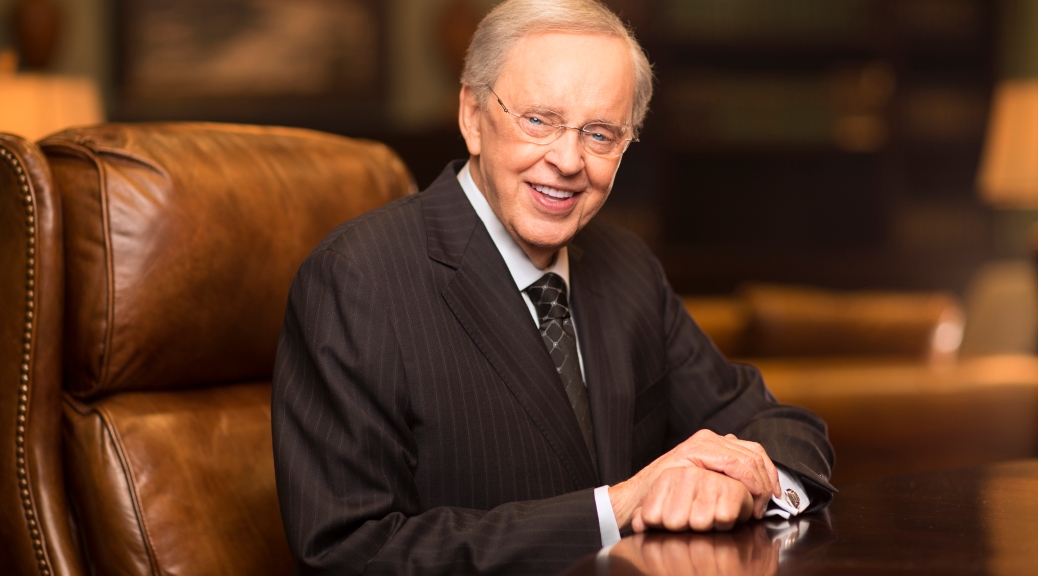
Charles Stanley – Choosing to Forgive


Ephesians 4:31-32

Isn’t it interesting that young children generally don’t hold grudges? They may cry and throw tantrums, but once their anger has been vented, they let it go. Adults, however, have a tendency to hang on to offenses. When people wrong us or our loved ones, we want them to pay for what they’ve done, to suffer as we have. It only seems fair to expect restitution of some kind, and unless that occurs, we withhold forgiveness.

As Christians, however, we are called to a different standard and way of thinking—one that’s consistent with God’s character. He is a merciful Father who wants His children to show mercy to others (Luke 6:36). His Son’s life on earth demonstrated this. As Jesus hung on the cross, He prayed for those who crucified Him, “Father, forgive them; for they do not know what they are doing” (Luke 23:34). God expects us to forgive as Jesus did, regardless of circumstances.

This command seems impossible to carry out until we start to grasp the enormity of what took place on the cross. Christ’s death made us recipients of a mercy so great it defies comprehension. The Savior took all our sin upon Himself and died in our place. He experienced the outpouring of God’s wrath so we might be forgiven and reconciled to the Father. Although we deserve condemnation, through Jesus Christ we have instead received God’s mercy.

Now as new creations in Christ who are indwelt by the Holy Spirit, we have His power to truly let go of the wrongs done to us and extend mercy to others, just as God has given mercy to us.

Bible in One Year: Ecclesiastes 1-4


http://www.intouch.org/

Our Daily Bread — I Just Can’t Do It


Read: 1 Corinthians 1:26–31 | Bible in a Year: Psalms 18–19; Acts 20:17–38

The law was our tutor to bring us to Christ, that we might be justified by faith. Galatians 3:24 nkjv

“I just can’t do it!” lamented the dejected student. On the page he could see only small print, difficult ideas, and an unforgiving deadline. He needed the help of his teacher.

We might experience similar despair when we read Jesus’s Sermon on the Mount. “Love your enemies” (Matthew 5:44). Anger is as bad as murder (v. 22). Lust equals adultery (v. 28). And if we dare think we can live up to these standards, we bump into this: “Be perfect, therefore, as your heavenly Father is perfect” (v. 48).

“The Sermon on the Mount produces despair,” says Oswald Chambers. But he saw this as good, because at “the point of despair we are willing to come to [Jesus] as paupers to receive from Him.”

In the counterintuitive way God so often works, those who know they can’t do it on their own are the ones who receive God’s grace. As the apostle Paul put it, “Not many of you were wise by human standards. . . . But God chose the foolish things of the world to shame the wise” (1 Corinthians 1:26–27).

In God’s wisdom, the Teacher is also our Savior. When we come to Him in faith, through His Spirit we enjoy His “righteousness, holiness and redemption” (v. 30), and the grace and power to live for Him. That’s why He could say, “Blessed are the poor in spirit, for theirs is the kingdom of heaven” (Matthew 5:3).

Thank You, Lord, for blessing those who are poor in spirit, who mourn, and who hunger and thirst for Your righteousness. You are our righteousness!

Read more from Oswald Chambers at utmost.org.

Through the Son we can enjoy life in God’s kingdom. 

By Tim Gustafson

INSIGHT

The Bible is filled with stories of how God used weak, unlikely, or flawed characters to bring about His purposes. Included in that lineup are Abraham, Isaac, Jacob, Moses, Rahab, Gideon, and Peter—just to name a few. God chose elderly Abraham and his barren wife to be “the father [and mother] of many nations” (Genesis 17:5). He used Isaac, who played favorites (25:27–28), and Jacob, a deceiver, to continue that line (25:29–34; 27:1–29). God called the reluctant Moses, a murderer on the run, to lead His people out of slavery in Egypt (Exodus 2:11–15; 14:1–31). God chose the prostitute Rahab to hide the spies in Jericho (Joshua 2) and to be included in the genealogy of Jesus (Matthew 1:5); He called Gideon, who cowered in fear, to serve as judge and rescue the Israelites from the Midianites (Judges 6–8); and He appointed Peter, an outspoken fisherman, to be His disciple (Matthew 16:22). God still uses flawed characters—you and me—to fulfill His purposes.

For more on how God can use you, check out christianuniversity.org/SF212.

Alyson Kieda


http://www.odb.org

Ravi Zacharias Ministry – In the Silence

“Silence is golden” flashes across the theater screen just before a film begins. In other words, stop talking, listen to the film, and allow others to listen as well! Yet, for many used to the relentless noise in our lives, silence is far from golden. Silence is disruptive, even threatening to us. When I lost my husband several years ago, I was struck by how loud the silence had become in my own life. Days would go by without my having spoken audibly to anyone, save my two dogs.

Yet, I was not without sound during this period of my life. I began to pay attention to all the sounds that made up my day to day existence. The din of traffic noise, airplanes, and nautical sounds from the harbor all made for a symphony of sound. Because I wasn’t speaking out loud to anyone, I was able to intentionally listen to a whole new world of natural sounds. I heard the wind in the trees, or the soft patter of my dogs’ feet as they walked across the hardwood floors. I listened for the distinctive sounds of a variety of birds as they went about foraging for food or calling for a mate. At the time, I didn’t realize how unique it was to be able to truly listen because I was by myself, nor would I have viewed it, as I now do, as a gift.

According to audio-ecologist, Gordon Hempton, it’s not easy to find silence in the modern world. “If a quiet place is one where you can listen for 15 minutes in daylight hours without hearing a human-created sound, there are no quiet places left in Europe. There are none east of the Mississippi River. And in the American West? Maybe 12.”(1) We live in a noisy world.

Continue reading Ravi Zacharias Ministry – In the Silence

Joyce Meyer – Equal


Here there is not Greek and Jew, circumcised and uncircumcised, barbarian, Scythian, slave, free; but Christ is all, and in all. — Colossians 3:11

Adapted from the resource Wake Up to the Word Devotional – by Joyce Meyer

Equal means “just; equitable; giving the same or similar rights or advantages.”

The world places labels and assigns varying values to almost everything, but in God’s eyes, we are all equal. He loves and values each of us equally. We are all one in Christ!

Don’t spend your time thinking over and over about your faults. And don’t compare yourself with other people, thinking that you should strive to be like them. Oscar Wilde said, “Be yourself; everyone else is already taken.”

I strongly suggest that you make peace with yourself, if you haven’t already done so, and learn to think about yourself the way God does. Remember, God loves you just as much as He does everyone else. We are all equal in His sight.

Prayer Starter: Father, thank You for loving me…and for making me a unique and special individual. Help me to receive Your love more and more each day. Help me to truly love myself and break free from comparing myself to others. In Jesus’ Name, Amen


http://www.joycemeyer.org

Campus Crusade for Christ; Bill Bright – Glory Will Be Ours


“Yet what we suffer now is nothing compared to the glory he will give us later” (Romans 8:18).

In Sydney, Australia, a taxi driver to whom I witnessed became very angry.

“I was in World War II,” he exploded, “and I saw thousands of people die. I don’t want to have anything to do with a God who allows war.”

“Don’t blame God for war and the slaughter of millions of people,” I explained. “War is the result of man’s sin. Man does what he does because of his selfishness and pride. God does not desire that man should destroy men. God is not in favor of war. But sickness, death, earthquakes, tornadoes, floods are all a part of God’s judgement because of man’s sin, because of man’s disobedience to His commands.

The problem of suffering is a mysterious one, but for the Christian there is a good, logical answer. All creation waits patiently and hopefully for that future day when God will resurrect His children. On that day, thorns and thistles, sin and death and decay – the things that overcome the world will disappear at God’s command.

The world around us then will share in the glorious freedom from sin which God’s children enjoy. Even the things of nature, animals and plants which now suffer deterioration and death, await the coming of the time of this great glory.

We Christians – though we have the Holy Spirit within us as a foretaste of future glory – also groan to be released from pain, heartache, sorrow and suffering. We too wait anxiously for that day when God will give us full rights as His children, including the new bodies He has promised us – bodies that will never suffer again, and that will never die.

Bible Reading:Romans 8:24-27

TODAY’S ACTION POINT: I will rejoice in the certainty that glory is ahead for me as a believer, and as a result I am willing to joyfully endure whatever suffering comes my way. I will also encourage others in their times of sorrow to consider God’s love and plan for them, and will help them to understand the scriptural reason for man’s suffering

http://www.cru.org

Max Lucado – Our Work Can Be Worship


Listen to Today’s Devotion

Many people dread their work.  If you’re one of them, try changing your attitude toward your work! God’s eyes fall on the work of our hands. One stay-at-home-mom keeps this sign over her sink:  “Divine tasks performed here, daily.”  Indeed, work can be worship.

Peter wrote, “You are a chosen people.  You are a kingdom of priests, a holy nation, God’s very own possession.  This is so you can show others the goodness of God.” (1 Peter 2:9). So, let every detail in your life—your words, actions, whatever—be done in the name of the Master, Jesus. (Colossians 3:17). You don’t drive to an office, you drive to a sanctuary. You don’t attend a school, you attend a temple.  You may not wear a clerical collar, but you could, because your work is God’s pulpit!

Read more Cure for the Common Life

For more inspirational messages please visit Max Lucado.

Home

Denison Forum – Trump–Putin press conference: “Disgraceful” or “Trump derangement syndrome”?

Like millions of others, I watched the press conference between US President Donald Trump and Russian President Vladimir Putin yesterday. Then I watched reactions in the press, and it was as if there were two different events.

Fox News reports that the president is facing “harsh bipartisan criticism back home” from lawmakers who claimed he “missed a chance to ‘stand up’ to the Russian president on election meddling.” Sen. John McCain, R–Ariz., was especially critical, calling the president’s statements “one of the most disgraceful performances by an American president in memory.”

By contrast, several Republican leaders were supportive of Mr. Trump’s meeting with Mr. Putin. For instance, Sen. Rand Paul, R–Ken., called critics of President Trump’s approach to Russia “mistaken” and said, “We should look for ways to make the dialogue better.” He described the president’s critics as victims of “Trump derangement syndrome.”

Our “post-truth” culture

Oxford Dictionaries selected “post-truth” as its international word of the year in 2016. The decision seems appropriate in our relativistic culture.

For example, Episcopal Church leaders decided last week to allow same-sex couples to marry in their home parish, even if their local bishop objects morally to gay marriage. This despite objections from some bishops that such a move would force Episcopalians “to accept social and cultural practices that have no Biblical basis in Christian worship.”

Continue reading Denison Forum – Trump–Putin press conference: “Disgraceful” or “Trump derangement syndrome”?

Charles Stanley – Let Christ Bear Your Burdens


Matthew 11:28-30

Jesus’ compassion is displayed repeatedly throughout the Gospel accounts, and in today’s passage, He shows loving concern by inviting us to come to Him for relief. Is there anything more needed in this world than the feeling of being set free from whatever is weighing us down?

Jesus invites us to come, take His yoke upon us, and learn from Him. At first glance, a yoke may sound like an additional burden, but to understand what Jesus means, we must look at these verses from their historical context. A yoke was a bar that fit over the neck and shoulders of two animals. When a heavy load had to be transported, two oxen were yoked together, thereby distributing the weight evenly between them.

What our Lord is describing is a lifelong process that encompasses coming to Him for salvation and learning to know Him—His perfect character, His priorities for life, and His plans for us and the world. Jesus is asking us to place ourselves under the yoke of His lordship. He promises that a life of submission will fit us well and provide relief.

Our Savior offers to be with us in every trial we face. Sometimes He removes the difficulties that weigh us down, while at other times, He lifts the burdensome feelings that accompany our trials. But there will be occasions when He walks with us through the hardships and suffering, giving us the grace and strength to endure. Even then we will discover that His yoke is easy and His burden is light because His compassion and mighty power carry us through.

Bible in One Year: Proverbs 29-31


http://www.intouch.org/

Our Daily Bread – No Co-signer required


Read: Hebrews 6:13–20 | Bible in a Year: Psalms 16–17; Acts 20:1–16

People swear by someone greater than themselves, and the oath confirms what is said. Hebrews 6:16

When a person without a long history of paying his or her bills on time wants to obtain a loan to purchase a home or car, lenders are often reluctant to take the financial risk. Without a track record, that person’s promise to repay what he borrows is insufficient for the bank. The would-be borrower usually resorts to finding someone who does have a history of making good on their debts, asking them to put their name on the loan too. The co-signer’s promise assures the lender the loan will be repaid.

When someone makes a promise to us—whether for financial, marital, or other reasons—we expect them to keep it. We want to know that God will keep His promises too. When He promised Abraham that He would bless him and give him “many descendants” (Hebrews 6:14; see Genesis 22:17), Abraham took God at His word. As the Creator of all that exists, there is no one greater than He; only God could guarantee His own promise.

Abraham had to wait for the birth of his son (Hebrews 6:15) (and never saw how innumerable his offspring would grow to be), but God proved faithful to His promise. When He promises to be with us always (13:5), to hold us securely (John 10:29), and to comfort us (2 Corinthians 1:3–4), we too can trust Him to be true to His word.

Lord, thank You for being so trustworthy. I need no other promises but Your word. Help me to trust You more and more each day.

God’s promises are sure.

By Kirsten Holmberg

INSIGHT

In Hebrews 6:19, the metaphor of an anchor is used to describe the believer’s secure hope. This metaphor was a common one in Greco-Roman literature and was used to describe a person’s security and hope based on their good character.

But the author of Hebrews does not describe the believer’s “anchor”—their hope (6:11–12)—as based on their own character. Instead, the author says our hope is found “behind the curtain” (v. 19)—alluding to the “holy of holies” in the temple. In the past, this was the primary place where God’s people could fully experience God’s presence. Only the high priest could enter, and only once a year.

But now Jesus, the One both fully God and fully human, is our priest, the One who gives access to God. Because He has conquered sin and death, our rock-solid hope is anchored in Him. Through Christ we experience the very presence and power of God (v. 20).

Monica Brands


http://www.odb.org

Ravi Zacharias Ministry – Revealing Mysteries

A favorite scene from the story of Jesus’s birth is of the far-seeing elderly Simeon reaching for the child in the young Mary’s arms, content now to die for having seen the Messiah with his own eyes. His words to Mary, more eerie than most mothers could graciously accept, always seemed a cryptic little note from a strange and saintly old man. Simeon walks up to Mary and says to the infant as much to the mother:

“This child is destined for the falling and rising of many in Israel, and to be a sign that will be opposed so that the inner thoughts of many will be revealed.”(1)

I have long tried to imagine how I might hear his words as a mother. I have tried to imagine what Mary might possibly have said in response to those words, her newborn’s fingers wrapped around her own. Surely, the elderly Simeon’s reaction must have taken her breath away.

So I had spent much time considering this exchange. But the prophetic words of the old man never struck me as the very pivotal introduction to the gospel writer’s story itself. Is Simeon the prophetic voice that initiates Luke’s overarching motif of suffering throughout his telling of the story of Christ?

Starting with Simeon, theologian Roy Harrisville draws out this side of Luke that surprised my reading of his Gospel and passion narrative—if only the surprise of seeing plainly something I’d never noticed.(2) Again and again Luke points out the necessity of Jesus’s suffering, long before Jesus is approaching the cross. Nonetheless, I was left with a plaguing question perhaps less for Harrisville than for God—or Jesus along the road to Emmaus: Why was it necessary that the Messiah should suffer these things and then enter into glory, as he tells the men as they walk toward Emmaus? Why was Christ’s suffering a matter of “divine necessity”? Why did he need to suffer?

Continue reading Ravi Zacharias Ministry – Revealing Mysteries

Joyce Meyer – God Will Give You Truth When You Ask for It


Anyone who does not love does not know God, because God is love. — 1 John 4:8

Adapted from the resource Trusting God Day by Day Devotional – by Joyce Meyer

I spent many years of my life as a very unhappy, dissatisfied person, and I wasted a lot of time thinking my unhappiness was someone or something else’s fault. Thoughts such as, If I just had more money, I would be happy, or If people did more for me, I would be happy, or If I did not have to work so hard, I would be happy, or If I felt better physically, I would be happy filled my mind. The list of reasons that I thought caused my unhappiness seemed endless, and no matter what I did to entertain myself, nothing worked for long.

As I grew in my personal relationship with God, I literally became desperate for peace, stability, true happiness, and joy. That kind of hunger for change usually requires facing some truth—maybe some unpleasant truth or things we don’t like to admit—about ourselves, and I have learned that if we really want truth, God will give it to us. As I began seeking God for the root cause of my unhappiness, He showed me that I was very selfish and self-centered. My focus was on what others could and should do for me, rather than what I could and should do for them. That was not easy for me to accept, but doing so was the beginning of a life-changing journey with God.

God helped me begin to see myself as a person who could give and help. I had to change my thinking from, What about me?, to What can I do for you? I would like to say this was an easy change to make, but the truth is that it was very difficult and took a lot longer than I like to admit.

Everything God does is for our good; all of His commands are intended to help us have the best lives we can possibly have. He commands us to love and be kind to others, which means taking the focus off of ourselves, silencing the voice that asks, “What about me?” and learning to follow Jesus’ example of being kind, generous, and loving toward others.

Prayer Starter: Father, please show me the root causes of any unhappiness in my life—show me truth. As I grow in You, help me to be less me-focused and more concerned with how I can bless others. In Jesus’ Name, Amen


http://www.joycemeyer.org

Campus Crusade for Christ; Bill Bright – No Hurt in Second Death


“Let everyone who can hear, listen to what the Spirit is saying to the churches; He who is victorious shall not be hurt by the Second Death” (Revelation 2:11).

I find great comfort in the promises of God’s word, and this is another that makes a positive assurance to use: we shall not be hurt by the Second Death.

But just what is meant by the term Second Death? It would seem to mean that the conqueror shall not have anything to fear in the future world. The punishment of hell is sometimes called death – not in the sense that the soul will cease to exist, but because death is the most fearful thing we know about, and there is a striking similarity in many respects between death and future punishment.

As death cuts us off from life, so the second death cuts one off from eternal life. Death puts an end to all our earthly hopes, and the second death to all hope forever. Death is accompanied by terrors and alarms, which are only faint emblems of the coming terror in the world of woe.

This promise of no harm for us in the second death really is all that is necessary to sustain us in our trials. Nothing else is needed to make the burdens of life tolerable but this assurance that the end of our earthly journey will bring us to the close of suffering. No power can harm us beyond the grave.

We have no promise that we shall not die, but we do have this glorious assurance that nothing beyond that will ever hurt us. Meanwhile, we are expected to listen – and to be faithful.

Bible Reading:John 8:21-25

TODAY’S ACTION POINT: Knowing that nothing beyond the grave will ever hurt me, I will make this present life count for Christ and His kingdom.


http://www.cru.org

Max Lucado – Work With Enthusiasm for the Lord


Listen to Today’s Devotion

What if everyone worked with Ephesians 6:7 in mind? “Work with enthusiasm, as though you were working for the Lord rather than for people.”  Suppose no one worked to satisfy self or please the bottom line but everyone worked to please God.  Many occupations would instantly cease– drug trafficking, thievery, prostitution, nightclub and casino management.

Certain behaviors would cease as well. If I’m repairing a car for God, I’m not going to overcharge his children. Imagine if everyone worked for the audience of One. Every nurse, thoughtful. Every officer, careful. Every teacher, hopeful. Every lawyer, skillful. Impossible? Well, not entirely. All we need is someone to start a worldwide revolution. Might as well be us!

Read more Cure for the Common Life

For more inspirational messages please visit Max Lucado.

Home

Denison Forum – Trump–Putin summit begins: How to navigate volatile times

When the World Cup began a month ago, Argentina was favored to defeat Brazil in the final. France was predicted to lose in the knockout stage; Croatia was not expected to get that far.

As half the world watched yesterday, France defeated Croatia to win the title.

Before Saturday morning, few people had heard of Angelique Kerber, while Serena Williams has been recognized as the greatest tennis player of all time. Then Kerber defeated Williams to win the Wimbledon championship.

This time last year, Novak Djokovic was out of tennis and dealing with an elbow injury that required surgery. Yesterday he won the men’s Wimbledon title in straight sets.

Now the world is watching as Donald Trump and Vladimir Putin prepare for their summit in Helsinki, Finland. According to Fox News, the two are expected to discuss Russia’s role in the 2016 presidential election, Putin’s forcible annexation of Crimea, sanctions imposed by the US in response to that annexation, the conflict in Syria, and nuclear arms control.

However, it is impossible to predict what will actually come from their meeting.

Facing an unpredictable future

Continue reading Denison Forum – Trump–Putin summit begins: How to navigate volatile times

Charles Stanley –The Solution for Anxiety


1 Peter 5:6-7

Do you sometimes feel as if you are carrying the weight of the world on your shoulders? Burdens come in all forms, but they have one thing in common—they weigh us down and wear us out. And the longer we carry them, the heavier they seem. Unless we deal with them properly, they can cloud our thinking, interfere with our work, and affect our family life.

The world’s answers for anxiety are temporary at best, but Jesus Christ offers the only permanent solution. He invites us to cast our worries and concerns on Him because He cares for us. He’s our faithful High Priest who sympathizes with our weaknesses and intercedes for us with His Father (Heb. 4:15; Heb. 7:25).

As the Son of Man, Jesus experienced firsthand the difficulties and burdens of earthly life. He knew how to live on meager financial resources without feeling anxious (Matt. 8:20) and how to trust His Father while under great emotional distress (Luke 22:42-44). He experienced betrayal by Judas Iscariot and rejection by His own people. And while Jesus never sinned, He faced temptations just as we do.

If you are struggling under the pressures of daily living, what is keeping you from giving your burden to Christ? Perhaps you’ve tried, but the heavy load of concern just seems to keep rolling back onto your shoulders. It takes humility to admit we can’t handle things ourselves, and it takes trust to allow God to work the situation out according to His will. But if we’ll surrender the burden to Him, the only thing we have to lose is our anxiety.

Bible in One Year: Proverbs 26-28


http://www.intouch.org/

Our Daily Bread — The Best Gift


Read: Luke 11:9–13 | Bible in a Year: Psalms 13–15; Acts 19:21–41

Seek and you will find. Luke 11:9

When I was packing up to go home to London, my mother approached me with a gift—one of her rings I had long admired. Surprised, I asked, “What’s this for?” She replied, “I think you should enjoy it now. Why wait until I die? It doesn’t fit me anyway.” With a smile I received her unexpected gift, an early inheritance that brings me joy.

My mom gave me a material gift, but Jesus promises that His Father will give the Holy Spirit to those who ask (Luke 11:13). If parents who are marred with sin can provide necessities (such as fish or eggs) for their children, how much more will our Father in heaven give to His children. Through the gift of the Holy Spirit (John 16:13), we can experience hope, love, joy, and peace even in times of trouble—and we can share these gifts with others.

Growing up, we may have had parents who were unable to love and care for us fully. Or we may have had mothers and fathers who were shining examples of sacrificial love. Or our experience may have been somewhere in between. Whatever we’ve known with our earthly parents, we can hold onto the promise that our heavenly Father loves us unceasingly. He gave His children the gift of the Holy Spirit.

Heavenly Father, I’m amazed at Your love for me. Help me to dwell in Your presence this day, sharing Your love with those I meet.

Our Father gives good gifts.

By Amy Boucher Pye

INSIGHT

While mentioned all throughout the New Testament, the mission and work of the Holy Spirit is a particular focus of two key biblical texts: John 14–16 and Romans 8. In John 14–16, we find Jesus’s last teaching time with His followers before going to the cross. There He explained the ministry of the Spirit to the disciples who were reeling from the news that Jesus was going away—and they could not follow. After the Master’s departure, the gift of the Spirit would be to them a helper (14:16), teacher (14:26), and guide (16:13). In a very different setting, Paul tells Christ-followers in Rome that the Holy Spirit has a comprehensive ministry in the life of God’s child. The Spirit empowers (Romans 8:5), leads (v. 14), assures (v. 16), and assists in our prayers (vv. 26–27). The gift of the Spirit is the amazing spiritual resource that God has given to us to enable us to live for Him.

For more on the work of the Spirit, check out Free in the Spirit at discoveryseries.org/q0307.

Bill Crowder


http://www.odb.org

Joyce Meyer – Having a Childlike Approach to Life

Whoever humbles himself like this child is the greatest in the kingdom of heaven. — Matthew 18:4

Adapted from the resource The Power of Being Thankful Devotional – by Joyce Meyer

One thing we all know about children is that they enjoy life. A child can literally enjoy anything. A child can turn work into a game so he is able to enjoy it.

I recall asking my son to sweep the patio when he was about 11 or 12 years old. I looked outside and saw him dancing with the broom to the music playing on the headset he was wearing. I thought, Amazing! He has turned sweeping into a game. If he has to do it, he is going to enjoy it. 

We should all have that attitude. We may not choose to dance with a broom, but we should choose an attitude of thanksgiving in everything we do and always enjoy all aspects of life.

Prayer Starter: When I am in a situation that doesn’t seem like a lot of fun naturally, help me, Father, to make the most of it. I thank You that I can enjoy every part of my life, knowing that the joy of the Lord is my strength. In Jesus’ Name, Amen.


http://www.joycemeyer.org

Campus Crusade for Christ; Bill Bright – The Lord Will Pay


“Remember, the Lord will pay you for each good thing you do, whether you are slave or free” (Ephesians 6:8).

When I proposed to Vonette I told her that I loved her dearly, and I wanted her to be my wife. I promised to do everything I could to make her happy and that she would always be the most important person in my life. But I further explained that my first allegiance was to the Lord, for I had already made that commitment to Him and could not and would not violate that promise to follow Him whatever the cost. She agreed, and we were married on those conditions.

My love for Vonette is far greater today because Jesus Christ is first in my life, and her love for me is far greater because He is first in her life. Our relationship is infinitely richer and more meaningful than it would have been had she been master of her life, and I the lord of my life, or if we had made each other first in our lives and the Lord Jesus Christ second.

The apostle Paul, writing under the inspiration of the Holy Spirit, is affirming the promise of our Lord recorded in Matthew 6:32-33, “Your heavenly Father already knows perfectly well what you need and He will give it to you if you give Him first place in your life and live as He wants you to.”

In the context of this verse in Ephesians, Paul is dealing with family relationships – authority within the family. If we can grasp the concept of God as our paymaster, it will make a vast difference in the way we respond to the authority of men.

Christ knows everything you endure. He gives you your full portion of all that He owns. He is really the one for whom you are working. Wherever you are working, you may have assignments and responsibilities which you do not enjoy. But if Christ is truly the one for whom you work, then you will undertake His assignments cheerfully.

If we choose to be rebellious, we face the danger of a reward from our paymaster that might not be at all to our liking. Let us be about our Father’s business – willingly, joyfully, enthusiastically.

Bible Reading:Ephesians 6:1-7

TODAY’S ACTION POINT: Though I may have a boss or leader who tells me what to do, and when to do it, I will always remember that my first allegiance is to the Lord Jesus Christ, and by putting Him first, even above my loved ones who surround me, I can serve others with greater joy, confidence and enthusiasm.


http://www.cru.org

Words of Hope – Daily Devotional – Think Before You Speak


Read: Mark 8:31-33

You are not setting your mind on the things of God, but on the things of man. (v. 33)

Lots of things come out of our mouths. It is estimated that the average person says about 16,000 words a day! That is a lot of talking! What strikes me is that so often we don’t think about what we say. So often we just blurt out words. Sometimes we wish we could have those words back as illustrated by the children’s sermon about trying to put the toothpaste back into the tube.

Peter is a prime example of speaking without thinking. In typical Peter fashion, he blurted out words that went totally against Jesus’ mission. Peter just didn’t understand. So, on the heels of commending Peter for his good confession that he was the Christ, Jesus had to explain what it meant for him to be the Christ. Jesus then spoke “plainly” (v. 32) about how he would have to “suffer many things and be rejected by the elders and the chief priests and the scribes and be killed, and after three days rise again” (v. 31).

Rather than listening and learning from the Lord, Peter rebuked him. In Matthew’s account of this incident, Peter exclaims, “Far be it from you, Lord! This shall never happen to you” (Matt. 16:22). But he was wrong. That is the difference between the things of God and the things of men. Our thoughts are not always God’s thoughts (Isa. 55:8).

—John Koedyker

Prayer: Lord, help us to have in mind the things of God when we speak. Amen


https://woh.org/