Tag Archives: Peace

Presidential Prayer Team; H.L.M. – “Fore” God


Jordan Spieth recently earned professional golf’s number one ranking this year with five wins totaling $23 million – not bad for a 22-year-old. But while other players may dine at fancy restaurants or frolic with ladies off camera, Spieth celebrates at Chick-Fil-A and poses with his 15-year-old autistic sister. More important, he projects a clean image of good sportsmanship and Christian conduct. Speith also makes it a priority to attend Bible study while on the Professional Golfers’ Association Tour.

Daniel resolved that he would not defile himself with the king‘s food, or with the wine that he drank.

Daniel 1:8

In the Bible, Daniel’s greatness was the result of his communication with the Lord and his quiet refusal to give up his convictions. Both his physical and spiritual diets were an important part of his relationship with God. While Daniel limited his food intake, he indulged in prayer.


Thank your Heavenly Father today for America’s leaders who prayerfully live out their convictions and trust Him for the results. Intercede for those who serve as role models in this nation to uphold Godly standards, and pray that they, like Daniel and Jordan, resolve to obey God despite daily temptation.

Recommended Reading: James 1:5-18


Night Light for Couples –Split Vision


“A wise man’s heart guides his mouth.” Proverbs 16:23

Isn’t it curious how in the midst of a nasty family argument we can shake our bad mood the instant the telephone rings or a neighbor knocks on the door? Have you ever been brought up short by a small voice questioning such a sudden turn to peaches and cream after twenty minutes of fire and brimstone? Sometimes we treat those we love the worst, and kids are quick to recognize this hypocrisy.

Mark Hatfield, a longtime senator from Oregon and the father of four, said his wife once stung him by saying, “I just wish you were as patient with your children as you are with your constituents.” He isn’t alone. We’re all guilty at times of what might be called “split vision”— treating acquaintances with forbearance while losing patience or even heaping contempt on those under our own roof. We assume the worst. We pounce on every shortcoming. We never miss an opportunity to harangue. In the process, we wound the people we care about most.

It’s time we cut one another a little slack at home. If we say our spouses, children, and parents are the most significant people in our lives, we can prove it by showing them the same kindnesses we would bestow on our most honored guests.

Just between us…

  • Are we as patient with each other at home as we are with guests and strangers?
  • Why do you think we can be so hard on each other?
  • How can we encourage each other to avoid this kind of “split vision”?

Father, open our eyes to see one another the way You do. Forgive us for the laziness and selfishness that so easily sour our family relationships. Help us guard our words and actions so that we may be pleasing in Your sight. Amen.

From Night Light For Couples, by Dr. James & Shirley Dobson

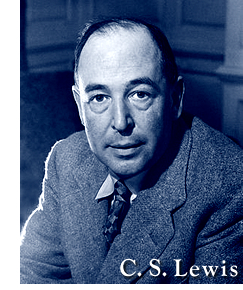
C.S. Lewis Daily – Today’s Reading


TO VERA GEBBERT, who had told Lewis of her pregnancy and of her having read Isaiah 66:9 from the Bible she kept open on her dining table: On not wishing to be pregnant.

23 March 1953

Your first story (about mistaking [your pregnancy] for seasickness) is one of the funniest I ever heard. In our country there are usually alterations of shape which would throw grave doubts on the sea-sick hypothesis!…but no doubt you manage things better in America. Any way, congratulations and encouragements. As to wishing it had not happened, one can’t help momentary wishes: guilt begins only when one embraces them. You can’t help their knocking at the door, but one mustn’t ask them in to lunch. And no doubt you have many feelings on the other side. I am sure you felt as I did when I heard my first bullet, ‘This is War: this is what Homer wrote about.’ For, all said and done, a woman who has never had a baby and a man who has never been either in a battle or a storm at sea, are, in a sense, rather outside—haven’t really ‘seen life’—haven’t served. We will indeed have you in our prayers.

Now as to your other story, about Isaiah 66? It doesn’t really matter whether the Bible was open at that page thru’ a miracle or through some (unobserved) natural cause. We think it matters because we tend to call the second alternative ‘chance.’ But when you come to think of it, there can be no such thing as chance from God’s point of view. Since He is omniscient His acts have no consequences which He has not foreseen and taken into account and intended. Suppose it was the draught from the window that blew your Bible open at Isaiah 66. Well, that current of air was linked up with the whole history of weather from the beginning of the world and you may be quite sure that the result it had for you at that moment (like all its other results) was intended and allowed for in the act of creation. ‘Not one sparrow,’ you know the rest [Matthew 10:29]. So of course the message was addressed to you. To suggest that your eye fell on it without this intention, is to suggest that you could take Him by surprise. Fiddle-de-dee! This is not Predestination: your will is perfectly free: but all physical events are adapted to fit in as God sees best with the free actions He knows we are going to do. There’s something about this in Screwtape.

Meanwhile, courage! Your moments of nervousness are not your real self, only medical phenomena. All blessings.

From The Collected Letters of C.S. Lewis, Volume III

Compiled in Yours, Jack

Charles Stanley – The Power of Prayer


2 Chronicles 20:1-15

From Scripture, we see the importance and effectiveness of praying with spiritual authority. Elijah, for example, boldly challenged the prophets of Baal because he knew the Lord would hear and answer. And King Jehoshaphat sought God for direction and strength—and called upon the nation to do the same.

Their examples teach what is required for prayer to be powerful:

Dependence on God. The petitions of both men showed deep reliance upon the Lord. Knowing that victory over Israel’s enemies was beyond their own abilities, they asked God to intervene.

A focus on His plan. Elijah did things God’s way against tremendous odds and at great personal risk (1 Kings 19:1-2). Jehoshaphat called for the nation to fast as he sought to discover the Lord’s plan. Because they looked to God for a strategy, they both had a clear goal that led them through the difficulties they faced.

Purity of motive. Both leaders had God-centered intentions and a goal of furthering His purposes. They weren’t trying to gain anything for themselves.

Confidence in God’s faithfulness. Neither man hesitated to ask publicly for divine help. Elijah told the plan to the 450 enemy prophets, and Jehoshaphat called upon all of Israel to join him in intercession.

If your prayers seem to be having little impact, ask yourself, Have I been relying upon my own strength to resolve matters? Is there a selfish basis for my request? Am I lacking confidence in God (James 1:5-7)? If so, turn to the Lord, confess, and seek to follow the example of Elijah and Jehoshaphat.

Bible in One Year: Acts 12-13


Our Daily Bread — The Mighty Finns


Read: Isaiah 37:30-38

Bible in a Year: Lamentations 3-5; Hebrews 10:19-39

Lord our God, deliver us from his hand, so that all the kingdoms of the earth may know that you, Lord, are the only God. —Isaiah 37:20

It began as a distant, foreboding hum, then grew into an ominous, earth-rattling din. Soon hundreds of tanks and thousands of enemy infantrymen swarmed into view of the badly outnumbered soldiers in Finland. Assessing the murderous wave, an anonymous Finn lent some perspective. Courageously, he wondered aloud about the enemy: “Where will we find room to bury them all?”

Some 2,600 years before Finland showed such pluck in that World War II battle, an anxious Judean citizenry reacted quite differently to their own overwhelming situation. The Assyrian armies had trapped the people of Jerusalem inside its walls, where they faced the hopeless prospect of a starvation-inducing siege. Hezekiah nearly panicked. But then he prayed, “Lord Almighty, the God of Israel, enthroned between the cherubim, you alone are God over all the kingdoms of the earth” (Isa. 37:16).

Through the prophet Isaiah, the Lord answered with strong words for Assyria’s King Sennacherib. “Against whom have you raised your voice and lifted your eyes in pride? Against the Holy One of Israel!” (v. 23). Then God comforted Jerusalem. “I will defend this city and save it, for my sake and for the sake of David my servant!” (v. 35). The Lord defeated Sennacherib and destroyed the Assyrian army (vv. 36-38).

No matter what dangers loom on your horizon today, the God of Hezekiah and Isaiah still reigns. He longs to hear from each of us and show Himself powerful. —Tim Gustafson

In what ways has God shown Himself strong in the past?

Share your story with others in the comments section below.

God is greater than our greatest problem.

INSIGHT: Isaiah 36-37 and a parallel account in 2 Kings 18-19 tell of the threat and siege of Jerusalem by the Assyrians during the reign of Hezekiah. Having exiled the northern kingdom of Israel 10 years earlier (2 Kings 18:9-12), Assyria now turned its attention to Judah (v. 13). Initially, Hezekiah tried to avert the invasion by agreeing to pay tribute (vv. 14-16), but Assyria was determined to attack Judah (v. 17; Isa. 36:1). Hezekiah turned to God for help (37:14-20), and Isaiah prophesied the defeat of the Assyrians and promised protection and deliverance for Judah (vv. 21-37). Sim Kay Tee

Alistair Begg – Guilty of Double-dealing


And I will cut off from this place…those who bow down and swear to the Lord and yet swear by Milcom. Zephaniah 1:4-5

These people thought they were safe because they were with both parties: they went with the followers of Jehovah and bowed at the same time to Milcom. But duplicity is abominable with God, and His soul hates hypocrisy.

The idolater who distinctly gives himself to his false god has one sin less than he who brings his polluted and detestable sacrifice into the temple of the Lord, while his heart is with the world and its sins.

To hold with the hare and run with the hounds is a coward’s policy. In the common matters of daily life, a double-minded man is despised, but in religion he is loathsome to the last degree.

The penalty pronounced in the verse before us is terrible, but it is well-deserved; for how should divine justice spare the sinner who knows the right, approves it, and professes to follow it, and all the while loves the evil and gives it dominion in his heart?

My soul, search yourself this morning and see whether you are guilty of double-dealing. You profess to be a follower of Jesus-do you truly love Him? Is your heart right with God? Are you a member of the family of old Father Honest, or are you a relative of Mr. Shady?

A name for being alive is of little value if I am actually dead in trespasses and sins. To have one foot on the land of truth and another on the sea of falsehood will involve a terrible fall and a total ruin. Christ will be all or nothing.

God fills the whole universe, and as a result there is no room for another god. If, then, He reigns in my heart, there will be no space for another reigning power.

Do I rest alone on Jesus crucified and live alone for Him? Is it my desire to do so? Is my heart set on doing so?

If yes, then blessed be the mighty grace that has led me to salvation; and if no, then, Lord, pardon my sad offense, and unite my heart to fear Your name.

The Family Bible Reading Plan

  • 1 Chronicles 3, 4
  • Hebrews 9

Devotional material is taken from “Morning and Evening,” written by C.H. Spurgeon, revised and updated by Alistair Begg.

Charles Spurgeon – The evil and its remedy


“The iniquity of the house of Israel and Judah is exceeding great.” Ezekiel 9:9“The blood of Jesus Christ his Son cleanseth us from all sin.” 1 John 1:7

Suggested Further Reading: Mark 3:22-30

There are some sins that show a diabolical extent of degraded ingenuity—some sins of which it is a shame to speak, or of which it is disgraceful to think. But note here: “The blood of Jesus Christ cleanseth from all sin.” There may be some sins of which a man cannot speak, but there is no sin which the blood of Christ cannot wash away. Blasphemy, however profane; lust, however bestial; covetousness, however far it may have gone into theft and plundering; breach of the commandments of God, however much of riot it may have run, all this may be pardoned and washed away through the blood of Jesus Christ. In all the long list of human sins, though that be long as time, there stands but one sin that is unpardonable, (Matthew 12:31) and that one no sinner has committed if he feels within himself a longing for mercy, for that sin once committed, the soul becomes hardened, dead, and seared, and never desires afterwards to find peace with God. I therefore declare to thee, O trembling sinner, that however great thine iniquity may be, whatever sin thou mayest have committed in all the list of guilt, however far thou mayest have exceeded all thy fellow-creatures, though thou mayest have distanced the Pauls and Magdalens and every one of the most heinous culprits in the black race of sin, yet the blood of Christ is able now to wash thy sin away. Mark! I speak not lightly of thy sin, it is exceedingly great; but I speak still more loftily of the blood of Christ. Great as thy sins are, the blood of Christ is greater still. Thy sins are like great mountains, but the blood of Christ is like Noah’s flood; twenty cubits upwards shall this blood prevail, and the top of the mountains of thy sin shall be covered.

For meditation: The price of life is far too costly for man to achieve his redemption (Psalm 49:7-9), but the Prince of life has achieved it

(Psalm 49:15) by his own death (Acts 3:15).

Sermon no. 223

14 November (1858)

John MacArthur – Building a Picture of Salvation


“By faith Noah, being warned by God about things not yet seen, in reverence prepared an ark for the salvation of his household” (Heb. 11:7).

The ark is a beautiful picture of salvation by grace through faith.

God called Noah to a gargantuan task. Conservative figures estimate that the ark was about 438 feet long, 73 feet wide, and 44 feet high. That makes it almost one-and-a-half times the length of a football field and more than four stories high. Its three decks totaled almost 96,000 square feet with a total volume of about 1.3 million cubic feet. Naval engineers concur that its shape and dimensions constitute an incredibly stable ship design.

But beyond the enormity of its size and precision of its measurements, the ark is a wonderful illustration of salvation through faith in Jesus Christ. For example, Noah was instructed to cover the ark inside and out with pitch (Gen. 3:14). The Hebrew word for pitch has the same root as the word for atonement. The pitch kept the waters of judgment from entering the ark just as Christ’s atoning blood keeps judgment from the repentant sinner.

The ark was large enough to hold two of each species of animals plus every person who turned to God for safety. Only eight persons chose to be saved on God’s terms, but had more come, surely He would have accommodated them. It is His desire that none perish, but that all come to repentance (2 Pet. 3:9). Those who perished in the Flood did so because they rejected God’s means of salvation.

Similarly, Jesus’s blood is sufficient to atone for every sinner and every sin since man’s fall in the Garden of Eden. No one who comes to Him will be cast out (John 6:37), yet so few avail themselves of His gracious provision (Matt. 7:14).

Noah was a man who “walked with God” (Gen. 6:9), yet he wasn’t without sin. That’s obvious from his drunken and immodest behavior after the Flood (9:20-21). But Noah, like every true believer, was justified by God’s grace, his faith being counted as righteousness. That has always been the basis of salvation (Gen. 15:6;Rom. 4:5).

Suggestions for Prayer

Thank God for His amazing grace, by which He saved you and continues to cleanse you from every sin.

For Further Study

Read Romans 4:1-8.

Joyce Meyer – Be a Good Example


Teach what is fitting and becoming to sound (wholesome) doctrine [the character and right living that identify true Christians].—Titus 2:1

Being a Christian is not so much a matter of doing as it is of being. When you’re willing to get out there and shine, you’ll eventually swallow up the darkness in your realm of influence.

God anoints normal, everyday people to live supernaturally in a frustrating world. He wants you to be a doer of the Word and not a hearer only. He wants you to stop just telling people Jesus loves them and start letting Jesus flow through you to meet their needs.

The best way to show the love of Christ is by example. People in the world want to see Christians who live what they preach and teach.

You can be a shining example of a victorious Christian, and that’s the best way to “teach what it fitting.”

From the book Ending Your Day Right by Joyce Meyer.

Campus Crusade for Christ; Bill Bright – Abundant, Supernatural Life


“Even so, consider yourself to be dead to sin but alive to God in Christ Jesus” (Romans 6:11, NAS).

My friend Randy had given up on the Christian life. He said, “I have tried, but failed so many times; nothing seems to work. God doesn’t hear my prayers, and I am tired of trying. I’ve read the Bible, prayed, memorized Scripture, and gone to church. But there is no joy and I don’t see any purpose in continuing a life of shame and hypocrisy, pretending I am something that I’m not.”

After listening to his account of his many failures and defeats, I began to explain the ministry of the Holy Spirit. He interrupted me with, “I know all about the Holy Spirit. I’ve read everything I can find, everything you and others have written – and nothing works for me.”

My thoughts turned to Romans, chapter 6. I asked him, “Randy, are you sure you’re a Christian?”

“Yes,” he answered. “I’m sure.”

“How do you know?”

“By faith,” he responded. “The Scripture promises, ‘For by grace are you saved through faith, that not of yourselves, it’s a gift of God, not of works, lest any man should boast.’ I know I’m saved.”

“Why,” I asked him, “do you trust God for your salvation, but do not believe in His other promises concerning your rights as a child of God?”

I began to read from Romans 6 and reminded Randy that every believer has available to him the mighty, supernatural power of the risen Christ. With the enabling of the Holy Spirit, the believer can live that supernatural life simply by claiming his rights through an act of his will. The same Holy Spirit who inspired Ephesians 2:8 and 9 inspired Romans 6, and, by faith, we can claim that sin no longer has control over us and that the mighty power of the resurrection is available as promised.

That day, God touched Randy’s life, his spiritual eyes were opened and he began, by faith, to live in accordance with his God-given heritage.

Bible Reading: Romans 6:12-18

TODAY’S ACTION POINT: Today, by faith, I will claim the truths of Romans 6. As an act of my will, I surrender the members of my body as instruments of righteousness unto God, to live that abundant, supernatural life, which is my heritage in Christ. Enabled by the Holy Spirit, I will encourage other believers to claim their kingdom rights, and non-believers to join this adventure with the risen Savior

Presidential Prayer Team; C.P. – The Rescuer


Andrew Jackson once said, “Finally, it is my most fervent prayer to that Almighty Being before whom I now stand, and who has kept us in His hands from the infancy of our Republic unto the present day, that He will so overrule all my intentions and actions and inspire the hearts of my fellow citizens that we may be preserved from dangers of all kinds and continue forever a united and happy people.” President Jackson did not trust in his own knowledge, but prayed for God to have His way.

You delivered me from strife with my people; you kept me as the head of the nations.

II Samuel 22:44

Like Andrew Jackson, King David knew where his help and success came from. The whole of II Samuel 22 shows David humbly praising God for deliverance from all of his enemies, including King Saul. Would that this nation’s leaders turn to God for protection and harmony among its people as David and Andrew Jackson did.

Thank God for the many people and leaders in America who still depend on the Lord. Pray that the ones who don’t will turn to Him as their refuge and support. The success of this nation still depends on God.

Recommended Reading: Proverbs 3:1-12

Greg Laurie –Saturday, Some Thanksgiving Thoughts for You


“Enter into His gates with thanksgiving, and into His courts with praise. Be thankful to Him, and bless His name.”—Psalm 100:4

I really like Thanksgiving, because there is not a lot of pressure to go out and buy things. You have to get food, of course. But apart from that, Thanksgiving is not about shopping. It is more about getting together with family and friends and doing what most people love to do, which is eat.

We can enjoy the food. We can enjoy our family. We can enjoy our fellowship. But the real purpose of Thanksgiving is to give thanks. It is a day to focus on giving thanks.

Of course, that is sometimes easier said than done. It is easy when things are going reasonably well, the bills are paid, we have a roof over our head and our health is good. But when times are hard, we don’t want to give thanks at all. But here is what the Bible says: “Give thanks to the Lord, for he is good, his love endures forever” (Psalm 106:1 NIV).

Notice this verse does not say to give thanks to the Lord when you feel good. Rather, it says, “Give thanks to the Lord, for He is good.”

Someone might say, “Well, what if my heart is not in it? Should I still give thanks?” Yes, you should. Many times when we offer our worship to God, it is just that: a sacrifice. Hebrews 13:15 says, “Through Jesus, therefore, let us continually offer to God a sacrifice of praise—the fruit of lips that openly profess his name.”

The Bible not only commands us to give thanks regardless of circumstances, but it also tells us to verbally give thanks to God. It would be like a husband never telling his wife that he loves her. She needs to hear it from him. And of course, a husband needs to hear “I love you” from his wife, too.

God knows all things. He knows whether we love him. However, He still asks for us to give Him verbal praise. Far too often, we fail to give God what is due him. As Psalm 29:2 reminds us, “Ascribe to the Lord the glory due his name; worship the Lord in the splendor of his holiness.”

Night Light for Couples –Believe the Best


“If one falls down, his friend can help him up.” Ecclesiastes 4:10

T he floor at Art and Naomi Hunt’s house was scattered with wrenches, screwdrivers, and a host of oddly shaped pieces of wood and metal. The task at hand? To construct a new gas barbecue. Art knew that Naomi was the more mechanically gifted partner in their marriage, but he was determined to put together this latest addition to their arsenal of modern cooking appliances. As Art struggled, his wife watched. Finally, progress stopped altogether, and Art reluctantly asked for Naomi’s advice. But instead of just giving her opinion, Naomi took the wrench from Art’s hand and began finishing the job herself.

Not surprisingly, Art felt rather emasculated, incompetent, and foolish. Now he faced a choice. He could believe either the best or the worst about Naomi’s actions. If he believed the worst, he would think, Man, she’s taking control. She doesn’t have any confidence in my abilities. Or, believing the best, he could tell himself, She’s going further than I asked her to, but she’s just trying to help me. That’s okay. Art chose the latter.

In a lifelong relationship, we regularly arrive at these emotional crossroads. We could go either way: give our partner the benefit of the doubt, or give ourselves the right to take offense. When we choose to see our spouse’s good intentions and base our reactions on them, we’re taking the road toward intimacy and away from unnecessary conflict. As Art Hunt understood, the real task at hand was building his relationship with Naomi, not putting together a new gadget.

Just between us…

  • How do we usually react when one of us steps in to help the other?
  • Do we see the best in each other’s motives? If not, why?
  • Do either of us give the other reason to question our motives?

Dear God, my spouse is Your gift to me, and I’m grateful. Help me to always believe, see, and act on the best. Grant me grace to mature in this area. Amen.

From Night Light For Couples, by Dr. James & Shirley Dobson

Charles Stanley – Praying With Authority


1 Kings 18:19-39

God has given His children the privilege of calling upon Him for all they need, and what’s more, He’s promised to respond. He has also included the right to petition Him on behalf of others. In fact, Scripture tells us that the prayers of a righteous person can accomplish much (James 5:16).

To be righteous in the Father’s sight, we must accept His offer of salvation. Before redemption, we were unrighteous people under His judgment (Eph. 2:1, 3). Through faith in Christ as our Savior, we are made new and declared holy in His sight. Then, after we are able to approach Him as righteous people, we must align our prayers with His will—that’s the only way for our petitions to be powerful and effective (1 John 5:14-15). And the key to aligning our requests with His plan is getting to know our heavenly Father’s character and priorities.

Elijah is a good example of someone who prayed with authority. The Lord sent him into battle against the evil king Ahab and the 450 prophets of Baal. This was a spiritual conflict to prove who was the real God—Baal or the Lord of Israel. Elijah’s weapons were his knowledge of the Father’s plan and the authority he had in prayer as a prophet of God. His request—that Jehovah would make Himself known, voiced publicly before his opponents, matched the Lord’s will (Ex. 7:5; 1 Kings 18:37). And when God responded to Elijah’s prayer, the people declared, “The Lord, He is God” (1 Kings 18:39).

Are you a child of God? If so, you can pray with spiritual might by making sure your requests are in agreement with His will.

Bible in One Year: Acts 10-11

Our Daily Bread — The Big Stink


Read: Genesis 3:6-13,22-24

Bible in a Year: Lamentations 1-2; Hebrews 10:1-18

God knows that when you eat from it your eyes will be opened, and you will be like God, knowing good and evil. —Genesis 3:5

In August 2013, large crowds gathered at the Phipps Conservatory in Pittsburgh, Pennsylvania, to witness the blooming of the tropical plant known as the corpse flower. Since the flower is native to Indonesia, and may flower only once every several years, its blooming is a spectacle. Once open, the huge spiky, beautiful, red bloom smells like rotten meat. Because of its putrid fragrance, the flower attracts flies and beetles that are looking for rotting meat. But there is no nectar.

Like the corpse flower, sin holds out promises but in the end offers no rewards. Adam and Eve found this out the hard way. Eden was beautiful until they ruined it by doing the one thing God urged them not to do. Tempted to doubt God’s goodness, they ignored their Creator’s loving warning and soon lost their innocence. The God-given beauty of the tree of the knowledge of good and evil became like a corpse flower to them. The reward for their disobedience was alienation, pain, emptiness, toil, and death.

Sin looks inviting and may feel good, but it doesn’t compare with the wonder, beauty, and fragrance of trusting and obeying God, who has made us to share His life and joy. —Marvin Williams

What temptations are you facing today? Remember that God promises to help you fight against temptation. Ask Him to help you remember to rely on Him.

God’s commands can overpower Satan’s suggestions.

INSIGHT: Today’s passage records the entrance of sin into an innocent world. But it also records God’s grace in response to sin. Rather than let Adam and Eve eat from the tree of life and live forever in their sin, God graciously blocked the way to that tree (vv. 22-23). J.R. Hudberg

Ravi Zacharias Ministry –    Gaining Consciousness


The line between real and imagined is sometimes a little blurry. At least this is the conclusion of one report on the business of cyberspace, where thousands of peoplehave imaginary lives and quite a few are actually making a living at it. The creators of several popular online role-playing games completed a year-long study of the very real transactions that are taking place in their imaginary worlds. The results portray a flourishing economy that is rapidly grabbing advertisers’ attention. The sellers are role players who have taken the time to find marketable goods in their virtual worlds—and they are clearly putting in the time. In one popular game, a gnome is sold with a basic skill set for $214; in another, a virtual cherry dining set for a virtual home runs about 250 actual dollars. Between June 2005 and June 2006, 9,042 role players spent $1.87 million dollars on virtual goods from swords to special powers. According to analyst estimates for 2015, U.S. virtual goods revenue alone will top $1 billion and could even rake in over $2 billion.

It is entertainment I don’t claim to fully understand. But it is fascinating (and maybe worrisome) to see how seamless the real and the virtual can become. Of course, this is a reality that runs through far more than worlds of online gaming. The imagination is always at work in the way we see the world itself; this is both instinctive and instructive. Moreover, to note that something is imaginary is not to dismiss it as void of truth or reality. Fans of Bill Watterson’s Calvin and Hobbes cartoon remember significant lines of truth coming from a stuffed tiger. Yet, there are also times that what is not real can become so intertwined with what is real that we scarcely notice a difference. That is, until something real reminds us otherwise—like a jolt of consciousness, an outsider’s perspective, or a credit card receipt.

The Hebrew prophet Jonah was a prophet by profession. He knew the liturgy and worship of the people of Israel by heart. So it is not unreasonable that as his life was ebbing away in the depths of the sea, Jonah would cry out with the words of a psalm he had heard countless times before. And yet, the words no doubt had a depth of meaning for him unlike anything he had known before. As he was losing consciousness—literally in Hebrew, “in the feebleness of his person,”—Jonah not only remembered God by name, but in some ways was seeing God for the first time. Like one awakened to enmeshed worlds both real and unreal, Jonah quickly clung to what was real.

Up until this point Jonah’s behavior suggests a mentality that God was not entirely omnipresent, but present only in Israel, in the temple, and in the places of his own interest. As Jonah ran to Tarshish to avoid the call of God to go to Nineveh, he ran believing there was a place he could go where God could not find him. But as he sunk further into the depths of the sea, the prophet realized that he was mercifully mistaken. His language evokes a play on words—As I was losing consciousness, I remembered the LORD. Or else, it was a sudden recognition of the Really Real in the imaginary world he had occupied. Losing consciousness, Jonah was actually gaining it.

Perhaps not wanting to consider the discomfort it would take to uproot our own embedded fallacies, tellers of Jonah’s story often minimize the distress that broke his silence with God. But the popular notion that Jonah went straight from the side of the ship and into the mouth of the fish is not supported by either the narrative as a whole or Jonah’s cry for help. H. L. Ellison suggests that “[Jonah] was half drowned before he was swallowed. If he was still conscious, sheer dread would have caused him to faint—notice that there is no mention of the fish in his prayer. He can hardly have known what caused the change from wet darkness to an even greater dry darkness. When he did regain consciousness, it would have taken some time to realize that the all-enveloping darkness was not that of Sheol but of a mysterious safety.”(1)

In that mysterious safety, Jonah shows us the strange world that unwound his imaginary one, and in it, the God who hears in both. Though the deep surrounded him and reeds were bound to his head, Jonah was heard—and his awareness of this was an essential turning point in his story. In prayer and darkness, Jonah admitted that the role of salvation cannot be in his hands. If only momentarily, the drowning prophet clung to a truth more hopeful than escapism and far more able than idols: “Salvation belongs to the LORD.”

It is hard to believe that Jonah could have considered being swallowed alive a rescue, and yet it is precisely Jonah’s considerations from which he needed to be rescued. In truth, at times, the deliverance we need most is that of deliverance from ourselves. Though our thoughts toward God be wound in self and seaweed, and the depths of our imagined autonomy threaten to drown us, rescue is indeed a valid hope. What if God is far more real than we often imagine?

Jill Carattini is managing editor of A Slice of Infinity at Ravi Zacharias International Ministries in Atlanta, Georgia.

(1) H.L. Ellison, “Jonah,” The Expositors Bible Commentary, ed. Frank E. Gaebelein (Grand Rapids: Zondervan, 1985), 374.


Alistair Begg – Trusting For Fruit


The branch cannot bear fruit by itself.

John 15:4

How did you begin to bear fruit? It was when you came to Jesus and cast yourself on His great atonement and rested on His finished righteousness. What fruit you had then!

Do you remember those early days? Then the vine flourished, the tender grape appeared, the pomegranates budded, and the beds of spices produced their fragrance. Have you declined since then?

If you have, we charge you to remember that time of love, and repent, and do your first works. Commit yourself fully to the activities that you have proved to draw you closest to Christ, because it is from Him that all your fruits proceed.

Any holy activity that will bring you to Him will help you bear fruit. The sun is, no doubt, a great worker in fruit-creating among the trees of the orchard: And Jesus is even more so among the trees of His garden of grace.

When have you been the most fruitless? Has it not been when you have lived farthest from the Lord Jesus Christ, when you have slackened in prayer, when you have departed from the simplicity of your faith, when your graces have engrossed your attention instead of your Lord, when you have said, “My mountain stands firm, I will never be moved” and you have forgotten where your strength lies-has not it been then that your fruit has ceased?

Some of us have been taught that we have nothing apart from Christ by terrible humiliation of heart before the Lord; and when we have seen the utter emptiness and death of all earthly power, we have cried in anguish, “From Him all my fruit must be found, for no fruit can ever come from me.”

We are taught by past experience that the more simply we depend upon the grace of God in Christ and wait upon the Holy Spirit, the more we will bring forth fruit unto God. We must trust Jesus for fruit as well as for life.

The Family Bible Reading Plan

  • 1 Chronicles 1, 2
  • Hebrews 8

Devotional material is taken from “Morning and Evening,” written by C.H. Spurgeon, revised and updated by Alistair Begg.

Charles Spurgeon – The sweet uses of adversity


“Shew me wherefore thou contendest with me.” Job 10:2

Suggested Further Reading: Psalm 119:65-72

There was a fair ship which belonged to the great Master of the seas; it was about to sail from the port of grace to the haven of glory. Before it left the shore the great Master said, “Mariners, be brave! Captain, be bold! For not a hair of your head shall perish; I will bring you safely to your desired haven. The angel of the winds is commissioned to take care of you on your way.” The ship sailed confidently with its streamers flying in the air. It floated along at a swift rate with a fair wind for many days. But suddenly there came a hurricane which drove them from the course, strained their mast until it bent as if it could snap in two. The sail was torn to ribbons; the sailors were alarmed and the captain himself trembled. They had lost their course. They were off the right track, and they mourned exceedingly. When the day dawned the waves were quiet, and the angel of the winds appeared; and they spoke unto him, and said, “Oh angel, were you not asked to take charge of us, and preserve us on our journey?” He answered, “It was even so, and I have done it. You were steering on confidently, and you knew not that a little ahead of your vessel lay a quicksand upon which she would be wrecked and swallowed up quick. I saw that there was no way for your escape but to drive you from your course. See, I have done as it was commanded me: go on your way.” This is a parable of our Lord’s dealings with us. He often drives us from our smooth course which we thought was the right track to heaven. But there is a secret reason for it; there is a quicksand ahead that is not marked in the chart. We know nothing about it; but God sees it, and he will not permit this fair vessel, which he has himself insured, to be stranded anywhere; he will bring it safely to its desired haven.

For meditation: If an ass can inconvenience a false prophet to deliver him from imminent danger (Numbers 22:21-34), God is able to obstruct his people in one way or another when they are heading for trouble. We can only see the benefits later (Hebrews 12:11).

Sermon no. 283

13 November (1859)

John MacArthur – Obeying Faith


“By faith Noah, being warned by God about things not yet seen, in reverence prepared an ark for the salvation of his household, by which he condemned the world, and became an heir of the righteousness which is according to faith” (Heb. 11:7).

True faith works.

When James said, “Faith without works is dead” (James 2:26), he stated a principle that’s consistent throughout Scripture: True faith always produces righteous works.

The people described in Hebrews 11 made their genuine faith known in the things they did. The same applies to us today. Paul said, “The grace of God has appeared, bringing salvation to all men, instructing us to deny ungodliness and worldly desires and to live sensibly, righteously and godly in the present age” (Titus 2:11-12).

Perhaps better than anyone else in history, Noah illustrates the obedience of faith. Scripture characterizes him as “a righteous man, blameless in his time . . . [who] walked with God” (Gen. 6:9).

I remember a sportscaster interviewing a professional football player and asking him what he thought of his team’s chances of winning the Super Bowl. The player replied, “We believe that if we just do what the coach says, we’ll win.” The team had absolute confidence in their coach, but they realized they had to do their part as well.

That illustrates the quality of faith Noah had in God, whom he trusted absolutely as he pursued a task that seemed utterly foolish and useless from a human perspective. Imagine instantly surrendering all your time and effort to devote 120 years to building something you’d never seen (a vessel the size of a ocean liner or battleship) to protect you from something you’d never experienced (rain and flooding). Yet Noah did it without question.

Noah’s faith is unique in the sheer magnitude and time span of the task God gave him to do. He didn’t argue with God or deviate from his assignment. Is that true of you? Are you pursuing your ministry as faithfully and persistently as Noah did his? Is your faith a faith that works?

Suggestions for Prayer

Thank God for the ministry He’s called you to. If you sense there’s more you could be doing, ask Him for guidance. Pray for added faithfulness and tenacity in serving Him.

For Further Study

Read the account of Noah in Genesis 6:1—9:17.

Joyce Meyer – Don’t Lose Focus


For the weapons of our warfare are not physical [weapons of flesh and blood], but they are mighty before God for the overthrow and destruction of strongholds.—2 Corinthians 10:4

Sometimes we lose our focus. We can be walking in love all day, going along fine, until someone comes along and offends us. As soon as we forget our focus of love, we stop making progress and come to a standstill—aggravated, upset, and offended.

Understand that the mind is a battlefield. If you don’t stop Satan when he gets into your thoughts, you are not going to stop him from getting into your life. Stay focused. Ask God to help you remain full of love, no matter what comes your way today.

From the book Starting Your Day Right by Joyce Meyer.