Tag Archives: Peace

Campus Crusade for Christ; Bill Bright – Claiming the Promise


“But when I am afraid, I will put my confidence in You. Yes, I will trust the promises of God. And since I am trusting Him, what can mere man do to me?” (Psalm 56:3,4).

Raymond and Martha were active church members and gave generously to the needs of the fellowship. But their real security, as Raymond shared, was largely in monetary holdings. After working hard for many years to build a financial empire, they had nothing to worry about. They were on “Easy Street” and could do anything for the rest of their lives, confident of being able to pass on a sizable fortune to their children and grandchildren.

But at this point, Raymond turned over the reins of his business to a trusted employee who, through mismanagement and embezzlement, coupled with a severe economic depression, was able to destroy in approximately two years what had taken Raymond more than thirty years to accumulate.

Devastated and fearful, Raymond and Martha turned to God and His Word. As they claimed God’s promises, the Savior whom they had professed to know but had not really known, became a reality in their lives. They became joyful, radiant and victorious. Though they had lost almost everything materially, they had, in the process, gained all that was really important. Now their trust was in the Lord who filled their lives with His love and grace. They passed on God’s blessing to others, including me.

Bible Reading: Psalm 25:4-10

TODAY’S ACTION POINT: I will not wait until personal tragedy, physical illness, financial reverses, heartache or sorrow cross my path, but will place my confidence in the Lord and in his Word and begin now to draw upon His supernatural resources to live a full and meaningful life for His glory

Presidential Prayer Team; H.L.M. – True Foundation


Walt Disney personally recruited the late Dean Jones in 1965 for a role in the movie That Darn Cat. The rising young star appeared to have everything the world could offer, but he was depressed and suicidal. “It was a fast track life,” said Jones. “I was making $50,000 a week. I had the Ferraris and beautiful women and all the rest of what I thought would satisfy my life. And it was empty. Really empty.”

Everyone who comes to me and hears my words and does them, I will show you what he is like.

Luke 6:47

But the still small voice of the Lord told him his current lifestyle “will never satisfy you.” After a drunk-driving accident nearly took his life, Jones cried out to Him: “I’ve done everything in this world I thought would make me happy and it doesn’t work. I have everything and I have nothing.” Jones said “yes” to God and true peace flooded his heart.

The Bible is the only true foundation for life. Thank your Heavenly Father for those godly role models in Hollywood past and present who seek Him daily. Pray also that your national and local leaders will base their lives and decisions on the truth of God’s Word.

Recommended Reading: James 1:19-27

Night Light for Couples – “Are You Jesus?”


“Command them to do good, to be rich in good deeds, and to be generous and willing to share.” 1 Timothy 6:18

After their meeting ran late, five out‐of‐town salesmen hurried as fast as they could to catch their train. As they raced through the terminal, one inadvertently kicked over a slender table on which rested a basket of apples. It belonged to a ten‐year‐old blind boy who was selling apples to pay for his books and clothes for school. The salesmen clambered aboard the train, but one felt compassion for the boy. He asked his friends to call his wife and tell her he would be late getting home.

Then he jumped off the train and returned to where the boy was standing. As the salesman gathered up the apples scattered across the floor, he noticed that several were bruised or split. Reaching into his pocket, he said to the boy, “Here’s twenty dollars for the apples we damaged. I hope we didn’t spoil your day. God bless you.” As he walked away, the boy called after him,

“Are you Jesus?”

We are most like Christ when we show compassion and generosity to others. Jesus said, “Whatever you did for one of the least of these brothers of mine, you did for me” (Matthew 25:40). We reflect His character whether we’re helping someone less fortunate or giving our mate a back rub at the end of the day.

Just between us…

  • How do our interactions with others reflect the character of Jesus?
  • When was the last time we stopped to help another person in need?
  • How do you feel when you show compassion to someone else?

Lord, we ask that Your extravagant love would flow through us each day to touch those around us. Show us how to serve, to help, and to give without expecting anything in return. Amen.

From Night Light For Couples, by Dr. James & Shirley Dobson

Our Daily Bread — Mention the Name


Read: Acts 4:5-20

Bible in a Year: Jeremiah 40-42; Hebrews 4

I am in the Father, and . . . the Father is in me. —John 14:10

A church group invited a speaker to address their meeting. “Talk about God,” the group leader told him, “but leave out Jesus.”

“Why?” the man asked, taken aback.

“Well,” the leader explained, “some of our prominent members feel uncomfortable with Jesus. Just use God and we’ll be fine.”

Accepting such instructions, however, was a problem for the speaker who said later, “Without Jesus, I have no message.”

Something similar was asked of followers of Jesus in the days of the early church. Local religious leaders conferred together to warn the disciples not to speak about Jesus (Acts 4:17). But the disciples knew better. “We cannot help speaking about what we have seen and heard,” they said (v. 20).

To claim to believe in God and not in His Son Jesus Christ is a contradiction in terms. In John 10:30, Jesus clearly describes the unique relationship between Himself and God: “I and the Father are one”—thus establishing His deity. That is why He could say, “You believe in God; believe also in me” (John 14:1). Paul knew that Jesus is the very nature of God and equal with God (Phil. 2:6).

We need not shy away from the name Jesus, for “salvation is found in no one else, for there is no other name under heaven given to mankind by which we must be saved” (Acts 4:12). —Lawrence Darmani

Jesus, You are God. Thank You for showing Yourself to us in the Bible and in our lives. You have done so much for us. Help us to share with others what we know of You and have experienced of You.

The name of Jesus is at the heart of our faith and our hope.


Alistair Begg – I Have Engraved You


Behold, I have engraved you on the palms of my hands. Isaiah 49:16

No doubt part of the wonder that is concentrated in the word “Behold” is on account of the contrast with the unbelieving lament of the preceding sentence. Zion said, “The Lord has forsaken me; my Lord has forgotten me.” How amazed the divine mind seems to be at this wicked unbelief!

What can be more astounding than the unfounded doubts and fears of God’s favored people? The Lord’s loving word of rebuke should make us blush.

He cries, “How can I have forgotten you, when I have engraved you on the palms of My hands? How dare you doubt My constant remembrance when the memorial is carved upon My own flesh?” O unbelief, what a strange marvel you are! We do not know what to wonder at most-the faithfulness of God or the unbelief of His people. He keeps His promise a thousand times, and yet the next trial makes us doubt Him.

He never fails; He is never a dry well; He is never as a setting sun, a passing meteor, or a melting vapor; and yet we are as continually troubled with anxieties, molested with suspicions, and disturbed with fears as if our God were a mirage of the desert.

“Behold” is a word intended to stir our admiration. Here, indeed, we have a theme for marveling. Heaven and earth may well be astonished that rebels should obtain such a closeness to the heart of infinite love as to be written on the palms of His hands. “I have engraved you.” It does not say, “your name.”

The name is there, but that is not all: “I have engraved you.” Consider the depth of this! “I have engraved your person, your image, your circumstances, your sins, your temptations, your weaknesses, your wants, your works; I have engraved you, everything about you, all that concerns you; I have put all of this together here.”

Will you ever say again that your God has forsaken you when He has engraved you on His own palms?

The Family Bible Reading Plan

  • 2 Kings 20
  • Hebrews 2

Devotional material is taken from “Morning and Evening,” written by C.H. Spurgeon, revised and updated by Alistair Begg.

Charles Spurgeon – The Christian’s heaviness and rejoicing


“Wherein ye greatly rejoice, though now for a season, if need be, ye are in heaviness through manifold temptations.” 1 Peter 1:6

Suggested Further Reading: Philippians 2:25-30

“Though now for a season, if need be, ye are in heaviness.” It does not say, “Though now for a season you are suffering pain, though now for a season you are poor”; but “you are in heaviness;” your spirits are taken away from you; you are made to weep; you cannot bear the pain; you are brought to the very dust of death, and wish that you might die. Your faith itself seems as if it would fail you. That is the thing for which there is a ‘need be’. That is what my text declares, that there is an absolute ‘need be’ that sometimes the Christian should not endure his sufferings with a gallant and a joyous heart; there is a ‘need be’ that sometimes his spirits should sink within him, and that he should become even as a little child, smitten beneath the hand of God. Ah! Beloved, we sometimes talk about the rod, but it is one thing to see the rod, and it is another thing to feel it; and many a time have we said within ourselves, “If I did not feel so low spirited as I now do, I should not mind this affliction;” and what is that but saying, “If I did not feel the rod I should not mind it?” It is that breaking down of the spirit, that pulling down of the strong man, that is the very festering of the soreness of God’s scourging—the blueness of the wound, whereby the soul is made better.

For meditation: Whenever you are overwhelmed by such distress, remember that your Saviour also experienced it on your behalf (Mark 14:33-34). He knows what it is like and can help you (Hebrews 2:18; 4:15-16).

Sermon no. 222

7 November (1858)

John MacArthur – Worshiping God His Way


“By faith Abel offered to God a better sacrifice than Cain” (Heb 11:4).

True worship requires coming to God on His terms.

At the heart of every false religion is the notion that man can come to God by any means he chooses—by meditating, doing good deeds, and so on. But Scripture says, “There is no other name under heaven that has been given among men, by which we must be saved” (Acts 4:12). That name is Jesus Christ, and we come to Him by confessing and repenting of our sin, trusting in His atoning death on the cross, and affirming His bodily resurrection from the grave (cf. Rom. 10:9-10). There is no other way to God.

Centuries before Christ’s death, God provided a means of worship and sacrifice. Genesis 4:3-5 says, “It came about in the course of time that Cain brought an offering to the Lord of the fruit of the ground. And Abel, on his part also brought of the firstlings of his flock and of their fat portions. And the Lord had regard for Abel and for his offering; but for Cain and for his offering He had no regard.”

Apparently God had designated a special time for sacrificing because “in the course of time” (v. 3) literally means, “at the end of days”—at the end of a certain period of time. Additionally, He initiated a particular pattern for worship and sacrifices. Otherwise Cain and Abel would have known nothing about how it was to be done.

God required a blood offering for sin. Abel came in faith, acknowledged his sin, and made the appropriate sacrifice. His offering was better than Cain’s because Cain neglected the prescribed sacrifice, thereby demonstrating his unwillingness to submit to God and deal with his sin.

There was nothing intrinsically wrong with Cain’s offering. Grain, fruit, or vegetable offerings were included in the Mosaic covenant. But the sin offering had to come first. Like so many today, Cain wrongly assumed he could approach God on his own terms. In doing so he became the father of all false religions, and his name became synonymous with rebellion and apostasy (cf. Jude 11).

Suggestions for Prayer

  • Thank God for graciously providing salvation through faith in Jesus Christ.
  • Be careful never to approach Him irreverently or presumptuously.

For Further Study

Read Jude 11. How did Jude describe the false teachers of his day?

Joyce Meyer – You Are Responsible for Your Own Life


Be doers of the Word, and not hearers only. —James 1:22 KJV

One of the biggest problems in society today is that people don’t want to take responsibility for their lives. They want quick fixes. Society has trained them to believe that if they have problems, somebody else is responsible. Their parents are responsible. Their spouses are responsible. Their schools or employers are responsible. The company that made the cigarettes or vehicle or junk food is responsible.

I’m not saying you are responsible for the current state of your life. Lots of uncontrollable events occur in our lives. Sometimes we do get very bad messages in childhood. Sometimes we have bad people in our lives who hurt us. The situation you find yourself in may or may not be your fault. But it is your fault if you take it lying down! You do not have to stay in that bad situation. You get to make a choice. And that choice is 100 percent yours.

No matter how you got to where you find yourself today, don’t let it be an excuse to stay there. I had many excuses and reasons for my poor health, bad attitude, and unbalanced life. As long as I offered excuses, I never made progress.

The time has come to be very honest with yourself and with God. When you have a moment of privacy, take a deep breath, clear your head, and repeat this phrase: “I am responsible for my own life. No one can take charge of it but me. If I am unhappy or unhealthy, I know I have the power to change that. I have all the help and knowledge I need; and with God’s hand today, I start becoming the person of excellence I have always known I could be.”

From the book New Day, New You by Joyce Meyer.


Campus Crusade for Christ; Bill Bright – No Other Savior


“There is salvation in no one else! Under all heaven there is no other name for men to call upon to save them” (Acts 4:12).

As a young sceptic, I had difficulty believing in the resurrection, for I could not believe in the supernatural. But as I became aware of the uniqueness of Jesus and of the different quality of life that was His, I was forced to reconsider the biblical claim to His resurrection.

Since it is a matter of historical fact that the tomb in which His dead body was placed was empty three days later, I set out to discover if the tomb could have been empty on any other basis than the biblical claim that He had been raised from the dead. In my research, I learned that there were three different theories explaining the empty tomb.

First, it was proposed that He was not really dead but had fainted from the loss of blood on the cross, and that He recovered in the cool of the tomb (this notion is today expounded by certain skeptics under the name of the “swoon theory”). Second, it was conceivable that Jesus’ body was stolen by His enemies; or third, that it was stolen by the disciples.

Experience and logic have forced me to discount all three of these theories as impossibilities. First, Jesus could never have moved the stone or escaped from the guards in His weakened condition. Second, Jesus’ enemies had no reason to steal His body since they did not want to give credence to a belief in His resurrection. Even if they had stolen the body, they could simply have produced it to discount the resurrection.

Third, the disciples who deserted Jesus at His trial and crucifixion were the same men who, having seen Him after His resurrection, spent the rest of their lives telling everyone who would listen, even at the cost of their own lives, that Jesus was alive. Ask yourself this question, “Would the disciples be willing to die as martyrs propagating a lie?”

Christianity alone has a living Savior; in Him alone is salvation.

Bible Reading: Romans 10:9-13

TODAY’S ACTION POINT: Several times today, as the Holy Spirit prompts me, I will remember to thank God for the gift of His Son as my personal Savior and will tell someone else that Jesus is alive and wants to be his Savior, too

Presidential Prayer Team; C.P. – Grace Gratefulness


November is a month Americans are reminded to be thankful for the many blessings God has given this nation. People list family, friends, homes, health and material possessions as things to be grateful for. In today’s verse, Paul thanks God for the people He ministered to, those who received God’s grace in Christ.

I give thanks to my God always for you because of the grace of God that was given you.

I Corinthians 1:4

Grace is often defined as God’s undeserved favor, but it is so much more than that. Grace is the ability to do God’s will (Philippians 2:13). It extends God’s love (II Thessalonians 2:16) and forgiveness of sin (Romans 5:20) to mankind. Grace enables people to fellowship with God (Hebrews 4:16) and invites all to live forever (John 3:16). Through God’s grace, Christians love others (I John 4:19).


This Thanksgiving month, praise God in gratefulness for His grace and for those who have already received it. Thank Him for your brothers and sisters in Christ. Then pray for everyone you know who have yet to receive God’s grace through Jesus. Ask for the eyes of this nation to turn to Him in humble gratitude.

Recommended Reading: Ephesians 2:1-10

Greg Laurie – Disaster or Deliverance


“And we know that all things work together for good to those who love God, to those who are the called according to His purpose.”—Romans 8:28

Chuck Swindoll tells the story of a man who was shipwrecked on an uninhabited island. He painstakingly built a little hut for protection from the elements where he could keep the few items he had salvaged from the wreck.

For weeks he lived in this little hut, with only the hot sun and cold nights to keep him company. Prayerfully, he scanned the horizon for the approach of a ship, but nothing appeared.

Then one evening, when he returned from a search for food, he was terrified to find his little hut in flames! He tried to put the fire out, but it was too late. Everything he had in the world had gone up in smoke.

He went to sleep that night listening to the pounding of the surf, amazed at his misfortune. The next morning he awoke to find a ship anchored at the shore! It was the first ship he had seen in all the weeks he had been marooned.

Still trying to believe his eyes, he heard footsteps, and then heard the captain’s voice: “We saw your smoke signal and came to rescue you!”

What may seem like a disaster in your life might be just the thing that leads to your deliverance!

Has God used bad things in your life to bring about good?

Night Light for Couples – Time and Wisdom


“For if the willingness is there, the gift is acceptable according to what one has, not according to what he does not have.” 2 Corinthians 8:12

Generosity comes in many forms. One version is material gifts. Another is the sharing of our time and wisdom. I (jcd) recall the example of one man who gave up two hours and influenced my life for years. When I was in college, my aunt heard a speech by a well‐known Christian psychologist, Dr. Clyde Narramore. “We need Christian young men and women in the field of mental health,” Dr. Narramore said to the audience. “If you know of promising students who are interested, I’ll be glad to meet with them.” My aunt told me of this invitation, and I called Dr. Narramore for an appointment. He graciously agreed to see me, even though he was busy and didn’t know me from Adam.

As we talked in his living room, he laid out a plan for how I could become a psychologist. It’s been over forty years since that conversation took place, yet I still remember the advice he gave me that day. It shaped the next five years of my life and helped channel me into a profession I love.

You may not have the financial means to help people in need, but you can offer them your time and insights. It may be just what they need to point them in the right direction.

Just between us…

  • Who has influenced us through their gifts of time and wisdom?
  • In what areas do we have expertise, insights, or available time that might help someone else?
  • Who do we know who might benefit from our generosity?

Heavenly Father, tonight we reach for a truly generous life together. Guide and strengthen our willingness to share. Thank You for putting us on earth for something bigger and more meaningful than our own comfort or happiness. Amen.

From Night Light For Couples, by Dr. James & Shirley Dobson

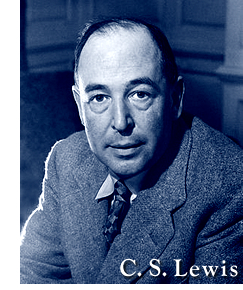
C.S. Lewis Daily – Today’s Reading


An ordinary simple Christian kneels down to say his prayers. He is trying to get into touch with God. But if he is a Christian he knows that what is prompting him to pray is also God: God, so to speak, inside him. But he also knows that all his real knowledge of God comes through Christ, the Man who was God—that Christ is standing beside him, helping him to pray, praying for him. You see what is happening. God is the thing to which he is praying—the goal he is trying to reach. God is also the thing inside him which is pushing him on—the motive power. God is also the road or bridge along which he is being pushed to that goal. So that the whole threefold life of the three-personal Being is actually going on in that ordinary little bed- room where an ordinary man is saying his prayers. The man is being caught up into the higher kinds of life—what I called Zoe or spiritual life: he is being pulled into God, by God, while still remaining himself.

From Mere Christianity

Compiled in A Year with C.S. Lewis

Streams in the Desert for Kids – Above the Clouds


Job 37:21

When you read a verse like the one above from Job, you may begin to wonder what was going on with Job and his friends to bring up such a conversation.

These guys said to Job, “Do you know how God controls the clouds and makes his lightning flash? Do you know how the clouds hang poised?… Can you join him in spreading out the skies, hard as a mirror of cast bronze?… Now no one can look at the sun, bright as it is in the skies after the wind has swept them clean.” In other words, “Job, you don’t know enough to understand God’s ways.”

Then God answered Job (chapters 38–41; read it sometime—it’s beautiful). God said that he is the one who has created everything the way it is. God sees the sun even when to us it is covered by clouds. Now Job knows he can hear from God. He can understand what God is doing in the world when he learns to consider that God’s perspective is so different from ours.

Do you want to hear from God and see his bigger perspective? You can if you will pray with all your heart and ask God to show you his plan and his way.

Dear Lord, I know you made everything, understand everything, yet you want to talk with me. You give me understanding. Amen.

Charles Stanley – The Key to the Good Things in Life


Ezra 8:22

Perhaps the title of today’s devotion sounds like that of a self-help book promising fame, wealth, and prestige if you’ll follow 10 easy steps. But when you consider how the culture defines the good things in life, you’ll realize that God’s definition doesn’t quite match the world’s—truly good things are achieved only by seeking Him. When we make God our top priority, we can expect His blessings of. . .

An intimate love relationship. Those who earnestly seek God learn to know Him deeply and experience an amazing sense of oneness with Him. Then He’s no longer a distant deity but He becomes a close friend. As your commitment grows, you’ll experience a love that transcends any human relationship.

Satisfaction.Only the Lord can fill the empty place in every heart. All earthly pursuits of pleasure or purpose fade in comparison to the satisfaction found in His presence.

Joy. When seeking the Lord is your priority, you’ll find a new joy that circumstances cannot steal, since it’s based in your relationship with Christ. Suffering and difficulties won’t devastate you, because you’ll trust Him and see the situation from His perspective.

God’s help. As today’s verse explains, the Lord’s hand of favor is upon those who seek Him. In fact, He delights in coming to their aid and providing for their needs.

Are these the kind of good things you’re experiencing, or have worldly values sidetracked you? Your thoughts reveal your true priorities. If you can go all day without thinking of the Lord, you’re not earnestly seeking Him. But when He’s the delight of your life, you won’t be able to forget Him.

Bible in One Year: John 14-16

Our Daily Bread — He Trains My Hands


Read: Exodus 4:10-17

Bible in a Year: Jeremiah 37-39; Hebrews 3

Praise be to the Lord my Rock, who trains my hands for war, my fingers for battle. —Psalm 144:1

When former NBA player David Wood was playing for Taugrés de Baskonia, I was with him at a Spanish Basketball Cup final. Before one game, he read Psalm 144:1: “Praise be to the Lord my Rock, who trains my hands for war, my fingers for battle.” He turned to me and said, “You see? It’s as if God has written this verse just for me! He trains my hands to catch rebounds and my fingers to shoot!” David felt called to play basketball and had learned that God takes us as we are and enables us to do what He calls us to do.

We can easily dismiss ourselves as having little use to God because we feel we have nothing to offer. When God appeared to Moses and assigned him the task of telling the Israelites that He would deliver them from the Egyptians (Ex. 3:16-17), Moses felt inadequate. He said to the Lord, “I have never been eloquent . . . . I am slow of speech and tongue” (4:10). Perhaps Moses had some kind of speech impediment, or he was just afraid, but God overcame his inadequacy with His sufficiency. God said, “Now go; I will help you speak and will teach you what to say” (v. 12).

All God wants from us is to follow His plans. He will sort out the rest. In His mighty hands, you can be a blessing to others. —Jaime Fernández Garrido

Here I am, Lord, ready to serve You in whatever way You desire. Lead me.

Dr. Jaime Fernández Garrido is director of the evangelical radio and television program Born Again

God’s call to a task includes His strength to complete it.

INSIGHT: When God called Moses to deliver the Jews from Egyptian bondage, Moses protested and offered various reasons why he was not the right candidate for the job (Ex. 3). He questioned his own identity (v. 11), his lack of authority (v. 13), and his credibility and acceptability (4:1). God responded by assuring Moses of His power and presence (4:1-9). Moses then continued his protest, saying he lacked eloquence and was “slow of speech and tongue” (v. 10). But God assured Moses He would enable him to speak powerfully and effectively (v. 12). Running out of excuses, Moses asked God to “send someone else” (v. 13). He was angry with Moses for his lack of trust and being unwilling to take up the assignment (v. 14). God told Moses that He would enable him to do what He called him to do. Sim Kay Tee

Ravi Zacharias Ministry –  Out of Obscurity


A trend continues to take place in the online world of anonymity. Several websites offer the opportunity to air one’s darkest confessions. Visitors put into words the very thing they have spent a lifetime wanting no one to know about themselves. While visiting, they can also read the long-hidden confessions of others, and recognize a part of humanity that is often as obscured as their own secrets—namely, I am not the only one with a mask, a conflicted heart, a hidden skeleton. “Every single person has at least one secret that would break your heart,” one site reads.  “If we could just remember this, I think there would be a lot more compassion and tolerance in the world.” Elsewhere, one of these sites made news recently when one of its anonymous users posted a cryptic message seemingly confessing to murder, catching the attention of Chicago Police.(1)

So often the world of souls seems to move as if instinctively to the very things asked of us by a sagacious God. The invitation to confess is present in the oldest stories of Scripture. After his defiance of God’s request, Adam is asked two questions that invite an admission of his predicament; first, “Where are you?” and later, “Who told you that you were naked?” God similarly inquires of Cain after the murder of Abel, “Where is your brother?” Through centuries of changing culture and the emerging story of faith, this invitation to confess is given consistently. “Therefore confess your offenses to one another and pray for one another so that you may be healed,” writes the author of James 5:16. A similar thought is proclaimed in 1 John 1:7. “If we walk in the light, as he is in the light, we have fellowship with one another, and the blood of Jesus, his Son, purifies us from all sin.” Perhaps the call to transparency is not from a God who delights in the impoverishment of his subjects, but a God who knows our deepest needs.

The hope of an online confessional brings us one step nearer to meeting the need of bringing what is hidden to light, and it is commendable that so many are giving in to the impulse to explore the ancient gift of confession. But perhaps such an impulse to haul the truth from obscurity is worthy of something even greater than anonymity. Light is not meant to be kept in shadows; the benefit of openness is not meant to be experienced alone. The stories and scriptures mentioned above speak of the element of community in confession, the promise of fellowship where there is courage to be honest about our selves and our needs. On websites of nameless visitors, though I tell you my darkest secret, we remain nameless to one another. While it may help significantly to know that I am not the only one with a mask, my mask remains. The anonymity factor offers the glimpse of light while maintaining the security of darkness. But isn’t this undermining the very light we seek? It is akin to lighting a lamp and putting it under a bowl.

Jesus reminded crowds full of secrets and sinners that there was no reason to do this. When a hemorrhaging woman in a swarm of people reached out to touch the fringe of his robe, she did so anonymously. Her condition would have classified her among the unclean, and it was therefore illegal to touch anyone. She probably calculated, “If I could just touch the hem of his robe, I could be healed.  The crowd will keep me hidden. He won’t be bothered; he won’t even need to know.” But this was not what happened.  Jesus knew he had been touched and immediately called the woman out of her anonymity. Before him, she was not lost in the crowd.

While we may successfully remain shrouded in disguise from the community around us, the Christian story invites the world to see that we stand unobscured before Christ and united with him nonetheless. Such a thought can indeed be terrifying: before him, we are not disguised. But more than this, it is inherently a gift. In his presence, none are kept in obscurity, hidden in mask or shroud; there are no shadows of anonymity that can hide, nor crowd large enough to keep us hidden. We are not disparaged for the flesh and blood and material of our humanity, but shown instead its true and greatest fulfillment.

The invitation to emerge from our darkest failings, lies, and secrets is not an invitation to dwell in our own impoverishment but rather a summons to light, reconciliation, and true humanity. The unique message of Jesus is that there is no reason to hide. Before we came up with plans to improve our images or learned to pretend with masks and swap for better identities, he saw who we were and was determined to approach regardless. Before we found a way to conceal our many failings or even weighed the possibilities of unlocking our darkest secrets, God came near and called us out of obscurity by name.

Jill Carattini is managing editor of A Slice of Infinity at Ravi Zacharias International Ministries in Atlanta, Georgia.

(1) Gabe Falcon, “It’s creepy and cryptic, but is PostSecret murder confession real?” CNN, September 2, 2013.

Alistair Begg – The Longing of the Thirsty


For I will pour water on the thirsty land. Isaiah 44:3

When a believer has fallen into a low, sad state of feeling, he often tries to lift himself out of it by chastening himself with dark and gloomy fears. That is not the way to rise from the dust, but to continue in it.

We may as well chain the eagle’s wing to make it fly as doubt in order to increase our grace. It is not the law but the Gospel that saves the seeking soul at first; and it is not a legal bondage but gospel liberty that can restore the fainting believer afterwards.

Slavish fear does not bring the backslider back to God, but the sweet wooings of love attract him to Jesus. This morning are you thirsting for the living God and unhappy because you cannot find him to the delight of your heart? Have you lost the joy of the Lord, and is your prayer, “Restore to me the joy of your salvation”?1

Are you conscious also that you are unproductive, like the dry ground, that you are not bringing forth the fruit that God has a right to expect of you, that you are not as useful in the church or in the world as your heart desires to be?

Then here is exactly the promise that you need: “For I will pour water on the thirsty land.” You will receive the grace you so desperately need, and you will have it in abundance.

Water refreshes the thirsty: You will be refreshed; your desires shall be satisfied. Water revives sleeping vegetable life: Your life will be restored by fresh grace.

Water makes the bud develop and makes the fruit ripen; and so by God’s grace you will be made fruitful in His ways. Whatever good quality there is in divine grace, you will enjoy it to the full. All the riches of divine grace you will receive in plenty; you shall be as it were drenched with it: And as sometimes the meadows become flooded by the bursting rivers, and the fields are turned into pools, so shall you be-the thirsty land shall be springs of water.

1) Psalm 51:12

The Family Bible Reading Plan

  • 2 Kings 19
  • Hebrews 1

Devotional material is taken from “Morning and Evening,” written by C.H. Spurgeon, revised and updated by Alistair Begg.

Charles Spurgeon – Let us pray


“But it is good for me to draw near to God.” Psalm 73:28

Suggested Further Reading: James 4:1-8

Draw near to God with living, loving prayer; present the promise, and you shall obtain the fulfilment. Many things I might say of prayer; our old divines are full of high praise concerning it. The early fathers speak of it as if they were writing sonnets. Chrysostom preached of it as if he saw it incarnate in some heavenly form. And the choicest metaphors were gathered together to describe in rapturous phrase the power, nay, the omnipotence of prayer. Would to God we loved prayer as our fathers did of old. It is said of James the Less, that he was so much in prayer that his knees had become hard like those of a camel. It was doubtless but a legend, but legends are often based on truths. And certain it is that Hugh Latimer, that blessed saint and martyr of our God, was accustomed to pray so earnestly in his old age, when he was in his cell, that he would often pray until he had no strength left to rise, and the prison attendants had need to lift him from his knees. Where are the men like these? Oh angel of the covenant, where can you find them? When the Son of Man comes shall he find prayer on the earth? Ours are not worthy of the name of supplication. Oh that we had learned that sacred art, that would draw near to God, and plead his promise. Cowper has put several things together in one hymn.

Prayer clears the sky; “Prayer makes the darkened cloud withdraw.”

Prayer is a heaven-climber; “Prayer climbs the ladder Jacob saw.”

Prayer makes even Satan quake; “For Satan trembles when he sees,

The weakest saint upon his knees.”

For meditation: Do you regard your prayer-life as a dead, boring routine? May God teach us to draw near to him and enjoy the relationship in a living and meaningful way (Luke 11:1-4).

Sermon no. 288

6 November (1859)