Tag Archives: politics

Our Daily Bread — The Rock

Our Daily Bread

Matthew 7:24-27; Ephesians 2:18-22

Jesus Christ Himself [is] the chief cornerstone. —Ephesians 2:20

On a trip to Massachusetts, my husband and I visited Plymouth Rock, an iconic symbol in the United States. It is traditionally thought to be the place where the Pilgrims, who traveled to America on the Mayflower in 1620, first set foot. While we enjoyed learning about its significance, we were surprised and disappointed that it is so small. We learned that due to erosion and people chipping off pieces, it is now just one-third its original size.

The Bible refers to Jesus as a Rock (1 Cor. 10:4), who never changes (Heb. 13:8). He is the solid Rock on which we can build our lives. The church (the body of believers) is built on a foundation with “Jesus Christ Himself being the chief cornerstone.” In Him all believers are joined together (Eph. 2:20-22).

Jesus is the solid Rock we can cling to when the storms of life blow and beat against us (Matt. 7:25). Writer Madeleine L’Engle said: “It’s a good thing to have all the props pulled out from under us occasionally. It gives us some sense of what is rock under our feet and what is sand.”

Plymouth Rock is an interesting mass of minerals with an intriguing historical significance. But Jesus is a precious cornerstone, and those who trust in Him will always have a solid Rock to depend upon. —Cindy Hess Kasper

O build on the Rock, forever sure,

The firm and true foundation,

Its hope is the hope which shall endure—

The hope of our salvation. —Belden

Christ, the Rock, is our sure hope.

Bible in a year: Jeremiah 46-47; Hebrews 6


Campus Crusade for Christ; Bill Bright – Chosen to be Glorified

dr_bright

“And having chosen us, He called us to come to Him; and when we came, He declared us ‘not guilty,’ filled us with Christ’s goodness, gave us right standing with Himself, and promised us His glory” (Romans 8:30).

A famous Christian leader insisted to me that anyone could lose his salvation. I asked him if he felt that he would ever lose his. Quickly, he replied, “Absolutely not. I am sure I will not lose my salvation.”

Can we lose our salvation? Personally, I believe there is too much controversy over this issue. Some fear that the individual who has assurance of salvation and knows that he will spend eternity with God might have a tendency to compromise his conduct, which would result in disobedience to God and would be an insult to Christ and His church. Others think that the individual who does not live like a Christian – although he professes faith in Christ – has never experienced the new birth, does not have eternal life and will be forever separated from God.

It is quite likely that the person who insists on “doing his own thing” – going his own way while professing to be a Christian – is deceived and should be encouraged to look into the mirror of God’s Word. For if his salvation is real, the evidence should proclaim it.

The caterpillar which goes through a metamorphosis to become a butterfly, lives like a butterfly, not a caterpillar. In the same way, the man or woman who has experienced new life in Christ will witness to it in his life.

Our beginning Scripture deals with seven marvelous truths:

He chose us.

He called us.

We came.

He declared us not guilty.

He filled us with Christ’s goodness.

He gave us a right standing with Himself.

He promised us His glory.

For centuries, man has been mystified by predestination and eternal security. One famous theologian put it this way: “How would it be a source of consolation to say…that whom God foreknew, He predestinated, and whom he predestinated, He called, and whom He called, He justified, and whom He justified might fall away and be lost forever?”

We should praise and worship God because of His promises to all who receive Him that He will never leave them nor forsake them (Hebrews 13:5).

Bible Reading: Ephesians 1:3-6

TODAY’S ACTION POINT: I will meditate upon the truths in this marvelous Word from God. And as an expression of my gratitude for the privilege of living a supernatural life, I will praise and thank God constantly for His goodness and will encourage other believers to do the same


Presidential Prayer Team; P.G. – Liberty Guided by Love

ppt_seal01

Author Glen Allport writes that love and freedom intertwine in human life…that each are connected parts of a whole, requiring one another. A lack of love, he says, harms freedom, and without freedom, love withers and dies.

If I partake with thankfulness, why am I denounced because of that for which I give thanks?

I Corinthians 10:30

Corinthian Christians were struggling. Some came from Jewish roots where the law dictated the orders of daily life, including what they ate and drank. Others coming out of paganism couldn’t understand the dietary restrictions being placed on them by their fellow believers. In our modern society, some consider themselves vegetarians, others cling to an “organic only” regime, and there are those who refuse meat from livestock not humanely slaughtered. The Bible says to do what is right for you, but don’t vilify your neighbors if their choices are different. At the same time, you should never intestinally offend their sensibilities.

Bottom line – be thankful for whatever you consume, from your plate or from one lovingly offered to you. Be grateful, too, that America is still bountiful! Do your part to provide for the needy, and intercede for your nation’s leaders…that they would know “the earth is the Lord’s, and the fullness thereof.” (I Corinthians 10:26)

Recommended Reading: I Corinthians 10:23-33

Presidential Prayer Team; G.C. – Movin’ on Up

ppt_seal01

Movin’ on Up! Can you name that tune in three notes? Most Americans can identify the theme song to the 1970’s hit comedy “The Jeffersons” in three notes. Why would this simple ditty resonate so passionately when the show has been out of vogue for years? It probably has something to do with the lyrics. “Well we’re movin’ on up / To the east side / To a deluxe apartment in the sky / Movin’ on up / To the east side / We finally got a piece of the pie.”

But thanks be to God, that you who were once slaves of sin have become obedient.

Romans 6:17

For many people enslaved to the trappings of sin – gossip, substance abuse, the love of money, or sexual inappropriateness – the first taste of the forgiveness of Christ is just like “moving on up” to the deluxe life, one previously thought out of reach. For the one set free, the natural response is gratitude and obedience…not born out of obligation, but from thankfulness for being moved out of hopelessness into blessing.

Take a moment today and reflect on the freedoms you have as an American, and the abundant life you have in Christ personally. Soon you, too, will be movin’ on up towards gratitude and obedience.

Recommended Reading: Luke 7:36-48


Charles Stanley – The Circle of Our Impact

Charles Stanley

Matthew 5:14-16

One of today’s great tragedies is that so many people live chaotic lives with no real purpose. We would expect this from non-believers, but Christians should live out the knowledge that God has a very specific purpose for each person. When we consider what He has invested in us, it is no wonder that He wants to see us bear fruit in the lives of others. We can powerfully impact those in our circle of influence, much the way a stone tossed into a pond will make expanding concentric ripples.

In today’s passage, Jesus describes believers as light and calls us to reflect Him in a sin-darkened culture. Like the moon reflecting the light of the sun, we are to let the truth and beauty of the indwelling Christ shine out through our conduct, conversation, and character. In doing so, we must put away sin because it diminishes our light, as does soot on the globe of a lantern.

Our influence on others should be purposeful rather than haphazard. We ought to ask ourselves which people we are impacting. Are we in fact making a difference in anyone’s life? The truth is, we can turn our “ripples” into powerful waves for God that affect wide circles of individuals. For instance, consider the impact of prayer. There’s no end to its possibilities—your influence can extend to the remotest places on earth when you are on your knees before the Lord.

Don’t ever underestimate the scope and circle of your influence when you are obedient to God. By following Him, you live out what it means to be the “light of the world.”


Presidential Prayer Team; C.H. – Solid Ground

ppt_seal01

The foolish man built his house upon the sand (Matthew 7:26). This biblical wisdom has real world practicality. In 2010, Chile had an earthquake registering a magnitude of 8.8. Japan’s 2011 quake/tsunami combo was a whopping 9.0 on the seismic scale.

Therefore let us be grateful for receiving a kingdom that cannot be shaken.

Hebrews 12:28

As much as architects work to create structures that can endure earthquakes, one of the simplest principles still stands – you must build on a firm foundation. All else is sinking sand. The author of today’s passage knew the difference between things that could be shaken and those that could not. In verse 27, he speaks of how the Almighty Father will shake the heavens and Earth to remove “things that have been made” – cars, houses, money, fame. What remains will be the kingdom of God.

Praise the Lord, for His kingdom cannot be shaken. When national policies change, and you wonder how you will fare when new laws are put into place, take heart. God and His purposes remain unchanged. Pray for stability in America – and wisdom for your leaders – in these uncertain times. Then give thanks for your citizenship in the unshakable kingdom of your Lord.

Recommended Reading: Matthew 7:24-29


Our Daily Bread — Good-Behavior Rewards

Our Daily Bread

2 Corinthians 5:1-11

We make it our aim . . . to be well pleasing to [God]. —2 Corinthians 5:9

In a children’s ministry in my church, we hand out cards to the kids when we notice their good behavior. They collect the cards and receive prizes for the good choices they’ve made. We are trying to reinforce good behavior rather than focusing on bad behavior.

When one leader handed a card to 11-year-old Tyree, he responded, “No, thanks. I don’t need one; I want to behave well, and I don’t need a reward for that.” For him, doing the right thing was its own reward. He definitely has good values ingrained in him, and he wants to live them out—prize or not.

As believers in Jesus, we will receive rewards one day. Second Corinthians 5:10 says that everyone will “receive the things done in the body, according to what he has done, whether good or bad.” But to get a reward should not be our motivation for right living. Neither is it to earn salvation. Living out of love for God and pleasing Him should be our heart’s desire.

When we love God, we make it our aim to please Him who first loved us (1 John 4:19) and to serve Him with pure motives (Prov. 16:2; 1 Cor. 4:5). The best reward will be to be with Him! —Anne Cetas

In all I think and say and do,

I long, O God, to honor You;

But may my highest motive be

To love the Christ who died for me. —D. DeHaan

Our desire to please God is our highest motive for obeying Him.

Bible in a year: Jeremiah 34-36; Hebrews 2

Ravi Zacharias Ministry – Louder Than Words

Ravi Z

A wordsmith, according to Merriam-Webster, is a person who works with words; especially a skillful writer. As a part of my quest to become a wordsmith, I have subscribed to what has become one of my favorite online sites, Wordsmith.org. Each day the site sends a word of the day to my inbox. For example, the word bumbledom came into my inbox today. A bumbledom is a behavior characteristic of a pompous and self-important petty official. While I love the sound of bumbledom rolling off of my tongue, I am not sure how often I will find a use for it in my writing and speaking. But it sure is fun to drop it into conversation!

Words are the lifeblood for writers. Indeed, words are to writers, what food is for chefs. Writers spend their days imagining just the right combination of words put together in such a way that a beautiful sentence or idea emerges. When this happens, what is written can actually take the reader beyond the page creating images, pictures, colors, sounds, and smells that transport the reader to another world. Just as a chef combines the right ingredients to create a delicious dish, a skilled writer mingles words and carves out sentences to offer an experience of transcendence beyond the everyday realities of life.

Words are powerful. But there are times when words are not enough. There are mysteries that lie beyond their reach, such as when a joy experienced is too great, or sorrows are too deep as to be inexpressible. In such encounters, words seem rudimentary and inadequate. Nothing written can adequately capture the depth of what is being experienced or contemplated.

A group of early Christian teachers understood that there was a relationship between “the things that are spoken and the things that are ineffable, the things that are known and the things that are unknowable.”(1) They understood that there was a limitation of language in the face of mystery. In the contemplation of the Divine, for example, God’s essence, or ousia in the Greek, is something that could not be captured by words since God is beyond human understanding. God must do the extraordinary—divine revelation—for anything of God to be known.

Church historian Jaroslav Pelikan describes this early Christian theology as apophatic: “Theology was, at one and the same time, sublime and ‘apophatic,’ that is, based on negation. As the evangelist John had said, ‘no one has ever seen God,’ which means one could see the glory of God, but not God himself.”(2) God’s being or essence was beyond human beings. All that could be known or even spoken of was what God had chosen to reveal.

And God’s chosen means of ultimate revelation was startlingly in a person. The writer of Hebrews proclaims: “Long ago God spoke to our ancestors in many and various ways by the prophets, but in these last days he has spoken to us by a Son, whom he appointed heir of all things, through whom he also created the worlds. He is the reflection of God’s glory and the exact imprint of God’s very being, and he sustains all things by his powerful word” (Hebrews 1:1-3). In the person of Jesus, who is the logos or Word of God, God is revealed.

In Jesus we receive a vision of the ineffable God. “No one has ever seen God,” the Evangelist proclaims. “It is God the only Son, who is close to the Father’s heart, who has made him known” (John 1:18). What we can know about God is centrally communicated in Jesus through his life and ministry. Jesus embodied God’s saving work of redemption in his life, his death, and his resurrection. God is revealed definitively in Jesus who came to seek and to save what was lost.

As one who writes and speaks, I know the power of words.  In the defense of the gospel, a carefully crafted argument is often critical to breaking through the barriers of misinformation and misunderstanding. Yet, I am reminded that even words have limits, and people must see the gospel lived out, and must experience its power. The gospel must be embodied by those who claim to believe it. The oft-used saying attributed to St. Francis of Assisi “preach the gospel at all times, and if necessary use words” is a helpful reminder of the power of our lives in communication. And if I’m honest, embodying the gospel takes far more creative effort than simply crafting an argument or a skillful, word-smithed sentence.

The Christian tradition presents a God chiefly revealed through a person. As a result, I am challenged to consider the speech given by my life and actions just as carefully as I choose my words for an essay. For, “the Word became flesh and lived among us, and we have seen his glory, the glory as of a father’s only son, full of grace and truth” (John 1:14). God has acted in a person, and this action speaks louder than words.

Margaret Manning is a member of the speaking and writing team at Ravi Zacharias International Ministries in Seattle, Washington.

(1) John of Damascus as quoted in Jaroslav Pelikan, The Christian Tradition, vol. 2 (Chicago: University of Chicago Press, 1974), 31.

(2) Ibid., 32.


(The 5000 Post of the DDNI Blog )

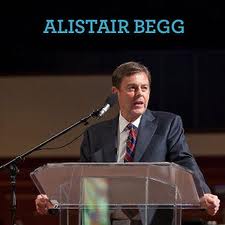
Alistair Begg – A Day For Remembering

Alistair Begg

No weapon that is fashioned against you shall succeed.

Isaiah 54:17

The 5th of November is notable in English history for two great deliverances granted by God for us. On this day the plot of the Papists to destroy the Houses of Parliament was discovered, 1605.

>While for our princes they prepare

In caverns deep a burning snare,

He shot from heaven a piercing ray,

And the dark treachery brought to day.

And secondly, today is the anniversary of the landing of King William III, at Torbay in 1688, which was crucial for the establishment of religious liberty.

This day should be celebrated not by the revelry of youth, but by the songs of saints. Our Puritan forefathers most devoutly made it a special time of thanksgiving. There is public record of the annual sermons preached by Matthew Henry on this day. Our convictions and our love of liberty should make us regard its anniversary with holy gratitude. Let our hearts and lips exclaim, “We have heard with our ears, our fathers have told us, what deeds you performed in their days, in the days of old.”1

You have made this nation the home of the Gospel; and when the enemy has risen against her, You have shielded her. Help us to offer repeated songs for repeated deliverances.

Grant us more and more a hatred of sin, and hasten the day of your coming. Till then and ever, we believe the promise, “No weapon that is fashioned against you shall succeed.” Should it not be laid upon the heart of every lover of the Gospel of Jesus on this day to plead for the overturning of false doctrines and the extension of divine truth? Would it not be well to search our own hearts and turn out any of the lumber of self-righteousness that may lie concealed within?

1Psalm 44:1

Presidential Prayer Team; H.L.M. – Total Gift

ppt_seal01

Can you imagine life without God’s gift of grace? Unfortunately, many live without it. According to a survey from LifeWay Research, 47 percent of Americans feel the weight of a bad choice from their past, even though a majority believe God gives second chances. Nearly 19 percent believe God gives a second chance when a person depends only on Him, followed closely by when a person makes restitution (18 percent), does enough good (15 percent) or promises not to repeat the mistake (11 percent).

I give thanks to my God always for you because of the grace of God that was given you in Christ Jesus.

I Corinthians 1:4

Ephesians 2:8 says, “For by grace you have been saved through faith. And this is not your own doing; it is the gift of God.” The work of salvation is for God’s glory and is not accomplished by human effort. Salvation is fully a gift from God!

Of course, when someone gives you a gift, you say, “Thank you.” So every day thank God for His total gift of grace in your life…and for the second chances He has given you. Thank Him also for the grace He has bestowed on this country. Then pray that the nation’s leaders will discover this priceless gift of salvation through Jesus Christ.

Recommended Reading: Ephesians 2:1-10

Presidential Prayer Team; C.P. – People Presents

ppt_seal01

November. Christmas plans begin. Visions of bicycles, electronic gizmos and longed-for jeans may be dancing in your head as you think about those perfect gifts you will purchase for friends and family.

I thank my God through Jesus Christ for all of you, because your faith is proclaimed in all the world.

Romans 1:8

Ah, but first comes Thanksgiving. You put a lot of thought into Christmas gifts for people you care about…but do you realize the people in your life are God’s gift to you? In today’s verse, Paul thanks God for the Christians in Rome and for their world-renowned faith. He prayed that he would be able to visit them so they’d mutually encourage each other.

As thanksgiving approaches, think about all the people the Lord has put into your life – and pray for wisdom to be a blessing to them in some way. Remember to be grateful for your friends and family, your pastor and fellow church members, as well as associates in support groups and professional organizations, and all the people who serve you daily. Finally, thank God for the people who serve your country…whether in leadership, in the armed forces or at menial government jobs. Pray they will get to know God’s greatest “people gift,” Jesus.

Recommended Reading: John 3:16-21

Our Daily Bread — Be Still

Our Daily Bread

Psalm 46

Be still, and know that I am God; I will be exalted among the nations, I will be exalted in the earth! —Psalm 46:10

Eric Liddell, memorialized in the film Chariots of Fire, won a gold medal in the 1924 Paris Olympics before going to China as a missionary. Some years later, with the outbreak of World War II, Liddell sent his family to safety in Canada, but he remained in China. Soon Liddell and other foreign missionaries were interned in a Japanese detainment camp. After months of captivity, he developed what doctors feared was a brain tumor.

Every Sunday afternoon a band would play near the hospital, so one day Liddell requested they play the hymn “Be Still, My Soul.” As he listened, I wonder if Eric pondered these words from the song: Be still, my soul: the hour is hastening on / When we shall be forever with the Lord. / When disappointment, grief, and fear are gone, / Sorrow forgot, love’s purest joys restored. / Be still, my soul: when change and tears are past / All safe and blessed we shall meet at last.

That beautiful hymn, so comforting to Eric as he faced an illness that led to his death 3 days later, expresses a great reality of Scripture. In Psalm 46:10, David wrote, “Be still, and know that I am God.” In our darkest moments, we can rest, for our Lord conquered death on our behalf. Be still, and allow Him to calm your greatest fears. —Bill Crowder

Teach me, Lord, to still my soul before You. Help

me to bear patiently the trials I face, and to

leave everything to You to direct and provide.

I know that You will always remain faithful.

God’s whisper of comfort quiets the noise of our trials.

Bible in a year: Jeremiah 30-31; Philemon


John MacArthur – Having a Faith That Responds

John MacArthur

“Faith is . . . the conviction of things not seen” (Heb. 11:1).

When the writer said, “Faith is the assurance of things hoped for, the conviction of things not seen”, he used two parallel and almost identical phrases to define faith.

We’ve seen that faith is the assurance that all God’s promises will come to pass in His time. “The conviction of things not seen” takes the same truth a step further by implying a response to what we believe and are assured of.

James addressed the issue this way: “Someone may well say, ‘You have faith, and I have works; show me your faith without the works, and I will show you my faith by my works.’. . . But are you willing to recognize . . . that faith without works is useless? . . . For just as the body without the spirit is dead, so also faith without works is dead” (James 2:18, 26). In other words, a non-responsive faith is no faith at all.

Noah had a responsive faith. He had never seen rain because rain didn’t exist prior to the Flood. Perhaps he knew nothing about building a ship. Still, he followed God’s instructions and endured 120 years of hard work and ridicule because he believed God was telling the truth. His work was a testimony to that belief.

Moses considered “the reproach of Christ [Messiah] greater riches than the treasures of Egypt; for he was looking to the reward” (Heb. 11:26). Messiah wouldn’t come to earth for another 1,400 years, but Moses forsook the wealth and benefits of Egypt to pursue the messianic hope.

Shadrach, Meshach, and Abednego, when faced with a life- threatening choice, chose to act on their faith in God, whom they couldn’t see, rather than bow to Nebuchadnezzar, whom they could see all too well (Dan. 3). Even if it meant physical death, they wouldn’t compromise their beliefs.

I pray that the choices you make today will show you are a person of strong faith and convictions.

Suggestions for Prayer:

Ask God to increase and strengthen your faith through the events of this day.

Look for specific opportunities to trust Him more fully.

For Further Study:

Read Daniel 3:1-20. How was the faith of Shadrach, Meshach, and Abednego tested?


Presidential Prayer Team; J.K. – Eternal Freedom

ppt_seal01

Well, it’s over! The World Series has been played and there was a winner. Some players received the glory. But in a very short time, they and their team will be forgotten.

Give thanks to the Lord…proclaim that his name is exalted.

Isaiah 12:4

It should not be that way for the God of your salvation! In what could be characterized as a psalm, Isaiah proclaims that the Lord should be praised and His name should be exalted. From the time of the Exodus of Israel from Egypt to the celebration of Passover each year, God’s chosen people give thanks and praise to their deliverer.

That should be your song as well, believer. You are delivered – redeemed and saved from the fate of sin! When you realize the joy of reconciliation to the One against whom you have sinned, sing your praises to God and speak of it to those around you. As they come to faith, they can make this song their own, knowing the reality of His saving grace.

Intercede for America…that many will come to faith and understand their deliverance. May they give thanks to God for the freedoms He has given – in this great country and for eternity. The praises should never die; the glory is always the Lord’s.

Recommended Reading: II Corinthians 3:12-4:6

Charles Spurgeon – The exaltation of Christ

CharlesSpurgeon

“Wherefore God also hath highly exalted him, and given him a name which is above every name: That at the name of Jesus every knee should bow, of things in heaven, and things in earth, and things under the earth; And that every tongue should confess that Jesus Christ is Lord, to the glory of God the Father.” Philippians 2:9-11

Suggested Further Reading: John 17:1-5

Look at him! Can your imagination picture him? Behold his transcendent glory! The majesty of kings is swallowed up; the pomp of empires dissolves like the white mist of the morning before the sun; the brightness of assembled armies is eclipsed. He in himself is brighter than the sun, more terrible than armies with banners. See him! See him! Oh! Hide your heads, you monarchs; put away your gaudy pageantry, you lords of this poor narrow earth! His kingdom knows no bounds; without a limit his vast empire stretches out itself. Above him all is his; beneath him many a step are angels, and they are his; and they cast their crowns before his feet. With them stand his elect and ransomed, and their crowns too are his. And here upon this lower earth stand his saints, and they are his, and they adore him; and under the earth, among the infernals, where devils growl their malice, even there is trembling and adoration; and where lost spirits, with wailing and gnashing of teeth for ever lament their being, even there, there is the acknowledgement of his Godhead, even though the confession helps to make the fire of their torments. In heaven, in earth, in hell, all knees bend before him, and every tongue confesses that he is God. If not now, yet in the time that is to come this shall be carried out, that every creature of God’s making shall acknowledge his Son to be “God over all, blessed for ever. Amen.” Oh! My soul anticipates that blessed day, when this whole earth shall bend its knee before its God willingly! I do believe there is a happy era coming, when there shall not be one knee unbent before my Lord and Master.

For meditation: For meditation: Those who refuse to acknowledge the Lord Jesus Christ in this life (2 John 7) will be forced to acknowledge him in the next—but it will be too late to do them any good. Those who trust in him now will enjoy praising him for ever.

Sermon no. 101

2 November (1856)

Charles Stanley – What Keeps Grace from Flowing?

Charles Stanley

James 4:1-6

We know from the Bible that God continually showers His children with blessings. However, most believers don’t always feel as though He’s pouring His favor upon them. What could be blocking the free flow of divine grace?

Proverbs 6:16-19 provides a list of seven things that God hates. Certain attitudes and behaviors are categorized as detestable to Him, and the first thing mentioned is pride.

Nothing will interfere with spiritual growth as much as a proud spirit. That is why God considers it an abomination. Pride misaligns priorities in such a way that we—and not the Lord—become our own priority.

We can find many examples of pride throughout Scripture. For instance, the serpent convinced the first woman that if she ate of the forbidden fruit, she would “be like God” (Gen. 3:5). That sounded good to Eve, who apparently thought she deserved this high honor. So she and Adam ate the fruit, thereby bringing all manner of destruction and pain into the world.

If you have been struggling to feel God’s hand of blessing in your life, a wise first step is to humbly pray and ask the Lord to reveal any hidden areas of pride in your life. His arms are full of blessings that He desires to give you. As the preacher D. L. Moody once observed, “God sends no one away empty except those who are full of themselves.” Will you choose instead to be full of God? You can start by laying your pride at the foot of the cross. Then your life can overflow with blessings.

Our Daily Bread — Loved To Love

Our Daily Bread

Deuteronomy 10:12-22

What does the LORD your God require of you, but . . . to walk in all His ways and to love Him. —Deuteronomy 10:12

“A heart is not judged by how much you love, but by how much you are loved by others.” I saw this quotation, attributed to the Wizard of Oz, on a wall plaque in a gift shop.

The Wizard of Oz may be a good story, but it’s not a reliable source of spiritual information. God said something quite different. According to Him, the greatest commandment is to love—to love Him first and then others (Mark 12:29-31). Scripture says nothing about expecting to be loved in return. In fact, Jesus stated the opposite in His most famous sermon: “Blessed are you when they revile and persecute you, and say all kinds of evil against you falsely for My sake. Rejoice and be exceedingly glad, for great is your reward in heaven” (Matt. 5:11-12).

When it comes to love, the important thing we need to know is this: All love starts with God (1 John 4:19). As Moses told the Israelites, God delighted in them to love them (Deut. 10:15), and because of that they were to love others, even strangers (v.19). God’s intent is that the people who receive His love will become the conduit of His love to others.

Apart from God—who Himself is love—none of us could truly love or be loved (1 John 4:7-8). —Julie Ackerman Link

“Love seeketh not her own,” and so

He did not stay as God above,

But chose a manger and a cross

To show that He was Love. —Wilmshurst

He who does not love does not know God, for God is love. —1 John 4:8

Bible in a year: Jeremiah 24-26; Titus 2

Ravi Zacharias Ministry – Mere Christianity

Ravi Z

“I can’t believe how many children there are here,” I leaned and whispered to my husband. We were visitors at a church whose smallest members were helping with the service that morning. A young girl, no more than 8, stood at the front of the altar beside the minister. As she began to speak, her voice echoed the eagerness that her countenance gave away. “Join me in saying the Apostles’ Creed,” she said with a tone that caused me to heed the invitation differently:

I believe God made the world, the sky, the stars, the animals, and all the people in the world. I believe that God’s Son, Jesus, came into the world from heaven. That’s what we remember on Christmas.

Thus began the Apostles’ Creed reworded for children, and in these almost familiar lines were the tenents of the Christian faith, the reminder of all that Christians remember from Christmas to Easter. The little girl’s voice rose above the sounds of a congregation speaking in unison. She was clearly excited by the assignment she had been given. She seemed equally excited by the words of the Creed, the statements of belief shared with the very adults she was leading. It was a creed led in such a way as to remind everyone present that the call of Christ is one a child can answer. The substance to Christian hope is a simple, though profound, reality.

The word creed comes from the Latin word credo, meaning, “I believe.” When asked by Jesus, “Who do you say that I am?” Peter’s response was his creed: “You are the Christ, the Son of the living God.”(1) The earliest creeds were used as baptismal vows, affirmations of belief in God the Father, Jesus the Son, and the Holy Spirit. For persons standing on the precipice of faith, the creed was the statement with which they prepared themselves to jump, and in so doing, found they had been given something on which to stand. As Martin Luther noted of the Apostles’ Creed, the most common of ancient confessions, “Christian truth could not possibly be put into a shorter and clearer statement.”

In dire contrast to this ancient attempt to develop concise affirmations of Christian belief is the call among us for a simplified faith that lessens the significance of Jesus’s birth, life, and death, while focusing more on the responsibility his life imparts. Whether or not he was really born or buried, whether he was fully human and fully divine is thought nonessential; the obligation to respond, the need to build relationships, the call to follow, is considered more important. The creeds say so much more than this. Christmas and Easter say so much more than goodwill and forgiveness.

In the letter to the Hebrews, the affirmation is given that faith gives substance to our hopes and makes certain the realities we do not see. Those who first said “credo” did so with the assurance that their lives were dramatically about to change. They were saying in these vows that their beliefs were worth the chance of persecution, suffering, and even death. In their confession of faith was the conviction that what is true is of greater substance than fear or self. They went to their baptisms knowing that the birth, life, and death of Christ was the hope on which they must live and die and believe.

The lines of the Apostles’ Creed, the mere Christianity that men, women, and children continue to stand on, repeat this stirring hope and sounding joy:

I believe in God the Father, Almighty, Maker of heaven and earth. And in Jesus Christ, his only begotten Son, our Lord, who was conceived by the Holy Spirit, born of the Virgin Mary, suffered under Pontius Pilate, was crucified, dead, and buried; he descended into hell, and on the third day he rose again from the dead; he ascended into heaven, and now sits at the right hand of God the Father Almighty.

This is no mere Christianity. This is the story we welcome into a manger and receive from the tomb. This is what we remember on Christmas and every day after.

Jill Carattini is managing editor of A Slice of Infinity at Ravi Zacharias International Ministries in Atlanta, Georgia.

(1) See Matthew 16:15-16.


Ravi Zacharias Ministry – Starting With a Question


Ravi Z

Starting with a question seems like a good idea to most people: it helps to bring a sharper focus, it’s conversational, it reveals gaps in knowledge, and it’s quite natural.(1) Kids seem to use questions instinctively to find out about the world. Of course, there are lazy questions and there are thoughtful questions. The difference is hard to explain, but anyone who has ever heard or asked a great question, asked at the right time, will immediately know why good, careful, thoughtful questions are always worth asking.

 When it comes to questions about faith, Christians have often pointed to the example of God asking Adam and Eve, ‘Where are you?’ (Genesis 3:9), and the way in which Jesus interacts with people in the New Testament. Here are just a few of the questions of Jesus:

 What are you looking for? What do you want me to do for you? Have I been with you for so long a time and you still do not know me? If you love only those who love you, what credit is that to you? Do you want to be well? Do you see this woman? What good is it to gain the whole world but forfeit your soul? Is not life more than food and the body more than clothing? Who is greater, the one seated at the table, or the one who serves? Do you think that I have come to establish peace on the earth? Which of you would hand his son a stone when he asks for a loaf of bread, or a snake when he asks for a fish? How can you believe, when you accept praise from one another and do not seek the praise that comes from the only God? Did I not tell you that if you believe you will see the glory of God? Why do you call me ‘Lord, Lord,’ but do not do what I command? Why do you break the commandment of God for the sake of your tradition? For which of these good works are you trying to stone me? Do you think that I cannot call upon my Father and he will not provide me at this moment with more than twelve legions of angels? Would you like some breakfast? Have you come to believe because you have seen me? I am the resurrection and the life; whoever believes in me, even if he dies, will live, and everyone who lives and believes in me will never die. Do you believe this? Do you love me?

 Perhaps starting with questions isn’t such a bad idea after all, is it? Even so, some may be suspicious of starting with questions. Some may find them leading or loaded. Others may be worried about being unfaithful to God if they use and engage properly with questions. But, as you can see, Jesus used questions, which, for me, is the strongest reason to use them. And when Jesus asked a question it suddenly brought everything into focus, not just for the one he was asking, but for everyone listening as well. Jesus’s often subversive questions summarize and lift up the prevailing authority structures, symbols, and assumptions. His questions lift them high up into the air for inspection, so that everyone can see more clearly the motives, traditions, assumptions, and all the wildness that often rages under the surface.

 Questions can help us to concentrate, pay attention, and think together. A good question can transform a meandering discussion into a life-changing moment, when reality breaks through illusion. In these moments, when we gently ask the right questions of ourselves or others, we can sometimes get under a question, and meet the one behind it. In the words of T.S. Eliot, “Oh my soul, be prepared for the coming of the Stranger. Be prepared for him who knows how to ask questions.” The message of Christ comes in power, reality, and compassion and is able to answer the deeper questions that come bursting out when the door is opened.

 Tom Price is Academic Tutor at the Oxford Centre for Christian Apologetics and a member of the speaking team at Ravi Zacharias International Ministries in Europe.

 (1) Article adapted from “Starting With Questions” Pulse, Issue 8 (Summer 2011), pp. 12-13.

Presidential Prayer Team; – J.K. – His Hand of Comfort

ppt_seal01

Halloween is a time when scary things are prevalent – skeletons come to life, ghostly sounds emanate from unlikely places, and people dress in frightening costumes. Much time is spent making light of death.

He laid his right hand on me, saying, “Fear not, I am the first and the last.”

Revelation 1:17

However, there is no comfort in death if you have not the certainty of life eternal with Jesus Christ. He loved beyond any other when He died to take away the sin of the world. He rose again, and it was this glorified Jesus that John saw in his vision. John fell at His feet “as though dead” in awe of His glory (Revelation 1:17). But Christ extended His hand of comfort and gave John the assurance that no one else could give. Jesus was the divine Son of God, “the first and the last.” He is before all things and will be in control at the end of all things, having authority over all. You need not fear.

Apply this glorious truth to every situation in your life, including the effects of the chaotic conditions in government. Intercede for the nation’s leaders…that they may discover the certainty of life with Christ and be guided by Him. Then rest in His presence.

Recommended Reading: Revelation 1:9-18