John MacArthur – The Joy of God’s Peace


“Grace to you and peace from God our Father and the Lord Jesus Christ” (Phil. 1:2).

Nothing you face today is beyond the purview of God’s grace and peace.

Paul’s wonderful benediction for grace and peace was ever on his heart. He offered it in each of his epistles and expounded on it throughout his writings.

Grace is the outpouring of God’s goodness and mercy on undeserving mankind. Every benefit and provision you receive is by God’s grace. That’s why Peter called it “the manifold grace of God” (1 Pet. 1:10). Just as your trials are manifold or multifaceted, so God’s multifaceted and all-sufficient grace is correspondingly available to sustain you.

Peace, as used in Philippians 1:2, speaks of the calmness and absence of strife characteristic of one in whom God’s grace is at work. The New Testament also links it to mercy, hope, joy, and love. To experience those graces is to experience true peace.

It is said that when Bible translators were seeking a word or phrase for “peace” in the language of the Chol Indians of South Mexico, they discovered that the words for “a quiet heart” gave just the meaning they were looking for. That’s an appropriate parallel because peace guards the soul against anxiety and strife, granting solace and harmony.

Colossians 3:15 says, “Let the peace of Christ rule in your hearts, to which indeed you were called in one body.” In Philippians 4:6-7 Paul says to “be anxious for nothing, but in everything by prayer and supplication with thanksgiving let your requests be made known to God. And the peace of God, which surpasses all comprehension, shall guard your hearts and your minds in Christ Jesus.”

Although “grace to you and peace” was a common greeting in the early church, it was an uncommon experience in the unbelieving world. The same is true today because only those who belong to God the Father and the Lord Jesus Christ receive grace and peace.

Are you experiencing God’s peace? Remember, nothing you face today is beyond the purview of God’s all- sufficient grace and surpassing peace.

Suggestions for Prayer

Read Ephesians 2:14-18 and praise God for Christ, who is your peace, and for His gracious work on your behalf.

For Further Study

  • What is the first step to acquiring peace (John 16:33; 1 Pet. 5:14)?
  • What does the God of peace desire to accomplish within you (1 Thess. 5:23; Heb. 13:20-21)?


Joyce Meyer – A New Level of Commitment


Commit your way to the Lord [roll and repose each care of your load on Him]; trust (lean on, rely on, and be confident) also in Him and He will bring it to pass.- Psalm 37:5

God wants to take us to a new level of commitment. This is something to be excited about and grateful for because with commitment comes blessing. It’s not always easy, but it is worth all it requires. We all fight battles and face the temptation to stop fighting and just give up, but commitment is the thing that enables us to resist that temptation.

When you are fiercely committed to God’s purpose for your life, you will begin to experience all that He has for you. God loves you and He wants you to be in a committed relationship with Him— for life. I can’t imagine anything more satisfying, more rewarding, or more adventurous. He has more in store for you than you have ever asked or imagined, but in order to see His plans become a reality in your life you will need to be 100 percent committed to Him and His will.

Prayer of Thanks

Father, I choose to commit my life fully to You. I thank You that You are leading me into the destiny You have for me. With Your help, I will focus on You and commit every part of my life to Your plan and purpose for me.

Campus Crusade for Christ; Bill Bright – he Heavens Declare God’s Glory


“The heavens are telling the glory of God; they are a marvelous display of His craftmanship” (Psalm 19:1).

When King David was a small lad, his father assigned him the care of the sheep. Day after day, night after night he cared for his sheep as a loving shepherd. No doubt on numerous occasions he would lie on his back and look up at the sun and the vastness of space, during the daytime. At night, the stars and the moon would seem so close that he could almost reach them, as he would talk to the God of his fathers.

The vast expanse of creation captivated him, and instinctively he knew that God, who created it all, was his God and he could trust Him with his life, so that just before he went against the giant Goliath he could say to King Saul, “When I am taking care of my father’s sheep and a lion or a bear comes and grabs a lamb from the flock, I go after it with a club…I’ve done it to this heathen Philistine too, for he has defied the armies of the living God. The Lord who saved me from the claws and teeth of the lion and the bear will save me from this Philistine” (1 Samuel 17:34-37). When David went out against Goliath, he said to the giant, “You come to me with a sword and a spear, but I come to you in the name of the Lord of the armies of heaven and of Israel” (1 Samuel 17:45). Then with a sling and a stone, he killed the Philistine.

I personally believe David triumphed because his confidence in God came not only from the teachings of the holy Scriptures, but also from the experience that he had had with God, who created all the heavens and the earth.

Bible Reading: Psalm 19:2-6

TODAY’S ACTION POINT: I will make a special point to study the vastness of God’s creation through books about science and to take time – not only in Scriptures, but also in books of science — to notice the handiwork of God’s beautiful creation, conscious that it will help me to become more sensitive and alert to the needs of others.

Presidential Prayer Team; J.R. – Source of Exceptionalism


In his 1989 farewell address, Ronald Reagan famously described his vision of America as a shining city upon a hill. “In my mind, it was a tall proud city built on rocks stronger than oceans, wind-swept, God-blessed and teeming with people of all kinds living in harmony and peace.”

Send out your light and your truth; let them lead me; let them bring me to your holy hill.

Psalm 43:3

President Reagan’s words were adapted from “A Model of Christian Charity,” a 1630 sermon by John Winthrop, who first delivered it to immigrants arriving in America. It articulates the idea of “American Exceptionalism.” Its central premise was that the nation would survive only if its citizens were just, merciful, labored and suffered together, and worshiped the God of Israel. But, Winthrop warned, “if we shall deal falsely with our God in this work we have undertaken, and so cause Him to withdraw His present help from us, we shall be made a story and a by-word through the world.”

Today, pray that America may be that shining city – illuminated by His light and truth – and also that others may be drawn to Him by your testimony of His exceptional love.

Recommended Reading: Matthew 5:3-16

Greg Laurie – Build on Your Own Foundation


For it is God who works in you both to will and to do for His good pleasure.—Philippians 2:13

Some people are really into exercise. They love to work up a sweat, go on a run, or lift weights. I hate all of it. And I know I’m not alone in that. But the fact of the matter is that we really need to exercise. We can’t hire someone to work out for us. It’s something we have to do for ourselves.

The apostle Paul wrote to the believers in Philippi, “Work out your own salvation with fear and trembling; for it is God who works in you both to will and to do for His good pleasure” (Philippians 2:12–13). Paul was in prison when he wrote this epistle. He was writing it from Rome and was experiencing anxiety over the fact that he was separated from these believers.

Effectively Paul was saying, “Look, guys, I can’t be with you right now. I wish I were there to offer you guidance and to be a good example for you, but I can’t do it. But check it out. It is God who works in you, not Paul.”

They may have thought, We can’t live the Christian life without Paul around. Well, actually they could. And if pastors and spiritual leaders are doing their jobs properly, they will get you up on your own feet spiritually so that you are not dependent on them.

Paul was saying, “Guys, keep things in perspective. It is God who is doing the work. Maybe He worked through me, but it’s still God who did the work.”

We can put people on pedestals and think they can do no wrong. And sometimes people will base their relationship with God on someone else’s relationship with God. That isn’t good. We need to get our own faith. We need to build on our own foundation.

Max Lucado – Thought Prevention


We are not a victim of our thoughts. We have a vote. We have a voice. We can exercise thought prevention!

“Don’t talk to me,” we say. “I’m in a bad mood.” As if a mood were a place to which we were assigned, rather than an emotion we permit. Or we say, “Don’t mess with her. She has a bad disposition.” Is a bad disposition something we have like a cold or the flu? Or do we have a choice? Paul says we do.  In 2 Corinthians 10:5 he says, “We capture every thought and make it give up and obey Christ.”

Capture every thought—you get the impression we’re the soldiers and the thoughts are our enemies. The minute they appear we go into action. Selfishness, step back!  Envy, get lost!  Find another home, Anger…you aren’t allowed on this turf!

Capturing thoughts is serious business! But, you can do it!

From Max on Life

Charles Stanley – Together In the Christian Life

No Christian has ever been called to “go it alone” in his or her walk of faith.

Hebrews 10:24, 25

The writer of Hebrews knew that his audience, made up mainly of Jewish believers who had just come to faith, was struggling with how to incorporate their Jewish heritage into their walk with Christ. The author therefore spends a great deal of time explaining that Jesus Christ prepared the way for uninterrupted fellowship with the Father. He is our great High Priest. His death provided the way for individuals to have personal access to God without going through a human agent.

At times, this principle was difficult for the Jewish Christians to accept. They were accustomed to participating in a variety of ceremonial washings and offerings to be cleansed from their sins; immediate access to God apart from those things was something new. But the writer assured them that since Christ died for their sins and rose from the dead, they could now go directly to the Father with their prayers and needs. The author also knew the challenge facing these converts to remain faithful to their new faith. So he exhorted them to “hold fast … without wavering” (Heb. 10:23)

He instructed his readers to help one another hold fast to their faith in God. He knew they would be tempted by trial and persecution to drift from the truth that God had plans for their lives. So he said, “Let us consider how to stimulate one another to love and good deeds” (Heb. 10:24). The Greek term translated “stimulate” literally means “to irritate” or to pressure one another to consider what the Lord has done in the past. He is faithful and does not abandon the work of His hands. We are His creations, and when we encounter difficulty, sorrow, rejection or any other distress, we can know without doubt that God will provide the wisdom and resources we need. Even in times of joy, He is blessed by happiness and contentment. In essence, the author was instructing his readers to spur one another along, to refuse to become ensnared by negativity, and to take responsibility for their lives in Christ as well as one another.

With this backdrop, the author made it clear that they should not stop meeting together (Heb. 10:25). They needed one another, just as we need other believers. To give up meeting together would spell disaster because it would provide Satan an opportunity to draw them away from the Lord. In meeting together, they found the mutual encouragement to keep going. The same is true for us.

God wants us to regularly meet with other believers. He wants His people in church! Many believers don’t take this admonition seriously because they don’t know the reason behind it. I have often heard this refrain: “I can worship God at home. I don’t need to go to church.” Many believers believe the sole reason we meet together is to worship—and understandably so. After all, we call it a worship service.


If worship were the only reason we are commanded to meet, then those who claim they can worship at home would have a strong argument. But worship is not the sole reason. Nor is it so that we can be taught God’s truth. We can turn on our radios and televisions and hear good Bible teaching. On the surface, it seems that anything we can do at church we can do just as well at home, alone.

So why are we commanded to meet? Why go to church?

The writer of Hebrews says it is to safeguard against drifting. We are the body of Christ, and when we are with other believers, we are doing what comes naturally and what we will do for eternity—being together in His presence. We make up the church, and together we provide strength for one another through prayer, fellowship, and encouragement.

Enemy forces are always at work around us, seeking to blow us off course. Sheer individual commitment is really not enough to keep us in line. We need the presence and accountability of other believers who love us and are willing to laugh, cry, and check on us. At times, when we feel as if our faith makes no difference—or we see no fruit in our lives, and we don’t think our testimonies make a difference—it does. When we surrender our lives to Christ, He uses us in countless ways, ways we may never know.

In the atmosphere, worship, and fellowship in God’s house, we discover that we are not alone. We hear others talk about how the Lord has miraculously provided for them. One may describe the pain he has suffered as a result of a loss. A new believer may tell her story of redemption, rejoicing in God’s grace. As we listen to others recount God’s work in their lives, something happens inside of us. We are spurred on to faithfulness and to praising God for His goodness.

The accountability and encouragement found in church anchor us against the tides that work to sweep us away. To neglect the regular assembly of fellow Christians is to miss out on this essential element in the development of our faith.

Throughout the Bible, we find that one of God’s principle desires is to have a close relationship with each one of us. By becoming active in a local church, you safeguard yourself against missing out on all that God has for you. Your participation in a body of other believers safeguards your personal fellowship with God. Remember, when you drift away from the family of God, it is only a matter of time until you drift away from fellowship with God.

Regular church attendance should never be viewed as something you do to gain God’s merit. We are not saved by good works. Instead, it should provide the catalyst for spiritual growth. Make sure the church you attend teaches the Word of God without compromising His truth. If yours doesn’t, I recommend you visit another church. Find one that accurately teaches the principles in Scripture while demonstrating God’s love, forgiveness, and grace. Remember that you also have a responsibility to actively use your spiritual gifts for the benefit of other believers.

Adapted from The Charles F. Stanley Life Principles Bible,

Our Daily Bread – Who’s The Boss?


Sin shall not have dominion over you, for you are not under law but under grace.  —Romans 6:14


Read: Romans 6:1-14
Bible in a Year: Leviticus 4-5; Matthew 24:29-51

As my wife was babysitting our two young grandsons, they began to argue over a toy. Suddenly, the younger (by 3 years) forcefully ordered his older brother, “Cameron, go to your room!” Shoulders slumped under the weight of the reprimand, the dejected older brother began to slink off to his room when my wife said, “Cameron, you don’t have to go to your room. Nathan’s not the boss of you!” That realization changed everything, and Cam, smiling, sat back down to play.

As followers of Christ, the reality of our brokenness and our inclination to sin can assume a false authority much like that younger brother. Sin noisily threatens to dominate our hearts and minds, and the joy drains from our relationship with the Savior.

But through the death and resurrection of Christ, that threat is an empty one. Sin has no authority over us. That is why Paul wrote, “For sin shall not have dominion over you, for you are not under law but under grace” (Rom. 6:14).

While our brokenness is very real, Christ’s grace enables us to live in a way that pleases God and expresses His transforming power to the world. Sin is no longer our boss. We now live in the grace and presence of Jesus. His dominion in our lives releases us from the bondage of sin. —Bill Crowder

Thank You for Your grace, Lord, that cleanses us inside. Your grace is greater than all our sin. We know we can’t live without it. And we’re grateful that we don’t have to.

God pursues us in our restlessness, receives us in our sinfulness, holds us in our brokenness. —Scotty Smith

INSIGHT: Previously in Romans, Paul has been teaching about our redemption and justification—how through faith in Jesus Christ, God made us right with Him (3:21–4:25). Paul now deals with another aspect of our salvation—sanctification (Rom. 6:1–8:39). Because we have been given a new life and a new relationship with God (6:4-14), He expects us to live differently and to mature in holiness.

Alistair Begg – You shall call his name Jesus


You shall call his name Jesus.  Matthew 1:21

 When a person is dear, everything connected with him becomes dear for his sake. Thus, so precious is the person of the Lord Jesus in the estimation of all true believers that everything about Him they consider to be inestimable beyond all price. “Your robes are all fragrant with myrrh and aloes and cassia,” said David,1 as if the very vestments of the Savior were so sweetened by His person that he could not but love them. It is certain that there is not a spot where His hallowed foot has trod, there is not a word that His blessed lips have uttered, nor a thought that His loving Word has revealed that is not precious to us beyond all price.

And this is true of the names of Christ–they are all sweet in the believer’s ear. Whether He is called the Husband of the church, her Bridegroom, her Friend; whether He is referred to as the Lamb slain from the foundation of the world–the King, the Prophet, or the Priest–every title of our Master–Shiloh, Emmanuel, Wonderful, the Mighty Counselor–every name is like the honeycomb dropping with honey, and luscious are the drops that distill from it.

But if there is one name sweeter than another in the believer’s ear, it is the name Jesus. Jesus! It is the name that moves the harps of heaven to melody. Jesus! The life of all our joys. If there is one name more charming, more precious than another, it is this name. It is the melody of our psalms. Many of our hymns begin with it, and scarcely any, that are good for anything, end without it. It is the sum total of all delights. It is the music with which the bells of heaven ring, a song in a word, an ocean for comprehension, a matchless oratorio in two syllables, a gathering up of the hallelujahs of eternity in five letters.

Jesus, I love Thy charming name,
‘Tis music to my ear.

1) Psalm 45:8

Today’s Bible Reading

The family reading plan for February 8, 2015
* Genesis 41
Mark 11

Devotional material is taken from “Morning and Evening,” written by C.H. Spurgeon, revised and updated by Alistair Begg.

Charles Spurgeon – Secret sins


“Cleanse thou me from secret faults.” Psalm 19:12

Suggested Further Reading: 2 Kings 5:15-27

You do not think there is any evil in a thing unless somebody sees it, do you? You feel that it is a very great sin if your master finds you out in robbing the till—but there is no sin if he should not discover it—none at all. And you, sir, you fancy it to be very great sin to play a trick in trade, in case you should be discovered and brought before the court; but to play a trick and never be discovered, that is all fair—do not say a word about it. “Mr Spurgeon, it is all business; you must not touch business; tricks that are not discovered, of course you are not to find fault with them.” The common measure of sin is the notoriety of it. But I do not believe in that. A sin is a sin, whether done in private or before the wide world. It is singular how men will measure guilt. A railway servant puts up a wrong signal, there is an accident; the man is tried, and severely reprimanded. The day before he put up the wrong signal, but there was no accident, and therefore no one accused him for his neglect. But it was just the same, accident or no accident, the accident did not make the guilt, it was the deed which made the guilt, not the notoriety nor yet the consequence of it. It was his business to have taken care—and he was as guilty the first time as he was the second, for he negligently exposed the lives of men. Do not measure sin by what other people say of it; but measure sin by what God says of it, and what your own conscience says of it. Now, I hold that secret sin, if anything, is the worst of sin; because secret sin implies that the man who commits it has atheism in his heart.

For meditation: “Be sure your sin will find you out” (Numbers 32:23)—one day God is going to reveal the secrets of men (Romans 2:16). There is a world of difference between being truly sorry for our sin itself and just feeling sorry for ourselves when we get found out (Hebrews 12:17).

Sermon no. 116

8 February (1857)

John MacArthur – The Joy of Spiritual Unity


“To the saints . . . including the overseers and deacons” (Phil. 1:1).

Faithful spiritual leaders are worthy of your appreciation and esteem.

Paul’s salutation includes the “overseers and deacons” at Philippi. That probably is not a reference to elders and deacons as we know them, but a general reference to all the Philippian saints, which included spiritual leaders (overseers) and those who followed (servants).

That implies unity and submission within the church, which brings joy to leaders and followers alike. Hebrews 13:17 emphasizes that point: “Obey your leaders, and submit to them; for they keep watch over your souls, as those who will give an account. Let them do this with joy and not with grief, for this would be unprofitable for you.”

Spiritual leadership is a sacred responsibility. Leaders are to lead, feed, and guard the flock of God, which Christ purchased with His own blood (Acts 20:28). They are accountable to God Himself for the faithful discharge of their duties.

You have a sacred responsibility as well: to obey and submit to your leaders. Hebrews 13:7 says, “Remember those who led you, who spoke the word of God to you; and considering the result of their conduct, imitate their faith.” Paul adds in 1 Thessalonians 5:12-13, “Appreciate those who diligently labor among you, and have charge over you in the Lord and give you instruction, and . . . esteem them very highly in love because of their work.”

Sadly, our society encourages criticism and mistrust of anyone in authority. Verbal assaults and character assassinations are common. Many within the church have adopted that attitude toward their spiritual leaders, whom they view as functionaries or paid professionals. Consequently many churches today are weak and ineffective from disunity and strife. Many pastors suffer untold grief from disobedient and ungrateful people.

You must never succumb to that mentality. Your leaders deserve your appreciation and esteem not because they are exceptionally talented or have winsome personalities, but because of the sacred work God called them to do.

Your godly attitude toward spiritual leaders will contribute immeasurably to unity and harmony within your church and will allow your leaders to minister with joy, not grief.

Suggestions for Prayer; Thank God for your spiritual leaders. Pray for them and encourage them often.

For Further Study; Read 1 Corinthians 9:3-14.

  • What right was Paul discussing?
  • What illustrations did he use?

Joyce Meyer – Pleasant Words, Healing Words


The mind of the wise instructs his mouth, and adds learning and persuasiveness to his lips. Pleasant words are as a honeycomb, sweet to the mind and healing to the body.- Proverbs 16:23-24

Our thoughts can either get us into trouble or elevate us above our problems. Too often, however, we allow our minds to linger over and ponder the wrong kind of thoughts. In the verse above, it says the mind (or the heart) of the wise teaches his mouth. This proverb means that the thoughts on which we dwell will eventually come out in our words. If our words are good and uplifting, they encourage others and us.

Those thoughts aren’t just about others; they are also about how we reflect on ourselves, as well. One of the smartest friends I had in school confessed one day that she felt intellectually inferior. Her words shocked me, and I told her so. I learned that her father used to call her stupid when she didn’t grasp something the first time he explained it to her. Eventually, her own thoughts said to her, You aren’t intelligent enough to understand this.

That’s a good example of how our words can tear down others. But we can also uplift others with our words. When we focus on the good we see in people and tell them, we may well be God’s messenger to them.

For example, I’ve stood in front of a crowd and spoken many times. Because I have victory, they assume I’m always in victory, and that I never have to struggle the way they do. Sometimes a person will come to me and say, “God really used you tonight. I came here discouraged and kept asking God what I should do. Right in the middle of your teaching, I heard God speak through you.”

Those are pleasant words, as sweet as a honeycomb. Those people who speak to me are often unaware of how hard I’ve fought the enemy and struggled to free my mind from his influence. When they tell me what a blessing I’ve been to them, they often don’t sense how much their words mean to me.

Everyone needs to hear pleasant and healing words. It’s too easy to assume certain people don’t have the same struggles or severe battles that we experience. All of us struggle, and for some, it’s worse than for others. I believe that the more God wants to use us, the more forcefully Satan exerts his power against us.

We can help each other. When we sincerely speak pleasant words, healing words, we are not only diffusing our enemy’s power, but we are building up one another. We need to build up others as much as we need others to encourage us.

I can remember times when I’ve wanted to say a kind word to someone, and I would think, Oh, she knows that. She’s heard that before. Then I would say to myself, Yes, maybe she knows, and perhaps she’s heard it before, but she hasn’t heard it from me. It’s not that my words are better than anyone else’s, but it is the Holy Spirit who takes our words, anoints them, and brings healing and help to others.

What if each of us decided, I am God’s servant to bring healing words to wounded and hurting hearts? What if God chose us to strengthen and build up people by speaking soothing, kind, and thoughtful words to them? Not only do we put the devil to flight, but our friends’ joy soars, and ours does, too because we’ve been used as God’s instruments of healing. I learned long ago that it takes so little to do so much good. Often it’s only a word of encouragement, a hug, or just saying the words, “I care.”

Holy Spirit of God, please remind me of the words that dwell inside me. Remind me to hold on to the good, the kind, and the uplifting thoughts, and empower me to push away those that can hurt and tear down others and myself. I ask this through Jesus Christ. Amen

Campus Crusade for Christ; Bill Bright – He Hears Our Cries


“Lord, You know the hopes of humble people. Surely, You will hear their cries and comfort their hearts by helping them” (Psalm 10:17).

Some time ago Nancy DeMoss, who with her beloved husband, Art (one of my dearest friends), had launched a fruitful ministry to executives, called to share an exciting experience. It had been raining all day, and a downpour was predicted for that evening. More than 1300 guests were coming to their home for a lawn dinner to hear the gospel presented by the well-known Christian leader, Charles Colson.

They prayed that the rain would stop, and – miracle of miracles – except for only a few drops of moisture, the rain was held back, though around them, they later learned, there had been a downpour. The gospel had been presented and hundreds had responded to the invitation to receive Christ, and as the guests were on their way home, the rain came – but the harvest was over. The God of nature had heard their prayers and responded.

On another occasion, during EXPLO ’74 in Seoul, Korea, as over a million people came each of five evenings to the famous Yoida Plaza, we prayed God would hold back the rain – but He chose to bless us in other ways, and the rain came. As it fell, God overruled and the people were drawn closer to each other and to the Lord.

Literally hundreds of thousands claimed to have received Christ during the week. In fact, more than a million – according to the officials – indicated that they had received Christ in just one evening. As a result, we gladly praised and thanked God for the rain.

God always knows what is best. He knows the hopes of humble people, and He will hear our cries and comfort our hearts. Sometimes He withholds the rain; other times He sends the rain and with it the outpouring of His blessings.

Bible Reading: Psalm 10:12-16

TODAY’S ACTION POINT: Knowing that God is worthy of my trust, that He controls not only the affairs of men and nations but also the laws of nature, I will submit my requests to Him today and be willing to abide by His decisions, knowing also that He makes no mistakes. I shall rejoice and give thanks to Him no matter what happens.

Presidential Prayer Team; P.G. – From the Heart


In last month’s trials for the television program American Idol, judge Jennifer Lopez denied one contestant the opportunity to continue, saying that while her voice was lovely, there were “no feelings from the heart” behind it. She explained to the would-be songstress that without that emotion, there was nothing to connect to, only notes coming from her mouth.

He put a new song in my mouth, a song of praise to our God

Psalm 40:3

You might not have the voice of a soloist or even a member of the chorus, but if the song you sing comes from what God has put in your heart, you are a part of that heavenly choir that harmonizes in worship to Him every day. Think about a tune you already know: “There’s Within My Heart a Melody.” Only days before that song was written, Luther Bridges experienced sorrow and tragedy – the death of his wife and children in a fire. But through it all, Bridges found the song God put in his heart.

What keeps you from singing? Don’t let it! Confess it to the Lord and ask Him to give you a new song. Intercede for the far-from-harmonious Congress that they, too, could find the courage to sing by filling their lives with Jesus Christ.

Recommended Reading: Romans 15:8-13

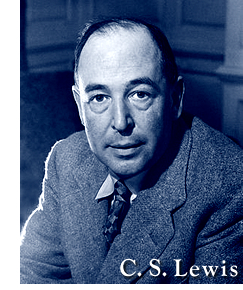
C.S. Lewis – Today’s Reading


All sorts of people are fond of repeating the Christian statement that ‘God is love’. But they seem not to notice that the words ‘God is love’ have no real meaning unless God contains at least two Persons. Love is something that one person has for another person. If God was a single person, then before the world was made, He was not love. Of course, what these people mean when they say that God is love is often some- thing quite different: they really mean ‘Love is God’. They really mean that our feelings of love, however and wherever they arise, and whatever results they produce, are to be treated with great respect. Perhaps they are: but that is something quite different from what Christians mean by the statement ‘God is love’. They believe that the living, dynamic activity of love has been going on in God forever and has created everything else.

And that, by the way, is perhaps the most important difference between Christianity and all other religions: that in Christianity God is not a static thing—not even a person—but a dynamic, pulsating activity, a life, almost a kind of drama. Almost, if you will not think me irreverent, a kind of dance.

From Mere Christianity

Compiled in A Year with C.S. Lewis

Night Light – Decisions, Decisions


“The head of every man is Christ, and the head of the woman is man, and the head of Christ is God.” 1 Corinthians 11:3

Among the most controversial Scriptures are those relating to a wife’s obligation to “submit” to a husband’s leadership. This principle offends many women. Furthermore, it places power in the hands of men who sometimes misuse it. And yet, there it is, time and again: “The husband is head of the wife.” Those words can’t be brushed aside by those who rely on Scripture as their infallible guide. But what does this “headship” really mean?

The Bible makes it clear that the husband is to be the leader in his home, yet he has no right to run roughshod over the opinions and feelings of his wife. He is to love her as Christ loved the church (Ephesians 5:25) and to serve her unselfishly and compassionately. A man should include his wife in making mutually satisfying decisions, always working to incorporate her perspectives and seeking compromise when possible. In situations where they simply cannot find common ground, Scripture gives the man the prerogative—and responsibility—to choose and lead. Yet in this case, he must be more sensitive and considerate than ever, bearing in mind that he will ultimately answer to God not only for his choices, but for his treatment of his wife.

Just between us…

  • (husband) How would you rate my leadership as your husband?
  • Does our decision‐making process fit the biblical model? (wife)
  • How do you feel about your role as “leader in the home”?
  • (husband) Am I sensitive to your feelings regarding decisions?

Heavenly Father, in Your divine plan for marriage You have asked the husband to lead and the wife to submit, and we want so much to obey You. We come humbly now, asking for Your wisdom and help to do so. Amen.
From Night Light For Couples, by Dr. James & Shirley Dobson

Charles Stanley – The Result of Surrender

Galatians 5:16-25

Ask most believers if they would like to accomplish what the Lord has planned for them to do with their life, and they will say, “Yes!” To be the person He calls each one of us to be, we must surrender our will to His. That means telling God that we are willing for Him to do whatever He must to drive selfishness out of our life. He may send pain and heartache, because that is a sure way to get our attention. But as a result, we’ll be wiser and more mature followers.

Yielding our will to God’s superior plan clears off the throne of our life, enabling the Holy Spirit to take His rightful place there. Then, as He discards any junk that’s been cluttering our perspective, we are transformed from the inside out as our spirit undergoes important changes: We begin to recognize when God’s hand is at work; we experience freedom from selfish pursuits and earthly attachments like money and wrong relationships; and we understand and appreciate what it means to operate under His power and authority. In serving the Lord, we gain a confidence that we never had while serving ourselves. What’s more, others will see the effects of God’s work in us.

A Spirit-filled believer knows how to love and be loved, maintain peace and joy even in hard times, and give others a second chance. He also wisely knows when to submit. Surrender is not an easy step. It requires courage and patience, as learning submission is a life-long process. But God’s compensation—a Spirit-filled life that attracts others to Jesus Christ—is well worth giving up selfish pursuits.

Our Daily Bread – Birthday Celebration


By You I have been upheld from birth . . . . My praise shall be continually of You.  —Psalm 71:6


Read: Psalm 71:5-18
Bible in a Year: Leviticus 1-3; Matthew 24:1-28

I used to love birthdays. I can still remember standing excitedly on our front porch waiting for my friends to show up for my 5th birthday party. I wasn’t just excited about the balloons, the gifts, and the cake. I was happy that I was no longer only 4! I was growing up.

As I’ve gotten older, however, birthdays have sometimes been more discouraging than exciting. Last year when I celebrated a birthday that marked me by decades more than by years, my wife, Martie, cheered me up with the reminder that I should be grateful to be growing older. She pointed me to Psalm 71, where the psalmist talks about God’s presence throughout his life. He remembers that God “took me out of my mother’s womb” (71:6), and he proclaims with thankfulness, “O God, You have taught me from my youth; and to this day I declare Your wondrous works” (v.17). And now, when the psalmist is older, he has the honor to proclaim: “[God’s] strength to this generation, [His] power to everyone who is to come” (v.18). God had blessed the psalmist with His presence through every year of his life.

Birthdays now remind me of God’s faithfulness. And they bring me closer to being in the presence of the One who has been with me all these years! —Joe Stowell

Lord, remind me often that growing older means I am growing nearer to You! Keep my heart filled with gratitude for Your many blessings, and keep my mind fixed on the joy of heaven.

Count your many blessings—birthday by birthday!

INSIGHT: God’s faithfulness is cause for praise. The psalmist says, “By You I have been upheld from birth” (Ps. 71:6). It is His faithfulness that inspires our confidence in Him: “I will hope continually, and will praise You yet more and more” (v.14).

Alistair Begg –  Our Final Journey


Arise and go.   Micah 2:10


The hour is approaching when the message will come to us, as it comes to all, “Arise, and leave the home in which you lived, from the city in which you have done your business, from your family, from your friends. Arise, and take your final journey.”

And what do we know of the journey? And what do we know of the country to which we are going? We have read a little about it, and part has been revealed to us by the Spirit; but how little do we know of the realms of the future! We know that there is a black and stormy river called Death. God bids us cross it, promising to be with us.

And after death, what comes? What wonder-world will open upon our astonished sight? What scene of glory will be unfolded to our view? No traveler has ever returned to tell. But we know enough of the heavenly land to make us welcome our summons there with joy and gladness.

The journey of death may be dark, but we may face it fearlessly, knowing that God is with us as we walk through the gloomy valley, and therefore we need fear no evil. We shall be departing from all we have known and loved here, but we shall be going to our Father’s house–to our Father’s home, where Jesus is–to that royal “city that has foundations, whose designer and builder is God.”1 This will be our last relocation, to live forever with Him we love, in the midst of His people, in the presence of God.

Christian, meditate much on heaven; it will help you to press on and to forget the difficulty of the journey. This vale of tears is but the pathway to the better country: This world of woe is but the stepping-stone to a world of bliss.

Prepare us, Lord, by grace divine,
For Thy bright courts on high;
Then bid our spirits rise, and join
The chorus of the sky.

1) Hebrews 11:10

Today’s Bible Reading

The family reading plan for February 7, 2015
* Genesis 40
Mark 10

Devotional material is taken from “Morning and Evening,” written by C.H. Spurgeon, revised and updated by Alistair Begg.

Charles Spurgeon – The prodigal’s return


“But when he was yet a great way off, his father saw him and had compassion, and ran, and fell on his neck, and kissed him.” Luke 15:20

Suggested Further Reading: John 3:16-21

When the light of God’s grace comes into your heart, it is something like the opening of the windows of an old cellar that has been shut up for many days. Down in that cellar, which has not been opened for many months, are all kinds of loathsome creatures, and a few sickly plants blanched by the darkness. The walls are dark and damp with the trail of slugs and snails; it is a horrid filthy place into which no one would willingly enter. You may walk there in the dark very securely, and except now and then for the touch of some slimy creature, you would not believe the place was so bad and filthy. Open those shutters, clean a pane of glass, let a little light in, and now see how a thousand noxious things have made this place their habitation. It was not the light that made this place so horrible, but it was the light that showed how horrible it was before. So let God’s grace just open a window and let the light into a man’s soul, and he will stand astonished to see at what a distance he is from God. Yes, sir, today you think yourself second to none but the Eternal; you fancy that you can approach his throne with steady step; it is but a little that you have to do to be saved; you imagine that you can accomplish it at any hour, and save yourself upon your dying bed as well as now. Ah! sir, if you could be made to be in appearance what you are in reality, then you would see that you are far enough from God even now, and so far from him that unless the arms of his grace were stretched out to bring you to himself; you must perish in your sin.

For meditation: Even the believer has sins of which he is ignorant (Psalm 19:12). God knows all about them. Thank him that he came in the person of his only-begotten Son to meet us when we were far off and to bring us back to himself (Ephesians 2:13).

Sermon no. 176

7 February (1858)