Greg Laurie – Narcissists Need Not Apply


“‘God resists the proud, but gives grace to the humble.’ Therefore submit to God.”—James 4:6–7

I read an interesting article about how narcissistic our culture is today. It said, “A new analysis of the American Freshman Survey, which has accumulated data for the past 47 years from 9 million young adults, reveals that college students are more likely than ever to call themselves gifted and driven to succeed, even though their test scores and time spent studying are decreasing.

The article went on to talk about how because of Facebook and Twitter, everyone can act like they are a rock star. They can live in the fantasy world of video games as an Olympian or sharpshooter.

But then there are those who have a realistic assessment of themselves, and here is some good news: God can do amazing things through those people. In fact, God goes out of His way to find people like that—people who see their shortcomings, but also the greatness of God.

When Simon Peter saw himself in light of God’s greatness, he told Jesus, “Depart from me, for I am a sinful man!” (Luke 5:8). In other words, “Don’t waste your time on me Lord. I will only let you down!”

The people God uses are not proud and arrogant, but see themselves for what they are.

This gives hope to all the people out there who are not extraordinary, but ordinary.

  • Those who are not necessarily the best students, class president, or on the homecoming team.
  • Those who are not the first chosen for the team, but the last.
  • Those who have not made the cover of People magazine’s “World’s Most Beautiful People.”

If we humble ourselves, examine our gifts and abilities realistically, and then hand them over to God to use as He pleases, God can and will use us for His glory.

“Humble yourselves in the sight of the Lord, and He will lift you up” (James 4:10 NKJV).

Streams in the Desert for Kids – Don’t Fret


Psalm 37:1

What in the world does “fret” mean? Here is a little word that doesn’t have any positive definitions. It means “to worry, to be discontent, to have something be eaten away by something else.” It means, “to torment or irritate or upset someone or yourself.” So when the Bible says not to “fret” it means “quit worrying about it.” That’s not always easy to do, is it?

Here’s another little word with a negative definition: Envy. Envy is a kind of jealousy. The dictionary defines it as the “resentful or unhappy feeling of wanting somebody else’s success, good fortune, qualities, or possessions.” We can envy someone else’s clothes, their looks, their friendships, their talents, or their achievements. For example, when a friend does well on an exam, instead of being happy for her, you feel jealous and you wish it could have been you instead. That’s envy.

The Bible says that we shouldn’t fret about or envy the apparent success of people who do wrong. Do you know someone who got rewarded for cheating? How did it make you feel? Did you fret and feel envious? Unfortunately, fretting and envy don’t change the situation, but they do make us miserable. That’s why the Bible says not to fret or envy. And although people who cheat to get ahead appear to be getting away with it, they’re losers in the long run.

Dear Lord, I admit I have both fretted and been envious. Please help me to be content with doing honest work and to trust you with the rest. Amen.

Discovering God’s Design – Comeuppance?


Micah 2:1–5

God’s plans will override those of the swindlers Micah describes. And that sounds only fair, doesn’t it? In fact, we get a certain sense of satisfaction when we read about the just deserts coming to these terrible individuals. It goes without saying that we can identify with the swindled, or at least that we stand with them in our righteous disgust over the injustice they are experiencing.

Pastor and author Bill Hybels points out in a sermon that each of us is born with closed fingers. He goes on to describe ways in which that grasping response stays with us until finally, in death, we relax our grip. That sounds pretty consistent with Micah’s oppressors. But Hybels is talking about you and me.

When we get to the Gospels, we see Jesus responding to peoples’ greed and oppression in a different manner than the judgment described in Micah 2:1–5. Hybels envisions a scene between Jesus and a certain swindler named Zacchaeus (see Lk 19:1–10):

Zacchaeus was a clutcher … until he had dinner with Jesus …

Here is what I imagine Jesus might have said over dinner: “Hey, Zacchaeus. What your heart yearns for will never be satisfied by that which you are hanging on to so tightly. Your heart was meant to be in deep communion with God and in loving community with other people in the Family of God. You have walked away from that kind of communion and are settling for something far less. You are settling for trying to meet the needs of your heart by clutching stuff.”

I think Jesus might have gone on, “You know what I am going to do for you? In the not too distant future, I am going to open up my hands and they are going to receive steel spikes so that guys like you with hands like yours can be changed. I am going to be so generous to you, Zacchaeus. I am going to take your sin and greed and lack of love and I am going to pay for it on the cross and present salvation to you as a gift.

“And I won’t stop there. I am going to adopt you into my family. I am going to answer your prayers. I am going to give you strength through the storms of life. And I am going to give you heaven on top of all.”

At a certain point in the conversation, I think the enormity of Jesus’ generosity melted Zacchaeus and something changed on the inside. Zacchaeus emerges with his voice trembling with excitement and newfound conviction …

When your heart gets transformed by generous grace, your hands have a way of opening up.

Maybe it isn’t so hard after all to see ourselves on the negative side of justice, at least some of the time. None of us looks forward to comeuppance, but “Come to me, … and I will give you rest” (Mt 11:28) sounds inviting.

Think About It

  • What weighs most heavily on you?
  • Are you ready to let it go?
  • Are you willing, like Zacchaeus, to allow your life to be transformed?

Pray About It

Lord, transform my life by your power and presence. Help me to fully realize the extent of Jesus’ gifts to me.

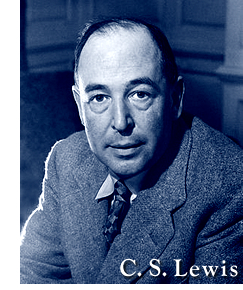
C.S. Lewis Daily – Today’s Reading


To become new men means losing what we now call ‘ourselves’. Out of our selves, into Christ, we must go. His will is to become ours and we are to think His thoughts, to ‘have the mind of Christ’ as the Bible says. And if Christ is one, and if He is thus to be ‘in’ us all, shall we not be exactly the same? It certainly sounds like it; but in fact it is not so.

It is difficult here to get a good illustration; because, of course, no other two things are related to each other just as the Creator is related to one of His creatures. But I will try two very imperfect illustrations which may give a hint of the truth. Imagine a lot of people who have always lived in the dark. You come and try to describe to them what light is like. You might tell them that if they come into the light that same light would fall on them all and they would all reflect it and thus become what we call visible. Is it not quite possible that they would imagine that, since they were all receiving the same light, and all reacting to it in the same way (i.e. all reflecting it), they would all look alike? Whereas you and I know that the light will in fact bring out, or show up, how different they are. Or again, suppose a person who knew nothing about salt. You give him a pinch to taste and he experiences a particular strong, sharp taste. You then tell him that in your country people use salt in all their cookery. Might he not reply ‘In that case I suppose all your dishes taste exactly the same: because the taste of that stuff you have just given me is so strong that it will kill the taste of everything else.’ But you and I know that the real effect of salt is exactly the opposite. So far from killing the taste of the egg and the tripe and the cabbage, it actually brings it out. They do not show their real taste till you have added the salt.

From Mere Christianity

Compiled in A Year with C.S. Lewis

Night Light for Couples – Side By Side


“Encourage one another daily.” Hebrews 3:13

The Greek translation for the word encouragement is parakletos, which literally means “called alongside to help.” It brings to mind the scriptural image of two people yoked side by side, as when Jesus said, “Take my yoke upon you and learn from me…. For my yoke is easy and my burden is light” (Matthew 11:29–30). This kind of encouragement includes offering an uplifting word, but it is more than that. It is standing by your husband and keeping an attitude of good cheer when he is laid off his job. It is pitching in to finish the dishes when your wife is too tired to stand. It’s crouching down to a four‐year‐old’s eye level and listening sympathetically as she tearfully tells you about her skinned knee.

The act of encouraging doesn’t include instructing your partner on what to do about a problem. It doesn’t include giving advice, offering tips for improving in the future, or uttering hollow words such as “You really should have known better than to make that foolish mistake” or “Get over it.” Instead, encouragement is a participation game. When you stand alongside your mate and share his or her troubles, you’ve become a practitioner of parakletos and an exceptional source of courage, hope, and happiness.

Just between us…

  • Do you know anyone who always makes you feel good about yourself?
  • How do they do it? Why is it often so difficult to think about the other person first? • How has God used me to “come alongside” you?
  • How can I do better?

Lord Jesus, thank You that You put it within our power to encourage others. May we grow in that ministry. May we become experts at it—starting in our marriage. Amen.

Encourage one another daily.

From Night Light For Couples, by Dr. James & Shirley Dobson


Charles Stanley – Finding Strength in the Lord


Psalm 31

The world does not offer much hope for those in despair, but God does. Long before he was king, David stepped out of God’s will. In order to get beyond Saul’s reach, he sought refuge from the Philistines, and when he returned to the ashes of his city, Ziklag, he was in utter despair. However, David “strengthened himself in the Lord” (1 Sam. 30:6). Though Scripture is not specific about his moment of surrender, I believe he underwent a five-step spiritual process.

First, David repented. Repentance is a change of mind that results in change of conduct. Recognizing his mistake, David chose a new direction. Second, he recalled God’s past faithfulness in hard times. Third, he reflected on heavenly power. He was emotionally, physically, and spiritually drained, but he had been exhausted before and knew God’s strength was sufficient for him. David had recorded accounts of his experiences with the Lord, which made recollecting easier.

Fourth, David remembered God’s promises. His psalms show that he valued assurances of protection, peace, and help during troubles. Fifth, he resolved to trust God rather than give in to the despair that threatened to overwhelm him. In response to David’s faith, God gave him the strength he desperately needed.

If you surrender to God in moments of despair, He will provide what you need, as He did for David. He wants to strengthen His children so they can bear up under the weight of tough circumstances. So yield to Him—at some point, you’ll no doubt look back and mark the day as the beginning of new growth in your faith.

Our Daily Bread — Sharing A Burger


Read: James 2:14-17
Bible in a Year: 1 Samuel 15-16; Luke 10:25-42


Do not forget to do good and to share, for with such sacrifices God is well pleased. —Hebrews 13:16

Lee Geysbeek of Compassion International told about a woman who had the opportunity to travel to a distant land to visit the child she sponsored. She decided to take the child, who was living in abject poverty, to a restaurant.

The boy ordered a hamburger, and the sponsor ordered a salad. When the food came to the table, the boy, who assuredly had never had such a meal in his life, surveyed the scene. He looked at his huge hamburger and over at his sponsor’s small salad. Then he took his knife and cut the burger in half, offered it to his sponsor, rubbed his tummy, and asked, “Hungry?”

A child who had next to nothing his whole life was willing to share half of what he had with someone he thought might need more. This child can be a good reminder the next time we meet someone in physical, emotional, or spiritual need. As followers of Jesus, our faith in Him should be mirrored through our actions (James 2:17).

We encounter people in need every day. Some around the globe, some simply around the corner. Some in need of a warm meal, others a kind word. What a difference followers of Christ, who have experienced His love, could make by doing good and sharing (Heb. 13:16). —Dave Branon

Today, Lord, help me see beyond my own problems to the needs of others. Guide my hand to give instead of get, to offer instead of ask, and to bless instead of seeking blessings. May Your name be honored.

To be doing good is man’s most glorious task. —Sophocles

INSIGHT: James makes a strong connection here between invisible faith and the visible works that faith produces. In Ephesians 2:8-9, Paul declares faith to be completely distinct from works. There is no conflict between these two points, however, for Paul agrees with James in Ephesians 2:10, saying, “For we are His workmanship, created in Christ Jesus for good works, which God prepared beforehand that we should walk in them.” Paul says that salvation in Christ is rooted in faith apart from works, but that this faith will result in the kind of works for which God has made us in Christ.

Ravi Zacharias Ministry – We Must Play


In August of 1963, due to his ailing health and increasing responsibilities, C.S. Lewis announced his retirement from Cambridge. His stepson Douglas Gresham and friend Walter Hooper were sent to the university to sort out his affairs and bring home the two thousand or so books that lined the walls of his Magdalene College office. Knowing the house was already filled to its bursting point with books, the pair wondered all the way home where on earth they would find the space to put them. But Lewis had already contrived an intricate plan for their use.

A nurse named Alec had been hired to stay up nights in case Lewis fell ill and needed his assistance. As the men returned with the enormous load of books, Alec was asleep in his room on the ground floor. As the truck pulled into the driveway, Lewis appeared, cautioning them to silence. “Where’ll we store the books?” Hooper whispered, to which Lewis responded with a wink. Carrying each stack with tedious concern so as not to wake the sleeping victim, the three men piled the works around the nurse’s bed, sealing him in a cocoon of manuscript and literature. When they were finished, the books were stacked nearly to the ceiling, filling every square inch of the room where the snoring nurse still slept.

Much to the relief of the anxious culprits who were waiting outside, Alex finally awoke. From within the insulated tomb, first came sounds of bellowing, and finally the tumbling of the great literary wall. An amused nurse emerged from within the wreckage.

The characters in this story are every bit as spirited as some of the playful personalities from Lewis’s imaginary worlds. These are the whimsical scenes—fiction and non-fiction—that seal in my mind the many weighty lessons I have wrought from him. But perhaps namely: Christianity is a religion with room—and reason—for life and laughter.

Much of the thought and work of C.S. Lewis wrestles with the existential evidences of the life-giving presence of God and the winsome invitations around us that beckon us to participate in this life. I am not alone in saying it was Lewis who first taught me to move toward the questions that reappear though we bury them and to at least be honest about the logical outworkings of the philosophies we hold, even loosely. It was Lewis who taught me to search after God with both heart and mind and energy, but with the wonder and imagination of a child who is able to be startled by the very thing she is looking for. A former atheist, Lewis came to believe with everything in him that Christianity gives an explanation—and a face—to the joy we stumble across, joy that “flickers on the razor-edge of the present and is gone.”

On the one hand, if life is but time and happenstance, why do we laugh or wonder, or experience a desire to play, however fleetingly at all? Is the encounter of delight simply the mind’s attempt to distract us from pain? What good is joy, what purpose is humor or laughter or beauty, if life is but a series of instincts to survive and the universe at a cosmic level is meaningless? On the other hand, if we are made in the image of a holy, loving, imaginative God, how wonderful that God has made us with both logic and laughter, with intrinsic worth and immortal wonder.

Nearing the end of one of his most remarkable lectures, in which he spoke hauntingly of the glory of the God and the immortality of the soul made in God’s image, Lewis added a word of warning: “This does not mean that we are to be perpetually solemn. We must play. But our merriment must be of that kind (and it is, in fact the merriest kind) which exists between people who have, from the outset, taken each other seriously.”(1)

The resurrected, vicariously human Son of God invites us in to such a story, a creator who made us to live fully, coming in person to confront our desolation and to be our consolation, that we might encounter what the very word means. What if the door on which we have been knocking all our lives will one day open at last? Seeking and playing, finding and living may well be among life’s greatest efforts.

Jill Carattini is managing editor of A Slice of Infinity at Ravi Zacharias International Ministries in Atlanta, Georgia.

(1) C.S. Lewis, Weight of Glory (New York: Harper, 1980), 46.

(2) Photo by Ben May Media. http://benmaymedia.zenfolio.com/ Used by permission. Bangalore, India. These children were playing a board game at one of Agni Raksha’s’ recovery facilities. Agni Raksha helps burn victims who are burned maliciously – sometimes if a dowry is not paid by a father marrying off his daughter, the husband or mother-in-law will light the girl on fire. Often times when a child sees their mother on fire, they run to try and help them and get severely burned themselves.

Alistair Begg – Comfort on the Hill


…the place that is called The Skull. Luke 23:33

The hill of comfort is the hill that is called The Skull or Calvary; the house of consolation is built with the wood of the cross; the temple of heavenly blessing is based upon the riven rock–riven by the spear that pierced His side. No scene in sacred history ever gladdens the soul like Calvary’s tragedy.

Is it not strange, the darkest hour

That ever dawned on sinful earth,

Should touch the heart with softer power,

For comfort, than an angel’s mirth?

That to the Cross the mourner’s eye should turn,

Sooner than where the stars of Bethlehem burn?

Light springs from the midday-midnight of Golgotha, and every herb of the field blooms sweetly beneath the shadow of the once accursed tree. In that place of thirst, grace has dug a fountain that runs continually with water pure as crystal, each drop capable of alleviating the woes of mankind. You who have had your seasons of conflict will confess that it was not at Olivet that you ever found comfort, not on the hill of Sinai, nor on Tabor; but Gethsemane and Golgotha have been a means of comfort to you. The bitter herbs of Gethsemane have often taken away the pains in your life; and the groans of Calvary yield rare and rich comfort.

We never would have known Christ’s love in all its heights and depths if He had not died; nor could we guess the Father’s deep affection if He had not given His Son to die. The common mercies we enjoy all sing of love, just as the seashell, when we put it to our ears, whispers the sounds of the deep sea from which it came; but if we desire to hear the ocean itself, we must not look at everyday blessings, but at the transactions of the crucifixion. If you want to know love, then go afresh to Calvary and see the Man of Sorrows die.

Devotional material is taken from “Morning and Evening,” written by C.H. Spurgeon, revised and updated by Alistair Begg.


Charles Spurgeon – The best of masters


“Peace I leave with you, my peace I give unto you: not as the world giveth, give I unto you.” John 14:27

Suggested Further Reading: 1 Thessalonians 5:23-28

It is the same with the world at this day. Everyone greets us in writing with a “Dear sir,” or a “My dear sir,” and concludes with “Yours very truly,” and “Yours sincerely.” We call all “friends,” and if we meet but casually we express the utmost anxiety with regard to one another’s health, and we carefully enquire after each other’s families; when perhaps we shall no sooner have passed by the person than we shall forget his existence, and certainly shall entertain no anxious thoughts with regard to his welfare, nor any loving remembrance of him. The world gives very largely when it gives compliments. Oh, what blessings would descend upon all our heads, if the blessings uttered could be blessings bestowed. Even when the “Good bye” is given, which translated means, “God be with you”—if that could be but true, and if God could be with us, in answer to that prayer, so little understood, how rich might we be! But alas! the way of the world is, “Be ye warmed and filled;” but it has not that which should warm, nor that which should fill. It is a world of words; high-sounding, empty, all-deceiving words. Now this is not so with Christ. If he says “Peace be with you,” his benediction is most true and full of sweet sincerity. He left his own peace in heaven, that he might give the peace which he enjoyed with his Father, to us in this world of sorrow, for thus he puts it, “My peace I give unto you.” Christ, when he blesses, blesses not in word only, but in deed. The lips of truth cannot promise more than the hands of love will surely give. He gives not in compliment. Furthermore, even when the world’s wishes of peace are sincere, what are they but mere wishes?

For meditation: Greetings and best wishes from the lips of a Christian should be modelled on Christ, not the world. Do you go in for the “polite lie” or are your concerns for others genuine (Philippians 2:20; 3 John 2)?

Sermon no. 247
10 April (1859)

John MacArthur – Rejecting Worldly Ambitions


“Blessed are those who hunger and thirst for righteousness, for they shall be satisfied” (Matt. 5:6).

Only Christ can satisfy your deepest needs.

Within every man and woman is a hunger and thirst only God can satisfy. That’s why Jesus said, “I am the bread of life; he who comes to Me shall not hunger, and he who believes in Me shall never thirst” (John 6:35).

Sadly, most people search for happiness in the wrong places. The prodigal son in Luke 15 is one example. He turned from God to pursue sinful pleasures, but soon discovered that sin cannot satisfy a hungering soul. That’s when he returned to his father’s house, where he was given a great feast—a picture of salvation.

The rich fool in Luke 12 thought that amassing possessions was the key to happiness, saying to himself, “What shall I do, since I have no place to store my crops? . . . This is what I will do: I will tear down my barns and build larger ones, and there I will store all my grain and my goods. And I will say to my soul, ‘Soul, you have many goods laid up for many years to come; take your ease, eat, drink and be merry.’ But God said to him, ‘You fool! This very night your soul is required of you; and now who will own what you have prepared?’ So is the man who lays up treasure for himself, and is not rich toward God” (vv. 17- 21). Unlike the prodigal son, the rich fool never turned to God in repentance. Consequently he lost everything.

The rich fool is typical of many people today: they ignore Christ and attempt to fill the void with worldly pleasures. Most are oblivious to the eternal peril that awaits them if they don’t repent.

Those who love God shun worldliness, pursue righteousness, and know the satisfaction that comes from pleasing Him. That’s the essence of the Sermon on the Mount: “Seek first His kingdom and His righteousness; and all [you need] will be added to you” (Matt. 6:33). Keep that goal uppermost in your mind as you face the challenge of each new day.

Suggestions for Prayer

Thank God that He satisfies the deepest desires of your heart.

For Further Study

Read Daniel 4:28-37.

  • What was Nebuchadnezzar’s sin?
  • How did God punish Him?
  • How did Nebuchadnezzar respond after being punished?


Joyce Meyer – Where’s My Pony?


My son, attend to my words; consent and submit to my sayings. Let them not depart from your sight; keep them in the center of your heart. For they are life to those who find them, healing and health to all their flesh.   —Proverbs 4:20-22

In these verses, the writer used the words, attend to my words, which is another way of exhorting us to meditate. I love the fact that God not only frequently tells us to meditate—to ponder seriously—His Word, but He frequently promises results. It’s as if God says, “Okay, Joyce, if you meditate, here’s what I’m going to do for you.”

In this passage, the promise is life and health. Isn’t that amazing? It’s even a promise that when you contemplate and brood over the Bible, it will affect your physical body.

We’ve known for a long time that when we fill our minds with healthy, positive thoughts, it affects our body and improves our health. This is just another way of repeating this truth. Or take the opposite viewpoint: Suppose we fill our minds with negative thoughts and remind ourselves how frail we are or how sick we were the day before. We soon become so filled with self-pity and self-defeating thoughts that we get even sicker.

In the previous pages, I’ve already mentioned the idea of prosperity (see Psalm 1 and Joshua 1:8). I believe that by “prosperity,” God means that we’ll be enriched and prosper in every part of our lives. It’s not a promise of more material wealth, but an assurance of being able to enjoy all the wonderful blessings we have.

Recently when I meditated on several passages in the Bible, I realized God was showing me that the Word has hidden treasures in it—powerful, life-giving secrets—which God wants to reveal to us. They are there for those who muse, ponder, and contemplate the Word of God.

What we often forget is that God wants our fellowship, our company, and our time with Him. If we want a deep relationship with our heavenly Father, we have to make quality time for God. I recently heard someone say, “Quality time comes out of quantity times.” In other words, it’s only as we spend time with God on a regular, daily basis that we have those special, life-changing moments. We can’t program them to happen, but if we’re there on a daily basis, God will cause some of those times to be quality times of special blessing.

  1. L. Moody once said that the Bible would keep us from sin, or sin would keep us from the Bible. That’s the principle here. As we concentrate on God’s Word and allow it to fill our thoughts, we will push away all desire to sin or to displease God in any way. We become more deeply rooted in Him. Again, think of it in the negative. When our mind remains focused on our problems all the time, we become consumed with them. If we meditate on what’s wrong with others, we see even more flaws and faults. But when we concentrate on God’s Word, light comes into our souls.

I want to go back one more time to that powerful statement in Philippians 4:8. No matter which translation or paraphrase we read it in, the message is powerful and exactly what we need to do to condition our minds for victory.

Here’s Eugene Peterson’s paraphrase in The Message: “Summing it all up, friends, I’d say you’ll do best by filling your minds and meditating on things true, noble, reputable, authentic, compelling, gracious—the best, not the worst; the beautiful, not the ugly; things to praise, not things to curse.”

Dear Father in heaven, teach me the blessings of pondering Your Word, of filling my heart and mind with Your spiritual manna. May I grow into maturity and become more and more like Your Son, Jesus. It’s in His name that I pray. Amen.

Campus Crusade for Christ; Bill Bright – His Gifts and Powers 


“It is the same and only Holy Spirit who gives all these gifts and powers, deciding which each of us should have” (1 Corinthians 12:11).

As I counsel in the area of Christian service, I find much confusion among many Christians regarding the gifts of the Holy Spirit.

Believers often are so involved in trying to discover or receive additional spiritual gifts that they are not developing and using their known gifts and abilities to do God’s will.

For this reason, I caution against going to great lengths to discover one’s spiritual gifts. Rather than emphasize gifts, I encourage a person to surrender fully to the lordship of Jesus Christ and appropriate by faith the fullness of the Holy Spirit.

Then, by faith and hard work, while depending on the Holy Spirit, a person can set out with determination to accomplish that to which God has called him.

Paul wrote about this important principle in his letter to the Philippians:

“Dearest friends, when I was there with you, you were always so careful to follow my instructions. And now that I am away you must be even more careful to do the good things that result from being saved, obeying God with deep reverence, shrinking back from all that might displease Him….

“For I can do everything God asks me to do with the help of Christ who gives me the strength and power” (Philippians 2:12; 4-13). This, of course, can be done only if a Christian totally submits himself to the lordship of Jesus Christ and the control of the Holy Spirit.

Bible Reading: I Corinthians 12:1-10

TODAY’S ACTION POINT:  I’ll be more concerned about being yielded to the moment-by-moment direction and control of God’s Holy Spirit than about discovering my spiritual gift(s).


Presidential Prayer Team; C.P. – With Him


When Jesus went into the grave, your sin went with Him (Ephesians 2:2). When He rose, if you believe, your spirit rose with Him (2:5). When He returned to Heaven, spiritually speaking, you are seated with Him in heavenly places (2:6). Now His Spirit lives inside of you (I Corinthians 6:19) and “if the Spirit of him who raised Jesus from the dead dwells in you, he who raised Christ Jesus from the dead will also give life to your mortal bodies through his Spirit who dwells in you.” (Romans 8:11)

Made us alive together with Christ—by grace you have been saved.

Ephesians 2:5

Until that day, what are believers to do? You are not saved by good works, but you are called to do them (Ephesians 2:8-10). You are to use whatever gift you have to serve others (I Peter 4:10). Consider your skills, talents and resources, and how you can use one of them to help someone this week – not to earn your salvation, but in gratitude for it.

Pray, too, for your leaders and the citizens of this nation to receive the free gift of salvation and do the good works they are called to do.

Recommended Reading: Hebrews 13:1-8, 15-17

Greg Laurie – The Matter of the Heart


“These people draw near to Me with their mouth, and honor Me with their lips, but their heart is far from Me.”  —Matthew 15:8

Have you ever found yourself distracted during a time of worship? As you’re singing, maybe you’re thinking, I am so sick of this song. Why are we still singing this song? Or maybe you’re looking around and saying to yourself, I’m more spiritual than anyone here. I’m such an awesome worshiper. Then again, you might be thinking, I wonder what I should eat after church?

During a worship service, it’s possible to have no thought of God whatsoever. But here’s what we need to know: Worship is not an art form; it is a heart form. God looks at what is going on inside. Quoting from Isaiah, Jesus said, “These people draw near to Me with their mouth, and honor Me with their lips, but their heart is far from Me” (Matthew 15:8).

Jesus told the story of a Pharisee and a tax collector who both went to the temple to pray. Tax collectors were despised in the eyes of nearly everyone, while Pharisees were the most religious guys around. Jesus said that the “Pharisee stood and prayed thus with himself, ‘God, I thank You that I am not like other men—extortioners, unjust, adulterers, or even as this tax collector. I fast twice a week; I give tithes of all that I possess’ ” (Luke 18:11–12).

The tax collector, however, stood at a distance in the temple. He wouldn’t even look up to heaven as he beat his breast and prayed, “God, be merciful to me a sinner!”

Jesus concluded by saying, “I tell you, this man went down to his house justified rather than the other” (verse 14). Why? Because his heart was right toward God.

When we worship, let’s do it from our heart. Because the heart of the matter is the matter of the heart.


Max Lucado – Into His Likeness


Strange as it may seem, Paul tells us in 1 Corinthians 2:16 that Christians actually have within themselves a portion of the very thoughts and mind of Christ. Strange is the word! If I have the mind of Jesus, why do I still think so much like me? Why do I still have the hang-ups of Max? Why do I still hate traffic jams?

God has ambitious plans for us. The same one who saved your soul longs to remake your heart. His plan is nothing short of a total transformation. Colossians 3:10 reminds us, “You have begun to live the new life, in which you are being made new and are becoming like the One who made you. This new life brings you the true knowledge of God.” Let’s fix our eyes on Jesus! Perhaps in seeing him, we will see what we can become.

From Just Like Jesus

Night Light for Couples – A Most Extraordinary Event

A Most Extraordinary Event – by Jo Ann Larsen

Larry and Jo Ann were an ordinary couple. They lived in an ordinary house on an ordinary street. Like any other ordinary couple, they struggled to make ends meet and to do the right things for their children. They were ordinary in yet another way—they had their squabbles.

Much of their conversation concerned what was wrong in their marriage and who was to blame—until one day when a most extraordinary event took place.

“You know, Jo Ann, I’ve got a magic chest of drawers. Every time I open the drawers, they’re full of socks and underwear,” Larry said. “I want to thank you for filling them all these years.”

Jo Ann stared at her husband over the top of her glasses. “What do you want, Larry?”

“Nothing. I just want you to know I appreciate those magic drawers.”

This wasn’t the first time Larry had done something odd, so Jo Ann pushed the incident out of her mind until a few days later.

“Jo Ann, thank you for recording so many correct check numbers in the ledger this month. You put down the right numbers fifteen out of sixteen times. That’s a record.”

Disbelieving what she had heard, Jo Ann looked up from her mending. “Larry, you’re always complaining about my recording the wrong check numbers. Why stop now?”

“No reason. I just wanted you to know I appreciate the effort you’re making.”

Jo Ann shook her head and went back to her mending. “What’s gotten into him?” she mumbled to herself.

Nevertheless, the next day when Jo Ann wrote a check at the grocery store, she glanced at her checkbook to confirm that she had put down the right check number. “Why do I suddenly care about those dumb check numbers?” she asked herself.

She tried to disregard the incident, but Larry’s strange behavior intensified.

“Jo Ann, that was a great dinner,” he said one evening. “I appreciate all your effort. Why, in the past fifteen years I’ll bet you’ve fixed over 14,000 meals for me and the kids.”

Then, “Gee, Jo Ann, the house looks spiffy. You’ve really worked hard to get it looking so good.” And even, “Thanks, Jo Ann, for just being you. I really enjoy your company.”

Jo Ann was growing worried. Where’s the sarcasm, the criticism? she wondered.

Her fears that something peculiar was happening to her husband were confirmed by sixteen‐year‐old Shelly, who complained, “Dad’s gone bonkers, Mom. He just told me I looked nice. Even though I’m wearing all this makeup and these sloppy clothes, he still said it. That’s not Dad, Mom. What’s wrong with him?”

Whatever was wrong, Larry didn’t get over it. Day in and day out he continued focusing on the positive.

Over the weeks, Jo Ann grew more accustomed to her mate’s unusual behavior and occasionally even gave him a grudging “Thank you.” She prided herself on taking it all in stride, until one day something so peculiar happened that she became completely discombobulated.

“I want you to take a break,” Larry said. “I am going to do the dishes. So please take your hands off that frying pan and leave the kitchen.” (Long, long pause.) “Thank you, Larry. Thank you very much!”

Jo Ann’s step was now a little lighter, her self‐confidence higher, and once in a while she hummed. She didn’t seem to have as many blue moods anymore. I rather like Larry’s new behavior, she thought.

That would be the end of the story except one day another most extraordinary event took place. This time it was Jo Ann who spoke.

“Larry,” she said, “I want to thank you for going to work and providing for us all these years. I don’t think I’ve ever told you how much I appreciate it.”

No matter how hard Jo Ann has pushed for an answer, Larry has never revealed the reason for his dramatic change of behavior, and so it will likely remain one of life’s mysteries. But it’s one I’m thankful to live with.

You see, I am Jo Ann.

Looking ahead…

As Larry demonstrated, a little encouragement can transform a marriage. None of us—king or queen, president or business leader, husband, housewife or child—is without the human craving for appreciation. Mark Twain once said, “I can live for two months on a good compliment.” A kind word is like that. It fuels our energy and infuses us with new enthusiasm for facing the challenges life throws our way.

I invite you during this week’s discussion to consider the incredible power of encouragement. As you apply each principle, I think you’ll find that the sun shines a little brighter and your day runs a bit smoother. You might begin by simply telling your partner how much you appreciate having him or her around.

– James C Dobson

  • From Night Light For Couples, by Dr. James & Shirley Dobson

Charles Stanley – Blessed With Less

 Psalm 81:6-16

Today’s passage paints a popular picture of the Lord’s blessing. We read that and assume, If I just listen and obey God, He will give me more and more. We tend to think of blessings as new benefits the Lord gives us to enjoy.

We might praise God for a salary increase. We may thank Him for a new relationship. In our minds, the term blessing has become synonymous with gift, hasn’t it?

Many believers may be surprised to hear that God often blesses us by taking things away. They think, What? How can God benefit me by giving me less of what I enjoy?

This way of thinking reveals a problem of pride. It’s easy to assume we know what’s best for ourselves. Our logical conclusion is, If I enjoy something, then it must be good and proper. As such, the Lord’s blessing should give me more of that, right?

Wrong. God brings things into our lives that He knows will bless us. Our shortsighted perspective keeps us from seeing the whole picture, but He sees all from beginning to end. He knows whether a particular relationship or more money would ultimately be a blessing or a curse. In some situations, the best thing He can “give” is to take something away.

The Lord isn’t a cosmic Santa Claus. Sometimes, in His wisdom, He chooses to “bless with less.” Can you remember a particular disappointment that caused you to question whether He was acting in your best interest? With time and perspective, can you now see God’s loving care for you in taking something away?

Our Daily Bread — The Mud Puddle


Read: Psalm 119:1-8
Bible in a Year: 1 Samuel 13-14; Luke 10:1-24


Blessed are those who keep His testimonies, who seek Him with the whole heart! —Psalm 119:2

My friend Ed was telling me a story about his little son. He was standing in a mud puddle, so Ed told him to get out. But instead, his son began running through the puddle. “No running through it either,” he said. So the boy began walking through the water. When Ed told him, “No walking!” the boy stood with just his toes in the water, looking defiantly at his dad. The child knew what his father wanted, but he didn’t want to do it.

Sometimes I’m like that stubborn little boy. I know that what I’m doing isn’t pleasing to the Lord, but I do it anyway. God told the children of Israel to “fully obey the Lord your God” (Deut. 28:1 niv), but they failed repeatedly. The psalmist acknowledged his struggle in Psalm 119, “Oh, that my ways were steadfast in obeying your decrees!” (v.5 niv).

Jealousy, hatred, rebellion—they occur all too often. But God provided for our redemption through the sacrifice of His Son, the Lord Jesus Christ. The Holy Spirit helps us when we are tempted (1 Cor. 10:13); and when we confess our wrongdoing, God promises to forgive us (1 John 1:9).

If you are like me and keep running back into the mud puddles of life, don’t give up. God will help you to resist temptation, and He will never stop loving you! —Dave Egner

Dear Lord, help me when I’m tempted. Bring the promises of the Bible to mind and strengthen me by Your Holy Spirit to say no to temptation. Let all my words and deeds bring honor to Your name.

To master temptation, let Christ master you.

INSIGHT: Psalm 119 is the longest chapter in the Bible with 176 verses. The entire psalm celebrates God’s Word and speaks of its priority and sufficiency in the daily life of the believer. The psalmist uses different words to describe God’s Word: the law of the Lord (v. 1), testimonies (v. 2), ways (v. 3), precepts (v. 4), statutes (v. 5), commandments (v. 6), righteous judgments (v. 7), and word (v. 9). Through the Bible, God communicates His standards for our lives, His guidance, and His ways.

Ravi Zacharias Ministry – Easter in Academia


Lock atheist philosophers who do not specialize in religion in a room with theist philosophers who do specialize in religion (well, don’t really, but if you did), and if you listened to the ensuing debates, you “would have to conclude that the theists definitely had the upper hand in every single argument or debate.”(1)

Those are not my words but the words of an atheist. And not just any atheist, an atheist who is a respected professional philosopher with 12 books and over 140 articles to his name.

Despite his atheism, Quentin Smith draws the theism-friendly conclusion that “God is not ‘dead’ in academia; he returned to life in the late 1960s and is now alive and well in his last academic stronghold, philosophy departments.”(2)

God is alive. And not only in philosophy, but in sociology as well. Fifty years ago sociology was convinced that God was on the way out. The scholars had bought into secularization theory; you know the idea: The more modern and technological the world becomes, the more secular it becomes.

Peter Berger was one of the leading proponents of this theory. Today he has completely abandoned it.

At an academic conference in Miami in 2011, Berger said that he and almost everyone in the field changed their minds simply because that is what the evidence demanded. He said that if you look at the contemporary world,

“The real situation is that most of the world is as religious as it ever was. You have enormous explosions of religion in the world… In fact, you can say every major religious tradition has been going through a period of resurgence in the last 30, 40 years or so… anything but secularization.”(3)

Probably the most influential British philosopher of religion of the last half century is longtime Oxford professor Richard Swinburne. In 2003 he published a book entitled The Resurrection of God Incarnate, and in that book he concludes that on the available evidence today, it is 97% probable that Jesus truly—miraculously—rose from the dead, proving that he is the God he claimed to be.

Do all philosophers agree with Swinburne? Of course not. And even Swinburne recognizes that we can’t take the exact percentage too seriously. He likes to work with probability theory so he plugs in numbers at each point in the argument; they are only meant to provide a rough estimate.

Still though, the fact that someone of his intellectual credibility can make that claim in print, have it published by Oxford University Press, and then ably defend it at top academic conferences all around the world speaks to the fact that the intellectual case for the Christian faith is strong.

A number of popular authors have suggested otherwise in recent years. But these New Atheists are generally not engaged with current philosophical scholarship. In fact, much of the New Atheism at the popular level can be traced directly back to old scholarship at the academic level.

Richard Dawkins denies the existence of a God who can ground good and evil, right and wrong. But criticism without alternative is empty. What is his alternative?: a world in which the disturbing response to being asked whether the wrongness of rape is as arbitrary as the fact that we’ve evolved five fingers rather than six is, “You could say that, yeah.”(4)

Quentin Smith denies the existence of a God who can raise the dead. What is his alternative?:

“The fact of the matter is that the most reasonable belief is that we came from nothing, by nothing and for nothing… We should…acknowledge our foundation in nothingness and feel awe at the marvelous fact that we have a chance to participate briefly in this incredible sunburst that interrupts without reason the reign of non-being.”(5)

Is this any less extraordinary than a resurrection from the dead? On second thought, is this not itself a resurrection from the dead?

If we think it is our minds that keep us from God, we may not be dealing with the arguments at the highest level. My own story is one of reasoning that if God really made me, and if he made me with my mind, then he would ensure that a sincere intellectual search would point in his direction.(6)

To my surprise, that is just what I found. And when I was finally willing to open to God not only my mind but also my heart, I found so much more.

Vince Vitale is a member of the speaking team at Ravi Zacharias International Ministries in Oxford, England.

(1) Quentin Smith, “The Metaphilosophy of Naturalism,” Philo. 4.2 (2001), 197.

(2) Ibid.

(3) Peter Berger, “Six Decades as a Worldwide Religion Watcher: Observations & Lessons Learned.” Ethics & Public Policy Center. n.p., n.d., accessed online on July 22, 2014 at http://eppc.org/publications/berger/.

(4) Richard Dawkins, Interview by Justin Brierley, “The John Lennox—Richard Dawkins Debate.” Bethinking.org, 2008. Web. 25 April 2014. http://www.bethinking.org/atheism/the-john-lennox-richard-dawkins-debate.

(5) Quentin Smith, “The Uncaused Beginning of the Universe,” in William Lane Craig and Quentin Smith, Theism, Atheism, and Big Bang Cosmology (1993), 135. Emphasis added.

(6) Some of the ideas expressed in this Slice are also recorded in the following video: http://bit.ly/WC1rrg

Also see Why Suffering?: Finding Meaning and Comfort When Life Doesn’t Make Sense, co-authored with Ravi Zacharias. Vince Vitale wrote his PhD on the problem of suffering. He now teaches at Wycliffe Hall of Oxford University and is Senior Tutor at The Oxford Centre for Christian Apologetics.