Charles Spurgeon – The jeer of sarcasm, and the retort of piety


“Then David returned to bless his household. And Michal… came out to meet David, and said, How glorious was the king of Israel today, who uncovered himself today in the eyes of the handmaids of his servants, as one of the vain fellows shamelessly uncovereth himself! And David said unto Michal, It was before the Lord, which chose… to appoint me ruler… over Israel: therefore will I play before the Lord. .” 2 Samuel 6:20-22

Suggested Further Reading: 1 Peter 3:1-7

It is a happy thing when we are enabled to rejoice together in our family relationships; when husband and wife help each other on the path to heaven. There can be no happier position than that of the Christian man who finds, in every holy wish he has for God, a helper; who finds that often she outstrips him; that when he would do something, she suggests something more; when he would serve his Master there is a hint given that more yet might be done, and no obstacle put in the way, but every assistance rendered. Happy is that man and blessed is he. He has received a treasure from God, the like of which could not be bought for diamonds. That man is blessed of the Most High; he is heaven’s favourite, and he may rejoice in the special favour of his God. But when it is the other way, and I know it is the case with some of you, then it is a sore trial indeed. Perhaps, though a careful, cautious, prudent, and excellent worldly woman, she cannot see with you in the things which you love in the kingdom of God, and when you have done something which in the excess of your zeal seems to be but little, she thinks it inordinate and extravagant. “Oh,” says she, “do you go and mix with these people? Does King David go and wear a linen ephod like a peasant? Do you go and sit down with that rabble? You? You can stand up for your dignity—put ‘esquire’ after your name, and yet walk in the street with any beggar that likes to call himself a Christian. You,” says she, “you that are so cautious in everything else, you seem to have lost your head when you think about your religion.”

For meditation: Those close to the Lord Jesus Christ, his friends and family, could not understand him (Mark 3:21; John 7:5) but God worked in their lives (Acts 1:14; 1 Corinthians 9:5). Don’t despair of your loved ones who seem so far from God (1 Corinthians 7:16).

Sermon no. 321
9 April (Preached 8 April 1860)

John MacArthur – Inheriting the Earth


“Blessed are the gentle, for they shall inherit the earth” (Matt. 5:5).

Someday God will reverse the curse and return the earth to His people.

God said to Adam and Eve, “Be fruitful and multiply, and fill the earth, and subdue it; and rule over the fish of the sea and over the birds of the sky, and over every living thing that moves on the earth” (Gen. 1:28). But their sin cost them their sovereignty and brought a curse upon the earth (Gen. 3:17-18).

The apostle Paul said, “The anxious longing of the creation waits eagerly for the revealing of the sons of God . . . in hope that the creation itself also will be set free from its slavery to corruption” (Rom. 8:19-21). Someday that curse will be reversed and God’s people will once again inherit the earth.

The Greek word translated “inherit” (Matt. 5:5) means “to receive an allotted portion.” The earth is the allotted portion of believers, who will reign with the Lord when He comes in His kingdom (Rev. 20:6). That’s an emphatic promise in Matthew 5:5, which literally reads, “Blessed are the gentle, for only they shall inherit the earth.”

Many Jewish people of Christ’s day thought the kingdom belonged to the strong, proud, and defiant. But Jesus said the earth will belong to the gentle, meek, and humble. Proud, self-righteous people don’t qualify (cf. Luke 1:46- 53). Jesus said, “Unless you are converted and become [humble and submissive] like children, you shall not enter the kingdom of heaven” (Matt. 18:3).

As a recipient of God’s promises, you should be thrilled knowing that you will inherit the earth and reign with Christ in His earthly kingdom. Be encouraged to know that even when evil people and godless nations seem to prosper, God is in complete control and will someday establish His righteous kingdom on earth.

Rejoice in that assurance, and seek to be all He wants you to be until that great day.

Suggestions for Prayer

  • Thank God that all of creation will someday be freed from sin’s corrupting influences.
  • Praise Him for His mighty power, which will bring it all to pass.

For Further Study

Read 1 Corinthians 6:1-8.

  • What issue did Paul address?
  • How does the future reign of Christians apply to that issue?


Joyce Meyer – Positive Belief


[For Abraham, human reason for] hope being gone, hoped in faith that he should become the father of many nations, as he had been promised, so [numberless] shall your descendants be. He did not weaken in faith when he considered the [utter] impotence of his own body, which was as good as dead because he was about a hundred years old, or [when he considered] the barrenness of Sarah [deadened] womb. No unbelief or distrust made him waver (doubtingly question) concerning the promise of God, but he grew strong and was empowered by faith as he gave praise and glory to God, fully satisfied and assured that God was able and mighty to keep His word and to do what He had promised. Romans 4:18-21

The story of Abraham amazes me no matter how many times I read it. It’s not just the birth of a son when he was a hundred years old. That’s a miracle. But just as amazing is the information that he waited twenty-five years for the fulfillment of the promise. He was seventy-five when God promised him a son.

I wonder how many of us would believe God and live in expectation for twenty-five years. Most of us probably would have said, “I didn’t really hear from God.” “Oh, I guess maybe God didn’t really mean that.” Or, “I need to go somewhere else to get a fresh word from the Lord.”

Sarah and Abraham did have problems holding on to that promise. As a means of attempting to get what they wanted, they had Sarah’s handmaiden, Hagar, bear him a son, but God let him know that wasn’t the way it was going to be. I believe their actions delayed the arrival of God’s promised child.

In our impatience, we often take matters into our own hands. I say we get “bright ideas” plans of our own, which we hope God will bless. These plans open the door for confusion and chaos. Then their results must be dealt with, which often delays our miracle.

When Moses came down from Sinai after having received the Ten Commandments from God, He saw the wickedness of the Israelites who had become impatient in waiting. In anger, he broke the tablets on which God had written the commands. Although we can understand Moses’ anger, we must remember that it was not initiated by God. Therefore, Moses had to ascend Mount Sinai again and once more go through the process of obtaining the Ten Commandments. Moses may have enjoyed a momentary emotional release, but it cost him a lot of extra work. This is a good lesson for all of us. We must pray first and agree with God’s plan, not plan and pray that our plan will work.

It’s often difficult to believe God and hold on year after year after year. Sometimes after my meetings, people come to me and tell me many sad stories. I encourage them to become positive and upbeat. Some people will listen to every word I say; nod, maybe even smile, and then they say the most negative word of all: “But …” With that single word, they are negating everything I’ve said. That’s not the spirit of Abraham.

The Bible gives us promises, hope, and encouragement. God promises good to those ofus who serve Him. Despite the adversity of our circumstances and some people have absolutely terrible situations God still promises good. Our sense of goodness, however, may not be the same as God’s. Getting what we want immediately may not be best for us. Sometimes waiting is the best thing because it helps develop the character of God in us.

The Lord chooses to do good to us and to make us happy; the devil chooses to do wrong and to make us miserable. We can remain patient and keep believing God’s promises, or we can allow the evil one’s whisper to fill our ears and lead us astray.

Too many of us have ignored the fact that God is the originator of miracles. He specializes in doing the impossible: He provided a son to barren Sarah; He opened the Red Sea for the Israelites to walk across on dry land; He destroyed Goliath with a single stone from a slingshot. Those are miracles. That’s the Holy Spirit at work, defying the laws of nature (He made the laws, so He can break them).

Hebrews 11 is a chapter about faith and the people of God who dared to believe the promises. But without faith it is impossible to please and be satisfactory to Him. For whoever would come near to God must [necessarily] believe that God exists and that He is the rewarder of those who earnestly and diligently seek Him [out] (v. 6).

As I consider that verse, I can see how the devil creeps in. He says to us, “Yes, that’s true. Those were special people. You are nobody. God won’t do anything special for you. Why should He?”

That is a satanic lie and one that too many easily accept. God loves each of us, and the Bible says Hes our Father. Any good father loves to do good things for his children. God wants to do good things for you and for me. Expect a miracle in your life. Expect many miracles.

Positive belief in God’s promises yields good results because the Good One sends them to us. Refuse to give up, and you will see the result of your positive belief.

Dear Father in heaven, forgive my lack of belief. Forgive me for allowing Satan to deceive me or make me think I’m worthless or unworthy of Your miracles. I am worthy because You made me worthy. You are the God of the impossible, and I ask You to help me wait on You and never give up. In the name of Jesus Christ my Lord, I pray. Amen.


Campus Crusade for Christ; Bill Bright – Examples of His Love 


“Little children, let us stop just saying we love people; let us really love them, and show it by our actions” (1 John 3:18).

The story is told about two farmers. Every day, one of them would haul pails of water up the steep slope to his terraced field and irrigate his meager crop.

The second farmer tilled the terrace just below, and he would poke a hole in the dyke and let the other farmer’s water run down into his field.

The first farmer was upset. Being a Christian, he went to his pastor and asked for advice. The pastor told him to keep on watering as before and to say nothing. So, the farmer returned to his fields and the watering of his crop, but the farmer below him continued to drain off his water. Nothing had changed.

After a few days, the first farmer went to his pastor again. The pastor told him to go a step further – to water his neighbor’s crop! So the next day, the farmer brought water to his neighbor’s field and watered the crops. After that, he watered his own field.

This went on for three days, and not a word was exchanged between the two farmers. But after the third day, the second farmer came to the first farmer.

“How do I become a Christian?” he asked.

There is a saying, ‘Love your friends and hate your enemies.’ But I say: Love your enemies!…If you are friendly only to your friends, how are you different from anyone else? Even the heathens do that. But you are to be perfect, even as your father in heaven is perfect” (Matthew 5:43-48).

Bible Reading: I John 3:14-17

TODAY’S ACTION POINT:  I will make every effort to demonstrate the love of Christ by the way I act toward others.

Presidential Prayer Team; J.R. – Astonishing Abandonment


The Romans were known for their brutality to those they conquered, but they also imposed harsh penalties upon miscreants in their own ranks. Topping the list was “fustuarium,” a particular method of capital punishment reserved for soldiers who deserted their units. This was administered by the deserter’s own legion; they would fall upon the man and beat him to death with a cudgel.

I am astonished that you are so quickly deserting him who called you in the grace of Christ.

Galatians 1:6

This savagery was no doubt on the mind of the apostle Paul when he wrote with astonishment that the Galatian Christians were blithely deserting the faith for false gospels. Unlike the Romans, whose justice was meted out with unwavering ruthlessness, Christ offered grace and mercy to all. But Paul cautioned that forsaking the true gospel was no small matter, and that those who preached deceit would be cursed.

Today in America, “false gospels” are epidemic – and producing great clouds of confusion and tumult. But today, pray that you may be an example and testimony to the love of the One, the Only, Jesus to those who need to trust Him as Lord. This is your duty as a soldier of Christ!

Recommended Reading: Galatians 1:6-17


Greg Laurie – You Are Being Watched


They worshiped together at the Temple each day, met in homes for the Lord’s Supper, and shared their meals with great joy and generosity all the while praising God and enjoying the goodwill of all the people. And each day the Lord added to their fellowship those who were being saved.—Acts 2:46–47

There is a direct connection between a Christian’s worship and a Christian’s witness. Believers are being watched both inside and outside of the church.

When you go to church every week and things are going your way, when you have the perfect little family, a great job, a nice home, and your health is good, people will look at you and say, “Well yeah, you are not living in reality. Of course you are happy.”

But then one day maybe tragedy befalls you. You lose that job or one of your children or your health. When something difficult happens and you are still praising God, that is a testimony to a lost and watching world.

Your worship is a witness to people at church as well. When nonbelievers go to church, they are checking everything out. They are taking it all in. What kind of witness are you to the people sitting near you? They may be Christians, or they may not be. They may be there for the first time—and maybe for the last time. They will form an evaluation on what they believe about God and Christianity largely based on what they see.

You might say, “Well, that is a lot of pressure, Greg.” All I am saying is that you are being watched. And I think it’s a powerful testimony when you are worshiping the Lord and a nonbeliever is standing there next to you thinking, What is this all about?

It was watching Christians worship the Lord on my high school campus that opened my heart to listen to the gospel. And then when someone shared from God’s Word, I wanted to hear it, and I ended up believing that day. My heart was opened by watching Christians worship with sincerity.

Worship is a witness.

Max Lucado – Your Heart, His Home


The crowning attribute of Christ was this: his heart was spiritual. His thoughts reflected his intimate relationship with the Father. Our hearts seem so far from his. He is pure; we’re greedy. He is peaceful; we’re hassled. He is purposeful; we’re distracted. He is pleasant; we’re cranky. The distance between our hearts and his seems so immense! How could we ever hope to have the heart of Jesus?

Ready for a surprise? You already do. One of the supreme yet unrealized promises of God is simply this: if you’ve given your life to Jesus, Jesus has given himself to you. He has made your heart his home. It would be hard to say it any more succinctly than Paul does in Galatians 2:20, “Christ lives in me.”

God is willing to change us into the likeness of the Savior. Shall we accept his offer?


From Just Like Jesus

Encouragement for Today – The Moment that Saved My Marriage   LYSA TERKEURST


“Let your gentleness be evident to all.” Philippians 4:5a (NIV)

We all have them. Weak places. Places inside us that make us wonder if we’ll ever get it together like the together people. Places that make us feel “less than” the next girl.

One of those weak places for me has always been my tendency to let my emotions boss me around, especially in conflict.

My deepest desire is to let my “gentleness be evident to all” like our key verse says … but the truth is my reactions haven’t always reflected my desire for gentleness. I really think I was born with firecrackers in my blood.

But when my relationships began to suffer due to my emotionally driven tirades, I found myself crying out to the Lord for help. He prompted my heart to pause and let the Holy Spirit intervene on my behalf when my emotions rallied to be right.

Honestly, I wasn’t totally convinced that this whole “giving it over to God” thing really worked. Until one day I saw the beginnings of my imperfect progress.

A few years ago, my husband Art and I hit a rough place financially. Some investments we’d made went bad and we lost nearly our entire life savings. I was knee deep in caring for three small children at the time and hadn’t a clue that financial danger was looming on the horizon.

That is, until Art came home and the look on his face spoke of utter defeat. How could we have lost so much? He’d been wise with our finances. He’d done his research. He was a faithful saver. I stood stunned in our foyer that day, as Art told me the news.

There were many different directions my reaction could have gone in the minutes that followed. I was upset. When Art first talked of making these particular investments, I shared with him that I didn’t have a good feeling about it. But, in the end, I let him make the final decision.

So many times in my marriage, I’ve chosen the wrong words — words that were tainted with bitterness, words that were emotionally toxic. But I’m so thankful the Lord had been working on preparing my heart for this moment, and instead of reacting immediately with what would have been a disastrous response, I paused. I allowed the Holy Spirit a few seconds to interrupt my natural flesh feelings.

Then, because of God’s Spirit working in me, I was able to wrap my arms around my husband and speak life-giving words into his weary heart: “I love you, Art. I loved you yesterday when we had everything. I love you today when we have nothing. I love you for who you are, not what you have.”

Now please understand … I was only able to have this response by God’s grace working in me. I still did quite a bit of wrestling to let my feelings catch up to the gentle words I felt led to speak out loud.

But a few years later, I saw incredible fruit from this one good reaction. Art and I were interviewed on a radio program. On the show Art was asked, “I know you and Lysa had a rough start to your marriage. But what happened that made you know you’d stick by her forever, no matter what?”

Without hesitation, Art recounted my reaction over the lost investments.

I cried. I couldn’t help but think this could have been the moment that saved my marriage.

Had I been left to my own flesh reaction that day, it could have set us on the road to marital disaster. But, because of God’s response being stored up in me, this situation wound up bringing us closer together than we’d ever been.

And I realized how crucial it is to always be aware of God’s preparation in our lives.

One way to be more discerning of this is to commit to exchange whispers with God before shouts with the world every day. Before you check your cell phone or scroll through social media, spend time with Him. Listen for Him. And then go look for rich evidence of Him at work in your life.

Because God stands in our yesterday, today and tomorrow, He sees all. And He knows the perfect way to prepare our hearts for every situation.

When we embrace His preparations, even a girl with firecrackers in her blood like me can have reactions that honor God and breathe life into relationships.

Dear Lord, I’m choosing to let You take control of my reactions. Help me to always exchange whispers with You before shouts with the world. In Jesus’ Name, Amen.

TRUTH FOR TODAY:
Proverbs 29:11, “A fool vents all his feelings, But a wise man holds them back.” (NKJV)

REFLECT AND RESPOND:
What situation have you been in recently where you could have paused to let the Holy Spirit work on your behalf?

If you didn’t have a good reaction, don’t give up! The beauty of imperfect progress isn’t having it all together right away. It’s allowing the Lord to take you by the hand and lead you through slow steps of progress wrapped in grace.

Night Light for Couples – Let’s Make a Deal


“People who want to get rich fall into temptation and a trap.” 1 Timothy 6:9

Some of you are old enough to remember Monty Hall and the game show Let’s Make a Deal—the one where contestants could keep what they had already won or risk trading it in for the mystery prize behind “door number one, door number two, or door number three.” Believe it or not, I once convinced Jim to go with me to one of the shows.

There we were: I had toy birds fastened everywhere on my head and blouse, and Jim (reluctantly) held a sign that said, “My wife is for the birds.” Our getup was enough to earn us seats in the contestants’ row, and before we knew it, we were in front of the cameras trying to name the correct price of four items to win a brand‐new Camaro. And believe me, we needed that car! Jim had just graduated from USC, and we had invested every available dollar in his tuition and expenses.

We guessed the first three items within the three‐dollar margin of error, but we missed on the last one—a Hoover vacuum cleaner. So we didn’t win the Camaro. Yet we walked away from that show with a new vacuum cleaner and another, much more valuable prize: a greater appreciation for how easily greed could overcome us.

Since that time we have observed that Satan appears to offer whatever a person hungers for in exchange for a spiritual compromise. In our case, a new automobile was the perfect enticement to unleash our greed. If illicit sex is your desire, it will eventually be made available. If your passion is for fame or power, the object of that lust will be promised (even if never delivered). Likewise, if you thirst for great wealth—beware! People who care passionately about money are often suckers for wild‐eyed schemes and shady deals. They are always on the verge of a bonanza that seems to slip through their fingers. Instead of getting rich, they get taken.

This is the threat posed by greed. Material comforts or money in the bank can become our first love—our greatest treasure and passion. And when that happens, God becomes almost irrelevant. But the Lord will not settle for second place (“You shall have no other gods before me”— Exodus 20:3). We encourage you to say, “Let’s make a deal” right now. Agree now that you’ll always keep money in its place and the Lord as the first love of your life.

– Shirley M Dobson

From Night Light For Couples, by Dr. James & Shirley Dobson

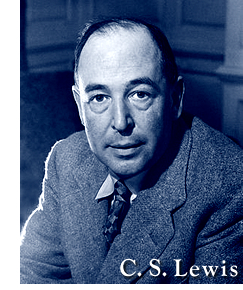
C.S. Lewis Daily – Today’s Reading


On happiness

What Satan put into the heads of our remote ancestors was the idea that they could “be like gods”—could set up on their own as if they had created themselves—be their own masters—invent some sort of happiness for themselves outside God, apart from God. And out of that hopeless attempt has come nearly all that we call human history—money, poverty, ambition, war, prostitution, classes, empires, slavery—the long terrible story of man trying to find something other than God which will make him happy.

God cannot give us a happiness and peace apart from Himself, because it is not there. There is no such thing.

From Mere Christianity
Compiled in Words to Live By

Charles Stanley – God’s Blessing

Genesis 12:1-4

“God bless you!” We hear it all the time, don’t we? From the pastor’s benediction in worship to a simple courtesy when someone sneezes, we hear wishes of God’s blessing so often that we don’t even stop to consider what the phrase means.

Let’s break away from habit and discover what it truly means to be blessed by the Lord. In Genesis 12, God’s commission of Abram shows His wonderful promise to make the man into a prospering nation and give him a great and enduring name. More than that, God extends His blessing to those close to Abram and ultimately takes it to a global scale, pledging to bless the entire world by what He’s doing in this one person’s life.

So, when the Lord speaks about blessing someone, it’s a promise to intervene mightily and noticeably in that individual’s life. This could mean a thriving, happy family or, possibly, financial prosperity. Maybe it involves emotional security or spiritual insight. The heavenly Father might have in mind to give honor, wisdom, or lasting purpose. In fact, we see every one of these things in God’s pledge to Abram.

But let’s not overlook two conditions for the Lord’s favor. From Abram’s life, we see that God values obedience and faith (12:4; 15:6; 22:2-3, 12).

God wants to bring abundance into your life. Be sure His blessing isn’t being hindered. Ask, Am I trusting Him? Have I ignored something He has asked me to do? Give in to His call, and open your arms to receive what your Father longs to give you.

Our Daily Bread — Fragrant Living


Read: Philippians 4:10-20
Bible in a Year: 1 Samuel 10-12; Luke 9:37-62


I am full, having received . . . the things sent from you, a sweet-smelling aroma . . . well pleasing to God. —Philippians 4:18

I’m grateful that God has given us the sense of smell so we can enjoy the many fragrances of life. I think of how much I enjoy something as simple as the fresh and inviting aroma of after-shave lotion in the morning. Or the mellow smell of fresh-cut grass in the spring. I especially enjoy sitting in the backyard when the delicate scent of my favorite roses fills the air. And then there are the savory aromas of delicious food.

So it catches my attention when the apostle Paul says that our generous acts of love toward others are like a “sweet-smelling aroma, an acceptable sacrifice, well pleasing to God” (Phil. 4:18). When we think of helping those in need, we usually think of it as the right thing to do—or even the Christlike thing to do. But Paul says that our intentional act of reaching out to meet someone’s need actually fills the throne room of God with a fragrance that brings pleasure to Him.

We can please God with the aromas that rise from being a blessing to others! What an added incentive this is for us to perform deeds of kindness in His name.

Who might need your act of kindness today? Ask God to lead you to someone. Be a blessing. It’s a fragrant thing to do! —Joe Stowell

Here is what I hope to do for others today: ___________________

Blessing others is a blessing to God.

INSIGHT: Paul says, “I have learned in whatever state I am, to be content . . . . I can do all things through Christ who strengthens me” (4:11,13). Paul’s contentment came from the sufficiency of knowing Christ, not from the gifts he received from the Philippian believers (vv. 14-17). However, these sacrificial gifts were a “sweet-smelling aroma” to God (v. 18; see Lev. 7:12-15).

Ravi Zacharias Ministry –  The Last Word


My high school band director was adamant about many things, but none so much as what he called the obligatory rule of good musicianship. That is, the two most important notes in any musical composition are the first and the last. “The audience might forgive you for what comes in the middle,” he would say, “but they will forget neither your very first impression nor your final remark.”

The last word of the book of Acts in the Greek New Testament is the word akolutos. The word literally means “unhindered,” though many translations render it with multiple words. Others move the word from its final position for the sake of syntax. In both cases, I think something is lost in translation. Luke was intentionally making a statement with this last word of his two volume testimony to the life of Jesus Christ. I think he intended readers to pause at the conclusion of his words, leaving us with the provocative thought of a gospel that is unhindered. After the stories of Jesus’s ministry were told, after recollections of his death and ruminations of his resurrection, after Jesus’s ascension and the church’s beginnings, after all the resistance, disappointment, and surprises along the way, Luke concludes, “Then Paul dwelt two whole years in his own rented house, and received all who came to him, preaching the kingdom of God and teaching the things which concern the Lord Jesus Christ with all confidence, unhindered” (Acts 28:30-31).

Through prisons and angry crowds, the book of Acts traces the birth and growth of the early church. The book begins with a few hundred believers in Christ and a collective will to be his witnesses in Jerusalem, in Judea and Samaria, and to all the ends of the earth. Opposition to this witness is described at every turn. Persecution, beatings, death, and imprisonment all threatened the voice of the early church and ultimately the spread of the gospel itself. But in spite of all this, Luke epitomizes the history of the early church and the spread of the gospel by boldly describing the progression of God’s kingdom as going forth without so much as the slightest of hindrances. The Good News of God to all the world, he seems to want the world to remember, goes forth in power.

For any man or woman who will hear his testimony, Luke wants to conclude his eyewitness account with the dimension of the gospel that is most striking—namely, that these evidences are far from the end of the story. Luke wants hearers to be well aware that eyewitnesses to the power of the kingdom will go well beyond his own eyes, his stories, his lifetime; your eyes, your stories, your lifetime. Though variant theologies and distorted gospels will abound, though the world will delight in yet another conspiracy theory that promises to be the downfall of Christianity, the great narration of God’s kingdom will go forth unhindered. For the Christian, this means we need not live defeated by every emerging plot to undermine Christ. For Christ is risen! And for the one who has yet to accept him, it is continually and powerfully an invitation. Consider living into a victory like his, walking further up and farther into the great unhindered kingdom of the vicariously human Son of God.

Luke begins on a note intent on crescendo: “Many have undertaken to set down an orderly account of the events that have been fulfilled among us” (Luke 1:1). He sets out to sing the beginnings of the early church and the work of God from the very start to the ends of time. He wants to be clear that we are invited to be a part of a story that will not fade away. Despite all appearances, despite dim turns in melody, the story of Jesus was and will continue to be Good News that resounds without hindrance. No person or power can thwart the resonant sounds of the new life Jesus proclaims, for it is moved by a Spirit who presses it ever-onward, ringing invitingly into the unexpected places of the world. The redemptive song of Christ and the Spirit who enables creation to add its praise will continue to move forth, unhindered.

Jill Carattini is managing editor of A Slice of Infinity at Ravi Zacharias International Ministries in Atlanta, Georgia.

Alistair Begg – What Are Your Chances?


For if they do these things when the wood is green, what will happen when it is dry? Luke 23:31

Among other interpretations of this suggestive question, the following is full of teaching: “If the innocent substitute for sinners suffers in this way, what will be done when the sinner himself–the dry tree–falls into the hands of an angry God?”

When God saw Jesus in the sinner’s place, He did not spare Him; and when He finds the unregenerate without Christ, He will not spare them. O sinner, Jesus was led away by His enemies; and you will be dragged away by fiends to the place appointed for you. Jesus was deserted by God; and if He, who was only imputedly a sinner, was deserted, how much more will you be?

“Eloi, eloi, lama sabachthani?” What an awful shriek! But what will be your cry when you shall say, “O God! O God! Why have You forsaken me?” and the answer shall come back, “Because you have ignored all My counsel and would have none of My reproof, I also will laugh at your calamity; I will mock when terror strikes you.”

If God did not spare His own Son, how much less will He spare you! What whips of stinging pain will be yours when your conscience smites you with all its terrors. You rich, you merry, you most self-righteous sinners–who would stand in your place when God says, “Awake, O sword, against the man that rejected Me; smite him, and let him feel the sting forever”?

Jesus was spat upon. Sinner, what shame will be yours! We cannot sum up in one word all the mass of sorrows that met upon the head of Jesus who died for us; therefore it is impossible for us to tell you what streams, what oceans of grief must roll over your spirit if you die as you are now. You may die in this state; you may die now. By the agonies of Christ, by His wounds and by His blood, do not bring upon yourselves the wrath to come! Trust in the Son of God, and you shall never die.

Devotional material is taken from “Morning and Evening,” written by C.H. Spurgeon, revised and updated by Alistair Begg.

Charles Spurgeon – Importance of small things in religion


“The Lord our God made a breach upon us, for that we sought him not after the due order.” 1 Chronicles 15:13

Suggested Further Reading: 1 Samuel 13:8-14

When we come before God, it will be no excuse for us to say, “My Lord, I did wrong, but I thought I was doing right.” “Yes, but I gave you my law, but you did not read it; or, if you read it, you read it so carelessly that you did not understand it, and then you did wrong, and you tell me you did it with a right motive. Yes, but it is of no avail whatever.” Just as in Uzzah’s case, did it not seem the rightest thing in the world to put out his hand to prevent the ark from slipping off? Who could blame the man? But God had commanded that no unpriestly hand should ever touch it, and inasmuch as he did touch it, though it was with a right motive, yet Uzzah must die. God will have his laws kept. Besides, my dear brethren, I am not sure about the rightness of your motives after all. The State has issued a proclamation, it is engraven, according to the old Roman fashion, in brass. A man goes up with his file, and he begins working away upon the brass; erases here, and amends there. Says he, “I did that with a right motive; I didn’t think the law a good one, I thought it was too old-fashioned for these times, and so I thought I would alter it a little, and make it better for the people.” Ah, how many have there been who have said, “The old puritanic principles are too rough for these times; we’ll alter them, we’ll tone them down a little.” What are you at, sir? Who are you that dares to touch a single letter of God’s Book?

For meditation: Sincerity needs to be allied to truth (Joshua 24:14). It is possible to be sincerely wrong (John 16:2; Acts 26:9; Romans 10:2).

Sermon no. 307
8 April (1860)


John MacArthur – Controlling Yourself


“Blessed are the gentle, for they shall inherit the earth” (Matt. 5:5).

Gentleness is power under control.

The Greek word translated “gentle” in Matthew 5:5 speaks of humility, meekness, and non-retaliation—traits that in our proud society are often equated with weakness or cowardice. But in reality they are virtues that identify kingdom citizens.

The same word was used by the Greeks to describe a gentle breeze, a soothing medicine, or a domesticated colt. Those are examples of power under control: a gentle breeze brings pleasure, but a hurricane brings destruction; a soothing medicine brings healing, but an overdose can kill; a domesticated colt is useful, but a wild horse is dangerous.

Christ Himself is the epitome of gentleness. Even when officially announcing His messiahship to Jerusalem, He humbly entered the city astride a donkey (Matt. 21:5). His behavior amid persecution was exemplary: “Christ . . . suffered for you, leaving you an example for you to follow in His steps, who committed no sin, nor was any deceit found in His mouth; and while being reviled, He did not revile in return; while suffering, He uttered no threats” (1 Pet. 2:21-23).

Despite His humility and restraint, Jesus wasn’t weak or cowardly. He never defended Himself, but when His Father’s house was being desecrated, He made a whip and beat those who were defiling it (John 2:13-16; Matt. 21:12-13). He never shirked from pronouncing judgment on unrepentant sinners, and never compromised His integrity or disobeyed His Father’s will.

The hypocritical Jewish religious leaders expected that when Israel’s Messiah came He would commended them for their wonderful spirituality. Instead, Jesus condemned them and called them children of the devil (John 8:44). In retaliation they had Him murdered. His power was always under control; theirs wasn’t.

Our society has little use for gentleness. The macho, do-your-own-thing mentality characterizes most of our heroes. But you are called to a higher standard. When you pattern your life after Jesus, you will have a significant impact on society and will know true happiness.

Suggestions for Prayer; Thank God for the virtue of gentleness, which He is producing in you by the power of His Spirit. Follow Christ’s example today so that gentleness will mark your character.

For Further Study; Read the following passages, noting the responsibilities and blessings that accompany self-restraint: Proverbs 16:32, Ephesians 4:1-2, Colossians 3:12, and Titus 3:1-2.


Joyce Meyer – Why Worry?


Cease from anger and forsake wrath; fret not yourself—it tends only to evildoing. Psalm 37:8

Anxiety and worry are both attacks on the mind intended to keep you from serving the Lord. The enemy uses these weapons to press your faith down so you cannot live in victory. Many people are worriers but don’t even realize it. They may call it something else—but it is still worry. In addition to telling you to “fret not,” other passages warn you to “take no thought,” (Matthew 6:25), “be careful for nothing” (Philippians 4:6), and “cast . . . all your care” (1 Peter 5:7).

Matthew 6:27 says, And who of you by worrying and being anxious can add one unit of measure (cubit) to his stature or to the span of his life? The obvious point is that worry is useless. It does not accomplish any good thing. In that case, why worry and why be so anxious?

Campus Crusade for Christ; Bill Bright – God’s Home Is Holy


“Don’t you realize that all of you together are the house of God, and that the Spirit of God lives among you in His house? If anyone defiles and spoils God’s home, God will destroy him. For God’s home is holy and clean, and you are that home” (1 Corinthians 3:16,17).

At this writing, I am with the staff at our annual training on the campus of Colorado State University. In addition to the 3,000 United States and Canadian field staff of Campus Crusade for Christ who are here, thousands more are attending music workshops, summer school, numerous conferences and meetings on this campus. Also, the entire Denver Broncos professional football team is here for training.

Throughout the day, from early morning till late at night, the campus is alive with people jogging, roller-skating, playing tennis, walking and other physical activities. These people are disciplining their bodies, keeping them in good physical tone.

Sadly, however, I also witness many people who lack interest in physical well-being by smoking and drinking alcoholic beverages. A stroll down the sidewalks of this beautiful campus will reveal numerous smokers. And, in the early hours, before the clean-up crews go to work, one can see in the gutters the empty beer cans from the previous night’s revelry and carousing.

The body of the Christian is the temple of God – Father, Son and Holy Spirit (1 Corinthians 6:19 and 1 Corinthians 3:16,17). For this reason, God asks us to present our bodies as “living sacrifices,” holy and righteous, for God could dwell in no less a temple.

Bible Reading: I Corinthians 3:11-15

TODAY’S ACTION POINT:  I will take especially good care of my body – physically, mentally, spiritually – realizing it is the temple of God’s Holy Spirit.

Presidential Prayer Team; P.G. – Heed the Warning


Before the Titanic met its fate, numerous messages were sent saying it was speeding into an ice field, but the calls were ignored. In fact, when a nearby ship sent an urgent warning, the Titanic was talking to officials at Cape Race about menu plans and where chauffeurs should meet arriving passengers. Preoccupied with the trivial, the Titanic’s radio officer responded, “Shut up. I am talking to Cape Race. You are jamming my signals.”

For God, who said, “Let light shine out of darkness,” has shone in our hearts.

II Corinthians 4:6

In today’s America, too many are focused on the unimportant matters of daily existence. When someone tries to share the gospel, their response is, “Shut up. You’re messing with my life.” They don’t understand the god of this world had blinded their minds.

The Gospel is clear. All have sinned and are separated from God; Jesus died and rose again to pay the price for sin and restore a right relationship with the Father. One only needs to believe the message. Jesus calls you the light of the world and asks you to shine as a reflection of His glory. Pray that He accomplishes His will in you today – then intercede for the nation’s leaders to heed the warning and be saved.

Recommended Reading: II Corinthians 4:1-6

Greg Laurie – The Language of Heaven


Make a joyful shout to God, all the earth! —Psalm 66:1

When believers gather and worship the Lord, something wonderful happens. As Jesus said, “For where two or three are gathered together in My name, I am there in the midst of them” (Matthew 18:20). This does not mean that God lives in the church. In a sense He does, if we are speaking of believers. Because we are the church, He lives in us. But God doesn’t live in a building.

But when God’s people meet together, something changes. And what changes is that He manifests His presence in a supernatural way when we gather to worship Him and honor Him. And when we praise God together, whether it’s in prayer or in prayer set to song in worship, we are doing what we were created to do. We are here to bring glory to God.

The Bible tells us that God has created all things for His glory (see Isaiah 43:7). And Psalm 106:1 says, “Praise the LORD! Oh, give thanks to the Lord, for He is good! For His mercy endures forever.”

Some might say, “Well, I don’t really have a good voice.” Neither do thousands of contestants on American Idol, but that didn’t stop them. And it shouldn’t stop you. When we sing to the Lord, it is not a performance for each other; it is a performance for an audience of one: God. And God isn’t really all that impressed with your pitch or how loudly you sing. He is really far more interested in what is going on in your heart. So if that is all you can do, then that is good enough.

From Genesis to Revelation, our faith is one of worship. And in Heaven, we will sing (see Revelation 15:2–4). Worship is the language of Heaven. So let’s start practicing now.