Ravi Zacharias Ministry – Present Trouble

Despite our coping mechanisms of choice, fear and weariness are often common sentiments across much of the globe, laden with a sense of uncertainty. People deal en masse with losses of all kinds and the turbulent emotions that come with losing ground. For many in the affluent West who have lived with mindsets of comfort and feasts of resources, economic downturn is a sudden and disorienting shift. For others, hard times simply get much harder, more worrisome, more lonely. Picking up the pieces of a community destroyed by a 7.8 magnitude earthquake, aid workers in Nepal note that many Napalis are afraid to go back inside their homes, fatigued from being up at night anxious and in fear.

Writing in a century with its own fears and famines, Blaise Pascal took note of the human capacity for a dangerous kind of escapism when fears loom large and hope remains distant. He saw a general disassociation with the present, a perpetual anticipation of the future or recollection of the past, which kept life itself at bay. “So imprudent are we that we wander in the times which are not ours and do not think of the only one which belongs to us,” he wrote. “And so idle are we that we dream of those times which are no more and thoughtlessly overlook that which alone exists. For the present is generally painful to us. We conceal it from our sight, because it troubles us… So we never live, but we hope to live.”(1)

Of course, whether in times of scarcity or in times of plenty, in tragic or ordinary days, the temptation to mentally dismiss ourselves from the present moment is quite real. It is always possible to live with eyes intent on something better in the future or with a nostalgic gaze on the past and all that once was. But in times of discomfort, crisis, or shortage, the choice to wander in times other than the present strikes us more as self-preservation or necessity than temptation, an essential coping mechanism in the midst of pain—and so we dismiss ourselves from the present all the more freely. Whether to daydream of better times or to look fearfully into the future, we leave the harrowing realities of the present to escape from the weariness of now, to hope for something more, to remember something better. But no matter our reason, when the future alone is our end and life is preoccupied with what once was or what might be, it is something less than living.

In a community shaped by the story of a crucified leader, opportunities to comfort a fearful world in the midst of instability and loss are filled with images of a human savior without affluence, a Son who embraced anguish, God among us without the glory and prosperity he might have had if he stayed away. The church remembers one who prayed alert through agony, not abandoning the present though he was more able than you or me to do so, while sweating drops of blood alone as his friends laid exhausted from sorrow.

The gift of a broken Christ to an anxious culture is that the brokenhearted are not alone.

Moreover, his is a bigger history marked by expressions, prophecies, stories, and assurances uttered in the very midst of famines, warfare, plagues, exile, and losses of every kind. These voices join his to remind us that the antidote to fear is love, the perfect love which casts out despair and weariness. The stories of scripture and the history of Jesus Christ from birth to death to resurrection give image after image of remnants of life in the midst of fear and trial and despair, strength to set aside self-preserving instincts to love neighbors abundantly and to risk bringing the whole of life under the lordship of Christ now. This vicariously human Son is among us today; neither death, nor life, nor things present, nor things to come, can separate us from the perfect love of God in Jesus Christ.

Jill Carattini is managing editor of A Slice of Infinity at Ravi Zacharias International Ministries in Atlanta, Georgia.

(1) Blaise Pascal, Pensees (Charleston: Biblio Bazaar, 2007), 87-88.

Alistair Begg – Asking “Why?”


He led them by a straight way.

Psalm 107:7

Changing circumstances often causes the anxious believer to ask, “Why is this happening to me?” I looked for light, but darkness came; for peace, but faced trouble. I said in my heart, my mountain stands firm, I shall never be moved. Lord, You hide Your face, and I am troubled. Only yesterday I could read my title clearly; but today my evidences are blurred, and my hopes are clouded. Yesterday I could climb the mountain and view the landscape and rejoice with confidence in my future inheritance; today my spirit has no hopes, but many fears; no joys, but great distress. Is this part of God’s plan for me? Can this be the way in which God would bring me to heaven?

Yes, it is even so. The eclipse of your faith, the darkness of your mind, the fainting of your hope–all these things are just parts of God’s method of making you ready for the great inheritance, which you will soon enjoy. These trials are for the testing and strengthening of your faith–they are waves that wash you further upon the rock–they are winds that steer your ship more quickly toward the desired haven. What David wrote then will be true of you: “he brought them to their desired haven” (verse 30). By honor and dishonor, by evil report and by good report, by plenty and by poverty, by joy and by distress, by persecution and by peace–by all these things your spiritual life is maintained, and by each of these you are helped on your way.

Do not think, believer, that your sorrows are out of God’s plan; they are necessary parts of it. “Through many tribulations we must enter the kingdom.”1 Learn, then, to “count it all joy . . . when you meet trials of various kinds.”2

O let my trembling soul be still,

And trust Thy wise, Thy holy will!

I cannot, Lord, Thy purpose see,

Yet all is well since ruled by Thee.

1) Acts 14:22   2) James 1:2

Devotional material is taken from “Morning and Evening,” written by C.H. Spurgeon, revised and updated by Alistair Begg.

Charles Spurgeon – A psalm of remembrance

“We have known and believed the love that God hath to us.” 1 John 4:16

Suggested Further Reading: Habakkuk 3:16-19

“Hast thou considered my servant Job?” “Ah,” says Satan, “he serves thee now, but thou hast set a hedge about him and blessed him, let me but touch him.” Now he has come down to you, and he has afflicted you in your estate, afflicted you in your family, and at last he has afflicted you in your body. Shall Satan be the conqueror? Shall grace give way? O my dear brother, stand up now and say once more, once for all, “I tell thee, Satan, the grace of God is more than a match for thee; he is with me, and in all this I will not utter one word against the Lord my God. He doeth all things well—well, even now, and I do rejoice in him.” The Lord is always pleased with his children when they can stand up for him when circumstances seem to belie him. Here come the witnesses into court. The devil says, “Soul, God has forgotten thee, I will bring in my witness.” First he summons your debts—a long bill of losses. “There,” says he “would God suffer you to fall thus, if he loved you?” Then he brings in your children—either their death, or their disobedience, or something worse, and says, “Would the Lord suffer these things to come upon you, if he loved you?” At last he brings in your poor tottering body, and all your doubts and fears, and the hidings of Jehovah’s face. “Ah,” says the devil, “do you believe that God loves you now?” Oh, it is noble, if you are able to stand forth and say to all these witnesses, “I hear what you have to say, let God be true, and every man and everything be a liar. I believe none of you. You all say, God does not love me; but he does, and if the witnesses against his love were multiplied a hundredfold, yet still would I say, “I know whom I have believed.”

For meditation: The question is bound to be asked sooner or later (Psalm 42:3,10). The apostle Paul gives the greatest answer (Romans 8:35-39).

Sermon no. 253
22 May (1859)

John MacArthur – A Traitor Turns to Christ (Matthew)


The twelve apostles included “Matthew the tax-gatherer” (Matt. 10:3).

God can use you despite your sinful past.

I remember reading a notice in a local newspaper announcing the opening of a new evangelical church in our community. It gave the date and time of the first services, then added, “our special guest star will be . . .” and named a popular Christian celebrity. In its attempt to appeal to unbelievers or simply draw a large crowd, the church today commonly uses that kind of approach.

Jesus, however, used a different approach. None of His disciples were famous at all. In fact, rather than drawing a favorable crowd, some of them might have repelled or even incited anger and hatred among His Jewish audience. Matthew was such a man because he was a despised tax-gatherer—one of many Jewish men employed by Rome to collect taxes from his own people. As such he was regarded as a traitor by his own countrymen.

The Roman tax system allowed tax collectors to keep anything they collected in excess of what was owed to Rome. That encouraged bribes, extortion, and other abuses.

To compound the issue, Matthew was among those who had the prerogative of taxing almost anything they wanted to tax—roads, bridges, harbors, axles, donkeys, packages, letters, imports, exports, merchandise, and so on. Such men could accumulate enormous wealth for themselves. You might remember another tax-gatherer named Zaccheus, who is described in Luke 19:2 as a wealthy man. His salvation was evidenced by his offer to repay fourfold to those he had defrauded (v. 8).

Some people think God can’t use them because they’re not famous or because of their past sins. But God has used Matthew, Zaccheus, and millions of others like them. Concentrate on your present purity and let God bless your ministry as He sees fit.

Suggestions for Prayer

Thank God that he has made you a new person in Christ (2 Cor. 5:17). Minister in light of that reality!

For Further Study

Read Luke 19:1-10.

  • Where was Zaccheus when Jesus first spoke to him?
  • What was the reaction of the crowd when Jesus went to Zaccheus’s house?
  • What prompted Jesus to say that salvation had come to Zaccheus?

Joyce Meyer – Mind and Mouth


For out of the fullness (the overflow, the superabundance) of the heart the mouth speaks. Matthew 12:34

Today’s verse reminds me of a woman who came to one of my conferences and shared with me that she never stopped thinking and talking about her problems, even though she was being taught not to focus on them. She knew she needed to stop thinking about negative things, but she seemed powerless to do so.

This woman had been abused, and she met several other women who shared that pain. As they talked, she realized God had told her everything He had told them, but they had obeyed while she had disobeyed. They had renewed their minds with the Word of God while she had kept driving her problems deeper into her soul by refusing to get them off of her mind.

Whatever we set our minds on eventually comes out of our mouths. Because this woman refused to obey God and stop thinking and talking about her problems, she was in a prison she could not escape. We seek things by thinking and speaking about them. She could have used her thoughts and words to seek God, but she used them to seek more of the very things she was trying to overcome.

I encourage you to seek God by thinking and speaking about the things of God and by asking the Holy Spirit to fill your mind and your mouth with the things He wants you to focus on.


Campus Crusade for Christ; Bill Bright – First Step to Wisdom


“How does a man become wise? The first step is to trust and reverence the Lord! Only fools refuse to be taught” (Proverbs 1:7).

In 1787, the Constitutional Convention was on the verge of total failure. The issue: whether small states should have the same representation as large states.

From the wisdom of his 81 years, Benjamin Franklin recalled the Scriptures which says, “Except the Lord build the house, they labor in vain that build it” (Psalm 127:1), and in this hopeless situation, he offered a suggestion.

“Gentlemen,” he said, “I have lived a long time and am convinced that God governs in the affairs of men. If a sparrow cannot fall to the ground without His notice, is it probable that an empire can rise without His aid?

“I move that prayer imploring the assistance of heaven be held every morning before we proceed to business.” God heard their prayers and the conflict was soon resolved. To this day, all legislative sessions continue to be opened with prayer, with God’s blessing.

“Reverence of the Lord is the beginning of knowledge” reads the Modern Language translation of this verse – a preamble to wise living a good motto for life.

Someone has said, “The eternal task of religion is the conquest of fear.” Men fear many things – bacteria, losing their jobs, being dependent in old age, giving offense to their neighbors, war, failure, death.

Fear (worshipful reverence) of God represents a different kind of fear – the kind a child shows toward wise and loving parents when he shuns acts of disobedience to avoid both grieving those parents whom he loved and suffering the inevitable discipline which follows disobedience. Perhaps if we feared God more, we would fear everything else less.

Bible Reading: Proverbs 1:8-16

TODAY’S ACTION POINT: My fear and reverence of God is the beginning of supernatural living and will result in worship of Him – by walk as well as by talk.


Presidential Prayer Team; P.G. – No Compromise


Islamist militants continue their barbarous rampaging in the Middle East and across North Africa, targeting individuals, including Christians, for torture or worse. They seem to get perverse satisfaction from posting their brutality on social media for the world to see. As for the Christians, they could have paid a high tax to the terrorists or converted to Islam to save their lives – but they chose not to compromise.

Can we find a man like this, in whom is the Spirit of God?

Genesis 41:38

Joseph was an uncompromising man. He was God’s man in slavery, in prosperity, and in the palace of the king. Even in prison, Joseph was God’s man. Through everything he trusted the Lord and Him alone. He prayed…and he knew God listened.

It’s easy to show you possess the Spirit of God within, but openly confessing your faith is a bit more difficult. Are you praying for yourself and others in your circle to have uncompromising and bold Joseph-like faith when the days grow more troubling? Add to your intercessions members of Congress and America’s courts to know Jesus Christ and His Father and find no-compromise courage to stand for God.

Recommended Reading: I Timothy 6:3-12

Greg Laurie – Well Done!


“His lord said to him, ‘Well done, good and faithful servant; you were faithful over a few things, I will make you ruler over many things. Enter into the joy of your lord.’ ” —Matthew 25:21

Jonathan Edwards is best known for his sermon “Sinners in the Hands of an Angry God” and his role in one of the great spiritual awakenings in the United States. He also was the third president of Princeton University.

But Edwards left an amazing legacy in other ways as well. He served the Lord to the best of his ability and made sure that his family was in church every Sunday. Of his descendants, 430 were ministers, 86 were university professors, 13 were university presidents, 75 authored books, seven were elected to Congress, and one became vice president of the United States.

If you’re a parent, you will make choices that affect your children. Then your children will make choices that affect your grandchildren. This goes on and on, and the circle gets wider and wider. What you do will affect other people. The decisions you make will have an impact on others.

Some may say, “This is my life, and I make my choices.” But it is bigger than that. Our choices on Earth are binding in eternity.

I want to be able to say to the Lord one day that I did the best I could with the life, time, and resources that He gave me. I want the Lord to say to me, “Well done, good and faithful servant. Enter into the joy of your Lord.”

Don’t you want to hear that?

You might be thinking, I’ve already made a bunch of mistakes. I’ve messed up a lot.

It is not too late to change. Start making good decisions from now on. Do what you can to right the wrongs that you’ve committed over the years. And then, from this day forward, determine to walk with God and start living the way He wants you to live.

Max Lucado – Nothing to Be Proud About


Do art critics give awards to the canvas? Can you imagine a scalpel growing smug after a successful heart transplant? Of course not. And the message of the Twenty-Third Psalm is that we have nothing to be proud about either. We have rest, salvation, blessings, and a home in heaven—and we did nothing to earn any of it. Who did the work? The answer threads through the Psalm. . .

He makes me. . .

He leads me. . .

He restores my soul. . .

You are with me. . .

Your rod and staff comfort me. . .

You prepare a table. . .

You anoint my head. . .

And just to make sure we get the point, right in the middle of the poem, David declares, the shepherd leads his sheep, not for our names’ sake, but for “His name’s sake!”

From Traveling Light


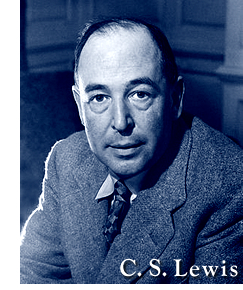
C.S. Lewis Daily – Today’s Reading


I find I must borrow yet another parable from George MacDonald. Imagine yourself as a living house. God comes in to rebuild that house. At first, perhaps, you can understand what He is doing. He is getting the drains right and stopping the leaks in the roof and so on: you knew that those jobs needed doing and so you are not surprised. But presently he starts knocking the house about in a way that hurts abominably and does not seem to make sense. What on earth is He up to? The explanation is that He is building quite a different house from the one you thought of—throwing out a new wing here, putting on an extra floor there, running up towers, making courtyards. You thought you were going to be made into a decent little cottage: but He is building a palace. He intends to come and live in it Himself.

The command Be ye perfect is not idealistic gas. Nor is it a command to do the impossible. He is going to make us into creatures that can obey that command. He said (in the Bible) that we were ‘gods’ and He is going to make good His words. If we let Him—for we can prevent Him, if we choose—He will make the feeblest and filthiest of us into a god or goddess, a dazzling, radiant, immortal creature, pulsating all through with such energy and joy and wisdom and love as we cannot now imagine, a bright stainless mirror which reflects back to God perfectly (though, of course, on a smaller scale) His own boundless power and delight and goodness. The process will be long and in parts very painful, but that is what we are in for. Nothing less. He meant what He said.

From Mere Christianity

Compiled in A Year with C.S. Lewis

Surprise, Surprise, Surprise!


by Philip Gulley

M y wife and I waited eight years to have children. I was in college, then graduate school, and I thought I was too busy. My mother had five children in seven years, was principal of a school, and attended college all at the same time. And she did a good job, which I point out to her every Saturday when I visit her at the Home for the Mentally Distraught. Despite our childless state, my wife and I were willing, indeed eager, to share our perspective on child‐rearing with anyone who would listen. Now that we have children, we seldom offer advice. The moment you tell other parents how to raise their kid, the odds increase that your own child will turn up on America’s Most Wanted.

So we don’t give advice anymore, because we’ve realized we don’t know anything about children. Before we had children, we knew everything. Now we have children, and the only parent we feel superior to is Ma Barker.

It’s been hard to admit my ignorance about child‐rearing. It’s easy to be smug when you’re driving home from someone else’s house saying, “When I have children, they will never act like that.” Now when our childless friends visit, I tell them when they leave, “Don’t talk about us on your way home.” They know what I mean.

Most experiences don’t turn out the way we’d planned. Parenting is one of them.

Take Spencer’s second Christmas. Someone in the church gave him a nativity set as a gift. He was particularly taken with the wise men, one of whom he used as tableware. He dipped Balthasar up to his ears in ketchup and licked him clean. My wife said, “Honey, don’t dip the wise man in the ketchup.”

There are many things we anticipated telling our children—things like, “Because I said so, that’s why!” and “Not in this house you won’t!” and even “Don’t put that in the toilet!” But we never imagined ourselves saying, “Don’t dip the wise man in the ketchup.”

That’s the kick about life. We think we have it figured out, but then we wade in and discover otherwise. Kind of like Gomer Pyle used to say, “Surprise, surprise, surprise!”

All in all, this is a good thing. For when our future is sure and certain, when all the corners are tucked in nice and neat, there is no need for faith.

Consider King David. He grew up a shepherd, which was nothing to write home about. If a dog can do your job, it’s time to worry. So David grew up a shepherd, but he died a king. Goes to show we never know what direction life will take.

This is especially true of being a parent. We never know everything there is to know. The only solution is to do your best and trust God for the rest. At least that’s what my sainted mother used to tell me, back in my younger days when I knew it all.

Looking ahead…

Is there any endeavor that husbands and wives are less adequately prepared for than parenting? The task of raising a child is daunting, exhausting, frustrating, discouraging, humbling—and just to keep it interesting, it comes with an unexpected twist around every corner. Yet when guided by dedication and prayer, parenting is also the most fulfilling and wonderful experience in living. And it doesn’t have to be as chaotic as Phil Gulley’s tongue‐in‐cheek description makes it out to be.

Those of you who are parents already realize that you will make mistakes and that you’ll never know it all. But nothing worth accomplishing comes easy anyway, and it’s the very challenge of child rearing that makes success so satisfying. This week we’re going to talk about how to make the most of the experience.

– James C Dobson

From Night Light For Couples, by Dr. James & Shirley Dobson

Cathe Laurie – Like a Girl

Cathe Laurie – Like a Girl – When did doing something “like a girl” become an insult?

Thousands of years before the women’s liberation movement, or anyone ever heard of Gloria Steinem, the ancient biblical stories in Scripture never stereotyped or portrayed women as weak. Yes, we know that the average woman is weaker physically than men, but they are not weaker spiritually, mentally, or emotionally. Think of Deborah, Jael, Esther, or Ruth. Think of Mary (any one of the Marys will do), Martha, Priscilla, or Philip’s four daughters.

This past year, the highest rated commercial shown during the Super Bowl wasn’t one by Go-Daddy or Budweiser. It was a commercial that asked the question, “What would it look like to do something ‘like a girl’?” Several young people were filmed doing the first thing that came to mind when asked to “run like a girl, throw like a girl, fight like a girl.” It wasn’t too surprising when they jogged daintily in place, or flailed their bent wrists in a lame fight, or awkwardly flung their arm to throw an imaginary ball. All of them deliberately looked silly, weak, distracted.

Look at the heroic women in Scripture—their examples of integrity, bravery, and wit. Read the gripping story in Exodus of Moses’ mother, Jochebed; his sister, Miriam; and the Jewish midwives Shiphrah and Puah (their names forever recorded for us to honor).

Exodus 1:17 tells us that because the midwives feared God, they refused to obey the king’s orders. They were women who would stand to defy the commands of Pharaoh of Egypt and save a son, who would rescue a nation, which would bring us our Messiah, who would save the world. Because they feared God, they were strong mentally, spiritually, and emotionally.

It is worth noting that Pharaoh’s decree was, “If the baby is a boy, kill him; if it is a girl, let her live” (Exodus 1:16 NLT). In his eyes, letting every daughter live would never be a threat to his kingdom. He had no concept of female bravery or empathy. Little did he know that to fight like a girl, stand like a girl, think like a girl, would be the beginning of the undoing of the might of his Egypt.

To fight the good fight and run the race set before us—whether we are in the kitchen, in the classroom, in the boardroom, in the courtroom, or in the mission field—means we are not insignificant, nor an afterthought in the mind of God. My dear sisters, mothers, and daughters: Pharaoh may have misjudged women, but let’s not misjudge ourselves.

Let every daughter live, and run, and fight, and love, and live like the girl God made you to be! Don’t think the Bible is about men, for men, while women stand by in cute outfits and cheer. It is about women as well, and the part we have to play in this great unfolding drama.

These words from the great apostle Paul were written to Timothy, a young man who first learned the Scriptures—not at his father’s knee, but on the lap of his mother, Eunice, and his grandmother, Lois: “I have fought the good fight, I have finished the race, I have kept the faith. Finally, there is laid up for me the crown of righteousness, which the Lord, the righteous Judge, will give to me on that Day, and not to me only but also to all who have loved His appearing” (2 Timothy 4:7–8).

Remember, Israel’s first deliverer was not a man in flowing robes and a long beard. It was a slave woman, a mother named Jochebed, in average clothing, shedding tears, and showing miraculous courage.

Today, the world, the church, and the family need the influence of women who will fear and obey God above all.

Charles Stanley – Dealing With Fear


Philippians 4:6

Not only is anxiety uncomfortable; it also leads to negative consequences. For example, reasoning becomes cloudy when permeated with worry. So an anxious person will have trouble making wise decisions. Fear of failure may also lead to procrastination or lack of productivity. Apprehension can devastate personal and spiritual growth, relationships, and work. So conquering fear is important.

These four steps can help:

  1. IDENTIFY THE FEAR. Ask yourself, What are the circumstances surrounding my feelings? What triggered them? What message am I telling myself?
  2. TURN TO THE LORD. Remember that God loves you and desires a close relationship with you. He is in sovereign control of your situation, so bring your apprehension to Him.
  3. REBUKE THE FEAR. You have authority and power in Jesus’ name to reject what isn’t from Him. Meditate on Scripture passages such as Matthew 10:31 and Proverbs 1:33. Let God’s truth replace any wrong thinking.
  4. CLING TO YOUR HEAVENLY FATHER. Take your focus off your circumstances, and look to the One who promises His help. The Bible gives this assurance: “Do not fear, for I am with you; Do not anxiously look about you, for I am your God. I will strengthen you, surely I will help you, surely I will uphold you with My righteous right hand” (Isaiah 41:10).

Circumstances are external and often beyond your control. But your response originates within. It’s amazing how fears diminish in the Father’s presence.

Our Daily Bread — New Start For A Broken Heart


Read: Isaiah 61:1-3

Bible in a Year: 1 Chronicles 13-15; John 7:1-27

He has sent me to heal the brokenhearted. —Isaiah 61:1

The Museum of Broken Relationships in Zagreb, Croatia, is filled with anonymously donated remnants of love gone wrong. There is an axe that a jilted lover used to destroy the furniture of an offending partner. Stuffed animals, love letters framed in broken glass, and wedding dresses all speak volumes of heartache. While some visitors to the museum leave in tears over their own loss, some couples depart with hugs and a promise not to fail each other.

The Old Testament prophet Isaiah wrote, “The Spirit of the Lord GOD is upon Me, because the LORD has anointed Me to preach good tidings to the poor; He has sent Me to heal the brokenhearted” (Isa. 61:1). When Jesus read from Isaiah 61 at the synagogue in Nazareth, He said, “Today this Scripture is fulfilled in your hearing” (Luke 4:21). Extending far beyond help for an emotional wound, Isaiah’s words speak of a changed heart and a renewed spirit that come by receiving God’s gift of “beauty for ashes, the oil of joy for mourning, the garment of praise for the spirit of heaviness” (Isa. 61:3).

All of us have experienced regret and broken promises in our lives. Whatever has happened, the Lord invites us to find healing, hope, and new life in Him. —David McCasland

Lord, You are the promise-keeping God who has said He will make all things new. Today we give You our ashes in exchange for Your beauty, our mourning for the joy of finding comfort in You. Thank You!

God can transform tragedies into triumphs.

INSIGHT: Today’s Bible reading is a prophetic text that points to the arrival of the Messiah. It is not surprising, therefore, that in the synagogue of Nazareth Jesus selected a portion of this passage to announce His arrival and mission (Isa. 61:1-2). Luke 4:18-19 records for us this significant announcement rooted in Isaiah’s ancient words. In the verbs used by Isaiah, we see the core of Christ’s work (preach, heal, proclaim), and in the nouns we find word-pictures of the needy people for whom He had come (poor, brokenhearted, captives, bound).


Ravi Zacharias Ministry – Behold, the Crucified


Even modern English Bible versions often end up retaining the rather un-modern term “behold” in their translations of the Hebrew word hinneh and the Greek word idou. This is because there is no other equivalent English word that quite does the job that behold does. All the three terms—Hebrew, Greek, and English—have a certain gravitas, and, whenever used, command us to pay careful attention to what follows.

In John’s narrative of the trial and the crucifixion of Jesus, there are five occurrences of the term—three coming from the mouth of the unwitting prophet, Pilate, and twice from the mouth of our Lord Jesus. Each occurrence summons us to a facet of the person and work of Christ.

In John 19:4, “Pilate came out again and said to them, ‘Behold, I am bringing Him out to you so that you may know that I find no guilt in Him.’” We may render Pilate’s words as: “Behold, the Guiltless One!” Christians have always claimed, and will always claim, that Jesus, the Innocent, bore the sins of a guilty world. When his executioners twisted together a crown of thorns and thrust it upon his head, little did they know that they were enacting a prophetic truth! For in that single image—the crown of thorns on his head—is encapsulated the central Christian claim: that this guiltless-but-crucified one bore upon himself the guilt and curse of the whole of creation. Remember: “Cursed is the ground because of you…. Both thorns and thistles it shall grow for you” (Gen. 3:17-18).

The following verse is the second time the word occurs: “Jesus then came out, wearing the crown of thorns and the purple robe. Pilate said to them, ‘Behold, the Man!’” (v.5). Jesus is the window to God; He is also the mirror to man. In him, we see what is wrong with us, and what we are meant to be. The poetic poignancy of the occurrence is also found in the allusion that, just as the first human being, Adam, takes stage on the sixth day of creation, Christ, the New Human Being, takes center stage on the sixth day—Good Friday—of new creation.(1) And we are summoned to pay close attention to him, the man.

We are no longer helplessly and hopelessly fated to take the course of Adam. There is another pattern for being fully and truly human: Behold, the man!

The third time “behold” appears is in verse 14, where “[Pilate] said to the Jews, ‘Behold, your King.’” In his book, Jesus Rediscovered, Malcolm Muggeridge, in his inimitable way, says, “The crown of thorns, the purple robe, the ironical title ‘King of the Jews,’ were intended to mock or parody Christ’s pretensions to be the Messiah; in fact, they rather hold up to ridicule and contempt all crowns, all robes, all kings that ever were. It was a sick joke that back-fired.”(2) Muggeridge is perhaps being a touch cynical here, and may be guilty of rendering serious political reflection and engagement impossible and pointless. All the same, the Christian claim that Jesus is the Christ (i.e., the King) is a claim that effectively loosens all other claims, renegotiates all other allegiances, recasts all other power, downsizes all other authorities, domesticates all other principalities, and tempers the Christian resolve to not give beings and things, apart from God and his Christ, an ultimacy that they demand but do not deserve. Christ, in short, dismantles idols and unravels idolatries.

The final two occurrences are found in John 19:26-27: “When Jesus then saw his mother, and the disciple whom he loved standing nearby, he said to his mother, ‘Woman, behold, your son!’ Then he said to the disciple, ‘Behold, your mother!’ From that hour the disciple took her into his own household.” We may club the two occurrences to mean, “Behold, your new family!” Theologians have also often noted John’s allusion to the Church in his record of Jesus side being speared (Jn. 19:34): as Eve, the bride of Adam, issued forth from Adam’s side, the Church, the bride of Christ, issues forth from the crucified’s side, with the blood and water symbolizing the two foundational sacraments of the Church, Lord’s Supper and Baptism. At the foot of the Cross, there is the creating and forging of a new family, a new community, a new humanity—the Church: a believing that leads to a belonging.

Kethoser (Aniu) Kevichusa is a member of the speaking team at Ravi Zacharias International Ministries in Nagaland, India.

(1) This basic thought is borrowed from the various writings of N.T. Wright on the passage.

(2) Malcolm Muggeridge, Jesus Rediscovered (London: Fontana, 1969), 47.

Alistair Begg – If…


…if indeed you have tasted that the Lord is good.

1 Peter 2:3

“If.” Then this is not a matter to be taken for granted concerning every one of the human race. “If”–then there is a possibility and a probability that some may not have tasted that the Lord is gracious. “If”–then this is not a general but a special mercy; and it is necessary to ask whether we know the grace of God by inward experience. There is no spiritual favor that may not be a matter for heart-searching.

But while this should be a matter of earnest and prayerful inquiry, no one ought to be content while there is any such thing as an “if” about his having tasted that the Lord is good. A jealous and holy distrust of self may give rise to the question even in the believer’s heart, but the continuance of such a doubt would be an evil indeed. We must not rest without a desperate struggle to clasp the Savior in the arms of faith and say, “I know whom I have believed, and I am convinced that he is able to guard until that Day what has been entrusted to me.”1

Do not rest, believer, until you have a full assurance of your interest in Jesus. Let nothing satisfy you until, by the infallible witness of the Holy Spirit bearing witness with your spirit, you are identified as a child of God. Do not trifle with this. Do not be satisfied with “perhaps” or “if” or “maybe.” Build on eternal truths; really build upon them. Let your anchor be cast into that which is within the veil, and see to it that your soul is linked to the anchor by a cable that will not break. Get beyond these dreary “ifs”; stay no longer in the wilderness of doubts and fears; cross the Jordan of distrust, and enter the promised land of peace, where the land ceases not to flow with milk and honey.

1) 2 Timothy 1:12

Devotional material is taken from “Morning and Evening,” written by C.H. Spurgeon, revised and updated by Alistair Begg.

Charles Spurgeon – A sense of pardoned sin


“Thou hast cast all my sins behind thy back.” Isaiah 38:17

Suggested Further Reading: Psalm 32

We are saved by faith, and not by feeling. “We walk by faith and not by sight.” Yet there is as much connection between faith and hallowed feeling, as there is between the root and the flower. Faith is permanent, just as the root is ever in the ground; feeling is casual, and has its seasons. Just as the bulb does not always shoot up the green stem; far less is it always crowned with the many, many-coloured flower. Faith is the tree, the essential tree; our feelings are like the appearance of that tree during the different seasons of the year. Sometimes our soul is full of bloom and blossom, and the bees hum pleasantly, and gather honey within our hearts. It is then that our feelings bear witness to the life of our faith, just as the buds of spring bear witness to the life of the tree. Presently, our feelings gather still greater vigour, and we come to the summer of our delights. Again, perhaps, we begin to wither into the dry and yellow leaf of autumn; nay, sometimes the winter of our despondency and despair will strip away every leaf from the tree, and our poor faith stands like a blasted stem without a sign of greenness. And yet, my brethren, so long as the tree of faith is there we are saved. Whether faith blossom or not, whether it bring forth joyous fruit in our experience or not, so long as it be there in all its permanence we are saved. Yet we should have the gravest reason to distrust the life of our faith, if it did not sometimes blossom with joy, and often bring forth fruit unto holiness.

For meditation: True joy cannot exist without saving faith (1 Peter 1:8-9), but sometimes our salvation needs to have its joy restored (Psalm 51:12).

Sermon no. 316
21 May (Preached 20 May 1860)

John MacArthur – Beyond Doubt to Hope (Thomas)


The twelve apostles included “Thomas” (Matt. 10:3).

Jesus can replace your doubts with hope.

When Jesus was crucified, Thomas was shattered. He loved Jesus deeply and wanted always to be with Him. He was willing even to die with Him, but now his greatest fear had been realized: Jesus was gone.

Thomas was not with the other disciples when Jesus appeared to them after His resurrection. John 20:25 says, “The other disciples therefore were saying to [Thomas], ‘We have seen the Lord!’ But he said to them, ‘Unless I shall see in His hands the imprint of the nails, and put my finger into the place of the nails, and put my hand into His side, I will not believe.'” Thomas was emotionally spent and unwilling to subject himself to any further pain. So he retreated behind a wall of empiricism, saying in effect, “I’m not going to believe this on your word alone. I need proof! I must see Jesus myself.”

Because of that, people have labeled him “Doubting Thomas,” but remember, none of the disciples believed the resurrection until Jesus appeared to them. Thomas wasn’t a compulsive doubter—he was a loving pessimist.

As it turned out, Thomas didn’t need as much proof as he thought. When Jesus finally appeared to him and invited him to touch His hands and side, Thomas didn’t do either. Instead he immediately cried out, “My Lord and my God!” (v. 28)—which is the greatest single confession of faith ever made.

Thomas struggled with doubt because he didn’t understand what Jesus said about His own death and resurrection, and he wasn’t with the other disciples when Jesus first appeared to them. He failed to understand God’s Word and forsook the company of believers—two common mistakes that can lead to doubt.

Jesus doesn’t condemn you when you have doubts. Instead, He gives you His Spirit, His Word, and the fellowship of His people to encourage and strengthen you. So commune with the Spirit in prayer, know the Word well, and never forsake the fellowship of believers. That’s how to change your doubts into hope!

Suggestions for Prayer

Thank God for the presence of His Spirit, the power of His word, and the fellowship of His people.

For Further Study

Read Luke 24:13-35.

  • Why didn’t the two disciples recognize Jesus?
  • How did Jesus change their doubts to hope?

Joyce Meyer – Peace Is the “Umpire”


And let the peace (soul harmony which comes) from Christ rule (act as umpire continually) in your hearts [deciding and settling with finality all questions that arise in your minds, in that peaceful state] to which as [members of Christ’s] one body you were also called [to live]. Colossians 3:15

Peace is our inheritance from Jesus, but we have to choose to follow Him daily. Colossians 3:15 teaches us that peace is to be the “umpire” in our lives, settling every issue that needs a decision. To gain and maintain peace in our hearts, we may have to learn to say no to a few things.

For example, if we don’t feel peace about something, we should never go ahead and do it. And if we don’t have peace while we are doing something, then we shouldn’t expect to have peace after we have done it. Many people marry others they didn’t have peace about marrying, and then they wonder why they don’t have peace in their marriages. Many people buy expensive items they didn’t have peace about buying, then continue to lose their peace every month when they have to make payments on them.

Colossians 3:15 says to let the peace from Christ “rule (act as umpire continually)” in our hearts. The presence of peace helps us decide and settle with finality all questions that arise in our minds. If you let the Word have its home in your heart and mind, it will give you insight and intelligence and wisdom (see v. 16).You won’t have to wonder, Should I or shouldn’t I? I don’t know if it’s right. I don’t know what to do. If you are a disciple of Christ, He has called you to follow peace.

Campus Crusade for Christ; Bill Bright – We can Have Real Peace


“So now, since we have been made right in God’s sight by faith in His promises, we can have real peace with Him because of what Jesus Christ our Lord had done for us” (Romans 5:1).

When Arthur DeMoss, one of my very best friends and one of our Lord’s choicest servants, went to be with the Lord, as the result of an unexpected heart attack, all of us were shocked. The word reached me in Austria, where I was meeting with our European staff. Immediately, I flew back to the United States for the memorial service.

As I participated in that service, I looked over the large audience, about half of whom had been introduced to Christ through the ministry of this man whom we had all come to honor.

In the crowd, I saw one face that stood out – a face that was most radiant of all. It was Art’s widow, Nancy. She was sitting in the front row with their seven children. Her radiant countenance was a demonstration to me of the supernatural joy and peace which God gives in such times of extreme grief.

Nancy and Art were the greatest of lovers and friends. They had been deeply in love since their courtship and were almost inseparable whether in the building of the business, in the rearing of their family or in their burden for evangelism and the souls of men.

Yet, in this time of Nancy’s greatest sorrow, the evidence that she was filled with the Spirit radiated from her countenance. She was experiencing the supernatural peace of God – love’s security, which is available to all of God’s children.

Bible Reading: Romans 5:2-11

TODAY’S ACTION POINT: I will claim by faith God’s peace – not only for me but also for family and friends in need of such peace – and seek to introduce others to the One who is the Prince of Peace.