Charles Stanley – The Mind of Christ


1 Corinthians 2:12-16

The best life you could possibly live is the one your Creator has designed for you. He has given believers everything they need to become more like Him and ?to achieve all He has planned for them. Since the way we think is vitally important in this process, the Lord has given us the mind of Christ. Now we have the capacity to think as He does and to see situations from His perspective.

This marvelous ability to align our thoughts with His is a gift that we receive from God at the moment of salvation. However, the practice of it is our responsibility. We all come to Christ with minds that are already “pre-programmed” to one degree or another. For example, a child who grows up hearing demeaning comments will probably incorporate them into his concept of who he is and what he can accomplish. Also, this world’s system is constantly attempting to fit us into its mold, and Satan tries to inject his lies into our thinking.

If we are to experience the abundant life the Lord wants us to have, old thoughts that do not agree with God’s Word must be replaced with truth. Then we need to screen the ideas that bombard us each day. As we cooperate with God in this ongoing process, our lives will be transformed.

Compare your thoughts, attitudes, and beliefs with biblical teachings. If they don’t match, reject wrong patterns of thinking, and fill your mind with corresponding truths from Scripture instead. Since the Lord has empowered believers to think right, let’s cultivate the mind of Christ within us.

Bible in One Year: Job 35-38

Our Daily Bread — Deceptive Currents


Read: Deuteronomy 8:11-20

Bible in a Year: 2 Chronicles 32-33; John 18:19-40

When they had pasture, they were filled; they were filled and their heart was exalted. —Hosea 13:6

In his book The Hidden Brain, science writer Shankar Vedantam describes the day he went for a leisurely swim. The water was calm and clear, and he felt strong and proud for covering a long distance so easily. He decided to swim out of the bay and into open water. But when he tried to return he couldn’t make any progress. He had been deceived by the current. The ease of swimming had not been due to his strength but to the movement of the water.

In our relationship with God something similar can happen. “Going with the flow” can lead us to believe we’re stronger than we are. When life is easy, our minds tell us that it’s due to our own strength. We become proud and self-confident. But when trouble hits, we realize how little strength we have and how helpless we are.

This happened with the Israelites. God would bless them with military success, peace, and prosperity. But thinking they had achieved it on their own, they would then become proud and self-sufficient (Deut. 8:11-12). Assuming that they no longer needed God, they would go their own way until an enemy attacked and they would realize how powerless they were without God’s help.

When life is going well we too need to beware of self-deception. Pride will take us where we do not want to go. Only humility will keep us where we ought to be—grateful to God and dependent on His strength. —Julie Ackerman Link

Lord, we don’t dare trust in our own strength to do our tasks today. You are the Giver of our talents and opportunities. Help us use them not for our own advancement, but to help others.

True humility credits God for every success.

INSIGHT: The book of Deuteronomy, the final book of the Pentateuch, covers a period of only 40 days. The children of Israel had wandered in the wilderness for 40 years and now stood at the threshold of the Promised Land. This important book reviews their covenant with God.


Ravi Zacharias Ministry – The Gifts of Silence


“Silence is golden” flashes across the theater screen just before a film begins. In other words: stop talking, listen to the film, and allow others to listen as well! Yet, for many used to the relentless noise in our lives, silence is far from golden. Silence is disruptive, even threatening to us. When I lost my husband several years ago, I was struck by how loud the silence had become in my own life. Days would go by without my having spoken audibly to anyone, save my two dogs.

Yet, I was far from without sound during this period of my life. I began to pay attention to all the sounds that made up my day to day existence. The din of traffic noise, airplanes, and nautical sounds from the harbor all made for a symphony of sound. Because I wasn’t speaking out loud to anyone, I was able to intentionally listen to a whole new world of natural sounds. I heard the wind in the trees, or the soft patter of my dogs’ feet as they walked across the hardwood floors. I listened for the distinctive sounds of a variety of birds as they went about foraging for food or calling for a mate. At the time, I didn’t realize how unique it was to be able to truly listen because I was by myself, nor would I have viewed it, as I now do, as a gift.

According to audio-ecologist, Gordon Hempton, it’s not easy to find silence in the modern world. “If a quiet place is one where you can listen for 15 minutes in daylight hours without hearing a human-created sound, there are no quiet places left in Europe. There are none east of the Mississippi River. And in the American West? Maybe 12.”(1) We live in a noisy world.

Of course, silence is not the absence of sound, and is very different from manufactured noise. Hempton continues, “For true silence is not noiselessness… silence is the complete absence of all audible mechanical vibrations, leaving only the sounds of nature at her most natural. Silence is the presence of everything, undisturbed.”(2) I remember one of these silent places Hempton describes. On a backpacking trip with my brother high in the North Cascade Mountains of Washington State, we heard no other human noise, except our own exhausted breathing, no bird or animal noises, only the trickling of a nearby brook and the gentle wind as it danced around us.

Being able to hear the sounds of nature is an unexpected and often rare gift in a world bombarded by artificial noise. Of course, it is often the case that noise serves as a distraction from truly listening. Perhaps fearful of listening to the tangled thoughts within me, I can often fill my days with the noise of constant movement and activity, so that I rarely pay attention, or tune my ears to the stirrings of my own heart and mind.

The ancient discipline of keeping silence, though not always as benevolent or delightful as attuning one’s ears to the natural world, was used for intentional listening; so that one’s deepest thoughts and feelings could be heard. Removing the distraction of external noise, one is able to ‘tune in’ to thoughts and emotions, questions and answers. Many thoughts that arise in silent spaces are ugly, distorted, and grave. Listening in silence exposes pretense and self-righteousness, falsehood, hypocrisy and self-importance. In that vast mountain range of truly listening, perspective is given. There is little room to hide.

Yet even listening to the thoughts of darkened hearts and minds provides an opportunity for reorganization and evaluation. It provides the opportunity for renewal. Quiet gifts of discernment, spaciousness, and grace arrive. Wisdom for a new direction in which to go, and more space for truly listening grow within. We may even hear the still, small voice of God. In one of his ancient songs, David reminded himself of the gifts of silence: “My soul wait in silence for God only; from God is my salvation….My soul wait in silence for God only, for my hope is from God. God is my rock and my salvation.”

Author Alan Jones has written that “silence, in the end, can become a healing and comforting experience.”(3) When we pay attention and listen, we open up space where we can meet with God. Unlike prayers where we do all the talking, Jones describes the listening posture of prayer as “a daily willingness to place ourselves on the threshold and wait there.” Indeed, he goes on to suggest that cultivating quiet and a practiced attunement becomes the time when we move from the agitated periphery of our lives, identifying with our lives without qualification or added information to simply a silent interior space.(4)

Paying attention in silence is not simply for the sake of listening to the often unheard sounds around us nor is it exclusively ascetically-motivated sensory deprivation. Instead, it is the tuning of hearts and minds to attend to sounds that truly matter. For the Christian, prayerful listening is the opportunity to attune our hearts to the voice of God. Indeed, a silent heart is often the only fitting response to the overwhelming holiness of God’s presence. As the ancient prophet wrote: But the Lord is in his holy temple. Let all the earth be silent before Him.

Paying attention in silence creates space to listen to our lives and to listen for God to speak. It is a discipline for listening well in a very noisy world. The gospel writers often speak of Jesus removing himself from the noise of his day, and withdrawing to “lonely places” for prayer. Jesus understood the place of silence, paying attention to God’s voice by purposefully withdrawing and turning off the noise around him. The silence is often lonely, as I experienced after my husband’s death. And yet, unique gifts are given in the lonely, silent spaces, and the still, small voice of God can be heard.

Margaret Manning Shull is a member of the speaking and writing team at Ravi Zacharias International Ministries in Bellingham, Washington.

(1) Gordon Hempton as quoted by Kathleen Dean Moore, “In Search of Silence,” Utine Reader, March-April 2009.

(2) Julia Baird, “An Unquiet Nation,” Newsweek, January 27, 2010.

(3) Alan Jones, Soul Making (San Francisco: HarperOne, 1985), 62.

(4) Ibid.

 

Alistair Begg – Look at the Positives


The Lord has done great things for us; we are glad. Psalm 126:3

Some Christians are sadly prone to look on the dark side of everything, and to dwell more upon what they have gone through than upon what God has done for them. Ask for their impression of the Christian life, and they will describe their continual conflicts, their deep afflictions, their sad adversities, and the sinfulness of their hearts, but with scarcely any reference to the mercy and help that God has provided them.

But a Christian whose soul is in a healthy state will come forward joyously and say, “I will not speak about myself, but to the honor of my God. He has brought me up out of a horrible pit and out of the miry clay and set my feet upon a rock and established my goings; and He has put a new song in my mouth, even praise to our God. The Lord has done great things for me–I am glad.”

This summary of experience is the very best that any child of God can present. It is true that we endure trials, but it is just as true that we are delivered out of them. It is true that we have our corruptions, and sadly we acknowledge this, but it is just as true that we have an all-sufficient Savior who overcomes these corruptions and delivers us from their dominion. In looking back, it would be wrong to deny that we have been in the Slough of Despond and have crept along the Valley of Humiliation, but it would be equally wicked to forget that we have been through them safely and profitably; we have not remained in them, thanks to our Almighty Helper and Leader, who has “brought us out to a place of abundance.”1

The deeper our troubles, the louder our thanks to God, who has led us through them all and preserved us until today. Our griefs cannot spoil the melody of our praise; we consider them to be the “bass line” of our life’s song, “The LORD has done great things for us; we are glad.”

1) Psalm 66:12

Devotional material is taken from “Morning and Evening,” written by C.H. Spurgeon, revised and updated by Alistair Begg.

Charles Spurgeon – A free salvation


“Yea, come, buy wine and milk without money and without price.” Isaiah 55:1

Suggested Further Reading: Romans 15:13-16

He who is a happy Creator will be a happy Redeemer; and those who have tasted that the Lord is gracious, can bear witness that the ways of religion “are ways of pleasantness and all her paths are peace.” And if this life were all, if death were the burial of all our life, and if the shroud were the winding-sheet of eternity, still to be a Christian would be a bright and happy thing, for it lights up this valley of tears, and fills the wells in the valley of Baca to the brim with streams of love and joy. The gospel, then, is like wine. It is like milk, too, for there is everything in the gospel that you want. Do you want something to bear you up in trouble? It is in the gospel—“a very present help in time of trouble.” Do you need something to nerve you for duty? There is grace all-sufficient for everything that God calls you to undergo or to accomplish. Do you need something to light up the eye of your hope? Oh! There are joy-flashes in the gospel that may make your eye flash back again the immortal fires of bliss. Do you want something to make you stand steadfast in the midst of temptation? In the gospel there is that that can make you immovable, always abounding in the work of the Lord. There is no passion, no affection, no thought, no wish, no power which the gospel has not filled to the very brim. The gospel was obviously meant for manhood; it is adapted to it in its every part. There is knowledge for the head; there is love for the heart; there is guidance for the foot. There is milk and wine, in the gospel of our Lord Jesus Christ.

For meditation: Do you limit the Gospel to being something only for the need of the unconverted? It also strengthens the believer (Romans 16:25).

Sermon no. 199
9 June (Preached 11 June 1858)


John MacArthur –Avoiding Spiritual Delusion


“Prove yourselves doers of the word, and not merely hearers who delude themselves” (James 1:22).

It’s a delusion to think you can hear God’s Word, then disobey it without cost.

Matthew 7:21-23 records the tragic results of spiritual delusion. Jesus says, “Not everyone who says to Me, ‘Lord, Lord,’ will enter the kingdom of heaven; but he who does the will of My Father who is in heaven. Many will say to Me on that day, ‘Lord, Lord, did we not prophesy in Your name, and in Your name cast out demons, and in Your name perform many miracles?’ And then I will declare to them, ‘I never knew you; depart from Me, you who practice lawlessness.'”

Jesus made a clear distinction between those who merely claim to be Christians and those who truly are. The difference is, true believers do the will of the Father. In the words of James, they are doers of the Word, not merely hearers who delude themselves.

“Hearers” in James 1:22 translates a Greek word that speaks of auditing a class. Auditing students attend class and listen to the instructor but don’t do any work. Consequently, they don’t receive credit for the course. The phrase “delude themselves” speaks of being victimized by one’s own faulty reasoning.

People who listen to God’s Word but never obey it are spiritual auditors who delude themselves by thinking that hearing the Word is all God requires of them. Unfortunately, many churches are full of such people. They attend services and hear the sermons but their lives never seem to change. They’re content to hear the Word but never apply it. Like those whom Jesus condemned in Matthew 7, they’ve chosen religious activities over true faith in Christ.

How tragic to think you’re saved, only to hear, “I never knew you; depart from Me, you who practice lawlessness” (Matt. 7:23). That will never happen if you’re a doer of the Word.

Suggestions for Prayer

Take advantage of every opportunity to respond to the Word in specific ways. Ask God for His grace to keep you faithful to that goal.

For Further Study

Read Matthew 7:13-29.

  • How did Jesus describe false prophets?
  • How can you discern a false from a true prophet?
  • To what did Jesus liken those who hear His words and act on them? Why?

Joyce Meyer – The Beautiful Truth


The Lord is merciful and gracious, slow to anger and plenteous in mercy and loving- kindness. Psalm 103:8

The promise that God is not mad at us is the most freeing truth we will ever find. God knows that we will sin, but He provided the forgiveness of our sins in Jesus. The beautiful truth is that when we no longer focus on our sin, we find that we do it less and less. As we focus on God’s goodness, we become more and more like Jesus.

God, through Christ, has totally taken care of the problem of sin—that’s something to be thankful for! God urges us not to sin, but He knew we would due to the weakness of our flesh, so He took care of the problem by sending His Son as the sacrifice for our sins.

Jesus paid for everything that we have done and ever will do wrong, and He opened up a new way for us to live and serve God. Not in fear or guilt, but in freedom, love, and intimacy. Receive God’s love, mercy, and forgiveness today and be thankful for it!

Prayer of Thanks Father, I am so grateful that You are not mad at me. I am thankful that You still love me even when I sin. And thank You for the sacrifice of Jesus, making it possible for me to be in relationship with You today.


Campus Crusade for Christ; Bill Bright – You Cannot Outgive God


“For if you give, you will get! Your gift will return to you in full and overflowing measure, pressed down, shaken together to make room for more, and running over. Whatever measure you use to give – large or small – will be used to measure what is given back to you” (Luke 6:38).

R.G. Le Tourneau was one of God’s great businessmen. He wrote a book, entitledGod Runs My Business. Though he had little formal training, he became one of America’s leading industrialists, developing and securing patents for many major improvements in earth-moving equipment. He gave away millions of dollars, and he founded a wonderful Christian college which bears his name. I had known and admired him for many years, but one of my most memorable experiences with him was at his plant in Longview, Texas. As we chatted, I was captivated by this exuberant, joyful layman who was overflowing with the love of God, still creative in his later years, and always proclaiming the truth that you cannot outgive God – the more you give away the more you receive. He had discovered a law of the universe.

The giving of the tithe (ten percent of our increase) is an Old Testament principle. The New Testament principle of giving is expressed in this passage: “The more you give, the more you will receive.” I personally do not believe that that involves indiscriminate giving, but rather that we should prayerfully evaluate all the various opportunities that are available to further the cause of Christ and His kingdom.

New Testament concept makes clear that everything belongs to God. We are custodians, stewards, of that which is entrusted to us for only a brief moment of time. Three-score and ten years (or possibly a little more), and then all that we possess will pass on to another. We are not to hoard, nor are we to pass on large estates to our heirs. That which is entrusted to God’s children is given to them to be used while they are still alive. We are to care for our own, and make provision for their needs, but all that is entrusted to us beyond that amount should be spent while we are still alive, while we can guarantee proper stewardship.

Bible Reading: II Corinthians 8:1-6

TODAY’S ACTION POINT: Mindful of this spiritual principle, that everything belongs to God and He has entrusted me with the privilege and responsibility of being a good steward, I will seek every opportunity to invest all the time, talent and treasure available to me while I am still alive, for the enhancement of the kingdom of God.

Presidential Prayer Team; J.K. – Intense Gratitude


Everything contrary to human thought comes as a command from the Lord Jesus in today’s verses. It is possible to love the unlovable – but you must have a confident trust in the sovereignty of God and His care and direction in the events, and people, of your life.

Do good to those who hate you, bless those who curse you, pray for those who abuse you.

Luke 6:27-28

Many years ago, Jackie DeShannon sang, “Think of your fellow man / lend him a helping hand / Put a little love in your heart…And the world will be a better place.” It is shallow theology, for many humanitarians can help people in need. But your faith in the saving work of God’s Son on the cross should instill in you an intense gratitude for Christ’s love, causing you to serve Him with all your heart, soul and strength. Then you can be nice – bless, pray, and do good – to those who are not.

Spread a little Sonshine in your part of the world today. Testify to God’s goodness to you. Intercede for those who lead this country…that they may love as Jesus loved.

Recommended Reading: Luke 6:27-36

Greg Laurie – Called to Do Something


Just as our bodies have many parts and each part has a special function, so it is with Christ’s body. We are many parts of one body, and we all belong to each other. —Romans 12:4–5

When we think of Moses, a lot of things come to mind. We might think of Charlton Heston’s portrayal of Moses in The Ten Commandments. We may think of Moses as the great lawgiver or as the man whose personal integrity and godliness kept three million-plus people from full-tilt idolatry. But probably the best thing we could say about him is that he was Moses, the man of God.

Yet the life of Moses is a great paradox. He was a human being, which means that he had flaws, just like the rest of us. He had some serious setbacks and made some gross mistakes. As Bible commentator I. M. Haldeman said of Moses, “He was the child of a slave, and the son of a queen. He was born in a hut, and lived in a palace. . . . He was educated in the court, and dwelt in the desert.” One thing we learn from the life of Moses is that God can use anyone.

Have you ever wondered whether God could use someone like you? As believers, we are a part of what the Bible calls the body of Christ. And just as each part of the human body plays an important role, every person in the body of Christ plays an important role as well.

God has called each of us and has gifted us to serve Him. We are told in Romans 12, “Just as our bodies have many parts and each part has a special function, so it is with Christ’s body. . . . In his grace, God has given us different gifts for doing certain things well” (verses 4, 6).

God wants to use you. We are not all called to do the same thing. But we are all called to do something.

Max Lucado – His First Choice


You are God’s child. He saw you, picked you, and placed you! Jesus said, “You did not choose me, I chose you!” You are God’s child. Replacement or fill-in? Hardly. You are His first choice. The choice wasn’t obligatory, required, compulsory, forced, or compelled. He selected you because He wanted to. You are His open, willful, voluntary choice. He walked onto the auction block where you stood, and He proclaimed, This child is mine!

1 Peter 1:19 says He bought you, “with the precious blood of Christ, as of a lamb without blemish and without spot.” You are His child forever. Your struggles will not last forever—but you will. The promise is in 2 Timothy 2:12: “If we endure, we shall also reign with Him.” Believe it. Clutch it. Tattoo it on the interior of your heart!  You are God’s child.

From You’ll Get Through This

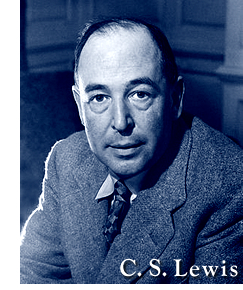
C.S. Lewis Daily – Today’s Reading


TO MARY VAN DEUSEN: On how one responds to the diagnosis of serious illness and on four strategies for coping.

10 April 1959

I have just had Sister Hildegarde’s letter. My heart goes out to you. You are now just where I was a little over two years ago—they wrongly diagnosed Joy’s condition as uremia before they discovered cancer of the bone.

I know all the different ways in which it gets one: wild hopes, bitter nostalgia for lost happiness, mere physical terror turning one sick, agonised pity and self-pity. In fact, Gethsemane. I had one (paradoxical) support which you lack—that of being in severe pain myself. Apart from that what helped Joy and me through it was 1. That she was always told the whole truth about her own state. There was no miserable pretence. That means that both can face it side-by-side, instead of becoming something like adversaries in a battle-of-wits. 2. Take it day by day and hour by hour (as we took the front line). It is quite astonishing how many happy—even gay—moments we had together when there was no hope. 3. Don’t think of it as something sent by God. Death and disease are the work of the Devil. It is permitted by God: i.e., our General has put you in a fort exposed to enemy fire. 4. Remember other sufferers. It’s fatal to start thinking ‘Why should this happen to us when everyone else is so happy.’ You are (I was and may be again) one of a huge company. Of course we shall pray for you all we know how. God bless you both.

From The Collected Letters of C.S. Lewis, Volume III

Compiled in Yours, Jack

The Collected Letters of C. S. Lewis