Charles Stanley – Our Caring and Able Father


2 Chronicles 20:1-4

Everyone faces challenges in life. Whether our struggles are financial, vocational, relational, or physical, we can be certain that nobody is exempt. Fortunately, we serve a God who is both interested in our problems and able to take care of them.

When trouble looms, prayer is always a good first step to take. But having a foundation upon which to build our prayers also makes a difference. Jehoshaphat, the king of Judah, faced an enormous challenge. Three different tribes—the Moabites, Ammonites, and Meunites—simultaneously waged war against him. Most leaders would have crumbled under such pressure, or at the very least taken drastic measures, but Jehoshaphat was a wise leader. Though afraid, he did not strike out against his enemies. Instead, knowing that God was interested in his dilemma, he “turned his attention to seek the LORD” and proclaimed a fast throughout the land (2 Chron. 20:1-3).

Jehoshaphat also knew that God, who was more powerful than any earthly problem, had done miraculous things for Abraham, Isaac, Jacob, Moses, and David. That same God would help him, too, in his hour of need. We should never underestimate the Lord’s interest in our affairs. He helped our biblical ancestors, and He can and will help His children today.

It’s easy to think our problems are unimportant in God’s eyes, but He doesn’t feel that way at all. Whatever concerns us concerns Him. If we, like Jehoshaphat, turn to the Lord and proclaim His power, He will intervene. And no matter how great our challenges are, God is greater.

Bible in One Year: Psalms 44-49

Our Daily Bread — Look at the Tassels


Read: Numbers 15:37-41

Bible in a Year: Nehemiah 12-13; Acts 4:23-37

Remember all the commandments of the Lord and do them. —Numbers 15:39

Best-selling author Chaim Potok began his novel The Chosen by describing a baseball game between two Jewish teams in New York City.  Reuven Malter, the book’s main character, notices that the opposing players’ uniforms have a unique accessory—four long ropelike tassels that extend below each teammate’s shirt. Reuven recognizes the tassels as a sign of strict obedience to God’s Old Testament laws.

The history of these fringes—known as tzitzit—began with a message from God. Through Moses, God told His people to create tassels containing some strands of blue thread and attach them to the four corners of their top garments (Num. 15:38). God said, “You may look upon [the tassels] and remember all the commandments of the Lord and do them” (v. 39).

God’s memory device for the ancient Israelites has a parallel for us today. We can look at Christ who consistently kept the whole law in our place and obeyed His heavenly Father (John 8:29). Having received His work on our behalf, we now “put on the Lord Jesus Christ, and make no provision for the flesh, to fulfill its lusts” (Rom. 13:14). Keeping our eyes on God’s Son helps us to honor our heavenly Father. —Jennifer Benson Schuldt

Dear Jesus, thank You for being my spiritual role model. Help me to walk in Your steps so that I can honor and obey God with the Holy Spirit’s help.

If Christ is the center of your life, you’ll always be focused on Him.

INSIGHT: The book of Numbers is part of the opening segment of the Old Testament Scriptures. It is book four of the five-book Pentateuch, referred to in Judaism as the Torah (the Law). These books were written by Moses as a record not only of the beginning of time and life (Genesis), but also the beginning of the nation of Israel (Exodus through Deuteronomy). This book received its name because of Moses’ order to number the population of the tribes. Jewish names for the book of Numbers include “and the Lord spoke” and “in the wilderness” (both names coming from Num. 1:1).

Ravi Zacharias Ministry – God With Us


In a powerful scenario played out in a hot, dry, and dusty wilderness, Jesus said in response to a temptation: “One does not live by bread alone, but on every word that comes from the mouth of God” (Matthew 4:4). Notice he did not say that man did not live on bread “at all,” as some forms of mysticism and bodily denial might assert. He showed that man did live on bread partially, but not exclusively. In other words, we are both body and spirit, and there is a higher dimension to our existence.

The New Atheists, and the old ones for that matter, would have us embrace what some have called “nothing buttery.” We are nothing but our DNA; we are nothing but our social and biological inheritance; we are nothing but a random collocation of atoms, time, and chance. What is interesting in all this is that those who are saying such things use words. Indeed, they write long books, extensive articles, and scholarly tones to persuade us that we are nothing but “matter in motion.”

Is their use of words, their reliance on reason, their appeal to rationality, a backhanded tribute to Jesus’s claim that there is something higher, more complex, and real that is indeed a major feature of what it is to be human? After all, if my delight in reading or my love of the ideas and impressions that arise from reading are mere chemical reactions with deterministic outcomes, mere responses and not real experiences, then I am left wondering if even my wondering is nothing more than a blind reaction to stimulus. I must confess: I don’t buy it.

If we look at the ancient Scriptures, we see an initial confrontation with several players. Adam and Eve are in an idyllic setting. God is present and in communion with them. Then the “tempter” appears and raises what will be a lasting question, one which has as much bearing on the twenty-first Century as it did when it was first stated: “Did God really say?” (Genesis 3:1). Now, whether we take this question in broad directions (Is there any God who actually speaks?) or in specific directions (Do I believe God is speaking to me now? What should I do in these circumstances? Can I expect insight from God for life?), the thought has vast consequences. Did God really say?

If there is no God, if there is nothing but chance and necessity, then I must fling myself into existence with all the will and hope I can muster and simply allow the dice to land. If there is a God, however, then I not only have access to the author and creator of life, but I can meet and know a God who is called “The Good Shepherd” and reminds us that his name is Immanuel, “God with us.”

In this age of the saturated self, time and space are drowning in voices, noises, and insistent demands—all clamoring for our attention. We might feel at times as if we are suffocating or simply being squished by blind forces that have no consideration or compassion, and we wonder if we can survive. Did God really say? Did God say anything that could help? In a very powerful story told in Genesis 21:8-20, Hagar, who gave birth to Ishmael by Abraham, was sent away as a result of internal family strife and hostility. Abandoned with a young boy, wandering in a wasteland, she collapsed in hopeless despair. We surely feel her sense of utter desperation and loss. Yet into this bleak, dark, and hopeless scenario, God speaks. And his words are words of hope and words of life. Hagar hears what is being communicated and responds.

Of course, it could all be false. It could all be a construct. It could all be nothing but wishful thinking. Perhaps it is all imagination or the work of religious deceivers across time who have created these moving stories to distract us. Perhaps man really does live by bread alone, and what we need to do is simply accept it and get on with life as it is. Or perhaps—perhaps—there is a God, and God is, as Francis Schaeffer said, there and not silent. The choice is real and it is unavoidable. Jesus offers a way and an alternative to the bleak vision of life bound by time, chance, and necessity: Humanity does not live by bread alone, but on every word that comes from the mouth of God.

Stuart McAllister is regional director of the Americas at Ravi Zacharias International Ministries in Atlanta, Georgia.

Alistair Begg – The Spirit’s Blessings


And they were all filled with the Holy Spirit.

Acts 2:4

The blessings of today would be rich if all of us were filled with the Holy Spirit. It would be impossible to overestimate the consequences of this sacred filling of the soul. Life, comfort, light, purity, power, peace, and many other precious blessings are inseparable from the Spirit’s gracious presence.

  • As sacred oil, He anoints the head of the believer, setting him apart to the priesthood of saints and giving him grace to execute his office properly.
  • As the only truly purifying water He cleanses us from the power of sin and sets us apart to holiness, enabling us to desire and then to do what pleases the Lord.
  • As the light, He revealed Himself to us in our darkness, and now He reveals the Lord Jesus to us and in us and guides us in the way of righteousness. Enlightened by His pure celestial ray, we are no longer in darkness but light in the Lord.
  • As fire, He purges us from dross and sets our consecrated nature ablaze. He is the sacrificial flame by which we are enabled to offer our whole souls as a living sacrifice unto God.
  • As heavenly dew, He removes our barrenness and fertilizes our lives. How we long for Him to come upon us from above at this early hour! Such morning dew would be a sweet beginning to the day.
  • As the dove, with wings of peaceful love He broods over His Church and over the souls of believers, and as a Comforter He dispels the cares and doubts that spoil the peace of His beloved. He descends upon the chosen as He did upon Christ at His baptism and bears witness to their sonship by working in them a filial spirit by which they cry, “Abba, Father.”
  • As the wind, He brings the breath of life to men; blowing where He wills, He performs the quickening operations by which the spiritual creation is animated and sustained.

Would to God that we might feel His presence this day and every day.

Devotional material is taken from “Morning and Evening,” written by C.H. Spurgeon, revised and updated by Alistair Begg.

Charles Spurgeon – His name—the mighty God


“The mighty God.” Isaiah 9:6

Suggested Further Reading: Hebrews 2:10-18

Great is the mystery of godliness, for the passage from which the text is taken says, “Unto us a child is born.” A child! What can a child do? It totters in its walk, it trembles in its steps—and it is a child newly born. Born! An infant hanging on its mother’s breast, an infant deriving its nourishment from a woman? That! Can that work wonders? Yea, saith the prophet, “Unto us a child is born.” But then it is added, “Unto us a Son is given.” Christ was not only born, but given. As man he is a child born, as God he is the Son given. He comes down from on high; he is given by God to become our Redeemer. But here behold the wonder! “His name,” this child’s name, “shall be called Wonderful, Counsellor, the mighty God.” Is this child, then, to us the mighty God? If so, O brethren, without controversy, great is the mystery of godliness indeed! And yet, just let us look through the history of the church, and discover whether we have not ample evidence to substantiate it. This child born, this Son given, came into the world to issue a challenge against sin. For thirty years and upwards he had to struggle and wrestle against temptations more numerous and more terrible than man had ever known before. Adam fell when a woman tempted him; Eve fell when a serpent offered fruit to her, but Christ, the second Adam, stood invulnerable against all the shafts of Satan, though tempted he was in all points like as we are. Not one arrow out of the quiver of hell was spared; the whole were shot against him. Every arrow was aimed against him with all the might of Satan’s archers, and that is not little! And yet, without sin or taint of sin, more than conqueror he stood.

For meditation: Here, on the morning of his 25th birthday, Spurgeon gloried in the birthday of his great elder brother, the Lord Jesus Christ—God born of a woman, given in the likeness of sinful flesh so that God could condemn our sin in his flesh (Galatians 4:4; Romans 8:3). What an appropriate birthday meditation, remembering how Christ identified with us so that we could be identified with him!

Sermon no. 258

19 June (1859)

John MacArthur – Ministering to the Poor


“If a man comes into your assembly with a gold ring and dressed in fine clothes, and there also comes in a poor man in dirty clothes, and you pay special attention to the one who is wearing the fine clothes, and say, ‘You sit here in a good place,’ and you say to the poor man, ‘You stand over there, or sit down by my footstool,’ have you not made distinctions among yourselves, and become judges with evil motives?” (James 2:2-4).

You must show equal respect to poor and rich alike.

Partiality is an age-old problem that exists in almost every area of life. Perhaps its most common manifestations are racial, religious, and socio-economic discrimination. By implication James denounced partiality in any form, but in James 2:2-4 he specifically mentions preferential treatment of the rich over the poor. He knew such favoritism was devastating not only because it is sinful, but also because the majority of believers in the early church were poor, common people. Discriminating against them would have struck a blow at the very heart of the church!

From its inception the church has upheld the priority of ministering to the poor. Acts 2:44-45 says, “All those who had believed were together, and had all things in common; and they began selling their property and possessions, and were sharing them with all, as anyone might have need.” Paul organized a relief fund for the needy saints in Jerusalem (1 Cor. 16:1-4), and during one severe famine, “in the proportion that any of the disciples had means, each of them determined to send a contribution for the relief of the brethren living in Judea. And this they did, sending it in charge of Barnabas and Saul to the elders” (Acts 11:29-30).

God has chosen the poor of this world to be rich in faith and heirs of the kingdom, but some of James’s readers were dishonoring them (vv. 5-6). That had to stop! We too must honor the poor by treating them with dignity rather than prejudice, and meeting their needs whenever possible. Be alert to those around you whom you might help in some practical way.

Suggestions for Prayer

Ask the Lord to keep you sensitive to those around you, and for wisdom to know how to respond to their needs.

For Further Study

Read 1 Corinthians 1:26-29, noting the kinds of people God uses to accomplish His purposes.

Joyce Meyer – No Longer a Victim


He heals the brokenhearted and binds up their wounds [curing their pains and their sorrows].Psalm 147:3

You may have been a victim at one point in your life, but you don’t have to remain one. You can be emotionally healthy and whole in your soul. The Word of God promises that God will heal your wounds. He will help you . . .He’s waiting to help you.

We all have painful issues from the past that we need to deal with. Many of them were not our fault, and it isn’t fair that we should suffer because of other people’s behavior. Perhaps you were teased mercilessly as a child and still feel insecure or sensitive because of that old pain. Maybe someone you loved left you without explanation, or you may have been abused in some way. Whatever the source of your pain, be thankful that God loves you and wants to heal you. You don’t have to spend your life as a victim; you can have victory and even help bring victory to others.

Prayer of Thanks Father, I thank You that You are a healer. You have not left me to suffer in the pain of the past—You are healing my wounds and giving me the strength to move forward. Today is a new day, and I am going to enjoy every minute of it!

Campus Crusade for Christ; Bill Bright – All Is Ours


“So don’t be proud of following the wise men of this world. For God has already given you everything you need. He has given you Paul and Apollos and Peter as your helpers. He has given you the whole world to use, and life and even death are your servants. He has given you all of the present and all of the future. All are yours, and you belong to Christ, and Christ is God’s (1 Corinthians 3:21-23).

A famous scholar and statesman called me aside to offer his counsel. “As the head of a great worldwide Christian student movement,” he said, “you should be more scholarly, more of a philosopher. Your approach is too simple. Your critics and even some of your friends feel that your writings and your speaking should be more profound as befits one of your stature and position.” He continued in this vein for some time. I heard him out, prayerfully asking God to give me the wisdom to respond.

When he finished I said to him, “There was a time when I wanted to impress people with my intellect, my learning. I spent many years in graduate school including two theological seminaries where I had the privilege of sitting at the feet of some of the most learned theologians of our time.”

I confessed to him that there was a period in my student life when I became intoxicated with learning and could have spent the rest of my life in the ivory tower. Then it occurred to me in a very definite, dramatic way that one of the reasons the Christian message was not better understood by every Christian and the reason the Christian church was making such little impact upon a worldly society was that many theologians, and consequently their students, pastors and missionaries, had complicated the good news of God’s love and forgiveness. I reminded my friend that Jesus, the greatest teacher of all, taught in such a way that the masses, largely illiterate and unlearned, heard Him gladly. I went on to explain that I had made a concerted effort all through my ministry to try to communicate clearly by eliminating big words and philosophical and theological jargon, the kind of “Christianese” that does not communicate except to those who are familiar with the usage.

This famous scholar seemed to understand for the first time the importance of following the example of our Lord and other great teachers through the centuries who sought to communicate clearly to the masses.

Bible Reading: I Corinthians 3:16-20

TODAY’S ACTION POINT: Remembering that God has given me everything I need, I will look to Him to guide my steps and enable me to live the supernatural life. I will also keep the message simple as I communicate the good news of God’s love in Christ.

Presidential Prayer Team; H.L.M. – Praying His Plan


James Holmes was once a promising neuroscience graduate student. That is, until Holmes committed one of the worst mass killings in U.S. history in a crowded cinema in Denver. Twelve people tragically died and 70 were injured on July 20, 2012. Holmes’ mother, Arlene, chose to deal with her grief with proactive prayer. After her son was arrested for the shooting, Arlene prayed every day for each victim. She also regularly prays for the mentally ill. “People think he is a monster, but he has a disease that changed his brain. I am praying for good men and women engulfed in psychosis and alone with their disease.”

And whatever you ask in prayer, you will receive, if you have faith.

Matthew 21:22

When Jesus spoke to His followers about the power of prayer, He was not telling them they would receive anything they want simply by asking and believing. Rather, prayer must be in harmony with the principles of God’s kingdom and with His will.

The Lord’s priority is that each person embrace a relationship with Jesus Christ. So as you intercede for America’s leaders, lay aside any of your personal opinions and focus on God’s plan for their lives. Ask Him to reveal His love and truth to them in a powerful, life-changing way!

Recommended Reading: John 14:12-21

Greg Laurie – One Bite at a Time


God blesses those who patiently endure testing and temptation. Afterward they will receive the crown of life that God has promised to those who love him.—James 1:12

It has been said that conversion has made our hearts a battlefield. It is true. When you believe in Jesus Christ, a battle begins in your heart. It is a battle between God and Satan. When you take that step and make a commitment to Lord, the Devil will want to pull you away from the commitment you have made.

So if you have found yourself being tempted a lot lately, then cheer up. It is actually an indication that you are living as a true Christian.

It is not a sin to be tempted. That is a strategy the Devil loves to use. He will tempt you, and then he will condemn you for being tempted. It is not a sin to be tempted; it is a sin when you give in to the temptation. It is not the bait that constitutes sin; it is the bite. If you refuse it and overcome it, God promises to bless you for it. We read in James, “God blesses those who patiently endure testing and temptation. Afterward they will receive the crown of life that God has promised to those who love him” (James 1:12).

The bottom line is that you are under the control and power of the Lord Jesus Christ. You have God’s ID tag attached to you, and the Devil can no longer control you. He can no longer manipulate you. So he will try to draw you out. He will try to weaken your resolve. He will try to get you to compromise. He will try to take you one bite at a time. It’s a little bit here, a compromise there, a little lowering your guard in a certain area. And pretty soon, you will find yourself in a place where you never wanted to be.

Max Lucado – God is Not Sometimes Sovereign


This season in which you find yourself may puzzle you, but it does not bewilder God. He can and will use it for His purpose. God is not sometimes sovereign. He is not occasionally victorious. Jeremiah 30:24 reminds us, “The Lord shall not turn back until He has executed and accomplished the thoughts and intents of His mind.”

Case in point. Joseph in prison. From an earthly viewpoint the Egyptian jail was the tragic conclusion of Joseph’s life. The devil had Joseph just where he wanted him. So did God. What Satan intended for evil, God used for testing. If you see your troubles as nothing more than isolated hassles and hurts, you will grow bitter and angry. But, if you see your troubles as tests used by God for his glory and your maturity—then even the smallest incidents take on significance!

From You’ll Get Through This

Night Light for Couples – Cool Blades

Night Light for Couples – Cool Blades

by Pam Gross

It was a vaguely familiar feeling—a feeling of freedom experienced a lifetime ago. Motion. Speed. Wind. Excitement. Small but present danger. Oh, yes! That same exhilaration that comes with competence. I was doing it! I was rollerblading on the boardwalk at Seaside, Oregon, on a glorious late summer afternoon. Two miles of flat, smooth pavement, sunshine, ocean air. I couldn’t help my smile; it was as ridiculously relentless as a yellow happy face. My body moved with relative ease and a modicum of grace. Push, glide, push, glide—don’t lift the feet so high. Swing the hips. Oops! Too much push means too much glide. Let’s get more control here. Up and down! Up and down! Miles and miles—every once in a while picking up the scent of a cigar as I once again whizzed past my husband reading Tom Clancy on a bench.

Getting tired, I informed my husband that on the next pass I wanted to stop.

“Okay,” he said. “I’ll be ready.”

Stopping was not a skill I had mastered at that point. As I approached him, I slowed to a more manageable speed. He stood up, swung his arms wide, and enfolded me in a great hug.

“I am your stopping post,” he whispered.

I thought, Yes. What a wonderful metaphor. You are my safe stopping place.

I sat for a while on the bench enjoying the moment. Some teenagers sauntered past, talking quietly among themselves. The last, a young man of about thirteen, looked admiringly at my skates, bent down, and murmured just so we could hear, “Cool blades.” Then he picked up his pace to catch his friends. My husband and I said in unison, “Cool blades?” And we laughed.

Then the sunset zealots began converging like football fans on Super Bowl Sunday. I hoisted myself off the bench to make the most of the fading light. Up and down, push and glide. Lost in the exquisite rhythm and the elegant air, I almost missed them. But out of the corner of my eye I glimpsed a bicycle surrey pulled up close to the boardwalk. Four women nested there comfortably in that distinctly female way of companionable silence. I thought they were completely absorbed by the inch‐by‐inch disappearance of the day, but as I moved past, almost out of earshot, I heard the soft call of support: “You go, girl!” To acknowledge, I signaled a “thumbs up” and continued on.

Now, whenever I put on my skates, I hear the young voice saying, “Cool blades,” and I smile. When I think of my husband as a safe stopping place, I smile. When I recall the soft call of support, I smile. I’m sure glad I didn’t take seriously those people who predicted, “Rollerblade? You’re nearly sixty! You’ll kill yourself!”

Kill myself? I’d say I was perfectly alive that day on the boardwalk.

Looking ahead…

The routine of what might be called the safe, predictable life has a way of wearing down wives and husbands. Too many years spent in that same office with the broken air conditioner, mowing that same lawn with the crabgrass that never goes away, scraping the ketchup off those same dishes, and making the same lunches for seemingly ungrateful children can leave married couples bored and restless. What’s the solution?

One answer is to open your mind to the possibilities around you. Learn a new skill… study a new subject… take on a new hobby… pursue a new adventure. Think about what you’ve always wanted to try, then do it. You may even find yourself rollerblading down the boardwalk—and loving it.

– James C Dobson

From Night Light For Couples, by Dr. James & Shirley Dobson

C.S. Lewis Daily – Today’s Reading


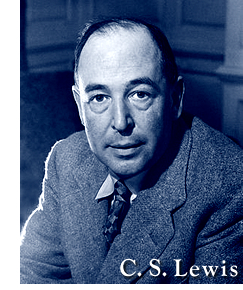
The problem of reconciling human suffering with the existence of a God who loves, is only insoluble so long as we attach a trivial meaning to the word ‘love’, and look on things as if man were the centre of them. Man is not the centre. God does not exist for the sake of man. Man does not exist for his own sake. ‘Thou hast created all things, and for thy pleasure they are and were created’ [Revelation 4:11]. We were made not primarily that we may love God (though we were made for that too) but that God may love us, that we may become objects in which the Divine love may rest ‘well pleased’. To ask that God’s love should be content with us as we are is to ask that God should cease to be God: because He is what He is, His love must, in the nature of things, be impeded and repelled, by certain stains in our present character, and because He already loves us He must labour to make us lovable. We cannot even wish, in our better moments, that He could reconcile Himself to our present impurities—no more than the beggar maid could wish that King Cophetua should be content with her rags and dirt, or a dog, once having learned to love man, could wish that man were such as to tolerate in his house the snapping, verminous, polluting creature of the wild pack. What we would here and now call our ‘happiness’ is not the end God chiefly has in view: but when we are such as He can love without impediment, we shall in fact be happy.

From The Problem of Pain

Compiled in A Year with C.S. Lewis