Ravi Zacharias Ministry – A Growing Process


As a gardener, nothing is more rewarding to me than reaping the benefits of my labor whether that is a lovely bouquet of flowers, or the bounty of my fruit and vegetable gardens. When the soil, sun, and rain are just right everything grows, blooms, and produces a bountiful harvest. But, of course, not everything is just right.

Morning glory belongs to a family of unique and tenacious plants. While offering beautiful white or purple blossoms, that beauty belies a more pernicious and tenacious nature to spread and take over one’s entire yard! Morning glory is a variety of bindweed, which grows from rhizomes—underground storage structures that promote the spread of the weed. Hardy, tenacious, and opportunistic, the morning glory will spread in such ways that it will destroy every square inch of the garden.

Battling this plant nemesis in my own gardens has given me a new understanding for the process involved in the cultivation and preservation of gardens. Digging deep to get up as many of the rhizomes as possible takes commitment, hard work, and a great deal of time. Often, I look out over garden beds cleared of any visible evidence of morning glory after my labor, only to look out the next day and see new shoots where I had just cleared them.

With all of this back-breaking labor, it is easy to be tempted towards finding an easier way: A rock garden, perhaps, instead of a green one? Why in the world would anyone be attracted to the inconvenience of going out and working long hours in the hot sun battling insects, weeds, and other pests for a garden? Why would I slave in the summer sun for beauty or for bounty?

When I labor over my garden, or any project for that matter, I am connected to a larger process, and not just an end result. It was my knees that began to ache from bending over, my hands that occasionally encountered a stinging or biting insect of one kind or another, my muscles that would cramp my fingers and hands from relentless weeding and digging. Yet, taking notice of this process makes me aware of my own tendency to desire convenience or to want to give up when things become difficult. Just as one might take for granted the process that goes into getting good food on filled grocery shelves, I often want for the shortcut or the expedience. Working hard to create conditions that enhance thriving for my flowers and vegetables in my own garden connects me to a part of the process that is done on my behalf on a much larger scale. I think of all the people who labor on my behalf so that I might enjoy the wonderful food on my grocery shelves. Going out and doing battle for my own garden reminds me that the process is just as important as the end product.

In many other regards, our busyness and commitment to convenience often keep us from engaging in vital processes that inform us of our beginning and guide us to our end, just as they contribute to a general amnesia about what it takes to put food on our tables. Our consumer conveniences often sever us from vital connections; we forget from whence we have come and where we are going. We look for the quick fix or the shortcut to the end goal, rather than journeying through many arduous processes essential to our growth and development as human persons.

How similarly people of faith often wish for the easy way or the convenience of a ‘seven-step plan’ for spiritual growth. Jesus’s frequent use of agricultural imagery should not surprise us. Some of the most beloved images from Jesus’s conversations with his disciples evoke the vine and branches from grapevines and vineyards that likely filled the landscape. Growing grapes requires a long process. It takes three years to establish a grape planting. Yet, even during the third season, only a limited harvest may be expected from the vines. The first full crop normally takes between four to five years.

Perhaps this knowledge can give new insight into the words of Jesus:

I am the vine; you are the branches…Remain in me, and I will remain in you…no branch can bear fruit by itself; it must remain in the vine…remain in my love…I chose you and appointed you to go and bear fruit—fruit that will last.(3)

The spiritual life, like our development as human beings, is about the process. Just as in farming, much of that process involves watching and waiting, tilling and cultivating the land, even having to persevere and dig deep to pull out yet another encroaching rhizome. There are no short cuts for a bountiful harvest.

Margaret Manning Shull is a member of the speaking and writing team at Ravi Zacharias International Ministries in Bellingham, Washington.

(1) “Every Piece of Fruit” cited in Alice Peck Ed., Bread, Body, Spirit (Woodstock, VT: SkyLight Paths Publishing, 2008).

(2) John 15:4-16.

Alistair Begg – Cooked Evenly


Ephraim is a cake not turned.

Hosea 7:8

A cake not turned is uncooked on one side; and so Ephraim was, in many respects, untouched by divine grace: Though there was partial obedience, there was too much rebellion left. My soul, I charge you to see whether this is true of you. Are you thorough in the things of God? Has grace gone to the very center of your being so that its divine operation is felt in all your powers, your actions, your words, and your thoughts? To be sanctified, spirit, soul, and body, should be your aim and prayer; and although sanctification might not be complete in you, still it must be at work in you. There must not be the appearance of holiness in one place and reigning sin in another; otherwise you will also be a cake not turned.

A cake not turned is soon burnt on the side nearest the fire, and although no man can have too much religion, there are some who seem burnt black with bigoted zeal for that part of truth that they overemphasize; others are charred to a cinder with a self-congratulatory pharisaic performance of those religious activities that suit their mood. The assumed appearance of superior sanctity frequently accompanies a total absence of all vital godliness, and the saint in public is a devil in private. He deals in flour by day and in soot by night. The cake that is burned on one side is dough on the other.

This is true of me, Lord Jesus; turn me! Turn my unsanctified nature to the fire of Your love, and let it feel the sacred glow, and let my burnt side cool a little while I learn my own weakness and lack of heat when I am removed from Your heavenly flame. Let me not be a double-minded man, but one who is entirely under the powerful influence of reigning grace. I know only too well that if I am left like a cake unturned, and am not on both sides the subject of Your grace, I will be consumed forever in everlasting burnings.

Devotional material is taken from “Morning and Evening,” written by C.H. Spurgeon, revised and updated by Alistair Begg.

John MacArthur – Fulfilling the Royal Law


“If . . . you are fulfilling the royal law, according to the Scripture, ‘You shall love your neighbor as yourself,’ you are doing well” (James 2:8).

Love is the only antidote for partiality.

In Matthew 22:36 a lawyer asked Jesus which commandment was the greatest. Jesus answered, “‘You shall love the Lord your God with all your heart, and with all your soul, and with all your mind.’ This is the greatest and foremost commandment. The second is like it, ‘You shall love your neighbor as yourself.’ On these two commandments depend the whole Law and the Prophets” (vv. 37-40). Love for God and one’s fellow man summarizes the intent of God’s law, and is the measure of true faith.

Jesus wasn’t calling for the shallow, emotional, self-oriented love that is so prevalent in our society, but for a sacrificial quality of love that places the needs of others on par with your own. That kind of love is utterly incompatible with partiality, which seeks only to further its own selfish goals.

Showing partiality breaks God’s law because it violates God’s attributes, misrepresents the Christian faith, ignores God’s choice of the poor, and condones the blasphemous behavior of the rich (James 2:1-7). But when you treat others impartially, you fulfill the royal law. “Royal” in James 2:8 translates a Greek word that speaks of sovereignty. The law was given by God, who is the supreme authority in the universe, so it is authoritative and binding. Love fulfills God’s law because if you love someone, you won’t sin against him.

Apparently not all of James’s readers were showing partiality, so he commended them, saying they were “doing well.” The Greek word translated “well” speaks of that which is excellent. They were doing an excellent thing because they were acting in a manner consistent with God’s impartial, loving nature. That’s God’s call to every believer: for “the one who says he abides in [Christ] ought himself to walk in the same manner as He walked” (1 John 2:6). As you do, you fulfill God’s law and thereby prove that your faith and love are genuine.

Suggestions for Prayer

God’s love is the only antidote for partiality, so pray each day that He will teach you how better to express His love to those around you.

For Further Study

Read the following verses, noting the characteristics of godly love: John 3:16, Ephesians 5:25-29, Philippians 1:9-11, and 1 John 5:1-3.


Joyce Meyer – Don’t Be Afraid to Stop


The thoughts and purposes of the [consistently] righteous are honest and reliable, but the counsels and designs of the wicked are treacherous. —Proverbs 12:5

Don’t be ashamed to back off if you get out in the middle of something and find that God is not in it. Just be secure enough to simply say, “I thought this was God, but it’s not, so I am not going to do it anymore.”

You can apologize to others if you caused them any trouble or confusion. But there is no shame in quickly admitting that you were wrong. It is more important not to perpetuate a mistake than it is to keep people from thinking you were wrong. Don’t be afraid to say, “I didn’t hear from God.” Honesty will keep your day going right, all day long.

Campus Crusade for Christ; Bill Bright – Protected From Satan


“But the Lord is faithful: He will make you strong and guard you from satanic attacks of every kind” (2 Thessalonians 3:3).

As a lad I grew up in a rural community on a ranch five miles from the nearest town. I received the first seven years of my formal education in a one-room, country school. I was often the only student in my class and there were never more than three of us. It was not unusual for some big bully to pick on a student smaller than himself and fights would ensue.

I had been taught never to run from a fight because that was not the manly thing to do and so I sometimes found myself in such a situation. I was encouraged by a brother, several years older, who would stand by to insure that the fighting was fair and that I would not be taken advantage of. The Lord Jesus Christ is our elder brother. He stands by to help us, to make us strong and guard us from the attacks of Satan who is like the big bully.

Two thousand years ago Satan was defeated at the cross. He has no control over us except that which God allows and which we by our disobedience and unbelief enable Him to have. Why then, you ask, does the average Christian have such a tough time living the Christian life? It is because he does not understand that the battle has already been won! Victory is ours and nothing can touch us or harm us whether we are criticized, persecuted or even martyred for the sake of the kingdom, for we are not of this world. We are citizens of the heavenly kingdom. While here on this earth, Christ will envelop us and surround us with His supernatural peace and power, turning tragedy to triumph, heartache and sorrow to joy. This is our heritage if only we keep on trusting and obeying Him.

Bible Reading: II Thessalonians 3:1-5

TODAY’S ACTION POINT: I will remember that Jesus Christ is not only my Savior and Lord, but my older brother and that He will protect me against satanic attacks of every kind. The battle has already been won! Through His enabling supernatural resources, I will live a supernatural life for His glory today.

Presidential Prayer Team; J.K. – Connections


The Jews in Christ’s day were ready to celebrate the Passover – a remembrance of their release from the grips of Pharaoh in Egypt, but did any of them connect the current happenings to the events of the first Passover?

There was darkness over the whole land until the ninth hour.

Mark 15:33

The ninth plague in captivity was pitch darkness over the land for three days. At the time of Jesus’ crucifixion, there was darkness for three hours. There was silence on His cross as He experienced the judgment of your sins and the sins of the world as His Father forsook Him. Then, just as in Egypt, the firstborn died; only now it was God’s firstborn Son, the Lamb of God, willingly laying down His life as a sacrifice for you. The Earth quaked at His death. The veil in the temple was torn in two – a sign that Jesus had fulfilled the law in order to provide a “new and living way”…freedom from the law for those who believe in Him (Hebrews 10:20).

Beloved, let Christ work through you by His Holy Spirit to save the lost in your corner of the world. Pray also for those who lead this nation – that they may know of His sacrifice and believe.

Recommended Reading: Hebrews 10:12-25

Greg Laurie – Cheap Imitations


Another parable He put forth to them, saying: “The kingdom of heaven is like a man who sowed good seed in his field; but while men slept, his enemy came and sowed tares among the wheat and went his way.”—Matthew 13:24–25

Christians should be aware that the Devil is an imitator. When he cannot stop a work of God, he will offer his cheap imitation. That way he minimizes the power and glory of God.

God has His genuine; the Devil has his imitations. God has love; the Devil has lust. God has true faith in Christ; the Devil has false religion. He offers just enough to keep people from the real truth. Those who buy into this will say, “I don’t really need to hear about Jesus. I am a religious person” or “I am a spiritual person.” They are satisfied with a cheap imitation instead of going after the real thing.

Jesus told a parable about a farmer who sowed wheat in a field, but at night, his enemy came in and sowed tares among the wheat. A tare, also known as the darnel seed, looks a lot like wheat initially. But as it grows, it actually will uproot the wheat.

That is how the Devil works. He will put his plants in the church. They will talk like Christians. They will use phraseology that Christians use. And when they do something wicked, people will say, “I can’t believe that a Christian would do such a thing!” Here’s an idea. Maybe they actually were tares among the wheat. I am not saying that Christians are incapable of sinning. But I do think some people who attend church are tares among the wheat. They are imitations.

Case in point: Judas was a tare among the wheat as one of Jesus’ disciples. In fact, when Jesus said one of the Twelve would betray Him, no one knew He was referring to Judas. But Judas was an imitator. The Devil puts his fake versions out there, flooding the market with cheap substitutes.


Max Lucado – God’s Doing What’s Best for Us

God is at work in each of us whether we know it or not, whether we want it or not. Lamentations 3:33 says, “He takes no pleasure in making life hard, in throwing roadblocks in the way.” He doesn’t delight in our sufferings, but He delights in our development. It’s what Paul pointed out in Philippians 1:6, “God began doing a good work in you, and I am sure He will continue it until it is finished when Jesus Christ comes again.”

Don’t see your struggle as an interruption to life but as preparation for life. No one said the road would be easy or painless. But God will use this mess for something good. This trouble you are in isn’t punishment; it’s training, the normal experience of children. God is doing what’s best for us, training us to live God’s holy best!

From You’ll Get Through This

Night Light for Couples – Breaking Out


“God did not give us a spirit of timidity, but a spirit of power, of love and of self-discipline.” 2 Timothy 1:7

Breaking out of comfortable routines can be beneficial for us, but it isn’t always as easy as it sounds. My (jcd’s) father, for example, hated automatic transmissions on automobiles because he had learned to drive with stick shifts. I’ve fallen into similar patterns. Until 1992 I wrote books on yellow pads with pencils. I worked that way for years despite the availability of word processors. The twentieth century was almost over before I decided to join it.

Rigidity and the force of habit can cause us to do things that make no sense. Yet when we stop learning and growing, we fail to reach our potential. To look at it another way, which companies would you say are more successful in today’s fast‐changing marketplace: those whose motto is “We’ve always done it this way,” or those that continually evaluate their methods and seek improvements?

Some of what succeeds in business also makes sense in marriage. You might ask yourself if any outdated routines and pointless—or even costly—habits are holding you back.

Just between us…

  • Am I stuck in any habits that no longer make sense?
  • How are those who are unwilling to change like the Pharisees of

Scripture? (See Luke 11:37–44.)

  • Do you enjoy learning?
  • How can I encourage you to get out of old ruts or discard outdated habits?

Lord, we can become so comfortable in our old ways, but comfort can lead to stagnation and retreat. Inspire us by Your Spirit “of power, of love and of self-discipline” to reach for Your creative best. Thank You for the gift of new life we can enjoy together every day. Amen.

From Night Light For Couples, by Dr. James & Shirley Dobson

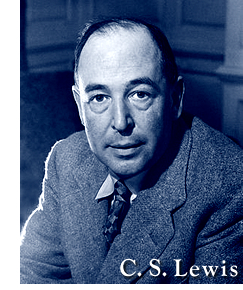
C.S. Lewis Daily – Today’s Reading


TO EDWARD LOFSTROM: A letter of great encouragement for someone who had been struggling with excessive self-awareness.

10 June 1962

You are of course perfectly right in defining your problem (which is also mine and everyone’s) as ‘excessive selfness’. But per- haps you don’t fully realise how far you have got by so defining it. All have this disease; fortunate are the minority who know they have it. To know that one is dreaming is to be already nearly awake, even if, for the present, one can’t wake up fully. And you have actually got further than that. You have got beyond the illusion (very common) that to recognise a chasm is the same thing as building a bridge over it.

Your danger now is that of being hypnotised by the mere sight of the charm, of constantly looking at this excessive selfness. The important thing now is to go steadily on acting, so far as you can—and you certainly can to some extent, however small—as if it wasn’t there. You can, and I expect you daily do—behave with some degree of unselfishness. You can and do make some attempt at prayer. The continual voice which tells you that your best actions are secretly filled with subtle self-regards, and your best prayers still wholly egocentric—must for the most part be simply disregarded—as one disregards the impulse to keep on looking under the bandage to see whether the cut is healing. If you are always fidgeting with the bandage, it never will.

A text you should keep much is mind is I John iii, 20: ‘If our heart condemns us God is greater than our heart.’ I sometimes pray ‘Lord give me no more and no less self-knowledge than I can at this moment make a good use of.’ Remember He is the artist and you are only the picture. You can’t see it. So quietly submit to be painted—i.e., keep on fulfilling all the obvious duties of your station (you really know quite well enough what they are!), asking forgiveness for each failure and then leaving it alone. You are in the right way. Walk—don’t keep on looking at it.

From The Collected Letters of C.S. Lewis, Volume III

Compiled in Yours, Jack

The Collected Letters of C. S. Lewis

Charles Stanley – Courage in the Lonely Hour


2 Timothy 4:6-18

Today’s passage captures a painful time in the life of Paul the apostle. As he sat in a prison cell, he knew that death was imminent. He had devoted the last years to teaching, training, and winning souls for Christ, but he now stood alone, unsupported during his trial and time in jail. Loneliness must have seemed overwhelming.

Paul felt abandoned, yet he didn’t blame anyone or pity himself. Instead, he met the suffering with courage. What motivated him to stand with strength during this trying time?

For the apostle, an awareness of Christ’s presence gave comfort and motivated him to persevere. Having a copy of Scripture in his cell no doubt encouraged him in this way (2 Tim. 4:13). And he not only knew God was right there with him in the current moment; he also recalled earlier times when the Lord had intervened. For instance, years before, Paul had had a vision telling him not to fear during a storm on the sea. And though the ship ran aground, all of the men survived (Acts 27:22-24).

For those of us who know Jesus Christ as our personal Savior, strength is readily available in His intimate presence. Our heavenly Father promises that He will never abandon His children—even when everyone else has left.

Have your circumstances left you feeling lonely? Remember times when God was evident to you—when He clearly revealed His hand in your life. And read His Word so that the truth of His presence can comfort and encourage you. As a believer, you are truly never alone.

Bible in One Year: Psalms 60-66

Our Daily Bread — Our Daily Bread — The Challenge of Transition`


Read: Joshua 1:6-11

Bible in a Year: Esther 6-8; Acts 6

Be strong and very courageous. —Joshua 1:7

After former professional athlete Chris Sanders suffered a career-ending injury, he told a group of military veterans that although he had never experienced combat, “I understand the pressures of transitions.”

Whether it’s the loss of a job, the loss of a marriage, a serious illness, or a financial setback, every major change brings challenges. The former athlete told the soldiers that the key to success when you are transitioning into a new way of living is to reach out and get help.

The book of Joshua is recommended reading whenever we find ourselves in transition. After 40 years of wandering and setbacks, God’s people were poised to enter the Promised Land. Moses, their great leader, had died, and Joshua, his assistant, was in charge.

God told Joshua to “be strong and very courageous, that you may observe to do according to all the law which Moses My servant commanded you; do not turn from it to the right hand or to the left, that you may prosper wherever you go” (Josh. 1:7). God’s words of direction were to be the bedrock of Joshua’s leadership in every situation.

The Lord’s charge and promise to Joshua apply to us as well: “Be strong and of good courage; do not be afraid, nor be dismayed, for the Lord your God is with you wherever you go” (v. 9).

He is with us in every transition. —David C. McCasland

Father, I’m bringing You my trials and frustrations. You know each and every detail. Please comfort me as only You can, and provide exactly what I need for today. Help me give my unfulfilled expectations to You, trusting You’re working out a plan for me.

God remains faithful in every change.

INSIGHT: From personal observation, Joshua knew that the Canaanites lived in strongly fortified cities (Num. 13:28-29). But God’s command was accompanied with a promise of victory: “No man shall be able to stand before you all the days of your life; as I was with Moses, so I will be with you. I will not leave you nor forsake you” (Josh. 1:5).

Ravi Zacharias Ministry –  Christianity and Violence


In a 2002 article in The Guardian, author Salman Rushdie, inspired by bouts of violence in his native India, articulated a now-common view on religion. The article was titled, “Religion, as ever, is the poison in India’s blood.” In it, Rushdie outlined the familiar stance of the vociferous new atheists, bidding the world to stop speaking of religion in the fashionable language of “respect” and skating around the obvious conclusions about both God and religion. He writes:

“What is there to respect in any of this, or in any of the crimes now being committed almost daily around the world in religion’s dreaded name? How well, with what fatal results, religion erects totems, and how willing we are to kill for them! […] India’s problem turns out to be the world’s problem. What happened in India has happened in God’s name. The problem’s name is God.“(1)

Rushdie’s voice is merely one among many in the increasingly prevalent conversation about God, religion, and violence. Against Christianity, the critiques come quite specifically. Richard Dawkins describes the Christian story as vicious, sado-masochistic, and repellent, symptomatic of a violent God, a Bible full of violence, and followers willing to overlook that violence, or worse, to embrace it. For Dawkins and his conspirators, God is the problem that initiates the problem of violence: “The God of the Old Testament is arguably the most unpleasant character in all fiction: jealous and proud of it; a petty, unjust, unforgiving control-freak; a vindictive, blood-thirsty ethnic cleanser; a misogynist, homophobic, racist, infanticidal, genocidal, filicidal, pestilential, megalomaniacal, sado-masochistic, capriciously malevolent bully. Those of us schooled from infancy in his ways can be desensitized to their horror.”(2)

Unsatisfied altogether by those who try to interpret the Old Testament through the lenses of the New, those who point to Jesus as fulfilling personally and particularly some of the more uncertain images of God, the new atheists see only continuity in the violence of Christian theology.  In Dawkins’ words, “New Testament theology adds a new injustice, topped off by a new sadomasochism whose viciousness even the Old Testament barely succeeds.  It is, when you think about it, remarkable that a religion should adopt an instrument of torture and execution as its sacred symbol… The theology and punishment-theory behind it is even worse.”(3)

While the vitriolic rants of the new atheists are filled with arrogance, oddities, and inconsistencies of their own, their well-voiced objections to Christian violence are hardly unique to them. For many, both in and outside the church, it is an issue deeply felt, a problem that needs a viable answer. Why is it that religion and violence often merge? And what is the solution? For the great majority of those who bravely vocalize such a question, the great “solution” of eradicating religion is simply unhelpful. And in fact some are suggesting the exact opposite, suggesting that the cure to religious violence does not rest in less religion or no religion (an argument that has been on the increase since the Enlightenment), but rather more religion.

In a carefully qualified sense, professor Miroslav Volf explains, “I don’t mean, of course, that the cure for violence lies in increased religious zeal… [rather] it lies in a stronger and more intelligent commitment to the faith as faith.” That is, commitment to the kind of faith that is itself good news, truth and beauty incarnate, a story that reinterprets all others. After the horrific murders of nine members of Emmanuel African Methodist Episcopal Church last week, the world has been shown such a faith. Addressing the one accused of killing their loved ones, they spoke of mercy and offered forgiveness. They did not speak full of rage, just broken hearts.

As Volf continues, “The more we reduce Christian faith to vague religiosity which serves primarily to energize, heal, and give meaning to the business of life whose content is shaped by factors other than faith (such as national or economic interests), the worse off we will be. Inversely, the more the Christian faith matters to its adherents as faith and the more they practice it as an ongoing tradition with strong ties to its origins and with clear cognitive and moral content, the better off we will be.”(4) In other words, Christ’s Incarnation properly understood as a nonviolent invasion of a violent world by the God of shalom hardly fosters violence.

On the contrary, his violent death at the hands of a life-taking world is entirely reversed at the hands of the life-giving Father and the resurrection of a murdered son. His proclamation of a different kingdom is embodied in a God who steps near enough to consume us, but who offers instead a paradoxical alternative: “Whoever eats my flesh and drinks my blood remains in me, and I in him” (John 6:56).  No, Christianity properly understood and entirely embodied cannot be used to incite violence. It instead takes the angry words of its staunchest critics and the vile abuse of misguided disciples, and, like its liberator, lives the radical alternative to the story they tell.

Jill Carattini is managing editor of A Slice of Infinity at Ravi Zacharias International Ministries in Atlanta, Georgia.

(1) Salman Rushdie, “Religion, as ever, is the poison in India’s blood,” The Guardian, March 9, 2002, http://www.guardian.co.uk/books/2002/mar/09/society.salmanrushdie, accessed January 15, 2010.

(2) Richard Dawkins, The God Delusion (New York: Houghton Mifflin, 2006), 51.

(3) Ibid., 285.

(4) Miroslav Volf, “Christianity and Violence,” Boardman Lectureship in Christian Ethics, March 6, 2002, http://repository.upenn.edu/boardman/2, accessed January 18, 2010.

Alistair Begg – Christ the Builder


It is he who shall build the temple of the Lord and shall bear royal honor. Zechariah 6:13

Christ Himself is the builder of His spiritual temple, and He has built it on the mountains of His unchangeable affection, His omnipotent grace, and His infallible truthfulness. But as it was in Solomon’s temple, so in this: The materials need to be prepared. There are the cedars of Lebanon, but they are not framed for the building; they are not cut down and shaped and made into those planks of cedar whose fragrant beauty will make glad the courts of the Lord’s house in paradise. There are also the rough stones still in the quarry, which must be hewn out and squared.

All this is Christ’s own work. Each individual believer is being prepared and polished and made ready for his place in the temple; but Christ’s own hand performs the preparation-work. Afflictions cannot sanctify, except when they are used by Him to fulfill His purpose. Our prayers and efforts cannot make us ready for heaven, apart from the hand of Jesus, who fashions our hearts correctly.

As in the building of Solomon’s temple, where “neither hammer nor axe nor any tool of iron was heard”1 because it all arrived perfectly ready for the exact spot it was to occupy, so is it with the temple that Jesus builds; the preparation is all done on earth. When we reach heaven, there will be no sanctifying us there, no squaring us with affliction, no maturing us with suffering.

No, we must be made ready here–and all that Christ will do He will do now; and when He has done it, we will be ferried by a loving hand across the stream of death and brought to the heavenly Jerusalem, to live as eternal pillars in the temple of our Lord.

Beneath His eye and care,

The edifice shall rise,

Majestic, strong, and fair,

And shine above the skies.

1) 1 Kings 6:7

Devotional material is taken from “Morning and Evening,” written by C.H. Spurgeon, revised and updated by Alistair Begg.

Charles Spurgeon – The majestic voice


“The voice of the Lord is full of majesty.” Psalm 29:4

Suggested Further Reading: Hebrews 1:1-4

In some sense Jesus Christ may be called the voice of God, for you know he is called the Word of God frequently in Scripture; and I am sure this Word of God “is full of majesty.” The voice and the word are very much the same thing. God speaks: it is his Son. His Son is the Word; the Word is his Son, and the voice is his Son. Truly the voice, the Word of God, “is full of majesty.” Angels! Ye can tell what majesty sublime invested his blest person when he reigned at his Father’s right hand; ye can tell what were the brightnesses which he laid aside to become incarnate; ye can tell how sparkling was that crown, how mighty was that sceptre, how glorious were those robes bedecked with stars. Spirits! Ye who saw him when he stripped himself of all his glories, ye can tell what was his majesty. And oh! Ye glorified, ye who saw him ascend up on high, leading captivity captive—ye beloved songsters, who bow before him, and unceasingly sing his love! Ye can tell how full of majesty he is. High above all principalities and powers ye see him sit; angels are but servants at his feet; and the mightiest monarchs like creeping worms beneath his throne. High there, where God alone reigns, beyond the sight of angels or the gaze of immortal spirits—there he sits, not majestic merely, but full of majesty. Christian! Adore your Saviour; adore the Son of God; reverence him, and remember at all seasons and times, how little so ever you may be, your Saviour, with whom you are allied, the Word of God, is essentially full of majesty.

For meditation: The Lord Jesus Christ is full of grace and truth (John 1:14); in him the fulness of God dwells bodily (Colossians 1:19; 2:9). It should be a staggering thought that every Christian has received from his fullness (John 1:16; Ephesians 1:22,23).

Sermon no. 87
22 June (1856)

John MacArthur – Siding with God’s Enemies


“Is it not the rich who oppress you and personally drag you into court? Do they not blaspheme the fair name by which you have been called?” (James 2:6-7).

You can’t accomplish God’s purposes by siding with His enemies.

Favoritism has a way of blinding its victims to reality. James wrote of Christians who were trying to impress a rich man so they could benefit from his wealth and social status (vv. 2-3). The rich man represented the enemies of Christ, yet they gave him preferential treatment anyway. The poor man represented those whom God chose to be rich in faith and heirs of His kingdom, yet they treated him badly and dishonored him (v. 6). That’s not only inconsistent, it’s foolish! You can’t accomplish God’s purposes by siding with His enemies.

Some ungodly rich people tyrannized Christians by withholding their wages and even putting some to death (James 5:4-6). They forcibly dragged Christians to court to exploit them by some injustice or inequity. They blasphemed the fair name of Christ. The phrase “by which you have been called” (v. 7) speaks of a personal relationship. Typically new converts made a public proclamation of their faith in Christ at their baptism. From then on they were called “Christians,” meaning, “Christ’s own,” “Christ’s ones,” or “belonging to Christ.” So when people slandered Christians, they were slandering Christ Himself!

That anyone could overlook those evils and show favoritism to the enemies of Christ shows the subtle and devastating power of partiality. Today, the circumstances may be different, but the principles are the same. So for the sake of Christ and His people, remember the three reasons James gives for not showing partiality: You and your brothers and sisters in Christ are one with the Lord Jesus Christ, who is the glory of God revealed (v. 1); God has chosen the poor to eternal riches (v. 5); and God has called you by His name (v. 7). If you desire to be like Christ, you cannot be partial. Be fair and impartial in all your interactions with others.

Suggestions for Prayer

Is there a personal or business relationship in which you are showing favoritism to gain some advantage for yourself? If so, confess it to the Lord and correct it right away.

For Further Study

Read Romans 15:5-7.

  • How should Christians treat one another?
  • What impact will we have if we obey Paul’s admonition?


Joyce Meyer – Don’t Let Your Emotions Vote


Do not be misled, my beloved brethren.—James 1:16

If we desire to walk after the Spirit, all our actions must be governed by God’s principles. In the realm of the Spirit, there is a precise standard of right and wrong, and how we feel does not alter that standard.

If doing the right thing requires a “yes” from us, then it must be “yes” whether we feel excited or discouraged. If it is “no,” then it is “no.” A principled life is enormously different from an emotional life. When an emotional person feels thrilled or happy, he may undertake what he ordinarily would not do. But when he feels cold and emotionless or melancholy, he will not fulfill his duty, because his feelings refuse to cooperate.

All who desire to be truly spiritual must conduct themselves daily according to godly principles. A good sign to show you’re growing and maturing in Christ is when you consistently obey, even when you don’t feel like it.

Learn not to ask yourself how you feel about things, but instead ask yourself if doing or not doing something is right for you. You may know that you need to do something, but you don’t feel like doing it at all. You can wish you felt like it, but wishing does no good. You must live by principle and simply choose to do what you know is right. There may be a certain thing you want to do badly. It might be a purchase you want to make that you know is too expensive. Your feelings vote “yes,” but your heart says “no.” Tell your feelings they don’t get to vote. They are too immature to vote and will never vote for what is best for you in the long run.

We don’t allow people to vote in political elections until they are eighteen, because we assume they would be too immature to know what they are doing. Why not look at your emotions the same way?

They have always been a part of you, but they are very immature. They are without wisdom and cannot be trusted to do the right thing, so just don’t let them vote. We mature but our emotions don’t, and if they are left unchecked, our lives will be a series of unfinished and disappointing ventures.

Trust in Him Pray and ask God to help you trust Him more than you trust your emotions.

Campus Crusade for Christ; Bill Bright – Cleansing From Sin


“If we confess our sins, He is faithful and just to forgive us our sins, and to cleanse us from all unrighteousness” (1 John 1:9, KJV).

Henry was experiencing difficulty in communicating with God. “It seems as though He is far away from me,” he said, “and no matter what I do I am not able to make contact with Him.”

Henry was weighted down with problems and concerns that robbed him of his joy, his radiance and even his physical strength. He was a Christian and wanted to be a man of God but had become careless in his walk with Christ, and in the process had lost his first love.

If that condition describes you as well, it is quite likely that you have allowed sin to short-circuit your relationship with God. The mighty overflow of His power has been cut off, and you are no longer walking in the light as God is in the light. This is expressed in this great epistle of 1 John.

King David knew that experience because he had disobeyed God and, as recorded in Psalm 32, would not admit that he had sinned. As a result, his dishonesty made him miserable and filled his days with frustration.

If the light has gone out in your life and you are conscious of the same kind of experience to which King David refers, may I encourage you to take a sheet of paper, make a list of everything you know is wrong in your life, as the Holy Spirit directs you, and confess your sins to God.

As you make your list, claim the promise of 1 John 1:9. The word confess means “to agree with,” “to say along with.” Your are saying to God, “I acknowledge that what I am doing is wrong. I know Christ’s death on the cross paid the penalty for these sins. I repent.” To repent means genuinely to change your mind, which results in a change of action.

As a result of this change, you no longer do those things that grieve or quench the Spirit, and you desire to honor Him every moment of every day of your life through faith and obedience. Then, whenever sin enters your life, you engage in spiritual breathing.

Bible Reading: Proverbs 28:10-14

TODAY’S ACTION POINT: Today I will make a list of everything the Holy Spirit calls to my mind that is short-circuiting His power in my life, and I will genuinely confess them before God.

Presidential Prayer Team; P.G. – Wedding Crashers


June is the traditional month for weddings, and many invitations encourage guests to wear a particular color or specified attire. You dress appropriately for the most memorable occasions. In today’s parable of the wedding feast of a king, a wedding crasher shows up, distinctive because he is wearing the wrong clothes. The imposter is ushered out, strongly condemned. He didn’t belong.

But when the king came in to look at the guests, he saw there a man who had no wedding garment.

Matthew 22:11

There will soon be a wedding feast at the marriage of Christ and his bride, the church. God has designed the robes for the occasion – righteous garments of fine linen, bright and pure (Revelation 19:8). There will be no imposters there…no one that is detestable or false, but only those whose names are written in the Lamb’s Book of Life (Revelation 21:27).

But beware: evil people and deceivers abound in today’s world who would lead you away from living a godly life in Christ (II Timothy 3:13). Do not let your “itching ears” deceive you. (II Timothy 4:3-5). As the Gospel is being perverted, pray that you will be unshakeable. Intercede for America’s Christian leaders to remain strong in their faith and a solid witness to those around them.

Recommended Reading: Matthew 22:1-14

Greg Laurie – Expect Opposition


Then Moses went back to the LORD and protested, “Why have you brought all this trouble on your own people, Lord? Why did you send me? Ever since I came to Pharaoh as your spokesman, he has been even more brutal to your people. And you have done nothing to rescue them!” —Exodus 5:22–23

Sometimes we think that when we are in the will of God, it always will be smooth sailing. But I have found that the opposite is usually the case. When I am in the will of God, I brace myself for opposition. I almost see it as a confirmation that I am doing the will of God. In fact, if there is no opposition, I start to wonder what I am doing wrong.

When God sent Moses back to Egypt after 40 years in the desert, Moses probably was hoping that he could walk in, say what he had to say to Pharaoh, and hear him reply, “No problem. Go for it. Everything is good.”

But that isn’t what happened. Rather, Pharaoh answered, “And who is the LORD? Why should I listen to him and let Israel go? I don’t know the Lord, and I will not let Israel go” (Exodus 5:2).

Then Pharaoh made things worse. He told the Israelite foremen that obviously the people had too much time on their hands because they had this guy Moses coming in and asking for their release. He instructed them to no longer give them straw to hold their bricks together. They would have to get their own straw but still make their quota of bricks.

When the leaders of Israel found out, they said to Moses, “May the Lord judge and punish you for making us stink before Pharaoh and his officials. You have put a sword into their hands, an excuse to kill us!” (verse 21). Effectively it was a complete disaster.

Don’t be discouraged if you have tried to serve the Lord or do something for His glory and discovered that people are not supporting you—or are even harassing you. That is exactly what happened to Moses.