Presidential Prayer Team; H.L.M. – Changing Lives


Clay Lein, a successful electrical engineer, proclaimed he was an atheist. However, Clay started attending church at his wife’s request. Then he volunteered at a youth camp and was asked to pray aloud. Clay nervously decided to fake it as he tried to draw upon childhood memories from Sunday school and Vacation Bible School. But as he began to pray, the Holy Spirit took over. Words flowed from Clay’s lips as he prayed for each child. One girl was so deeply moved that she began to cry. She shared she was being abused and hadn’t been able to tell anybody until that moment.

Because your steadfast love is better than life, my lips will praise you.

Psalm 63:3

Clay said, “That’s when I think something clicked for me. God was relevant and He really wanted to do amazing things in my life.” Clay attended seminary and now serves as a minister at a church in Houston. The display sign outside the church reads: “Changing lives for God in Christ.”

God, the Creator of over 100 billion galaxies, has set you free from a life of mediocrity and insignificance. Thank Him for His amazing plans for you. Pray that America’s leaders also seek to fulfill His plan for their lives.

Recommended Reading: John 14:12-21

Greg Laurie – Ready to Pounce


Stay alert! Watch out for your great enemy, the devil. He prowls around like a roaring lion, looking for someone to devour. —1 Peter 5:8

A number of years ago I read an interesting book called Death in the Long Grass. Its author, a big-game hunter, recounts stories of not only hunting lions, but also of lions hunting people.

There was a certain group of lions that had a taste for human blood and would come into camps at night, step over people without even waking them, and find their intended prey. It was never determined why the lions chose whom they chose. But they would pick up their victims, kill them immediately, and drag them away without waking a single person. The author wrote about one large cat in particular that killed over one hundred people. The book also mentions that a charging lion can cover one hundred yards in just three seconds.

Lions are powerful and very frightening creatures. And they have the capability to take you out rapidly if they want to.

The Bible likens the Devil to a lion. First Peter 5:8 tells us, “Stay alert! Watch out for your great enemy, the devil. He prowls around like a roaring lion, looking for someone to devour.”

And in Genesis, God gave this warning to Cain: “But if you refuse to do what is right, then watch out! Sin is crouching at the door, eager to control you. But you must subdue it and be its master” (4:7). God was saying, “Listen, you are flirting with disaster. You had better throw on the brakes, because sin is like a wild beast, and it is ready to pounce.” The Devil is always looking for trouble, pacing back and forth like a lion in his cage.

Sin was crouching at Cain’s door, and it is crouching at our door too. And for some, it is already across the threshold. So we must be careful.

Max Lucado – Map Out a Strategy

You cannot control the weather. You are not in charge of the economy. You can’t un-wreck the car. But you can map out a strategy. Remember, God is in this crisis. Ask God to give you two or three steps you can take today. Seek counsel from someone who has faced a similar challenge. Ask friends to pray. Reach out to a support group. Most importantly, make a plan.

You’d prefer a miracle for your crisis? You’d rather see the bread multiplied or the stormy sea turned glassy calm in a finger snap? God may do this. Then again, He may say, “I am with you. I can use this for good. Now let’s make a plan.” God’s sovereignty does not negate our responsibility. It empowers it. Don’t let the crisis paralyze you. Trust God to do what you cannot. Obey God, and do what you can.

From You’ll Get Through This

Night Light for Couples – Love By Serving


“Now that I, your Lord and Teacher, have washed your feet, you also should wash one another’s feet.” John 13:14

Husband, we’re speaking especially to you tonight. Just as selfishness is a sure marriage killer, an attitude of service and sacrifice—the “I’m Third” philosophy—is an indisputable marriage builder. We urge you to study your wife. What is it that speaks to her heart?

Are you providing that for her? Would she appreciate help with the dishes, vacuuming, or changing the baby’s diaper? Should you be more romantic? Could you put off that weekend auto show so she can visit her sister? Maybe you’d rather go fishing on Saturday, but should you watch the kids instead so your wife can have a needed day out?

Jesus gave us a classic example of service when He washed His disciples’ feet and told them to do the same for one another. Is it time for some symbolic “foot washing” in your marriage? Women are romantic creatures. God made them that way. Have you tried to understand that tender nature and sought to meet the needs it expresses?

Here’s the personal payoff: If you as a husband will address this romantic longing, your wife, being a responder, will be drawn closer to you. You’ll get the kind of attention and admiration you hope for. Try it!

Just between us…

  • (husband) When have I done a good job of “foot washing” in our marriage?
  • (husband) Do you feel I understand your romantic nature? Why or why not?
  • (husband) Have I met your needs during the past week?
  • (husband) Dear Lord, I want to become an expert at meeting my wife’s needs.

Teach me to “wash her feet” and serve my way to a great marriage. Amen.

From Night Light For Couples, by Dr. James & Shirley Dobson

Charles Stanley – The Living Word


Hebrews 4:12-13

The Bible is the most amazing book ever written. God used human beings to record His thoughts and words in writing so that others could know Him (2 Peter 1:20-21). The One who spoke the universe into existence still speaks just as powerfully through the pages of the Bible that you hold in your hands.

At the moment of salvation, believers receive the Holy Spirit, and the lines of communication with the Lord are established. Then, whenever the Scriptures are read, children of God can hear His voice, and the Spirit enables them to understand and put into practice what they have heard.

The Bible is not just a good book with comforting verses but is effective, always accomplishing the purpose for which God sends it (Isa. 55:10-11). Scripture is active and alive and “performs its work in [those] who believe” (1 Thess. 2:13). The Word of God has the power to change our lives if we will believe Him and do what He says.

God uses Scripture to transform us from the inside out. His Word has the quality of a sword that cuts through our hearts and judges thoughts and intentions, delivering light to the darkness hiding in our souls. This Book tells us not only who God is, but also who we are.

Sometimes life’s concerns can deafen our “spiritual ears.” Before reading Scripture, ask God to help you hear and understand what He’s saying. As you believe and obey, your spiritual hearing will become more acute, and your time in the Word will be an intimate conversation with the Lord.

Bible in One Year: Proverbs 16-18

Our Daily Bread — Seeing Beyond Loss


Read: Psalm 77:1-15

Bible in a Year: Psalms 4-6; Acts 17:16-34

I will remember the years of the right hand of the Most High. I will remember the works of the Lord. —Psalm 77:10-11

Author William Zinsser described his last visit to see the house where he grew up, a place he greatly loved as a boy. When he and his wife arrived at the hill overlooking Manhasset Bay and Long Island Sound, they found that the house had been demolished. All that remained was a huge hole. Disheartened, they walked to the nearby seawall. Zinsser looked across the bay, absorbing the sights and sounds. Later, he wrote of this experience, “I was at ease and only slightly sad. The view was intact: the unique configuration of land and sea I remember so well that I still dream about it.”

The psalmist wrote of a difficult time when his soul refused to be comforted and his spirit was overwhelmed (Ps. 77:2-3). But in the midst of his trouble, he shifted his focus from his sadness to his Savior, saying, “I will remember the years of the right hand of the Most High. I will remember the works of the Lord . . . Your wonders of old” (vv. 10-11).

In dealing with disappointment, we can either focus on our loss or on God Himself. The Lord invites us to look to Him and see the scope of His goodness, His presence with us, and His eternal love. —David C. McCasland

Heavenly Father, this life can be both wonderful and disappointing. We know that things are not the way they ought to be. Our disappointments cause us to turn to You, the only true hope for the world.Share this prayer from our Facebook page with your friends. facebook.com/ourdailybread

Faith in God’s goodness keeps hope alive.

INSIGHT: The Psalms are moving reflections on life and God. In today’s psalm Asaph shares the disappointment of feeling as though God has abandoned him. But Asaph also shows us how to change our perspective. We do this by focusing on the character and deeds of the Lord. Our circumstances may not change, but we will see them in a different way—against the backdrop of God.

Alistair Begg – The Persons of the Trinity


Beloved in God the Father… sanctified in Christ Jesus…in the sanctification of the Spirit.

Jude 1; 1 Corinthians 1:2; 1 Peter 1:2

Consider the union of the three Divine Persons in all their gracious acts. How unwisely do those believers talk who make preferences in the Persons of the Trinity, who think of Jesus as if He were the embodiment of everything lovely and gracious, while the Father they regard as severely just but destitute of kindness. Equally wrong are those who magnify the decree of the Father and the atonement of the Son so as to depreciate the work of the Spirit.

In works of grace none of the Persons of the Trinity act separately from the rest. They are as united in their works as in Their essence. In Their love toward the chosen They are one, and in the actions that flow from that great central source They are still undivided.

Notice this especially in the matter of sanctification. While it is right to speak of sanctification as the work of the Spirit, yet we must make sure that we do not view it as if the Father and the Son were not involved. It is correct to speak of sanctification as the work of the Father, of the Son, and of the Spirit. Still God says, “Let us make man in our image, after our likeness,”1 and so we are “his workmanship, created in Christ Jesus for good works, which God prepared beforehand, that we should walk in them.”2

See the value that God sets upon real holiness, since the three Persons in the Trinity are represented as co-working to produce a Church without “spot or wrinkle or any such thing.”3 And you, believer, as the follower of Christ, must also set a high value on holiness-upon purity of life and godliness of conversation. Value the blood of Christ as the foundation of your hope, and never speak disparagingly of the work of the Spirit. This day let us live in such a way as to manifest the work of the Triune God in us.

1) Genesis 1:26

2) Ephesians 2:10

3) Ephesians 5:27

Devotional material is taken from “Morning and Evening,” written by C.H. Spurgeon, revised and updated by Alistair Begg.

Charles Spurgeon – A simple sermon for seeking souls


“Whosoever shall call upon the name of the Lord shall be saved.” Romans 10:13

Suggested Further Reading: Ecclesiastes 5:1-7

“I thought,” said somebody addressing me one day, “I thought when I was in the garden, surely Christ could take my sins away, just as easily as he could move the clouds. Do you know, sir, in a moment or two the cloud was all gone, and the sun was shining. Thought I to myself, the Lord is blotting out my sin.” Such a ridiculous thought as that, you say, cannot occur often. I tell you, it does, very frequently indeed. People suppose that the greatest nonsense in all the earth is a manifestation of divine grace in their hearts. Now, the only feeling I ever want to have is just this,—I want to feel that I am a sinner and that Christ is my Saviour. You may keep your visions, and ecstasies, and raptures, and dances to yourselves; the only feeling that I desire to have is deep repentance and humble faith; and if, poor sinner, you have got that, you are saved. Why, some of you believe that before you can be saved there must be a kind of electric shock, some very wonderful thing that is to go all through you from head to foot. Now hear this, “The word is nigh thee, even in thy mouth, and in thy heart: …That if thou shalt confess with thy mouth the Lord Jesus, and shalt believe in thine heart…. Thou shalt be saved.” What do you want with all this nonsense of dreams and supernatural thoughts? All that is wanted is, that as a guilty sinner, I should come and cast myself on Christ. That done, the soul is safe, and all the visions in the universe could not make it safer.

For meditation: “God be merciful to me a sinner” was Christ’s description of a man calling upon God and being justified (Luke 18:13,14). Any insistence on special experiences and strange happenings is an evidence of having departed from Christ, the head of the church (Colossians 2:18,19).

Sermon no. 140

12 July (1857)

John MacArthur – Rejecting Christ


“For those who disbelieve, ‘the stone which the builders rejected, this became the very corner stone,’ and, ‘a stone of stumbling and a rock of offense’; for they stumble because they are disobedient to the word, and to this doom they were also appointed” (1 Pet. 2:7-8).

Rejecting Christ leads to spiritual damnation.

Israel was a unique nation, chosen by God to be the guardian of His Word and proclaimer of His kingdom. The Old Testament records His miraculous and providential care for her throughout the centuries, and the prophets told of One who would come as her great Deliverer. Israel eagerly awaited the promised Messiah.

But the story has a surprise ending. In the Person of Jesus Christ, the Messiah finally came and presented Himself to Israel. The religious leaders examined Him carefully, measuring Him in every way they could. But He didn’t fit their blueprint. They expected a reigning political Messiah who would instantly deliver them from Roman oppression. They felt no need for a spiritual deliverer, so they rejected Him and tossed Him aside like a worthless rock.

That rejected cornerstone is precious to believers but remains a stone of stumbling and a rock of offense to unbelievers. A “stone of stumbling” was a stone on which someone tripped while walking along the road. A “rock of offense” was a rock large enough to crush a person. The point: rejecting Christ brings spiritual devastation of enormous proportions.

All who reject Christ do so because they are disobedient to the Word. Rebellion against the written Word inevitably leads to rejection of the living Word. Of such people Peter said, “To this doom they were also appointed” (v. 8). They weren’t appointed to reject Christ, but to receive the judgment that their rejection demands. That’s a frightening reality that should motivate you to take every opportunity to evangelize the lost.

Suggestions for Prayer

If you have family or friends who are rejecting Christ, pray for them often, asking God to grant them saving faith.

For Further Study

Read Romans 9:30-10:17, noting Israel’s false standard of righteousness and Paul’s prayer for her salvation.

Campus Crusade for Christ; Bill Bright – He Gives Good Gifts


“And you hardhearted, sinful men know how to give good gifts to your children, won’t your Father in heaven even more certainly give good gifts to those who ask Him for them?” (Matthew 7:11).

“Daddy, we love you and want to do only that which pleases you.” Do you know what I would do if my sons expressed their love for me and their trust in me in this way?

“I love you, too,” I would tell them, as I put my arms around them and gave them a big hug. “I appreciate your offer to do anything I want. Your expression of love and faith is the greatest gift you can give me.”

As a result, I am all the more sensitive and diligent to demonstrate my love and concern for them.

Is God any less loving and concerned for His children? Of course not. He has proven over and over again that He is a loving God. He is worthy of our trust. Further, He has the wisdom and power to do for us far more than we ever are able to do for our children.

“If you then, being evil, know how to give good gifts to your children, how much more shall your Father who is in heaven give what is good to those that ask Him?” (Matthew 7:11 NAS).

By our attitudes and actions, most of us say to God, “I don’t love You. I don’t trust You.”

Can you think of anything that would hurt you more deeply, coming from your children? The average Christian is a practical atheist living as though God does not exist. Even though we give lip service to Him, we often refuse to trust and obey His promises as recorded in His Word.

Bible Reading: Matthew 7:7-11

TODAY’S ACTION POINT: Knowing that God wants to give me a supernatural, abundant life, I will trust and obey Him today in all that I do.

Presidential Prayer Team; G.C. – Survival


According to the “Top Ten Tips for Surviving a Zombie Outbreak,” the key to survival is building a fortress. Construction can be tricky in emergency situations, so you are encouraged to use what is immediately available. Make sure you stock the area with useful supplies and, if you have time, leave notes for others to find. Then comfort yourself in remembering that zombies aren’t classically swift.

For you have been to me a fortress and a refuge in the day of my distress.

Psalm 59:16

Does life ever feel like zombies are hot on your trail? In Exodus 14, God’s people found themselves in a comparable situation, standing at the edge of the Red Sea, caught between rushing water and an advancing army that was quite alive and anything but fictitious. Surely, they were more than antsy when they were told, “The Lord will fight for you, and you have only to be silent.” (Exodus 14:14)

If you believe death or destruction is at your door, there is no need to panic. God sees you! Humbly pray about what is troubling you, and then turn your attention towards helping others find their way to the fortress. Instead of fearing what is behind you, take refuge in God’s provisions and rest in His freedom from the anxieties of life, real or imagined.

Recommended Reading: II Corinthians 1:2-7

Night Light for Couples – I Deserve It!


“For the sinful nature desires what is contrary to the Spirit, and the Spirit what is contrary to the sinful nature.” Galatians 5:17

That sinful nature we talked about yesterday often rears its head in the form of the thought I deserve more. It leads us to demand the best deal, the lion’s share, the most credit, and the finest of everything. From earliest childhood, as we have seen, our impulse is to focus on ourselves and to disregard the needs of others.

And, yes, this “I‐deserve‐it” attitude can permeate marriages. Resentment can build over who works the hardest, who spends more than his or her share of the money, and who is not doing enough to serve the other. Anger then erupts over insignificant irritants that bubble up from the cauldron of emotions. Many fights in marriage begin with the belief that we’re being cheated in the relationship.

Beware of this trap. The minute we begin thinking that we are entitled to more, we’ve started down the slippery road to selfishness. It can devastate a relationship.

John Ferrier didn’t deserve to die in an Ohio neighborhood—but when crisis came, he chose to sacrifice for others. Jesus didn’t deserve to be nailed to a wooden cross—but out of love for the Father and for us, He allowed Himself to be crucified. This kind of sacrificial love seeks to serve, not “deserve”—and that changes everything!

Just between us…

  • What do you feel we truly deserve in this life?
  • Do you sometimes feel that you’re not getting what you deserve in our marriage?
  • Is selfishness a problem for us?

Dear Lord, we need Your Spirit at work in us to overcome our self-centered impulses. By Your grace, empower us to serve instead of to “deserve.” Amen.

From Night Light For Couples, by Dr. James & Shirley Dobson

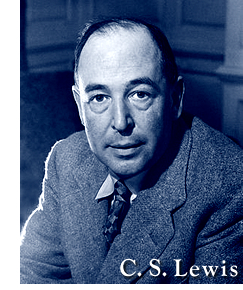
C.S. Lewis Daily – Today’s Reading


Those Divine demands which sound to our natural ears most like those of a despot and least like those of a lover, in fact marshal us where we should want to go if we knew what we wanted. He demands our worship, our obedience, our prostration. Do we suppose that they can do Him any good, or fear, like the chorus in Milton, that human irreverence can bring about ‘His glory’s diminution’? A man can no more diminish God’s glory by refusing to worship Him than a lunatic can put out the sun by scribbling the word ‘darkness’ on the walls of his cell. But God wills our good, and our good is to love Him (with that responsive love proper to creatures) and to love Him we must know Him: and if we know Him, we shall in fact fall on our faces. If we do not, that only shows that what we are trying to love is not yet God— though it may be the nearest approximation to God which our thought and fantasy can attain. Yet the call is not only to prostration and awe; it is to a reflection of the Divine life, a creaturely participation in the Divine attributes which is far beyond our present desires. We are bidden to ‘put on Christ’, to become like God. That is, whether we like it or not, God intends to give us what we need, not what we now think we want. Once more, we are embarrassed by the intolerable compliment, by too much love, not too little.

From The Problem of Pain

Compiled in A Year with C.S. Lewis

Charles Stanley – Two Types of Listeners


Acts 17:10-12

In order for the Holy Spirit to be unimpeded in His work, we must make an effort to hear God when He speaks. It is possible, for example, to “listen” to every word of a sermon, while actually not hearing a word of it. Sadly, there are some vacant attendees like this in churches every week! Their bodies may be in the pew, but their minds are obviously somewhere else. In fact, there are two types of listeners in practically every church in the world: passive and aggressive.

A passive listener is one who’s present at services—maybe even every week—but just sits in the pew and lets his mind wander. He watches people, notices how they dress and act, socializes with friends, and makes lunch plans. He doesn’t go to church to hear from the Lord. He shows up out of habit, or because the simple act of going makes him feel better about himself.

An aggressive listener, on the other hand, walks into the sanctuary excited about what the Lord is going to say. This Christian has a Bible, notebook, and pen in hand, ready to capture the meat of the message. He scribbles down as much as he can, trying not to miss a single point of the sermon. Throughout the message, he asks himself, How does this apply to my life?

The Lord communicates in many different ways, and when He speaks, we should always listen actively. If you find your mind wandering during worship, perhaps you’re approaching God passively. Ask Him to refocus your thoughts, and decide to be an aggressive listener from now on.

Bible in One Year: Proverbs 13-15

Our Daily Bread — Desert Places


Read: Isaiah 48:16-22

Bible in a Year: Psalms 1-3; Acts 17:1-15

They did not thirst when He led them through the deserts. —Isaiah 48:21

Dry. Dusty. Dangerous. A desert. A place where there is little water, a place hostile to life. It’s not surprising, then, that the word deserted describes a place that is uninhabited. Life there is hard. Few people choose it. But sometimes we can’t avoid it.

In Scripture, God’s people were familiar with desert life. Much of the Middle East, including Israel, is desert. But there are lush exceptions, like the Jordan Valley and areas surrounding the Sea of Galilee. God chose to “raise His family” in a place surrounded by wilderness, a place where He could make His goodness known to His children as they trusted Him for protection and daily provision (Isa. 48:17-19).

Today, most of us don’t live in literal deserts, but we often go through desert-like places. Sometimes we go as an act of obedience. Other times we find ourselves there through no conscious choice or action. When someone abandons us, or disease invades our bodies, we end up in desert-like circumstances where resources are scarce and life is hard to sustain.

But the point of going through a desert, whether literally or figuratively, is to remind us that we are dependent on God to sustain us—a lesson we need to remember even when we’re living in a place of plenty. —Julie Ackerman Link

Are you living in a place of plenty or of need? In what ways is God sustaining you?

In every desert, God has an oasis of grace.

INSIGHT: Easton’s Bible Dictionary says of the prophet Isaiah: “He exercised the functions of his office during the reigns of Uzziah (or Azariah), Jotham, Ahaz, and Hezekiah. Uzziah reigned fifty-two years (810-759 bc) and Isaiah must have begun his career a few years before Uzziah’s death. . . . He lived till the fourteenth year of Hezekiah, and in all likelihood outlived that monarch (who died [in] 698 bc) . . . . His first call to the prophetical office is not recorded. A second call came to him ‘in the year that King Uzziah died’ (Isa. 67:1). He exercised his ministry in a spirit of uncompromising firmness and boldness.”


Alistair Begg – Established Through Suffering


After you have suffered a little while, the God of all grace … will himself restore, confirm, strengthen, and establish you.  1 Peter 5:10

You have seen the arch of heaven as it spans the plain: Glorious are its colors, and rare its hues. It is beautiful, but, sadly, it passes away, and the rainbow is no more. The fair colors give way to the fleecy clouds, and the sky is no longer brilliant with the tints of heaven. It is not established. How can it be? A glorious show made up of transitory sunbeams and passing raindrops-how can it remain?

The graces of the Christian character must not resemble the rainbow in its transitory beauty but, on the contrary, must be established, settled, abiding. Seek, O believer, that every good thing you have may be an abiding thing. May your character not be a writing upon the sand, but an inscription upon the rock! May your faith be no “baseless fabric of a vision,” but may it be built of material able to endure that awful fire that shall consume the wood, hay, and stubble of the hypocrite. May you be rooted and grounded in love. May your convictions be deep, your love real, your desires sincere. May your whole life be so settled and established that all the blasts of hell and all the storms of earth will never be able to remove you.

But notice how this blessing of being established in the faith is gained. The apostle’s words point us to suffering as the means employed-“After you have suffered a little while.” It is of no use to hope that we shall be well rooted if no rough winds pass over us. Those old gnarlings on the root of the oak tree and those strange twistings of the branches all tell of the many storms that have swept over it, and they are also indicators of the depth into which the roots have forced their way. So the Christian is made strong and firmly rooted by all the trials and storms of life. Do not shrink then from the tempestuous winds of trial, but take comfort, believing that by their rough discipline God is fulfilling this benediction to you.

Devotional material is taken from “Morning and Evening,” written by C.H. Spurgeon, revised and updated by Alistair Begg.

Charles Spurgeon – The mission of the Son of man


“For the Son of man is come to seek and to save that which was lost.” Luke 19:10

Suggested Further Reading: Luke 15:1-7

It is strange what unusual places Christ finds some of his people in! I knew one of Christ’s sheep who was found out by his Master while committing robbery. I knew another who was found out by Christ, while he was spiting his old mother by reading the Sunday newspaper and making fun of her. Many have been found by Jesus Christ, even in the midst of sin and vanity. I knew a preacher of the gospel who was converted in a theatre. He was listening to a play, an old-fashioned piece, that ended with a sailor drinking a glass of gin before he was hung, and he said, “Here’s to the prosperity of the British nation, and the salvation of my immortal soul;” and down went the curtain; and down went my friend too, for he ran home with all his might. Those words, “The salvation of my immortal soul,” had struck him to the quick; and he sought the Lord Jesus in his chamber. Many a day he sought him, and at last he found him to his joy and confidence. But for the most part Christ finds his people in his own house; but he finds them often in the worst of tempers, in the most hardened conditions; and he softens their hearts, awakens their consciences, subdues their pride, and takes them to himself; but they would never come to him unless he came to them. Sheep go astray, but they do not come back again by themselves. Ask the shepherd whether his sheep come back, and he will tell you, “No, sir; they will wander, but they never return.” When you find a sheep that ever came back by himself, then you may hope to find a sinner that will come to Christ by himself. No; it must be sovereign grace that must seek the sinner and bring him home.

For meditation: We all like sheep have gone astray; we have all gone our own way (Isaiah 53:6); we have all ended up like sheep without a shepherd (Matthew 9:36). The Lord Jesus Christ is the great shepherd (Hebrews 13:20), the good shepherd (John 10:11,14) and the giving shepherd who gave his life for his sheep (John 10:11) and who gives eternal life to his sheep (John 10:28). Have you been found by him and returned to him (1 Peter 2:25)?

Sermon no. 204
11 July (1858)

John MacArthur – Security in Christ


“This is contained in Scripture: ‘Behold I lay in Zion a choice stone, a precious corner stone, and he who believes in Him shall not be disappointed'” (1 Pet. 2:6).

Christ is the fulfillment of all Messianic promises, and in Him you are eternally secure.

First Peter 2:6 is a paraphrase of Isaiah 28:16, which says, “Thus says the Lord God, ‘Behold, I am laying in Zion a stone, a tested stone, a costly cornerstone for the foundation, firmly placed. He who believes in it will not be disturbed.'” Isaiah was speaking of the Messiah—the coming Christ of God. Peter, writing under the inspiration of the Holy Spirit, applied Isaiah’s prophecy to Jesus.

In Isaiah’s prophecy, “Zion” refers to Jerusalem, which stands atop Mount Zion. Mount Zion is sometimes used figuratively in Scripture to refer to the New Covenant of grace, whereas Mount Sinai represents the Old Covenant of law. Isaiah was saying that God would establish the Messiah as the cornerstone of His New Covenant Temple, the church.

The analogy of believers as stones and Christ as the cornerstone would have great meaning for the Jewish people. When the Temple in Jerusalem was built, the stones used in its construction were selected, cut, and shaped in the stone quarry according to precise plans (1 Kings 6:7). Only then were they taken to the building site and set into place. The most important stone was the cornerstone, to which the various angles of the building had to conform.

God used a similar process to build His New Covenant Temple. Its stones (individual believers) are elect and shaped by the Holy Spirit to fit into God’s master plan for the church. Jesus Himself is the precious cornerstone, specially chosen and prepared by the Father to be the standard to which all others conform. He is the fulfillment of all Messianic promises, and the One in whom you can trust without fear of disappointment. That means you are secure in Him!

Live today in the confidence that Christ cannot fail. He will always accomplish His purposes.

Suggestions for Prayer

Praise God for keeping His promises and for giving you security in Christ.

For Further Study

Read Galatians 4:21-31.

  • Who was the bondwoman and what did she represent?
  • To whom did Paul liken believers?

Joyce Meyer – “In” But Not “Of”


I have given and delivered to them Your word (message) and the world has hated them, because they are not of the world [do not world], just as I am not of the world.- John 17:14

The verse for today teaches us that as believers we are in the world but not of the world, which means that we cannot take a worldly view of things. Not becoming like the world in our ways and attitudes requires constant vigilance. Watching too much graphic violence in the form of entertainment, as happens in the world, can sear or harden our consciences and reduce our sensitivity to God’s voice. Many people in the world today are desensitized to the agonies real people suffer because they see tragedies portrayed so often on television.

The news media frequently delivers negative reports or tragic stories in unemotional, matter-of-fact ways and we often see and hear these things without feeling. We hear of so many terrible things that we no longer respond to it with the appropriate emotions of compassion or outrage we should display.

I believe these things are part of Satan’s overall plan for the world. He wants us to become hard-hearted and unengaged emotionally when we become aware of horrible events that take place around us. He does not want us to care about those affected by such things. But, as Christians, we should care, we should feel, and we should pray. Whenever we hear about what is happening in the world, we should ask God for His perspective and inquire as to how He wants us to respond. We then need to listen for His response and act accordingly. This is one way we can be in the world but not of the world.

Campus Crusade for Christ; Bill Bright – Strength out of Weakness


“And he said unto me, My grace is sufficient for thee: for my strength is made perfect in weakness. Most gladly therefore will I rather glory in my infirmities, that the power of Christ may rest upon me” (2 Corinthians 12:9, KJV).

On thousands of occasions, under all kinds of circumstances, I have found God’s promise to be true in my own experiences and in the lives of multitudes of others.

Charles Spurgeon rode home one evening after a heavy day’s work. Feeling very wearied and depressed, he suddenly recalled the Scripture, “My grace is sufficient for thee.”

Immediately he compared himself to a tiny fish in the Thames river, apprehensive lest its drinking so many pints of water in the river each day might drink the Thames dry. Then he could hear Father Thames say, “Drink away, little fish, my stream is sufficient for thee.”

Then he pictured a little mouse in Joseph’s granaries in Egypt, afraid lest its consumption of the corn it needed might exhaust the supplies and it would starve to death. Then Joseph would come along and sense its fear, saying “Cheer up, little mouse, my granaries are sufficient for thee.”

He thought of himself as a mountain climber reaching the lofty summit and dreading lest he might exhaust all the oxygen in the atmosphere. Then he would hear the Creator Himself say, “Breathe away, O man, and fill thy lungs ever. My atmosphere is sufficient for thee.”

“Then,” Spurgeon told his congregation, “for the first time in my life I experienced what Abraham must have felt when he fell upon his face and laughed.”

What kinds of needs do you have today? Are they needs for which our heavenly Father is not sufficient? Can you trust Him? Is there anyone who has proven himself to be more trustworthy?

Bible Reading: II Corinthains 12:1-10

TODAY’S ACTION POINT: In every type of need, burden and problem I face today – whether my own or that of someone else – I will count on the sufficiency of Christ to handle it, and to enable me to live supernaturally.