John MacArthur – The Joy of Anticipated Reward


“That the proof of your faith . . . may be found to result in praise and glory and honor at the revelation of Jesus Christ” (1 Pet. 1:7).

Your future reward is directly related to your present service.

The joy you experience after your faith has been tested and proven genuine is largely due to your present blessings and assurance of salvation. But there’s a future aspect as well: the joy of anticipating the reward you’ll receive from Jesus when you see Him face to face and hear “Well done, good and faithful servant! . . . Come and share your master’s happiness!” (Matt. 25:21, NIV). Peter described it as the “praise and glory and honor [you’ll receive] at the revelation of Jesus Christ” (1 Pet. 1:7).

“Praise” in that text speaks of verbal commendation. To receive “glory” is to be made like Christ. Jesus is the incarnation of God’s glory (John 1:14) and “we know that, when He appears, we shall be like Him, because we shall see Him just as He is” (1 John 3:2). Paul spoke of those who “by perseverance in doing good seek for glory and honor and immortality” (Rom. 2:7). As a result they will receive what they seek (v. 10).

Peter probably used “honor” as a synonym for rewards, which God will grant to all who faithfully serve Him. I believe those rewards are various capacities for heavenly service and are directly related to the believer’s service in this life. Jesus said, “Behold, I am coming quickly, and My reward is with Me, to render to every man according to what he has done” (Rev. 22:12, emphasis added). Paul said, “He who plants and he who waters are one; but each will receive his own reward according to his own labor” (1 Cor. 3:8, emphasis added).

God alone is worthy of praise, glory, and honor, but He will give you all three because you’ll be in the image of Jesus Christ—sinless and fully glorified (1 John 3:2). Until that time, “watch yourselves, that you might not lose what we have accomplished, but that you may receive a full reward” (2 John 8).

Suggestions for Prayer

Praise the Lord for the joy of anticipating your future reward.

For Further Study

Peter spoke of a time when Jesus will reward believers. What do these verses teach about that time: Romans 8:18, 1 Corinthians 1:7-8, 2 Thessalonians 1:5-10, and 1 Peter 4:10-13?


Campus Crusade for Christ; Bill Bright – Will He Be Ashamed?


“And anyone who is ashamed of Me and My message in these days of unbelief and sin, I, the Messiah, will be ashamed of him when I return in the glory of My Father, with the holy angels” (Mark 8:38).

Dr. Charles Malik, once president of the General Assembly of the United Nations, and I – along with others – were invited to a very prestigious meeting in Washington, D.C. Present were some of the most distinguished leaders in our nation and from other countries.

In the course of his remarks, Dr. Malik emphasized his conviction that there were no human solutions to the problems that face mankind. Only Jesus Christ could help us as individuals and as nations.

As a young businessman, I was tremendously impressed to think that one of the world’s leading scholars and statesmen would speak so boldly and courageously of his faith in Christ. Following the meeting, I introduced myself to him and expressed to him my appreciation for his courage in speaking out so boldly for Christ.

I had heard others – politicians, statesmen, scholars – speak of faith in God and the Bible and the church in general terms. But few, in those days, ever spoke of their faith in the person of the Lord Jesus Christ. I shall never forget his response.

“I am sobered by the words of my Lord,” he said, quoting today’s verse, Mark 8:38.

Perhaps you are one who loudly acclaims, “No, I could never be ashamed of my wonderful Lord.” But the familiar axiom is true: actions speak louder than words. If we are truly unashamed of our Savior, we will look for every opportunity to share the good news of His great love.

Bible Reading: Psalm 31:1-5

TODAY’S ACTION POINT: I will not be ashamed of my Lord and Savior Jesus Christ, but will trust the indwelling Holy Spirit to witness through me.

Presidential Prayer Team; A.W. – Then and Now


The song Forever, written by Chris Tomlin, has been a favorite of worship leaders since its release in 2001. It’s been listed in the top 25 praise songs as reported by Christian Copyright Licensing International since 2003. The lyrics are based on Psalm 136. The Psalm is meant to be sung and praises God for all He has done.

And brought Israel out from among them, for his steadfast love endures forever.

Psalm 136:11

There are countless examples in the Old and New Testament of people singing and of God’s command to do so. Today’s verse focuses on when God brought Israel out of slavery in Egypt. Being set free was certainly something to sing about then and still is today – which is probably why Chris Tomlin has had so much success with the same words so many years after they were originally written.

God’s Word says He doesn’t change. He set His people free in Egypt over 2,000 years ago and He can set you free today. During this month of celebrating America’s freedom, set aside some time to celebrate your freedom in God and the life in the Spirit that He provides. As you do, pray for those who do not know Christ to find Him and be set free, too.

Recommended Reading: Romans 8:1-11

Greg Laurie –A Part of Everything


At this point many of his disciples turned away and deserted him.—John 6:66

When Jesus laid out for His disciples what it really meant to follow Him, many of His so-called disciples left. Then Jesus turned to Peter and the others and said, “Are you also going to leave?” (John 6:67).

Peter said, “Lord, to whom would we go? You have the words that give eternal life” (verse 68). I love that. Peter was saying, “Lord, we don’t know everything about You. We don’t get You at times. But this much we know: We are sticking with You. We have made a commitment to You, and we want to be close to You.

Are you willing to say that to Jesus? Are you ready to say, “Lord, I want You to go with me wherever I go”? Sure, we will say it to Him when we get on a plane. Lord, bless the pilots. Help the plane operate properly. Lord, get me to my destination safely. There is nothing wrong with praying a prayer like that. Nor is there anything wrong with praying as you are going into the operating room, Lord, be with me now. Guide the hands of the surgeons. Let the operation be successful.

We are enthusiastic about praying when we are headed into an uncertain situation or into rough waters. But are we also ready to say, “Lord, go with us on our vacation,” “Lord, go with us as we go out tonight,” “Lord, go with us as we go to that party,” or “Lord, be with us as we go to this movie”?

Remember, Jesus has His eyes on you. He is looking at you. And we should be able to invite Jesus everywhere—into rough waters and times of crisis as well as into leisure time. We should invite Jesus to be a part of everything we do.

Max Lucado – Forgiveness is Not Excusing


It’s one thing to give grace to friends, but to give grace to those who give us grief? Most of us find it hard to forgive. Leave your enemies in God’s hands. You are not endorsing their misbehavior when you do. You can hate what someone did without letting hatred consume you. Forgiveness is not excusing. Give grace, but if need be, keep your distance. You can forgive the abusive husband without living with him. Be quick to give mercy to the immoral pastor, but be slow to give him a pulpit.

Society can dispense grace and prison terms at the same time. To forgive is to move on, not to think about the offense anymore. You don’t excuse him, endorse her, or embrace them. You just route your thoughts about them through heaven. In Romans 12:19 God says, “I will take care of it!” Let Him!

From Facing Your Giants

Our Wedding Night Changed Our Marriage


KIM KIMBERLING, PH.D.

“What, then, shall we say in response to these things? If God is for us, who can be against us?” Romans 8:31 (NIV)

When I tell people that my wife Nancy and I have been married 45 years, I almost always hear “Wow!” and “That’s great.” I appreciate those comments, but where we are today has been a journey. We didn’t have an awesome marriage for a very long time.

In fact, starting out as barely 20-year-olds, we really had no idea what marriage was all about. Our fights almost did our marriage in before it began. After six years of marriage, the future was dark, we had a new baby and we needed a miracle.

Of all the things we did wrong, there is one thing we did right. I wish I could say I brought it to the marriage, but I didn’t. Nancy did.

Let me paint a picture for you.

On our wedding night after we left the reception and finally made it to our hotel room, Nancy made a request of me that God has used in our marriage since that day.

As we got ready for bed, Nancy went into the bathroom to change. I changed in about 30 seconds and waited for her sitting on the side of the bed. An eternity later, she emerged from the bathroom looking like an angel. She walked over to me, took my hand, sat beside me on the bed, looked into my eyes and said, “We need to pray.”

In case you were wondering, that was the last thing I thought my new bride would say to me in that moment. But the real surprise was that I looked her back in the eyes and said, “OK.”

We knelt by the bed in our hotel room, held hands and prayed a prayer we both knew and were comfortable praying together: The Lord’s Prayer.

Since that first night many years ago, we have prayed together almost every day. Through all the ups and downs of life and marriage, praying together daily is the glue God has used over and over to keep us close to Him.

During the darkest times in our marriage, as we continued to pray together, we saw God show up over and over to keep us together.

First, God used an older lady in our church to minister to Nancy. As Nancy shared our story, this wise woman lovingly encouraged Nancy to stay in the marriage and that God would make something beautiful out of it.

Second, as we continued to talk about our marriage and our struggles, it became obvious that neither one of us really wanted a divorce.

Finally, we made a vow never to bring up divorce again and to let God build our marriage His way.

As we purposely put God first each day, our marriage began to change. It was not overnight; in fact, it was a process that continues to this day. But God taught us how to fight for our marriage instead of fighting each other. It was marriage-changing.

We learned to stand side by side with God and take on anything and everything that the world threw at us. We learned firsthand that if God is for us no one can ever stand against us (Romans 8:31b). It is a truth that I pray every married couple can embrace because it is a truth that will close the gap between where your marriage is and where God wants it to be.

Father, You truly are the Great Healer. I pray that I may see Your plan for my marriage. Make the changes You want to make in me. In us. I pray to be so connected to You and my spouse that we may stand together against all that would come against our marriage. In Jesus’ Name, Amen.

TRUTH FOR TODAY:
John 17:15, “My prayer is not that you take them out of the world but that you protect them from the evil one.” (NIV)

REFLECT AND RESPOND:
Today, where is God in your marriage?

If God is not the center of your marriage, what needs to be your next step? It may be praying together on a regular basis, or talking to a trusted mentor. If you and your spouse need further help, it may be time to talk to your pastor or a Christian counselor.

Whatever your next step is, do it today! It will make a difference in your marriage tomorrow.

Night Light for Couples –Frustrating Foibles


“Be kind and compassionate to each other, forgiving each other, just as in Christ God forgave you.” Ephesians 4:32

The great tragedies of life can undermine committed love, but so can minor frustrations. These daily irritants, when accumulated over time, may be even more threatening to a marriage than the catastrophic events that crash into our lives. And yes, there are times in every marriage when a husband and wife don’t like each other very much. There may be occasions when anger or disappointment takes the fun out of a relationship temporarily. Emotions are like that. They occasionally flatten out like an automobile tire with a nail in it. Riding on the rim is a pretty bumpy experience for everyone on board.

The next time you’re tempted to trade in your spouse, remember that divorce must never be considered an option for those who are committed to each other for life. Instead, determine to work on your points of friction and to accept the human frailties and faults in your spouse. He or she must accept an equal number of flaws in you as well. A covenant of commitment and acceptance is a powerful secret to lifelong love.

Just between us…

  • What “daily irritant” between us is most frustrating to you?
  • Have we gotten better or worse at handling everyday aggravations?
  • How can we reduce frustrations in our marriage?

Dear God, You know how little irritations often cause pain in our marriage. As we humbly release these irritations to You, please heal us. Forgive us our pride. Anoint us with grace. Grow in us a love that’s stronger than any fault or foible. Amen.

From Night Light For Couples, by Dr. James & Shirley Dobson

Charles Stanley – The Struggle With Guilt


1 John 1:5-9

What believers do about guilty feelings has a lot to do with what they understand about guilt. By definition, the word refers to a sense of wrongdoing—an emotional conflict arising from second thoughts about a particular action or thought. The biblical method for clearing away such feelings is repentance.

However, many believers are plagued by false guilt, which is not actually rooted in sin. It can develop in several ways:

A church caught up in legalism can foster this unhealthy feeling. A member may not do enough of what is “required” (such as praying, Bible reading, and witnessing). Or she may do things that others in the church categorize as wrong, even though there’s no scriptural basis for their opinion.

Painful memories of abuse in childhood often lead an adult to believe he is somehow to blame for the sins committed against him.

Hearing believers’ criticisms of others can lead to low self-esteem. Without clear discernment, a person may get the sense that he can’t measure up to God’s standards or the world’s.

Genuine, biblically based conviction is an anxiety in the spirit over a definite, willful sin. All the various causes of false shame have one thing in common: They are not the result of sinful behavior. Such feelings are Satan’s tool for harassing God’s people.

When we understand that true conviction is the Holy Spirit’s loving pressure on our spirit to correct a specific wrong, we can reject Satan’s attempts to distract us with lies. Whatever the cause of false guilt, it must be unearthed and removed from the believer’s life.

Bible in One Year:Isaiah 19-22

Our Daily Bread — The Checkup


Read: Psalm 139:17-24

Bible in a Year: Psalms 43-45; Acts 27:27-44

Search me, O God, . . . and see if there is any wicked way in me. —Psalm 139:23-24

It’s that time of year when I go to the doctor for my annual physical. Even though I feel well and I’m not experiencing any health problems, I know that routine checkups are important because they can uncover hidden problems that if left undiscovered can grow to be serious health issues. I know that giving permission to my doctor to find and remedy the hidden problems can lead to long-term health.

Clearly the psalmist felt that way spiritually. Pleading for God to search for hidden sin, he prayed, “Search me, O God, . . . and see if there is any wicked way in me, and lead me in the way everlasting” (Ps. 139:23-24). Pausing to give God the opportunity for a full and unconditional inspection, he then surrendered to the righteous ways of God that would keep him spiritually healthy.

So, even if you are feeling good about yourself, it is time for a checkup! Only God knows the true condition of our heart, and only He can forgive, heal, and lead us to a cleansed life and productive future. —Joe Stowell

Lord, You know me better than I know myself. Search the deepest parts of my heart for anything that is displeasing to You. Cleanse me of my wandering ways and lead me in Your good and righteous way.

God’s work in us isn’t over when we receive salvation—it has just begun.

INSIGHT: Often when discussing the greatness of God, Bible scholars speak in terms of His “omni”-attributes. These reveal God to be all-knowing (omniscient), everywhere-present (omnipresent), and all-powerful (omnipotent). In Psalm 139 David gives us descriptions of all three. God’s perfect knowledge and understanding are pictured in verses 1-6, His continual presence is praised in verses 7-12, and His mighty power is in view in verses 13-18. We serve a God who is both great and good—a God who is big enough for all we will ever face.

Ravi Zacharias Ministry – Pharisee


“You are nothing but a Pharisee,” said Maggie with vehemence. “You thank God for nothing but your own virtues; you think they are great enough to win you everything else.”(1)

Whether familiar or new to the scathing words of Maggie Tulliver to her brother Tom in George Eliot’s The Mill on the Floss, it is clear that she is not speaking complimentary. The word “Pharisee,” as this interchange illustrates, is often used as something of a synonym for hypocrite, a haughty individual with a holier-than-thou air about them. Webster’s dictionary further articulates this common usage, defining the adjective “pharisaical” as being marked by “hypocritical censorious self-righteousness,” or “pretending to be highly moral or virtuous without actually being so.”(2) To be called a Pharisee is far from a compliment; it is to be accused of living with a false sense of righteousness, being blind and foolish with self-deception, or carrying oneself with a smug and hypocritical legalism.

The etymology of the word from its roots as a proper noun to its use as an adjective is one intertwined with history, drawing on the very tone with which a rabbi from Nazareth once spoke to the religious group that bore the name. In seven consecutive statements recorded in the book of Matthew, Jesus begins his stern rebukes with the scathing introductions: “Woe to you, scribes and Pharisees, you hypocrites!” “Woe to you blind guides!” His conclusion is equally pejorative: “You snakes! You brood of vipers! How can you escape being sentenced to hell?”(3) The word “Pharisee” has become far more associated with this critique than its greater context. Thus Maggie can call her brother a Pharisee and not be thinking of the Jewish sect of leaders for which Jesus had harsh words, but of the harsh words themselves.

Yet taking something out of context, even if Webster’s dictionary grants the permission, can be dangerously misleading. These were not always the connotations of the word Pharisee, and we do ourselves and the words of Jesus a disservice by assuming that his harsh words are all we need to remember about them. Quite ironically, the description “pharisaical” would once have been a great compliment. The Pharisees were highly regarded guardians of the strict interpretation and application of Jewish Law. They were known for their zeal and for their uncompromising ways of following the God of their fathers. It is likely that the apostle Paul was a Pharisee, and it is suggested that much of his Christian theology owes something to the shape and content of this earlier training.(4) In other words, to be a Pharisee was not an easy life riddled with loopholes and duplicities, like we might assume. The Pharisees were so certain there was a right way to follow God that they sought to follow this God to that very letter with all of their lives.

In this light, Jesus’s words seem a little harsher, his tone a little crueler—and perhaps his warnings a little closer to home. In the Pharisees, Jesus scolded the very best of the religious crowd, those who dedicated everything, and cared the deepest about following God. If Jesus came today into churches and singled out the ministers who work the hardest, the youth who are most involved, and the families who serve most consistently and called them a brood of vipers, we would be hurt and confused and even defensive. This is exactly what happened amongst the Pharisees.

But not all were so defensive that they refused to hear. Nicodemus came to Jesus in the obscurity of darkness and found himself confronted by a conversation about flesh and light. Nicodemus was a Pharisee, a member of the Jewish ruling council, who was highly regarded. This most likely explains the veil of night by which he sought to meet Jesus; the comments against his fellow Pharisees were not met with open arms. Even so, it was an act of faith to seek out this controversial young man from Galilee; it was an act of humility to grapple with a message that thoroughly confused him, accusations that cut to his very core, and words that called even the God he knew into question. Yet this initial meeting with Jesus was for Nicodemus the beginning of life made new. This Pharisee who had come so far in his faith, who had lived so great a commitment to God, had not come so far as to reject the idea that even he might need to stop and turn around. Might the Pharisee in all of us respond similarly.

Jill Carattini is managing editor of A Slice of Infinity at Ravi Zacharias International Ministries in Atlanta, Georgia.

(1) George Eliot, The Mill on the Floss (New York: Penguin, 2002), 394.

(2) Merriam-Webster Online, http://www.merriam-webster.com/dictionary/pharisaical, and Webster’s New World Dictionary of the American Language (Cleveland: William Collins Publishers, 1980), 1066.

(3) Matthew 23:33.

(4) N.T. Wright, The New Testament and the People of God (Minneapolis: Fortress Press, 1992), 182.


Alistair Begg – Consider the Promiser


…precious and very great promises. 2 Peter 1:4

If you would know experimentally [experientially] the preciousness of the promises and enjoy them in your own heart, meditate much upon them. There are promises that are like grapes in the winepress; if you will tread them, the juice will flow. Thinking over the hallowed words will often be the prelude to their fulfillment. While you are musing upon them, the benefit that you are seeking will insensibly come to you. Many a Christian who has thirsted for the promise has found the favor that it ensured gently distilling into his soul even while he has been considering the divine record; and he has rejoiced that he was ever led to lay the promise near his heart.

But besides meditating upon the promises, seek in your soul to receive them as being the very words of God. Say to your soul: “If I were dealing with a man’s promise, I would carefully consider the ability and the character of the man who had covenanted with me. So with the promise of God, my eye must not be so much fixed upon the greatness of the mercy-that may stagger me-as upon the greatness of the promiser-that will cheer me.

My soul, it is God, even your God, God who cannot lie, who speaks to you. This word of His that you are now considering is as true as His own existence. He is an unchangeable God. He has not altered the thing that has gone out of His mouth, nor called back one single soothing sentence. Nor does He lack any power; it is the God who made the heavens and the earth who has spoken. Nor can He fail in wisdom as to the time when He will bestow the favors, for He knows when it is best to give and when better to withhold. Therefore, seeing that it is the word of a God so true, so immutable, so powerful, so wise, I will and must believe the promise.” If in this way we meditate upon the promises and consider the Promiser, we shall experience their sweetness and obtain their fulfillment.

The Family Bible Reading Plan

  • Judges 10, 11:1-10
  • Acts 14

Devotional material is taken from “Morning and Evening,” written by C.H. Spurgeon, revised and updated by Alistair Begg.

Charles Spurgeon – The Father of lights


“Every good gift and every perfect gift is from above, and cometh down from the Father of lights, with whom is no variableness, neither shadow of turning.” James 1:17

Suggested Further Reading: Revelation 21:22-22:5

The apostle, having thus introduced the sun as a figure to represent the Father of lights, finding that it did not bear the full resemblance of the invisible God, seems constrained to amend it by a remark that, unlike the sun, our Father has no turning or variableness. The sun has its daily variation; it rises at a different time each day, and it sets at various hours in the course of the year. It moves into other parts of the heavens. It is clouded at times, and eclipsed at times. It also has tropic; or, turning. It turns its chariot to the South, until, at the solstice, God bids it reverse its rein, and then it visits us once more. But God is superior to all figures or emblems. He is immutable. The sun changes, mountains crumble, the ocean shall be dried up, the stars shall wither from the vault of night; but God, and God alone, remains ever the same. Were I to enter into a full discourse on the subject of immutability, my time, if multiplied by a high number, would fail me. But reminding you that there is no change in His power, justice, knowledge, oath, threatening, or decree, I will confine myself to the fact that His love to us knows no variation. How often it is called unchangeable, everlasting love! He loves me now as much as he did when first he inscribed my name in his eternal book of election. He has not repented of his choice. He has not blotted out one of his chosen; there are no erasures in that book; all whose names are written in it are safe for ever.

For meditation: As part of creation the sun speaks of the character of God (Romans 1:20) but even at its brightest can only give a glimpse of his glory. Praise God for the Lord Jesus Christ, the true light (John 1:9) whose face, when transfigured, shone like the sun (Matthew 17:2); God the Son has made God the Father of light known to us (John 1:18).

1st sermon at New Park St.

27 July (Preached 18 December 1853)

John MacArthur – Rejoicing in Your Inheritance


“In this you greatly rejoice” (1 Pet. 1:6).

Contemplating your eternal inheritance should give you joy that transcends any temporal circumstance.

Joy is a major theme in Scripture. The psalmist said, “Sing for joy in the Lord, O you righteous ones; praise is becoming to the upright” (Ps. 33:1); “My lips will shout for joy when I sing praises to Thee; and my soul, which Thou hast redeemed” (Ps. 71:23).

Even creation itself is said to rejoice in the Lord: “Thou dost make the dawn and the sunset shout for joy. . . . Let the heavens be glad, and let the earth rejoice; let the sea roar, and all it contains; let the field exalt, and all that is in it. Then all the trees of the forest will sing for joy before the Lord. . . . Let the mountains sing together for joy before the Lord; for He is coming to judge the earth” (Ps. 65:8; 96:11-13; 98:8-9).

Joy is the special privilege of every believer, regardless of his or her circumstances. You might suffer untold heartache and persecution for your faith in Christ, but amid the severest trials, God wants you to know profound joy. That’s why Peter said, “To the degree that you share the sufferings of Christ, keep on rejoicing; so that also at the revelation of His glory, you may rejoice with exultation” (1 Pet. 4:13).

First Peter 1:6-9 identifies five elements of your Christian life that should bring you joy amid trials. The first is your protected inheritance. That’s what Peter referred to when he said, “In this you greatly rejoice” (v. 6, emphasis added). Other elements include a proven faith, a promised honor, a personal fellowship, and a present deliverance (vv. 6-9), which we will explore in coming days.

The Greek word translated “greatly rejoice” in 1 Peter 1:6 is not the usual Greek word for “rejoice.” Peter used a more expressive and intense word, which speaks of one who is happy in a profound spiritual sense rather than a temporal or circumstantial sense. That’s the quality of joy God grants to those who trust in Him and look beyond their temporal trials to the glory of their eternal inheritance. Let that be your focus as well.

Suggestions for Prayer

Thank God for the joy that transcends circumstances.

For Further Study

Read John 16:16-22.

  • According to Jesus, why would the disciples lament?
  • What would bring them joy?
  • What does their experience teach you about the basis for your joy as a Christian?

Joyce Meyer – Love One Another


[Let your] love be sincere . . . hate what is evil [loathe all ungodliness, turn in horror from wickedness], but hold fast to that which is good. Love one another with brotherly affection…giving precedence and showing honor to one another. – Romans 12:9-10

As a Christian, you are to have sincere love—God’s kind of love. God doesn’t always love the way people act or the things they do, but He always loves them as people. God calls you to that same kind of love. You don’t have to like everything someone does—in fact you are told to turn from wickedness—but it is your Christian responsibility to follow the example of Christ. When you recognize that everyone is God’s creation, it is easier to obey His command to love and honor them.

You must have a loving attitude toward people, an attitude that is filled with mercy, kindness, and sincere love. This doesn’t always come easy, but God will provide the strength you need to show His kind of love to others.

Campus Crusade for Christ; Bill Bright – We Help Conquer Satan


“They defeated him by the blood of the Lamb, and by their testimony; for they did not love their lives but laid them down for Him” (Revelation 12:11).

Down through the years, you and I have lauded and applauded the martyrs – and rightly so.

These heroes of the faith – like Chester Bitterman of the Wycliffe Bible Translators, one of the latest in a long line of martyrs – preferred death to disloyalty to God and to Christ. Their testimony literally was written in blood.

Truly, “they did not love their lives but laid them down for Him.” And by so doing, they became partners with God and with Christ in defeating the enemy of men’s souls, Satan. Satan is to be conquered not only by the blood of the Lamb, but also by reason of the testimony of the martyrs.

T.E. McCully, father of missionary martyr Ed McCully, who, along with Jim Elliot, Pete Fleming, Nate Saint and Roger Youderian, lost his life to the Auca Indians on January 8, 1956, made a sage observation about the great sacrifice these young men had made.

“Sometimes,” he said, “it’s harder to be a living sacrifice than it is to be a dead sacrifice.” And this hits us all right where we live, in our walk with Christ today. The daily grind, the commitment and recommitment, the enduring of trial and testing – all of this takes a daily sacrifice. This is an opportunity for our lives to be a “sacrifice of praise” to our God.

Bible Reading: Revelation 12:7-12

TODAY’S ACTION POINT: Claiming the power of the Holy Spirit by faith, I will seek to be a living sacrifice, so that my life will be part of Satan’s defeat.

Presidential Prayer Team; C.P. – In Appreciation


How often do you hear about people who live near a great landmark, such as the Statue of Liberty, and never go see it? People grow accustomed to the things around them and don’t stop to appreciate the gifts they’ve been given.

Come, bless the Lord, all you servants of the Lord, who stand by night in the house of the Lord!

Psalm 134:1

So it is with reaction to the Lord. Americans have the freedom to worship God, yet how many of the nation’s churches are nearly empty each Sunday? Many people are not even aware of how wonderful and beautiful it is to give oneself over in complete worship of the Creator of the Universe. “Therefore let us be grateful for receiving a kingdom that cannot be shaken, and thus let us offer to God acceptable worship, with reverence and awe.” (Hebrews 12:28)

Spend time today worshipping Him in spirit and truth (John 4:24) and appreciating His gifts to you. Ask the Lord to move on His people to give Him honor and praise due His name. Pray for God to send a revival to this country and turn many hearts to Jesus – so they, too, may revel in the reality of His resurrection and bless the Lord!

Recommended Reading: Matthew 28:1-7, 16-20

Greg Laurie –Ask for Directions


If any of you lacks wisdom, let him ask of God, who gives to all liberally and without reproach, and it will be given to him. —James 1:5

Have you ever had an electronic gadget that you couldn’t figure out how to turn on or off? You dug out the manual, read through it, and found the little illustration. It is so obvious now that you know. But you didn’t know until you read the manual.

James reminds us, “If any of you lacks wisdom, let him ask of God, who gives to all liberally and without reproach, and it will be given to him” (James 1:5). When we consult God’s Word, the user’s manual of life, He will guide us.

The psalmist said, “Your word is a lamp to my feet and a light to my path” (Psalm 119:105). As we read God’s Word, we will know His way. We find out things in His Word that we would not know otherwise.

When Moses asked God for divine direction, God told him, “My Presence will go with you, and I will give you rest” (Exodus 33:14). Or literally, “My face will go with you.” God was telling Moses, “You have my full attention, and I will be watching your every move.”

Have you ever been talking to someone who wasn’t looking at you? You are telling him something, and he is looking past you or looking around or checking his watch.

God was saying to Moses, “I’m going to go with you. And not only am I going to go with you, but I am going to be looking at you. I will keep My eye on you. I am going to be really dialed into everything you are experiencing.”

So often we try to do in our own strength what God promises to do for us. And worrying is completely useless. Worry does not empty tomorrow of its sorrow; it empties today of its strength.

Max Lucado – Give Grace


Forgiveness is not foolishness. Forgiveness, at its core, is choosing to see your offender with different eyes. By the way, how can we grace-recipients do anything less? Dare we ask God for grace when we refuse to give it? This is a huge issue in Scripture! Jesus was tough on sinners who refused to forgive other sinners. Remember his story in Matthew 18, about the servant freshly forgiven a debt of millions who refused to forgive a debt equal to a few dollars? He stirred the wrath of God. “You evil servant! I forgave you that tremendous debt. Shouldn’t you have mercy just as I had mercy on you?” (Matthew 18:32).

In the final sum, we give grace because we’ve been given grace. And we’ve been given grace so we can freely give it. See your enemies as God’s child and revenge as God’s job.

From Facing Your Giants

Night Light for Couples –Doing the Right Thing


“If anyone does not provide for his relatives, and especially for his immediate family, he has denied the faith.” 1 Timothy 5:8

Our friends Keith and Mary Korstjens have been married for more than forty years. Shortly after their honeymoon, Mary was stricken with polio and became quadriplegic. The doctors informed her that she would be confined to a wheelchair for the rest of her life. It was a devastating development, but Keith never wavered in his commitment to Mary. For all these years he has bathed and dressed her, carried her to and from her bed, taken her to the bathroom, brushed her teeth, and combed her hair.

Obviously, Keith could have divorced Mary in 1957 and looked for a new and healthier wife, but he never even considered it. We admire this man not only for doing the right thing, but for continuing to love and cherish his wife. Though the problems faced by the rest of us may be less challenging than those encountered by the Korstjens, each of us will confront some kind of hardship in the years ahead. How will we respond?

Just between us…

  • Do you worry about failing health down the road?
  • When you’re sick, how well do I care for you?
  • Have you ever resented having to serve me during times of sickness or disability?
  • How could illness—either minor or serious—actually strengthen our marriage?

Lord, we don’t want to deny the faith by failing to provide for those You have entrusted to our care. We ask for Your strength—especially when hardships come—to show enduring love in our marriage and in our family. Amen.

From Night Light For Couples, by Dr. James & Shirley Dobson

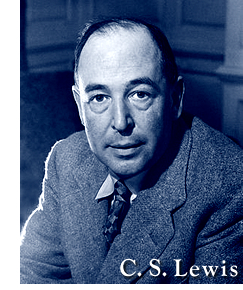
C.S. Lewis Daily – Today’s Reading


When it comes to a question of our forgiving other people, it is partly the same and partly different. It is the same because, here also, forgiving does not mean excusing. Many people seem to think it does. They think that if you ask them to forgive someone who has cheated or bullied them you are trying to make out that there was really no cheating or no bullying. But if that were so, there would be nothing to forgive. They keep on replying, “But I tell you the man broke a most solemn promise.” Exactly: that is precisely what you have to forgive. (This doesn’t mean that you must necessarily believe his next promise. It does mean that you must make every effort to kill every taste of resentment in your own heart—every wish to humiliate or hurt him or to pay him out.) The difference between this situation and the one in which you are asking God’s forgiveness is this. In our own case we accept excuses too easily; in other people’s we do not accept them easily enough.

From The Weight of Glory

Compiled in A Year with C.S. Lewis