Max Lucado – A Better Option


I spent too much of a high school summer working in the oil field. We donned gas masks, waded into ankle deep, contaminated mire. My mom burned my work clothes. The stink stunk! Yours can do the same. Linger too long in the stench of your hurt, and you’ll smell like the toxin you despise. The better option? Join with David as he announces, “The Lord lives. Blessed be my Rock. It is God who avenges me. He delivers me from my enemies. Therefore I will give thanks to You, O God!” (Psalm 18:46-49).

Wander daily through the gallery of God’s goodness. Catalog His kindnesses. Look at what you have. Let Jesus be the friend you need. Talk to Him. Spare no details. Disclose your fear and describe your dread. You just found a friend for life in Jesus Christ. What could be better than that?

From Facing Your Giants

Night Light for Couples – The Family That Prays Together


“For where two or three come together in my name, there am I with them.” Matthew 18:20

The day you were married, you probably knelt together and shared a prayer during your wedding ceremony. In front of family and friends, you helped cement your union through this joint conversation with the Lord. Sadly, many couples never pray together again.

Don’t misunderstand—prayer when you are alone, with a friend, in a Bible study, or in church is extremely important and valued just as much by our heavenly Father. But there is something special about prayer between husband, wife, and God that can’t be found elsewhere. It creates a spiritual connection, accountability, and a holy bond that brings strength and stability to the relationship. It can even allow you to communicate about sensitive issues that might otherwise never come out—issues that can be discussed and prayed over in a spirit of humility and purity of motive.

The old saw “The family that prays together, stays together” still applies today. We encourage you to remember it the next time you kneel in prayer.

Just between us…

  • When was our last meaningful prayer time together?
  • What’s the most common obstacle that keeps us from praying together?
  • How do you feel about praying with me?
  • How could we benefit from praying as a couple?
  • Should we schedule a regular time of prayer together?

Father, You have blessed us with each other as partners in marriage. Show us how to make prayer—together—a regular part of our life. Amen.

From Night Light For Couples, by Dr. James & Shirley Dobson

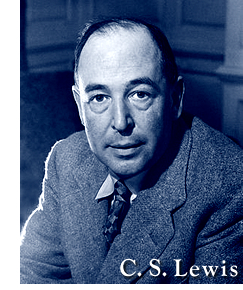
C.S. Lewis Daily – Today’s Reading


Screwtape offers more advice on using daily annoyances to entrap a Patient:

It is, no doubt, impossible to prevent his praying for his mother, but we have means of rendering the prayers innocuous. Make sure that they are always very ‘spiritual’, that he is always concerned with the state of her soul and never with her rheumatism. Two advantages will follow. In the first place, his attention will be kept on what he regards as her sins, by which, with a little guidance from you, he can be induced to mean any of her actions which are inconvenient or irritating to himself. Thus you can keep rubbing the wounds of the day a little sorer even while he is on his knees; the operation is not at all difficult and you will find it very entertaining. In the second place, since his ideas about her soul will be very crude and often erroneous, he will, in some degree, be praying for an imaginary person, and it will be your task to make that imaginary person daily less and less like the real mother—the sharp-tongued old lady at the breakfast table. In time, you may get the cleavage so wide that no thought or feeling from his prayers for the imagined mother will ever flow over into his treatment of the real one. I have had patients of my own so well in hand that they could be turned at a moment’s notice from impassioned prayer for a wife’s or son’s ‘soul’ to beating or insulting the real wife or son without a qualm.

From The Screwtape Letters

Compiled in A Year with C.S. Lewis

Charles Stanley – Friendship: A Help to Holiness


John 15:12-15

In all of God’s creation, just one thing did not meet with His approval. He beheld Adam, who was the only being of his kind, and said, “It is not good for the man to be alone” (Gen. 2:18). The Creator designed people for emotional, mental, and physical intimacy so they’d be able to share their innermost selves with one another.

Jesus explained this to His disciples, saying they should love each other as He had loved them. In a God-honoring friendship, two people build each other up and spur one another toward Christlikeness. Many people, however, fall far short of making and maintaining relationships that sharpen their faith (Prov. 27:17). They instead welcome the trivial talk of casual acquaintances: The weather, tough bosses, and world affairs are safe topics. Sadly, believers often shy away from the penetrating conversations about sin, accountability, and biblical living that would serve to enrich their faith.

Strong relationships begin with men and women who decide to risk their pride and comfort in order to love as Jesus does. They recognize that one of the reasons we have friends is so we can motivate one another toward holiness. In a friendship of mutual trust and submission, two people will confess sin, offer gentle reproof, and share burdens.

The walls we build to keep people at a distance are often defenses against God as well: We don’t want Him too close to our most personal business. But as believers learn to share openly and freely with a brother or sister in Christ, they develop the capacity to be more honest with God.

Bible in One Year:Song of Solomon 5-8

Our Daily Bread — Be Near


Read: Psalm 34:4-18

Bible in a Year: Psalms 29-30; Acts 23:1-15

The Lord is near to those who have a broken heart. —Psalm 34:18

My friend was going through some difficult challenges in her life and family. I didn’t know what to say or do, and I told her so. She looked at me and said, “Just be near.” That’s what I did, and later on we started talking about God’s love.

Many times we don’t know how to respond when others are grieving, and words may do more harm than good. Serving others requires that we understand them and find out what they need. Often we can help by meeting practical needs. But one of the best ways to encourage those who are suffering is to be near—to sit beside them and listen.

God is near to us when we call out to Him. “The righteous cry out, and the Lord hears, and delivers them out of all their troubles,” the psalmist says. “The Lord is near to those who have a broken heart, and saves such as have a contrite spirit” (Ps. 34:17-18).

By putting ourselves in the shoes of others and allowing our hearts to feel compassion, we can help those who are hurting. We can be near them as God is with us and sit close to them. At the right time, the Holy Spirit will give us the words to say, if they are needed. —Keila Ochoa

Who needs my help or for me to sit alongside them this week?

The best way to encourage others may be to just be near.

INSIGHT: Notice the exuberance with which David celebrates God in Psalm 34. In verses 1-3, the king declares his commitment to continual praise and invites others to join him in the celebration. At the root of his exaltation are two great expressions of God’s care—His answers to our prayers (vv. 4-6) and His protection and provision (vv. 7-10). These take on such great value to David because he recognizes his own weakness, marked by his fears (v. 4) and his sense of personal emptiness (“this poor man,” v. 6). God’s rescue in the face of such realities is cause for celebration.

Ravi Zacharias Ministry – Love as the Substance of Everything


Oft quoted at weddings, preeminent celebrations of romantic love, a poem is read extolling the virtue of love:

Love is patient and kind

Love is not jealous or boastful…

Love bears all things, believes all things, hopes all things, endures all things, love never ends.

What many may not realize is that this is a poem from the pen of the apostle Paul. And while this poem is used to paint a picture of young love at weddings, its intent far transcends the romance of the occasion, and a fairly limited understanding of this virtue.

Romantic love was not in the apostle’s mind when he penned this verse. Instead, tremendous conflict in the fledgling Corinthian church caused Paul great grief. There were dissensions and quarrels over all kinds of issues in this community; quarrels over leadership and allegiance, over moral standards, over marriage and singleness, over theology, and quarrels so extreme that lawsuits were being filed!(1)

So after reminding the Corinthian followers of Jesus that they represented his body—a body with many members and unique gifts and functions—Paul lifts up love as the height of what it means to be a mature human being:

If I speak with the tongues of men and of angels, but do not have love, I have become a noisy gong or a clanging cymbal. And if I have the gift of prophecy, and know all mysteries and all knowledge; and if I have all faith, so as to remove mountains, but do not have love, I am nothing….Love never fails; but if there are gifts of prophecy, they will be done away; if there are tongues, they will cease; if there is knowledge, it will be done away….but now abide faith, hope, and love, these three; but the greatest of these is love (13:1-3, 8, 13).

Often, as I survey various communities in our world today, I see the same kind of division and derision, as was present in the Corinthian community. More often than not, one encounters a war of information, argumentation based on this book or that claim, this person’s authority or that person’s expertise. Quick to criticize and lambaste, noisy gongs and clanging cymbals abound; but the love that never fails is a rare and fleeting occurrence. How does one make sense of all this, particularly in light of Paul’s proclamation that without love we are nothing?

Perhaps part of the reason why there is so little love is that there is a fear that to love is somehow to compromise. Many feel the strong need to disassociate with the way love is commonly defined; as unthinking acceptance, an anything goes, an ‘I’m ok you’re ok’ easy love as bland and undefined as gelatin. Surely, the Apostle Paul’s understanding goes far beyond this flabby view of love. After all, he spends the majority of his first letter to the Corinthians exhorting their bad behavior by virtue of their lack of love.

Yet, I sometimes worry that a reticence to extend love to others without condition belies a forgetfulness about the conditions of our acceptance by God. Paul writes to the Romans, “But God demonstrates his own love toward us, in that while we were yet sinners, Christ died for us” (5:8). If God loved us while we were yet sinners, why do we find it so hard to love others?;

In a world that largely perceives Christians to be in-fighters, hypocritical, argumentative, and judgmental naysayers, would it not demonstrate maturity to reexamine our fear of what it might look like if we tried to take Paul’s words about love to heart?

Would it, or could it look like creating seminaries in the prisons, as has been done at Louisiana’s maximum security prison at Angola? Would it, or could it look like working with different Christian fellowships towards a vital social goal despite denominational differences or theological disagreements? Would it, or could it look like proactive movement to engage the culture rather than reactive retreat? Would it, or should it look like growing into mature human beings? Paul continues,

When I was a child, I used to speak as a child, think as a child, reason as a child; when I became a man, I did away with childish things.

In Jesus, the full stature and maturity of humanity is on display. He taught that love was the summary of all that had gone before, and fulfillment of the entire law and the message of the prophets—love God and love your neighbor as yourself. If the greatest of the virtues is love, as affirmed by Jesus and the apostle Paul, can all who seek to follow envision becoming a community that seeks to make love their chief responsibility and goal?(2) Now abide faith, hope and love, these three; but the greatest of these is love.

Margaret Manning Shull is a member of the Speaking and Writing team at Ravi Zacharias International Ministries in Bellingham, Washington.

(1) See 1 Corinthians 1:10-14; 3:1-10; 4:14-21; 5:1-13; 6:1-11; 7; 8:1-4 as examples.

(2) Matthew 22:34-40; Mark 12:28-34.

Alistair Begg – Away Then, All Fears


She wags her head behind you – the daughter of Jerusalem. Isaiah 37:22

Reassured by the Word of the Lord, the poor trembling citizens of Zion grew bold and shook their heads at Sennacherib’s boastful threats. Strong faith enables the servants of God to look with calm contempt upon their most haughty foes. We know that our enemies are attempting impossibilities. They seek to destroy eternal life, which cannot die while Jesus lives-to overthrow the citadel, against which the gates of hell shall not prevail. They kick against the goads to their own wounding and defiantly charge against God to their own hurt.

We know their weakness. What are they but men? And what is man but a worm? They roar and swell like waves of the sea, foaming out their own shame. When the Lord arises, they shall fly as chaff before the wind and be consumed as crackling thorns. Their utter powerlessness to do damage to the cause of God and His truth may make the weakest soldiers in Zion’s ranks laugh them to scorn.

Above all, we know that the Most High is with us, and when He clothes Himself in armor, where are His enemies? If He comes forth from His place, the fragments of the earth will not long contend with their Maker. His rod of iron shall dash them in pieces like a potter’s vessel, and their very remembrance shall perish from the earth. Away, then, all fears-the kingdom is safe in the King’s hands. Let us shout for joy, for the Lord reigns, and His foes shall be as straw for compost.

As true as God’s own word is true;

Nor earth, nor hell, with all their crew,

Against us shall prevail.

A jest, and byword, are they grown;

God is with us, we are his own,

Our victory cannot fail.

The Family Bible Reading Plan

  • Judges 4
  • Acts 8

Devotional material is taken from “Morning and Evening,” written by C.H. Spurgeon, revised and updated by Alistair Begg.

Charles Spurgeon – Continental tour H2


Suggested Reading: Philippians 2:12-16

At Zurich I saw in the great fair what I also saw at Baden-Baden, a sight which gave me pleasure, namely, the little star of truth shining amid the darkness. Opposite the house at Baden, where Satan was winning souls at the gaming table, there was a little stall at which an agent of the Bible Society was selling Bibles and Testaments. I went up and bought a Testament from him, and felt quite cheered to see the little battery erected right before the fortifications of Satan, for I felt in my soul it was mighty through God to the pulling down of the stronghold. There in the midst of the fair at Zurich where they were selling all manner of things, like John Bunyan’s Vanity Fair, there stood a humble looking man with his stall, upon which there were Bibles, Testaments, and Mr Ryle’s Tracts. It is always a great comfort to me to see my sermons in French and other languages sold at the same shops as those of that excellent man of God. There is the simple gospel in his tracts, and they are to my knowledge singularly owned of God. How sweet it is to see these dear brethren in other churches, loving our Lord, and honoured by him. At Lucerne we stopped and spent our third Sabbath day and of all days in the year, Sabbath days on the Continent are most wretched, so far as the means of grace are concerned. This, however, was spent in quiet worship in our own chamber. Our first Sabbath was a dead waste, for the service at church was lifeless, spiritless, graceless, powerless. Even the grand old prayers were so badly read, that it was impossible to be devout while hearing them, and the sermon upon “The justice of God in destroying the Canaanites,” was as much adapted to convert a sinner, or to edify a saint, as Burke’s Peerage, or Walker’s dictionary.

For meditation: In what ways do you think Spurgeon would have applied the title of the sermon which so disappointed him, so that it could be beneficial to saint and sinner alike?

Part of nos. 331-332

21 July

John MacArthur – Remembering Your Inheritance


“Blessed be the God and Father of our Lord Jesus Christ, who according to His great mercy has caused us to be born again to a living hope through the resurrection of Jesus Christ from the dead, to obtain an inheritance which is imperishable and undefiled and will not fade away, reserved in heaven for you” (1 Pet. 1:3-4).

Victory over present circumstances comes when you focus on your eternal inheritance and praise God for it.

One amazing privilege you have as a Christian is to be the beneficiary of a rich and exciting spiritual inheritance. Jesus gave us a glimpse of its magnitude when He said, “The King will say to those on His right, ‘Come, you who are blessed of My Father, inherit the kingdom prepared for you from the foundation of the world'” (Matt. 25:34). The kingdom itself is part of your inheritance!

This inheritance is shared by every child of God. Hebrews 9:15 says that Christ “is the mediator of a new covenant, in order that . . . those who have been called may receive the promise of the eternal inheritance.” Jesus commissioned Paul to preach to the Gentiles “so that they may turn from darkness to light and from the dominion of Satan to God, in order that they may receive forgiveness of sins and an inheritance among those who have been sanctified by faith in [Him]” (Acts 26:18).

No one can fully understand “all that God has prepared for those who love Him” (1 Cor. 2:9). Consequently, at times you might forget that you’re a child of the King and begin to act like this world is all you have to live for. God may even have to discipline you from time to time to correct your behavior. But someday you will be all God created you to be and will know the full glory of your inheritance. In the meantime, be diligent to “set your mind on the things above, not on the things that are on the earth” (Col. 3:2). Focus on your inheritance and praise God for it. That will help you see beyond your present circumstances to the glory that awaits you when Jesus calls you home.

Suggestions for Prayer

Thank God for the rich inheritance that is yours in Christ.

For Further Study

Read 1 Peter chapter 1.

  • What spiritual privileges did Peter mention?
  • What commands did he give?
  • Is there any connection between those privileges and commands? Explain.

Campus Crusade for Christ; Bill Bright – His Spirit Tells Us


“That is what is meant by the Scriptures which say that no mere man has ever seen, heard or even imagined what wonderful things God has ready for those who love the Lord. But we know about these things because God has sent His Spirit to tell us, and His Spirit searches out and shows us all of God’s deepest secrets” (1 Corinthians 2:9,10).

For many years, on every populated continent, I have asked millions of Christians this question: “What is the greatest thing that has ever happened to you since you became a Christian?”

The answer invariably has been: “To experience the reality, power, control and fruit of the Holy Spirit.” There is no other truth that so transforms the life of the Christian and enables him to be fruitful for the glory of God.

Two strangers were viewing the Niagara whirlpool rapids one day and one said to the other, “Come and I’ll show you the greatest unused power in the world.”

Taking him to the foot of Niagara Falls, he said, “There is the greatest unused power in the world!”

“Oh, no my friend,” came the reply, “not so. The greatest unused power in the world is the Holy Spirit of the living God.”

Christ’s strength is given to us through the Holy Spirit to meet our every need. How do we receive that strength, that supernatural power?

As Christians, we have the potential within us, in the person of God’s Holy Spirit, but sin hinders the working of the Holy Spirit in our lives.

By confessing all our known sin and appropriating that supernatural power of the Holy Spirit within us, we can, by faith, be filled and continue to be filled with the power of the Holy Spirit. Then, according to God’s Word, the Holy Spirit ministers to our every need.

When we by faith are filled with the Holy Spirit, He guides us, empowers us, makes us holy, bears witness in our lives, comforts us, gives us joy, gives discernment, bears fruit in and through our lives and gives us spiritual gifts for the building up of the Body of Christ.

Bible Reading: I Corinthians 2:11-16

TODAY’S ACTION POINT: I will by faith appropriate the greatest unused power in the world today, the supernatural power of God’s indwelling Holy Spirit who enables me to live a supernatural life. I will share with someone today how he, too, can live a supernatural life.

Charles Stanley – The Need for Friendship


2 Timothy 4:9-22

Independence is a prized attribute in our culture, but biblically, it isn’t a worthy aspiration. Nowhere in Scripture will you find the erroneous quote, “God helps those who help themselves.” The very fact that the Lord formed the church—a community of believers—should tell us that He did not create people for self-sufficiency or isolation.

When we place faith in Jesus Christ, the Holy Spirit indwells us so we can have a fulfilling relationship with the Lord and satisfying friendships with one another. In God’s design, a close, committed biblical friendship between two believers serves to build both toward Christlikeness. Over and over in Scripture, we find evidence of God’s followers relying upon a close friend or confidante for support. Paul, in particular, spoke freely and often of his dependence upon dear companions and encouraged others to form intimate partnerships as well (2 Tim. 2:22).

It’s interesting to me that our modern culture seems to be headed in the opposite direction. The farther we drift from God, the more pervasive our self-sufficient attitude becomes. Neighbors treat each other with suspicion instead of congeniality, and that mindset has even invaded the church. We’re hesitant to give to others, which in turn makes us reluctant to receive.

Scripture tells us to love one another, bear our brothers’ burdens, and confess our sins to fellow believers (John 13:34; Gal. 6:2; James 5:16). In other words, we’re to give ourselves away to others and receive from them in return. That’s how church members can encourage one another to Christlikeness.

Bible in One Year:Song of Solomon 1-4

Our Daily Bread — Our Daily Bread — Faithful Service


Read: 2 Timothy 2:1-10

Bible in a Year: Psalms 26-28; Acts 22

You therefore must endure hardship as a good soldier of Jesus Christ. —2 Timothy 2:3

Having served in World War I, C. S. Lewis was no stranger to the stresses of military service. In a public address during the Second World War, he eloquently described the hardships a soldier has to face: “All that we fear from all the kinds of adversity . . . is collected together in the life of the soldier on active service. Like sickness, it threatens pain and death. Like poverty, it threatens ill lodging, cold, heat, thirst, and hunger. Like slavery, it threatens toil, humiliation, injustice, and arbitrary rule. Like exile, it separates you from all you love.”

The apostle Paul used the analogy of a soldier suffering hardship to describe the trials a believer may experience in service to Christ. Paul—now at the end of his life—had faithfully endured suffering for the sake of the gospel. He encourages Timothy to do the same: “You therefore must endure hardship as a good soldier of Jesus Christ” (2 Tim. 2:3).

Serving Christ requires perseverance. We may encounter obstacles of poor health, troubled relationships, or difficult circumstances. But as a good soldier we press on—with God’s strength—because we serve the King of Kings and Lord of Lords who sacrificed Himself for us! —Dennis Fisher

Dear Father, help me to be faithful in my service to You. Thank You for the strength You provide to help me persevere through suffering.

God’s love does not keep us from trials, but sees us through them.

INSIGHT: Paul often uses colorful metaphors to describe the Christian. Sheep (John 10:27), salt and light (Matt. 5:13-14), and ambassadors (2 Cor. 5:20) are well-known examples. In today’s reading Paul uses three common professions to describe the motivation and challenges of the Christian life. He speaks of the perseverance and allegiance of the soldier (vv. 3-4), the dedication and discipline of the athlete (v. 5), and the diligence and patience of the farmer (v. 6). Paul also uses these metaphors again in his letter to the Corinthians (1 Cor. 9:7,27).

Ravi Zacharias Ministry – Kind, Beautiful, and Foolish


In his book The Idiot, Fyodor Dostoevsky sets forth the bold assertion that “beauty will save the world.” The sheer number of ways in which this quote has been applied attests to the risk inherent in the idea, and perhaps inherent in beauty itself. Certainly the church during the Reformation recognized the risks involved in imaging God, using beauty to communicate an incommunicable mystery, the impersonal to describe a Person. For good reason, many are cautious when we hear a statement such as the one in this novel.

But Dostoevsky did not pronounce the idea with the naïveté with which it is often quoted. He did not have in mind the kind of beauty we worship in the fashion or beauty industries nor did he have in mind an impersonal object or a purely abstract notion, a distinct but distant ideal. On the contrary, Dostoevsky entertains the idea in a person, in Myshkin, who lives the quality of beauty as if an inescapable quality of his inmost being. For Myshkin’s inclination is to help rather than to harm, to give mercy rather than malice, forgiving again and again, though surrounded by people who do not. In fact, it is this group who tirelessly labels Myshkin the “idiot” because he refuses to participate in the disparaging and destructive ugliness of their own ways but instead takes what is cruel and repulsive in them and their culture and dispels it. They hate him for it; they believe him a fool. But it is a kind and beautiful foolishness.

I sometimes wonder if we have so stripped away the possibility of actual beauty in our encounters with the divine that we not only miss something real of God and others to behold in the world, but we miss opportunities to show the world the beauty of God—in hands and faces, in people who bestow crowns of beauty instead of ashes, in communities that repair ruined cities instead of causing further devastation.(1) Theologian William Dyrness laments the modern mentality that has somehow lost the sense of the “wholeness that beauty reflects.”(2) We are so mindful of beauty’s limitations; but isn’t it we who are the limited as the depicters of God’s beauty? “[When I look at] the moon and the stars that you have established,” sang David, “what are human beings that you are mindful of them?” (Psalm 8:3). Describing the very wholeness that beauty reflects, Dyrness continues, “Based on God’s continuing presence in the Spirit of Christ, God is somehow present in all beauty.”(3)

That is to say, the divine presence can be seen in the beauty of bringing the cup of cold water, in the stained glass mural of the great cathedral, or in the life that sits in broken shards before the potter and in the lives who sit with her. Moreover, if beauty is revelation, if creativeness is more than an object but an action of both play and work in God’s kingdom, if the Incarnation is a call to participate in the glory of God as persons who imbibe that glory, then there is most certainty in beauty the potential to save, for God is both the Source and Subject.

In his 1970 Nobel Laureate lecture in literature, Aleksandr Solzhenitsyn made the bold suggestion: “Perhaps that ancient trinity of Truth, Goodness, and Beauty is not simply an empty, faded formula as we thought in the days of our self-confident, materialistic youth. If the tops of these three trees converge, as the scholars maintained, but the too blatant, too direct stems of Truth and Goodness are crushed, cut down, or not allowed through—then perhaps the fantastic, unpredictable, unexpected stems of Beauty will push through and soar to that very place, and in so doing fulfill the work of all three?”(4) In other words, perhaps we cannot afford to omit the possibility of God reaching out to the world in beauty, in mystery, and transcendence.

Of course, this is not to say that beauty is not a risk for the community of God. We are sinful and limited creatures in our ability to appreciate true beauty, and it is often an elusive concept to understand practically. We are artistically formed at the hands of a God who is far beyond us. We must indeed remember with David that it is we who fall short, we who must maintain the perspective of humility and keep before us a sense of mystery. But like Myshkin who attempted to rise above the ugliness of his world, we must also have the courage to risk beauty, living as those who recognize the glory of God in the face of Jesus Christ and so choose to boldly proclaim and reflect this beauty in a world that would have otherwise.

Jill Carattini is managing editor of A Slice of Infinity at Ravi Zacharias International Ministries in Atlanta, Georgia.

(1) See Isaiah 61.

(2) William Dyrness, Visual Faith: Art, Theology, and Worship in Dialogue (Grand Rapids, Baker Academic, 2001), 90.

(3) Ibid., 90.

(4) Aleksandr Solzhenitsyn, Nobel Lecture in Literature, 1970, from Nobel Lectures, Literature 1968-1980, Ed. Tore Frängsmyr (Singapore: World Scientific Publishing Co., 1993).

Alistair Begg – Anticipate Heaven for a Few Years


The guarantee of our inheritance.

Ephesians 1:14

Oh, what enlightenment, what joys, what consolation, what delight of heart is experienced by that man who has learned to feed on Jesus, and on Jesus alone. Yet the realization that we have of Christ’s preciousness is, in this life, imperfect at best. As an old writer says, “‘Tis but a taste!”

We have tasted “that the LORD is good,”1 but we do not yet know how good and gracious He is, although what we know of His sweetness makes us long for more. We have enjoyed the firstfruits of the Spirit, and they have set us hungering and thirsting for the fullness of the heavenly vintage. We groan within ourselves, waiting for the adoption. Here we are like Israel in the wilderness, who had but one cluster from the vine; there we shall be in the vineyard. Here we see the manna falling small, like coriander seed; but there shall we eat the bread of heaven and the old corn of the kingdom. We are but beginners now in spiritual education, for although we have learned the first letters of the alphabet, we cannot read words yet, much less can we put sentences together.

But as one says, “He that has been in heaven but five minutes knows more than the general assembly of divines on earth.” We have many unfulfilled desires at present, but soon every wish shall be satisfied, and all our powers shall find the sweetest employment in that eternal world of joy.

O Christian, anticipate heaven for a few years. Within a very little time you will be rid of all your trials and your troubles. Your eyes now suffused with tears shall weep no longer. You will gaze in ineffable rapture upon the splendor of Him who sits upon the throne. Better still, you shall sit upon His throne. The triumph of His glory shall be shared by you; His crown, His joy, His paradise-these will be yours, and you will be co-heir with Him who is the heir of all things.

1) Psalm 34:8

The family reading plan for July 20, 2015

  • Judges 3
  • Acts 7

Devotional material is taken from “Morning and Evening,” written by C.H. Spurgeon, revised and updated by Alistair Begg.


Charles Spurgeon – Continental tour H1


Suggested Reading: Mark 9:38-41

In Brussels I heard a good sermon in a Romish church. The church was crowded with people, many of them standing, though you might have a seat for a halfpenny or a farthing. But I stood too. And that good man—for I believe he is a good man—preached the Lord Jesus with all his might. He spoke of the love of Christ, so that I, a very poor hand at the French language, could fully understand him, and my heart kept beating within me as he spoke of the beauties of Christ and the preciousness of his blood, and of his power to save the chief of sinners. He did not say justification by faith, but he did say, “Efficacy of the blood,” which comes to very much the same thing. He did not tell us we were saved by grace and not by our works, but he did say that all the works of men were less than nothing when they were brought into competition with the blood of Christ, and that that blood was in itself enough. True there were objectionable sentences, as naturally there must be, but I could have gone to that man and could have said, “Brother, you have spoken the truth;” and if I had been handling the text myself, I must have done it in the same way, if I could have done it as well. I was pleased to find my own opinion verified in that case, that there are some, even in the apostate church, who cleave unto the Lord; some sparks of heavenly fire that tremble amidst the rubbish of old superstition, some lights that are not blown out, even by the strong wind of popery, but still cast a feeble gleam across the waters sufficient to guide the soul to the rock Christ Jesus.

For meditation: We may find it impossible to understand or agree with their position, but the true believing saints of God can sometimes be found in the most unexpected places (1 Kings 18:3-4; Philippians 4:22. NB: The Caesar in question was Nero!)

Part of nos. 331-332

20 July ( From A Lecture on August 21 1860 )

John MacArthur – Proclaiming the Excellencies of God


“That you may proclaim the excellencies of Him who has called you out of darkness into His marvelous light” (1 Pet. 2:9).

You are an ambassador of the living God.

The privilege of proclaiming the excellencies of God takes us back to 1 Peter 2:9, but we consider it here because it summarizes the purpose of all our Christian privileges.

The Greek word translated “proclaim” is an unusual word used only here in the New Testament. It means “to advertise” or “publish,” and refers to making something known that would otherwise be unknown. “Excellencies” speak of powerful and heroic deeds. You are an ambassador of Christ, having the great privilege of proclaiming what God has done for His people.

That was an intrinsic part of Hebrew worship. For example, Psalm 103 says, “Bless the Lord, O my soul, and forget none of His benefits; who pardons all your iniquities; who heals all your diseases; who redeems your life from the pit; who crowns you with lovingkindness and compassion; who satisfies your years with good things, so that your youth is renewed like the eagle. The Lord performs righteous deeds, and judgments for all who are oppressed. He made known His ways to Moses, His acts to the sons of Israel. The Lord is compassionate and gracious, slow to anger and abounding in lovingkindness” (vv. 2-8).

It would be an honor to be an ambassador of the United States, representing this country’s power and capabilities to other countries. But you have an even greater honor: to represent the power and capabilities of the living God. When you have an opportunity to speak for Him, you can rightly say, “I have the privilege of announcing the mighty and heroic deeds of the living God, who has called me into His service.”

Because you are in Christ, you have glorious privileges that include union with God, access to the Father, spiritual sacrifices, security, affection, dominion, possession, holiness, illumination, and compassion. What greater honor can there be than to proclaim the excellencies of the One who has granted you such marvelous privileges?

Suggestions for Prayer

  • Thank God for calling you as His ambassador.
  • Ask Him for the courage and integrity to represent Him well always.

For Further Study

Read Psalm 147, noting all the mighty deeds of God there proclaimed.

Joyce Meyer – Whom God Loves, He Chastens


For the Lord corrects and disciplines everyone whom He loves, and He punishes, even scourges, every son whom He accepts and welcomes to His heart and cherishes. – Hebrews 12:6

When we need correction—and there are times when we all need it—I believe it is the Lord’s first desire to correct us Himself. Whom the Lord loves, He chastens. God’s correction or chastisement is not a bad thing; it is always and ultimately only for our good.

The fact that it works toward our good does not mean it always feels good or that it is something we enjoy immediately: For the time being no discipline brings joy, but seems grievous and painful; but afterwards it yields a peaceable fruit of righteousness to those who have been trained by it [a harvest of fruit which consists in righteousness—in conformity to God’s will in purpose, thought, and action, resulting in right living and right standing with God]. (Hebrews 12:11)

Correction is probably one of the most difficult things for most of us to receive, especially when it comes through another person. Even if we have problems, we don’t want others to know we have them. I believe God prefers to correct us privately; but if we won’t accept His correction or if we don’t know how to allow Him to correct us privately, He will correct us publicly, using whatever source He needs to use. We may not always like the source God chooses to use, but it is wisdom to accept correction in order to avoid “going around the mountain one more time” (see Deuteronomy 2:3).

Campus Crusade for Christ; Bill Bright – In the Book of Life


“Everyone who conquers will be clothed in white, and I will not erase his name from the Book of Life, but I will announce before my Father and His angels that he is Mine” (Revelation 3:5).

Perhaps you have rejoiced – as I have – at the reminder that our names are written in the Lamb’s Book of Life, God’s heavenly record of the redeemed.

Here are two more promises to the conqueror, the overcomer, the victorious Christian – one having to do with future reign, the other with our security in Him.

Not only to the believers in Sardis who should be victorious, but also to those in every age and every land, lies the hope – indeed the promise – of appearing with Christ in white robes expressing holiness and joy in that future day when He shall rule and reign on this earth.

If you are a believer in Christ, your name is in the that book which contains the names of those who are to live with Him throughout eternity. Not to have our names erased, of course, means that the names will be found there on the great day of final account, and forever and ever.

What better way could we use our time today – and tomorrow – and the next day – than to add names to the Book of Life, by faithfully witnessing to others about the good news of the gospel? Our privilege and responsibility is to share; God’s Holy Spirit does the work of convicting and saving.

Bible Reading: Revelation 3:1-6

TODAY’S ACTION POINT: “Dear Lord, help me to add names to Your Book of Life by sharing my faith in You at every possible opportunity.”

Presidential Prayer Team; H.L.M. – Free to Forgive


Dylann Roof recently opened fire and killed nine people while they studied the Bible at a historic South Carolina church. Roof, who was captured after 14 hours on the run, walked into the courtroom dressed in a black-and-white prison uniform and flanked by two guards in body armor. Family members of the victims filed in, appearing composed as they stared at the defendant. However, they offered tearful words of forgiveness to the 21-year-old man charged with murdering their loved ones. “May God have mercy on your soul,” said Felicia Sanders, whose 26-year-old son Tywanza was the youngest person to die in the tragedy.

Rejoice in the Lord, O you righteous, and give thanks to his holy name!

Psalm 97:12

People have a self-centered nature. Yet only Jesus Christ can free you to please the Lord instead of yourself. He fills you with His powerful love which does not demand its own way. As a result, you can forgive others even when they have wronged you.

Intercede for Roof and the victims’ families. Thank God for the incredible power of the Holy Spirit to change hearts and lives. Pray that the people and leaders of this nation truly experience the freedom that is found in a relationship with Jesus Christ.

Recommended Reading: Matthew 16:21-28

Greg Laurie – What Coveting Is—and Isn’t


“You shall not covet your neighbor’s house; you shall not covet your neighbor’s wife, nor his male servant, nor his female servant, nor his ox, nor his donkey, nor anything that is your neighbor’s.” —Exodus 20:17

“You shall not covet” is probably one of the most misunderstood of the Ten Commandments. Coveting isn’t simply desiring something. Nor is it simply admiring something that we don’t have. To covet is to become devoured by desire for something. And many times, it’s something that isn’t yours to have.

The word for covet is also translated “to pant after.” Think of a wolf that has gotten a taste for blood and is out there pursuing his prey, panting after it. That wolf will not rest until he catches his prey, kills it, and eats it.

That is what coveting is. How does it work? You become obsessed with something. First the eyes look at the object, the mind admires it, and the will goes over to it. Lastly, the body moves in to possess it. One thing leads to another.

Judas Iscariot effectively threw his life away for thirty pieces of silver when he betrayed the Lord. We are told in 1 Timothy 6:10, “For the love of money is a root of all kinds of evil, for which some have strayed from the faith in their greediness, and pierced themselves through with many sorrows.” That verse is often quoted as “Money is the root of all evil,” but the Bible says no such thing. The love of money is the root of all kinds evil. It doesn’t mean that it’s bad to want some money. But it becomes a problem when we covet, or pant after, it.

Some people covet throughout their lives. They become obsessed with certain things and will make any sacrifice to get what they want. It may be a person. It may be an object. It may be a position. Whatever it takes, they are determined to get it. And it can destroy them.