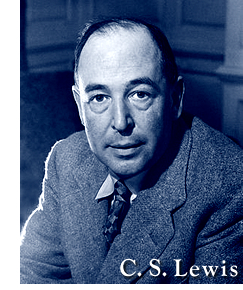
C.S. Lewis Daily – Today’s Reading


We begin to notice, besides our particular sinful acts, our sinfulness; begin to be alarmed not only about what we do, but about what we are. This may sound rather difficult, so I will try to make it clear from my own case. When I come to my evening prayers and try to reckon up the sins of the day, nine times out of ten the most obvious one is some sin against charity; I have sulked or snapped or sneered or snubbed or stormed. And the excuse that immediately springs to my mind is that the provocation was so sudden and unexpected; I was caught off my guard, I had not time to collect myself. Now that may be an extenuating circumstance as regards those particular acts: they would obviously be worse if they had been deliberate and premeditated. On the other hand, surely what a man does when he is taken off his guard is the best evidence for what sort of a man he is? Surely what pops out before the man has time to put on a disguise is the truth? If there are rats in a cellar you are most likely to see them if you go in very suddenly. But the suddenness does not create the rats: it only prevents them from hiding. In the same way the suddenness of the provocation does not make me an ill-tempered man; it only shows me what an ill-tempered man I am. The rats are always there in the cellar, but if you go in shouting and noisily they will have taken cover before you switch on the light.

From Mere Christianity

Compiled in A Year with C.S. Lewis

Streams in the Desert for Kids – Water in a Pile


Joshua 3:13

The Jordan River was at flood stage. So did his people worry when God said, “Have the priests pick up the Ark of the Covenant and walk into the water”? Did the priests wonder if they could hold onto the Ark in the swirling water? Did they think they would be swept away and lose their lives? No matter, God told them what would happen when they did what he said. They had to have enough faith to put their feet in the water. And that’s when the miracle happened. Somewhere way up stream the waters were cut off and piled up. Even more miraculous, the ground in the river bed was dry. The priests walked to the middle of the river and stood there until all the people crossed over into the Promised Land.

When God is the architect, we are the workers, using our hands, our feet, our faith to help our heavenly Father. God directed the priests. Because they had bold faith, they followed directions. And God’s people passed safely, understanding his faithfulness and power.

As you carry your load, remember you have the living God with you. You are working for him. So be bold in your faith. Who knows what he will accomplish with it!

Dear Lord, I’m not sure what you can accomplish with me. But you are the master planner. Help me have enough faith to work for you through troubles. Amen.

Charles Stanley – Developing Faith Through Adversity


2 Corinthians 11:23-30

It doesn’t seem fair, does it? Paul spent the second half of his life serving Christ, and yet he experienced continual suffering. Why would God let one of His most faithful servants go through so much pain? This isn’t a question just about Paul; it’s an issue we face today. In our minds, the Lord should protect His loyal followers from hardships, but He doesn’t necessarily do so.

Maybe our reasoning is backwards. We think faithful Christians don’t deserve to suffer, but from God’s perspective, suffering is what produces faithful Christians. If we all had lives of ease without opposition, trials, or pain, we’d never really know God, because we’d never need Him. Like it or not, adversity teaches us more about the Lord than simply reading the Bible ever will.

I’m not saying we don’t need to know Scripture; that’s our foundation for faith. But if what we believe is never tested by adversity, it remains head knowledge. How will we ever know that God can be trusted in the midst of trouble if we’ve never been challenged by hardship? The Lord gives us opportunities to apply scriptural truths to the difficulties facing us, and in the process, we find Him faithful. For example, how would Paul ever have known the strength of Christ if he had never been weakened by persecution, pain, and adversity?

Depending on your response, trials can be God’s greatest means of building faith or an avenue to discouragement and self-pity. If you’ll believe what Scripture says and apply its principles to your situation, your trust in God will grow, and your faith will be strengthened through adversity.

Bible in One Year: Ecclesiastes 1-4

Our Daily Bread — Tears of a Teen


Read: Romans 9:1-5

Bible in a Year: Psalms 18-19; Acts 20:17-38

I have great sorrow and continual grief in my heart. —Romans 9:2

As I sat with four teenagers and a 20-something homeless man at a soup kitchen in Alaska, I was touched by the teens’ compassion for him. They listened as he talked about what he believed and then they gently presented the gospel to him—lovingly offering him hope in Jesus. Sadly, the man refused to seriously consider the gospel.

As we were leaving, one of the girls, Grace, expressed through her tears how much she didn’t want the man to die without knowing Jesus. From the heart, she grieved for this young man who, at least at this point, was rejecting the love of the Savior.

The tears of this teen remind me of the apostle Paul who served the Lord humbly and had great sorrow in his heart for his countrymen, desiring that they trust in Christ (Rom. 9:1-5). Paul’s compassion and concern must have brought him to tears on many occasions.

If we care enough for others who have not yet accepted God’s gift of forgiveness through Christ, we will find ways to share with them. With the confidence of our own faith and with tears of compassion, let’s take the good news to those who need to know the Savior. —Dave Branon

Is there someone you need to talk to about Jesus today?

Sharing the gospel is one person telling another good news.

INSIGHT: The book of Romans is unique in Paul’s New Testament writings. While the rest of his letters are to those with whom he had an existing relationship (either individuals or churches), Romans is written to a group of people that Paul has not yet met. This may explain some of the deep theological themes that he covers. Although Paul was hoping to visit the Christians in Rome in person, one of the reasons he wrote this letter was to ensure they had a solid foundation of belief.

Ravi Zacharias Ministry –  How Should We Pray?


Huckleberry Finn first heard about prayer from Miss Watson, who told him that prayer was something you did everyday and that you’d get what you asked for. So he tried three or four times praying for hooks to complete his fishing line, but when he still didn’t get what he asked for decided that “No, there ain’t nothing in it.”

Prayer is a curious activity. It is one we seem, at times, regardless of belief or creed, almost inclined naturally toward, while other times, like Huck, almost as naturally conclude we either can’t make it work or conclude there ain’t nothing in it.

One day Jesus was praying in a certain place, and when he finished, one of his disciples asked him to teach them how to pray. Jesus said to them, “When you pray, say:

‘Father, hallowed be your name.

Your kingdom come.

Give us each day our daily bread.

And forgive us our sins,

for we ourselves forgive everyone indebted to us.

And do not bring us to the time of trial.’”(1)

The Lord’s Prayer, which Christian’s around the world still hold and practice today, comes out of this context—that is, out of a plea for help with prayer and out of the praying of Jesus himself. It is not just the good advice Jesus had to offer about praying; it is his praying. In fact, giving his followers this prayer, Jesus, like John, was following a common rabbinic pattern. When a rabbi taught a prayer, he would use it to teach his disciples the most distinctive, concise, essential elements of his own theological teachings. Thus, disciples would learn to pray as their teacher prayed, and from then on, when a disciple’s prayer was heard, it would sound like that of his teacher’s prayers, bearing his own mark and posture before God.

As this suggests, when Christians pray the Lord’s Prayer today, it is simultaneously an offering of the voice of Jesus, a declaration of belonging to him, and a pronunciation of the lessons he wanted his followers most to know and to hold near.

Somewhat different than fishing hooks, the prayer for daily bread is foundational; a literal need. News of world food shortages, urban food deserts, the prevalence of malnourishment, and volatile food prices remind us with repetition that cries for basic provision are appropriate and necessary. Fifteenth century theologian Martin Luther spoke of the prayer for daily bread as the plea for “everything included in the necessities and nourishment for our bodies such as food, drink, clothing, shoes, house, farm, fields, livestock, money, property, an upright spouse, upright children, upright members of the household, upright and faithful rulers, good government, good weather, peace, health, decency, honor, good friends, faithful neighbors, and the like.”(2) In other words, bread is not merely the private concern of those who need something to eat. It is far broader than this, including far more than bread, and far more than isolated individuals before God. Our daily bread is something friends, neighbors, communities, economic situations, and governments affect collectively. Christ’s prayer for daily bread, then, is a prayer for food and clothing, but also for good neighbors, good rulers, and good conscience as we face need and want and hope in unison together.

As such, a prayer for daily bread can be a reminder that we do not live in a vacuum before God or the world. Rather, we live in communities where we are responsible for one another. So if we pray for daily bread, like Jesus, we pray for God’s care and provision. But subsequently, we are praying against the things in life that prevent God’s provisions for our neighbors as much as for ourselves. This may well be corruption or systems of social injustice; it may also be our own hardened hearts, fearful dispositions, or a self-consumed and consuming living. When our neighbor prays for daily bread, our neighbor prays for our help, in the hands of the one who provides all things.

To pray the words Jesus invited us to pray means we pray out of the same paradox in which Jesus prayed himself. He was both the Son who knew he would need the Father’s provision to get through the days before him and the Son who poured out his life for the crowds and individuals that needed him. Praying for daily bread, we are simultaneously the wealthy who can respond in gratitude for all that God has given us and the impoverished who cry out for the daily bread we need and the God who sustains all things. We are both the rich and the poor, the trespasser and the one trespassed against, united to our neighbors in ways we are constantly invited to imagine. We join ancient ancestors who prayed for physical nourishment in the desert, and with them know that we are still hungry. In difficult days, in plentiful days, the invitation of Christian prayer is the invitation of the Spirit to join in a united cry—”Give us this day our daily bread”—placed before the bread of life who comes to give life to the world.

Jill Carattini is managing editor of A Slice of Infinity at Ravi Zacharias International Ministries in Atlanta, Georgia.

(1) Luke 11:1-4.

(2) Martin Luther, “The Small Catechism,” The Book of Concord, 357.

Alistair Begg – Know Your Election


For we know, brothers loved by God, that he has chosen you. 1 Thessalonians 1:4

Many persons want to know their election before they look to Christ, but that is not possible; it is only to be discovered by “looking to Jesus.”1 If you desire to ascertain your own election, after the following manner shall you assure your heart before God.

Do you feel yourself to be a lost, guilty sinner? Go straight to the cross of Christ, and tell Jesus so, and tell Him that you have read in the Bible, “Whoever comes to me I will never cast out.”2 Tell Him that He has said, “The saying is trustworthy and deserving of full acceptance, that Christ Jesus came into the world to save sinners.”3 Look to Jesus and believe on Him, and you shall make proof of your election directly, for as surely as you believe, you are elect.

If you will give yourself wholly up to Christ and trust Him, then you are one of God’s chosen ones; but if you stop and say, “I want to know first whether I am elect,” you do not know what you are asking. Go to Jesus, just as you are, in all your guilt. Leave all curious inquiry about election alone. Go straight to Christ, and hide in His wounds, and you shall know your election. The assurance of the Holy Spirit shall be given to you, so that you shall be able to say, “I know whom I have believed, and I am convinced that he is able to guard until that Day what has been entrusted to me.”4

Christ was at the everlasting council-He can tell you whether you were chosen or not; but you cannot find it out in any other way. Go and put your trust in Him, and His answer will be, “I have loved you with an everlasting love; therefore I have continued my faithfulness to you.”5 There will be no doubt about His having chosen you when you have chosen Him.

Sons we are through God’s election,

Who in Jesus Christ believe.

1) Hebrews 12:2   2) John 6:37  3) 1 Timothy 1:15   4) 2 Timothy 1:15   5) Jeremiah 31:3

Devotional material is taken from “Morning and Evening,” written by C.H. Spurgeon, revised and updated by Alistair Begg.

Charles Spurgeon – The story of God’s mighty acts


“We have heard with our ears, O God, our fathers have told us, what work thou didst in their days, in the times of old.” Psalm 44:1

Suggested Further Reading: 2 Chronicles 29:31-36

The old stagers in our churches believe that things must grow, gently, by degrees; we must go step by step onwards. Concentrated action and continued labour, they say, will ultimately bring success. But the marvel is, all God’s works have been sudden. When Peter stood up to preach, it did not take six weeks to convert the three thousand. They were converted at once and baptised that very day; they were that hour turned to God, and became as truly disciples of Christ as they could have been if their conversion had taken seventy years. So was it in the day of Martin Luther: it did not take Luther centuries to break through the thick darkness of Rome. God lit the candle and the candle burned, and there was the light in an instant—God works suddenly. If any one could have stood in Wurtemburg, and have said, “Can popery be made to quail, can the Vatican be made to shake?” The answer would have been:—“No; it will take at least a thousand years to do it. Popery, the great serpent, has so twisted itself about the nations, and bound them so fast in its coil, that they cannot be delivered except by a long process.” However, God said, “Not so.” He smote the dragon sorely, and the nations went free; he cut the gates of brass, and broke in sunder the bars of iron, and the people were delivered in an hour. Freedom came not in the course of years, but in an instant. The people that walked in darkness saw a great light, and upon them that dwelt in the land of the shadow of death, did the light shine. So was it in Whitefield’s day. The rebuking of a slumbering church was not the work of ages; it was done at once. Have you never heard of the great revival under Whitefield?

For meditation: We tend to label God “slow”, but he is only “slow to anger” (2 Peter 3:9). He was a very quick Creator and we should take encouragement from the fact that he has brought revival out of the blue before and can do it again (Isaiah 66:8; Acts 2:2).

Sermon no. 263

17 July (1859)

John MacArthur – Possessed by God


“You are . . . a people for God’s own possession” (1 Pet. 2:9).

Since God paid the price to redeem you, you belong to Him.

When Jesus said, “I am the good shepherd; and I know My own, and My own know Me” (John 10:14), He stated a truth that has been especially dear to me since the early years of my theological education. One of the pleasant memories from my seminary days is sitting in chapel and singing the hymn by the nineteenth-century lyricist Wade Robinson “I Am His and He Is Mine.” I may never fully comprehend the depths of what it means to belong to Christ, but I will forever glory in it.

The Greek word translated “possession” in 1 Peter 2:9 means “to purchase” or “acquire for a price.” Paul used it in Ephesians 1:14 to speak of “the redemption of God’s own possession.” Everyone is His by creation, but we as Christians are uniquely His because He paid the price to redeem us from the bondage of sin and death.

God’s ownership of believers is emphasized throughout Scripture. Paul admonished elders to “shepherd the church of God which He purchased with His own blood” (Acts 20:28). He said to the Corinthians, “Do you not know that your body is a temple of the Holy Spirit who is in you, whom you have from God, and that you are not your own? For you have been bought with a price: therefore glorify God in your body” (1 Cor. 6:19-20). Titus 2:14 says that Christ “gave Himself for us, that He might redeem [or purchase] us from every lawless deed and purify for Himself a people for His own possession.”

Isaiah 43:21 says, “The people whom I formed for Myself, will declare My praise.” That was to be Israel’s purpose, and it is yours as well. God chose you as His own possession and gave His Son to purchase your salvation. You are His eternally, so live accordingly and rejoice in such a glorious privilege!

Suggestions for Prayer

Make it your practice to praise God abundantly for the privilege of belonging to Him.

For Further Study

Read John 10:1-33.

  • What characterizes the Good Shepherd?
  • What did Jesus claim about His relationship with God the Father?
  • How did the Jewish leaders react to His teaching?


Joyce Meyer – Follow Wisdom


I, Wisdom [from God], make prudence my dwelling, and I find out knowledge and discretion. – Proverbs 8:12

There is a lot of powerful information in this small scripture—information you would do well to explore. In the Scriptures being prudent means being good stewards or managers of the gifts that God has given you to use. Those gifts include time, energy, strength, and health, as well as material possessions.

Each of us has been given a different set of gifts, and each of us has different abilities to manage those gifts. It is your individual responsibility to develop knowledge and discretion as to how you can best use your gifts. You do this by listening to the Lord and obeying what He tells you to do.

Following Wisdom is an excellent choice—one that will bring you many blessings!

Campus Crusade for Christ; Bill Bright – Glory Will Be Ours


“Yet what we suffer now is nothing compared to the glory he will give us later” (Romans 8:18).

In Sydney, Australia, a taxi driver to whom I witnessed became very angry.

“I was in World War II,” he exploded, “and I saw thousands of people die. I don’t want to have anything to do with a God who allows war.”

“Don’t blame God for war and the slaughter of millions of people,” I explained. “War is the result of man’s sin. Man does what he does because of his selfishness and pride. God does not desire that man should destroy men. God is not in favor of war. But sickness, death, earthquakes, tornadoes, floods are all a part of God’s judgement because of man’s sin, because of man’s disobedience to His commands.

The problem of suffering is a mysterious one, but for the Christian there is a good, logical answer. All creation waits patiently and hopefully for that future day when God will resurrect His children. On that day, thorns and thistles, sin and death and decay – the things that overcome the world will disappear at God’s command.

The world around us then will share in the glorious freedom from sin which God’s children enjoy. Even the things of nature, animals and plants which now suffer deterioration and death, await the coming of the time of this great glory.

We Christians – though we have the Holy Spirit within us as a foretaste of future glory – also groan to be released from pain, heartache, sorrow and suffering. We too wait anxiously for that day when God will give us full rights as His children, including the new bodies He has promised us – bodies that will never suffer again, and that will never die.

Bible Reading: Romans 8:24-27

TODAY’S ACTION POINT: I will rejoice in the certainty that glory is ahead for me as a believer, and as a result I am willing to joyfully endure whatever suffering comes my way. I will also encourage others in their times of sorrow to consider God’s love and plan for them, and will help them to understand the scriptural reason for man’s suffering.

Presidential Prayer Team; J.K. – New Beginnings


The people of Israel had angered God with their disobedience and after 70 years of captivity in Babylon were released to return home. Even in their punishment, the Lord had been good to them. He raised up godly leaders, protected them and forgave them. He gave them a new start.

Will you not revive us again, that your people may rejoice in you?

Psalm 85:6

Scottish preacher George H. Morrison said, “The victorious Christian life is a series of new beginnings,” and he is right. When you disobey God, it is sin and you fall from a right relationship with Him. You must make a new beginning by confessing your sin and turning back to Him. He will restore you. He will revive you through His love and faithfulness and will give you righteousness and peace so that you may rejoice.

The remnant nation of Israel prayed for new life and a new birth of freedom by thanking God for all He had done. They petitioned for restoration of their life in Him. The same should happen today for this country. Confess your sins and the sins of this nation. Petition the Lord to save this country. When you seek Him, be confident that He will give you peace and a fresh start.

Recommended Reading: I John 1:5-2:5

Greg Laurie –In Rhythm with God


But Noah found grace in the eyes of the LORD. —Genesis 6:8

A jeweler will display a ring or a fine piece of jewelry against a dark backdrop so that our eyes are automatically drawn to it. And that is what Noah was like against the dark backdrop of wickedness in his day. He was a rare jewel, a radiant light in a very dark place. The Bible tells us that “Noah found grace in the eyes of the Lord” (Genesis 6:8), which means that God extended grace toward him.

The Bible also tells us that “Noah walked with God.” (verse 9). That is said of only two people in the Scriptures: Enoch and Noah. So what does it mean to walk with God? Amos 3:3 gives us insight into this: “Can two walk together, unless they are agreed?” The idea is to move in rhythm with someone. If you take a walk with someone, you have to keep pace with that person. When I walk with my grandchildren, for example, I can’t walk at my normal speed. I slow down.

The idea of walking with God is that we are not running and dragging God along, and neither is God running and dragging us along. Rather, we are to get in rhythm with God. The objective is to get in synch with Him, not try to get Him in synch with us.

I remember a time when I went scuba diving and ended up using too much of my air. So I had to use the extra regulator hanging from the instructor’s tank, and from that point on, I had to go wherever he went. I could either stay in rhythm with my instructor and live, or break free and die. So I stayed in rhythm with him.

That is the idea of walking with God. And Noah walked with God.

Max Lucado – Focus First and Most on God


Giants. We must face them. Yet we need not face them alone. Focus first, and most, on God. Read 1 Samuel 17 and list the observations David made about Goliath. I find only two. One to Saul and one to Goliath’s face, “Who is this uncircumcised Philistine that he should defy the armies of the living God” (1 Samuel 17:26). David asks nothing about Goliath’s skill, age, or the weight of the spear, the size of his shield. But he gives much thought to God. The armies of the living God; The Lord of hosts, the God of the armies of Israel. In all, the God-thoughts outnumber Goliath-thoughts nine to two.

How does this ratio compare with yours? Is your list of blessings four times as long as your list of complaints? Are you four times as likely to describe the strength of God as you are the demands of your day? That’s how you face a giant.

From Facing Your Giants

Night Light for Couples –Protected By Prayer


by Cheri Fuller

The missionary rose and prepared to leave the campsite where he had spent the night en route to the city for medical supplies. He extinguished his small campfire, pulled on his canvas backpack, and hopped on his motorcycle to continue his ride through the African jungle. Every two weeks he made this two‐day journey to collect money from a bank and purchase medicine and supplies for the small field hospital where he served. When he completed those errands, he hopped on his bike again for the two‐day return trip.

When the missionary arrived in the city, he collected his money and medical supplies and was just about to leave for home when he saw two men fighting in the street. Since one of the men was seriously injured, the missionary stopped, treated him for his injuries, and shared the love of Christ with him. Then the missionary began his two‐day trek home, stopping in the jungle again to camp overnight.

Two weeks later, as was his custom, the missionary again made the journey to the city. As he ran his various errands, a young man approached him—the same man the missionary had ministered to during his previous trip. “I knew you carried money and medicine with you,” the man said, “so my friends and I followed you to your campsite in the jungle after you helped me in the street. We planned to kill you and take all the money and drugs. But just as we were about to move in and attack you, we saw twenty‐six armed guards surround and protect you.”

“You must be mistaken,” said the missionary. “I was all alone when I spent the night in the jungle. There were no guards or anyone else with me.”

“But sir, I wasn’t the only one who saw the guards. My five companions saw them, too. We counted them! There were twenty‐six bodyguards, too many for us to handle. Their presence stopped us from killing you.”

Months later, the missionary related this story to the congregation gathered at his home church in Michigan. As he spoke, one of the men listening stood up and interrupted him to ask the exact day the incident in the jungle had occurred. When the missionary identified the specific month and day of the week, the man told him “the rest of the story.”

“On the exact night of your incident in Africa, it was morning here in Michigan, and I was on the golf course. I was about to putt when I felt a strong urge to pray for you. The urge was so strong that I left the golf course and called some men of our church right here in this sanctuary to join me in praying for you. Would all you men who prayed with me that day stand up?”

The missionary wasn’t concerned with who the men were; he was too busy counting them, one by one. Finally he reached the last one. There were twenty‐six men—the exact number of “armed guards” the thwarted attacker had seen.

Looking ahead…

Do you ever find yourself so caught up in the busyness of life that you forget about or postpone a time of prayer? I’m sure the missionary in the story above is one man who was grateful his congregation took seriously the urge to pray!

My father, James Dobson Sr., also took his prayer life seriously. He was known to spend hours at a time on his knees in conversation with the Lord. At Dad’s request, the words “He Prayed” are written on the footstone of his grave. Through his example, and through God’s response, I learned firsthand the power and privilege of prayer. In the week to come let’s take a closer look at this awesome opportunity.

-James C Dobson

From Night Light For Couples, by Dr. James & Shirley Dobson

Charles Stanley – Seeing Adversity from God’s Viewpoint


Isaiah 55:8-9

When adversity hits you like a ton of bricks, it could easily throw you into a pit of discouragement and despair. Although you may regard difficulties as setbacks, the Lord sees them as times for great advancement. His purpose in allowing them is not to destroy you but to stimulate your spiritual growth. In His great wisdom, the Lord knows how to take an awful situation and use it to transform you into the image of Christ and equip you to carry out His will.

Every adversity that comes into your life is sifted through God’s permissive will. That doesn’t mean the difficulty itself is His perfect will, but He’s allowed the trial to touch you so that He can use it to accomplish His wonderful purposes for your life. Although some of the suffering we see and experience seems senseless or blatantly evil, we must recognize that we have a very limited perspective and cannot always understand what the Lord is doing.

Our heavenly Father sees every aspect of life, but our view is restricted to what is right before us. His plans include not only you but also all of His creation, and they reach from the beginning of time to eternity. Though we’ll never grasp the infinite mind of God, we can know His faithfulness and love.

When you can’t understand God’s ways, focus on His perfect knowledge, wisdom, and power rather than the magnitude of your sorrow. Remember, He sees the entire picture and loves you more than you can imagine. This is a time to walk by faith, as perfect understanding comes only in heaven.

Bible in One Year: Proverbs 29-31

Our Daily Bread — A Given Name


Read: Matthew 1:18-25

Bible in a Year: Psalms 16-17; Acts 20:1-16

She will bring forth a Son, and you shall call His name Jesus, for He will save His people from their sins. —Matthew 1:21

Most families have their own family stories. One in our family has to do with how I got my name. Apparently, when my parents were in the early days of their marriage, they disagreed about what to name their first son. Mom wanted a son named after Dad, but Dad wasn’t interested in naming a son “Junior.” After much discussion, they reached a compromise, agreeing that only if a son was born on Dad’s birthday would he be given Dad’s name. Amazingly, I was born on my dad’s birthday. So I was given his name with a “Junior” attached to it.

The naming of children is as old as time. As Joseph wrestled with the news that his fiancée, Mary, was pregnant, the angel brought him insight from the Father about naming the Baby: “She will bring forth a Son, and you shall call His name Jesus, for He will save His people from their sins” (Matt. 1:21). Not only would Jesus be His name, but it would also explain the reason for His coming into the world: To take on Himself the punishment we deserve for our sin. His redemptive purpose behind the manger is wrapped up in the perfectly given Name above all names.

May our heart’s desire be to live in a way that honors His wonderful name! —Bill Crowder

Thank You, Father, for sending Your Son to rescue us from sin and bring us into relationship with You.

Jesus: His name and His mission are one and the same.

INSIGHT: The Bible contains more than 200 names for Jesus. In today’s passage we see two of them—Jesus and Immanuel—both drawn from the Old Testament. Jesus, the Greek form of the Hebrew word Joshua, means “the Lord saves” and describes what He came to do: “He will save His people from their sins” (v. 21). This phrase comes from Psalm 130:7-8 where Israel is encouraged to “put [their] hope in the Lord. . . . He himself will redeem Israel from all their sins” (niv). Immanuel is an Old Testament name mentioned in the prophecy of Isaiah (7:14; 8:8) and describes His nature: He is “God with us” (Matt. 1:23).

Ravi Zacharias Ministry – What Is Faith?


“Faith is believing what you want to believe, yet cannot prove.”

Sadly, many people, including some Christians, live with this definition of faith. For some it feels liberating. It means being able to believe in anything you want to believe. No explanation is required, indeed, no explanation can be given; it is just a matter of faith. For others, such a definition is sickening. Embracing faith means you stop thinking. As faith increases, reason and meaning eventually disappear. No explanations can be given, and none can be expected. Thus, living in faith is living in the dark.

For both groups, the problem is the same. By starting with the wrong definition of faith, they have asked the wrong question, are dealing with the wrong problem, and so have ended up with the wrong answer. Faith is not wishful thinking. It is not about believing in things that do not exist. It neither makes all things believable nor meaning impossible.

So what is the right definition of faith? “Faith is the substance of things hoped for, the evidence of things not seen,” writes the author of Hebrews. A few verses later faith is similarly defined as knowing that God exists and that God rewards those who earnestly seek Him.

Perhaps the best word we can use to translate the Greek word “pistis” (usually translated faith) is the word “trust” or “trustworthy.” Suppose you tell a friend that you have faith in her. What does that mean? It means two things. First, you are sure the person you are talking to actually exists. And second, you are convinced she is trustworthy; you can believe what she says and trust in her character.

It is in this way that the writer of Hebrews talks about faith in God. Faith is knowing that God is real and that you can trust in God’s promises. You cannot trust someone who isn’t there, nor can you rely on someone whose promises are not reliable. This is why faith is talked about as the substance of things hoped for and as the evidence of things not seen. Both words carry with them a sense of reality. Our hope is not wishful thinking. Faith does not make God real. On the contrary, faith is the response to a real God who wants to be known to us:

“I am the Lord, and there is no other;

besides me there is no god.

I arm you, though you do not know me,

so that they may know, from the rising of the sun

and from the west, that there is no one besides me;

I am the Lord, and there is no other” (Isaiah 45:5-6).

Ever since the church began, the refrain has always been the same: Come, believe, follow the light of the world. It has never appealed for people to leap into the dark; no such invitation is found anywhere in Scripture. Instead, we are called to step into the light. The Christian gospel is not a message that revels in ignorance. It is the revelation of God in the person of Christ, so that we might know there is no other. The Christian is called to see things as they really are, and not as she would simply like them to be. We trust in a God who has been revealed to us in the Son and the Spirit. We believe because God is real.

The Christian gospel invites you to delve into reality. It commands you to be honest in your commitment to know that which is true. Is Jesus real? Who did he claim to be? Is he really alive today? Faith comes in response to knowing the answers to these questions, even as Christ is calling you near. But don’t stop after the initial introductions! Just as you are able to put more trust in someone as you grow to know him, so faith increases as you grow in your relationship with Christ. There is a God who is real and true; there is a God who is near and longing to gather you nearer. The great joy of the Christian faith is found in the person who invites us to trust and believe.

Michael Ramsden is European director of Ravi Zacharias International Ministries in the United Kingdom.


Alistair Begg – Depend Fully on Jesus


Morning by morning they gathered it.

Exodus 16:21

Work hard to maintain a sense of your entire dependence upon the Lord’s good will and pleasure for the continuance of your richest enjoyments. Never try to live on the old manna, nor seek to find help in Egypt. All must come from Jesus or you are undone forever. Old anointings will not suffice to impart unction to your spirit; your head must have fresh oil poured upon it from the golden horn of the sanctuary, or it will cease from its glory.

Today you may be upon the summit of the mount of God, but He who has put you there must keep you there or you will sink far more speedily than you imagine. Your mountain only stands firm when He settles it in its place; if He hides His face, you will soon be troubled. If the Savior should see fit, there is not a window through which you see the light of heaven that He could not darken in an instant. Joshua bade the sun stand still, but Jesus can shroud it in total darkness. He can withdraw the joy of your heart, the light of your eyes, and the strength of your life; in His hand your comforts lie, and at His will they can depart from you.

Our Lord is determined that we shall feel and recognize this hourly dependence, for He only permits us to pray for “daily bread,” and only promises that our strength will be equal to our days. Is it not best for us that it should be so, that we may often repair to His throne and constantly be reminded of His love?

Oh, how rich the grace that supplies us so continually and does not refrain itself because of our ingratitude! The golden shower never ceases; the cloud of blessing tarries evermore above our dwelling. O Lord Jesus, we would bow at Your feet, conscious of our utter inability to do anything without You, and in every favor that we are privileged to receive, we would adore Your blessed name and acknowledge Your unexhausted love.

Devotional material is taken from “Morning and Evening,” written by C.H. Spurgeon, revised and updated by Alistair Begg.

Charles Spurgeon – The ceremony of laying the first stone of the New Tabernacle, 16 August 1859


Suggested Reading: 3 John: 5-11

We believe in what are called the five great points commonly known as Calvinistic; but we do not regard those five points as being barbed shafts which we are to push into the bowels of Christendom. We look upon them as being five great lamps which help to illuminate the cross, or rather five bright emanations springing from the glorious covenant of our Triune God, and illustrating the great doctrine of Jesus crucified. Against all comers, especially against all lovers of Arminianism, we defend and maintain pure gospel truth. At the same time I can make this public declaration, that I am no Antinomian. I do not belong to the sect of those who are afraid to invite the sinner to Christ. I warn him, I invite him, I exhort him. Hence, then, I have reproach on either hand. Inconsistency is urged by some, as if anything that God commanded could be inconsistent. I will glory in such inconsistency even to the end. I bind myself precisely to no form of doctrine. I love those five points as being the angles of the gospel, but then I love the centre between the angles better still. Moreover, we are Baptists, and we cannot swerve from this matter of discipline, nor can we make our church half-and-half in that matter. The witness of our church must be one and indivisible. We must have one Lord, one faith, and one baptism. And yet dear to our hearts is that great article of the Nicene Creed, the “Communion of Saints.” I do not believe in the communion of Episcopalians. I do not believe in the communion of Baptists. I dare not sit with them exclusively. I think I should be almost strict communicant enough not to sit with them at all, because I should say, “This is not the communion of saints, it is the communion of Baptists.” Whosoever loves the Lord Jesus Christ in verity and truth has a hearty welcome, and is not only permitted, but invited to communion with the Church of Christ.

For meditation: What binds you to others in fellowship? Oneness in the great fundamentals of the Gospel? Or a man-made grouping? The first would make you like Spurgeon, the second can easily lead to the extremes of unequal ecumenism or schism.

Part of nos. 268-70

16 July

John MacArthur – Set Apart for God


“You are . . . a holy nation” (1 Pet. 2:9).

Holiness involves the decreasing frequency of sin and the increasing frequency of righteousness.

Christians are a holy nation—a people set apart from sin and hell to an intimate relationship with God. Originally Israel was God’s holy nation, but by unbelief she forfeited that privilege. Now the church, which consists of both Jew and Gentile, is His unique people, and will remain so until the nation of Israel repents and receives her Messiah at His return (Zech. 12:10).

Biblical holiness (sanctification) is often misunderstood, but it needn’t be. When the Holy Spirit delivered you from the domain of darkness and transferred you into the kingdom of Christ, you became His special possession. That doesn’t mean you’re sinlessly perfect, but it does mean you’re no longer a slave to sin, the devil, and death. That’s positional sanctification. Practical sanctification is the decreasing frequency of sin and the increasing frequency of righteousness as you progress in your Christian walk.

Sanctification should not be confused with false standards of holiness, adopted by those who, like the Pharisees, attempt to be holy through external means; or, like the Stoics, have a passionless devotion to duty; or, like monks, isolate themselves from the world; or, like the quasi-Christian psychologists, replace sanctification with introspection, self-analysis, and improvement of one’s self-image.

True holiness begins with a love for Christ Himself. That’s what compels you toward greater sanctification. Peter said that you were “chosen according to the foreknowledge of God the Father, by the sanctifying work of the Spirit, that you may obey Jesus Christ” (1 Pet. 1:1-2). Christ Himself became to you “wisdom from God, and righteousness and sanctification, and redemption” (1 Cor. 1:30). In Him you were saved, which is the beginning of sanctification, and in Him you have every resource necessary for progressing in holiness.

Suggestions for Prayer

  • Thank God for your positional holiness in Christ, for by it you are perfect in His sight.
  • Thank Him for the Spirit’s power in your life, which enables you to live in a manner pleasing to Him.

For Further Study

What do these passages say about sanctification: Acts 15:7- 9, 1 Thessalonians 4:3, Hebrews 10:14, and 1 Peter 1:15-16?