Campus Crusade for Christ; Bill Bright – Trusting Means Safety


“Fear of man is a dangerous trap, but to trust in God means safety” (Proverbs 29:25).

One of the delegates attending a lay institute for evangelism protested that he was not going to go out into the community to share his faith, something he had never done before. I assured him that he was not required to go; it was simply an optional assignment. But I explained that if he would go along and observe a more mature witnessing Christian, he would learn something and would feel greater freedom in the future to witness on his own. Again he expressed his fear, but he did go, and God marvelously used him and his witnessing partner to introduce two people to Christ. He came home absolutely radiant, joyful, overflowing with thanksgiving and praise to God. He came to me immediately to say, “I am so glad that I went. I would have missed one of the greatest blessings of my life had I not gone. Thank you so much for encouraging me to go.”

The number one barrier to witnessing in the Christian life is the fear of man. Think of the contradiction. It never occurs to the average Christian that not to witness is to disobey God, and the consequences can be devastating to his spiritual life. Therefore the average Christian risks offending God for the fear of offending man.

It is interesting that there are 365 “fear nots” in the Bible – one for every day of the year. And yet there is one fear in particular that thwarts effective witnessing for Christ more than any other – the fear of man.

It would not be a distorted picture to envision thousands – and even millions – of believers caught in that dangerous trap referred to by the psalmist. And what a deadly snare! Martin Luther, years ago, found a solution to this deadly enemy:

And though this world with devils filled,
Should threaten to undo us,
We will not fear for God has willed
His truth to triumph through us
The prince of darkness grim –
We tremble not for him;
His rage we can endure,
For lo! his doom is sure,
One little word shall fell him.

Our trust must be in God whose indwelling Holy Spirit helps us not only to trust Him, but also to share the gospel with others.

Bible Reading: Proverbs 29:19-24

TODAY’S ACTION POINT: With God’s help, I will share His love and forgiveness with others with the confidence that having called me to be His witness, He will enable me and will prepare the hearts of those to whom I go.

Presidential Prayer Team; – Take the Time


In 1789, George Washington delivered the “Thanksgiving Proclamation.” In addition to giving thanks, the day was set aside “that we may unite in most humbly offering our prayers and supplications to the great Lord and Ruler of Nations, and beseech Him to pardon our national and other transgressions.” Washington was a national leader who understood the power of prayer. Perhaps this was because of another leader who passionately interceded for his people.

I lay prostrate before the Lord these forty days and forty nights because the Lord had said he would destroy you.

Deuteronomy 9:25

In Deuteronomy 9, the Israelites were about to cross the Jordan to fight for their promised land. Moses’ speech encouraged them that God would fight on their behalf, but also reminded them of how he interceded with God when they had sinned against Him. He stood in-between God and the Israelites to plead their case and defend them.

Moses was a leader who interceded regularly for others – and God listened. His prayers made a difference for the Israelites. When was the last time you truly interceded with God for someone or for the nation? Today, take the time, as much as is needed, to earnestly pray…and if you don’t know where or how to start, ask God for help (Romans 8:26).

Recommended Reading: I Timothy 2:1-8

Greg Laurie – Jesus, the Friend of Sinners


“God blesses you when people mock you and persecute you and lie about you and say all sorts of evil things against you because you are My followers. Be happy about it! Be very glad! For a great reward awaits you in heaven.”—Matthew 5:11–12

How was Jesus known when He walked this earth?

He was known as “the friend of sinners.” We might think that sounds like a compliment now, but it wasn’t meant as a compliment then.

Some members of the Jewish leadership establishment were appalled that Jesus would hang out with sinners.

No, He never compromised—this was our holy God in the flesh. But He loved these outcasts, this off-scouring of society, and they knew that He loved them. They were drawn by that love just like moths are drawn to a Coleman lantern in the middle of the wilderness.

We need to love people in the same way. Since we’re going to be persecuted, let’s be persecuted for the right reasons. Not for being self-righteous but for being righteous.

Night Light for Couples – Decisions, Decisions


“The head of every man is Christ, and the head of the woman is man, and the head of Christ is God.” 1 Corinthians 11:3

Among the most controversial Scriptures are those relating to a wife’s obligation to “submit” to a husband’s leadership. This principle offends many women. Furthermore, it places power in the hands of men who sometimes misuse it. And yet, there it is, time and again: “The husband is head of the wife.” Those words can’t be brushed aside by those who rely on Scripture as their infallible guide. But what does this “headship” really mean?

The Bible makes it clear that the husband is to be the leader in his home, yet he has no right to run roughshod over the opinions and feelings of his wife. He is to love her as Christ loved the church (Ephesians 5:25) and to serve her unselfishly and compassionately. A man should include his wife in making mutually satisfying decisions, always working to incorporate her perspectives and seeking compromise when possible. In situations where they simply cannot find common ground, Scripture gives the man the prerogative—and responsibility—to choose and lead. Yet in this case, he must be more sensitive and considerate than ever, bearing in mind that he will ultimately answer to God not only for his choices, but for his treatment of his wife.

Just between us…

  • (husband) How would you rate my leadership as your husband?
  • Does our decision‐making process fit the biblical model? (wife)
  • How do you feel about your role as “leader in the home”?
  • (husband) Am I sensitive to your feelings regarding decisions?

Heavenly Father, in Your divine plan for marriage You have asked the husband to lead and the wife to submit, and we want so much to obey You. We come humbly now, asking for Your wisdom and help to do so. Amen.

From Night Light For Couples, by Dr. James & Shirley Dobson

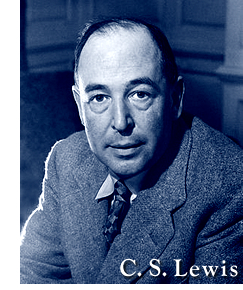
C.S. Lewis Daily – Today’s Reading


On goodness

Good and evil both increase at compound interest. That is why the little decisions you and I make every day are of such infinite importance. The smallest good act today is the capture of a strategic point from which, a few months later, you may be able to go on to victories you never dreamed of. An apparently trivial indulgence in lust or anger today is the loss of a ridge or railway line or bridgehead from which the enemy may launch an attack otherwise impossible.

From Mere Christianity

Compiled in Words to Live By

Streams in the Desert for Kids – Watch Out!


Habbakuk 2:1

In Bible times, one of the main defenses of the cities was a wall that extended around the perimeter of the town. Along the wall were watchtowers where watchmen stood guard. It was their duty to “watch” everything that went on both inside and outside the city. They were vital to the city because they were the first to spot messengers, visitors, good news, and approaching danger. When a watchman saw danger, he blew a horn to sound an alarm. The gates could be closed to keep out the enemy. If an important visitor was coming to the city, then the watchman would quickly alert the right people.

Ezekiel, one of the great prophets of the Bible, had quite a bit to say about the responsibility of a watchman. He said, “But if the watchman sees war coming and doesn’t blow the trumpet, warning the people, and war comes and takes anyone off, I’ll hold the watchman responsible for the bloodshed of any unwarned sinner” (Ezekiel 33:6, The Message).

We are watchmen too. It is our job as Christians to watch for God’s happenings and to tell people there is an enemy who wants to destroy our souls. The Bible says Satan roams around looking for someone to destroy. So we need to always be on the lookout for the good and the bad. When you tell others about what God is doing or to beware of approaching danger, then pray that they will listen.

Dear Lord, Help me to be a faithful watchman for my friends. There is so much bad stuff we can get into—stuff that can destroy us. I know the Devil would like us to go that direction, but I also know you are stronger than he is. Please help me to see the things you are doing and share those as well. Amen.


Charles Stanley – The Side Effects of Fear


Matthew 6:25-34

We’re all aware that fear produces anxiety, but it also has far-reaching effects. Here are some ways apprehension creates chaos in our life and impacts those around us.

Fear stifles thoughts and actions. It creates indecisiveness that results in stagnation. I have known talented people who procrastinate indefinitely rather than risk failure. Lost opportunities cause erosion of confidence, and the downward spiral begins.

Fear can be a roadblock to God’s plans for His children. When we’re dominated by negative emotions, we cannot achieve the goals He has in mind for us. A lack of self-confidence stymies our belief in what the Lord can do with our lives.

Fear can lead to destructive habits. To numb the pain of overbearing distress and foreboding, some turn to things like drugs and alcohol for artificial relief.

Fear steals peace and contentment. When we’re regularly afraid, our life becomes centered on pessimism and gloom.

Fear creates doubt. God promises an abundant life, but if we surrender instead to the chains of fear, we most likely won’t live in the abundance He offers.

No matter what you are afraid of, here’s what you need to know: God will never reject you. Whether you accept Him is your decision. And remember, the Lord wants to meet all of your needs. He feeds the birds of the air and clothes the grass with the splendor of lilies. How much more, then, will He care for you and me, who are made in His image? Our only concern is to obey the heavenly Father and leave all the consequences to Him.

Bible in One Year: Isaiah 63-66

Our Daily Bread — Faultfinders Anonymous


Read: Philippians 1:1-11

Bible in a Year: Psalms 72-73; Romans 9:1-15

And this I pray, that your love may abound still more and more. —Philippians 1:9

Like many people, when I read a newspaper or magazine I notice the misteaks in grammar and spelling. (You saw that, didn’t you!) I’m not trying to find errors; they leap off the page at me! My usual reaction is to criticize the publication and the people who produce it. “Why don’t they use ‘spell check’ or hire a proofreader?”

You may have a similar experience in your area of expertise. It seems that often, the more we know about something, the more judgmental we become over mistakes. It can infect our relationships with people as well.

Yet Philippians 1:9 expresses a different approach. Paul wrote, “And this I pray, that your love may abound still more and more in knowledge and all discernment.” God’s plan is that the more we know and understand, the more we love. Rather than cultivating a critical spirit and pretending we don’t notice or don’t care, our understanding should nourish empathy. Criticism is replaced by compassion.

Instead of our being faultfinders, the Lord calls us to be “filled with the fruits of righteousness which are by Jesus Christ, to the glory and praise of God” (v. 11).

When the Lord fills our hearts, we can overlook mistakes, hold our criticism, and love others, no matter how much we know about them! —David C. McCasland

Lord, by Your grace, please replace my critical spirit with Your love and compassion for others.

To err is human; to forgive, divine. Alexander Pope

INSIGHT: Notice the depth of love Paul has for his fellow believers at Philippi. This is seen in how he speaks to them and what he desires for them. He speaks as one who loves them and longs for them deeply (v. 8). His desires are seen in his prayers—that they will experience a growing yet wise love (v. 9), a discerning yet genuine spirit (v. 10), and a fruitful and Christ-honoring life (v. 11). These are great things we too can pray for in the lives of those we love and in our own lives as well. Bill Crowder

Ravi Zacharias Ministry – Longing Rendered


The places in literature that most often slow my mind to a reflective halt are usually intensely visual. Among them, perhaps surprisingly to some, are images from ancient scriptures that offer some of the most beautiful depictions. The resounding cry of Isaiah 64:1, “Oh, that you would rend the heavens and come down,” seems to leave a trail of the most desperate, sorrowing, hopeful faces in its wake, men and women longing in agreement. Fitting with Isaiah’s vision for a world that revolves around God as good and worthy king, his cry was a fervent prayer for the severe presence of a God he knew could come nearer.

Like the God for which he longed, the prophet’s words are intense, stirring, and intentional. Isaiah’s use of words—in fact, the entire genre of prophetic literature—cries out with poetic vision. As Abraham Heschel comments, “Prophecy is the product of a poetic imagination. Prophecy is poetry, and in poetry everything is possible, e.g. for the trees to celebrate a birthday and for God to speak to man.”(1) And that is to say, God gives us something of the divine character in the prophet’s powerful interplay of word, metaphor, and image. As messenger, the prophet yields the words of God, and the poetic nature of prophetic speech reveals a God who speaks in couplets, a God who uses simile and metaphor, rhythm and sound, alliteration, repetition, and rhetorical questions. Any reading of prophetic speech requires that one engage these poetic structures. A quick scan of Isaiah 64:1 reveals a depth of interacting words and key patterns, and a metaphor that moves us like the mountains Isaiah describes:

If only you would cleave the heavens!

(If only) you would come down,

From facing you, mountains would quake!

These few stanzas make use of repeated words and paired images to convey an intensity about human longing for the transcendence of God. The cry is not merely for God’s presence, but a presence that will tear open the heavens and cause mountains—even Mount Zion and the children of God—to tremble. Set in the opening line, the Hebrew word qarata is as illustrative in tone as it is meaning. The guttural sound and sharp stop in its pronunciation contribute to the severity of the word itself, which means to tear, to rend, to sever, or to split an object into two or more parts. “Oh that you would rend the heavens…”  “If only you would cleave open the heavens and come down…”

Significantly, this Hebrew word is most often found in the Old Testament referring to the rending of garments out of grief or desperation. Ezra describes falling in prayer “with my garments and my mantle torn, and on my knees, I spread out my hands to the Lord my God” (Ezra 9:5). The same word is used of David after hearing that Absalom had killed all of his sons: “The king rose, tore his garments, and lay on the ground; and all his servants who were standing by tore their garments also” (2 Samuel 13:31). The images of grief and shredded garments would likely have come to the minds of those who first heard the cry of Isaiah to God: If only you would tear the heavens in two and see what is happening in your holy cities… If only you would sever this distance that sits between us like a heavy garment…

But this act of rending is also used in the Old Testament figuratively, usually in terms of removing someone from power or formally tearing away their authority, as when Samuel told Saul that the kingdom had been rendered from him and given to his neighbors. Here, in the context of Isaiah’s prayer, the word seems to take on both figurative and literal qualities. Oh that you would rend the heavens like a garment and come down here, tear away our perception of authority and show us something real, your own power. The cry is clearly making use of metaphor and yet it is a desperate plea for God’s presence in power, tangibly and substantially—”so that the nations might tremble at your presence,” Isaiah cries.

Even so, whether uttered metaphorically or literally, the cry for God to tear open the heavens and come down is a cry no mind conceived, nor ear perceived how thoroughly God would answer. For those who read this passage in light of Christ, fully taking in the poignant image of the heavens tearing like a garment brings to mind the tearing of the temple curtain when Jesus took his last breath. “Then Jesus cried again with a loud voice and breathed his last. And at that moment the curtain of the temple was torn in two, from top to bottom. The earth shook, and the rocks were split” (Matthew 27:50-51). The incarnation, the death, and resurrection of Christ was God’s bold answer to an ancient longing—the longing and the answer both intensely visual and unapologetically real, even as God’s longing seems to meet our own: “Oh Jerusalem, Jerusalem… How often I longed to gather your children together, as a hen gathers her chicks under her wings, but you were not willing.”(3) The vicariously human Son is himself God’s response to the great metaphor of a God who rends the heavens like a garment, a God so present that he comes down to be among us, causing the earth to quake at his own breath.

Jill Carattini is managing editor of A Slice of Infinity at Ravi Zacharias International Ministries in Atlanta, Georgia.

(1) Abraham Heschel, The Prophets (New York: Harper, 2001), 469.

(2) See 1 Samuel 15:28.

(3) See Matthew 23:36-38.

Alistair Begg – A Deeper Affection


Rightly do they love you. Song of Songs 1:4

Believers love Jesus with a deeper affection then they dare to give to any other being. They would sooner lose father and mother than part with Christ. They hold all earthly comforts with a loose hand, but they carry Him locked tight in their hearts. They voluntarily deny themselves for His sake, but they are not to be driven to deny Him. It is a feeble love that the fire of persecution can dry up; the true believer’s love is a deeper stream than this.

Men have tried to divide the faithful from their Master, but their attempts have been fruitless in every age. Neither crowns of honor, nor frowns of anger have been able to untie this loving knot. This is not just a routine attachment that the world’s power may eventually dissolve. Neither man nor devil have found a key that opens this lock. Never has the craft of Satan been more at fault than when he has exercised it in seeking to break this union of two divinely welded hearts. It is written, and nothing can blot out the sentence, “Rightly do they love you.” The intensity of the love of the upright, however, is not so much to be judged by how it appears as by what the upright long for.

It is our daily lament that we cannot love enough. If only our hearts were capable of holding more and reaching further. Like Samuel Rutherford, we sigh and cry, “Oh, for as much love as would go round about the earth, and over heaven-yes, the heaven of heavens, and ten thousand worlds-that I might expand it all upon this fairest Lord Jesus.” Unfortunately, our longest reach is only a span of love, and our affection is like a drop in a bucket compared with what He deserves. Measure our love by our intentions, and it is strong indeed; we trust that the Lord judges it in this way. If only we could give all the love in all hearts in one great offering, a gathering together of all loves to Him who is altogether lovely!

The Family Bible Reading Plan

  • Judges 21
  • Acts 25

Devotional material is taken from “Morning and Evening,” written by C.H. Spurgeon, revised and updated by Alistair Begg.

Charles Spurgeon – The blind beggar


“And as he went out of Jericho…. blind Bartimaeus…. sat by the highway side begging.” Mark 10:46

Suggested Further Reading: John 9:39-41

To be both blind and poor, these were a combination of the sternest evils. One thinks it is scarcely possible to resist the cry of a beggar whom we meet in the street if he is blind. We pity the blind man when he is surrounded with luxury, but when we see a blind man in want, and following the beggar’s trade in the busy streets, we can hardly forbear stopping to assist him. This case of Bartimaeus, however, is but a picture of our own. We are all by nature blind and poor. It is true we account ourselves able enough to see; but this is just one phase of our blindness. Our blindness is of such a kind that it makes us think our vision perfect; whereas, when we are enlightened by the Holy Spirit, we discover our previous sight to have been blindness indeed. Spiritually, we are blind; we are unable to discern our lost estate; unable to conceive the blackness of sin, or the terrors of the wrath to come. The unrenewed mind is so blind, that it perceives not the all-attractive beauty of Christ; the Sun of righteousness may arise with healing beneath his wings, but this is all in vain for those who cannot see his shining. Christ may do many mighty works in their presence, but they do not recognise his glory; we are blind until he has opened our eyes. But besides being blind we are also by nature poor. Our father Adam spent our birthright, lost our estates. Paradise, the homestead of our race, has become dilapidated, and we are left in the depths of beggary without anything with which we may buy bread for our hungry souls, or clothing for our naked spirits; blindness and beggary are the lot of all men after a spiritual fashion, till Jesus visits them in love.

For meditation: Spiritually the unconverted are very often exactly the opposite of what they think they are. It can also be true of Christians, for better or worse (Revelation 2:9; 3:1,8,17,18).

Sermon no. 266

7 August (1859)

John MacArthur – Speaking the Truth in Love


“If I have the gift of prophecy . . . but do not have love, I am nothing” (1 Cor. 13:2).

Love is an indispensable ingredient in the learning process.

I have the privilege of spending time each week with hundreds of young people who attend The Master’s College. As I observe their progress, I see the impact godly teachers have had on their lives, and I’m convinced that students learn best when they know their teachers genuinely care about them.

Isn’t that true in any relationship? Don’t you respond more readily to those who love you and have your best interests at heart? That’s certainly true in ministry. Think of the pastors and teachers who have meant the most to you over the years. They’re probably the ones who have loved and ministered to you in special ways.

Whether it’s a pastor, teacher, family member, or friend, whoever speaks to people on behalf of God must do so with genuine love and concern. That’s the positive side of Paul’s negative statement in 1 Corinthians 13:2. Jeremiah was such a man. He loved the people of Israel deeply and was grieved at their apostasy and impending judgment. “Oh, that my head were waters,” he said, “and my eyes a fountain of tears, that I might weep day and night for the slain of the daughter of my people!” (Jer. 9:1). That’s the spirit of a loving prophet, and typical of Jeremiah’s lament over his people’s sin.

Loveless preaching and teaching misrepresent God’s character and hinder the gospel; loving proclamation is winsome and effective. That doesn’t mean all who hear you will respond positively—quite the contrary. The people of Judah didn’t listen to Jeremiah so they incurred severe judgment. Similarly, some to whom you speak will politely reject what you say; others will react with hostility. But those who respond in faith will appreciate your loving concern for their spiritual well-being.

Suggestions for Prayer

Thank God for those who have ministered to you in love. Seek to follow their example as you reach out to others.

For Further Study

Read Acts 20:19, 31; Romans 9:2-3; and 2 Corinthians 2:4, noting the things that prompted Paul to weep for the people he ministered to.

Joyce Meyer – The Invitation


What I have forgiven …has been for your sakes …to keep Satan from getting the advantage over us; for we are not ignorant of his wiles and intentions.- 2 Corinthians 2:10-11

Suppose we receive a package from an overnight carrier.

After we open it, we stare at a beautiful, oversized envelope, with our name written on it in exquisite calligraphy. Inside, the invitation starts with these words: You are invited to enjoy a life filled with misery, worry, and confusion.

Which one of us would say yes to such an outrageous invitation? Don’t we seek the kind of life that keeps us free from such pain and distractions? Yet many of us choose such a life. Not that we blatantly make that choice, but we sometimes surrender even temporarily to Satan’s invitation. His attack is ongoing and relentless-the devil is persistent! Our enemy bombards our minds with every weapon at his disposal every day of our lives.

We are engaged in a warfare, a warfare that rages and never stops. We can put on the whole armor of God, halt the evil one’s advances, and stand fast on the Word of God, but we won’t put a complete end to the war. As long as we are alive, our minds remain Satan’s battlefield. Most of our problems are rooted in thinking patterns that produce the problems we experience. This is where Satan triumphs. He offers wrong thinking to all of us. This isn’t a new trick devised for our generation; he began his deceptive ways in the Garden of Eden. The serpent asked the woman, Can it really be that God has said, You shall not eat from every tree of the garden? (Genesis 3:1a). That was the first attack on the human mind. Eve could have rebuked the tempter; instead, she told him God would let them eat from the trees, but not from one particular tree. They couldn’t even touch that tree, because if they did, they would die.

But the serpent said to the woman, You shall not surely die, For God knows that in the day you eat of it your eyes will be opened, and you will be like God, knowing the difference ‘between good and evil and blessing and calamity (vv. 4-5). This was the first attack, and it resulted in Satan’s first victory. What we often miss about temptation and the battle our enemy levels against us is that it comes to us deceptively.

Suppose he had said to the woman, “Eat of the fruit. You’ll bring misery, anger, hatred, bloodshed, poverty, and justice into the world.” Eve would have recoiled and run away. He tricked her because he lied and told her what would appeal to her. Satan promised, “You will be like God. You’ll know good and evil.” What a marvelous appeal to the woman. He wasn’t tempting Eve to do something bad, or at least he phrased it in such a way that what she heard sounded good.

That’s always the appeal of sin or satanic enticement. The temptation is not to do evil or to cause harm or bring injustice. The lure is that we will gain something. Satan’s temptation worked on Eve. And when the woman saw that the tree was good (suitable, pleasant) for food and that it was delightful to look at, and a tree to be desired in order to make one wise, she took of its fruit and ate; and she gave some also to her husband, and he ate (v.6).

Eve lost the first battle for the mind, and we have continued to fight for it since that time. But because we have the power of the Holy Spirit in our lives, we can win and we can keep on winning.

Victorious God, help me resist the onslaughts of Satan, who attacks my mind and makes evil seem good. I ask this in the name of Jesus Christ. Amen.

Campus Crusade for Christ; Bill Bright – His Mighty Power Within


“Last of all I want to remind you that your strength must come from the Lord’s mighty power within you” (Ephesians 6:10).

When my saintly mother became a Christian at 16, she immediately determined to become a woman of God with the help of the Holy Spirit. She devoted her life to my father and to the rearing of seven children.

Through the years, as I have observed her attitudes and actions closely, I have never seen her do anything that reflected negatively on the Lord.

As a result, my life has been greatly affected in a positive way. There is no question in my mind that everything God has done and ever will do in and through me will be, in no small measure, a result of those unique, godly qualities of my mother, and especially of her prayers.

In today’s world, there often is considerable criticism of a woman who finds her fulfillment as a wife, mother and homemaker, as though such roles are demeaning to the woman. The popular thought is that there is something better, such as a professional career.

I would not minimize the fact that there are gifted women who should be involved in business and professional life, but in most cases this would be a secondary role compared to the privilege of being a mother, especially a godly Christian mother in whose life the fruit of the Spirit is demonstrated.

What I can say about my mother, I believe my sons can say about theirs, for Vonette has demonstrated those same godly, Christlike qualities toward them as a mother – and , as a wife, toward me.

These two examples underscore a wonderful, basic truth of supernatural living: As we continue to live supernaturally, walking in the power and under the guidance and control of the Holy Spirit, the personality and character of Christ become more and more a part of us.

Bible Reading: Ephesians 6:11-20

TODAY’S ACTION POINT: When I need special strength – whether physical or spiritual – I will claim by faith the Lord’s mighty power within me to meet the need.

Presidential Prayer Team; C.H. – Moved to Serve


“Let me know if I can do anything for you.” This phrase is often tossed out by well-meaning people who care about others. But those truly burdened to help don’t say, “Let me know…” They say, “I’m bringing dinner. What time should I come?” Or “I’d like to babysit. What night do you want to go out with your spouse?”

“If you have judged me to be faithful to the Lord, come to my house and stay.”

Acts 16:15

In Acts, the author tells of Lydia’s conversion. When she and her family were baptized, Lydia insisted the apostle Paul and his companions come home with her. Today’s passage in The Message version says, “[Lydia] wouldn’t take no for an answer.” Lydia’s generosity for the servants of God teaches modern-day Christians how to meet needs as well.

Lydia was moved to hospitality. She didn’t say, “Let me know…” She insisted on the missionaries’ attendance. Do you meet the needs of others with as much passion as Lydia? Ask God to point out needs you can meet for others. Pray for servant hearts in Christians who are national leaders – that their service would reflect Christ on those who don’t know Him.

Recommended Reading: Acts 16:10-15

Greg Laurie – A Smile from God


May the Lord smile on you and be gracious to you. —Numbers 6:25

In the song, “Positively Fourth Street,” Bob Dylan sings, “I wish that for just one time, you could stand inside my shoes. You’d know what a drag it is to see you.”

We may think that God feels that way about us sometimes: “Oh, what a drag. Greg is here. Hi, Greg.” But that is not how God feels about us. He smiles.

Think about when someone you really love shows up. Your face lights up, doesn’t it? That is how God is with us.

In contrast, have you ever noticed how idols are always frowning? I have visited museums where I have seen various idols, and they always look like they are mad about something. They are never smiling.

But that is not God. He looks at us and smiles. He loves to bless us. And here is something else we may not know: He sings over us. Zephaniah 3:17 says, “For the LORD your God is living among you. He is a mighty savior. He will take delight in you with gladness. With his love, he will calm all your fears. He will rejoice over you with joyful songs.” I love that.

Recently I was pushing my granddaughter on the swing, and as I pushed her I was singing to her. I took the Chris Tomlin song, “Sing, Sing, Sing” but instead sang, “Swing, swing, swing.” Since then, whenever I ask her if she wants to go swing, she’ll start singing, “Swing, swing, swing.” She knows what that song is associated with. I sing over my granddaughter. I sing her Christian songs. I sing her biblical lyrics. I want them to be ingrained in her little mind so she remembers them.

God sings over you. He delights to be in your presence. And I hope you delight to be in His.


Max Lucado – How’s Your Marriage


How’s your marriage? On your wedding day, God loaned you an intricately crafted, precisely formed masterpiece. He entrusted you with a one-of-a-kind creation. Value her. Honor him. Some men collect wives as trophies; a means for pleasure, instead of a part of God’s plan. Don’t make this mistake. Be fiercely loyal to one spouse. Fiercely loyal. Don’t even look twice at someone else. No flirting. No teasing. No loitering at her desk or lingering in his office. Who cares if you come across as rude or a prude? You’ve made a promise. Keep it.

Your spouse is not your trophy but your treasure. Make your wife the object of your highest devotion. Make your husband the recipient of your deepest passion. Love the one who wears your ring. Make her, make him your giant-size privilege, your towering priority!

From Facing Your Giants


Night Light for Couples – Head of the House


by Thom Hunter

My preteen son Patrick doesn’t take many things seriously, but occasionally something grabs hold of him and he just won’t let it go. He will question an idea or concept until he is satisfied that society isn’t misleading him and that all is right in his world.

I’m never prepared for his persistence.

“Dad, can we go to the movies today?” he asked as we crawled down the optimistically named Northwest Expressway. “Maybe,” I said. “I’ll check with Mom when we get home.” “She’ll say no,” he said. “She’ll say we need to clean our rooms, or read a book, or play outside. Or… or something else.” The tires on the van made a couple more rotations. “Dad?” asked Patrick. “Can we get another hamster?” What a radical idea. We hadn’t had a hamster die on us in weeks. “Well, maybe,” I answered. “We’ll see what Mom thinks.”

I turned off the radio. “Dad?” came the voice again. “Can we eat out tonight?” “Probably,” I said. “If Mom doesn’t already have something planned.” I pushed a cassette tape into the player. “Dad?” Patrick asked. “Is Mom the head of our house?” Wham! I felt like I was in a ten‐car pileup. My face was turning red.

My temperature was rising. I was suddenly feeling closed in by the cars surrounding me. I looked in the rearview mirror. Patrick was perched in the middle of the seat behind me, an innocent little grin on his face.

“Patrick,” I said, “I am the head of the household. I make the decisions. And don’t you forget it. Understand?”

“Okay,” he said. “Does that mean we can eat out, go to the movies, and pick up a new hamster on the way home?”

He’d set me up. And I almost fell for it. He was watering down the parent partnership, looking for a crack in which to stick a wedge, testing a biblical concept, and looking for the advantage in the process.

What do pizza, hamsters, and big‐screen fantasy have to do with whether or not I am fulfilling my role as head of the family? I asked myself that question as I zeroed in on the bumper in front of me. I slammed on the brakes and avoided the accident. Fortunately, we were at the expressway’s top speed of seven miles an hour.

For scoring purposes, we did eat out and go to the movies that night, but we decided to sell the hamster cage. “We” made those decisions, his mother and I. This “head of the household” thing is very touchy to me. When I was growing up, there was never any doubt. Mother was the head of the household. But she had never intended it to be that way. She was supposed to have had a partner. She understood the concept of a helpmeet. If my father had been a different kind of man and hadn’t left us when I was six years old, she would have made a wonderful complement to him.

“You must be a man,” she would tell me when I was a teenager. “Take the responsibility; don’t run from the decisions; love your wife; cherish your children.”

And be the head of the household.

So I always wanted to be the head of the household: ruler over all I surveyed, supreme commander, father and master of my many loyal subjects. I carried this dream to the altar and later into the delivery room—five times. My kingdom went from squalling to crawling to sprawling all around me.

So, if I am the head of the household, why is the head aching and the house barely holding together? And if I am the head of the household, why do I sometimes go to bed with dishpan hands and worry that I’ve forgotten to unplug the iron?

If I am the head of the household, why do I have to barter for time to watch a football game on television, promising to ride bikes for two hours in exchange for ten minutes of solitude?

And, if I am the head of the household, why do I have to cut my subjects’ plates of meat after I set the table? And why do I have to clear the table and pick up mushy mashed potatoes from the floor with my bare hands while everyone else has dessert they weren’t supposed to get unless they ate all their mashed potatoes?

And, if I am the head of the household, why do I have to cover five other bodies before I pull my own blanket up to my own chin; explain away everybody else’s nightmares before I take on my own; fluff their pillows and tuck their feet back under the sheets; get them one more drink; and plug in their night‐lights?

And if I am the head of the household, why do I have to rub my wife’s back before she can go to sleep?

Why, I ask? Why do I have to do all these things? Because I am the head of the household, that’s why. If I don’t listen… if I am inconsiderate of others… if I make decisions without the input of the wife God gave me…if I try to do it on my own without God, then I may as well forget about being the head of the household.

That’s what I’ll tell Patrick next trip down the Northwest Expressway. We’ll have plenty of time.

Looking ahead…

Husband, this week is designed especially for you. (But we still want your wife to participate!) Like the author of the story above, do you sometimes struggle with your role as “head of the house”? What exactly does that mean, anyway? It is a controversial topic in today’s world, but there are biblical truths on which to base an understanding.

We’ll offer some of these principles this week. For tonight, why don’t you tell your wife how you define “head of the house”—then ask if she agrees.

– James C Dobson

From Night Light For Couples, by Dr. James & Shirley Dobson

Charles Stanley – The Power of the Cross


Romans 1:16-17

The scene of the cross is a paradox. It demonstrates the power of God in what appears to be the weakest moment of His Son’s life. With hands and feet nailed to rough wood, Jesus looked totally helpless. Adding to that impression was the fact that He remained there while the crowd jeered, “If You are the Son of God, come down from the cross” (Matthew 27:40).

Strength is not always revealed in a dramatic display; at times, it’s demonstrated in determined endurance. What power held Jesus on that cross, when with one spoken word He could have been free? It was divine love that kept Him there. With mankind’s eternal destiny at stake, Christ hung on the cross until our salvation was secured.

But the power of the cross didn’t end when Jesus finally finished His suffering, gave up His spirit, and died. His death thrust open the door of salvation to all people—those who walk through it by faith are forgiven for every sin and ensured a place in heaven.

Yet even after salvation, the power of the cross continues in believers’ lives. Millions of people have been transformed as a result of the Savior’s victory over sin and death. He sets us free from sinful habits and addictions, empowering us to live victoriously in His righteousness.

Have you let the cross do its work in your life? The Lord does not force its benefits on anyone. Rather, He offers them freely to all who will believe in Him and walk in His ways. With each step of faith that we take, the mighty work of God in us increases.

Bible in One Year: Isaiah 58-62

Alistair Begg – Know Your Enemies


Watchman, what time of the night? Isaiah 21:11

What enemies are around? Errors abound, and new ones appear every hour: Against what heresy am I to be on my guard? Sins creep from their lurking places when the darkness reigns; I need to climb the watchtower and give myself to prayer. Our heavenly Protector anticipated all the attacks that are about to be made upon us, and when the evil designed for us is still in the desire of Satan, He prays for us that our faith will not fail when we are sifted as wheat. Continue then, gracious Watchman, to warn us of our foes, and for Zion’s sake do not remain silent.

“Watchman, what time of the night?” What weather is coming for the Church? Are the clouds rolling in, or is it all clear and fair overhead? We must care for the Church of God with sincere and thoughtful love; and now that empty religion and irreligion both threaten, let us observe the signs of the times and prepare for conflict.

“Watchman, what time of the night?” What stars are visible? What precious promises are relevant to our circumstances? You sound the alarm and also give us the consolation. Christ, like the North Star, is always fixed in His place, and all the stars are secure in the right hand of their Lord.

But, watchman, when comes the morning? The Bridegroom delays. Are there no signs of His appearing as the Sun of Righteousness? Hasn’t the morning star arisen as the pledge of day? When will the day dawn and the shadows flee away? O Jesus, if You don’t come in person to Your waiting Church today, still come in Spirit to my sighing heart, and make it sing for joy.

Now all the earth is bright and glad

With the fresh morn;

But all my heart is cold, and dark and sad:

Sun of the soul, let me behold Thy dawn!

Come, Jesus, Lord,

O quickly come, according to Thy word.

The Family Bible Reading Plan

  • Judges 20
  • Acts 24

Devotional material is taken from “Morning and Evening,” written by C.H. Spurgeon, revised and updated by Alistair Begg.