Charles Spurgeon – Vessels of mercy—a sermon of self-examination


“And that he might make known the riches of his glory on the vessels of mercy, which he had afore prepared unto glory, Even us, whom he hath called, not of the Jews only, but also of the Gentiles?” Romans 9:23,24

Suggested Further Reading: Jeremiah 18:1-6

Like every potter he first of all makes the outlines in the clay. You may have seen a man at work executing designs in glass. Perhaps at the very first moment you may form a rough guess of what the whole thing is to be, though the ornament and elaboration which constitute the main part of the beauty you cannot yet discover. Certain it is, that the moment a man begins to be prepared for heaven by the grace of God in his soul, you may see the outlines of what he is to be, although it is but the bare outlines. Shall I tell you what those outlines are? There is first of all in him—faith in Christ; a simple, child-like trust in him that did hang upon the tree. There is next in him another mark of the potter’s hand—that is love to Christ—a love that is strong as death, though sometimes it seems to be feeble as a worm. There is in him also a hope that makes not ashamed, and a joy which makes glad his countenance. It is but the bare outline, as I have said, for the glory which excels is not there. The vase is only in its embryo, but yet sufficiently developed to give prophecy of its finished form; as for the pictures that shall be inlaid, as for all the many colours that shall be used on it, you cannot guess as yet, nor could you, unless you could climb to the potter’s seat and see the plan upon which he looks as the clay revolves upon the wheel. Dear brothers and sisters, have you anything in you as yet of the great outlines? Can you say in truth, “I believe on the Lord Jesus?” Fear not then, my hearer, you are a vessel of mercy.

For meditation: We have no right to talk rebelliously against our Maker (Isaiah 45:9), but the Christian has the right to pray to “Our Father and Potter in Heaven” (Isaiah 64:8).

Sermon no. 327

6 August (Preached 5 August 1860)

Campus Crusade for Christ; Bill Bright – Praying in His Will


“This is the confidence which we have before Him, that, if we ask anything according to His will, He hears us. And if we know that He hears us in whatever we ask, we know that we have requests which we have asked from Him” (1 John 5:14,15 NAS). 

A very dedicated church member, who came to me for counsel concerning her prayer life, said, “I pray all the time, but I don’t seem to get any answers. I have become discouraged and I wonder if God really answers prayer.”

I showed her this wonderful promise and asked, “First of all, do you pray according to the will of God?” This was a new thought to her.

“What do you mean?” she inquired. I explained by reminding her what God’s Word says. How do our requests relate to the Word of God and to the desires which He places in our hearts? As we read in Psalm 37:4, if we delight ourselves in the Lord, He gives us the desires of our hearts, and in Phillipians 2:13 Paul states that it is God who works in us both to will and to do His good pleasure. For example, we can always know that we are praying according to the will of God and the Word of God when we pray for the salvation of souls, for God is not willing that any should perish, but that all should come to repentance. We can pray for the maturing of believers because God wants all of us to be conformed to the image of Christ. We can also pray for all the needs of our brothers and sisters materially, emotionally, and most of all, spiritually – because God’s Word promises that He will supply all of our needs according to His riches in glory in Christ Jesus.

One can know that selfish prayers for “me, myself and only my interests” are not likely to be heard because we are to seek first God’s kingdom.

If we want to receive blessings from God for ourselves, we must forget ourselves and help others find their fulfillment. In the process, God will meet our needs. This does not suggest that we should not give attention to our own needs and to the needs of our loved ones, but rather we are not to seek only that which is for our personal best.

No prayer life can be effective without a thorough knowledge and understanding of God’s Word, the basis from which we can know the will of God and thus pray with assurance that our prayers will be answered.

Bible Reading: I John 3:22-24

TODAY’S ACTION POINT: I will saturate my mind with the Word of God and seek to know and do His will so that when I pray, my prayers will have ready answers.

Presidential Prayer Team; G.C. – Amazing Plans


When America’s forefathers were anticipating the future of their fledgling nation, they could not possibly have imagined the cultural and economic complexities challenging America today. John Adams, though, acknowledged the source and power behind their vision of the future: “the right to freedom, being the gift of God Almighty, is not in the power of Man to alienate.”

He said to them, “Hear this dream that I have dreamed.”

Genesis 37:6

In the Bible, God had big plans for a man named Joseph. He gave him dreams about a place of service and honor being prepared specifically for him. Joseph’s aspirations to fulfill God’s plan made him a target for resentment. His adversaries thought they could derail both his dreams and God’s purposes by contriving to have Joseph imprisoned and enslaved. They succeeded in putting Joseph in prison – but ultimately his enemy’s antics merely served to prepare Joseph for God’s amazing plans.

Mortal man is not the author and finisher of your story…or of America’s future. Regardless of what you see happening in the news today, be assured that no evil can upend God’s purposes and plans. Be confident and committed to pray for the nation’s leaders today.

Recommended Reading: Ephesians 1:3-14

Greg Laurie – With Us in the Storm


These things I have spoken to you, that in Me you may have peace. In the world you will have tribulation; but be of good cheer, I have overcome the world.” —John 16:33

When the Bible says that God will keep us, it doesn’t mean that He will always keep us from trouble. But it does mean that He will keep us while we’re in the midst of trouble.

When the Israelites saw the Egyptian army closing in on them at the Red Sea, God had allowed them to get into that situation. Why? It was so they would pray and see His glory on display. And then, when He answered them by opening up the Red Sea so they could walk through on dry ground, they saw that God walked with them through their difficulties.

God could have kept Daniel from the lion’s den. Instead, God kept Daniel in the lion’s den. God could have kept Shadrach, Meshach, and Abednego from the fiery furnace. Instead, God walked with Shadrach, Meshach, and Abednego in the fiery furnace. Jesus could have kept the disciples from all the storms on the Sea of Galilee. Instead, He was with them as they went through the storms.

Maybe you are in trouble right now. Maybe you are frightened and unsure about your future. You don’t know what is going to happen next. Know that you’re not alone. God is with you in the midst of your troubles.

Sometimes I think we believe that we have the right to live easy, tranquil lives, and then one day we will die in our sleep. Everything will be nice, cozy, and comfortable. But the Bible doesn’t promise that. Jesus said, “In the world you will have tribulation” (John 16:33). But He also said, “Be of good cheer, I have overcome the world.”

Sometimes God will keep us from a problem. And sometimes He will let us go through the problem and will be with us in the midst of it.

Max Lucado – A Cure for the High and Mighty


God doesn’t dislike arrogance…he hates it. Could he state it any clearer than Proverbs 8:13: “I hate pride and arrogance.” And then a few chapters later it says God can’t stomach arrogance or pretense. Believe me, he’ll put those upstarts in their place. You don’t want God to do that. It’s far wiser to descend the mountain than fall from it!

Pursue humility. Humility doesn’t mean you think less of yourself but that you think of yourself less. Paul described it in Romans 12:3, “Don’t cherish exaggerated ideas of yourself or your importance, but try to have a sane estimate of your capabilities by the light of the faith that God has given to you.” God has a cure for the high and mighty: come down from the mountain before he employs it. You’ll be amazed what you hear and who you see. And you’ll breathe a whole lot easier!

From Facing Your Giants

Night Light for Couples – The Conversation Game


“As a fair exchange… open wide your hearts.” 2 Corinthians 6:13

My husband has used a single illustration to help parents teach the art of communication to their children. It might be useful to our female readers, as well, in explaining to their husbands how to talk to them. It goes like this:

Give three tennis balls to your husband and ask him to throw them back one at a time. Instead of returning the balls, however, simply hold them. He’ll be left wondering what to do next. Obviously, it isn’t much of a game. Then explain your point—good conversation is much like a game of catch. You “throw” an idea or comment to your husband (How was work?), and he tosses it back (Great! I finally finished that project for the boss). If your husband doesn’t return it (Work was fine), the game ends. Both players feel awkward and wish they were somewhere else.

Of course, husbands and wives should do more than toss superficial details to each other. They should practice sharing dreams, feelings, marriage, spiritual goals, etc. But it all starts with playing the conversation game.

– Shirley M Dobson

From Night Light For Couples, by Dr. James & Shirley Dobson

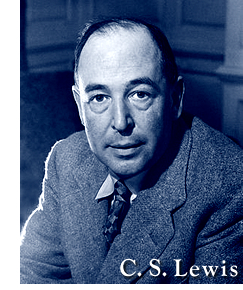
C.S. Lewis Daily – Today’s Reading


If the old fairy-tale ending ‘They lived happily ever after’ is taken to mean ‘They felt for the next fifty years exactly as they felt the day before they were married’, then it says what probably never was nor ever would be true, and would be highly undesirable if it were. Who could bear to live in that excitement for even five years? What would become of your work, your appetite, your sleep, your friendships? But, of course, ceasing to be ‘in love’ need not mean ceasing to love. Love in this second sense—love as distinct from ‘being in love’—is not merely a feeling. It is a deep unity, maintained by the will and deliberately strengthened by habit; reinforced by (in Christian marriages) the grace which both partners ask, and receive, from God. They can have this love for each other even at those moments when they do not like each other; as you love yourself even when you do not like yourself. They can retain this love even when each would easily, if they allowed themselves, be ‘in love’ with someone else. ‘Being in love’ first moved them to promise fidelity: this quieter love enables them to keep the promise. It is on this love that the engine of marriage is run: being in love was the explosion that started it.

From Mere Christianity

Compiled in A Year with C.S. Lewis

Charles Stanley – The Justice and Mercy of the Cross


Romans 3:23-27

The cross of Jesus Christ presents us with a dilemma. If the heavenly Father is good and loving, why would He let His Son endure the agony of crucifixion? From our human perspective, there’s nothing loving in this scene. But by looking beyond the obvious, we’ll see an awesome demonstration of love.

To grasp what took place at the cross, we first need to understand that the Lord is absolutely righteous and just. He always does what’s right and never acts contrary to His nature or His Word. On the other hand, mankind is sinful and deserving of eternal punishment. God couldn’t simply decide to forgive us, because He would then cease to be just—justice requires that a penalty be paid for sin. Either the Lord had to condemn us all to suffer His wrath, or He needed to devise a plan that would satisfy His justice yet allow Him to show mercy.

Before the foundation of the world, God already had a plan in place for His sinless Son to come to earth in human flesh to bear our sins (Revelation 13:8). The Father placed upon Him all our guilt and punishment. Because the Savior’s payment fully satisfied divine justice, sinful man could now be declared righteous. Justice punished sin, and mercy rescued sinners.

No matter who you are or what you’ve done, if you accept Christ’s payment on your behalf, you will be saved. God’s goodness and love are proved by the very act that looked cruel and hateful. This was the sole plan that could save us, and God’s perfect Son was the only one qualified to give His life in our place. What’s more, Jesus did it willingly.

Bible in One Year: Isaiah 54-57

Ravi Zacharias Ministry – Implementing Easter


The dominating time-piece is nothing if not thought-provoking. British inventor John Taylor’s “Chronophage” (literally ‘time eater’ from the Greek chronos and phageo) keeps watch outside Cambridge’s Taylor Library of Corpus Christi College.(1) A foreboding metal grasshopper with an ominous chomping mouth appears to devour each minute with eerie pleasure and constancy. The toll of the hour is marked by the clanging of a chain into a tiny wooden coffin, which then slams shut—”the sound of mortality,” says Taylor.(2) The pendulum also speeds up sporadically, then slows to a near halt, only to race ahead again as if somehow calculating the notion that time sometimes flies, sometimes stands still. The invention, according to Taylor, is meant to challenge our tendency to view time itself as we might view a clock. “Clocks are boring. They just tell the time, and people treat them as boring objects,” he added. “This clock actually interacts with you”—indeed, striking viewers with the idea that time is nothing to take for granted.(3)

The Christian worldview is one that recognizes at the deepest level that something about humanity is not temporal. Easter, in fact, is the celebration that this is not just a suspicion, but a reality. Christians believe in eternal dwellings, a day when tears will be no more, and in one who is preparing a house of rooms and welcome.(4) And yet, we also very much live with the distinct experience of these promises within time. Christ is not merely the one who will be with us in all eternity, the one who will dry our eyes at time’s end. Christians believe he is also alive and among us today, welcoming a kingdom that is both present and approaching. “Remember, I am with you always,” ends one of account of the life of Jesus, “even to the end of the age” (Matthew 28:20). For the Christian, all of time is filled with the hope of resurrection, even as it is filled with Christ himself.

Why then, I wonder, are there moments when time seems so oppressive, the hope of eternity a distant glimmer, the presence of a resurrected Christ beside the daily pendulum an inapplicable promise? If the Christian life is about moving closer and closer to the glory of the resurrected Christ, why is there not more light and less darkness, a more vibrant Church and less grumbling, greater outreach and less greed, followers who look more like Jesus and less like the world around them? The expectation in the life of a Christian is that there will be a dramatic difference, or at least steady progression, of lives transformed by Christ. But instead we often find little difference—or we find the opposite of progression, so that both inside and outside of the church people are left wondering: Where is transformation as all this time marches onward?

John Taylor’s menacing grasshopper is an apt image for such a confession. Time marches on oppressively, unapologetically, while the promise of “being transformed into [Christ’s likeness] from one degree of glory to another” seems to remain a distant mirage.(5) Christians begin to doubt. Skeptics point out the obvious fantasy of faith. *But perhaps something in Taylor’s clock also challenges this fearful view of time and transformation. Time is indeed a linear progression, marching onward in precise increments, but our experience of time is far less like this. We are at times startled by its passing, other times painfully aware of its tedious movement. We interact with time knowing that some minutes are fuller than others, but that time is always more than a linear, monotonous experience.

Similarly, when I think of transformation, I often think of dramatic change: an acorn turned into an oak tree, the apostle Paul changed from zealous tormentor to zealous Christian, Lazarus moved from death to life. And I believe there is indeed something quite like this that takes place in the life of one willing to follow resurrected Christ—a creature who actually stops being one thing in order to become something else. It should not be surprising that around the world we find Christians in the most unlikely places, administering aid, speaking hope, exhibiting this change of which the gospel speaks. For clothed in Christ’s perfect nature, the nature of a person is truly changed. Though we stand before God imperfect and discouraged, it is the Son the Father now sees. And this part of Christian transformation is as dramatic as it is complete, allowing us—and the world—to stand assured of God’s work within.

But this is not to say that God is finished working. To the one who has been united with Christ, the daily indwelling of God is a gift! Within the Christian’s experience of time, the message of the gospel is all the more transformational, the vicariously human Christ is our moral influence daily, and through the Holy Spirit we are being further transformed into his image. This kind of transformation is neither the dramatic change often expected, nor the steady linear progression for which we might hope. Like Paul himself, we can find ourselves doing the things we don’t want to do, falling back into mindsets that need to be renewed, imitating a broken world more than we imitate Christ. Transformation at these times seems far less like Lazarus rising from the grave and more like a would-be butterfly refusing to come out of its cocoon.

But even here, Christ is surely near, the eternal urging the world of souls to see the potential in this very moment: “The intermediate hope—” writes N.T. Wright, “the things that happen in the present time to implement Easter and anticipate the final day—are always surprising because, left to ourselves, we lapse into a kind of collusion with entropy, acquiescing in the general belief that things may be getting worse but that there’s nothing much we can do about them. And we are wrong. Our task in the present… is to live as resurrection people in between Easter and the final day.”(6)

That is to say, Easter is being implemented. Whether we make our bed in the depths, whether we fall repeatedly or seem to be moving backward, God is both near and at work, the reality of the resurrection working its way into every ticking minute. In the experience of time before us is the radical promise of both the intermediate hope and transformation and the gift of looking glory full in the face. By the power of the Spirit, God takes the most wretched of creatures and changes it into the likeness of Christ, the most beautiful creature. Whether time is flying or standing still, for the worst of us, even menacing grasshopper types, this is indeed very good news.

Jill Carattini is managing editor of A Slice of Infinity at Ravi Zacharias International Ministries in Atlanta, Georgia.

(1) Maev Kennedy, “Beware the time-eater: Cambridge University’s Monstrous New Clock,” The Gaurdian, September 18, 2008.

(2) Robert Barr, “Fantastical New Clock Even Tells Time,” MSNBC, September 19, 2008.

(3) Ibid.

(4) Luke 16:9, Revelation 21:4, John 14:2.

(5) 2 Corinthians 3:18.

(6) N.T. Wright, Surprised by Hope (New York: Harper, 2008), 29-30.

Alistair Begg – What Do We Know?


We know that for those who love God all things work together for good. Romans 8:28

Upon some points a believer is absolutely sure. He knows, for instance, that God sits in the center of the vessel when it rocks most. He believes that an invisible hand is always on the world’s tiller, and that wherever providence may drift, God is steering it. That reassuring knowledge prepares him for everything. He looks over the raging waters and sees the spirit of Jesus walking on the water, and he hears a voice saying, “It is I-do not be afraid.” He knows too that God is always wise, and knowing this, he is confident that there can be no accidents, no mistakes and that nothing can occur that ought not to happen. He can say, “If I should lose everything, it is better that I should lose it than keep it if it is God’s will: The worst disaster is the wisest and the kindest thing that I could face if God ordains it.”

“We know that for those who love God all things work together for good.” The Christian does not merely hold this as a theory, but he knows it as a matter of fact. So far everything has worked for good; the poisonous drugs mixed in proper proportions have effected the cure; the sharp cuts of the scalpel have cleaned out the disease and facilitated the healing. Every event as yet has worked out the most divinely blessed results; and so, believing that God rules all, that He governs wisely, that He brings good out of evil, the believer’s heart is assured, and he is learning to meet each trial calmly when it comes. In the spirit of true resignation the believer can pray, “Send me what You will, my God, as long as it comes from You; there never was a poor portion that came from Your table to any of Your children.”

Do not say, my soul, “Where will God find one to relieve my care?”

Remember that Omnipotence has servants everywhere.

His method is sublime and His heart profoundly kind,

God is never too early and never behind!

The Family Bible Reading Plan

  • Judges 19
  • Acts 23

Devotional material is taken from “Morning and Evening,” written by C.H. Spurgeon, revised and updated by Alistair Begg.


Charles Spurgeon – Preach the gospel


“For though I preach the gospel, I have nothing to glory of: for necessity is laid upon me; yea, woe is unto me, if I preach not the gospel!” 1 Corinthians 9:16

Suggested Further Reading: Philippians 1:12-18

There was a young woman under great distress of soul; she came to a very pious Christian man, who said “My dear girl, you must go home and pray.” Well I thought within myself, that is not the Bible way at all. It never says, “Go home and pray.” The poor girl went home; she did pray, and she still continued in distress. Then he said, “You must wait, you must read the Scriptures and study them.” That is not the Bible way; that is not exalting Christ. I find a great many preachers are preaching that kind of doctrine. They tell a poor convinced sinner, “You must go home and pray, and read the Scriptures; you must attend the ministry;” and so on. Works, works, works—instead of “By grace are ye saved through faith.” If a penitent should come and ask me, “What must I do to be saved?” I would say, “Christ must save you—believe on the name of the Lord Jesus Christ.” I would neither direct to prayer, nor reading of the Scriptures, nor attending God’s house; but simply direct to faith, naked faith in God’s gospel. Not that I despise prayer—that must come after faith. Not that I speak a word against the searching of the Scriptures—that is an infallible mark of God’s children. Not that I find fault with attendance on God’s word—God forbid! I love to see people there. But none of these things are the way of salvation. It is nowhere written—“He that attendeth chapel shall be saved;” or, “He that readeth the Bible shall be saved.” Nor do I read—“He that prayeth and is baptised shall be saved;” but, “He that believeth,”—he that has a naked faith in the “Man Christ Jesus,”—in his Godhead, in his manhood, is delivered from sin. To preach that faith alone saves is to preach God’s truth.

For meditation: The good news of the Gospel is not to be confused with our not-so-good advice. To think we are giving good news is not good enough (2 Samuel 4:10).

Sermon no. 34

5 August (1855)

John MacArthur – Languages Without Love


“If I speak with the tongues of men and of angels, but do not have love, I have become a noisy gong or a clanging cymbal” (1 Cor. 13:1).

Love distinguishes true communication from useless chatter and meaningless noises.

Paul begins his discourse on love by stating the futility of languages without love. The Corinthians were enamored with the showy spiritual gifts, apparently to the neglect of those they deemed less spectacular (see 1 Cor. 12:12-31). One of the gifts they prized most highly was tongues, which was the Spirit-given ability to declare God’s truth in a language unknown to the speaker but known to others who heard.

Tongues were a sign to provoke unbelieving Jewish people to consider the gospel (1 Cor. 14:21-22). Its first occurrence was on the Day of Pentecost when the Spirit enabled those assembled in the upper room to proclaim the mighty deeds of God in the native languages of the Jews gathered in Jerusalem at the time (Acts 2:4-11).

The “tongues of angels” Paul mentions in 1 Corinthians 13:1 isn’t the gift of tongues, as some suppose. He was simply using an exaggeration to emphasize his point, saying in effect, “If I had the ability to communicate with angels, it wouldn’t do any good without love.”

In Paul’s day, the worship of Cybele and Dionysus, two pagan gods, incorporated speaking in ecstatic languages accompanied by blaring trumpets, smashing gongs, and clanging cymbals. I believe Paul was drawing from that well-known practice to say that whenever Christians attempt to minister apart from the Spirit and His love, it’s no different than a pagan rite. It may look and sound like the real thing, but it’s meaningless and useless for any spiritual benefit.

You should take advantage of every opportunity to minister your spiritual gifts to others. But as you do, be sure it’s with love, in the energy of the Spirit, and in accordance with God’s Word. Then you’ll have a maximum impact as Christ uses your efforts for His glory.

Suggestions for Prayer

Ask God to convict you whenever you attempt to exercise your spiritual gifts without love.

For Further Study

Read Romans 12:1-21.

  • What does Paul say about spiritual gifts?
  • How are Christians to express brotherly love to one another?


Joyce Meyer – Live with Purpose


Therefore, my beloved brethren, be firm (steadfast), immovable, always abounding in the work of the Lord [always being superior, excelling, doing more than enough in the service of the Lord], knowing and being continually aware that your labor in the Lord is not futile [it is never wasted or to no purpose].- 1 Corinthians 15:58

Life without purpose is vanity. Webster’s definition of purpose is “something set up as an object or end to be attained.” Christians ought to be people with purpose. We are all purposed to seek the kingdom of God, which is His righ¬teousness, peace, and joy in the Holy Spirit (see Ro¬mans 14:17).

Today is an opportunity to willfully and deliberately seek God with the intent to know Him better than we knew Him yesterday. Today we can deliberately move forward with the intent to accomplish good things for the Kingdom.

Campus Crusade for Christ; Bill Bright – To Seek and To Save


“For the Son of man is come to seek and to save that which was lost” (Luke 19:10, KJV).

The Word of God clearly teaches that He wants His children to live supernaturally, especially in the area of living holy lives and bearing much fruit since that is the reason our Lord Jesus Christ came to this world.

Through the years I have prayed that my life and the ministry of Campus Crusade for Christ would be characterized by the supernatural. I have prayed that God would work in and through us in such a mighty way that all who see the results of our efforts would know that God alone was responsible, and give Him all the glory.

Now as I look back – marveling at God’s miraculous working in our behalf – I remember earlier days which were also characterized by praise and glory to God, even though I was not privileged then to speak to millions or even thousands. At one point in our ministry, about the only understanding supportive listener I could find was my wife.

Vonette and I used to live mostly for material pleasures. But soon after our marriage we made a full commitment of our lives to the Lord. Now it is our desire (1) to live holy lives, controlled and empowered by the Holy Spirit (2) to be effective witnesses for Christ, and (3) to help fulfill the Great Commission in our generation to the end that we may continue the ministry which our Lord began as He came to “seek and to save the lost.”

Bible Reading: Luke 19:1-9

TODAY’S ACTION POINT: I determine to bring my priorities in line with those of my Lord and Savior, who came to seek and to save the lost and to encourage others to do the same.

Presidential Prayer Team; H.L.M. – Pass the Ball of Faith


Stephen Curry likes to point people to “the Man who died for our sins on the cross.” Curry was named the National Basketball Association 2015 Most Valuable Player and led the Golden State Warriors to the championship. Yet his eyes are on heavenly prizes. Curry credits his parents for teaching him that studying for school and washing the dishes were more important than basketball. Most of all, they taught God’s Word and modeled their faith at home every day. As a result, Curry was 13 when he accepted Jesus as his Savior.

A faith that dwelt first in your grandmother Lois and your mother Eunice.

II Timothy 1:5

“It was a big decision that my parents couldn’t make for me,” said the superstar point guard. “I’m His humble servant right now and I can’t say enough how important my faith is to who I am and how I play the game.”

In the Bible, it was the influence of Timothy’s mother and grandmother that led him to Jesus Christ. So remember to pass the ball of faith through your words and actions to the children in your life. Pray that America’s leaders also see the importance of being godly examples to this nation’s future generation.

Recommended Reading: Psalm 78:1-8

Greg Laurie – Kept by His Power


I will lift up my eyes to the hills–from whence comes my help? My help comes from the Lord, who made heaven and earth. —Psalm 121:1–2

God wants us to be constantly reassured that He will keep us. We need this reassurance in such an evil and uncertain world because we worry about safety and security for ourselves and our families. And sometimes believers even wonder about their personal salvation. Even mature believers may have times of doubt when they wonder whether they are saved.

We need to remember that even great men of God had moments of doubt. Elijah had his moments of doubt. Even John the Baptist had moments of doubt. According to Jesus, John was the greatest of the Old Testament prophets. Yet after Jesus started His public ministry, John sent a message to Him asking, “Are You the Coming One, or do we look for another?” (Luke 7:19). But Jesus didn’t rebuke John; He reassured him.

In times of doubt, here is what you need to know: God is going to keep you. Psalm 121 says, “My help comes from the Lord, who made heaven and earth. He will not allow your foot to be moved; He who keeps you will not slumber” (verses 2–3).

The Hebrew word used in Psalm 121 for keep means to be watched, to be guarded, to have a hedge around you. It is having a wall around you that is impenetrable. God will keep us, and the Devil cannot scale or penetrate that wall.

We are reminded in 2 Thessalonians 3:3, “But the Lord is faithful, who will establish you and guard you from the evil one.” And 1 Peter 1:5 tells us that we “are kept by the power of God through faith for salvation ready to be revealed in the last time.”

Were it not for this protection of God, none of us would make it. But we are kept by His power.


Max Lucado – Humility


I was on a flight where the attendant couldn’t do anything right. Order soda and you would get juice. Ask for a pillow, she’d bring a blanket. I had just been a guest speaker at an event where people told me how lucky they were that I’d come. I don’t know what was loonier: the fact they said it or that I believed it. I was feeling cocky, and I grumbled. Do you see what I was doing? Don’t look at me like that. Haven’t you felt a bit superior to someone? The clerk at the grocery store. The waiter at the restaurant?

But her question changed all of that. “Mr. Lucado? Aren’t you the one who writes Christian books?” She filled the next few minutes with her pain. When she asked if I would pray for her, I did.  But both God and I knew she was not the only one needing prayer!

From Facing Your Giants

Night Light for Couples – Too Much Honesty


“Let your conversation be always full of grace.” Colossians 4:6

Most marriage counselors emphasize communication as a foundation for a healthy relationship: Nothing should be withheld from the marital partner. There is wisdom in that advice, provided it’s applied with common sense. It may be honest for a man to tell his wife that he hates her fat legs, her varicose veins, or the way she cooks. It’s honest for a woman to dump her anger on her husband and constantly berate him for his shortcomings and failures. But honesty that does not have the best interest of the other person at heart is really a cruel form of selfishness.

Some couples, in their determination to share every thought and opinion, systematically destroy the sweet spark of romance that once drew them together. They’ve lost any sense of mystique in the relationship.

So how does one express intimate feelings while avoiding too much honesty? Paul’s advice to all Christians works especially well for married partners: “Let your conversation be always full of grace.”

Just between us…

  • Am I sometimes so honest with you that my words are hurtful?
  • Do you think there should be exceptions to telling “the truth, the whole truth, and nothing but the truth” in marriage?
  • We know that God honors truthfulness, so how do we apply this to marital communication?
  • In what areas could we use more honesty and in what areas, more grace?

Heavenly Father, we know that truthfulness is Your will for our lives—but please give us the wisdom to know when to speak the truth and when to keep it to ourselves. Amen.

From Night Light For Couples, by Dr. James & Shirley Dobson

Charles Stanley – Waiting in Faith


Psalm 33:18-22

Our culture is not one that teaches patience. Just watch the frustration of drivers behind a car that doesn’t start moving the instant the traffic light turns green. Because of a two-second delay, tempers flare and horns honk. Living in a fast-paced world has programmed us to expect everything immediately, and that includes answers to our prayers.

At times, I have been very impatient and frustrated with the Lord when He hasn’t operated according to my schedule. I’ve even tried to manipulate circumstances so I could present Him with the solution and ask for His blessing. But delayed timing from my perspective is perfect timing from His viewpoint. An omniscient God who created and rules over time can never be late.

Waiting on the Lord requires faith. Just because we can’t see what He is doing does not mean that He is inactive. Our heavenly Father works outside of our visible realm, arranging and orchestrating events to bring about His plan for our lives. His work is like a seed planted deep in a garden—we cannot see the underground process. But just as a budding plant eventually appears, we can trust that in time, the Lord’s ordained outcome will become evident.

The solution to whatever problem you are facing is in God’s hands. Steadfastly cling to the truth of His love for you, His knowledge of all things, and His power over every obstacle. Then you can confidently walk by faith rather than by sight, knowing that on God’s schedule, His good purposes will be fulfilled. In time, your eyes will see proof of His faithfulness.

Bible in One Year: Isaiah 50-53

Our Daily Bread — Web Wisdom


Read: Proverbs 26:1-12

Bible in a Year: Psalms 66-67; Romans 7

A quarrelsome person starts fights as easily as hot embers light charcoal or fire lights wood. —Proverbs 26:21

Scroll to the bottom of many online news sites and you’ll find the “Comments” section where readers can leave their observations. Even the most reputable sites have no shortage of rude rants, uninformed insults, and name-calling.

The book of Proverbs was collected about 3,000 years ago, but its timeless wisdom is as up-to-date as today’s breaking news. Two proverbs in chapter 26 seem at first glance to contradict each other, yet they apply perfectly to social media. “Do not answer a fool according to his folly, lest you also be like him” (v. 4). And then, “Answer a fool according to his folly, lest he be wise in his own eyes” (v. 5).

The balance in those statements is in the “according to”: Don’t answer in the way a fool would answer. But respond so that foolishness is not considered wisdom.

My problem is that the foolishness I encounter is often my own. I have at times posted a sarcastic comment or turned someone else’s statement back on them. God hates it when I treat my fellow human beings with such disrespect, even when they’re also being foolish.

God gives us an amazing range of freedoms. We are free to choose what we will say, and when and how we say it. And we are always free to ask Him for wisdom. —Tim Gustafson

Things to keep in mind: Is what I am saying true, and is it loving? What is my motivation? Will it help anyone? Will this reflect the character of Jesus?Leave your thoughts about this topic on odb.org

Let love be your highest goal.

INSIGHT: The Wisdom Literature of the Old Testament (Job, Psalms, Proverbs, Ecclesiastes, Song of Solomon) is Hebrew poetry that uses a variety of poetic devices. In today’s reading, metaphors and analogies are used. The foolish person is compared to weather that is inappropriate for the season (v. 1), an animal that needs to be constrained (v. 3), a leg that is useless (v. 7), and a sling that is powerless (v. 8). These comparisons warn about the self-destructive nature of foolish choices. Bill Crowder