

But [as for] you, teach what is fitting and becoming to sound (wholesome) doctrine [the character and right living that identify true Christians]. – Titus 2:1
I went to church for years and years and never heard a message about the power my words had on my life. I may have heard something about my thoughts; but if so, it wasn’t enough to make any impact on my life because it did not change my thinking.
I heard about grace and salvation and other good things. But it wasn’t everything I needed to know in order to live in the righteousness, peace, and joy God offers to all who believe (see Romans 14:17).
There are many wonderful churches that teach God’s Word in its entirety; and I encourage you to make sure that wherever you choose to go to church, it is a place where you are learning and growing spiritually. We should not go to church just to fulfill an obligation we may think we have to God. We should go to church to fellowship with other believers in Jesus Christ, to worship God, and to learn how to live the life Jesus died for us to have and enjoy.
Monthly Archives: August 2015

Campus Crusade – Guardian Angels
“For the angel of the Lord guards and rescues all who reverence Him” (Psalm 34:7).
For many years my travels have taken me from continent to continent, to scores of countries each year. I have traveled under all kinds of circumstances, not a few times faced with danger. But always there was peace in my heart that the Lord was with me and I was surrounded by His guardian angels to protect me.
In Pakistan, during a time of great political upheaval, I had finished a series of meetings in Lahore and was taken to the train station. Though I was unaware of what was happening, an angry crowd of thousands was marching on the station to destroy it with cocktail bombs.
The director of the railway line rushed us onto the train, put us in our compartments and told us not to open our doors under any circumstances – unless we knew that the one knocking was a friend. The train ride to Karachi would require more than 24 hours, which was just the time I needed to finish rewriting my book Come Help Change the World.
So I put on my pajamas, got in my berth and began to read and write. It was not until we arrived in Karachi some 28 hours later that I discovered how guardian angels had watched over us and protected us. The train in front of us had been burned when rioting students had lain on the track and refused to move. So the train ran over them and killed them. In retaliation, the mob burned the train and killed the officials.
Now we were the next train and they were prepared to do the same for us. But God miraculously went before us and there were no mishaps. We arrived in Karachi to discover that martial law had been declared and all was peaceful. A Red Cross van took us to the hotel and there God continued to protect us. When the violence subsided we were able to catch a plane out of Karachi for Europe.
Bible Reading: Isaiah 63:7-9
TODAY’S ACTION POINT: Today I will make a special point of expressing my gratitude to God for assigning guardian angels to watch over me, protect and help me in my time of trouble. I will not take for granted the protection that many times in the past I have overlooked, not recognizing God’s miraculous, divine intervention, enabling me to live a supernatural life.

Presidential Prayer Team; H.L.M. – Godly Choices
The movie Jurassic World recently brought in over $511 million in its opening weekend, becoming the highest grossing global film of all time. Yet it is the film’s lead actor, Chris Pratt, who goes against Hollywood’s standards and demonstrates eternal qualities. Pratt values his faith in God and his family more than his fame and wealth. Chris and his wife Anna have been married for six years. When their son Jack was born premature, they spent weeks praying at the baby’s side. “We were scared for a long time. We prayed a lot,” said Pratt. “It restored my faith in God; not that it needed to be restored, but it really defined it.”
When Joseph woke from sleep, he did as the angel of the Lord commanded him: he took his wife.
Matthew 1:24
Another man, Joseph of Nazareth, also lived out his faith through his actions. God’s choice for Jesus’ earthly father was a man of integrity and courage. When God sent an angel to verify Mary‘s story, Joseph willingly obeyed in spite of the public humiliation he would face.
As you seek the Lord for daily decisions, pray and listen carefully to the Holy Spirit. Make choices that honor God. Pray also that America’s leaders will do the same.
Recommended Reading: Proverbs 3:1-10

Greg Laurie – How Sin Spreads
Your glorying is not good. Do you not know that a little leaven leavens the whole lump? —1 Corinthians 5:6
As believers, we are interconnected. The sin of one will affect many. That is why the apostle Paul said the church should never tolerate evil. He said, “And if one member suffers, all the members suffer with it; or if one member is honored, all the members rejoice with it” (1 Corinthians 12:26).
Apparently in the Corinthian church, there was a man who was sleeping his father’s wife (not his biological mother but a woman his father had married). The church was actually boasting about how liberal and tolerant they were. So Paul confronted them, saying, “And you are puffed up, and have not rather mourned, that he who has done this deed might be taken away from among you” (1 Corinthians 5:2).
If an unbeliever who is living an immoral lifestyle comes to our church, we’ll welcome that person. We’ll say, “We love you.” We’ll also say, “Jesus Christ wants to change your life.” We will call him or her to the Lord and to faith.
But if a Christian comes to our church and is living openly in sin, if we find out about it, we will call him or her to repentance. But if that Christian refuses to repent, then he or she will be asked to leave.
Some might think that isn’t very loving. But actually it is very loving, and I’ll tell you why. If believers are living openly in sin, and the church doesn’t do anything about it, it’s sending a message that everything is okay and that we can thumb our noses at God.
Paul said, “Do you not know that a little leaven leavens the whole lump?” (1 Corinthians 5:6). In modern vernacular, a little yeast permeates the whole batch of dough. If sin is tolerated, it will spread and corrupt others.

Max Lucado – The Two-Letter Word “IF”
The prison of pride is filled with self-made people, determined to pull themselves up by their own bootstraps even if they land on their rear ends! To the prideful it doesn’t matter what they did or to whom they did it or where they’ll end up– it only matters that I did it my way. You’ve seen the prisoners. The alcoholic who won’t admit his drinking problem. The woman who refuses to talk to anyone about her fears. Perhaps to see such a person all you have to do is look in the mirror.
The Bible says, “If we confess our sins, He is faithful and just. . .” (1 John 1:9). The biggest word in Scripture just might be that two-letter one, IF. Justification…rationalization…comparison…these are tools of the jailbird. But Jesus says, “Blessed are those who mourn. . .” (Matthew 5:4). You see, true blessedness begins with deep sadness.
From The Applause of Heaven

Night Light for Couples – Camping Companions
“Just as you share in our sufferings, so also you share in our comfort.” 2 Corinthians 1:7
After learning that camping was a common pastime among happy families, Gary Smalley and his wife, Norma, decided to take their own brood into the wild. On a beautiful Kentucky night, the Smalleys gathered around a campfire, sang songs, and roasted hot dogs. By nine o’clock all were pleasantly tired and tucked into their camper beds. Gary thought, I can really see why this draws families together.
Then it struck. Thunder rolled and lightning flashed all around. Rain and wind assaulted the outside, then the inside, of the Smalley camper. The sudden storm turned what had been a relaxing evening into a night of fright.
Did this harrowing turn of events cause Gary and Norma to abandon the outdoors forever? Not at all—they became avid campers. The Smalleys discovered that sharing experiences, both fun and frightful, bonded them in ways they couldn’t have imagined.
Our encouragement to couples is to share each others’ interests and activities. Common endeavors will deepen your relationship and provide priceless family memories—even when storms strike.
Just between us…
How does sharing recreation and other interests build companionship?
(husband) Which of my favorite activities do you enjoy?
(wife) Do you appreciate having me join you in your activities? Which ones, and why?
What new shared activities could bring us closer together?
Lord, thank You for tonight’s encouragement to be friends and companions in many ways. Show us new ways to get the most out of life—together! Amen.
From Night Light For Couples, by Dr. James & Shirley Dobson
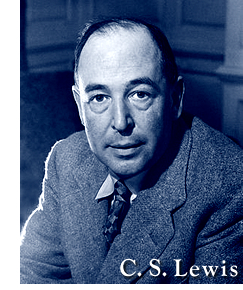
C.S. Lewis Daily – Today’s Reading
The rule for all of us is perfectly simple. Do not waste time bothering whether you ‘love’ your neighbour; act as if you did. As soon as we do this we find one of the great secrets. When you are behaving as if you loved someone, you will presently come to love him. If you injure someone you dislike, you will find yourself disliking him more. If you do him a good turn, you will find yourself disliking him less. There is, indeed, one exception. If you do him a good turn, not to please God and obey the law of charity, but to show him what a fine forgiving chap you are, and to put him in your debt, and then sit down to wait for his ‘gratitude’, you will probably be disappointed. (People are not fools: they have a very quick eye for anything like showing off, or patronage.) But whenever we do good to another self, just because it is a self, made (like us) by God, and desiring its own happiness as we desire ours, we shall have learned to love it a little more or, at least, to dislike it less.
From Mere Christianity
Compiled in A Year with C.S. Lewis

Charles Stanley – Sovereign Over Sin
Isaiah 14:24-27
God is sovereign. This means that He is the supreme authority over everything, including sin and its consequences. Yet He doesn’t cause anyone to sin—to do so would violate His righteous and holy nature. The Lord does, however, allow temptation to enter our lives. And since we have free will and the Holy Spirit, we can decide how to respond and are fully equipped to resist. Thankfully, He retains ultimate control and weaves the consequences of our actions in accordance with His purposes.
Sometimes God permits our sin to run its full course. For instance, when the Israelites refused to turn away from their disobedience, He “gave them over to the stubbornness of their heart, to walk in their own devices” (Psalms 81:12). Without divine protection, the nation succumbed to corrupt influences and ultimately was overrun. The Lord could have sheltered them, but the consequences drove the Israelites into repentance, which was His original plan.
Conversely, God will sometimes put an immediate halt to sin. Such was the case when King Abimelech took Abraham’s wife to himself. The king had been misled by the couple and was not aware that he was about to commit a sin. But the Lord knew of the deception, and He intervened (Genesis 20:1-6).
Of course, the wisest plan is to obey fully so God never has to use either of these tactics. Temptation is inevitable, but sin is not. The Lord’s sovereignty over our life means that any temptation must first pass through His permissive will. In this way, He makes sure His children are never tempted beyond what they can resist (1 Corinthians 10:13).
Bible in One Year: Jeremiah 31-32

Our Daily Bread – Under Siege
Read: Philippians 2:1-11
Bible in a Year: Psalms 100-102; 1 Corinthians 1
Let each of you look out not only for his own interests, but also for the interests of others. —Philippians 2:4
During the Bosnian War (1992-1996), more than 10,000 people—civilians and soldiers—were killed in the city of Sarajevo as gunfire and mortar rounds rained down from the surrounding hills. Steven Galloway’s gripping novel The Cellist of Sarajevo unfolds there, during the longest siege of a capital city in modern warfare. The book follows three fictional characters who must decide if they will become completely self-absorbed in their struggle to survive, or will somehow rise above their numbing circumstances to consider others during a time of great adversity.
From a prison in Rome, Paul wrote to the Christians in Philippi, saying: “Let each of you look out not only for his own interests, but also for the interests of others” (Phil. 2:4). Paul cited Jesus as the great example of a selfless focus on others: “Christ Jesus, who, being in the form of God, . . . made Himself of no reputation . . . humbled Himself and became obedient to the point of death, even the death of the cross” (vv. 5-8). Rather than seeking sympathy from others, Jesus gave all He had to rescue us from the tyranny of sin.
Our continuing challenge as followers of Jesus is to see through His eyes and respond to the needs of others in His strength, even in our own difficult times. —David C. McCasland
Are you going through something hard right now? What can you still do for another?
Embracing God’s love for us is the key to loving others.
INSIGHT: The words that Paul penned to the Philippian church while he was under house arrest are some of the most challenging. There is so much in this short letter that goes against our natural inclinations. From prison, Paul encouraged the Philippian believers to “make his joy complete” (2:2 niv). Paul is joyful while in prison because of his faith in Christ, and he encouraged the believers to add to his joy by looking out for one another and counting others as more important than themselves. Paul then uses Jesus as the example of this kind of selflessness. In taking on humanity, Jesus gave up everything that was rightfully His to come to our rescue. J.R. Hudberg

Ravi Zachrious – Unfolding Narrative
Most of us, if we’re honest, live by the clock. The alarm sounds and we are off, watching the minutes slip by. Time-sensitive deadlines drive our days. We have appointments and meetings, we eat at a certain time, and the day ends by a certain time. Bound to our timepieces, it often seems our every moment is synchronized and controlled.
In contrast to the “objective” measures of time marking seconds, minutes, and hours, there is also a “subjective” experience of time being “fast or slow.” Those of us who are growing older describe our experience of time as passing by more and more quickly. We feel our vacation time as ephemeral, while our work week plods slowly by—and yet both are marked by the same objective measurements of time. How is it that our subjective experience of time is so different from what our watches and clocks objectively mark out for us, second by second, hour by hour?
This question of our subjective experience of time is one that the ancient philosophers and early Christian leaders pondered. Their philosophical and theological musings bequeathed to us many perplexities regarding the human experience of time. Saint Augustine, for example, wrestled with the fleeting character of our human temporal experience. No sooner do we apprehend the present than it has receded into the past. He wrote, “We cannot rightly say what time is, except by reason of its impending state of not-being.”(1)
Regardless of our perceptual and philosophical difficulties with understanding the nature of time, what seems most crucial for our lives is the significance of events that happen in time, moment by moment, hour by hour, and day by day. Seeking to reclaim this emphasis, theologians have tried to understand the nature of time by what takes place in time—a narrative of unfolding events.(2) These theological discussions involve God’s engagement with time. Is God a wholly atemporal being, outside of time and history? Or is God genuinely engaged with time and revealed through an unfolding story of historical disclosure?
The biblical writers give witness to a God who progressively unfolds saving acts within history. The divine plan of salvation that Christians believe culminates in the life and ministry of Jesus Christ is called salvation history. God did not, for example, reveal every aspect of salvation to Abraham or to Moses. Instead, the biblical writers give witness to the God who works within and through the temporal events of history to reveal the plan of redemption. We see this unfolding in God’s commissioning of Moses prior to the Exodus: “I appeared to Abraham, Isaac, and Jacob as God Almighty (El Shaddai) but by my name ‘the Lord (Yahweh)’ I did not make myself known.”(2) Within the long ministry of the prophets, a God is revealed who gradually discloses what will take place. Isaiah presents the God who “proclaims to you new things from this time; even hidden things which you have not known. They are created now, and not long ago: and before today you have not heard them” (Isaiah 48:6-7).
For Christians, God’s decisive revelatory action in time is in the life, death, and resurrection of Jesus Christ. While there are many glimpses, sign-markers, and hints pointing towards a messianic redeemer in the Old Testament, ultimately God chose to enter a particular time as a human being to live life among the time-bound.
The significance of those time-bound events continues into our time, and indeed into eternity. And through the unfolding of time, humans can grow in their understanding of who God is and what God has done through Jesus, the Messiah. Indeed, as Jesus spoke with his disciples, he suggests that there would be more to learn and more to reveal through the work of the Holy Spirit: “I have many more things to say to you, but you cannot bear them now. But when the Spirit of truth comes, he will guide you into all the truth; for he will not speak on his own initiative, but whatever he hears he will speak; and he will disclose to you what is to come” (italics mine; John 16:12-13).
The witness of Scripture suggests that the events of our lives reveal this ongoing work of the Spirit. Sometimes, we apprehend the significance of those events in the present time. Other times, it is only through the lens of hindsight as events recede into times past that we understand God’s action. While time might move slowly for some or quickly for others, while minutes and seconds and hours are filled with appointments, meetings, and all the events that make up our time-bound existence, we would do well to look around to see how the Spirit of God is working through what might appear to be ordinary events in the march of time. Indeed, those who follow Jesus ought never to forget that God entered time to enact the new creation in Christ’s resurrection. As we grow in our understanding of that timeless act, the events of our temporal lives act as sign-markers for eternity. And while we often see the significance of our time-bound events “through a mirror darkly,” the day will come when “all things are subjected to Him…that God may be all in all.”(4)
Margaret Manning Shull is a member of the speaking and writing team at Ravi Zacharias International Ministries in Bellingham, Washington.
(1) Augustine, Confessions, XI, 14.
(2) Colin Gunton, cited in John Polkinghorne, Exploring Reality: The Intertwining of Science and Religion (New Haven: Yale University Press, 2005), 120.
(3) Exodus 6:2-3, Italics mine.
(4) 1 Corinthians 15:28.

Alistair Begg – Foreigners in The Lord’s House
Foreigners have come into the holy places of the Lord’s house. Jeremiah 51:51
In this account the faces of the Lord’s people were covered with shame, for it was a terrible thing for men to intrude upon the Holy Place that was reserved exclusively for the priests. Everywhere around us we see similar cause for sorrow. How many ungodly men are now studying with a view to entering the ministry! What a crying sin is that solemn lie by which our whole population is nominally part of a National Church! How fearful it is that ordinances should be pressed upon the unconverted, and that among the more enlightened churches of our land there should be such laxity of discipline. If the thousands who will read this portion will take this matter before the Lord Jesus today, He will interfere and avert the evil that otherwise will come upon His Church. To adulterate the church is to pollute a well, to pour water upon fire, to sow a fertile field with stones. May we all have grace to maintain in our own proper way the purity of the Church as being an assembly of believers and not a nation, an unsaved community of unconverted men.
Our zeal must, however, begin at home. Let us examine ourselves as to our right to eat at the Lord’s Table. Let us see to it that we are wearing our wedding garment, lest we ourselves should be regarded as foreigners in the Lord’s holy place. Many are called, but few are chosen; the way is narrow, and the gate is strait. O for grace to come to Jesus aright, with the faith of God’s elect. He who smote Uzzah for touching the ark is very jealous of His two ordinances. As a true believer I may approach them freely; as a foreigner I must not touch them in case I die. Heart-searching is the duty of all who are baptized or come to the Lord’s Table. “Search me, O God, and know my heart! Try me and know my thoughts!”1
1) Psalm 139:23
The Family Bible Reading Plan
1 Samuel 10
Romans 8
Devotional material is taken from “Morning and Evening,” written by C.H. Spurgeon, revised and updated by Alistair Begg.

Charles Spurgeon – Making light of Christ
“But they made light of it, and went their ways, one to his farm, another to his merchandise.” Matthew 22:5
Suggested Further Reading: Matthew 13:9-17
It is making light of the gospel and of the whole of God’s glorious things, when men go to hear and yet do not pay attention. How many who frequent churches and chapels to indulge in a comfortable nap! Think what a fearful insult that is to the King of heaven. Would they enter into Her Majesty’s palace, ask an audience, and then go to sleep before her face? And yet the sin of sleeping in Her Majesty’s presence, would not be so great, even though against her laws, as the sin of wilfully slumbering in God’s sanctuary. How many go to our houses of worship who do not sleep, but who sit with vacant stare, listening as they would to a man who could not play a lively tune upon a good instrument. What goes in at one ear goes out at the other. Whatever enters the brain goes out without affecting the heart. Ah, my hearers, you are guilty of making light of God’s gospel, when you sit under a sermon without paying attention to it! Oh! What would lost souls give to hear another sermon! What would yonder dying wretch who is just now nearing the grave, give for another Sabbath! And what will you give, one of these days, when you shall be close to Jordan’s brink, that you might have one more warning, and listen once more to the wooing voice of God’s minister! We make light of the gospel when we hear it, without solemn and awful attention to it.
For meditation: Hear—listen—remember—obey (James 1:25). A sleeping congregation is no more use than a sleeping preacher.
Sermon no. 98
18 August (Preached 17 August 1856)

John MacArthur – Treating Others with Consideration
“[Love] does not act unbecomingly” (1 Cor. 13:5).
Considerate behavior demonstrates godly love and adds credibility to your witness.
When I was a young child, I loved to slurp my soup. I didn’t see any harm in it even though my parents constantly objected. Then one evening I ate with someone who slurped his soup. He was having a great time but I didn’t enjoy my meal very much. Then I realized that proper table manners are one way of showing consideration for others. It says, “I care about you and don’t want to do anything that might disrupt your enjoyment of this meal.”
On a more serious note, I know a couple who got an annulment on the grounds that the husband was rude to his wife. She claimed that his incessant burping proved that he didn’t really love her. The judge ruled in her favor, stating that if the husband truly loved her, he would have been more considerate. That’s a strange story but true, and it illustrates the point that love is not rude.
“Unbecomingly” in 1 Corinthians 13:5 includes any behavior that violates acceptable biblical or social standards. We could paraphrase it, “Love is considerate of others.” That would have been in stark contrast to the inconsiderate behavior of the Corinthians—many of whom were overindulging at their love feasts and getting drunk on the Communion wine (1 Cor. 11:20-22). Some women were overstepping bounds by removing their veils and usurping the role of men in the church (1 Cor. 11:3-16; 14:34-35). Both men and women were corrupting the worship services by trying to outdo one another’s spiritual gifts (1 Cor. 14:26).
Undoubtedly the Corinthians justified their rude behavior—just as we often justify ours. But rudeness betrays a lack of love and is always detrimental to effective ministry. For example, I’ve seen Christians behave so rudely toward non-Christians who smoke that they destroyed any opportunity to tell them about Christ.
Be aware of how you treat others—whether believers or unbelievers. Even the smallest of courtesies can make a profound impression.
Suggestions for Prayer
Ask the Holy Spirit to monitor your behavior and convict you of any loveless actions. As He does, be sure to confess and forsake them.
For Further Study
Read Luke 7:36-50. How did Jesus protect the repentant woman from the Pharisee’s rudeness?
Joyce Meyer – How to Experience Real Change
Therefore we do not become discouraged (utterly spiritless, exhausted, and wearied out through fear). Though our outer man is [progressively] decaying and wasting away, yet our inner self is being [progressively] renewed day after day. – 2 Corinthians 4:16
Change does not come through struggle, human effort without God, frustration, self-hatred, self-rejection, guilt, or works of the flesh. Change in our lives comes as a result of having our minds renewed by the Word of God and by trusting God to work in us according to His will. God, Who began a good work in you, will complete it (see Philippians 1:6).
As we agree with God and really believe that what He says is true, it gradually begins to manifest in us. We begin to think differently, then we begin to talk differently, and finally we begin to act differently. This is a process that develops in stages, and we must always remember that while it is taking place, we can be thankful and have an attitude that says, God is changing me little by little, and I can enjoy myself while He is working.
Prayer of Thanks
Father, thank You for changing me and making me what You want me to be. Thank You for completing the good work You have begun.
Campus Crusade- Subduing the Enemy
“At that time Samuel said to [the Israelites], ‘If you are really serious about wanting to return to the Lord, get rid of your foreign gods and your Ashtaroth idols. Determine to obey only the Lord; then He will rescue you from the Philistines'” (1 Samuel 7:3).
As I was reading and meditating upon the Word of God this morning, the thought struck me forcefully that this passage relates to multitudes of defeated, frustrated Christians today who feel that they have lost contact with God. They are puzzled as to why He has withdrawn His blessing from them, but the reason, in most cases, is very simple.
Throughout the history of Israel, the people alternately obeyed God and disobeyed Him. When they obeyed, He blessed, and when they disobeyed, He disciplined. At this particular time the Lord seemingly had abandoned them. It was because, as Samuel explained, they were worshiping foreign gods and idols. “If you will only obey God,” he counseled, “He will rescue you from the Philistines.”
So they destroyed their idols and worshiped the Lord, and then a miracle happened. Samuel invited all of Israel to come to Mispah and said, “I will pray to the Lord for you.” As they gathered there, the Philistine leaders heard about it and mobilized their army to attack. Of course, the Israelites were terribly frightened, but God spoke with a mighty thunder from heaven, and the Philistines were thrown into terrible confusion. Israel surrounded them, and subdued them, and the Philistines did not invade Israel again for the remainder of Samuel’s life.
Enemies can take many forms, but their intent is always to destroy. What are the Philistines in your life? Lust, pride, jealousy, materialism, financial indebtedness, physical illness, resentments, antagonism, criticism, discrimination? Do you feel that God has forsaken you?
Why not look into the mirror of God’s Word? Ask the Lord to reveal the idols of your life, then turn away from them. Confess your sins and claim God’s victory over those areas of life that are destroying you.
Bible Reading: I Samuel 7:1-12
TODAY’S ACTION POINT: I will carefully examine my life to see if I am harboring any idols that would cause the Spirit of God to be grieved and quenched. I will destroy any that I find, and will confess my sins and appropriate God’s fullness to live a supernatural life for His glory.
Presidential Paryer Team – C.P. True Friends
C.S. Lewis once said true friends face in the same direction, toward common projects, interests and goals. Paul’s letters show that he considered Timothy his son in the Lord (Philippians 2:22). They lived C. S. Lewis’s definition of true friends as they spread the gospel.
The aim of our charge is love that issues from a pure heart and a good conscience and a sincere faith.
I Timothy 1:5
In his first letter to Timothy, Paul established their goal as partners as being a display of love from a pure heart that desires the best for the person to whom they were ministering. Loving with a good conscience meant serving with integrity as a person that could be relied upon to do the right thing. Loving from a sincere faith meant being committed to trusting Jesus and doing God’s will.
Who are the people you serve in your life? Is your aim to love from a pure heart, good conscience and sincere faith? Be a true friend. Next, pray about what’s best for the nation, with a right attitude, while trusting God. Then intercede for the nation’s leaders to be more concerned about the welfare of the citizens of the nation rather than their own selfish ambitions.
Recommended Reading: Hebrews 10:19-25
Greg Laurie – The Problem with Self-Confidence
Pride goes before destruction, and haughtiness before a fall. —Proverbs 16:18
Self-confidence is at the foundation of many sins people commit. But pride goes before a fall. We say, “I can handle this. This isn’t even a problem. I’ll know when to stop.” But it doesn’t work out that way.
That was the problem with the Israelites at Ai (see Joshua 7). They had self-confidence. They said, in effect, “We can handle Ai. It isn’t a problem.”
This is often what will lead to a fall. You think it isn’t going to happen to you. Proverbs 16:18 says, “Pride goes before destruction, and haughtiness before a fall.”
If you know someone who has fallen into sin, don’t be arrogant, because you could have done the same thing. In fact, the Bible tells us, “Dear brothers and sisters, if another believer is overcome by some sin, you who are godly should gently and humbly help that person back onto the right path. And be careful not to fall into the same temptation yourself” (Galatians 6:1).
Imagine being out with a friend who suddenly tripped, fell, and was injured. Would you kick him while he was down? “Idiot! Why didn’t you look?” Or, would you jerk him to his feet and throw him up against a wall? I hope not. No, you would reach down and gently get him back up on his feet again, dusting him off. “Are you okay? Hang on to my shoulder. I’ll help you walk. Do you need to see a doctor? Are you going to be all right?”
You show a little compassion, knowing it could have happened to you. We need to remember that as we’re reaching out to others.
The first thing that led to the Israelites’ defeat at Ai was self-confidence. And the first thing that usually leads to our spiritual defeat is self-confidence.
Max Lucado – Twice Imprisoned
My friend, Anibal was guilty. Period. I met him in Brazil. I also met my friend Daniel who had given Anibal a Bible. And he took me with him to tell Anibal about Jesus. We centered on the cross. We talked about guilt, and forgiveness. His heart was touched as we discussed heaven, a hope no executioner could take from him. But as we discussed conversion, Anibal’s face hardened. He had never backed down before any man, and he wasn’t about to do it now.
“Don’t you want to go to heaven?” I asked. “Sure,” he grunted. But the eyes that met mine weren’t tear-filled— they were the eyes of an angry prisoner. Twice imprisoned. Once because of murder, and once because of stubbornness. Jesus said, Blessed are those who know they’re in trouble and have enough sense to admit it (Matthew 5:5). Anibal didn’t want to…but my prayer is that we will.
From The Applause of Heaven
Night Light for Couples – Noble Character
“A wife of noble character is her husband’s crown, but a disgraceful wife is like decay in his bones.” Proverbs 12:4
A girl named Lucy gained something of a reputation for her deceitful nature. Countless times she persuaded a boy named Charlie Brown to try to kick the football she was holding, and each time she snatched it away just before he could boot it.
In the comic strips or in real life, a deceitful woman is best avoided. Solomon described such a wife as “decay in his bones.” The king must have known many a troublesome woman, for he also declared, “Better to live on a corner of the roof than share a house with a quarrelsome wife” (Proverbs 21:9). The Bible lists many other examples of women who showed disgraceful behavior, including Eve and Lot’s wife (disobedient), Michal (critical), Jezebel (unscrupulous and violent), Job’s wife (foolish),
Herodias (cruel), and Sapphira (greedy).
Temptation will come to even the most spiritual among us, but the wife who holds fast to her noble character will bring glory to God and blessings to her husband and herself.
Just between us…
(wife) If you were asked to describe my character, would the word noble come to mind? Why or why not?
What is noble character, and how can it bring glory to God? (You might consider some examples of noble women in the Bible—Ruth, Abigail, Mary of Bethany, and Mary, the mother of Jesus.)
How can you and I teach noble character to the next generation?
(wife) Dear Father, help me to receive the teaching of Your Word: It’s noble character—not youth, beauty, charm, or wealth—that will make me a priceless crown to my husband. Help me to be that kind of wife in word and deed. Amen.
From Night Light For Couples, by Dr. James & Shirley Dobson
Charles Stanley – God Is in Control
1 Corinthians 13:12
It is 100 percent true that God is good and that He’s in control. These facts, however, do not prevent bad things from happening. Though it’s within the Lord’s power to give everyone a perfect existence, that wouldn’t be in our best interest. Trials and suffering often drive people to the Father. And for those of us who are already His followers, God uses harsh circumstances to mature our faith and conform us to the image of His Son. To be made perfect and pleasing to our Father is indeed beneficial.
In His omniscience and wisdom, God will allow disaster and evil to touch our lives so we can grow from the experience. Growth, whether in compassion, trust, or knowledge, is good. If we could peek behind the scenes of our life, we’d see the Lord sovereignly working toward His ultimate purpose for us.
Romans 8:28 affirms this: “And we know that God causes all things to work together for good to those who love God, to those who are called according to His purpose.” On occasion, we see immediate positive results from trials. But other times, we must wait months or years (or until we reach heaven) to fully understand what God was doing in those difficult circumstances.
Suffering and evil are inevitable parts of a fallen world. But we have assurance that God is in control of the universe, including the tiny corner we occupy. When He permits bad things to happen, we can be sure that He will continue to provide comfort and guidance as He shapes us into the people He wants us to be.
Bible in One Year: Jeremiah 28-30
 DAILY DEVOTIONS, NEWS AND INFORMATION