Charles Stanley – When Our Faith Wavers

James 1:1-8

Faith is the heart of our Christian life. It is the means by which we are saved, receive forgiveness for our sins, enjoy a personal relationship with the Lord, and have the assurance of our salvation. By faith, we experience the peace of God and the power of the Holy Spirit in our lives. The Bible also tells us that praying in confident trust “avails much” (James 5:16 NKJV). Yet our lives and especially our prayers tend to be characterized by doubts and wavering faith.

Our faith wavers when . . .

We apply human thinking to our circumstances. Sometimes God is going to require us to do something with which human reasoning disagrees (Isa. 55:9).

We allow our feelings to overcome our faith. It could be a sense of unworthiness or inadequacy that trips us up. Fear of criticism or failure might cause us to doubt we can do what the Lord asks.

We fail to see God at work in our circumstances. Doubts creep in when we have asked Him to take action but nothing appears to be happening.

We have guilt over sin, past or present. We cannot operate with strong faith when we are under conviction of sin or dwelling on guilt over past wrongdoing.

We listen to the enemy’s lies. Satan is the father of lies, and his objective is to have us reject God’s truth and believe his deception instead.

Faith is defined as “the assurance of things hoped for, the conviction of things not seen” (Heb. 11:1). What is the condition of your faith? Do confidence and conviction describe you?

Bible in One Year: Ezekiel 17-19


Ravi Zacharias Ministry – Where the Light Is Strong


A classic vaudeville routine begins with a pitch-black theater except for a large circle of light coming from a street lamp. In the spotlight, a man is on his knees, crawling with his hands in front of him, carefully probing the lighted circle. After a few moments a policeman walks on stage. Seeing the man on all fours, he poses the obvious question: “Did you lose some­thing?”

“Yes,” the man replies. “I have lost my keys.”

Kindly, the police officer joins the man’s search, and two figures now circle the lighted area on hands and knees. After some time, the officer stops. “Are you absolutely certain this is where you lost your keys? We’ve covered every inch.”

“Why no,” the man replies matter-of-factly, pointing to a darkened corner. “I lost them over there.”

Visibly shaken, the policeman exclaims, “Well, then why in the name of all heaven are we looking for them over here?”

The man responds with equal annoyance: “Isn’t that obvious? The light is better over here!”

The classic comedy enacts a subtle point. It is far easier to limit our examining of life’s missing keys to easy, comfortable places. Like a modern parable, the story registers an illogic common to most. Searching dark and difficult corners—where the keys may have in fact been lost—is far less desirable.

Somewhere between morning radio stations—the first offering a barrage of belittling comments toward a once-popular celebrity, the second offering an open invitation to weigh-in on the latest political scandal—I wondered if the drama didn’t register something more. It is becoming increasingly difficult to avoid the signs that we live in a world of criticism, perhaps particularly in the west. We are encouraged by all facets of the media to examine the flaws of everyone, to search for the scandal in every story, and to pour over everything that divides us, offends us, or otherwise differs from us in any way.

But more than this, we are encouraged to opine and criticize regardless of whether we know anything about the subject or the person whatsoever. The comment section of online news stories invites readers to put their own responses in writing. And comment they do. The long list of critiques offers thoughts on anything from the topic, to the author, to things completely unrelated. For many, it simply offers a lawless trolling ground for inflammatory heckling, like a high school locker room except anonymous and worse. Carrying this one step further, online retailers not only invite anyone to be official reviewers; they also invite anyone to comment on these comments, to vote on whether or not the reviewers themselves need to be critiqued. While I appreciate some of these services, the attitude they endorse seems so pervasive. Everyone is now a critic and an expert deserving of a voice and a platform at once.

And this is where the man in the drama seems unquestionably familiar. How easy is it to search where the light is strong, to examine the faults and scandals of others as if it were the best place to logically spend our time? As the light of the media shines on an individual or the light of shameless gossip draws our attention like searchlights to a grand opening, how easy is it to declare this particular spot the place we will fully scrutinize? How readily do we prefer to be critics of those in the spotlight rather than fumble over our own flaws in the dark?

In the Christian journey, it is helpful to know that Jesus was aware just how tempting is the option of the easier route. “Why do you look at the speck of sawdust in your brother’s eye and pay no attention to the plank in your own?… You hypocrite, first take the plank out of your own eye, and then you will see clearly to remove the speck from your brother’s eye.”(1) The flaws we see in pop-stars, politicians, our culture, or co-workers may seem so startlingly clear to us. The critiques and opinions we can so readily offer about books and public scandal, internal gossip and things about which we actually know little all may seem innocent enough. But might there not be a better place to spend our energy searching? Maybe we are looking where the light is strong, but not where keys are really lost.

An old proverb explains, “The mocker seeks wisdom and finds none, but knowledge comes easily to the discerning.” Perhaps this is true because the mocker spends his time searching the comfortable places of life, the easy targets where light and company will always be found. The difficult, dimly lighted places require much more of us, and often we are left to search on our own. But the discerning know that wisdom comes with the kind of seeking that pulls us mysteriously inward, into places where there is actually something to find, and before a merciful throne that compels transparency. In the shadow of the vicariously human Son of God, many find the strength to walk this darkened path of self-examination. Here, everyone who seeks finds, the lost themselves are discovered, and once dark corners of the soul are changed by the light of Christ.

Jill Carattini is managing editor of Ravi Zacharias International Ministries in Atlanta, Georgia.

(1) Matthew 7:3-4.

Alistair Begg – Divine Guidance


You guide me with your counsel, and afterward you will receive me to glory. Psalm 73:24

The psalmist felt his need of divine guidance. He had just been discovering the foolishness of his own heart, and to prevent himself from being constantly led astray by it, he resolved that God’s counsel should be his guide. A sense of our own folly is a great step toward being wise, when it leads us to rely on the wisdom of the Lord. The blind man leans on his friend’s arm and reaches his home in safety, and likewise we should give ourselves up implicitly to divine guidance, without doubting, assured that even though we cannot see, it is always safe to trust the All-seeing God. “You will” is a blessed expression of confidence. He was sure that the Lord would not neglect the necessary task.

Here is a word for you, believer; rest in it. Be sure that God will be your counselor and friend; He will guide you; He will direct all your ways. In His written Word you have this assurance fulfilled in part, for Holy Scripture is His “counsel” to you. We are happy to have God’s Word as our constant guide! What is the sailor without his compass? And what is the Christian without the Bible? This is the unerring chart, the map in which every shoal is described, and all the channels from the quicksands of destruction to the harbor of salvation mapped and marked by one who knows the way.

O God we bless You, that we may trust You to guide us now, and even to the end! After this guidance through life, the psalmist anticipates a divine reception-“and afterward . . . receive me to glory.” What a thought for you, believer! God Himself will receive you in glory-you! Though you are wandering, erring, straying, still He will bring you safe at last to glory! This is your portion; live on it today, and if perplexities should surround you, go in the strength of this text straight to the throne.

The Family Bible Reading Plan

  • 1 Samuel 25
  • 1 Corinthians 6

Devotional material is taken from “Morning and Evening,” written by C.H. Spurgeon, revised and updated by Alistair Begg.

Charles Spurgeon – Election


“But we are bound to give thanks alway to God for you, brethren beloved of the Lord, because God hath from the beginning chosen you to salvation through sanctification of the Spirit and belief of the truth: Whereunto he called you by our gospel, to the obtaining of the glory of our Lord Jesus Christ.” 2 Thessalonians 2:13,14

Suggested Further Reading: Psalm 33:1-12

Revelation points us to a period long before this world was fashioned, to the days when the morning stars were formed; when, like drops of dew, from the fingers of the morning, stars and constellations fell trickling from the hand of God; when, by his own lips, he launched forth ponderous orbs; when with his own hand he sent comets, like thunderbolts, wandering through the sky, to find one day their proper sphere. We go back to years gone by, when worlds were made and systems fashioned, but we have not even approached the beginning yet. Until we go to the time when all the universe slept in the mind of God as yet unborn, until we enter the eternity where God the Creator lived alone, everything sleeping within him, all creation resting in his mighty gigantic thought, we have not guessed the beginning. We may go back, back, back, ages upon ages. We may go back, if we might use such strange words, whole eternities, and yet never arrive at the beginning. Our wing might be tired, our imagination would die away; if it could outstrip the lightnings flashing in majesty, power, and rapidity, it would soon weary itself before it could get to the beginning. But God from the beginning chose his people. When the unnavigated heavens were yet unfanned by the wing of a single angel; when space was shoreless, or else unborn when universal silence reigned; when neither a voice or whisper shocked the solemnity of silence; when there was no being and no motion, no time, and nothing but God himself alone in his eternity; when without the song of an angel, without the attendance of even the cherubim, long before the living creatures were born, or the wheels of the chariot of Jehovah were fashioned, even then, “in the beginning was the Word,” and in the beginning God’s people were one with the Word, and “in the beginning he chose them into eternal life.” Our election then is eternal.

For meditation: God’s love is from everlasting to everlasting (Psalm 103:17).

Sermon nos. 41-42

1 September (Preached 2 September 1855)

John MacArthur – The Reality of Spiritual Warfare


“Be strong in the Lord, and in the strength of His might. Put on the full armor of God, that you may be able to stand firm against the schemes of the devil. For our struggle is not against flesh and blood, but against the rulers, against the powers, against the world forces of this darkness, against the spiritual forces of wickedness in the heavenly places” (Eph. 6:10-12).

Victory in battle comes when you identify the enemy, resist his attacks, and then take the initiative against him.

Our nation has known many wars, but Vietnam was an especially frustrating campaign. Thick jungle terrain made the enemy hard to find and guerrilla warfare made him hard to fight. Many Vietnamese who peacefully worked the rice paddies by day donned the black garb of the Viet Cong soldier by night and invaded unsuspecting U.S. forces camped nearby. American public opinion was strongly anti-war and morale among our troops was often low.

Spiritual warfare has similar parallels. Subtly and deceitfully, Satan disguises himself as an angel of light and “prowls about like a roaring lion, seeking someone to devour” (1 Pet. 5:8). His emissaries disguise themselves as apostles of Christ and servants of righteousness (2 Cor. 11:13-15). It takes wisdom and discernment to identify them and defend yourself against their attacks.

Most people are defenseless, however, because they scoff at the supernatural and deny the reality of spiritual warfare. They think Satan may be fine for movie plots and book sales, but assume only the superstitious and credulous take him seriously. Unfortunately, many Christians have succumbed to their ridicule and forsaken the battle.

Ephesians 6:10-24 reminds us that spiritual warfare is real and that God has given us all the resources we need— not only to defend ourselves, but also to take the initiative and win the victory over the forces of darkness.

I pray that our studies this month will encourage you in the battle and challenge you to always have on “the full armor of God, that you may be able to stand firm against the schemes of the devil” (Eph. 6:11).

Suggestions for Prayer

Seek discernment and grace to identify the enemy and stand against him courageously.

For Further Study

Read Ephesians 6:10-24. What armor has God supplied to protect you in spiritual warfare?

Joyce Meyer – Enjoying Your Life Begins with a Choice


The thief comes only in order to steal and kill and destroy. I came that they may have and enjoy life, and have it in abundance (to the full, till it overflows). – John 10:10

Although we do not always have the power to change every unpleasant circumstance in our lives, we do have the power to change our outlook. We can look out at life from our inmost being with our hearts filled with positive thoughts and attitudes, or we can allow the events of life to shape how we think and feel. This is a decision only we can make-no one can make it for us!

I firmly believe that the bottom line of what we want from life is to be happy. We want to enjoy it! Sadly, we can waste most of life with the misconception that joy and enjoyment come from our circumstances. The truth is that they come from our attitude toward each circumstance rather than the circumstance itself. Obviously, nobody enjoys a troubling or painful circumstance, but if we look at it in a hopeful, faith-filled way, we can watch God work all things out for our good (see Romans 8:28).

Enjoying life begins with the thoughts you choose to think. Yes, it’s that simple! No matter what is going on in your life today, if you will choose happy, hope-filled thoughts, you will feel happier.

Our thoughts are connected to our feelings, so if we want to feel better, we need to think better. Nothing good comes from thinking sour, critical and negative thoughts, but something good always comes when we think according to God’s plan for our life. God offers each of us an opportunity to have a good life. His promises are for all who will believe! We all believe something, so why not make it something good?

Good thinking begins with a choice. I urge you to make yours today and every day of your life.

Campus Crusade for Christ; Bill Bright – He Gives Us a New Song to Sing


“He has given me a new song to sing, of praise to our God. Now many will hear of the glorious things He did for me, and stand in awe before the Lord, and put their trust in Him” (Psalm 40:3).

Jim was big man on campus, president of his fraternity and an atheist. He ridiculed all those who professed faith in God, especially the Christians in his fraternity house.

I was invited, over his objections, to speak at one of their weekly meetings. A number of fraternity brothers were active in Campus Crusade and insisted that I come even though Jim resented the idea. Yet, upon completion of my message, he was one of the very first to respond and, after further counsel, received Christ. He became one of the most joyful, radiant, contagious, fruitful witnesses for Christ on the entire campus.

He had a new song to sing, a song of praise to God who had liberated him from a life of decadence and deceit. Now his heart fairly burst with joy as he developed a strategy to help reach every key student for Christ on a great university campus.

There is no greater joy in life than that of sharing Christ with others, and there is no greater joy that comes to another than that which comes with the assurance of salvation when one receives Christ into his life.

Would you like to be an instrument of God to cause others to sing praises to Him? Then tell them the glorious things He has done for you and for them, and encourage them to place their trust in Christ.

Bible Reading: Psalm 40:4-8

TODAY’S ACTION POINT: Today I will seek every opportunity to encourage others to receive Christ so that they can join with me in singing a new song of praise to our God, and together we will share the glorious things He does for us when we place our trust in Him.

Presidential Prayer Team; – The Promised Land


God has a promised land for you to take!

I sat across the table from a man in midlife misery. He described his life with words like stuck, rut, and stalled. He’s a Christian. But he can’t tell you the last time he defeated a temptation or experienced an answered prayer. Twenty years into his faith he fights the same battles he was fighting the day he came to Christ. It’s as if the door to spiritual growth has a lock and everyone has the key but him.

Joshua 21:43 says, “So the Lord gave Israel all the land of which He had sworn to give. . .and they took possession of it and dwelt in it.”

The promised land! God’s vision for your life. Yours for the taking. Expect to be challenged. The enemy won’t go down without a fight. But your glory days await you!

From Glory Days

Greg Laurie – In the Fourth Watch


Now in the fourth watch of the night Jesus went to them, walking on the sea. —Matthew 14:25

In the Gospels we find a story about Jesus sending His disciples across the Sea of Galilee. As they went on their way, they hit a huge storm that was so severe, they thought they would drown.

Meanwhile, Jesus had gone up on a mountain to spend some time in prayer. No doubt He could see His disciples, but they couldn’t see Him. And they were thinking it was all over.

Then we read that “in the fourth watch of the night Jesus went to them, walking on the sea” (Matthew 14:25). Why did Jesus go to them in the fourth watch? Why didn’t He come right away, when the storm got bad? Or why didn’t He at least go out to them during the second or third watch? Yet Jesus went to them in the fourth watch—at the very end, effectively—after they had been battling the waves for up to nine hours.

Why do you think Jesus waited so long? I think He wanted them to exhaust their resources and realize there was no way out but through Him. And sometimes life goes that way. Something traumatic happens. Something that seems unbearable happens. We say, “How am I going to get through this? If God doesn’t come through for me, I am dead in the water.”

Actually, that is not such a bad place to be. As a friend of mine named Alan Redpath used to say that when we get to the end of ourselves, we get to the beginning of God.

Have you come to the end of yourself? Maybe, like the disciples, you’re experiencing an epic storm. Maybe you’re facing a crisis or a hardship. And maybe you’re thinking you won’t get through it. I have good news for you: Jesus always shows up.


Max Lucado – The Promised Land


God has a promised land for you to take!

I sat across the table from a man in midlife misery. He described his life with words like stuck, rut, and stalled. He’s a Christian. But he can’t tell you the last time he defeated a temptation or experienced an answered prayer. Twenty years into his faith he fights the same battles he was fighting the day he came to Christ. It’s as if the door to spiritual growth has a lock and everyone has the key but him.

Joshua 21:43 says, “So the Lord gave Israel all the land of which He had sworn to give. . .and they took possession of it and dwelt in it.”

The promised land! God’s vision for your life. Yours for the taking. Expect to be challenged. The enemy won’t go down without a fight. But your glory days await you!

From Glory Days

Night Light for Couples – Old Haunts, New Memories


“Praise the Lord…who satisfies your desires with good things so that your youth is renewed like the eagle’s.” Psalm 103:2, 5

Shirley and I celebrated our wedding anniversary a few years ago by exploring what we called our “old haunts.” We took an entire day together, beginning with a visit to the Farmer’s Market, where we had strolled as young lovers. Then we had a leisurely lunch at a favorite restaurant and talked of things long ago. Afterwards we saw a theater performance at the Pasadena Playhouse, where we had gone on our second date, and later we had cherry pie and coffee at Gwinn’s Restaurant, a favorite hangout for dating couples. We talked about our warm memories and relived the excitement of earlier days. It was a wonderful reprise.

If your marriage feels stagnant, maybe it’s time to experience again the wonderful places and events from your courtship or newlywed days. Re‐create your first date. Walk the same stretch of beach or mountain trail you used to enjoy. Return to the place you got engaged. Visit the church or chapel where you were married. Drive by the house or apartment where you first lived. Sing the old songs. Tell the old stories.

I think you’ll find that the old thrill is still there waiting for you.

Just between us…

  • What were our favorite places to go, or things to do, during our courtship?
  • Which of our dates or outings would you most like to re‐create?
  • How can we make sure we have experiences now that we’ll look back on with fondness?

Lord, thank You so much for the good old days of courtship. Help us to make many new ones in the days ahead. Amen.

From Night Light For Couples, by Dr. James & Shirley Dobson

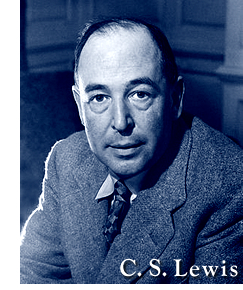
C.S. Lewis Daily – Today’s Reading


TO MARGARET DENEKE: On the death of her husband, Paul Benecke, Lewis’s old history tutor and a Fellow at Magdalen College.

3 October 1944

It will give me great pleasure to come to lunch at one o’clock on Oct. 30th. I will not try to express my sympathy to Miss Benecke when we meet—such things are often merely embarrassing. You, I am sure, will not doubt that she has it.

The gap in College is terrible. Already (and yet it is only a few days) I have twice found myself setting aside a problem ‘to ask Benecke about it’ and then realised with a pang that there is no more of that. His image haunts every room in Magdalen. I hear his imagined voice again and again: so vividly, when crossing Magdalen bridge this morning, that I almost wondered if there were not some objective reality in the experience. I can hardly explain how his funeral affected me. I have heard that service read in that chapel so often for those who have not believed a word of it and who (had they been alive) would have mocked, that my feeling was almost one of relief. Here at last was a dead man not unworthy of the service. In some queer way it enormously strengthened my faith, and before we filed out of chapel I really felt (do not misunderstand me) a kind of joy—a feeling that all was well, just as well as it could be.

I count it among my great good fortunes to have known him. As far as human eyes can judge he was—is—a saint: but oh!, we still needed him here so very badly.

From The Collected Letters of C.S. Lewis, Volume II

Compiled in Yours, Jack