Charles Stanley – How to Bolster Our Faith


Colossians 2:6-7

Once we have made up our minds to obey God, we gather courage around us like a cloak and proceed. That is, until something causes us to hesitate and question the wisdom of this decision. Our faith is wavering. What do we do now?

Ask yourself questions about God. Has God promised to meet all my needs? Has He sent the Holy Spirit to dwell in me, guide me, and equip me to obey Him? Did God promise to be with me at all times? Is anything too hard for Him? Search the Scriptures for answers, and let truth fill your mind.

Meditate on God’s Word. Ask the Lord to help you find Bible verses that relate to what you are facing. Then study the passage and apply its lessons to your personal situation.

Recall the Lord’s past faithfulness. No matter how unsteady our faith, God invites us to draw near so He can strengthen our trust in Him. When He does, accept His invitation and give Him the glory.

Assess the situation. Ask, How critical is this decision, and whom might it affect? Is this one of those forks in the road in which my unbelief could cause me or another person a lifetime of regret?

Choose to trust the Lord. Make the decision to believe God and obey, no matter how you feel.

As you take a step of faith, God will strengthen you through His Spirit and enable you to continue on. Before you know it, your faith will become steady, joy will return, and you will be moving ahead once again.

Bible in One Year: Ezekiel 23-25

Our Daily Bread — The Tyranny of the Perfect


Read: 1 John 1:5-2:2

Bible in a Year: Psalms 140-142; 1 Corinthians 14:1-20

If we claim to be without sin, we deceive ourselves and the truth is not in us. —1 John 1:8

Dr. Brian Goldman obsessively tried to be perfect in treating his patients. But on a nationally broadcast show he admitted to mistakes he had made. He revealed that he had treated a woman in the emergency room and then made the decision to discharge her. Later that day a nurse asked him, “Do you remember that patient you sent home? Well, she’s back.” The patient had been readmitted to the hospital and then died. This devastated him. He tried even harder to be perfect, only to learn the obvious: Perfection is impossible.

As Christians, we may harbor unrealistic expectations of perfection for ourselves. But even if we can somehow manage the appearance of a flawless life, our thoughts and motives are never completely pure.

John the disciple wrote, “If we claim to be without sin, we deceive ourselves and the truth is not in us” (1 John 1:8). The remedy is not to hide our sins and to strive harder, but to step into the light of God’s truth and confess them. “If we walk in the light,” said John, “as he is in the light, we have fellowship with one another, and the blood of Jesus, his Son, purifies us from all sin” (v. 7).

In medicine, Dr. Goldman proposes the idea of a “redefined physician” who—in a culture where we are hesitant to admit our errors—no longer toils under the tyranny of perfection. Such a physician openly shares mistakes and supports colleagues who do the same, with a goal of reducing mistakes.

What if Christians were known not for hiding their sins but for loving and supporting each other with the truth and grace of our God? What if we practiced a risky yet healthy honesty with each other and with the watching world? —Tim Gustafson

Father, it’s so difficult for us to share our faults with each other, but You call us to wholeness as Your people. Empower us by Your Spirit to live courageously in love and honesty.

Honesty with God about our sin brings forgiveness.

INSIGHT: Verse 9 of today’s passage is one of the most well-known verses in the New Testament. It speaks of the faithfulness of God to forgive our sins when we confess them. But it is interesting to note that verses 6-10 begin with the condition “if.” The word if ties results to our actions. John is saying that our condition—walking in darkness or walking in light (vv. 6-7) and being deceived or being forgiven (vv. 8-9)—depends on the choices we make. Although in our standing with God we are eternally forgiven through Christ’s sacrifice, we will miss out on fellowship with God when we neglect confession of sin. J.R. Hudberg

Ravi Zacharias Ministry –  On Faith


The story is told of a newlywed couple whose first argument after marriage was over who should brew the coffee in the morning. The husband said it should be the wife; the wife said it should be the husband. The argument went back and forth, until the wife finally appealed to Scripture, saying that, according to the Bible, it was the man who should brew the coffee. Obviously surprised, the husband challenged her to show him where in the Bible it said that. She picked up her Bible and turned to the book of “HE-brews”!

The book of Hebrews is unique and special in many respects. It also contains one of the greatest chapters on the central Christian theme of faith—chapter 11. The chapter begins with a succinct, but unsurpassable, definition of faith, and then goes on to list a number of Bible heroes and heroines of faith.

While the chapter is devoted exclusively to the single theme of faith, it also underscores the diversity of faith stories and experiences. The faith journeys of the people mentioned were very different, and their faith produced, as it were, very different results. When we look at the way these different Bible characters are juxtaposed, the diversity that emerges is fascinating—and encouraging.

We have Abel who believes, or has faith in, God and becomes the first person to die; then we immediately have Enoch who also believes, and becomes the first person to not die.

We have Noah who receives a message from God regarding the depopulation of the world, and by whose faith the world is condemned and destroyed; then we have Abraham who receives a message from God regarding the repopulation of the world, and by whose faith the world is blessed and redeemed.

Abraham is followed by Isaac. (Isaac is one of those poor fellows of whom the saying “The first half of our life is spoiled by our parents; the second half by our children” is particularly true!) In Genesis 27, Isaac, with all his sincere faith, leans on his two sons, Jacob and Esau, carefully feels and smells them, and then blesses them—and gets it wrong. Esau’s blessing goes to Jacob. His son Jacob, on the other hand, in his old age, simply leans on his staff, and by faith blesses his twelve sons from a distance—and gets it spot on.

Then we find Joseph whom God prepares in the desert but uses in the palace; only to be followed by Moses whom God prepares in the palace but uses in the desert.

The two women who get a mention in the passage are Sarah and Rahab. Sarah, Abraham’s wife, was a barren woman who was desperately trying to conceive. Rahab, on the other hand, was a prostitute who could ill afford to get pregnant; and so, presumably, was desperate to not conceive.

The point that this list of characters seems to be making is this: The personal faith journeys and stories of these people were different. So are ours—and so should they be.

We are often tempted to compare our experiences with that of others. We often feel frustrated that our faith in God is seemingly not as effective as that of others. Other times we are tempted to be somewhat prideful that our lives and ministries appear to be more productive and fruitful compared to others.

But this passage seems to be making the point that such comparisons are inappropriate and misleading. God calls, leads, and uses us in different ways, and we had better realize that.

In reading a passage like this—a “hall of fame” list of spiritual “celebrities”—we must also take care that we do not romanticize Bible heroes and their stories too much, lest we end up with false and faulty notions about them—just like the way we do today when we collude with the media and their celebrities in creating and projecting false images and ideals.

Take, for example, Sarah again. When we look into the actual story in Genesis 16, we initially find a Sarah with an overzealous and misguided faith (or perhaps even a lack of faith) trying to give God a hand in fulfilling His promise made to Abraham. She gets her husband Abraham to lie down with their servant Hagar. And what happens? She messes things up terribly.

Then again Genesis 18, when God reminds her of his promise, she blurts out laughing because she was almost ninety years old. What we find is that the “real” Sarah is not exactly the kind of person we would normally associate with great faith. But here, she and her faith get a mention.

The passage thus seems to be making another point: The lives of these heroes do not necessarily bear witness to their “greatness” or even the “greatness” of their faith. Some of them were undoubtedly towering personalities with truly great faith who played key roles in the Bible. For the most part, however, they were really ordinary people who, in their feeble and erring ways, by simply believing in the promises of the true and living God, and by aligning their lives accordingly, as best as they knew how, were graciously caught up in a story much bigger than they ever dreamed or imagined: the story of God’s redemption of the world. History, as they say, is HIStory—God’s story.

That is why in Hebrews 12 (which is, in a sense, the application of Hebrews 11), the writer begins by telling us to fix our eyes, not on these great men and women of faith, but on God himself.

And how do we do that? We do that by fixing our eyes on the radiance of God’s glory and the exact representation of God’s nature—even Jesus himself, the author and perfecter of our faith. He is the only one who perfectly demonstrates what true faith is, and his is the only faith according to which we may ultimately pattern our own.

As we fix our eyes on him and live our lives of faith in our ever so feeble and erring ways, we, with our own little faith stories, also get graciously caught up in God’s larger story. And I suppose we can, every now and again, fancy ourselves with the thought that, if the Bible were being written today, perhaps even you and I might stand a chance of getting a mention.

Kethoser (Aniu) Kevichusa is a member of the speaking team at Ravi Zacharias International Ministries in Nagaland, India.

 

Alistair Begg – True Love For Christ


You whom my soul loves. Song of Songs 1:7

It is good to be able, without any “if” or “but,” to say of the Lord Jesus, “You whom my soul loves.” Many can only say of Jesus that they hope they love Him; they trust they love Him; but only a poor and shallow experience will be content to stay here. No one ought to give any rest to his spirit until he feels quite sure about a matter of such vital importance. We should not be satisfied with a superficial hope that Jesus loves us and with a bare trust that we love Him. The old saints did not generally speak with “buts” and “ifs” and “hopes” and “trusts,” but they spoke positively and plainly. “I know whom I have believed,”1 said Paul. “I know that my Redeemer lives,”2 said Job. Get definite knowledge of your love for Jesus, and do not be satisfied until you can speak of your interest in Him as a reality-a reality that you have made sure of by receiving the witness of the Holy Spirit and His seal upon your soul by faith.

True love for Christ is in every case the Holy Spirit’s work and must be accomplished in the heart by Him. He is the efficient cause of it; but the logical reason why we love Jesus lies in Himself. Why do we love Jesus? Because He first loved us. Why do we love Jesus? Because He gave Himself for us. We have life through His death; we have peace through His blood. Though He was rich, yet for our sakes He became poor. Why do we love Jesus? Because of the excellency of His person. We are filled with a sense of His beauty, an admiration of His graces, a consciousness of His infinite perfection. His greatness, goodness, and loveliness, in one resplendent ray, combine to enchant the soul till it is so delighted that it exclaims, yes, He is “altogether lovely.”3 This is a blessed love that binds the heart with chains softer than silk, and yet stronger than steel!

1) 2 Timothy 1:12

2) Job 19:25

3) Song of Song 5:15, KJV

The Family Bible Reading Plan

  • 1 Samuel 27
  • 1 Corinthians 8

Devotional material is taken from “Morning and Evening,” written by C.H. Spurgeon, revised and updated by Alistair Begg.

Charles Spurgeon – Heaven and hell


“And I say unto you, That many shall come from the east and west, and shall sit down with Abraham, and Isaac, and Jacob, in the kingdom of heaven. But the children of the kingdom shall be cast out into outer darkness: there shall be weeping and gnashing of teeth.” Matthew 8:11-12

Suggested Further Reading: Isaiah 46:8-13

“I will,” says man, and he never performs; “I shall,” says he, and he breaks his promise. But it is never so with God’s “shalls.” If he says, “shall,” it shall be; when he says, “will,” it will be. Now he has said here, “many shall come.” The devil says, “they shall not come;” but “they shall come.” Their sins say, “you can’t come;” God says, you “shall come.” You, yourselves, say, “we won’t come;” God says, “you shall come.” Yes! There are some who are laughing at salvation, who scoff at Christ, and mock at the gospel; but I tell you some of you shall come yet. “What!” you say, “can God make me become a Christian?” I tell you yes, from here rests the power of the gospel. It does not ask your consent; but it gets it. It does not say, will you have it, but it makes you willing in the day of God’s power. Not against your will, but it makes you willing. It shows you its value, and then you fall in love with it, and immediately you run after it and have it. Many people have said, “we will not have anything to do with religion,” yet they have been converted. I have heard of a man who once went to chapel to hear the singing, and as soon as the minister began to preach, he put his fingers in his ears and would not listen. But by and by some tiny insect settled on his face, so that he was obliged to take one finger out of his ear to brush it away. Just then the minister said, “he that hath ears to hear, let him hear.” The man listened; and God met with him at that moment to his soul’s conversion.

For meditation: When God speaks he means it—every single word (Psalm 119:160; Proverbs 30:5). Does this fact strike you when you read or hear his word?

Sermon nos. 39-40

3 September (Preached 4 September 1855)


John MacArthur – Your Resources in Christ


“Be strong in the Lord, and in the strength of His might. Put on the full armor of God, that you may be able to stand firm against the schemes of the devil” (Eph. 6:10-11).

In Christ you have every resource necessary for spiritual victory.

Satan opposes God and wants to prevent believers from glorifying Him. One way he does that is by convincing them that he is either so formidable they could never defeat him, or so weak they can fight him on their own strength.

Second Corinthians 10:4 says, “The weapons of our warfare are not of the flesh, but divinely powerful for the destruction of fortresses.” Human resources alone can never defeat a spiritual enemy, but divine resources can. That’s why it’s crucial to understand the resources you have in Christ that insure spiritual victory.

In Ephesians 1:3 Paul says you have received all the blessings of heaven through Christ. That includes being forgiven and redeemed (vv. 6-7), and receiving knowledge, understanding, and wisdom (vv. 17-18). Within you resides the Holy Spirit (v. 13), who strengthens you and accomplishes more than you can ask or think (3:16, 20).

Believers represent the awesome power of God in this world—the same power that raised Christ from the dead, seated Him at the right hand of the Father, and subjected all things under His feet (Eph. 1:19-22). He is the Sovereign Lord against whom no one can successfully stand. That’s why Paul exhorted us to “be strong in the Lord, and in the strength of His might” (Eph. 6:10, emphasis added). We find this strength by putting on the armor He has supplied: truth, righteousness, peace, faith, salvation, the Word, and prayer. Then, no matter what direction the enemy approaches from, or how subtle his attacks may be, we’ll be able to stand firm.

Satan’s attacks are complex and subtle. His ways of working in this world are cunning and deceitful. Since it’s impossible to analyze and anticipate his every offense, focus on strengthening your defenses by understanding your spiritual resources and using them each day.

Suggestions for Prayer

  • Ask God to increase your understanding of spiritual warfare.
  • Seek wisdom in applying your resources in the most effective ways.
  • When you face spiritual battles, confide in a Christian friend who will pray with you and encourage you.

For Further Study

According to Matthew 4:1-11, how did Jesus deal with Satan’s attacks?

Joyce Meyer – All People Are Worthy of Respect


And Peter opened his mouth and said: Most certainly and thoroughly I now perceive and understand that God shows no partiality and is no respecter of persons.- Acts 10:34

The Bible says in several places that God is not a respecter of persons (see Acts 10:34, Romans 2:11, Ephesians 6:9). He does not treat some people better than others because of the way they dress, their levels of income, the positions they hold, or who they know. He not only treats everyone the same, it seems He goes out of His way to treat those who are hurting especially well.

The apostle Peter said this:

Practice hospitality to one another (those of the household of faith) [Be hospitable, be a lover of strangers, with brotherly affection for the unknown guests, the foreigners, the poor, and all others who come your way who are of Christ’s body]. And [in each instance] do it ungrudgingly (cordially and graciously, without complaining but as representing Him). (1 Peter 4:9)

Before you rush past this part, take an inventory of how friendly you are with people you don’t know and especially those who are entirely different from you. Some people are just naturally friendly and outgoing in temperament, but those of us who don’t seem to have the “friendly gene” need to make a decision to be friendly because the Bible says to do it.

The apostle James admonished the church not to pay special attention to people who wore splendid clothes to the synagogue or to give them preferable seats when they came in. He said if people acted in these ways and wanted special treatment, they had wrong motives (see James 2:1–4). In other words, we are to treat all people as being worthy of respect.

Jesus put an end to distinction between people and said we are all one in Him (see Galatians 3:28). We simply need to see valuable people— not rich or poor, highly educated or uneducated, not the labels in their clothes, hairstyles, the cars they drive, their professions or titles—just people for whom Jesus died.

Trust in Him God knew what He was doing when He sent His Son Jesus to die for all of us. If He was willing to do that, you can trust that He wants you to treat each person for whom He died with equal respect.

Campus Crusade for Christ; Bill Bright – Not by the Law


“Now do you see it? No one can ever be made right in God’s sight by doing what the law commands. For the more we know of God’s laws, the clearer it becomes that we aren’t obeying them: His laws serve only to make us see that we are sinners. But now God has shown us a different way to heaven – not by ‘being good enough’ and trying to keep His laws, but by a new way (though not new, really, for the Scriptures told about it long ago). Now God says He will accept and acquit us – declare us ‘not guilty’ – if we trust Jesus Christ to take away our sins. And we can all be saved in this same way, by coming to Christ, no matter who we are or what we have been like. Yes, all have sinned; all fall short of God’s glorious ideal; yet now God declares us ‘not guilty’ of offending Him if we trust in Jesus Christ, who in His kindness freely takes away our sins” (Romans 3:20-24).

One of my greatest concerns through the years, especially for those who are involved in Christian ministry around the world, has been the problem of legalism. In my opinion, legalism is the greatest heresy of Christianity. The reason legalism is so dangerous is that it is extremely subtle in its appeal. It is attractive even to the most sincere Christians, who are genuinely seeking to please God by determining to be “good enough” and to “earn God’s favor” through the good works of their self-effort.

How often there has been a tendency to forget “the just shall live by faith,” and “without faith it is impossible to please God.” There is a strong tendency to work hard in the flesh in order to please God. But if we trust Jesus Christ to take away such sins in our lives, He is faithful to do so, as He promised.

Bible Reading: Romans 3:25-31

TODAY’S ACTION POINT: Today I will remind myself often that the law is merely a way to show me that I am a sinner. By faith, I will trust Christ and accept His grace and forgiveness. By faith, I will draw upon the mighty resources of God to live the supernatural life, which is my heritage in Christ.

Presidential Prayer Team; C.H. – Humble Confidence


“Oh, Lord, it’s hard to be humble,” said an old song by Mac Davis, “when you’re perfect in every way.” Humility is a character trait for which not many pray. Who wants to be humble? But the Bible tells us God gives His favor to those who live in humility (Proverbs 3:34).

I turned my face to the Lord God, seeking him by prayer…with fasting and sackcloth and ashes.

Daniel 9:3

When Daniel wanted to hear from the Lord, today’s passage says he put on ashes and a sackcloth and fasted. In biblical times, when people wanted to show repentance, they dressed in rough, unsightly clothes, threw ashes on themselves and withheld from eating. It was a way to say, “God. I am nothing without you. Please hear my prayer!”

When you are desperate for the Lord, you don’t sit in a lounge chair, put your feet up, drink a latte and say, “Hear me, O God!” If you want mountain-moving prayers, you get on your face before the Lord. Lower yourself and admit your helplessness to the Creator of the Universe. Then pray with humble confidence for your national leaders and all Americans to be humble before the One True King and awe in His holy presence.

Recommended Reading: II Kings 22:8-20

Greg Laurie – Time to Wake Up


And do this, knowing the time, that now it is high time to awake out of sleep; for now our salvation is nearer than when we first believed.—Romans 13:12

Have you ever had someone call you very late at night or very early in the morning? The voice on the other end asks, “Did I wake you?”

And what do we usually say? Most of the time we say no. For some reason, we always want to deny the fact that we’re sleeping.

Writing about the imminent return of Christ, the apostle Paul said, “And do this, knowing the time, that now it is high time to awake out of sleep; for now our salvation is nearer than when we first believed. The night is far spent, the day is at hand. Therefore let us cast off the works of darkness, and let us put on the armor of light” (Romans 13:11–12).

The J. B. Phillips paraphrase states it this way: “Why all this stress on behaviour? Because, as I think you have realised, the present time is of the highest importance—it is time to wake up to reality. Every day brings God’s salvation nearer.”

Paul wasn’t addressing his words to nonbelievers. He was writing to Christians. He was addressing his remarks to genuine believers whose spiritual lethargy and laziness made them appear and act as though they had no spiritual life.

Maybe his words have more relevance for people who have been walking with the Lord for a while. When you’re a new Christian, you’re full of energy, not unlike a young person. You want to go out and do things for God.

But when you get older, you want to take a nap. And I think sometimes that believers who have known the Lord for a while may be in more danger of falling asleep than those who are young in the faith.

Believers need to wake up. The coming of the Lord is near.


Max Lucado – Closing the Gap


Nearly 9 out of 10 believers say they are saved, yes. But empowered? No. Like the children of Israel, they are out of Egypt but not yet possessing the Promised Land. That’s about 2 billion people who call themselves Christians chugging along on a fraction of their horsepower.

What would happen if they got a tune-up? How would the world be different if 2 billion people came out of the wilderness? How many marriages would be saved? How many wars would be prevented? If every Christian began to live the Promised Land life, how would the world be different? With God’s help you can close the gap between the person you are and the person you want to be, indeed, the person God made you to be. The Bible says you can live from glory to glory. You just need to possess the land!

From Glory Days

Night Light for Couples – Just the Two of Us


“Take me away with you—let us hurry!” Song of Songs 1:4

When Jim and I were dating, I was pleased to discover his creative, romantic side. Little things he did, such as sending me a love note hidden in a Coke bottle, made me feel special. I treasured those romantic moments from our early days together.

After we were married, we were extremely busy—Jim was finishing graduate training and I was teaching school. But we were still able to set aside an occasional weekend for just the two of us. We would wander through department stores, holding hands, laughing, and talking. We loved to window‐shop for furniture and dream about how we hoped to decorate our house of the future. We would enjoy a light breakfast and then plan a candlelit dinner somewhere for the evening.

Life became even more hectic in the coming years, as God blessed our efforts in His service. We came to a point where we desperately needed some time alone. We arranged for my mother to keep the kids, and we drove six hours north to a winter wonderland called Mammoth, California. That weekend turned out to be a highlight of our marriage. I felt like a college girl again. We talked along the way and stopped to eat whenever it suited our fancy. The next morning we donned our ski clothes and headed for a wonderful restaurant, The Swiss Café. Hilda, the bubbly Swedish lady who owned the restaurant, called me “Shoooolie.”

Our conversation at the breakfast table took us back into each other’s worlds. Jim’s eyes never looked bluer, and the love that’s always there between us, steady and committed, surged to an emotional peak.

Driving to the ski lodge was equally exhilarating. The roads looked like a Christmas card. The giant evergreens appeared majestic in their white fur coats. I knew it was going to be a great day for skiing. Once on the mountain, we swished back and forth across the slopes like two adolescents.

We were wonderfully exhausted driving back to the condo. Jim prepared a cozy fire in the fireplace while I made our favorite meal of fried burritos. We ate dinner by the firelight, discussing our day and an endless variety of topics. After the dinner dishes were cleaned up, we pulled the pillows off the couch, chose some of our favorite records, and put them on the stereo. We relaxed in front of the fire and talked for hours. We also agreed to try to repeat our private rendezvous at least once a year. The memories of that weekend motivated me for many days to be the wife and mother I needed to be.

Is it time for you to take a similar romantic trip? Even if finances are tight, just being together can rekindle “that lovin’ feeling.” All that is needed is a little effort and creative flair. Talk with your mate; ask him or her what would bring new interest and excitement to your marriage. Then schedule at least two “getaway” activities a month when you can be alone together. If you keep the fire of your relationship well tended with romance, you’ll enjoy its warmth throughout your marriage.

– Shirley M Dobson

From Night Light For Couples, by Dr. James & Shirley Dobson

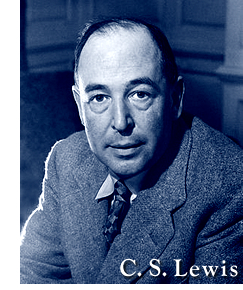
C.S. Lewis Daily – Today’s Reading


On death

On the one hand Death is the triumph of Satan, the punishment of the Fall, and the last enemy. Christ shed tears at the grave of Lazarus and sweated blood in Gethsemane: the Life of Lives that was in Him detested this penal obscenity not less than we do, but more. On the other hand, only he who loses his life will save it. We are baptised into the death of Christ, and it is the remedy for the Fall. Death is, in fact, what some modern people call “ambivalent.” It is Satan’s great weapon and also God’s great weapon: it is holy and unholy; our supreme disgrace and our only hope; the thing Christ came to conquer and the means by which He conquered.

Satan produced human Death. But when God created Man He gave him such a constitution that, if the highest part of it rebelled against Himself, it would be bound to lose control over the lower parts: i.e., in the long run to suffer Death. This provision may be regarded equally as a punitive sentence (“In the day ye eat of that fruit ye shall die”), as a mercy, and as a safety device. It is punishment because Death—that Death of which Martha says to Christ, “But . . . Sir . . . it’ll smell”—is horror and ignominy. (“I am not so much afraid of death as ashamed of it,” said Sir Thomas Browne.) It is mercy because by willing and humble surrender to it Man undoes his act of rebellion and makes even this depraved and monstrous mode of Death an instance of that higher and mystical Death which is eternally good and a necessary ingredient in the highest life. “The readiness is all”—not, of course, the merely heroic readiness but that of humility and self-renunciation. Our enemy, so welcomed, becomes our servant: bodily Death, the monster, becomes blessed spiritual Death to self, if the spirit so wills—or rather if it allows the Spirit of the willingly dying God so to will in it. It is a safety device because, once Man has fallen, natural immortality would be the one utterly hopeless destiny for him. Aided to the surrender that he must make by no external necessity of Death, free (if you call it freedom) to rivet faster and faster about himself through unending centuries the chains of his own pride and lust and of the nightmare civilisations which these build up in ever-increasing power and complication, he would progress from being merely a fallen man to being a fiend, possibly beyond all modes of redemption. This danger was averted. The sentence that those who ate of the forbidden fruit would be driven away from the Tree of Life was implicit in the composite nature with which Man was created. But to convert this penal death into the means of eternal life—to add to its negative and preventive function a positive and saving function—it was further necessary that death should be accepted. Humanity must embrace death freely, submit to it with total humility, drink it to the dregs, and so convert it into that mystical death which is the secret of life. But only a Man who did not need to have been a Man at all unless He had chosen, only one who served in our sad regiment as a volunteer, yet also one who was perfectly a Man, could perform this perfect dying; and thus (which way you put it is unimportant) either defeat Death or redeem it. He tasted death on behalf of all others. He is the representative “Die-er” of the universe: and for that very reason the Resurrection and the Life. Or conversely, because He truly lives, He truly dies, for that is the very pattern of reality. Because the higher can descend into the lower He who from all eternity has been incessantly plunging Himself in the blessed death of self-surrender to the Father can also most fully descend into the horrible and (for us) involuntary death of the body. Because Vicariousness is the very idiom of the reality He has created, His death can become ours. The whole Miracle, far from denying what we already know of reality, writes the comment which makes that crabbed text plain: or rather, proves itself to be the text on which Nature was only the commentary. In science we have been reading only the notes to a poem; in Christianity we find the poem itself.

From Miracles

Compiled in Words to Live By