Charles Stanley – The Purpose of Our Trials


1 Peter 4:12

Some believers like to portray their lives as ideal and carefree. But in reality, being a Christian isn’t always easy. In fact, sometimes we’ll experience trials that truly test our faith and ability to trust in God.

In today’s passage, Peter refers to times of testing as “fiery ordeals.” He says we shouldn’t be surprised when adversity comes our way. It’s important to remember that God has a purpose for our trials and will see us through each step of the way. But what purpose does God have for the hardships we face?

First, the heavenly Father will sometimes use painful experiences to cleanse and purify His children’s lives. Trials drive us to the Lord. Then, as we begin to focus on Him, we’re increasingly able to see things from His perspective and often become more aware of our sin.

Second, the Lord at times allows difficulty in our lives as a way of testing us—He might be trying our faith, endurance, or devotion to Him. He uses such experiences to reveal something about our spiritual development and to strengthen our faith.

Third, God uses suffering to demonstrate His power to sustain us. When He brings us through difficult times, He glorifies Himself. In turn, this encourages others when they experience trials, because they have witnessed God’s sustaining power in our lives.

Ultimately, hardships strengthen our testimony. In the midst of our struggles, we might feel overwhelmed. But once the storm has passed, we can often look back and see the Lord’s providential hand carrying us through.

Bible in One Year: Ezekiel 43-45

Our Daily Bread — Holding Me Up


Read: Psalm 34:1-7

Bible in a Year: Proverbs 8-9; 2 Corinthians 3

I am the Lord your God who takes hold of your right hand and says to you, Do not fear; I will help you. —Isaiah 41:13

After I no longer went on family road trips with my parents, it became a rare occasion to visit my grandparents who lived hundreds of miles away from us. So one year, I decided to fly to visit them in the small town of Land O’Lakes, Wisconsin, for a long weekend. As we drove to the airport for my return flight, Grandma, who had never flown, began to express her fears to me: “That was such a small plane you flew on . . . . There’s nothing really holding you up there, is there? . . . I would be so afraid to go up that high.”

By the time I boarded the small aircraft, I was as fearful as the first time I had flown. What exactly is holding up this plane, anyway?

Irrational fears, or even legitimate ones, don’t need to terrify us. David lived as a fugitive, afraid of King Saul who relentlessly pursued him because he was jealous of David’s popularity with the people. David found true solace and comfort only in his relationship with God. In Psalm 34 he wrote: “I sought the LORD, and he answered me; he delivered me from all my fears” (v. 4).

Our Father in heaven is all-wise and all-loving. When fear starts to overwhelm us, we need to stop and remember that He is our God and He will always hold us up. —Cindy Hess Kasper

My fears sometimes overwhelm me, Father. Yet I know that You are here with me. May Your perfect love cast out my fear and still my troubled heart!

When we believe that God is good, we can learn to release our fears.

INSIGHT: The superscription to Psalm 34 gives the occasion for David writing this song of deliverance. While a fugitive from the jealous King Saul, David foolishly took refuge in the Philistine territory of Gath (1 Sam. 21:10-15). This was a dangerous thing to do because Gath was the hometown of Goliath (17:23). When the Philistines realized that David was the Jew who had slain their champion Goliath, they captured him (21:11,13). Aware that his life was now in danger, David feigned insanity and the ploy succeeded for he was released and made his escape. In response to God’s deliverance, David wrote, “I sought the Lord, and he answered me; he delivered me from all my fears. 5 Those who look to him are radiant; their faces are never covered with shame. 6 This poor man called, and the Lord heard him; he saved him out of all his troubles. 7 The angel of the Lord encamps around those who fear him, and he delivers them.

Ravi Zacharias Ministry – Giving and Receiving


At an open lecture in a leading software company, I made the comment: “Love is seeking the highest best of the other person; it is not about your own interests.” An employee caught up with me at the end and inquired: “Is that kind of love possible?” I gave her an illustration of a mother who takes care of an ailing child—sacrificing her own comforts and well-being to ensure that the child is comfortable. This young lady thought for a moment and quipped: “Perhaps the mother does it because it is her own child.” She was actually suggesting that the reason for her selflessness is self-centeredness! A few years ago, a leading magazine in India carried a cover page article titled, “Twenty-five ways to be happy” written by a well-known columnist. Her very first point was similar: “Be selfish.”

Khaled Hosseini, award-winning author of The Kite Runner, presents a darkly selfish story about a man who found a magic cup and discovered that if he wept into the cup, his tears turned into pearls. But even though he had always been poor, he was a happy man and hardly shed a tear. So he found ways to make himself sad so that his tears could make him rich. As the pearls heaped up, so did his greed grow. The story ended with the man sitting on a mountain of pearls, knife in hand, weeping helplessly into the cup with his beloved wife’s slain body in his arms.

On the contrary, it is heartening to read of many leading billionaires in the world who are setting a remarkable model on giving. Warren Buffett and Bill and Melinda Gates unveiled the largest philanthropic drive ever. They started a campaign to get the richest men and women in the world to give away fifty percent of the wealth to charity during their lifetime or after their death. Buffett has pledged to give away an unbelievable ninety-nine percent of his wealth.

With a similar altruism, the heroes and heroines of the terrorist attack at the Taj hotel in Mumbai were its employees. Putting their lives on the line, these men and women braved the attack, and although they knew where the exit points were in the hotel, they stayed back to rescue as many guests as possible. In the process, eleven of them paid with their lives. No wonder Professor Rohit Deshpande at Harvard Business School has made this example a case study on customer-centric leadership

It appears that one camp seeks to be at the giving side and another prefers to be stay put at the receiving end.

The Bible says, “Greater love has no man (or woman) than that he (or she) lay down their life for their friends.” Jesus died on the cross in a supreme example of love for his friends, even friends who turned away from him, and ‘friends’ who had no awareness of what he was doing. He commanded his disciples to love their enemies and at a climactic moment near death, looked at his tormentors who crucified him and prayed; “Father forgive them.”

While we may all be guilty of self-centeredness, Jesus can make a change in our lives. Opening our hearts, he pours his love into our lives.(1) Jesus gave himself up for you and me and the best response we could exhibit is to give back our lives to him in gratitude, for it is far more blessed to give than to receive.

Neil Vimalkumar Boniface is a member of the speaking and writing team at Ravi Zacharias International Ministries in Chennai, India.

(1) See Romans 5:1-5.

Alistair Begg – Communion with God on the Mountain


And he went up on the mountains and called to him those whom he desired, and they came to him. Mark 3:13

Here was sovereignty. Impatient spirits may fret and fume because they are not called to the highest places in ministry; but, reader, learn to rejoice that Jesus calls those He desires. If He leaves me as a doorkeeper in His house, I will cheerfully bless Him for His grace in allowing me to do anything in His service. The call of Christ’s servants comes from above. Jesus stands on the mountain, forever above the world in holiness, zeal, love, and power. Those whom He calls must go up the mountain to Him; they must seek to rise to His level by living in constant communion with Him. They may not be able to achieve classic honors or attain scholastic eminence, but they must, like Moses, go up to the mountain of God and experience intimate communion with the unseen God if they are ever to be fit to proclaim the Gospel of peace.

Jesus went away to hold high fellowship with the Father, and we must enter into the same divine companionship if we want to bless our fellowmen. No wonder that the apostles were clothed with power when they came down fresh from the mountain where Jesus was. This morning we must endeavor to ascend the mount of communion, so that we may be ordained to the lifework for which we are set apart. Let us not see the face of man today until we have met with Jesus. Time spent with Him is time well spent. We will cast out devils and work wonders if we go down into the world clothed with that divine energy that only Christ can give. It is no use going to the Lord’s battle until we are armed with heavenly weapons. We must see Jesus; this is essential. At the mercy-seat we will linger until He makes Himself known to us and until we can truthfully say, “We were with Him on the Holy Mountain.”

The Family Bible Reading Plan

  • 2 Samuel 4, 5
  • 1 Corinthians 15

Devotional material is taken from “Morning and Evening,” written by C.H. Spurgeon, revised and updated by Alistair Begg.

Charles Spurgeon – Man’s weakness, and God’s anointing


“I am this day weak, though anointed king; and these men the sons of Zeruiah be too hard for me.” 2 Samuel 3:39

Suggested Further Reading: 1 Kings 3:3-9

David had been an adventurer in the cave, so long that he had grown used to it, and you never find him saying when he hid himself in Engedi, “I am this day weak.” No; after the first season of bitterness I believe he came to love Adullam’s dreary shelter; and the bleak mountains were dear to him. Now he has come into a new place, nations are at his feet, men bow before him. It is a new position, and he says “I am this day weak, though anointed king.” Whenever you make a change in life; whenever God calls you to another set of duties, you will surely find out what perhaps you do not now believe—that you are weak, though anointed king. Here, too, David had come into new temptations. The arrows had been shot at him before, from one direction alone, now the storm ceases on one side, and begins on the other. If men knew that the storm would always come to one side of the house they would repair and strengthen it, and then they would not fear the blast; but if suddenly it whirled round and took the other corner, how would they be prepared for that? Take care, Christian men and women, how you change your position; for often it is a change for the worse. The arrows may not fly on the right, but they will meet you on the left, and perhaps that may be your weakest side, and there you will be smitten in the tenderest part. David had now no more the temptations which beset a venturer, but those which cluster thick around the throne; for where there is the honey of royalty, there will surely be the wasps of temptations. High places and God’s praise do seldom agree; a full cup is not easily carried without spilling, and he that stands on a pinnacle needs a clear head and much grace.

For meditation: Change may be what we desired or totally did not want; new circumstances may make us feel humble or proud. Always remember your weakness and God’s strength, which is the answer to the honest “I am” of man (Exodus 4:10-12; Judges 6:14-16; Jeremiah 1:6-8; Romans 7:24,25; 1 Corinthians 15:9,10; 2 Corinthians 12:9,10).

Sermon no. 334

10 September (Preached 9 September 1860)

John MacArthur – Maintaining Spiritual Effectiveness


“Stand firm against the schemes of the devil” (Eph. 6:11).

Satan wants to render you ineffective for Christ.

In 1 Corinthians 16:9 Paul says, “A wide door for effective service has opened to me, and there are many adversaries.” That’s typical of spiritual warfare. The more opportunities you have to serve Christ, the more adversaries you’ll face. That’s because Satan seeks to hinder your spiritual service.

Often seminary students ask me if ministry becomes easier over the years. In one sense it does because you learn better study skills, time management, and the like. But in a greater sense it becomes more difficult because as you labor in the Word, contend for souls, and struggle against your own weaknesses, Satan opposes you at every turn.

You can sense something of the difficulty of ministry in Paul’s words to the Thessalonians: “Having thus a fond affection for you, we were well-pleased to impart to you not only the gospel of God but also our own lives, because you had become very dear to us. For you recall, brethren, our labor and hardship, how working night and day so as not to be a burden to any of you, we proclaimed to you the gospel of God” (1 Thess. 2:8-9). To the Ephesian elders he said, “Be on the alert, remembering that night and day for a period of three years I did not cease to admonish each one with tears” (Acts 20:31).

Every sphere of ministry is important—whether you’re a pastor, homemaker, factory worker, or student. Consequently, every ministry encounters opposition as Satan attempts to cause friction and discouragement within families, churches, and work places. Thus, believers must be humble and gentle toward one another, “being diligent to preserve the unity of the Spirit in the bond of peace” (Eph. 4:3). When we do that, the Body of Christ is strengthened and Satan can’t gain a foothold.

Ministry is hard work and the obstacles are great, but the victories are even greater. So be faithful, knowing that God will reward you richly.

Suggestions for Prayer

  • Thank God for the privilege of serving Him—even during the hard times.
  • Thank Him for the encouragement you receive from His Spirit, His Word, and your fellow believers.

For Further Study

According to Romans 8:18, what was Paul’s perspective on difficulties?

Joyce Meyer – Brighter and Clearer


But the path of the [uncompromisingly] just and righteous is like the light of dawn, that shines more and more (brighter and clearer) until [it reaches its full strength and glory in] the perfect day [to be prepared]. The way of the wicked is like deep darkness; they do not know over what they stumble. – Proverbs 4:18-19

Maybe you’re still thinking to yourself, Joyce, I’m a timid and shy person, that’s just my nature. I don’t think I can change. You may feel timid and shy, but you can choose to walk boldly through life. The main thing I want you to remember is that you can feel afraid, you can feel timid, you can feel downright cowardly, and yet you can make the choice to walk boldly and as if fear did not exist! Your free will is stronger than your feelings if you will exercise it.

You may be like thousands of others who have catered to their fearful feelings for so long that the fear has taken control. Your will, like a muscle, becomes weak if not exercised. As you begin to ask God to help you and exercise your willpower against your feelings, it will get easier and easier to be the person you truly want to be, the person God has designed you to be.

Lord, there are certain feelings that control my life and tear down my confidence. I trust that as I exercise my willpower, You will strengthen me and make my path brighter and clearer and easier to walk. Amen.

Campus Crusade for Christ; Bill Bright – Blessed are the Merciful


“Blessed are the merciful: for they shall obtain mercy” (Matthew 5:7, KJV).

If you and I have a desire to imitate God, seldom do we accomplish that purpose more than in the practice of showing mercy.

God delights in nothing more than in the exercise of showing mercy. One of the clear prerequisites to real happiness is this display of genuine mercy. Surely God has given us the supreme example, by giving His only Son to die in our place. That is mercy beyond comprehension, beyond description.

The world speaks often of having someone at its mercy. In a very real sense, God has us at His mercy – but He chose to be merciful and make a way of escape for us. The decision to take that way is ours.

To the degree that we show mercy to the poor, the wretched, the guilty – to that degree we are like God. And if He keeps us here on earth to be conformed more and more to His image, how important it is that we trust Him – by His indwelling Holy Spirit – to make us merciful.

When we do something to glorify God, like giving a cup of cold water in His name, in obedience to His commandments, and with a desire that He should be honored, He will consider it as done unto Him and reward us accordingly.

The lesson is clear: the merciful shall obtain mercy. And who among us is not a candidate for more of God’s mercy?

Bible Reading: Luke 6:31-36

TODAY’S ACTION POINT: “Dear Lord, with Your great mercy as the supreme example, I resolve to allow your Holy Spirit to show mercy through me.”

Presidential Prayer Team; C.H. – Big Requests


“Give an inch, they’ll take a mile,” is an idiom meaning, “Do something for someone, they’ll often ask for more.” An actual inch is one-twelfth of a foot, and there are 5,280 feet in a mile – so a person who requests that much is quite bold.

“Suppose ten are found there.” He answered, “For the sake of ten I will not destroy it.”

Genesis 18:32

Abraham used that level of boldness to request mercy for Sodom when God planned to destroy it. He pleaded, “What if there are fifty righteous people there?” God agreed to withhold judgment for fifty. Abraham was persistent. “Suppose five of the fifty righteous are lacking. Will you destroy the whole city for lack of five?” (Genesis 18:28) As God agreed to spare them, Abraham continued dropping the number until he got to ten.

God wants us to be bold in our prayers. “Let us then with confidence draw near to the throne of grace, that we may receive mercy and find grace to help in time of need.” (Hebrews 4:16) Take your big requests to God, for yourself and especially for the rescue and salvation of others. Then boldly pray for President Obama to be courageous in his own prayer life.

Recommended Reading: Genesis 18:22-33

Greg Laurie – Good Despite the Bad


Then the children of Israel did evil in the sight of the Lord. So the Lord delivered them into the hand of Midian for seven years. —Judges 6:1

Can God ever use a nonbelieving nation to overtake a believing nation as a form of punishment? The answer is yes. We should never think that we could not be overtaken by another nation if we continue to thumb our noses at God, persist in breaking His laws left and right, and insist on going out of our way to remove Him from our culture in every way. A chapter in Israel’s history should stand as a warning to us today.

As Judges 6 opens, we see the Israelites living under the power of the Midianites. This was a result of God’s disciplining them because of their disobedience. Interestingly, the Midianites were the first in history to domesticate the camel, which gave them a huge advantage militarily. Imagine being an Israelite who has engaged solely in battles of hand-to-hand combat when suddenly your enemy comes riding over the hills on camels. That is what the Israelites were dealing with.

Then there was the Midianites’ invasion of the land. They would sweep in on their camels, destroy the Israelites’ crops, and ravage their land. Israel was in despair, so they cried out to God for His help and deliverance. The Lord decided to answer their prayers through the most unexpected person possible, a man named Gideon.

Many times in life when things aren’t going well, it is because of bad decisions we’ve made. We disobey the Lord, and then we have the audacity to blame Him for the way things turn out. That is essentially what happened to Israel. They were wondering why things had turned out the way they did. But they brought it on themselves.

The good news is that even when we have made mistakes, God can intervene and bring redemption. God can bring good despite the bad.

Max Lucado – Promised-Land Property


Most babies cry, “Mama!” I cried, “Mustang!” I had asked my dad for a car every day of my life! My father’s stock reply was, “You’ll have a car once you earn it, save for it, & pay for it.” But then came that glorious night when dad handed me keys. Not payment vouchers or requirements, but keys! He said, “Take the car I’m giving you.” I had a new car because he declared it.

In Joshua’s day, the Hebrews had a new land because their Father did the same. “Every place that the sole of your foot will tread upon I have given you.” So Joshua let the people depart, each to their own inheritance.

You have an inheritance! If you’ve given your heart to Christ, the Bible says “God has blessed you with every spiritual blessing in the heavenly places in Christ” (Ephesians 1:3). Promised Land property—placed in your name!

From Glory Days

Night Light for Couples –God’s Recipe For Sex


“Let my lover come into his garden and taste its choice fruits.” Song of Songs 4:16

Someone once said that in matters of sex, men are like microwaves and women are like crockpots. There is certainly some truth to that cooking analogy—husbands can reach their “boiling point” before many wives have even decided what’s on the menu! Why would God make men and women this way? Don’t our different makeups set us up for conflict when our attention turns to physical intimacy?

I believe the Lord knew just what He was doing when He established these fundamental differences between us. After all, if women were more like men, we’d all probably spend so much time in the bedroom that we’d never get anything else done. And if men were more like women, we’d enjoy many more meaningful conversations—but the species might just disappear!

Our differences are what make life so interesting and invigorating. They force us to reach out, to grow, to appreciate our partner. When a husband is extroverted and the wife is introverted, the husband draws out the wife, while the wife helps the husband take time to reflect. When a wife is spontaneous and her husband is a planner, she brings energy and excitement to his life, while he adds stability to hers.

So it is with sex. Emotional and physical differences create interest and excitement. We encourage you to celebrate them! After all, when marital partners are joined as “one flesh,” it is more than a physical union. We are merging our whole beings—body, mind, and spirit—in a wonderful and sacred encounter. This is just what your loving God intended. You can enjoy the variety that each of you brings to your marriage—no matter what you’re cooking.

– Shirley M Dobson

From Night Light For Couples, by Dr. James & Shirley Dobson

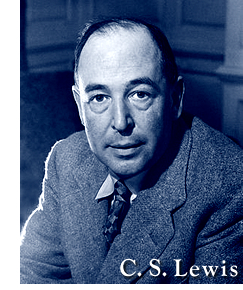
C.S. Lewis Daily – Today’s Reading


Good things as well as bad, you know, are caught by a kind of infection. If you want to get warm you must stand near the fire: if you want to be wet you must get into the water. If you want joy, power, peace, eternal life, you must get close to, or even into, the thing that has them. They are not a sort of prize which God could, if He chose, just hand out to anyone. They are a great fountain of energy and beauty spurting up at the very centre of reality. If you are close to it, the spray will wet you: if you are not, you will remain dry. Once a man is united to God, how could he not live forever?

From Mere Christianity

Compiled in Words to Live By