Charles Stanley – Confronting Conflict


Galatians 2:11-16

The Scriptures record many instances of conflict between nations, among friends, and in families. Today we see the same types of problems. While fighting, people can say harsh and even unfair words. Their accusations create turmoil and emotional pain. What we believe will determine the way we respond to such difficulties.

God’s Word proclaims His sovereignty over nature (Ps. 135:6), government (Job 12:23), and mankind (Acts 17:25). Nothing in heaven or on earth is hidden from Him or outside of His control. So, how does this help us in a conflict? First, our Father knows when people verbally attack us, and He has promised to protect us. Nothing can touch His children apart from His permissive will. Second, He has the power to work the painful times we endure into something beneficial (Rom. 8:28). We can have hope because His will cannot be thwarted, even in bad circumstances. Finally, we are His beloved children. He is a loving Father who understands what we are going through and always remains by our side. As His sons and daughters, we are not on our own.

When we believe in the Lord’s sovereign rule, our perspective on hard times changes. Instead of responding with fear, anger, or resentment, we will turn to Him in prayer and ask for guidance.

Conflict is inevitable. When we, or something we have done, is the source of the turmoil, we are to apologize. If others are at fault, we may have to confront them the way Paul did with Peter. But we are also called to forgive without exception. As Christ’s ambassadors, the way we respond really matters.

Bible in One Year: Daniel 5-6

Our Daily Bread — Words and Actions


Read: Matthew 21:28-32

Bible in a Year: Proverbs 19-21; 2 Corinthians 7

Let us not love with words or speech but with actions and in truth. —1 John 3:18

The email from the student in my college writing class expressed urgency. It was the end of the semester, and he realized he needed a better grade to participate in sports. What could he do? He had missed some assignments, so I gave him two days to complete those papers and improve his grade. His response: “Thank you. I’ll do it.”

Two days—and the deadline—passed, and no papers appeared. He didn’t back up his words with action.

Jesus told about a young man who did something similar. The boy’s dad asked him to do some work in the vineyard. The son said, “I will, sir” (Matt. 21:30). But he was all talk and no action.

In commenting on this parable, Matthew Henry concluded: “Buds and blossoms are not fruit.” The buds and blossoms of our words, which breed anticipation of what we might do, are empty without the fruit of our follow-through. Jesus’ main application was to religious leaders who spoke of obedience yet refused to follow through with repentance. But the words apply to us as well. It is in following God “with actions and in truth” (1 John 3:18)—not in making empty promises—that we honor our Lord and Savior.

Our actions in obeying God show Him more love, honor, and praise than any empty words we might say to try to appear good. —Dave Branon

Dear Father, help me to follow through on my promises to You and to all who depend on me. Especially help me to do Your will and not just talk about it.

Words are the blossoms, action the fruit.

INSIGHT: Matthew 21 describes several events in the life of Christ. This chapter opens with Jesus’ triumphal entry into Jerusalem (vv. 1-11) followed by the cleansing of the temple (vv. 12-17) and the cursing of the fig tree (vv. 18-22). Then the parable of the two sons follows a debate with the religious leaders about Jesus’ authority (vv. 23-32). It is this issue that forms the context of the parable, for it deals with how the sons responded to authority. The son who did his father’s wishes was the one who honored his father. Bill Crowder

Ravi Zacharias Ministry – Misplaced


I ran away once as a kid. I was mad about something ten year-olds get mad about—mad enough that I had to step up my normal fit or else risk being interpreted as only typically mad. The most untypical thing I could think to do was to pack a backpack of snacks and books and run away. So I ran to the backyard, climbed into my tree fort, and sat fuming in the snow.

After an hour or so, I decided it was time to go home. I was sure my mom was worried, troubled at the thought of me being lost and alone. I was also out of snacks, freezing, and beginning to see that my brilliant plan was riddled with inconveniences. So I made the long trek back to the house, expecting a reunion of apologies and hot cocoa. After all, to them, I was lost and now found, and this seemed a necessary occasion to celebrate. I converged, however, on a much less climactic scene. Nobody had noticed I was missing. When no one is looking for you, it loans a hopeless dimension to being lost.

Centuries before this scene, a man named Zacchaeus entered a big crowd only to be largely ignored. He was trying to join the group that had gathered to see Jesus as he passed through Jericho. Zacchaeus was a small man, but he was also the chief tax collector, and so he was chiefly despised. The walls of men and women who blocked his view were excluding more than a man of diminutive size; they were shutting out a man of depravity, wealth, and corruption. So Zacchaeus climbed a tree.

The rest of the story is all the more unusual for a man of his position. Zacchaeus was sitting inconspicuously in a tree when Jesus walked by, looked up, and called him down. At his invitation, the morally bankrupt, socially shunned tax collector came down from the tree and his life took a dramatic turn. At the conclusion of their time together, Jesus proclaimed of himself: “The Son of Man came to seek and to save what was lost.”(1) Zacchaeus had been found.

A friend of mine taught me that the Greek word for “lost” in this passage is best understood, not as doomed or damned as is sometimes interpreted, but “not in the right place.” The effect is that the finality of “lostness” is somewhat assuaged, conveying first that there is indeed a right place, but also the notion that the very quality of lostness is known. Inherent in Jesus’s description of the misplaced coin or the sheep that has gone astray is that someone is looking. Someone is looking in a way he would not be looking if it was found or if he thought it was gone forever. That is to say, what is lost and in the wrong place is being sought by the one who knows the right place. Likewise, what is lost is missed. And as I discovered as a ten year-old, it is this quality that makes all the difference.

It is this quality that makes the journey of faith and belief one that is well worth taking. Like those of us displaced by a sense of failure, banished by the judgment of others, or lost in anger or fear, Zacchaeus, prior to meeting Jesus, was simply in the wrong place. But he was not beyond the saving reach of the vicariously human Son of God who came to find him. He was lost, but there was someone looking. Jesus came to Jericho and to Jerusalem neither confirming customary exclusions nor endorsing social and spiritual hierarchies. In fact, immediately following his encounter with Zacchaeus—a man lost in his own wealth and the corruption that surrounded it—Jesus came beside a man lost in blindness and poverty. For the Son of Man came to seek and to save the lost wherever they might be lost. Thus, despite his way of life up to this point, Zacchaeus was not to be cut off from the people of God or God himself: “For this man, too, is a son of Abraham,” said Jesus. And his words seemed to be spoken as much to the crowd who shunned the sinner as to the sinner himself.

Jill Carattini is managing editor of A Slice of Infinity at Ravi Zacharias International Ministries in Atlanta, Georgia.

(1) Luke 19:10.

Alistair Begg – Face what He Faced


And other boats were with him. Mark 4:36

Jesus was the Lord High Admiral of the sea that night, and His presence preserved the whole convoy. It is good to sail with Jesus, even though we may be in a little boat. When we sail in Christ’s company, we cannot be sure of fine weather, for great storms may toss the vessel that carries the Lord Himself, and we should not expect to find the sea less boisterous around our little boat. If we go with Jesus we must be content to face what He faces; and when the waves are rough for Him, they will be rough for us. It is through tempest and storm that we will reach land, just as He did before us. When the storm swept over Galilee’s dark lake, the faces wore anxious frowns, and all hearts dreaded shipwreck.

When every attempt to ride it out proved useless, the resting Savior rose and with a word transformed the billowing tempest into the deep quiet of a calm. Then all the other boats were at rest as well as the one that carried the Lord. Jesus is the star of the sea; and though there is sorrow on the sea, when Jesus is on it, there is also joy.

May our hearts make Jesus their anchor, their rudder, their lighthouse, their lifeboat, and their harbor. His Church is the Admiral’s flagship; let us attend her exercises and cheer her officers with our presence. He Himself is the great attraction; let us always follow in His wake, observe His signals, steer by His chart, and never fear while He is within reach. Not one ship in the convoy shall be wrecked; the great Captain will steer every craft in safety to the desired haven. By faith we will raise our anchor for another day’s cruise and sail with Jesus into a sea of tribulation. Winds and waves will not spare us, but they all obey Him; and therefore whatever squalls may occur on the outside, faith will enjoy a blessed calm within. He is always in the center of the weather-beaten company:Let us rejoice in Him. His boat has reached the harbor, and so will ours.

The Family Bible Reading Plan

  • 2 Samuel 10
  • 2 Corinthians 3

Devotional material is taken from “Morning and Evening,” written by C.H. Spurgeon, revised and updated by Alistair Begg.

Charles Spurgeon – An appeal to sinners


“This man receiveth sinners.” Luke 15:2

Suggested Further Reading: Ephesians 1:3-8

Allow us just to amplify that word: “this man receiveth sinners.” Now, by that we understand that he receives sinners to all the benefits which he has purchased for them. If there be a fountain, he receives sinners to wash them in it; if there be medicine for the soul, he receives sinners to heal their diseases; if there be a house for the sick, an hospital, a home for the dying, he receives such into that retreat of mercy. All that he has of love, all that he has of mercy, all that he has of atonement, all that he has of sanctification, all that he has of righteousness—to all these he receives the sinner. Yea, more; not content with taking him to his house, he receives him to his heart. He takes the black and filthy sinner, and having washed him—“There,” he says, “thou art my beloved; my desire is towards thee.” And to consummate the whole, at last he receives the saints to heaven. Saints, I said, but I meant those who were sinners, for none can be saints truly, but those who once were sinners, and have been washed in the blood of Christ, and made white through the sacrifice of the lamb. Observe it then, beloved, that in receiving sinners we mean the whole of salvation; and this word in my text, “Christ receiveth sinners,” grasps in the whole of the covenant. He receives them to the joys of paradise, to the bliss of the beatified, to the songs of the glorified, to an eternity of happiness for ever. “This man receiveth sinners;” and I dwell with special emphasis on this point,—he receives none else. He will have none else to be saved but those who know themselves to be sinners.

For meditation: Contrast whom Christ receives with all that they receive in him in return (Luke 15:20-24). Are you one of them?

Sermon no. 219

14 September (1856)

John MacArthur – Guarding Your Mind and Emotions


“Stand firm therefore . . . having put on the breastplate of righteousness” (Eph. 6:14).

True righteousness begins with a right relationship with God.

A Roman soldier would often engage his enemy in hand- to-hand combat. At such times, the weapon of choice was the short sword, with which he sought to penetrate his opponent’s vital organs. For his own protection he wore a molded metal breastplate that extended from the base of his neck to the top of his thighs. It helped deflect any attacks aimed at his heart and abdomen.

The Roman breastplate has great symbolism in Paul’s analogy because to the Jewish people, the heart represented man’s mind and thinking processes; the intestinal area or bowels represented the seat of feelings and emotions. Proverbs 23:7 says, “As [a man] thinketh in his heart, so is he” (KJV). Jeremiah 17:9 says, “The heart is more deceitful than all else and is desperately sick; who can understand it?” Jesus added, “From within, out of the heart of men, proceed the evil thoughts” (Mark 7:21).

During spiritual warfare, Satan’s primary attacks target your thinking and emotions. If he can condition you to think and feel contrary to God’s Word, he has won a significant victory. That’s why he attempts to fill your mind with lies, immorality, false doctrine, and half-truths. He tries to blur the line between righteousness and sin by surrounding you with evil influences that increase your tolerance for sin. He clothes offensive sin in the blinding garment of entertainment. He puts it to music and masks it in humor to confuse you and deaden your spiritual senses. Satan wants to corrupt your emotions and draw you into sinful desires.

Putting on the breastplate of righteousness begins with a right relationship with God, who is the source of true righteousness. From that relationship flows the commitment to cultivate righteousness in your own life by learning and applying His Word. Therein lies the protection you need to safeguard your mind and emotions from satanic deceptions.

Suggestions for Prayer

Focus on strengthening your relationship with God today. Commune with Him in prayer. Meditate on His Word. Seek His grace in responding thoughtfully and righteously to the temptations you face.

For Further Study

Read Proverbs 10, noting Solomon’s description of righteous people.

Campus Crusade for Christ; Bill Bright – Blessed Peacemakers


“Is there any such thing as Christians cheering each other up? Do you love me enough to want to help me? Does it mean anything to you that we are brothers in the Lord, sharing the same Spirit? Are your hearts tender and sympathetic at all? Then make me truly happy by loving each other and agreeing wholeheartedly with each other, working together with one heart and mind and purpose” (Philippians 2:1,2). “Happy are those who strive for peace – they shall be called the sons of God” (Matthew 5:9).

Few individuals are more pleasing to our Lord than those who seek to promote peace. He is our great example since He is the author of peace. He is called the Prince of Peace, and He promises, “Peace I leave with you, My peace I give unto you: not as the world giveth, give I unto you. Let not your heart be troubled, neither let it be afraid” (John 14:27, KJV).

When you and I think of peacemakers today, we think perhaps of national leaders who have made great efforts toward international peace, or of negotiators who have served as intermediaries, attempting to eliminate strife between management and labor.

But more is involved in this beatitude – certainly more of a spiritual nature. You may know, or have known, as I have, members of churches whom the Lord has been able to use as peacemakers – those who calm fears and help to unruffle feathers when the inevitable quarrels arise.

Peacemaking is something that requires work. It does not come easily. Basically, man is hostile toward himself, toward his neighbor and toward God. The peacemaker is one who can build bridges of love and understanding and trust.

Friends, neighbors, men of influence, lawyers, physicians, may do much to promote peace, and certainly homemakers within families can make a great difference in the harmony of a home. Long and deadly arguments can be resolved by a simple expression of love and a kind word at the right moment.

Our strife-worn world, from the individual home to the international centers of influence, is in need of children of God who are peacemakers – committed to being ambassadors of the Prince of Peace.

Bible Reading: II Corinthians 13:11-14

TODAY’S ACTION POINT: Through the enabling of God’s Holy Spirit, I will seek ways to become a peacemaker in building bridges of love, trust and understanding where there is now conflict, discord and even hate.

Presidential Prayer Team; A.W. – Warrior Benefits


Recently, doctors have sought to discover if there’s really a link between prayer and physical and mental well-being. Dr. Harold Koenig, director at Duke University’s Center for Spirituality and Health, believes it’s been proven. “The benefits of devout religious practice, particularly involvement in a faith community and religious commitment, are that people cope better,” he said. “In general, they cope with stress better, they experience greater well-being because they have more hope, they’re more optimistic, they experience less depression, less anxiety, and they commit suicide less often. They have stronger immune systems, lower blood pressure, and better cardiovascular functioning.”

Do not be anxious about anything, but in everything by prayer…let your requests be made known.

Philippians 4:6

This isn’t news to those who practice today’s verse. Paul instructed Christians not to worry, but to instead pray with determination and gratitude. The outcome? Your heart and mind is guarded by Christ’s peace – a peace that non-believers simply can’t understand.

Take time to be thankful, knowing that as a prayer warrior you enjoy the benefits of His strength and comfort even in the most difficult of circumstances. Then pray that the nation’s leaders will discover the Lord and His peace for themselves.

Recommended Reading: Philippians 4:4-9

Greg Laurie – Getting the Job Done


“If you are faithful in little things, you will be faithful in large ones. But if you are dishonest in little things, you won’t be honest with greater responsibilities.” —Luke 16:10

When God told Gideon to tear down the altar his father had built to a false God, Gideon would have to risk his life to obey. In Gideon’s day, the patriarchal figure of a family in Israel was the law. So to oppose your father was to take a significant risk.

Gideon did it anyway. He “took ten men from among his servants and did as the Lord had said to him. But because he feared his father’s household and the men of the city too much to do it by day, he did it by night” (Judges 6:27).

Gideon took a big risk here. He took a stand, and he tore the altar down. Yes, he did it at night, but at least he obeyed God.

A lot of people will criticize those who go out and do things. We don’t like the way you do that. . . . We don’t agree with this. . . .We don’t agree with that.

My question for them would be, “What are you doing besides critiquing? What is your plan?”

There are a lot of people who are armchair quarterbacks and professional critics, yet they do little to nothing themselves. Then there are others who go out and get the job done. Some people are setting the world on fire while others are still looking for a match. I like people who go out and take risks. Even if they don’t always do things perfectly, even if they make a mistake here and there, I would rather try and fail than never do anything.

Some people start off weak, but they end up strong. Yet it is better to start weak and end strong than to start strong and end weak. It is better yet to start strong and end strong.

Max Lucado – An Invitation


In Joshua Chapter 1 God said, “This book of the law shall not depart from your mouth; but you shall meditate on it day and night that you may observe to do all that is written in it, for then you will make your way prosperous, and you will have good success.”

God’s word to Joshua is God’s word to us! I invite you to join me at GloryDaysToday.com for a 4-week journey in a Glory Days Scripture Memorization Challenge to memorize a verse a week.

Start with Joshua 1:9— the reminder that God has given you power. Then 2 Timothy 3:16-17— Scripture is a weapon useful in all situations. John 1:12— a reminder to inherit your inheritance. And then Joshua 21:43-45— the reminder that God fights for you, in the power of God’s Word, to face down every stronghold that stands against us!

From Glory Days

Night Light for Couples – Actions Earn Trust


“If you think you are standing firm, be careful that you don’t fall!” 1 Corinthians 10:12

The surest way to build trust in marriage is through your actions. Build a record of choices and deeds that proves to your partner you can be trusted at all times.

Take flirting, for example. It may be harmless to show a bit of extra friendliness to a member of the opposite sex. But ask yourself, Would my spouse feel comfortable if he or she witnessed this exchange? Would my actions earn trust, or would they raise doubt about my motives?

I (jcd) urge you to be wary of pride in your own infallibility. The minute you begin thinking that an affair “would never happen to me” is when you become most vulnerable. We are sexual creatures with powerful urges. We are also fallen beings with strong desires to do wrong. That is what temptation is all about. Do not give it a place in your life. My father once wrote, “Strong desire is like a powerful river. As long as it stays within the banks of God’s will, all will be proper and clean. But when it overflows those boundaries, devastation awaits downstream.”

Actions can affect trust in easy‐to‐overlook ways. When you promise to clean out the garage next weekend, make sure you do it. When you agree to limit your spending to a certain amount, follow through. Keeping your word in small matters builds trust in a big way.

Just between us…

  • Where is the line between friendly interest and flirting?
  • What actions do I take that help you trust me?
  • How did Jesus establish trust with His disciples?

Lord Jesus, thank You for being our example of trustworthiness and integrity. Help us every day to turn away from temptation and compromise. We want to be true in our innermost being. Amen.

From Night Light For Couples, by Dr. James & Shirley Dobson

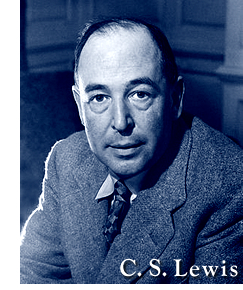
C.S. Lewis Daily – Today’s Reading


This signature on each soul may be a product of heredity and environment, but that only means that heredity and environment are among the instruments whereby God creates a soul. I am considering not how, but why, He makes each soul unique. If He had no use for all these differences, I do not see why He should have created more souls than one. Be sure that the ins and outs of your individuality are no mystery to Him; and one day they will no longer be a mystery to you. The mould in which a key is made would be a strange thing, if you had never seen a key: and the key itself a strange thing if you had never seen a lock. Your soul has a curious shape because it is a hollow made to fit a particular swelling in the infinite contours of the Divine substance, or a key to unlock one of the doors in the house with many mansions. For it is not humanity in the abstract that is to be saved, but you—you, the individual reader, John Stubbs or Janet Smith. Blessed and fortunate creature, your eyes shall behold Him and not another’s. All that you are, sins apart, is destined, if you will let God have His good way, to utter satisfaction. The Brocken spectre ‘looked to every man like his first love’, because she was a cheat. But God will look to every soul like its first love because He is its first love. Your place in heaven will seem to be made for you and you alone, because you were made for it—made for it stitch by stitch as a glove is made for a hand.

From The Problem of Pain

Compiled in A Year with C.S. Lewis