Charles Stanley – The Reward of Letting Go


Genesis 22:1-3

While it’s often a struggle to put everything on the altar, one thing I’ve learned is that you don’t have to understand how God will accomplish His plans. All He asks is that you surrender your will to His and trust that He will show you the way forward (Prov. 3:5-6). Abraham’s willingness to give up what was most precious to him came from his unyielding faith in the Lord’s trustworthiness.

However, if you tell God no because He won’t explain why He wants us to do something, we are actually hindering His blessing. But when we say yes to Him, heaven opens to pour out His goodness and reward our obedience. What matters more than material blessings are the things He is teaching us in our spirit. But don’t mistake His way of rewarding as being like a parent who withholds a treat until the child does as he’s told. Rather, obeying the Lord naturally positions us to receive what He is already trying to give us and accomplish in our lives. So, when we fail to trust Him and refuse to do what He says, we are the ones choosing to close ourselves off from those good things.

What has God asked you to do? Have you only partially cooperated? Or have you, like Abraham, given up your need to understand and then obeyed completely?

If the Lord says to give more than you think you’re able to give, know that He will provide. Whether things are running smoothly or the bottom has dropped out, He is always trustworthy. You can count on almighty God to keep His everlasting Word.

Bible in One Year: Micah 1-4

Our Daily Bread — The Upside of Setbacks


Read: Psalm 27

Bible in a Year: Song of Solomon 4-5; Galatians 3

Wait for the Lord; be strong and take heart and wait for the Lord. —Psalm 27:14

American swimmer Dara Torres had a remarkable career, appearing in five different Olympics from 1984 to 2008. Late in her career, Torres broke the US record for the 50-meter freestyle—25 years after she herself set that record. But it wasn’t always medals and records. Torres also encountered obstacles in her athletic career: injuries, surgery, as well as being almost twice the age of most other competitors. She said, “I’ve wanted to win at everything, every day, since I was a kid. . . . I’m also aware that setbacks have an upside; they fuel new dreams.”

“Setbacks have an upside” is a great life lesson. Torres’s struggles motivated her to reach for new heights. They have a spiritual benefit too. As James said, “Consider it pure joy . . . whenever you face trials of many kinds, because you know that the testing of your faith produces perseverance” (James 1:2-3).

Adopting this perspective on the difficulties of life is not easy, but it is worthwhile. Trials provide opportunity to deepen our relationship with God. They also provide the opening to learn lessons that success cannot teach by developing in us the kind of patience that waits on God and trusts Him for the strength to endure.

The psalmist reminds us, “Wait for the LORD; be strong and take heart and wait for the LORD” (Ps. 27:14). —Bill Crowder

In my times of trial, dear Lord, teach me to wait for You. But please teach me even more to trust the love You have for me. And as I do, may I learn Your wisdom and have the patience to endure.

The setbacks of life can teach us to wait upon the Lord for His help and strength.

Alistair Begg – Consider What Your Actions Say


For I was ashamed to ask the king for a band of soldiers and horsemen to protect us against the enemy on our way, since we had told the king, “The hand of our God is for good on all who seek him, and the power of his wrath is against all who forsake him.” Ezra 8:22

A convoy on many accounts would have been desirable for the pilgrim band, but Ezra was ashamed to ask for one. He feared that the heathen king might think his professions of faith in God were mere hypocrisy or might imagine that the God of Israel was not able to preserve His own worshipers. He could not bring his mind to depend on human instruments in a matter so evidently of the Lord, and therefore the caravan set out with no visible protection, and yet guarded by Him who is the sword and shield of His people.

It is to be feared that few believers sense this holy jealousy for God; even those who in some measure walk by faith occasionally spoil the sparkle of their life by seeking help from man. It is a most blessed thing to have no props and no buttresses, but to stand upright on the Rock of Ages, upheld by the Lord alone. Would any believers seek government funds for their church if they remembered that the Lord is dishonored by their asking for Caesar’s help? As if the Lord could not supply the needs of His own cause! Would we run so quickly to friends and relatives for assistance if we remembered that the Lord is glorified by our obvious reliance on His solitary arm? My soul, wait only on God.

“But,” says one, “are means never to be used?” Certainly they are. But our fault seldom lies in their neglect: Far more frequently it springs from foolishly believing in them instead of believing in God. Few run too far in neglecting the arm of man; but many sin greatly in making too much of it.

So learn, dear reader, to glorify the Lord by leaving means untried, if by using them you would dishonor the name of the Lord.

The Family Bible Reading Plan

  • 2 Samuel 20
  • 2 Corinthians 13

Devotional material is taken from “Morning and Evening,” written by C.H. Spurgeon, revised and updated by Alistair Begg.

Charles Spurgeon – The duty of remembering the poor


“Only they would that we should remember the poor; the same which I also was forward to do.” Galatians 2:10

Suggested Further Reading: James 2:1-17

If you do not help the one that you see has the greatest need, I am afraid the love of God dwelleth not in you. It is a duty we owe to the poor of the Lord’s flock, and we reap many advantages we should not have if we had not to remember the poor. Now, allow me to press home this obligation: why should we remember the poor? I shall not urge it upon the ground of common philanthropy and charity; that were a too mean and low way of addressing Christian men, although even they perhaps might be benefited by it. I shall urge it in another way. “Remember the poor,” because they are your Lord’s brethren. What! Do you not feel, like David, that you would do anything for Jonathan’s sake? And if he hath some poor sick son, some Mephibosheth, lame in his feet, wilt thou not seat him at thy table, or give him a maintenance, if thou canst, seeing that Jonathan’s blood is in his veins? Remember, beloved, the blood of Jesus runs in the veins of poor saints; they are his relatives, they are his friends; and if that move thee not, remember, they are thy friends too. They are thy brethren if thou art a child of God; they are allied to thee; if they are sons of God, so art thou, and they are brethren of thine. What! Let thy brother starve? If thou canst, wilt thou not relieve thy brother’s necessity, not shield him from the cold, not ward off hunger, not provide for his needs? Oh! I know thou lovest Jesus; I know thou lovest the friends of Jesus, and I know thou lovest thine own family; and, therefore, thou wilt love thy poor brethren, wilt thou not? I know thou wilt; thou wilt relieve them.

For meditation: Do you discriminate against some of your brothers and sisters in Christ? Your heavenly Father doesn’t (Galatians 3:28; Ephesians 6:9).

Sermon no. 99

24 September (Preached 25 September 1856)

John MacArthur – Learning from Christ’s Example


“Take . . . the sword of the Spirit, which is the word of God” (Eph. 6:17).

To wield the sword of the Spirit is to apply specific Biblical principles to specific situations.

Jesus gave us the perfect example of skillful and precise use of the sword of the Spirit. Following His baptism, “Jesus was led up by the Spirit into the wilderness to be tempted by the devil. And after He had fasted forty days and forty nights, He then became hungry. And the tempter came and said to Him, ‘If You are the Son of God, command that these stones become bread'” (Matt. 4:1-3).

Satan was challenging Christ’s trust in His heavenly Father’s power and provisions. God had just announced that Jesus was His Son (Matt. 3:17). Would He now abandon Jesus to starve in the wilderness? Satan urged Jesus to take matters into His own hands and supply for His own needs. After all, Satan implied, doesn’t the Son of God deserve better than this?

Jesus might have acted on His own authority or demanded that God give Him what He deserved. Instead, He demonstrated His trust in God and rebuked Satan for his evil intents: “It is written, ‘Man shall not live on bread alone, but on every word that proceeds out of the mouth of God'” (v. 4). That’s a specific verse applied to a specific situation. Jesus responded the same way to Satan’s other temptations (vv. 7, 10).

Scripture gives many general principles for Christian living, but the sword of the Spirit is a precise weapon. We must learn to apply the appropriate biblical principles to any given situation. That’s what the psalmist meant when he wrote, “How can a young man keep his way pure? By keeping it according to Thy word. . . . Thy word I have treasured in my heart, that I may not sin against Thee” (Ps. 119:9, 11).

Do you know where to go in the Bible to defend yourself against sorrow, discouragement, apathy, lust, or pride? If not, you’re attempting to do spiritual battle unarmed.

Suggestions for Prayer

  • Thank God for His precious Word and the study resources that are available to Bible students today.
  • Renew your commitment to daily systematic Bible study.

For Further Study

Read Psalm 119:97-105. Is that your attitude toward Scripture?

Joyce Meyer – Be Responsible


But you are not living the life of the flesh, you are living the life of the Spirit, if the [Holy] Spirit of God [really] dwells within you [directs and controls you]. But if anyone does not possess the [Holy] Spirit of Christ, he is none of His [he does not belong to Christ, is not truly a child of God]. – Romans 8:9

Romans 8:8 declares: Those who are living the life of the flesh [catering to the appetites and impulses of their carnal nature] cannot please or satisfy God, or be acceptable to Him. God wants us to enjoy the good life. Here He is saying to us, “If you walk in the Spirit, you will reap blessings from the Spirit-controlled life both now and hereafter.”

Be responsible for your choices today. You cannot choose to live in the flesh, and still expect everything to work out well. Choose to be obedient to the leading of the Holy Spirit.

Campus Crusade for Christ; Bill Bright – The Key to Real Joy


“Remember what Christ taught and let His words enrich your lives and make you wise; teach them to each other and sing them out in psalms and hymns and spiritual songs, singing to the Lord with thankful hearts. And whatever you do or say, let it be as a representative of the Lord Jesus, and come with Him into the presence of God the Father to give Him your thanks” (Colossians 3:16,17).

As I travel and speak throughout the world, I meet many individuals who are caught up in the emotionalism of a religious experience which they attribute to the Holy Spirit. They live from experience to experience, with little knowledge of what the Bible teaches. As a result, they seldom grow past the baby stage. They are seeking and talking about their experiences with the Holy Spirit instead of the Lord Jesus, forgetting that the Holy Spirit came to glorify Christ.

At the other extreme, I find that most Christians seldom mention the Holy Spirit. The supernatural life is a life of balance.

Notice the close parallel between Ephesians 5:18-20 and Colossians 3:16-17. The Spirit-filled person and the one whose mind and heart are saturated with the person and the Word of Jesus Christ will be joyful and thankful, and he will do all as a testimony of love to Him who is our Lord and Savior.

We can no more live a joyful, abundant, fruitful, victorious, supernatural life apart from the Word of God than we can do so apart from the Spirit of God. They are like the two wings of an airplane; a plane cannot fly with only one wing. Neither can we live balanced, victorious lives if we do not invest time in reading, studying, memorizing and meditating on God’s Word, while at the same time depending on the Holy Spirit, who inspired its writing centuries ago, to illuminate its truth to our minds and hearts.

________________________________________

Bible Reading: I Corinthians 10:31-33

________________________________________

TODAY’S ACTION POINT: Today – and every day – I will claim the Holy Spirit’s power to enable me to read, study, memorize and meditate on God’s holy, inspired Word with comprehension. I will claim by faith the help of the Holy Spirit to live in accordance with the teaching of God’s revealed truth. With His help, I will live a balanced, Spirit-controlled, supernatural life.

Presidential Prayer Team; C.H. – Protective Hand


Ezra was a priest sent by King Artaxerxes to help rebuild Jerusalem after the Jewish exile. The king gave him a letter stating that any Jews could return to their homeland with the priest. Ezra had spoken highly of the Lord to King Artaxerxes, who wasn’t a believer.

So we fasted and implored our God for this, and he listened to our entreaty.

Ezra 8:23

Before heading over the river, Ezra stopped to fast and ask the Lord for safety. “For I was ashamed to ask the king for a band of soldiers and horsemen to protect us against the enemy on our way, since we had told the king, ‘The hand of our God is for good on all who seek him, and the power of his wrath is against all who forsake him.’” (Ezra 8:22) His prayer came from a desire to glorify the name of the great I Am.

When your prayers grow from a yearning to make the name of God great, He’s moved to answer. Pray for the Lord to be glorified in this nation. Ask Him to protect Christians as they lift Him up in their homes and communities. Intercede, too, for America and its national leaders to recognize the hand of protection from your Heavenly Father and glorify Him accordingly.

Recommended Reading: Psalm 5:1-12

Greg Laurie – The Test of Time


You were running the race so well. Who has held you back from following the truth?—Galatians 5:7

One thing I have found in life is that it’s full of surprises. I have been greatly surprised by the way people’s lives have turned out. I think of people I went to school with who seemingly had no potential whatsoever, and they have clearly proven otherwise. Then there are those who seemed to have so much promise, but when I look at the trajectory their lives took, it is another story altogether.

I have been a pastor for more than four decades now, and I have seen a lot of people come and go through the years. I’ve seen some individuals who were gifted as musicians, preachers, or in some other way effectively crash and burn. I have also seen some who I thought would go out and change the world basically self-destruct instead.

As time goes by, I find myself being less impressed with things I was once more impressed by and more impressed with things I was once less impressed by. Nowadays, I am far more impressed by character than charisma. I am more interested in personal integrity than in mere talent. (Will this person stand the test of time?) I am impressed not by a person who has a huge ministry, but by someone who is still married to the same person they started out with. That impresses me, because so many things change as time goes by.

If God has gifted you, then you need to take that gift and use it for His glory. You not only want to start this race well, but you also want to finish it well. You can hold on to first place in a race for a while, but if, at the end, you break the rules or don’t cross the finish line, it doesn’t count. Finish well.


Max Lucado – An Unmoving Target 


Don’t chart your course according to the opinions of people or suggestions of culture. If you do, you’ll make the mistake the farmer’s son made. He sent the boy to prepare a field, reminding him to till straight lines.

“Select an object on the far side of the field, and plow straight to it,” the father said.

Later when the father checked on the boy’s progress, every row was uneven and wavy. He said, “I thought I told you to select an object and plow toward it.”

“I did,” the boy answered, “but the rabbit kept hopping,”

A straight line, like a good life, requires an unmoving target. Set your sights on the unchanging principles of God. Let God’s Word be the authoritative word in your world.

I invite you to memorize God’s Word—a new verse every week for four weeks. Join me at GloryDaysToday.com.

Night Light for Couples – A King and His Queen


“Those who honor me I will honor.” 1 Samuel 2:30

I can’t think of a better example of honor between husband and wife than the biblical account of Queen Esther and Xerxes, king of Persia, in the book of Esther. The young queen was faced with a terrible dilemma: Her people, the Jews, were to be killed as part of a ruthless plot concocted by one of the king’s most powerful nobles. Yet by law, no one, not even the queen, was allowed to approach the king without being summoned.

Esther relied on the principle of honor to protect her in this predicament. After fasting and, I’m sure, praying for three days, she went to the inner court of the palace. Rather than barging in, she waited patiently in the king’s hall. When the king saw Esther, he invited her in. She showed further respect for Xerxes by touching his scepter when she arrived. When the king asked her why she had come, Esther did not answer immediately. Instead, she invited the king to a banquet she had prepared, thus paying further tribute to her husband. At the banquet, she invited the king to yet another banquet the next day. Only then did she finally make her request known.

Every time Esther addressed her husband, she conveyed sincere respect. She used phrases such as “if it pleases the king”; “if [the king] regards me with favor and thinks it the right thing to do”; and “if I have found favor with you, O king.” Xerxes responded by honoring his wife—and granting her request! Through her courage and conduct, the Jews were spared a holocaust. In fact, King Xerxes went further: The evil noble was hanged, and the Jews were given new privileges and rights in the kingdom.

Our nature as humans is to criticize our spouse or complain about his or her shortcomings. Yet there is something attractive—and very compelling—about approaching each other as husband or wife with the deep respect and honor we would show royalty. I urge you to try approaching each other in just this way—even when you do not feel particularly close. Your reward will be a home environment that is more loving, positive, and enjoyable than you ever thought possible.

– Shirley M Dobson

  • From Night Light For Couples, by Dr. James & Shirley Dobson

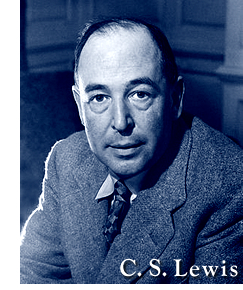
C.S. Lewis Daily – Today’s Reading


We have a strange illusion that mere time cancels sin. I have heard others, and I have heard myself, recounting cruelties and falsehoods committed in boyhood as if they were no concern of the present speaker’s, and even with laughter. But mere time does nothing either to the fact or to the guilt of a sin. The guilt is washed out not by time but by repentance and the blood of Christ: if we have repented these early sins we should remember the price of our forgiveness and be humble. As for the fact of a sin, is it probable that anything cancels it? All times are eternally present to God. Is it not at least possible that along some one line of His multi-dimensional eternity He sees you forever in the nursery pulling the wings off a fly, forever toadying, lying, and lusting as a schoolboy, forever in that moment of cowardice or insolence as a subaltern? It may be that salvation consists not in the cancelling of these eternal moments but in the perfected humanity that bears the shame forever, rejoicing in the occasion which it furnished to God’s compassion and glad that it should be common knowledge to the universe. Perhaps in that eternal moment St Peter—he will forgive me if I am wrong—forever denies his Master. If so, it would indeed be true that the joys of Heaven are for most of us, in our present condition, ‘an acquired taste’—and certain ways of life may render the taste impossible of acquisition. Perhaps the lost are those who dare not go to such a public place. Of course I do not know that this is true; but I think the possibility is worth keeping in mind.

From The Problem of Pain

Compiled in A Year with C.S. Lewis