Charles Stanley – Our Quiet Communication


James 2:14-18

The Lord calls us to share His truth with others, but oftentimes our actions and attitude completely contradict the words that are coming out of our mouths. This is an area in which we all seem to struggle.

Every day, every one of us communicates something to someone. We send messages by what we say and by what we don’t say, by what we do and by what we don’t do.

For example, if a father quietly decides to stop tithing, he is sending a loud message to his children. Without ever opening his mouth, he is declaring, “Kids, you can’t trust the Lord with your money. God isn’t faithful to meet your needs, so you better hold on to as much as you possibly can.” Is that the message you want to pass on to your sons and daughters?

You might argue, “Well, I’m not really a tither, but I would never tell my kids that you can’t trust God.” However, you have already sent an unspoken yet very clear message. What people—especially children—witness in our behavior speaks much louder than what we actually say with our mouths.

The apostle Paul understood what powerful lessons we teach by our actions. For this reason, he made sure he modeled the right behavior and values for his spiritual children to emulate (2 Thess. 3:7-9).

It is not an issue of whether or not we will communicate a message. Rather, the issue is, What kind of message are you already communicating? Search yourself for any disparity between what you say and what you do, and choose to share a complete, unified message of hope with the world.

Bible in One Year: Zechariah 6-10

Our Daily Bread — The Valley of Vision


Read: Jonah 2:1-10

Bible in a Year: Isaiah 9-10; Ephesians 3

I remembered you, Lord, and my prayer rose to you. —Jonah 2:7

The Puritan prayer “The Valley of Vision” speaks of the distance between a sinful man and his holy God. The man says to God, “Thou hast brought me to the valley of vision . . . ; hemmed in by mountains of sin I behold Thy glory.” Aware of his wrongs, the man still has hope. He continues, “Stars can be seen from the deepest wells, and the deeper the wells the brighter Thy stars shine.” Finally, the poem ends with a request: “Let me find Thy light in my darkness, . . . Thy glory in my valley.”

Jonah found God’s glory during his time in the ocean’s depths. He rebelled against God and ended up in a fish’s stomach, overcome by his sin. There, Jonah cried to God: “You cast me into the deep . . . . The waters surrounded me, even to my soul” (Jonah 2:3,5 NKJV). Despite his situation, Jonah said, “I remembered you, Lord, and my prayer rose to you” (v. 7). God heard his prayer and caused the fish to free him.

Although sin creates distance between God and us, we can look up from the lowest points in our lives and see Him—His holiness, goodness, and grace. If we turn away from our sin and confess it to God, He will forgive us. God answers prayers from the valley. —Jennifer Benson Schuldt

LORD, in the daytime stars can be seen from deepest wells, and the deeper the wells the brighter Your stars shine; let me find Your light in my darkness.

The darkness of sin only makes the light of God’s grace shine brighter.

INSIGHT: Jonah initially ministered to the northern kingdom of Israel during the powerful reign of Jeroboam II (2 Kings 14:23-28). God reassigned him to minister to the Assyrian city of Nineveh and to warn them to repent or face God’s judgment (Jonah 1:1). After Jonah refused this new mission and instead fled in the opposite direction (v. 3), God disciplined him by causing him to be swallowed up by a big fish during a violent storm (vv. 4,17). Jonah 2 records Jonah’s prayer of repentance when he was inside the fish. Jesus used this event to foreshadow His own burial and resurrection when He said, “For as Jonah was three days and three nights in the belly of a huge fish, so the Son of Man will be three days and three nights in the heart of the earth” (Matt. 12:40; Jonah 1:17). Sim Kay Tee

Ravi Zacharias Ministry – The Course of Waterfalls


In his book River Out of a Eden, Oxford scientist Richard Dawkins explains, “The universe we observe has precisely the properties we should expect if there is, at bottom, no design, no purpose, no evil and no good, nothing but blind, pitiless indifference.”(1) In a similar vein, Dawkins praises the humorous rejoinder of Douglas Adams to arguments that claim an apparent order and purpose in the universe. Writes Dawkins, “To illustrate the vain conceit that the universe must be somehow preordained for us because we are so well suited to live in it, [Adams] mimed a wonderfully funny imitation of a puddle of water, fitting itself snugly into a depression in the ground, the depression uncannily being exactly the same shape as the puddle.”(2) Their claim is clear: Humanity has adapted to a blind and indifferent universe like water to the shape of its container. It is perhaps a claim that at times lingers suggestively in desolate places of life and mind.

Ernest Gordon may, too, have at one time agreed. An officer of the British army during the Second World War, he was captured by the Japanese while at sea. At the age of 24, he was sent to work in the prison camp that would be constructing the Burma-Siam railroad.

For every mile of track, 393 men are said to have died. Wearing nothing but loincloths, they worked for hours in scorching temperatures, chopping their way through tangled jungles. Those who paused out of exhaustion were beaten to death by guards. Treated like animals, the prisoners became themselves like beasts trying to survive. Adapting to their harsh captivity, theft was as rampant as disease among them. Gordon himself eventually became so weak from illness that he was removed from the common camp and placed in the Death House. He describes his purposeless existence in that cruel and indifferent setting: “I was a prisoner of war, lying among the dead, waiting for the bodies to be carried away so that I might have more room.”(3)

Each night the Japanese guards would count the work tools before anyone was permitted to return to camp. One evening, when a shovel was found to be missing, a guard shouted relentlessly that the guilty man must present himself. When no one responded, he ordered callously, “All die! All die!” At this, a young man stepped forward, confessing to the theft, and was immediately killed before them.

The railroad prison camp by the River Kwai was a place where many could have observed in horror that “the universe has precisely the properties we should expect if there is, at bottom, no design, no purpose, no God watching over those in dire need of hope.” Like water conforming to the shape of its container, the captured men became like men fighting to survive, void of right and wrong, void of reverence for life, void of all meaning. Yet, amidst the stagnant waters of hatred and bitterness, something was astir.

After the incident with the shovel, upon returning to the camp, one of the guards discovered a mistake in their counting. There had never been a missing shovel. The young man that stepped forward was innocent; he had sacrificed his life to preserve the lives of his fellow inmates. After this incident, attitudes among the camp began to change dramatically. Instead of men in a detached game of survival of the fittest, they began to look out for each other. One of the men remembered the words of Scripture: “Greater love has no one than this, that he lay down his life for his friends.” Gordon, who once lay forgotten for dead, was slowly nursed back to health by fellow prisoners. Fully recovered, he eventually became a makeshift chaplain of the camp. When the prison was liberated in 1945–three years after his capture–Gordon entered seminary to become a minister of the message of Jesus Christ. “Faith thrives where there is no hope but God,” he later testified. How contrary to the words of Richard Dawkins.

The transformation in the men of the prison was so thoroughly unlike the world they were forced to live in that one could argue it was more like a waterfall defying gravity and moving upstream than a puddle naturally fitting into the crevice that holds it. The sacrifice of one innocent man can reverse the flow of history. Perhaps the kingdom of God is indeed among us, a spring of living water in a dry and weary land.

Jill Carattini is managing editor of A Slice of Infinity at Ravi Zacharias International Ministries in Atlanta, Georgia.

(1) Richard Dawkins, River Out of Eden (New York: Basic Books, 1995), 133.

(2) As printed in The Guardian, May 14, 2001.

(3) Ernest Gordon, To End All Wars (Grand Rapids: Zondervan, 1963).

Alistair Begg – Not an Option


Sing the glory of his name; give to him glorious praise! Psalm 66:2

It is not left to our own option whether or not we will praise God. Praise is God’s most righteous due, and every Christian, as the recipient of His grace, is bound to praise God from day to day.

It is true that we have no authoritative text for daily praise; we have no commandment prescribing certain hours of song and thanksgiving: But the law written upon the heart teaches us that it is right to praise God; and the unwritten mandate comes to us with as much force as if it had been recorded on the tables of stone or handed to us from the top of thundering Sinai.

Yes, it is the Christian’s duty to praise God. It is not only a pleasurable exercise, but it is the absolute obligation of his life. Those of you who are always mourning should not think that you are guiltless in this respect or imagine that you can discharge your duty to God without songs of praise. You are bound by the bonds of His love to bless His name as long as you live, and His praise should continually be in your mouth, for you are blessed in order that you may bless Him-“the people whom I formed for myself that they might declare my praise”;1 and if you do not praise God, you are not bringing forth the fruit that He has a right to expect from you.

Do not let your harp hang on the willows, but take it down and strum with a grateful heart, bringing out its loudest music. Arise and declare His praise. With every morning’s dawn, lift up your notes of thanksgiving, and let every setting sun be followed with your song. Surround the earth with your praises; circle it with an atmosphere of melody, and God Himself will listen from heaven and accept your music.

E’en so I love Thee, and will love,

And in Thy praise will sing,

Because Thou art my loving God,

And my redeeming King.

1) Isaiah 43:21

The Family Bible Reading Plan

  • 1 Kings 2
  • Galatians 6

Devotional material is taken from “Morning and Evening,” written by C.H. Spurgeon, revised and updated by Alistair Begg.

Charles Spurgeon – Love to Jesus


“O thou whom my soul loveth.” Solomon’s Song 1:7

Suggested Further Reading: Psalm 103

The Christian, if he had no Christ to love, must die, for his heart has become Christ’s. And so if Christ were gone, love could not be; then his heart would be gone too, and a man without a heart is dead. The heart, is it not the vital principle of the body? And love, is it not the vital principle of the soul? Yet there are some who profess to love the Master, but only walk with him by fits, and then go abroad like Dinah into the tents of the Shechemites. Oh, take heed, ye professors, who seek to have two husbands; my Master will never be a part-husband. He is not such a one as to have half of your heart. My Master, though he be full of compassion and very tender, hath too noble a spirit to allow himself to be half-proprietor of any kingdom. Canute, the Danish king, might divide England with Edmund the Ironside, because he could not win the whole country, but my Lord will have every inch of thee, or none. He will reign in thee from one end of the isle of man to the other, or else he will not put a foot upon the soil of thy heart. He was never part-proprietor in a heart, and he will not stoop to such a thing now. What saith the old Puritan? “A heart is so little a thing, that it is scarce enough for a sparrow’s breakfast, and ye say it be too great a thing for Christ to have it all.” No, give him the whole. It is but little when thou weighest his merit, and very small when measured with his loveliness. Give him all. Let thy united heart, thy undivided affection be constantly, every hour, given up to him.

For meditation: The members of the Godhead are the only joint-owners of the Christian. May God teach us his way—that our hearts may be united and wholly for him (Psalm 86:11-12).

Sermon no. 338

30 September (1860)

John MacArthur – Principles for Spiritual Victory


“Finally, be strong in the Lord, and in the strength of His might” (Eph. 6:10).

You can be victorious!

This month we’ve learned many things about spiritual warfare that I pray will better equip you for victory in your Christian life. In concluding our brief study of Ephesians 6:10-18, here are some key principles I want you to remember:

  1. Remember that Satan is a defeated foe. Jesus came to destroy his works (1 John 3:8) and will someday cast him into eternal hell (Rev. 20:10).
  2. Remember the power of Christ in your life. John said, “Greater is He who is in you than he who is in the world” (1 John 4:4). The same power that defeated Satan indwells you. Consequently, you are never alone or without divine resources.
  3. Remember to resist Satan. You have the power to resist him, so don’t acquiesce to him by being ignorant of his schemes or deliberately exposing yourself to temptation.
  4. Keep your spiritual armor on at all times. It’s foolish to enter combat without proper protection.
  5. Let Christ control your attitudes and actions. The spiritual battle we’re in calls for spiritual weapons (2 Cor. 10:3-4), so take “every thought captive to the obedience of Christ” (v. 5). Feed on the Word and obey its principles.
  6. Pray, pray, pray! Prayer unleashes the Spirit’s power. Be a person of fervent and faithful prayer (cf. James 5:16).

God never intended for you to live in spiritual defeat. I pray you’ll take advantage of the resources He has supplied that your life might honor Him. Enjoy sweet victory every day!

Suggestions for Prayer

Thank God for His promise of ultimate victory in Christ.

For Further Study

Read Ephesians 6:10-18.

  • Review each piece of armor.
  • Is any piece missing from your personal defense system? If so, determine what you will do to correct the deficiency.

Joyce Meyer – Peace and Confidence


I have told you these things, so that in Me you may have [perfect] peace and confidence. In the world you have tribulation and trials and distress and frustration; but be of good cheer [take courage; be confident, certain, undaunted]! For I have overcome the world. [I have deprived it of power to harm you and have conquered it for you.] – John 16:33

Look at each word Jesus spoke and meditate on it so that you get the full meaning of what Jesus is saying. He is telling us that during our lives we will have hard times, trials, and things that frustrate us, but we don’t have to let worry or depression be part of it, because He has given us courage (if we will take it), confidence, and assurance. No matter what comes against us, if we have confidence that we can make it through, it won’t bother us that much. It isn’t really our problems that make us unhappy; it is how we respond to them.

Jesus said to “be confident.” He did not say to “feel confident.” Start today choosing to be confident in every situation and you will begin driving fear back to Hades where it came from. When Satan tries to give you fear, give it back to him. You wouldn’t drink poison if someone offered it to you, would you? Then stop taking fear and start choosing courage.

Lord, thank You that You have overcome the world. I will be confident today because I follow You and walk in the victory You have already won. Amen.

From the book The Confident Woman Devotional: 365 Daily Devotions by Joyce Meyer


Campus Crusade for Christ; Bill Bright – Helping the Church


“The Holy Spirit displays God’s power through each of us as a means of helping the entire church” (1 Corinthians 12:7).

A friend once asked me, “Are all the spiritual gifts for today?” and “How can I discern my spiritual gifts?”

He had been reading a number of books with conflicting views on gifts and had heard sermons – some encouraging him to discover his gifts and others saying the gifts are not for today. He was woefully confused.

I shared with this friend that I have been a Christian for more than 35 years and have known the reality of the fullness of the Spirit for more than 30 years. I explained that I have seen God do remarkable – even miraculous – things in and through my life throughout the years.

Yet, I have not felt the need to “discover” my gifts, because I believe that whatever God calls me to do He will enable me to do if I am willing to trust and obey Him, work hard and discipline myself.

The Holy Spirit obviously controls and distributes all the gifts. So when I am filled, controlled and empowered with the Holy Spirit I possess all of the gifts potentially. God will give me any gifts I need.

I went on to tell my young friend that some of the gifts of the Spirit are supernatural enhancements of abilities common to all men, wisdom for instance. Other gifts, such as healing, are granted by the Holy Spirit to only a select few.

But the gifts differ in another way, too. Some are instantaneous, and others are developmental in nature. Primarily, we need to remember that whatever God calls us to do, He will enable us to do. “For it is God who works in you, both to will and to work for His good pleasure” (Philippians 2:13, NAS).

Bible Reading: I Corinthians 12:24-31

TODAY’S ACTION POINT: I will dwell on God’s ability to do in and through me what ever He calls upon me to do, rather than to spend precious time seeking to discover my spiritual gifts.

Presidential Prayer Team; J.R. – Wisdom Practice


The smartest people in the world don’t always stay so smart. Chess grandmaster Bobby Fischer reportedly had an I.Q. of 187 – but his embrace of bizarre anti-American and anti-Semitic beliefs and conspiracy theories destroyed his life. Bernie Madoff was an investment genius who took $5,000 earned from a summer lifeguarding job and turned it into a fortune – but then he used his financial prowess to swindle his friends and was slapped with a 150-year prison sentence.

Give your servant therefore an understanding mind…that I may discern between good and evil.

I Kings 3:9

King Solomon asked God for wisdom, and his request was granted. He was called the wisest man who ever lived – but it didn’t last. He subsequently did some things that were positively dumb. Among them was his decision, in defiance of God’s direction, to take 700 wives and 300 concubines, many of them foreigners and political and military adversaries. I Kings 11 says that his wives turned his heart away from God.

Make it your practice, today and every day, to pray for America’s leaders and to seek wisdom in your own life. There’s no “set it and forget it” in prayer. His mercies are “new every morning,” (Lamentations 3:23) as you seek Him…each and every day.

Recommended Reading: Lamentations 3:19-26

Greg Laurie – Actions Trump Words


So Samuel said: “Has the Lord as great delight in burnt offerings and sacrifices, as in obeying the voice of the Lord? Behold, to obey is better than sacrifice, and to heed than the fat of rams.”—1 Samuel 15:22

When God commanded Saul to settle accounts with some old enemies, the Amalekites, Saul partially obeyed. As a result, God rejected him as king. Saul’s sin may seem insignificant to us, but who are we to say that something is small if it is a big deal to God? Who are we to say that it doesn’t matter? If God says it matters, then it matters.

God looks at the heart. God sees things that we don’t see. And God could already see that Saul’s heart had turned away.

Some people say, “What’s wrong with having a little fun? I’ll know when to stop.”

But sin is sin, and “little” sins always lead to “big” sins. That’s where it starts.

I read about a Malaysian man who holds the world record for kissing venomous snakes. He has kissed a king cobra 51 times. We can have that attitude toward sin: I can handle this. It will never bite me. It will never get me. Then one day, that little kiss will prove to be your undoing. It will become a kiss of death.

As the prophet Samuel told Saul, “For rebellion is as the sin of witchcraft, and stubbornness is as iniquity and idolatry” (1 Samuel 15:23).

Sometimes people who blatantly sin think they can make it up to God. They think, I’ll give more in the offering. . . . I’ll sing louder at church. . . . I’ll go to a midweek Bible study.b But obedience is better than sacrifice. It is not a matter of obeying God whenever we find it easy or convenient or popular. Jesus said, “You are My friends if you do whatever I command you” (John 15:14).

God wants us to obey Him. He is more interested in our actions than our words.

Max Lucado – Evidence of God’s Commitment


Maybe you question your place in God’s family. You wrestle with doubt-laced questions. What if God changes His mind? Reverses His acceptance? Lord knows, he has reason to do so. Parents give birth to children and abandon them. How do we know God won’t do the same? God answered this question at the cross. When Jesus died, the heavenly vote was forever cast in your favor and mind. Promised Land people trust God’s hold on them more than their hold on God. They point to Calvary as evidence of God’s commitment to them.

In this week’s Glory Days Scripture Memory Challenge I invite you to join me in memorizing John 1:12.“Yet to all who did receive Him, to those who believed in His name, He gave the right to become children of God.”

Claim your inheritance! Join me at GloryDaysToday.com—let’s memorize God’s Word together!


Night Light for Couples – Watch Out For Traps


“Whoever believes in him shall not perish but have eternal life.” John 3:16

We’ve found that retired couples and stay‐at‐home spouses are especially likely to fall into four traps that can take the joy out of life. Here they are, along with some suggestions for avoiding each trap. First is the trap of isolation. Don’t allow yourself to withdraw within your own four walls. Stay connected to people even when it’s easier to stay home.

The second trap is inactivity. The simple act of taking a walk, visiting the library, or going grocery shopping keeps the muscles limber and the mind alert.

Third is the trap of self-pity. This attitude can cripple or even kill you! To ward it off, reach out to others. Develop a ministry of prayer and hospitality for those around you.

The fourth trap is despair. The elderly, in particular, can slip into thinking that life is over and no longer worth living. Yet the Christian must always be future oriented. The beauty of our faith lies in the assurance of the next world, where true joy awaits us all.

Just between us…

  • Do you ever fall into any of these traps? Which one(s)?
  • What specific things can we do to avoid them?
  • Are you looking forward to the future? Why or why not?
  • How does God use the elderly for His purposes?
  • How could praying and caring for others lead to joy for us?

Father, we are so thankful that we will one day leave life’s troubles behind and enter the joy of eternity with You. In the meantime, help us redeem the time for Your glory, confident that You are ready to work out Your divine purposes in every moment. Amen.

From Night Light For Couples, by Dr. James & Shirley Dobson

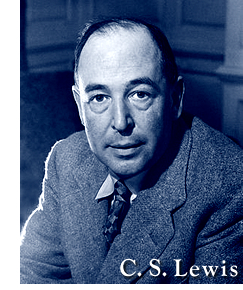
C.S. Lewis Daily – Today’s Reading


On doubt

As far as you (and I) are concerned I have no doubt that the fear you mention is simply a temptation of the devil, an effort to keep us away from God by despair. It is often the devil working through some defect in our health, and in extreme cases it needs a medical as well as a spiritual cure. So don’t listen to these fears and doubts any more than you would to any obviously impure or uncharitable thoughts. . . . Of course, like other evil temptations, they will not be silenced at once. You will think you have got rid of them and then they will come back again—and again. But, with all our temptations of all sorts, we must just endure this. Keep on, do your duty, say your prayers, make your communions, and take no notice of the tempter. He goes away in the end. Remember I John iii, 20 “If (=though) our heart condemn us, God is greater than our heart.”

From The Collected Letters of C.S. Lewis, Volume III

Compiled in Words to Live By