Presidential Prayer Team; C.H. – Big Requests


“Give an inch, they’ll take a mile,” is an idiom meaning, “Do something for someone, they’ll often ask for more.” An actual inch is one-twelfth of a foot, and there are 5,280 feet in a mile – so a person who requests that much is quite bold.

“Suppose ten are found there.” He answered, “For the sake of ten I will not destroy it.”

Genesis 18:32

Abraham used that level of boldness to request mercy for Sodom when God planned to destroy it. He pleaded, “What if there are fifty righteous people there?” God agreed to withhold judgment for fifty. Abraham was persistent. “Suppose five of the fifty righteous are lacking. Will you destroy the whole city for lack of five?” (Genesis 18:28) As God agreed to spare them, Abraham continued dropping the number until he got to ten.

God wants us to be bold in our prayers. “Let us then with confidence draw near to the throne of grace, that we may receive mercy and find grace to help in time of need.” (Hebrews 4:16) Take your big requests to God, for yourself and especially for the rescue and salvation of others. Then boldly pray for President Obama to be courageous in his own prayer life.

Recommended Reading: Genesis 18:22-33

Greg Laurie – Good Despite the Bad


Then the children of Israel did evil in the sight of the Lord. So the Lord delivered them into the hand of Midian for seven years. —Judges 6:1

Can God ever use a nonbelieving nation to overtake a believing nation as a form of punishment? The answer is yes. We should never think that we could not be overtaken by another nation if we continue to thumb our noses at God, persist in breaking His laws left and right, and insist on going out of our way to remove Him from our culture in every way. A chapter in Israel’s history should stand as a warning to us today.

As Judges 6 opens, we see the Israelites living under the power of the Midianites. This was a result of God’s disciplining them because of their disobedience. Interestingly, the Midianites were the first in history to domesticate the camel, which gave them a huge advantage militarily. Imagine being an Israelite who has engaged solely in battles of hand-to-hand combat when suddenly your enemy comes riding over the hills on camels. That is what the Israelites were dealing with.

Then there was the Midianites’ invasion of the land. They would sweep in on their camels, destroy the Israelites’ crops, and ravage their land. Israel was in despair, so they cried out to God for His help and deliverance. The Lord decided to answer their prayers through the most unexpected person possible, a man named Gideon.

Many times in life when things aren’t going well, it is because of bad decisions we’ve made. We disobey the Lord, and then we have the audacity to blame Him for the way things turn out. That is essentially what happened to Israel. They were wondering why things had turned out the way they did. But they brought it on themselves.

The good news is that even when we have made mistakes, God can intervene and bring redemption. God can bring good despite the bad.

Max Lucado – Promised-Land Property


Most babies cry, “Mama!” I cried, “Mustang!” I had asked my dad for a car every day of my life! My father’s stock reply was, “You’ll have a car once you earn it, save for it, & pay for it.” But then came that glorious night when dad handed me keys. Not payment vouchers or requirements, but keys! He said, “Take the car I’m giving you.” I had a new car because he declared it.

In Joshua’s day, the Hebrews had a new land because their Father did the same. “Every place that the sole of your foot will tread upon I have given you.” So Joshua let the people depart, each to their own inheritance.

You have an inheritance! If you’ve given your heart to Christ, the Bible says “God has blessed you with every spiritual blessing in the heavenly places in Christ” (Ephesians 1:3). Promised Land property—placed in your name!

From Glory Days

Night Light for Couples –God’s Recipe For Sex


“Let my lover come into his garden and taste its choice fruits.” Song of Songs 4:16

Someone once said that in matters of sex, men are like microwaves and women are like crockpots. There is certainly some truth to that cooking analogy—husbands can reach their “boiling point” before many wives have even decided what’s on the menu! Why would God make men and women this way? Don’t our different makeups set us up for conflict when our attention turns to physical intimacy?

I believe the Lord knew just what He was doing when He established these fundamental differences between us. After all, if women were more like men, we’d all probably spend so much time in the bedroom that we’d never get anything else done. And if men were more like women, we’d enjoy many more meaningful conversations—but the species might just disappear!

Our differences are what make life so interesting and invigorating. They force us to reach out, to grow, to appreciate our partner. When a husband is extroverted and the wife is introverted, the husband draws out the wife, while the wife helps the husband take time to reflect. When a wife is spontaneous and her husband is a planner, she brings energy and excitement to his life, while he adds stability to hers.

So it is with sex. Emotional and physical differences create interest and excitement. We encourage you to celebrate them! After all, when marital partners are joined as “one flesh,” it is more than a physical union. We are merging our whole beings—body, mind, and spirit—in a wonderful and sacred encounter. This is just what your loving God intended. You can enjoy the variety that each of you brings to your marriage—no matter what you’re cooking.

– Shirley M Dobson

From Night Light For Couples, by Dr. James & Shirley Dobson

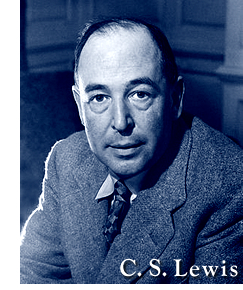
C.S. Lewis Daily – Today’s Reading


Good things as well as bad, you know, are caught by a kind of infection. If you want to get warm you must stand near the fire: if you want to be wet you must get into the water. If you want joy, power, peace, eternal life, you must get close to, or even into, the thing that has them. They are not a sort of prize which God could, if He chose, just hand out to anyone. They are a great fountain of energy and beauty spurting up at the very centre of reality. If you are close to it, the spray will wet you: if you are not, you will remain dry. Once a man is united to God, how could he not live forever?

From Mere Christianity

Compiled in Words to Live By

Charles Stanley – Salvation: The Work of Our Sovereign God


Ephesians 2:1-10

Salvation refers to the freedom gained when God rescues someone from slavery to sin and makes that person part of His family. This deliverance is accomplished only through His Son Jesus, who died in our place so we might be reconciled to the Father (Col. 1:22). This statement often evokes questions:

What if I try to live morally right, working hard at my job and being good to my family—won’t God accept me? Such questions assume that the Lord saves us on the basis of the way we live. But Romans 3:10 says, “There is none righteous, not even one.” In God’s sight, even our virtuous acts are like dirty rags (Isa. 64:6). Holy God will not have dealings with unrighteous people except through the Savior, Jesus Christ.

Won’t the Lord accept us because of His goodness? God is loving and good, but He is also just. He won’t overlook sin, no matter how small we think it is. Pride makes us reject the idea that we need forgiveness or cleansing from sin.

If we serve in our church or help the poor in God’s name, aren’t we part of His family? Good works do not solve our sin problem or reconcile us to God. Only Jesus does (Rom. 5:1). Good works are an important result of salvation, as opposed to a basis for it.

Salvation is a work of God’s grace, not the product of man’s effort. When we respond to the Spirit’s prompting, believe in Jesus, and are born again as God’s children (John 3:3), we can be assured of our place in heaven. How sure are you?

Bible in One Year: Ezekiel 40-42

Our Daily Bread — A Fragrance and a Letter


Read: 2 Corinthians 2:14-3:3

Bible in a Year: Proverbs 6-7; 2 Corinthians 2

We are to God the pleasing aroma of Christ. —2 Corinthians 2:15

Every time I get close to a rosebush or a bouquet of flowers, I’m unable to resist the temptation to pull a flower toward my nose to savor the fragrance. The sweet aroma lifts up my heart and triggers good feelings within me.

Writing to the Christians in Corinth centuries ago, the apostle Paul says that because we belong to Christ, God “uses us to spread the aroma of the knowledge of him everywhere” (2 Cor. 2:14). Through His strength we can live a victorious life, exchanging our selfishness for His love and kindness and proclaiming the goodness of His salvation. When we do this, we are indeed a sweet fragrance to God.

Paul then switches to a second image, describing Christians as a “letter from Christ” (3:3). The letter of our lives is not written with ordinary ink, but by the Spirit of God. God changes us by writing His Word on our hearts for others to read.

Both word pictures encourage us to allow the beauty of Christ to be seen in us so we can point people to Him. He is the One who, as Paul wrote in Ephesians 5:2, “loved us and gave himself up for us as a fragrant offering and sacrifice to God.” —Lawrence Darmani

Lord, let Your splendor fill my life, that I may draw people to You. Help me walk in the way that spreads the fragrance of Your love to others.

Our actions speak louder than our words.

INSIGHT: Paul had a strained relationship with the church in Corinth. Within this troubled church were those who undermined unity, holy living, and sound doctrine. The Corinthian church was the recipient of three visits and multiple letters from the apostle Paul. Yet despite all the problems the church was facing—doubting Paul’s authority, allowing and perhaps bragging about sin, suggesting there is no resurrection—Paul continually reassured them of both his own affection and God’s affection for them. Paul’s message is clear—for Corinth and for us. Yes, we will experience problems that need to be corrected, but our position in Christ is secure. J.R. Hudberg

Ravi Zacharias Ministry – The Gift of Ordinary


On the occasion of summer’s demise and the return of school year schedules, a thought of Oscar Wilde’s crosses my mind. Wilde thoroughly resented the power of modern calendars to remind us that, though full of activity, “each day that passes is the anniversary of some perfectly uninteresting event.” My own calendar’s declaration that yesterday was World Salami Day and today is Iguana Awareness Day seems to prove Mr. Wilde’s point. He would no doubt be further troubled to know that we are currently in a season that the Christian calendar calls “Ordinary Time.”

There are actually two intervals of Ordinary Time within the Christian church year, unbeknownst to most modern calendars. The first interval begins after Epiphany (the remembrance of the arrival of the wise men to the birthplace of Jesus) and continues until Lent (the forty days of remembrance leading up to the crucifixion of Jesus). The second interval of Ordinary Time begins at the conclusion of Pentecost (the celebration of the coming of the Holy Spirit) and continues until Advent (the celebration of the coming of the Christ child). We are currently living within this second interlude of Ordinary Time, waiting for the approach of Advent. But this is hardly the Church’s way of saying that the day before us is actually ordinary.

Far from announcing days that are commonplace or mundane, Ordinary Time is meant to be a season of anticipated living. The term actually comes from the word “ordinal,” which means that it is time “counted” or “numbered.” Though the Church’s festive banners may have come down after the celebrations of Lent and Easter have ended, the startling realities of life under the banners of a crucified King and the vicarious presence of a resurrected savior have begun. The Church attempts to remind the world to live expectantly between the mystery of the cross and the assurance of the living one within our midst.

Though Jewish feasts and holy days were a major part of the lives of Jesus and his disciples, the same was true for them as it is for the church: the majority of their time together was the time spent between holy days. Yet far from being described as the lull between holidays, the disciples’ “ordinary time” was spent healing and feeding crowds, proclaiming the kingdom, raising the dead, learning at the feet of Jesus, finding themselves in the mystery of the Son. More often than not, they were genuinely surprised by the one in their midst, no matter how ordinary the day.

In the everyday lives of Christ’s followers today there is a similar expectant quality within each moment, time that is shared with the world as a divine invitation. This is time counted; time that matters. Time in the presence of one who neither slumbers nor sleeps.

It is appropriate that the first signs of Jesus’s identity were displayed not to Jerusalem’s religious leaders or in the pious celebrations of a chosen nation. The first bold signs of the startling work of God came to foreigners, people who had to journey a great distance to see what the heavens were revealing. In the form of a great star to foreign astrologers, the God of Israel chose to reveal the birth of Jesus to nations far beyond the religious activities of Jerusalem.

Later revelations of the child’s identity were similarly filled with ordinary time and people. After the hype of Passover had settled in Jerusalem and the last of the festivities were waning, long after the villagers who had traveled far were on their way home, twelve year-old Jesus had stayed behind, though his parents were unaware of it. Three days later they found him in the temple courts, sitting among the teachers, listening to them and asking them questions. And “everyone who heard him was amazed” (Luke 2:47). Likewise, the first miracle Jesus performed was not in the temple or as a religious leader but at a wedding as a wedding guest. Quietly and discreetly for a party that was running short on wine, Jesus used the symbols and waters of purification, and he created enough wine to bless the bride and groom and all their guests long after the wedding was finished—a sign of both his coming hour of a life poured out and the coming feast of one at work gathering nations to his table. And once more, ordinary time was marked by the extraordinary.

While the calendar may seem to set us up to live from one major holiday to the next, what if there is far more to expect from the rest of our days? While holy days mark events that dramatically shape both religious and secular worldviews, our ordinary days give us the space to live these events out. In the repetitive rhythm of the church calendar, human hearts are invited to beat expectantly of a greater kingdom. Ordinary time is never ordinary, for God’s presence always involves the unexpected.

Jill Carattini is managing editor of A Slice of Infinity at Ravi Zacharias International Ministries in Atlanta, Georgia.

Alistair Begg – Prevailing Prayer


I will answer you, and will tell you great and hidden things that you have not known. Jeremiah 33:3

There are different translations of these words. One version renders it, “I will show you great and fortified things.” Another, “great and reserved things.” Now, there are reserved and special things in Christian experience: Every development in the spiritual life does not take place in the same way or in the same time frame. There are the common benefits and feelings of repentance and faith and joy and hope, which are enjoyed by the entire family; but there is an upper realm of delight, communion, and conscious union with Christ, which is far from being the routine enjoyment of believers.

We do not all have the high privilege of John, to lean upon Jesus’ bosom; nor of Paul, to be caught up into the third heaven. There are heights in experimental [experiential] knowledge of the things of God that the eagle’s eye has never seen and the philosopher’s mind has never grasped. God alone can take us there; but the chariot in which He transports us, and the horses with which that chariot is pulled, are prevailing prayers.

Prevailing prayer is victorious with the God of mercy, “In his manhood he strove with God. He strove with the angel and prevailed; he wept and sought his favor. He met God at Bethel, and there God spoke with us.”1 Prevailing prayer takes the Christian to the mountain and enables him to cover heaven with clouds of blessing, and earth with floods of mercy. Prevailing prayer lifts the Christian and shows him his inheritance and transfigures him into the likeness of his Lord. If you would reach to something higher than ordinary groveling experience, look to the Rock that is higher than you, and gaze with the eye of faith through the window of consistent prayer. When you open the window on your side, it will not be bolted on the other.

1) Hosea 12:3-4

The Family Bible Reading Plan

  • 2 Samuel 3
  • 1 Corinthians 14

Devotional material is taken from “Morning and Evening,” written by C.H. Spurgeon, revised and updated by Alistair Begg.

Charles Spurgeon – The death of the Christian


“Thou shalt come to thy grave in a full age, like as a shock of corn cometh in his season.” Job 5:26

Suggested Further Reading: 2 Corinthians 5:1-8

Wait a little, beloved. In a few more years you and I shall be carried through the heavens on the wings of angels. When I die, the angels approach. I am on the wings of cherubs. Oh, how they bear me up—how swiftly and yet how softly. I have left mortality with all its pains. Oh, how rapid is my flight! Just now I passed the morning star. Far behind me now the planets shine. Oh, how swiftly do I fly, and how sweetly! Cherubs! What sweet flight is yours, and what kind arms are these I lean upon. And on my way you kiss me with the kisses of love and affection.You call me brother. Cherubs; am I your brother? I who just now was captive in a tenement of clay—am I your brother? “Yes!” they say. Oh, hark, I hear music strangely harmonious! What sweet sounds come to my ears! I am nearing Paradise. Do not spirits approach with songs of joy? “Yes!” they say. And before they can answer, behold they come—a glorious convoy! I catch a sight of them as they are holding a great review at the gates of Paradise. And there is the golden gate. I enter in; and I see my blessed Lord. I can tell you no more. All else were things unlawful for flesh to utter. My Lord! I am with thee—plunged into thee—lost in thee just as a drop is swallowed in the ocean—as one single tint is lost in the glorious rainbow! Am I lost in thee, thou glorious Jesus? And is my bliss consummated? Is the wedding-day come at last? Have I really put on the marriage garments? And am I thine? Yes! I am.

For meditation: Are you looking forward to this time (Philippians 1:23)? You can if you are a Christian.The unbeliever has another prospect ahead (Hebrews 10:27). See the contrast in Luke 16:22,23.

Sermon no. 43

9 September (1855)

John MacArthur – Attacks on God’s People


“Stand firm against the schemes of the devil” (Eph. 6:11).

Satan wants to catch you off-guard.

Yesterday we saw how Satan attacks God’s Word. Today we will see how he attacks God’s people. Persecution, peer pressure, and preoccupation are three weapons he employs with great effectiveness.

Persecution should never take Christians by surprise because Scripture repeatedly warns us that it will come. For example, 2 Timothy 3:12 says, “Indeed, all who desire to live godly in Christ Jesus will be persecuted.” Yet such warnings are often overlooked in the health, wealth, and prosperity climate of contemporary Christianity.

As the greed perpetuated by such a movement continues its assault on Christian virtue, many professing believers have come to expect a pain-free, trouble-free life. When trials come, they’re caught off guard and often disillusioned with the church or with God Himself. Some prove to be phony believers, whom Jesus described in His parable of the four soils: people who initially respond to the gospel with joy, yet fall away when affliction or persecution arises because of the Word (Matt. 13:21).

Satan also uses peer pressure as an effective weapon. Many people never come to Christ for fear of losing their friends or being thought of as different. For them the cost of discipleship is too great. Even Christians sometimes struggle with peer pressure, compromising God’s standards to avoid offending others.

Another weapon is preoccupation with the world. Often the hardest place to live the Christian life is in the easiest place. For example, becoming a Christian in America isn’t the life-threatening choice it is in some parts of the world. Some who stand boldly against persecution or peer pressure might falter in a climate of acceptance. Often that’s when the danger of spiritual complacency and preoccupation with the world is greatest.

To guard against those attacks, remember that God uses persecution to mature you and bring glory to Himself. Also, make a conscious choice each day to please God rather than people. Finally, evaluate your priorities and activities carefully. Fight the tendency to become preoccupied with things unrelated to God’s kingdom.

Suggestions for Prayer

Ask God to keep you spiritually alert throughout this day so the enemy doesn’t catch you off guard.

For Further Study

Read Matthew 26:31-56. What might the disciples have done to avoid being caught off guard?


Joyce Meyer – Unity Brings Blessings


Behold, how good and how pleasant it is for brethren to dwell together in unity!…It is like the dew of [lofty] Mount Hermon and the dew that comes on the hills of Zion; for there the Lord has commanded the blessing, even life forevermore.- Psalm 133:1, 3

When you have been praying about something and do not seem to be hearing God giving you answers or making any progress, you may need to get someone to pray in agreement with you. That kind of unity is a powerful spiritual dynamic, and according to today’s verses, it is good and it commands God’s blessing.

When two or more people come into agreement, Jesus Himself promises to be with them, and His presence exerts more power than we can even imagine in our lives and in our circumstances. He says in Matthew 18:19–20: Again I tell you, if two of you on earth agree (harmonize together, make a symphony together) about whatever [anything and everything] they may ask, it will come to pass and be done for them by My Father in heaven. For wherever two or three are gathered (drawn together as My followers) in (into) My name, there I AM in the midst of them.

God is also with us as individuals, but our power increases as we come together in unity and agreement. The Bible says that one can put one thousand to flight and two can run off ten thousand (see Deuteronomy 32:30). I like that kind of math!

Because God’s blessing rests on unity and His presence is with those who agree in His name, the enemy works diligently to divide people, to bring strife into relationships, to provoke anger and jealousy and to keep people at odds with each other. We need to understand the power of unity and agreement and, though we do need private times of intimate communion with God, we also need to exercise the power of agreement by talking to God and listening for His voice with others.

Campus Crusade for Christ; Bill Bright – Covered With His Love


“Long ago, even before He made the world, God chose us to be His very own, through what Christ would do for us; He decided then to make us holy in His eyes, without a single fault – we who stand before Him covered with His love” (Ephesians 1:4).

On every continent and in scores of countries, I have asked thousands of people, including Muslims, Hindus, Buddhists, communists and atheists: “Who is the greatest person who ever lived? Who has done more good for mankind than anyone else?”

Among knowledgeable people, the answer is always the same, “Jesus of Nazareth.”

Born nearly 2,000 years ago, His coming had been foretold for centuries by the great prophets of Israel. The Old Testament, written by many individuals over a period of 1,500 years, contains more than 300 references concerning the promised Messiah. All of these prophecies have been fulfilled in the birth, life, ministry, death and resurrection of Jesus. They could not have referred to anyone else.

That in itself is conclusive evidence of God’s personal and supernatural intervention in history. Jesus’ coming into this world was no accident, and we who trust Him are covered by His love.

What a beautiful picture – covered with His love!

“All the armies that ever marched and all the navies that were ever built, and all the parliaments that ever sat, and all the kings that ever reigned, put together have not affected the life of man upon this earth as has that one solitary life,” declared an anonymous observer in reflecting upon the life of Jesus Christ.

Bible Reading: Ephesians 1:5-14

TODAY’S ACTION POINT: Throughout this day I will picture myself embraced by the arms of the Almighty, His love covering and comforting me. I will share His love and faithfulness with others.

Presidential Prayer Team; J.R. – Communication Clarity


A recent annual report for a large mutual fund included this helpful information: “In industrial metals, we are overweight nickel which is a tight market with promising demand characteristics. Finally, we believe location and time spreads in energy and agriculture as well as relative value positions in base metals can provide us with opportunities to generate value.” What? Aside from the poor writing, what does the report say? Is this fund good or bad? Not surprisingly, the fund lost nearly 27 percent in a single year.

That I may make it clear, which is how I ought to speak.

Colossians 4:4

The apostle Paul would not have been good at writing annual investment reports – he was much too honest and forthright. But he also understood the importance of clarity. In fact, he asked his friends to pray for him that he might make the Gospel clear to those around him. What’s all the more remarkable is that he made this request while he was in prison…for preaching the Gospel. His thoughts were not on the miserable predicament his Christianity had caused him. Instead, they were, “How can I say this more plainly so that more people will know Jesus?”

May that be your prayer today as you pray and share His love with others. Make it clear!

Recommended Reading: Galatians 1:10-16

Greg Laurie –The Subtle Destruction of Compromise


And it came to pass, when Israel was strong, that they put the Canaanites under tribute, but did not completely drive them out.—Judges 1:28

Approximately two hundred years had passed since Joshua led the Israelites on their famous march around the walls of Jericho. By God’s power, the walls of the city fell, and the Israelites conquered Jericho. Under Joshua’s direction, they also conquered many of the inhabitants of Canaan, including the Amorites, the Hittites, the Ammonites, and the Jebusites.

But the Israelites didn’t finish the job. They failed to drive all the Canaanites from the land, and they lived to regret it. Two hundred years later, the Canaanites had regained strength and began to dominate Israel. The tables were turned. Israel’s enemies were overtaking them.

This can happen to us as Christians. We commit our lives to Christ and effectively give Him the master key to every door in our lives—but maybe not every door. We may leave a few closets locked up because we have some skeletons in them. We have some areas that we don’t really turn over to the Lord, and then those little problems later turn into big problems.

It is not unlike having a tree that has overtaken your yard. You decide it’s time to remove it, and so you cut it down. But you can’t simply cut it down; you also have to pull out the stump too. Otherwise, it will grow back. It might even grow back stronger and cause more trouble.

In the same way, sin needs to be rooted out in our lives. When we compromise a little here and a little there, little things turn into big things. It’s like those adorable bunnies and chicks that parents buy for their children at Easter. Sweet little bunnies turn into adult rabbits, and cute little chicks become full-grown chickens.

Little things turn into big things. That is how sin can work in our lives.

Max Lucado – Certain Victory


“It’s time to declare war on the pestilence that goes by the name, I can’t. It attacks our self-control with I can’t keep a job and it attacks our marriages with I can’t forgive. It even attacks our faith with I can’t believe God cares for me.

Had Joshua mumbled those words, who would’ve blamed him? Joshua 1:1 begins with bad news, “Moses, my servant, is dead.” To lose Moses was to lose the cause. Imagine the dismay, the grief, the fear! And yet, God told Joshua, “Moses is dead. Now therefore, arise.” Moses may be dead, but God is alive! Even so, Joshua had reason to say, I can’t. Moses was dead. And the Canaanites ate folks like the Israelites for breakfast! But Joshua never declared defeat. God gave him reason for faith. Victory was certain because the victory was God’s!  The same is true for you.

From Glory Days

Night Light for Couples –God’s Gift


“The man and his wife were both naked, and they felt no shame.” Genesis 2:25

In previous generations, some people believed women were not supposed to enjoy sex. Even today some Christians still feel that sex between marital partners is somehow sinful or “dirty.”

But there’s nothing biblical about either viewpoint. The Lord created us as sexual beings and gave us the gift of physical intimacy as a means for expressing love between husband and wife. In the biblical account of the Garden of Eden, we are told that “a man will leave his father and mother and be united to his wife, and they will become one flesh.” The Bible says that before sin entered the picture, the first husband and wife were unashamed of their nakedness (Genesis 2:24–25).

Scripture also uses sexual symbolism to describe the relationship between God and man. (Look, for example, at Isaiah 62:5; Jeremiah 7:9 and 23:10; Ezekiel 16; Hosea; Ephesians 5; and Revelation 19:6–7.) In addition, Solomon’s Song of Songs clearly celebrates sexual pleasure between married lovers. We suggest that you set time aside to read that book together.

As designed by God, sexual desire in marriage is more than an afterthought or a means to guarantee procreation. That’s why we can wholeheartedly say, “Let’s ‘make love’ the way our God intended!”

Just between us…

  • While growing up, did you receive positive or negative messages about sex?
  • How do you think this has affected our love life?
  • Do you think of sex as a gift from God? Is there anything about our love life that you’d like to tell me?

Dear God, thank You for making Your wonderful intentions for married sex so clear in Scripture. Where we have trampled on this gift, forgive us. We want so much to “make love” Your way. Amen.

From Night Light For Couples, by Dr. James & Shirley Dobson

Charles Stanley – Our Help in Weakness


John 14:16-17

Following the Last Supper, Jesus took time to teach the disciples more about His mission and what would happen after He left the earth. He knew their darkest times lay ahead. They would experience despair at the death of their beloved Teacher, great joy at His resurrection, and sorrow at His departure. He was also aware that bearing witness to His life would challenge their faith. So, in John 14:16-31, He promised a Helper who would stand alongside them in the coming trials.

We often face life with a stiff upper lip, trusting our own ingenuity and skills to get us through. In choosing to follow the Lord, however, we agree to adopt a totally different mindset: We’re weaker than we could have imagined, but through the Holy Spirit, we are stronger than we dared to hope.

Whether our struggle is spiritual, emotional, or physical, we can rely on the Holy Spirit to help us. Paul gives us an example of what this looks like. When dealing with pain from a physical condition, the apostle prayed that the Lord would take away what he referred to as a “thorn in the flesh.” Instead, God said His power would be “perfected in weakness” (2 Corinthians 12:9).

Too many Christians operate under the misconception that God helps us only when we have gone as far as we can go. In reality, His Spirit doesn’t add to our strength, like some kind of spiritual steroid. Instead, when we admit we are powerless to help ourselves, the Holy Spirit gives us the strength we need to face any challenge with absolute confidence in God.

Bible in One Year: Ezekiel 37-39

Our Daily Bread — God’s Plans


Read: Joshua 5:13-6:2

Bible in a Year: Proverbs 3-5; 2 Corinthians 1

What message does my Lord command for his servant? —Joshua 5:14

An army officer may have an overall plan, but before each battle he has to receive and give out new instructions. Joshua, a leader of the Israelites, had to learn this lesson. After God’s people spent 40 years in the wilderness, God chose Joshua to lead them into the land He had promised to them.

The first stronghold they faced was the city of Jericho. Before the battle, Joshua saw the “commander of the Lord’s army” (probably the Lord Himself) standing opposite him with His sword drawn in His hand. Joshua fell on his face and worshiped. In other words, he recognized God’s greatness and his own smallness. Then he asked, “What message does my Lord have for his servant?” (Josh. 5:14). Joshua experienced victory at Jericho because he followed the Lord’s instructions.

On another occasion, however, Joshua and his people “did not inquire of the LORD” (9:14). As a result, they were deceived into making a peace treaty with the people of Gibeon, enemies in the land of Canaan. This displeased the Lord (vv. 3-26).

We too are dependent on the Lord as we face life’s struggles. He longs for us to come near to Him today in humility. And He’ll be there again for us tomorrow. —Keila Ochoa

In what area do you need God’s guidance today? Ask God to lead the way.Share your response to this question on facebook.com/ourdailybread or odb.org

Spiritual victory comes to those who humble themselves and seek God’s will.

INSIGHT: Easton’s Bible Dictionary provides some insight into the life of Joshua. He was “the son of Nun, of the tribe of Ephraim, the successor of Moses as the leader of Israel. . . . He was born in Egypt, and was probably of the age of Caleb, with whom he is generally associated. He shared in all the events of the Exodus, and held the place of commander of the host of the Israelites at their great battle against the Amalekites in Rephidim. He became Moses’ minister or servant, and accompanied him part of the way when he ascended Mount Sinai to receive the two tables. He was also one of the twelve who were sent on by Moses to explore the land of Canaan, and only he and Caleb gave an encouraging report.” Bill Crowder

Ravi Zacharias Ministry

I am often asked in conversations with people outside of Christian faith why I am a Christian. Sometimes, before I am finished with an explanation, a litany of offenses associated with Christianity pours out as evidence against believing: all the bloodshed and religious wars, the Inquisition, anti-Semitism, etc. I actually don’t mind these kinds of critiques or questions. They are very important, and it would be foolish of me to pretend that the record of Christendom in the world was spotless. Much has been done in the name of Jesus by those who claim to be Christians, for which there should be collective shame.

Sometimes my honest acknowledgement of historic faults isn’t enough for my skeptical friends. Next, they scrutinize the Bible. Who wrote it? Can we trust it? How do we know it is God’s word? When it comes to the Bible, I also understand why these kinds of questions are raised. There are some fairly difficult passages, culturally specific events and contexts that can make the work of translation and understanding in this contemporary time—let alone for those who are completely unfamiliar with it—complicated at best. Again, it would be untruthful if those who studied the Bible pretended to understand everything within its narrative perfectly or completely.

One thing that is not difficult to see or understand, however, is all the humanity on display throughout the biblical narrative. Even the most ‘heroic’ or ‘epic’ of biblical characters are shown with their flaws and their weaknesses on display as much as their strengths. For example, Israel’s great deliverer Moses is called long past his prime and after having been exiled from the royal life in Egypt. We find him tending sheep in the middle of the wilderness. By his own admission, he is not a great public speaker, likely suffering from a speech impediment, and he struggles with his temper; he had killed an Egyptian and struck a rock with such force and violence that he was not permitted to enter the Promised Land. King David, the great king of Israel, was actually the youngest of his family when he is anointed as king. He is tasked to keep the flocks. The first born son was the normal and rightful heir to inheritance and leadership. He committed murder and adultery, conducted a census against God’s specific prohibition, yet he is the one described as a ‘man after God’s heart.’

David likely penned most of Israel’s psalter—a psalter still used in both Jewish and Christian worship today. In this psalter, the record of human emotions, human experience, and human questioning is on display. These are the psalms of sacred worship even as they are the deepest cries of the human heart.

There are the twelve disciples; humble fishermen without much education who lived and learned from Jesus, himself. Despite their proximity to Jesus for three years, one would betray him, another would deny having even known him, and all of them would flee from him in his greatest hour of need. Even while having access to this great teacher, they often failed to understand his teaching. The apostle Paul, who penned most of the New Testament letters, was formerly a murderer of Christians and a legalist of legalists. Even though he is the first apostle of the early Christian movement, he couldn’t prevent a disagreement between himself and his fellow worker, Barnabus over John Mark from separating them.

In dealing with skeptics, there might be the temptation to overlook the humanity in the Bible. Perhaps it causes embarrassment, or creates fear that Christianity somehow doesn’t ‘work’ in transforming lives. I don’t see it that way at all. In fact, time and again when I have struggled with doubts in my faith, I am reminded of all the human individuals used by God as witnesses to the greatness of God’s love and redemption. It is one of the first things I point out in proclaiming the trustworthiness and faithfulness of the Biblical record, and indeed of Christian faith. For, unlike any other sacred text, as lofty and as grand as their epics might be, or as poetic and beautiful as their text reads, they do not show the full portrait of humanity on display as the Bible does; their heroes are not broken, but elevated humans and demi-gods.

So it seems worth asking: What kind of God, indeed what kind of religion, takes fallen and broken human beings and includes them in the plan of salvation? As the apostle Paul proclaimed of his own ministry; “for God, who said, ‘Let light shine out of darkness, made the light shine in our hearts to give us the light of the knowledge of the glory of God in the face of Christ. But we have this treasure in jars of clay to show that this all surpassing power is from God and not from us” (2 Cor. 4:6-7).

Skeptics and critics of Christianity might still have well-reasoned arguments, and legitimate issues to raise with the faith (and with the faithful), but one thing that cannot be denied is that the God on display in the Bible is not afraid of our humanity, nor does that God shy away from using those who many might consider undesirable. It is this common humanity—on display in my own life so frequently—recorded in the narrative of Scripture that keeps me believing in its truth and relevance.

And if that weren’t all enough, Christianity proclaims a God who valued humanity so much that in Jesus God took on flesh, becoming human. He took on his own jar of clay and in so doing gifted all of humanity with immeasurable treasure.


Margaret Manning Shull is a member of the speaking and writing team at Ravi Zacharias International Ministries in Bellingham, Washington.