Our Daily Bread — People Power


Read: Ephesians 4:7-16

Bible in a Year: Psalms 143-145; 1 Corinthians 14:21-40

The whole body . . . grows and builds itself up in love, as each part does its work. —Ephesians 4:16

A man was boarding a train in Perth, Australia, when he slipped and his leg got caught in the gap between the train carriage and the station platform. Dozens of passengers quickly came to his rescue. They used their sheer might to tilt the train away from the platform, and the trapped man was freed! The train service’s spokesman, David Hynes, said in an interview, “Everyone sort of pitched in. It was people power that saved someone from possibly quite serious injury.”

In Ephesians 4, we read that people power is God’s plan for building up His family. He has given each of us a special gift of His grace (v. 7) for the specific purpose that “the whole body, joined and held together by every supporting ligament, grows and builds itself up in love, as each part does its work” (v. 16).

Every person has a job to do in God’s family; there are no spectators. In God’s family we weep and laugh together. We bear each other’s burdens. We pray for and encourage one another. We challenge and help each other to turn from sin. Show us, Father, our part in helping Your family today. —Poh Fang Chia

Are you a spectator or a participant? What gifts do you have? In what ways can God use you to help others grow closer to Him?

We need each other to get to where God wants us to go.

INSIGHT: The various types of spiritual gifts are listed in Romans 12:6-8, 1 Corinthians 12:7-30, Ephesians 4:11, and 1 Peter 4:10-11. That no two lists are identical would suggest that each list is not exhaustive. God intends that we use these grace gifts to serve, instruct, encourage, edify, equip, and empower the church so as to glorify Him (1 Cor. 14:4-5,26,31; Eph. 4:12; 1 Peter 4:10-11). In Ephesians 4, Paul highlights the teaching gifts that help build up and mature the church (vv. 11-16). Apostles, prophets, evangelists, and pastor-teachers are gifted in proclaiming and teaching the Word of God. Sim Kay Tee


Ravi Zacharias Ministry – For the Weak


After fifteen years and nearly seventeen thousand miles, an unlikely fleet was set to make port on the beaches of Britain. On January 29, 1992, three massive containers on a cargo ship from Hong Kong crashed into the Pacific Ocean during a storm. The containers were filled with brightly colored bathtub toys bound for the United States. Instead, twenty-nine thousand little plastic ducks, frogs, beavers, and turtles began a journey that would be carefully monitored by children, oceanographers, environmentalists, and newscasters alike.

After 23 years, the tiny bobbing friends have traveled past Japan and back to Alaska, drifted deliberately down the Bering Strait and past the length of Greenland, and carefully floated down the eastern coastline of the United States. They have persevered through storms that would have left boats and crews in dire straits. They patiently endured four years frozen in ice as they crossed the Arctic Ocean. They have arrived at various intervals on various shores, faded and tattered by sun and surf, some with animal bites and barnacles to show for the journey. But each smiling plastic face seems to return with an ironic confession: the smallest vessels on tumultuous seas are not necessarily the most vulnerable.

Life is certainly far more than an attempt to keep our heads above water, and yet at times it feels a suited metaphor. Like tiny rubber ducks in an oceanic bathtub, we are tossed about the rocks of fear and anger, pulled under by currents of despair and disappointment, and broken at times by the journey. Human fragility is often as startlingly obvious as the image of a bath toy in the Bering Strait. We are at times almost averse to this fragility, whether seen in ourselves or in others. Fighting to keep afloat in an unpredictable sea, we take on distracting cargo and build defensive walls—anything that makes us feel less like tiny vessels lost at sea and more like giant ships passing in the night.

But metaphors of strength can be misleading, and vulnerability is often fearfully misunderstood. Though we may be reluctant to hear it, there is one tradition that clearly puts forth the story of a fragile and fleeting humanity. Jesus spoke readily of his own death and wept at the grave of a friend. The apostle Paul wrote of our bodies as “jars of clay,” words hastening back the image of David who lamented that he had become like “broken pottery.” Yet even well beyond the fragile images of humanity given in Scripture, the vulnerability of a God-man comes into focus and redefines all of our terms. The image of Jesus on the cross further turns our understanding of fragility on its head, challenges every discomfort with brokenness, and redirects our associations of weak and strong. In these images of Christ we discover a vulnerability of God that makes our greatest images of strength seem somehow childish. In his cruciform journey, God uses the weak to shame the strong, a suffering Son to meet the wounds of creation, and the vulnerable image of a broken savior who comes near.

The Christian profession is that it is by the Cross which we live, by a seemingly weak vessel, that we are brought home. Christ is not promised as a religious escape raft for the hard realities of this world. On the contrary, he calls to us in our weakness and reminds us that it is not unfamiliar to him. Through tumultuous waters, he beckons us to see there is potential in fragility, mercy in affliction, life beyond and within the journey that currently consumes us. Something like the image of tiny ducks arriving after an unlikely voyage, the journey of a soul to the cross is one in which Christ redirects our thoughts on vulnerability, the weak and the strong. And along the way, God is aware of every last and fragile vessel, going after even one that is lost, longing to gather us unto himself like a hen bringing together thousands of chicks under her wings.

Jill Carattini is managing editor of A Slice of Infinity at Ravi Zacharias International Ministries in Atlanta, Georgia.

Alistair Begg – Sick with Sin


“I will; be clean.” Mark 1:41

The primeval darkness heard God say, “Let there be light,” and immediately there was light. The word of the Lord Jesus is equal in majesty to that ancient word of power. Redemption, like creation, has its word of might. Jesus speaks, and it is done. Leprosy yielded to no human remedies, but it fled at once at the Lord’s “I will.” The disease exhibited no hopeful signs or tokens of recovery; nature contributed nothing to its own healing. But the unaided word effected the entire work on the spot and forever. The sinner is in a more miserable plight than the leper; let him imitate his example and go to Jesus, “imploring him and kneeling [say] to him . . .” Let him exercise what little faith he has, even though it should go no further than “If you will, you can make me clean.”

There need be no doubt as to the result of the application. Jesus heals all who come and casts out none. In reading the narrative in which our morning’s text occurs, it is worthy of careful consideration that Jesus touched the leper. This unclean person had broken through the regulations of the ceremonial law and pressed into the house, but Jesus, far from chiding him, broke through the law Himself in order to meet him. He made an interchange with the leper, for while He cleansed him, He contracted by that touch a Levitical defilement.

Even so Jesus Christ was made sin for us, although in Himself He knew no sin, that we might be made the righteousness of God in Him. If only poor sinners would go to Jesus, believing in the power of His blessed substitutionary work, they would soon learn the power of His gracious touch. The hand that multiplied the loaves, that saved sinking Peter, that upholds afflicted saints, that crowns believers-that same hand will touch every seeking sinner and in a moment make him clean. The love of Jesus is the source of salvation. He loves, He looks, He touches us, and we live.

The Family Bible Reading Plan

  • 1 Samuel 28
  • 1 Corinthians 9

Devotional material is taken from “Morning and Evening,” written by C.H. Spurgeon, revised and updated by Alistair Begg.

Charles Spurgeon – Christ triumphant


“And having spoiled principalities and powers, he made a shew of them openly, triumphing over them in it.” Colossians 2:15

Suggested Further Reading: Isaiah 63:1-6

I might describe the mighty pictures at the end of the procession; for in the old Roman triumph, the deeds of the conqueror were all depicted in paintings. The towns he had taken, the rivers he had passed, the provinces he had subdued, the battles he had fought, were represented in pictures and exposed to the view of the people, who with great festivity and rejoicing, accompanied him in throngs, or beheld from the windows of their houses, and filled the air with their acclamations and applauses. I might present to you first of all the picture of hell’s dungeons blown to atoms. Satan had prepared deep in the depths of darkness a prison-house for God’s elect; but Christ has not left one stone upon another. On the picture I see the chains broken in pieces, the prison doors burnt with fire, and all the depths shaken to their foundations. On another picture I see heaven open to all believers; I see the gates that were fast shut heaved open by the golden lever of Christ’s atonement. I see another picture, the grave despoiled; I behold Jesus in it, slumbering for awhile, and then rolling away the stone and rising to immortality and glory. But we cannot stay to describe these mighty pictures of the victories of his love. We know that the time shall come when the triumphant procession shall cease, when the last of his redeemed shall have entered into the city of happiness and of joy, and when with the shout of a trumpet heard for the last time, he shall ascend to heaven, and take his people up to reign with God, even our Father, for ever and ever, world without end.

For meditation: The victory and triumph (or victory parade) are Christ’s alone; if you are a Christian, your part in his victory procession is to be found in 2 Corinthians 2:14.

Sermon no. 273

4 September (1859)

John MacArthur – The Balanced Approach to Spiritual Victory


“Be strong in the Lord, and in the strength of His might. Put on the full armor of God” (Eph. 6:10-11).

Spiritual victory is not passive; it involves the discipline of daily obedience to Christ and His Word.

When I was a child, my father and I watched a boxing match on television. After going through the ritual of punching the air, kicking his feet, and putting rosin on his shoes, one of the fighters knelt in the corner and crossed himself. I asked my dad if that helped. He said, “It does if he can punch. If he can’t punch, it doesn’t help at all.”

That illustrates a point we touched on yesterday and will explore further today: God’s part and our part in spiritual warfare. Many Christians believe that spiritual victory comes simply by surrendering more completely to God. They quote verses like 2 Chronicles 20:15 to support their view: “The battle is not yours but God’s.” “Stop struggling and striving,” they say. “Instead, yield and completely surrender yourself to God. He alone does the fighting and gives the victory.”

Such people are often called “Quietists” because they view the Christian’s role in spiritual warfare as passive or quiet. Their anthem is “Let go and let God.”

But Scripture gives a very different view of the believer’s role. It pictures the Christian life as a war, a race, and a fight. We depend on God’s energy, power, and strength, but are by no means passive. We’re commanded to apply ourselves to good deeds, resist the devil, bring our bodies under subjection, walk in wisdom, press toward the prize, cleanse ourselves from all filthiness of flesh and spirit, work out our salvation with fear and trembling, and perfect holiness in the fear of God. Those are calls to fervent action.

In Ephesians 6:10-11 Paul says, “Be strong in the . . . strength of His might. Put on the full armor of God.” That’s the balance. God supplies the resources; we supply the effort.

Suggestions for Prayer

  • Thank God for the strength He gives for spiritual victory.
  • Ask for His wisdom in living a balanced Christian life.

For Further Study

Read 2 Peter 1:3-7.

  • What does God supply for Christian living?
  • What must you as a believer supply?


Joyce Meyer – Stay Out of Strife


He who is of a greedy spirit stirs up strife, but he who puts his trust in the Lord shall be enriched and blessed.- Proverbs 28:25

Probably 80 percent of the places we visit in our ministry have church members who are riddled with strife. Strife is the devil’s tool against us. It takes personal self-control to stay out of strife.

If you want to keep peace, you can’t always say everything you want to say. Sometimes you have to control yourself and apologize even when there is nothing in you that wants to do so. But if you sow the godly principle of harmony and unity today, a time will come when you will reap the blessings of all it can bring to you.


Campus Crusade for Christ; Bill Bright – Blessed are the Humble


“Blessed are the poor in spirit for theirs is the kingdom of heaven” (Matthew 5:3).

A young Christian leader, who was probably more impressed with himself than he should have been, shared with me one day how he had difficulty in being humble about all of his talent. He was a better than average speaker and a reasonably gifted singer, he had a good mind and personality, and in his heart of hearts he knew that as a Christian he should be humble.

He said, “I spend many hours on my knees asking God to make me humble.” I responded, “I can save you a lot of prayer time in that regard if you are interested.” He assured me that he was. Whereupon I explained to him that every gift he possessed – personality, good mind, his ability to sing, speak, and other qualities – were all gifts of God and could be taken from him at any moment by a brain tumor or a car accident or plane crash or any of a thousand different things. Furthermore I reminded him that Scripture admonishes us to humble ourselves.

“Humility is perfect quietness of heart,” Andrew Murray said. “It is to have no trouble. It is never to be fretted or irritated or sore or disappointed. It is to expect nothing, to wonder at nothing that is done to me. It is to be at rest when nobody praises me and when I am blamed or despised. It is to have a blessed hope in the Lord, where I can go in and shut the door and kneel to my Father in secret, and am at peace as in a deep sea of calmness when all around and above is trouble.”

Few Christians achieve such high standards, nevertheless it is an objective toward which we all should strive as long as we live, following the example of our Lord recorded in Philippians, chapter 2.

To be poor in spirit implies not only that we have a humble opinion of ourselves, but also that we recognize that we are sinners and have no righteousness of our own; that we are willing to be saved only by the grace and mercy of God; that we are willing to serve where God places us, to bear the burdens He allows and to stay in His hands and admit that we deserve no favor from Him.

As commonly interpreted, the word “blessed” means “happy.” You and I are assured of happiness when we are making conscious strides toward humility. All of this becomes possible as we yield to God’s indwelling Holy Spirit.

Bible Reading: Matthew 5:17-20

TODAY’S ACTION POINT: With the help of the Holy Spirit I will consciously humble myself, asking Him to enable me to love God with all my heart, soul, mind and strength and my neighbor as myself as an act of humility and as a major factor in achieving the supernatural life.

Presidential Prayer Team; J.K. – Hear God’s Call


Zechariah used the strangest illustration in today’s verse. What made it significant is that Israel had been prohibited to own horses (Deuteronomy 17:16), and those words were reserved for the engraved plate worn on the turban of the High Priest. So what was he saying? The prohibitions and separation required of Israel was to teach them what it meant to be holy. Certain things were sacred.

On that day there shall be inscribed on the bells of the horses, “Holy to the Lord.”

Zechariah 14:20

The New Testament relationship secured by Jesus with His Father for the believer elevates all of God’s creation to the sacred. Commentator F.B. Meyer says, “Consider the genius and inner heart of Christianity. Holiness to the Lord is working heartily and doing all to His glory.” He says it’s a life that deliberately obeys and serves Christ (I Corinthians 10:31) but remembers that “you cannot do all tasks to the glory of God unless you have mountains of transfiguring prayer.”

Set aside special time each day to pray for you, your family and the nation. Hear God’s call to the tasks He has for you…the work bell, school bell, or recreation bell. Respond with His grace and strength – realizing that on each bell you’ll find, “Holy to the Lord.”

Recommended Reading: Colossians 3:18-4:6

Greg Laurie – Watching and Working


Beloved, now we are children of God; and it has not yet been revealed what we shall be, but we know that when He is revealed, we shall be like Him, for we shall see Him as He is. And everyone who has this hope in Him purifies himself, just as He is pure.—1 John 3:2–3

  1. H. Spurgeon said, “It is a very blessed thing to be on the watch for Christ, it is a blessing to us now. How it detaches you from the world! You can be poor without murmuring; you can be rich without worldliness. . . . untold blessings are wrapped up in the glorious hope.”

The Bible says that “faith by itself, if it does not have works, is dead” (James 2:17). If watching for the Lord’s return is the evidence of faith, then working is the evidence of faith in action. We are not only to be anxiously awaiting Christ’s return, but we are to be working. Watching will help us prepare our own lives, but working will assure that we bring others with us.

Jesus said there is a blessedness in living this way: “Blessed are those servants whom the master, when he comes, will find watching” (Luke 12:37). Another way to translate the word blessed as it’s used in this verse is “happy.” In other words, “Happy are those servants whom the master, when he comes, will find watching.”

In contrast to the servant who watches and works, there is the unprepared servant. Jesus continued, “But if that servant says in his heart, ‘My master is delaying his coming,’ and begins to beat the male and female servants, and to eat and drink and be drunk, the master of that servant will come on a day when he is not looking for him, and at an hour when he is not aware, and will cut him in two and appoint him his portion with the unbelievers” (verses 45–46).

Watching and waiting for the return of Christ isn’t a miserable, repressive, or confining way to live. Rather, it is a happy, joyful, and purposeful way of life.

Max Lucado – God’s Vision in God’s Land


Joshua 21:45 says, “Not a word failed of any good thing which the Lord had spoken to the house of Israel. All came to pass.”  Joshua and his men went from dry land to the Promised Land, from manna to feasts, from arid deserts to fertile fields. They inherited their inheritance: the glory days of Israel. This is God’s vision for your life. You, at full throttle. You, as victor over the Jerichos and giants.

Paul describes it as a life in which “Christ’s love has the first and last word in everything we do” (2 Corinthians 5:14).  A life in which Paul says, “we do not lose heart” (2 Corinthians 4:16). A life defined by grace, refined by challenge, and aligned with a heavenly call. In God’s plan, in God’s land…God’s promises outweigh personal problems. Victory becomes a way of life! Your glory days await you!

From Glory Days

Night Light for Couples – A Gentle Caress


by Daphna Renan

Michael and I hardly noticed when the waitress came and placed the plates on our table. We were seated in a small deli tucked away from the bustle of Third Street in New York City. Even the smell of our recently arrived blintzes was no challenge to our excited chatter. In fact, the blintzes remained slumped in their sour cream for quite some time. We were enjoying ourselves too much to eat.

Our exchange was lively, if not profound. We laughed about the movie that we had seen the night before and disagreed about the meaning behind the text we had just finished for our literature seminar. He told me about the moment he had taken a drastic step into maturity by becoming Michael and refusing to respond to “Mikey.” Had he been twelve or fourteen? He couldn’t remember, but he did recall that his mother had cried and said he was growing up too quickly. As we finally bit into our blueberry blintzes, I told him about the blueberries that my sister and I used to pick when we went to visit our cousins in the country. I recalled that I always finished mine before we got back to the house, and my aunt would warn me that I was going to get a bad stomachache. Of course, I never did.

As our sweet conversation continued, my eyes glanced across the restaurant, stopping at the small corner booth where an elderly couple sat. The woman’s floral‐print dress seemed as faded as the cushion on which she had rested her worn handbag. The top of the man’s head was as shiny as the soft‐boiled egg he slowly nibbled. She also ate her oatmeal at a slow, almost tedious pace.

But what drew my thoughts to them was their undisturbed silence. It seemed to me that a melancholy emptiness permeated their little corner. As the exchange between Michael and me fluctuated from laughs to whispers, confessions to assessments, this couple’s poignant stillness called to me. How sad, I thought, not to have anything left to say. Wasn’t there any page that they hadn’t yet turned in each other’s stories? What if that happened to us?

Michael and I paid our small tab and got up to leave the restaurant. As we walked by the corner where the old couple sat, I accidentally dropped my wallet. Bending over to pick it up, I noticed that under the table, each of their free hands was gently cradled in the other’s. They had been holding hands all this time!

I stood up feeling humbled by the simple yet profound act of connection I had just been privileged to witness. This man’s gentle caress of his wife’s tired fingers filled not only what I had previously perceived as an emotionally empty corner, but also my heart. Theirs was not the uncomfortable silence that threatens to fill the space after the punch line or at the end of an anecdote on a first date. No, theirs was a comfortable, relaxed ease, a gentle love that did not always need words to express itself. They had probably shared this hour of the morning with each other for a long time, and maybe today wasn’t that different from yesterday, but they were at peace with that—and with each other.

Maybe, I thought as Michael and I walked out, it wouldn’t be so bad if someday that was us. Maybe it would be kind of nice.

Looking ahead…

When husband and wife have achieved true intimacy, like the elderly couple holding hands in tonight’s story, they can enjoy and appreciate each other at the deepest level. That’s true at the corner deli and in the bedroom.

Some would say that “having sex” and “making love” are one and the same, but there’s an important distinction between the two. The physical act of intercourse can be accomplished by any appropriately matched mammals, as well as most other members of the animal kingdom. But the art of making love, as designed by God, is a much more meaningful and complex experience—it’s physical, emotional, and spiritual. In marriage we should settle for nothing less than a sexual relationship that is expressed not only body-to-body, but heart to heart and soul to soul.

As we discuss this subject in the days ahead, you and your partner may want to ask each other: Is our physical intimacy all that it could be?

– James C Dobson

From Night Light For Couples, by Dr. James & Shirley Dobson

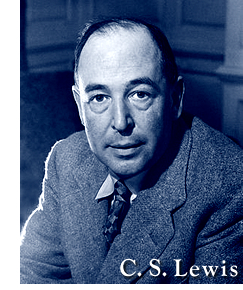
C.S. Lewis Daily – Today’s Reading


TO MARY NEYLAN, whose husband has received job security: More on the graces accompanying the death of Charles Williams. Lewis asks if he can dedicate George MacDonald: An Anthology to her.

20 May 1945

I think what you say about ‘grief being better than estrangement’ is very true. I am sorry you should have had this grief. . . .

I also have become much acquainted with grief now through the death of my great friend Charles Williams, my friend of friends, the comforter of all our little set, the most angelic. The odd thing is that his death has made my faith ten times stronger than it was a week ago. And I find all that talk about ‘feeling he is closer to us than before’ isn’t just talk. It’s just what it does feel like—I can’t put it into words. One seems at moments to be living in a new world. Lots, lots of pain but not a particle of depression or resentment.

By the bye I’ve finished a selection from Geo. MacDonald (365 extracts) which will come out about Xmas: would you (or not) care to have it dedicated to you? I feel it is rather yours by right as you got more out of him than anyone else to whom I introduced his books. Just let me know.

And why should you assume I’m too occupied to see you? Friday mornings in term are bad, but alright in Vac: and Friday afternoons in both. I should like a visit (with a week’s notice) whenever you find one convenient.

Excuse this paper. It may be less blotched than yours but yours did at least begin life as a real piece of note paper! I’m so glad Dan has got his job made permanent. Blessings!

From The Collected Letters of C.S. Lewis, Volume II

Compiled in Yours, Jack

Charles Stanley – How to Bolster Our Faith


Colossians 2:6-7

Once we have made up our minds to obey God, we gather courage around us like a cloak and proceed. That is, until something causes us to hesitate and question the wisdom of this decision. Our faith is wavering. What do we do now?

Ask yourself questions about God. Has God promised to meet all my needs? Has He sent the Holy Spirit to dwell in me, guide me, and equip me to obey Him? Did God promise to be with me at all times? Is anything too hard for Him? Search the Scriptures for answers, and let truth fill your mind.

Meditate on God’s Word. Ask the Lord to help you find Bible verses that relate to what you are facing. Then study the passage and apply its lessons to your personal situation.

Recall the Lord’s past faithfulness. No matter how unsteady our faith, God invites us to draw near so He can strengthen our trust in Him. When He does, accept His invitation and give Him the glory.

Assess the situation. Ask, How critical is this decision, and whom might it affect? Is this one of those forks in the road in which my unbelief could cause me or another person a lifetime of regret?

Choose to trust the Lord. Make the decision to believe God and obey, no matter how you feel.

As you take a step of faith, God will strengthen you through His Spirit and enable you to continue on. Before you know it, your faith will become steady, joy will return, and you will be moving ahead once again.

Bible in One Year: Ezekiel 23-25

Our Daily Bread — The Tyranny of the Perfect


Read: 1 John 1:5-2:2

Bible in a Year: Psalms 140-142; 1 Corinthians 14:1-20

If we claim to be without sin, we deceive ourselves and the truth is not in us. —1 John 1:8

Dr. Brian Goldman obsessively tried to be perfect in treating his patients. But on a nationally broadcast show he admitted to mistakes he had made. He revealed that he had treated a woman in the emergency room and then made the decision to discharge her. Later that day a nurse asked him, “Do you remember that patient you sent home? Well, she’s back.” The patient had been readmitted to the hospital and then died. This devastated him. He tried even harder to be perfect, only to learn the obvious: Perfection is impossible.

As Christians, we may harbor unrealistic expectations of perfection for ourselves. But even if we can somehow manage the appearance of a flawless life, our thoughts and motives are never completely pure.

John the disciple wrote, “If we claim to be without sin, we deceive ourselves and the truth is not in us” (1 John 1:8). The remedy is not to hide our sins and to strive harder, but to step into the light of God’s truth and confess them. “If we walk in the light,” said John, “as he is in the light, we have fellowship with one another, and the blood of Jesus, his Son, purifies us from all sin” (v. 7).

In medicine, Dr. Goldman proposes the idea of a “redefined physician” who—in a culture where we are hesitant to admit our errors—no longer toils under the tyranny of perfection. Such a physician openly shares mistakes and supports colleagues who do the same, with a goal of reducing mistakes.

What if Christians were known not for hiding their sins but for loving and supporting each other with the truth and grace of our God? What if we practiced a risky yet healthy honesty with each other and with the watching world? —Tim Gustafson

Father, it’s so difficult for us to share our faults with each other, but You call us to wholeness as Your people. Empower us by Your Spirit to live courageously in love and honesty.

Honesty with God about our sin brings forgiveness.

INSIGHT: Verse 9 of today’s passage is one of the most well-known verses in the New Testament. It speaks of the faithfulness of God to forgive our sins when we confess them. But it is interesting to note that verses 6-10 begin with the condition “if.” The word if ties results to our actions. John is saying that our condition—walking in darkness or walking in light (vv. 6-7) and being deceived or being forgiven (vv. 8-9)—depends on the choices we make. Although in our standing with God we are eternally forgiven through Christ’s sacrifice, we will miss out on fellowship with God when we neglect confession of sin. J.R. Hudberg

Ravi Zacharias Ministry –  On Faith


The story is told of a newlywed couple whose first argument after marriage was over who should brew the coffee in the morning. The husband said it should be the wife; the wife said it should be the husband. The argument went back and forth, until the wife finally appealed to Scripture, saying that, according to the Bible, it was the man who should brew the coffee. Obviously surprised, the husband challenged her to show him where in the Bible it said that. She picked up her Bible and turned to the book of “HE-brews”!

The book of Hebrews is unique and special in many respects. It also contains one of the greatest chapters on the central Christian theme of faith—chapter 11. The chapter begins with a succinct, but unsurpassable, definition of faith, and then goes on to list a number of Bible heroes and heroines of faith.

While the chapter is devoted exclusively to the single theme of faith, it also underscores the diversity of faith stories and experiences. The faith journeys of the people mentioned were very different, and their faith produced, as it were, very different results. When we look at the way these different Bible characters are juxtaposed, the diversity that emerges is fascinating—and encouraging.

We have Abel who believes, or has faith in, God and becomes the first person to die; then we immediately have Enoch who also believes, and becomes the first person to not die.

We have Noah who receives a message from God regarding the depopulation of the world, and by whose faith the world is condemned and destroyed; then we have Abraham who receives a message from God regarding the repopulation of the world, and by whose faith the world is blessed and redeemed.

Abraham is followed by Isaac. (Isaac is one of those poor fellows of whom the saying “The first half of our life is spoiled by our parents; the second half by our children” is particularly true!) In Genesis 27, Isaac, with all his sincere faith, leans on his two sons, Jacob and Esau, carefully feels and smells them, and then blesses them—and gets it wrong. Esau’s blessing goes to Jacob. His son Jacob, on the other hand, in his old age, simply leans on his staff, and by faith blesses his twelve sons from a distance—and gets it spot on.

Then we find Joseph whom God prepares in the desert but uses in the palace; only to be followed by Moses whom God prepares in the palace but uses in the desert.

The two women who get a mention in the passage are Sarah and Rahab. Sarah, Abraham’s wife, was a barren woman who was desperately trying to conceive. Rahab, on the other hand, was a prostitute who could ill afford to get pregnant; and so, presumably, was desperate to not conceive.

The point that this list of characters seems to be making is this: The personal faith journeys and stories of these people were different. So are ours—and so should they be.

We are often tempted to compare our experiences with that of others. We often feel frustrated that our faith in God is seemingly not as effective as that of others. Other times we are tempted to be somewhat prideful that our lives and ministries appear to be more productive and fruitful compared to others.

But this passage seems to be making the point that such comparisons are inappropriate and misleading. God calls, leads, and uses us in different ways, and we had better realize that.

In reading a passage like this—a “hall of fame” list of spiritual “celebrities”—we must also take care that we do not romanticize Bible heroes and their stories too much, lest we end up with false and faulty notions about them—just like the way we do today when we collude with the media and their celebrities in creating and projecting false images and ideals.

Take, for example, Sarah again. When we look into the actual story in Genesis 16, we initially find a Sarah with an overzealous and misguided faith (or perhaps even a lack of faith) trying to give God a hand in fulfilling His promise made to Abraham. She gets her husband Abraham to lie down with their servant Hagar. And what happens? She messes things up terribly.

Then again Genesis 18, when God reminds her of his promise, she blurts out laughing because she was almost ninety years old. What we find is that the “real” Sarah is not exactly the kind of person we would normally associate with great faith. But here, she and her faith get a mention.

The passage thus seems to be making another point: The lives of these heroes do not necessarily bear witness to their “greatness” or even the “greatness” of their faith. Some of them were undoubtedly towering personalities with truly great faith who played key roles in the Bible. For the most part, however, they were really ordinary people who, in their feeble and erring ways, by simply believing in the promises of the true and living God, and by aligning their lives accordingly, as best as they knew how, were graciously caught up in a story much bigger than they ever dreamed or imagined: the story of God’s redemption of the world. History, as they say, is HIStory—God’s story.

That is why in Hebrews 12 (which is, in a sense, the application of Hebrews 11), the writer begins by telling us to fix our eyes, not on these great men and women of faith, but on God himself.

And how do we do that? We do that by fixing our eyes on the radiance of God’s glory and the exact representation of God’s nature—even Jesus himself, the author and perfecter of our faith. He is the only one who perfectly demonstrates what true faith is, and his is the only faith according to which we may ultimately pattern our own.

As we fix our eyes on him and live our lives of faith in our ever so feeble and erring ways, we, with our own little faith stories, also get graciously caught up in God’s larger story. And I suppose we can, every now and again, fancy ourselves with the thought that, if the Bible were being written today, perhaps even you and I might stand a chance of getting a mention.

Kethoser (Aniu) Kevichusa is a member of the speaking team at Ravi Zacharias International Ministries in Nagaland, India.

 

Alistair Begg – True Love For Christ


You whom my soul loves. Song of Songs 1:7

It is good to be able, without any “if” or “but,” to say of the Lord Jesus, “You whom my soul loves.” Many can only say of Jesus that they hope they love Him; they trust they love Him; but only a poor and shallow experience will be content to stay here. No one ought to give any rest to his spirit until he feels quite sure about a matter of such vital importance. We should not be satisfied with a superficial hope that Jesus loves us and with a bare trust that we love Him. The old saints did not generally speak with “buts” and “ifs” and “hopes” and “trusts,” but they spoke positively and plainly. “I know whom I have believed,”1 said Paul. “I know that my Redeemer lives,”2 said Job. Get definite knowledge of your love for Jesus, and do not be satisfied until you can speak of your interest in Him as a reality-a reality that you have made sure of by receiving the witness of the Holy Spirit and His seal upon your soul by faith.

True love for Christ is in every case the Holy Spirit’s work and must be accomplished in the heart by Him. He is the efficient cause of it; but the logical reason why we love Jesus lies in Himself. Why do we love Jesus? Because He first loved us. Why do we love Jesus? Because He gave Himself for us. We have life through His death; we have peace through His blood. Though He was rich, yet for our sakes He became poor. Why do we love Jesus? Because of the excellency of His person. We are filled with a sense of His beauty, an admiration of His graces, a consciousness of His infinite perfection. His greatness, goodness, and loveliness, in one resplendent ray, combine to enchant the soul till it is so delighted that it exclaims, yes, He is “altogether lovely.”3 This is a blessed love that binds the heart with chains softer than silk, and yet stronger than steel!

1) 2 Timothy 1:12

2) Job 19:25

3) Song of Song 5:15, KJV

The Family Bible Reading Plan

  • 1 Samuel 27
  • 1 Corinthians 8

Devotional material is taken from “Morning and Evening,” written by C.H. Spurgeon, revised and updated by Alistair Begg.

Charles Spurgeon – Heaven and hell


“And I say unto you, That many shall come from the east and west, and shall sit down with Abraham, and Isaac, and Jacob, in the kingdom of heaven. But the children of the kingdom shall be cast out into outer darkness: there shall be weeping and gnashing of teeth.” Matthew 8:11-12

Suggested Further Reading: Isaiah 46:8-13

“I will,” says man, and he never performs; “I shall,” says he, and he breaks his promise. But it is never so with God’s “shalls.” If he says, “shall,” it shall be; when he says, “will,” it will be. Now he has said here, “many shall come.” The devil says, “they shall not come;” but “they shall come.” Their sins say, “you can’t come;” God says, you “shall come.” You, yourselves, say, “we won’t come;” God says, “you shall come.” Yes! There are some who are laughing at salvation, who scoff at Christ, and mock at the gospel; but I tell you some of you shall come yet. “What!” you say, “can God make me become a Christian?” I tell you yes, from here rests the power of the gospel. It does not ask your consent; but it gets it. It does not say, will you have it, but it makes you willing in the day of God’s power. Not against your will, but it makes you willing. It shows you its value, and then you fall in love with it, and immediately you run after it and have it. Many people have said, “we will not have anything to do with religion,” yet they have been converted. I have heard of a man who once went to chapel to hear the singing, and as soon as the minister began to preach, he put his fingers in his ears and would not listen. But by and by some tiny insect settled on his face, so that he was obliged to take one finger out of his ear to brush it away. Just then the minister said, “he that hath ears to hear, let him hear.” The man listened; and God met with him at that moment to his soul’s conversion.

For meditation: When God speaks he means it—every single word (Psalm 119:160; Proverbs 30:5). Does this fact strike you when you read or hear his word?

Sermon nos. 39-40

3 September (Preached 4 September 1855)


John MacArthur – Your Resources in Christ


“Be strong in the Lord, and in the strength of His might. Put on the full armor of God, that you may be able to stand firm against the schemes of the devil” (Eph. 6:10-11).

In Christ you have every resource necessary for spiritual victory.

Satan opposes God and wants to prevent believers from glorifying Him. One way he does that is by convincing them that he is either so formidable they could never defeat him, or so weak they can fight him on their own strength.

Second Corinthians 10:4 says, “The weapons of our warfare are not of the flesh, but divinely powerful for the destruction of fortresses.” Human resources alone can never defeat a spiritual enemy, but divine resources can. That’s why it’s crucial to understand the resources you have in Christ that insure spiritual victory.

In Ephesians 1:3 Paul says you have received all the blessings of heaven through Christ. That includes being forgiven and redeemed (vv. 6-7), and receiving knowledge, understanding, and wisdom (vv. 17-18). Within you resides the Holy Spirit (v. 13), who strengthens you and accomplishes more than you can ask or think (3:16, 20).

Believers represent the awesome power of God in this world—the same power that raised Christ from the dead, seated Him at the right hand of the Father, and subjected all things under His feet (Eph. 1:19-22). He is the Sovereign Lord against whom no one can successfully stand. That’s why Paul exhorted us to “be strong in the Lord, and in the strength of His might” (Eph. 6:10, emphasis added). We find this strength by putting on the armor He has supplied: truth, righteousness, peace, faith, salvation, the Word, and prayer. Then, no matter what direction the enemy approaches from, or how subtle his attacks may be, we’ll be able to stand firm.

Satan’s attacks are complex and subtle. His ways of working in this world are cunning and deceitful. Since it’s impossible to analyze and anticipate his every offense, focus on strengthening your defenses by understanding your spiritual resources and using them each day.

Suggestions for Prayer

  • Ask God to increase your understanding of spiritual warfare.
  • Seek wisdom in applying your resources in the most effective ways.
  • When you face spiritual battles, confide in a Christian friend who will pray with you and encourage you.

For Further Study

According to Matthew 4:1-11, how did Jesus deal with Satan’s attacks?

Joyce Meyer – All People Are Worthy of Respect


And Peter opened his mouth and said: Most certainly and thoroughly I now perceive and understand that God shows no partiality and is no respecter of persons.- Acts 10:34

The Bible says in several places that God is not a respecter of persons (see Acts 10:34, Romans 2:11, Ephesians 6:9). He does not treat some people better than others because of the way they dress, their levels of income, the positions they hold, or who they know. He not only treats everyone the same, it seems He goes out of His way to treat those who are hurting especially well.

The apostle Peter said this:

Practice hospitality to one another (those of the household of faith) [Be hospitable, be a lover of strangers, with brotherly affection for the unknown guests, the foreigners, the poor, and all others who come your way who are of Christ’s body]. And [in each instance] do it ungrudgingly (cordially and graciously, without complaining but as representing Him). (1 Peter 4:9)

Before you rush past this part, take an inventory of how friendly you are with people you don’t know and especially those who are entirely different from you. Some people are just naturally friendly and outgoing in temperament, but those of us who don’t seem to have the “friendly gene” need to make a decision to be friendly because the Bible says to do it.

The apostle James admonished the church not to pay special attention to people who wore splendid clothes to the synagogue or to give them preferable seats when they came in. He said if people acted in these ways and wanted special treatment, they had wrong motives (see James 2:1–4). In other words, we are to treat all people as being worthy of respect.

Jesus put an end to distinction between people and said we are all one in Him (see Galatians 3:28). We simply need to see valuable people— not rich or poor, highly educated or uneducated, not the labels in their clothes, hairstyles, the cars they drive, their professions or titles—just people for whom Jesus died.

Trust in Him God knew what He was doing when He sent His Son Jesus to die for all of us. If He was willing to do that, you can trust that He wants you to treat each person for whom He died with equal respect.

Campus Crusade for Christ; Bill Bright – Not by the Law


“Now do you see it? No one can ever be made right in God’s sight by doing what the law commands. For the more we know of God’s laws, the clearer it becomes that we aren’t obeying them: His laws serve only to make us see that we are sinners. But now God has shown us a different way to heaven – not by ‘being good enough’ and trying to keep His laws, but by a new way (though not new, really, for the Scriptures told about it long ago). Now God says He will accept and acquit us – declare us ‘not guilty’ – if we trust Jesus Christ to take away our sins. And we can all be saved in this same way, by coming to Christ, no matter who we are or what we have been like. Yes, all have sinned; all fall short of God’s glorious ideal; yet now God declares us ‘not guilty’ of offending Him if we trust in Jesus Christ, who in His kindness freely takes away our sins” (Romans 3:20-24).

One of my greatest concerns through the years, especially for those who are involved in Christian ministry around the world, has been the problem of legalism. In my opinion, legalism is the greatest heresy of Christianity. The reason legalism is so dangerous is that it is extremely subtle in its appeal. It is attractive even to the most sincere Christians, who are genuinely seeking to please God by determining to be “good enough” and to “earn God’s favor” through the good works of their self-effort.

How often there has been a tendency to forget “the just shall live by faith,” and “without faith it is impossible to please God.” There is a strong tendency to work hard in the flesh in order to please God. But if we trust Jesus Christ to take away such sins in our lives, He is faithful to do so, as He promised.

Bible Reading: Romans 3:25-31

TODAY’S ACTION POINT: Today I will remind myself often that the law is merely a way to show me that I am a sinner. By faith, I will trust Christ and accept His grace and forgiveness. By faith, I will draw upon the mighty resources of God to live the supernatural life, which is my heritage in Christ.