Presidential Prayer Team; C.H. – Humble Confidence


“Oh, Lord, it’s hard to be humble,” said an old song by Mac Davis, “when you’re perfect in every way.” Humility is a character trait for which not many pray. Who wants to be humble? But the Bible tells us God gives His favor to those who live in humility (Proverbs 3:34).

I turned my face to the Lord God, seeking him by prayer…with fasting and sackcloth and ashes.

Daniel 9:3

When Daniel wanted to hear from the Lord, today’s passage says he put on ashes and a sackcloth and fasted. In biblical times, when people wanted to show repentance, they dressed in rough, unsightly clothes, threw ashes on themselves and withheld from eating. It was a way to say, “God. I am nothing without you. Please hear my prayer!”

When you are desperate for the Lord, you don’t sit in a lounge chair, put your feet up, drink a latte and say, “Hear me, O God!” If you want mountain-moving prayers, you get on your face before the Lord. Lower yourself and admit your helplessness to the Creator of the Universe. Then pray with humble confidence for your national leaders and all Americans to be humble before the One True King and awe in His holy presence.

Recommended Reading: II Kings 22:8-20

Greg Laurie – Time to Wake Up


And do this, knowing the time, that now it is high time to awake out of sleep; for now our salvation is nearer than when we first believed.—Romans 13:12

Have you ever had someone call you very late at night or very early in the morning? The voice on the other end asks, “Did I wake you?”

And what do we usually say? Most of the time we say no. For some reason, we always want to deny the fact that we’re sleeping.

Writing about the imminent return of Christ, the apostle Paul said, “And do this, knowing the time, that now it is high time to awake out of sleep; for now our salvation is nearer than when we first believed. The night is far spent, the day is at hand. Therefore let us cast off the works of darkness, and let us put on the armor of light” (Romans 13:11–12).

The J. B. Phillips paraphrase states it this way: “Why all this stress on behaviour? Because, as I think you have realised, the present time is of the highest importance—it is time to wake up to reality. Every day brings God’s salvation nearer.”

Paul wasn’t addressing his words to nonbelievers. He was writing to Christians. He was addressing his remarks to genuine believers whose spiritual lethargy and laziness made them appear and act as though they had no spiritual life.

Maybe his words have more relevance for people who have been walking with the Lord for a while. When you’re a new Christian, you’re full of energy, not unlike a young person. You want to go out and do things for God.

But when you get older, you want to take a nap. And I think sometimes that believers who have known the Lord for a while may be in more danger of falling asleep than those who are young in the faith.

Believers need to wake up. The coming of the Lord is near.


Max Lucado – Closing the Gap


Nearly 9 out of 10 believers say they are saved, yes. But empowered? No. Like the children of Israel, they are out of Egypt but not yet possessing the Promised Land. That’s about 2 billion people who call themselves Christians chugging along on a fraction of their horsepower.

What would happen if they got a tune-up? How would the world be different if 2 billion people came out of the wilderness? How many marriages would be saved? How many wars would be prevented? If every Christian began to live the Promised Land life, how would the world be different? With God’s help you can close the gap between the person you are and the person you want to be, indeed, the person God made you to be. The Bible says you can live from glory to glory. You just need to possess the land!

From Glory Days

Night Light for Couples – Just the Two of Us


“Take me away with you—let us hurry!” Song of Songs 1:4

When Jim and I were dating, I was pleased to discover his creative, romantic side. Little things he did, such as sending me a love note hidden in a Coke bottle, made me feel special. I treasured those romantic moments from our early days together.

After we were married, we were extremely busy—Jim was finishing graduate training and I was teaching school. But we were still able to set aside an occasional weekend for just the two of us. We would wander through department stores, holding hands, laughing, and talking. We loved to window‐shop for furniture and dream about how we hoped to decorate our house of the future. We would enjoy a light breakfast and then plan a candlelit dinner somewhere for the evening.

Life became even more hectic in the coming years, as God blessed our efforts in His service. We came to a point where we desperately needed some time alone. We arranged for my mother to keep the kids, and we drove six hours north to a winter wonderland called Mammoth, California. That weekend turned out to be a highlight of our marriage. I felt like a college girl again. We talked along the way and stopped to eat whenever it suited our fancy. The next morning we donned our ski clothes and headed for a wonderful restaurant, The Swiss Café. Hilda, the bubbly Swedish lady who owned the restaurant, called me “Shoooolie.”

Our conversation at the breakfast table took us back into each other’s worlds. Jim’s eyes never looked bluer, and the love that’s always there between us, steady and committed, surged to an emotional peak.

Driving to the ski lodge was equally exhilarating. The roads looked like a Christmas card. The giant evergreens appeared majestic in their white fur coats. I knew it was going to be a great day for skiing. Once on the mountain, we swished back and forth across the slopes like two adolescents.

We were wonderfully exhausted driving back to the condo. Jim prepared a cozy fire in the fireplace while I made our favorite meal of fried burritos. We ate dinner by the firelight, discussing our day and an endless variety of topics. After the dinner dishes were cleaned up, we pulled the pillows off the couch, chose some of our favorite records, and put them on the stereo. We relaxed in front of the fire and talked for hours. We also agreed to try to repeat our private rendezvous at least once a year. The memories of that weekend motivated me for many days to be the wife and mother I needed to be.

Is it time for you to take a similar romantic trip? Even if finances are tight, just being together can rekindle “that lovin’ feeling.” All that is needed is a little effort and creative flair. Talk with your mate; ask him or her what would bring new interest and excitement to your marriage. Then schedule at least two “getaway” activities a month when you can be alone together. If you keep the fire of your relationship well tended with romance, you’ll enjoy its warmth throughout your marriage.

– Shirley M Dobson

From Night Light For Couples, by Dr. James & Shirley Dobson

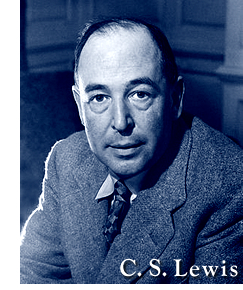
C.S. Lewis Daily – Today’s Reading


On death

On the one hand Death is the triumph of Satan, the punishment of the Fall, and the last enemy. Christ shed tears at the grave of Lazarus and sweated blood in Gethsemane: the Life of Lives that was in Him detested this penal obscenity not less than we do, but more. On the other hand, only he who loses his life will save it. We are baptised into the death of Christ, and it is the remedy for the Fall. Death is, in fact, what some modern people call “ambivalent.” It is Satan’s great weapon and also God’s great weapon: it is holy and unholy; our supreme disgrace and our only hope; the thing Christ came to conquer and the means by which He conquered.

Satan produced human Death. But when God created Man He gave him such a constitution that, if the highest part of it rebelled against Himself, it would be bound to lose control over the lower parts: i.e., in the long run to suffer Death. This provision may be regarded equally as a punitive sentence (“In the day ye eat of that fruit ye shall die”), as a mercy, and as a safety device. It is punishment because Death—that Death of which Martha says to Christ, “But . . . Sir . . . it’ll smell”—is horror and ignominy. (“I am not so much afraid of death as ashamed of it,” said Sir Thomas Browne.) It is mercy because by willing and humble surrender to it Man undoes his act of rebellion and makes even this depraved and monstrous mode of Death an instance of that higher and mystical Death which is eternally good and a necessary ingredient in the highest life. “The readiness is all”—not, of course, the merely heroic readiness but that of humility and self-renunciation. Our enemy, so welcomed, becomes our servant: bodily Death, the monster, becomes blessed spiritual Death to self, if the spirit so wills—or rather if it allows the Spirit of the willingly dying God so to will in it. It is a safety device because, once Man has fallen, natural immortality would be the one utterly hopeless destiny for him. Aided to the surrender that he must make by no external necessity of Death, free (if you call it freedom) to rivet faster and faster about himself through unending centuries the chains of his own pride and lust and of the nightmare civilisations which these build up in ever-increasing power and complication, he would progress from being merely a fallen man to being a fiend, possibly beyond all modes of redemption. This danger was averted. The sentence that those who ate of the forbidden fruit would be driven away from the Tree of Life was implicit in the composite nature with which Man was created. But to convert this penal death into the means of eternal life—to add to its negative and preventive function a positive and saving function—it was further necessary that death should be accepted. Humanity must embrace death freely, submit to it with total humility, drink it to the dregs, and so convert it into that mystical death which is the secret of life. But only a Man who did not need to have been a Man at all unless He had chosen, only one who served in our sad regiment as a volunteer, yet also one who was perfectly a Man, could perform this perfect dying; and thus (which way you put it is unimportant) either defeat Death or redeem it. He tasted death on behalf of all others. He is the representative “Die-er” of the universe: and for that very reason the Resurrection and the Life. Or conversely, because He truly lives, He truly dies, for that is the very pattern of reality. Because the higher can descend into the lower He who from all eternity has been incessantly plunging Himself in the blessed death of self-surrender to the Father can also most fully descend into the horrible and (for us) involuntary death of the body. Because Vicariousness is the very idiom of the reality He has created, His death can become ours. The whole Miracle, far from denying what we already know of reality, writes the comment which makes that crabbed text plain: or rather, proves itself to be the text on which Nature was only the commentary. In science we have been reading only the notes to a poem; in Christianity we find the poem itself.

From Miracles

Compiled in Words to Live By

Charles Stanley – Building Trust When Faith Wavers


Mark 9:21-24

Since faith is the core of our Christian experience, the consequences of wavering faith are far-reaching. Vacillating trust can lead us to make wrong decisions. Sometimes, after praying for direction, we might receive an answer that leads us to think, I can’t do that. So, instead of asking God to strengthen our faith, we make excuses. We may choose to postpone our obedience—even indefinitely—in order to do something else we consider just as worthwhile. But partial obedience is still disobedience, and it leads to situations that can be dire.

When our faith falters, not only can it result in poor choices, but it also is costly. The Israelites wandered 40 years in the desert because the nation allowed unbelief to overtake their faith. Wavering trust can make us miss out on the blessings of God; it often proves detrimental to those we love as well.

Our confidence will also be affected by shifting faith. When we are spiritually unsteady, we can easily be shaken by little things—even insignificant matters. Instead of standing firm, we may find our confidence eroding. Then we become less willing to take the risks God is asking of us. Rather than acting with certainty, we question and doubt what we are hearing from the Lord. We may also find joy diminishing because our wavering faith has led us away from God’s will. The inner peace of God that we once enjoyed evaporates as our faith weakens.

No matter how unsteady our faith, God invites us to draw near so He can strengthen our trust in Him. When He does, accept His invitation and give Him the glory.

Bible in One Year: Ezekiel 20-22

Our Daily Bread — The Babel Project


Read: Genesis 11:1-9

Bible in a Year: Psalms 137-139; 1 Corinthians 13

Unless the Lord builds the house, the builders labor in vain. —Psalm 127:1

Two workmen were asked what they were building together. One said he was building a garage. The other replied that he was building a cathedral. A day later there was only one man laying bricks. When asked where the second was, the first replied, “Oh, he got fired. He insisted on building a cathedral instead of a garage.”

Something similar happened on the ancient worksite of Babel. A group of people decided they would build a city and a tower that would reach to the heavens and unite their world (Gen. 11:4). But God didn’t want them working on a grand, self-centered plan based on the idea that they could rise to the heights of God and solve all of their own problems. So He came down, stopped the project, scattered the people “over all the earth,” and gave them different languages (vv. 8-9).

God wanted people to see Him as the solution to their problems, and He revealed His plan for them to Abraham (12:1-3). Through the faith of Abraham and his descendants, He would show the world how to look for a city “whose architect and builder is God” (Heb. 11:8-10).

Our faith does not rise out of our own dreams and solutions. The foundation of faith is in God alone and what He can do in and through us. —Mart DeHaan

Dear heavenly Father, forgive me for focusing on my own schemes and dreams. Help me to look to You for guidance in all that I do.

God wants to do what only He can do in and for us.

INSIGHT: Genesis 11 holds a pivotal place in the early Old Testament story, as it forms something of a bridge from the days of the early patriarchs (Adam, Seth, Noah) to the days of Abraham. In Genesis 1-10 we find not only the creation narrative but also the record of humanity’s early failures, which are proof we need the Rescuer that God promised in Genesis 3:15. This promise will find its ultimate fulfillment through the line of Abraham—in Jesus the Messiah—through whom all the people of the world will be blessed (22:18).  Bill Crowder

Ravi Zacharias Ministry – We Demand Windows


“We demand windows,” said C.S. Lewis speaking of the role of literature in our lives. Why occupy our time and hearts with accounts of characters and events that are not real? Why enter vicariously into the fictional life of one who behaves in ways we wouldn’t or shouldn’t? Lewis explains, “We want to see with other eyes, to imagine with other imaginations, to feel with other hearts, as well as with our own…. We demand windows. Literature as Logos is a series of windows, even of doors….”(1)

The literature I have loved most has taken me to windows of other worlds and other countries. Whether a Hobbit in the Shire or a rationalist in 19th century Russia, I have been a thousand characters in a thousand places and know more about myself and my world because of it. Crossing the bridge into Terabithia, I was introduced to another world and my own at once. The characters that came bounding out of Katherine Paterson’s pages pulled me through their window and voiced my very first questions about life, death, and my own mortality. When I first followed Charles Wallace and Meg through a wrinkle in time and a window to Camazotz, I saw that darkness can overwhelm, and wondered at the idea that there is yet a light that cannot be overcome. Likewise, Lewis’s own wardrobe provided the door that carried me to Narnia, a world that introduced the suggestion of signs and possibilities of another Kingdom within my own.

The windows we find in our literature teach us to see windows in our own worlds. The stories and places that pull us in and spit us out again show us our own lives as stories, our own place in a bigger story, our role in a better country. Perhaps we demand windows into other worlds simply because we are looking for another world, a world without suffering, or injustice, or our own pettiness.

The ancient psalmist voiced something similar about the world he was a part of and the world he imagined, “Hear my prayer, O LORD, listen to my cry for help; be not deaf to my weeping. For I dwell with you as an alien, a stranger, as all my fathers were” (39:12). Years later, the author of Hebrews wrote of Abraham, “By faith he made his home in the Promised Land like a stranger in a foreign country… For he was looking forward to the city with foundations, whose architect and builder is God” (11:8-10). God made humanity, Elie Wiesel once said, because God loves stories.

As we wake to life, whether in our own story or vicariously in other, we wake with questions. “How did we get here?” the Pevensie children asked with good reason. “And why are we here?” Of course, they got to Narnia through a wardrobe, but how they didn’t know. And what did it all mean? Who among us has at times not been floored with the same questions of our own world: How did we get here? Why are we here? And what is the point of it all?

Our questions of this world are as valid as our questions of any other. Had the Pevensies’ settled into Narnia without asking questions such as these, a great deal of the story would have been incomplete. Likewise, Annie Dillard writes of life in this place where we find ourselves, “Some unwonted, taught pride diverts us from our original intent, which is to explore the neighborhood, view the landscape, to discover where it is that we have been so startlingly set down, even if we can’t learn why.”(1) We are citizens in a world that would be easy to settle into and go about our lives. But what crucial part of the story do we miss by doing so?

The Christian story imagines a world where there are windows and doors that open to the Kingdom of God all around us—here and now and coming. There are places where heaven and earth meet at great crossroads, moments when we are given opportunities to see things beyond us, to see things as they really are. God is always leading us toward the many-roomed house Christ left us to imagine. The question is whether or not we will take the time to thoroughly explore and enjoy the neighborhood.

Jill Carattini is managing editor of A Slice of Infinity at Ravi Zacharias International Ministries in Atlanta, Georgia.

(1) “We Demand Windows,” Leland Ryken, ed. The Christian Imagination, (Colorado Springs: Shaw, 2002), 51.

(2) Annie Dillard, Pilgrim at Tinker Creek, (Bantam, 1977), 12.

Alistair Begg – The Great Physician


Now Simon’s mother-in-law lay ill with a fever, and immediately they told him about her. Mark 1:30

This is a very interesting little peep into the house of the apostolic fisherman. We quickly observe that household joys and cares are no hindrance to the full exercise of ministry; rather they furnish an opportunity for personally discovering the Lord’s gracious work in one’s own family. They may provide better instruction for the teacher than any other earthly discipline. There are those who decry marriage, but true Christianity and family life live well together. Peter’s house was possibly a poor fisherman’s hut, but the Lord of Glory entered it, lodged in it, and worked a miracle in it. If these words are being read this morning in some very humble cottage, let this fact encourage the inhabitants to seek the company of King Jesus. God is more often in little huts than in rich palaces.

Jesus is looking around your room now and is waiting to be gracious to you. Into Simon’s house illness had entered; fever in a deadly form had prostrated his mother-in-law; and as soon as Jesus came, they told Him of the sad affliction, and He hurried to the patient’s bed. Do you have any illness in the house this morning? You will find Jesus the best physician by far; go to Him at once and tell Him all about the matter. Immediately lay the case before Him. It concerns one of His people, and therefore He will not regard it as trivial. Notice that immediately the Savior restored the ill woman; none can heal as He does. We dare not assume that the Lord will remove all illness from those we love, but we dare not forget that believing prayer for the sick is far more likely to be followed by restoration than anything else in the world; and where this does not happen, we must meekly bow to His will by whom life and death are determined. The tender heart of Jesus waits to hear our griefs; let us pour them into His patient ear.

The Family Bible Reading Plan

  • 1 Samuel 26
  • 1 Corinthians 7

Devotional material is taken from “Morning and Evening,” written by C.H. Spurgeon, revised and updated by Alistair Begg.

Charles Spurgeon – Three homilies from one text


“And Jesus went about all Galilee, … healing all manner of sickness and all manner of disease among the people. And his fame went throughout all Syria: and they brought unto him all sick people that were taken with divers diseases and torments, …and he healed them. ” Matthew 4:23-25

Suggested Further Reading: 2 Kings 6:11-23

Take care that you bring your relatives to Christ on the arms of your faith. Faith is that which puts strength into prayer. The reason why we do not receive the answer to our supplications is, because we do not believe we shall be heard. You remember my sermon the other sabbath morning from the text, “Whatsoever things ye shall desire when ye pray, believe that ye receive them and ye shall have them.” (See August 13) If you can exercise faith for a dead soul, that dead soul shall be quickened and receive faith itself. If you can look to Christ with the eye of faith for a blind soul, that blind soul shall have sight given it and it shall see. There is a wonderful power in vicarious faith—faith for another. Not that any one of you can be saved without faith yourself; but that when another believes for you and on your account, and quotes the promise before God for you, you may be unconscious of it, but God hears and answers that faith, and breathes on your soul, and gives you faith to believe in the Lord Jesus Christ. I do not think Christians exercise enough of this power. They are so busy with faith about their troubles, faith about their sins, faith about their personal experience, that they have not time to exercise that faith for another. Oh but surely that gift was never bestowed upon us for our own use merely, but for other people. Try it, Christian man; try it, Christian woman; see whether God is not as good as your faith when your faith is exercised concerning the soul of your poor neighbour, of your poor drunken kinsman, or of some poor soul who thus far has defied every effort to reclaim him from the error of his ways.

For meditation: Sometimes Jesus healed the sick as the result of the faith of others (Matthew 8:10,13; 15:28; Mark 2:5; 9:23,24; Luke 8:50; John 4:50). Are you praying like this for the conversion of some who at present can’t and won’t pray for themselves?

Sermon no. 333

2 September (1860)

John MacArthur – Preparing for Battle


“Be strong in the Lord, and in the strength of His might. Put on the full armor of God, that you may be able to stand firm against the schemes of the devil” (Eph. 6:10-11).

Adequate preparation is the key to spiritual victory.

The Gulf War introduced some highly sophisticated weapons that had never been proven under live battle conditions. Most of the troops hadn’t experienced war either. Yet troops and machinery combined in a display of military conquest unparalleled in history.

Thorough preparation proved to be an indispensible element in that overwhelming victory. That included developing and testing high-tech weaponry, recruiting and training troops, and engaging in mock battles. Generals know that if they dare enter a battlefield ill-prepared, they’re destined for defeat. Consequently, they do everything possible to prepare their troops for victory.

Similarly, your success in spiritual warfare is directly proportional to your preparedness. You must “be strong in the Lord, and in the strength of His might” (Eph. 6:10), and also put on your armor (v. 11). God is your strength and source of victory, but you must trust Him and appropriate your spiritual resources. As Oliver Cromwell said, “Trust in God and keep your powder dry.”

If you delay preparation until the battle is upon you, then it’s too late. If your armor isn’t in place, you’re vulnerable to the arrows of the enemy. If you neglect prayer, worship, Bible study, accountability, and the other disciplines of faith, you can’t expect to prevail when spiritual skirmishes arise.

No soldier who values his own life would step onto a battlefield unprepared. How much more should soldiers of Christ prepare themselves to fight against Satan’s forces? Be diligent. Christ guarantees ultimate victory, but you can lose individual battles if you’re unprepared. It’s even possible to lapse into periods of spiritual lethargy, indifference, impotency, and ineffectiveness, but that’s utterly inconsistent with your mandate to fight the good fight (1 Tim. 1:18).

Don’t be caught off guard! Keep your armor on and remain alert to the advances of the enemy.

Suggestions for Prayer

  • Ask God to keep you alert to the reality of spiritual warfare and the need to be prepared at all times for battle.
  • Thank Him for the times He protected you when your armor wasn’t as secure as it needed to be.

For Further Study

Memorize 2 Timothy 2:4 as a reminder to be spiritually prepared at all times.

Joyce Meyer – Enjoying Your Life Begins with a Choice


The thief comes only in order to steal and kill and destroy. I came that they may have and enjoy life, and have it in abundance (to the full, till it overflows).- John 10:10

Although we do not always have the power to change every unpleasant circumstance in our lives, we do have the power to change our outlook. We can look out at life from our inmost being with our hearts filled with positive thoughts and attitudes, or we can allow the events of life to shape how we think and feel. This is a decision only we can make-no one can make it for us!

I firmly believe that the bottom line of what we want from life is to be happy. We want to enjoy it! Sadly, we can waste most of life with the misconception that joy and enjoyment come from our circumstances. The truth is that they come from our attitude toward each circumstance rather than the circumstance itself. Obviously, nobody enjoys a troubling or painful circumstance, but if we look at it in a hopeful, faith-filled way, we can watch God work all things out for our good (see Romans 8:28).

Enjoying life begins with the thoughts you choose to think. Yes, it’s that simple! No matter what is going on in your life today, if you will choose happy, hope-filled thoughts, you will feel happier.

Our thoughts are connected to our feelings, so if we want to feel better, we need to think better. Nothing good comes from thinking sour, critical and negative thoughts, but something good always comes when we think according to God’s plan for our life. God offers each of us an opportunity to have a good life. His promises are for all who will believe! We all believe something, so why not make it something good?

Good thinking begins with a choice. I urge you to make yours today and every day of your life.

Campus Crusade for Christ; None of These Diseases


“And said, If thou wilt diligently hearken to the voice of the Lord thy God, and wilt do that which is right in His sight, and wilt give ear to His commandments, and keep all His statutes, I will put none of these diseases upon thee, which I have brought upon the Egyptians: for I am the Lord that healeth thee” (Exodus 15:26, KJV).

Prior to a recent minor operation the surgeon came to my hospital room for prayer and to explain the nature of the hernia correction. He explained, “It is God alone who heals. It is my responsibility, along with my staff, to treat and care for you.”

In his excellent book, None of These Diseases, Dr. S.I. McMillen abundantly amplifies and proves the point of this promise: that if we always do that which is right in God’s sight, at the very least our health will be greatly improved.

This highly qualified physician contends that most of our physical problems are caused by stress, but the person who is doing that which is right in God’s sight is not likely to be continually under stress – at least not the kind of stress that impairs one physically.

“I am the Lord that healeth thee.” And He is the same yesterday, today and forever. That would indicate that His healing is available for all today – which of course brings up that sticky question of method and means.

Whatever our persuasion about this, the fact remains that if we really do believe that it is God who heals, then it should follow that He would be our first resource in time of physical need. And it may well be that His direction would take us to the physician. But He alone would be the healer.

Bible Reading: Exodus 15:22-26

TODAY’S ACTION POINT: As I approach each task today, I will make a conscious effort to be concerned about doing that which is right in God’s sight.

Presidential Prayer Team; J.R.- Faulty Forecast


On Election Day, November 7, 2000 between 7:49 p.m. and 8:00 p.m. all of the major networks – ABC, NBC, CBS, CNN and Fox – declared that Al Gore had won the State of Florida in the race for President of the United States. The problem with this prediction was that it was wrong; the race was, in reality, still too close to call. Even worse, when the “results” were broadcast the polls were still open in Florida’s Panhandle. Many people waiting in line, believing the outcome now decided, simply went home without voting.

We speak of what we know, and bear witness to what we have seen, but you do not receive our testimony.

John 3:11

“How can these things be?” Nicodemus asked Jesus when told he must be born again. Jesus was explaining to the rabbi that his past did not determine his future and that the man-made forecast was faulty. “We speak of what we know, and bear witness to what we have seen,” but that is not the full story. Far from it.

Remember this as you pray. God is not restricted by human expectations or limitations. He is able to do “far more abundantly than all that we ask or think.” (Ephesians 3:20.) Tap into that power today as you pray for the nation.

Recommended Reading: Ephesians 3:14-21

Greg Laurie – No Spiritual Vacations


In the spring of the year, when kings normally go out to war, David sent Joab and the Israelite army to fight the Ammonites. They destroyed the Ammonite army and laid siege to the city of Rabbah. However, David stayed behind in Jerusalem.—2 Samuel 11:1

Years ago when I was speaking in Hawaii, I met someone who told me he was on a spiritual vacation. He said he was taking some time off from his Christian life.

I told him that was no vacation, and we had a long talk. He ended up recommitting his life to Christ, and I’m glad to say that he is still serving the Lord today.

The moment we back off in the spiritual battle, we will be vulnerable. The moment we fall asleep, we will be weak. That is what happened to King David. He was plucked from obscurity as a shepherd to become the great king of Israel, leading his troops into battle. He was a powerful and godly man. But after years of walking with the Lord, David put his spiritual life on cruise control. We read in 2 Samuel 11:2 that “late one afternoon, after his midday rest, David got out of bed and was walking on the roof of the palace. As he looked out over the city, he noticed a woman of unusual beauty taking a bath.”

What was David doing? He was kicking back. Interestingly, his troops were out on the battlefields. And David, the warrior king, should have been leading them as he always did. Instead, he was taking some time off.

That is why the apostle Paul told Timothy, “Run from anything that stimulates youthful lusts. Instead, pursue righteous living, faithfulness, love, and peace. Enjoy the companionship of those who call on the Lord with pure hearts” (2 Timothy 2:22). These words are not merely directed to young people. You can be an older man or an older woman and still chase after youthful lusts.

You don’t feed lust; you starve it. Stay away from anything that would encourage immoral living.

Max Lucado – More Than Conquerors


God spoke. Joshua listened and Israel’s Glory Days began. The Jordan River opened up and Jericho’s walls fell down. Evil was booted, and hope was rebooted. Joshua 21:43 says, “So the Lord gave to Israel all the land of which He had sworn to give to their fathers, and they took possession of it. The Lord gave them rest all around…not a man of all their enemies stood against them!”

Perhaps you need a new season. You don’t need to cross the Jordan River, but you need to get through the week. You aren’t facing Jericho, but you are facing rejection or heartache. The story of Joshua dares us to believe God has a Promised Land for us to take! It’s not real estate, but a real state of the heart and mind! A Promised Land…a promised land life!

From Glory Days

Night Light for Couples – “Ordinary” Love


“Live a life of love, just as Christ loved us.” Ephesians 5:2

We’ve been talking about romantic love and how to preserve it. There are times in every marriage, however, when husbands and wives feel apathetic and “flat” toward each other. Jim wrote me the following note during just such a time, which occurred on our eighth wedding anniversary: “I’m sure you remember the many occasions during our eight years of marriage when the tide of love and affection soared high above the crest. This kind of intense emotion often accompanies a time of particular happiness. We felt this closeness when the world’s most precious child came home from the maternity ward. But emotions are strange! We felt the same closeness when you were hospitalized last year. I felt it intensely when I knelt over your unconscious form after a grinding automobile accident.

“Both happiness and threat bring overwhelming appreciation and affection for our sweethearts. But most of life is composed of calm, everyday events. During those times, I enjoy the serene love that actually surpasses the effervescent display. I find myself in that kind of love on this anniversary. I feel the steady, quiet affection that comes from a devoted heart. I am committed to you and your happiness now more than ever.

“When events throw us together emotionally, we will enjoy the thrill and romantic excitement. But during life’s routine, my love stands undiminished. Happy anniversary to my wonderful wife.”

Just between us…

  • When has our marriage provided the most romantic excitement?
  • How can serene love enhance romance between us?
  • Do we enjoy this kind of love? Why or why not?

Dear God, thank You for the intense feelings that accompany romantic love. Help us cherish them. May our love also remain strong and enduring on ordinary days or when feelings are at ebb tide. Amen.

From Night Light For Couples, by Dr. James & Shirley Dobson

C.S. Lewis Daily – Today’s Reading


The Christian doctrine of suffering explains, I believe, a very curious fact about the world we live in. The settled happiness and security which we all desire, God withholds from us by the very nature of the world: but joy, pleasure, and merriment, He has scattered broadcast. We are never safe, but we have plenty of fun, and some ecstasy. It is not hard to see why. The security we crave would teach us to rest our hearts in this world and oppose an obstacle to our return to God: a few moments of happy love, a landscape, a symphony, a merry meeting with our friends, a bathe or a football match, have no such tendency. Our Father refreshes us on the journey with some pleasant inns, but will not encourage us to mistake them for home.

From The Problem of Pain

Compiled in A Year with C.S. Lewis

Charles Stanley – When Our Faith Wavers

James 1:1-8

Faith is the heart of our Christian life. It is the means by which we are saved, receive forgiveness for our sins, enjoy a personal relationship with the Lord, and have the assurance of our salvation. By faith, we experience the peace of God and the power of the Holy Spirit in our lives. The Bible also tells us that praying in confident trust “avails much” (James 5:16 NKJV). Yet our lives and especially our prayers tend to be characterized by doubts and wavering faith.

Our faith wavers when . . .

We apply human thinking to our circumstances. Sometimes God is going to require us to do something with which human reasoning disagrees (Isa. 55:9).

We allow our feelings to overcome our faith. It could be a sense of unworthiness or inadequacy that trips us up. Fear of criticism or failure might cause us to doubt we can do what the Lord asks.

We fail to see God at work in our circumstances. Doubts creep in when we have asked Him to take action but nothing appears to be happening.

We have guilt over sin, past or present. We cannot operate with strong faith when we are under conviction of sin or dwelling on guilt over past wrongdoing.

We listen to the enemy’s lies. Satan is the father of lies, and his objective is to have us reject God’s truth and believe his deception instead.

Faith is defined as “the assurance of things hoped for, the conviction of things not seen” (Heb. 11:1). What is the condition of your faith? Do confidence and conviction describe you?

Bible in One Year: Ezekiel 17-19


Ravi Zacharias Ministry – Where the Light Is Strong


A classic vaudeville routine begins with a pitch-black theater except for a large circle of light coming from a street lamp. In the spotlight, a man is on his knees, crawling with his hands in front of him, carefully probing the lighted circle. After a few moments a policeman walks on stage. Seeing the man on all fours, he poses the obvious question: “Did you lose some­thing?”

“Yes,” the man replies. “I have lost my keys.”

Kindly, the police officer joins the man’s search, and two figures now circle the lighted area on hands and knees. After some time, the officer stops. “Are you absolutely certain this is where you lost your keys? We’ve covered every inch.”

“Why no,” the man replies matter-of-factly, pointing to a darkened corner. “I lost them over there.”

Visibly shaken, the policeman exclaims, “Well, then why in the name of all heaven are we looking for them over here?”

The man responds with equal annoyance: “Isn’t that obvious? The light is better over here!”

The classic comedy enacts a subtle point. It is far easier to limit our examining of life’s missing keys to easy, comfortable places. Like a modern parable, the story registers an illogic common to most. Searching dark and difficult corners—where the keys may have in fact been lost—is far less desirable.

Somewhere between morning radio stations—the first offering a barrage of belittling comments toward a once-popular celebrity, the second offering an open invitation to weigh-in on the latest political scandal—I wondered if the drama didn’t register something more. It is becoming increasingly difficult to avoid the signs that we live in a world of criticism, perhaps particularly in the west. We are encouraged by all facets of the media to examine the flaws of everyone, to search for the scandal in every story, and to pour over everything that divides us, offends us, or otherwise differs from us in any way.

But more than this, we are encouraged to opine and criticize regardless of whether we know anything about the subject or the person whatsoever. The comment section of online news stories invites readers to put their own responses in writing. And comment they do. The long list of critiques offers thoughts on anything from the topic, to the author, to things completely unrelated. For many, it simply offers a lawless trolling ground for inflammatory heckling, like a high school locker room except anonymous and worse. Carrying this one step further, online retailers not only invite anyone to be official reviewers; they also invite anyone to comment on these comments, to vote on whether or not the reviewers themselves need to be critiqued. While I appreciate some of these services, the attitude they endorse seems so pervasive. Everyone is now a critic and an expert deserving of a voice and a platform at once.

And this is where the man in the drama seems unquestionably familiar. How easy is it to search where the light is strong, to examine the faults and scandals of others as if it were the best place to logically spend our time? As the light of the media shines on an individual or the light of shameless gossip draws our attention like searchlights to a grand opening, how easy is it to declare this particular spot the place we will fully scrutinize? How readily do we prefer to be critics of those in the spotlight rather than fumble over our own flaws in the dark?

In the Christian journey, it is helpful to know that Jesus was aware just how tempting is the option of the easier route. “Why do you look at the speck of sawdust in your brother’s eye and pay no attention to the plank in your own?… You hypocrite, first take the plank out of your own eye, and then you will see clearly to remove the speck from your brother’s eye.”(1) The flaws we see in pop-stars, politicians, our culture, or co-workers may seem so startlingly clear to us. The critiques and opinions we can so readily offer about books and public scandal, internal gossip and things about which we actually know little all may seem innocent enough. But might there not be a better place to spend our energy searching? Maybe we are looking where the light is strong, but not where keys are really lost.

An old proverb explains, “The mocker seeks wisdom and finds none, but knowledge comes easily to the discerning.” Perhaps this is true because the mocker spends his time searching the comfortable places of life, the easy targets where light and company will always be found. The difficult, dimly lighted places require much more of us, and often we are left to search on our own. But the discerning know that wisdom comes with the kind of seeking that pulls us mysteriously inward, into places where there is actually something to find, and before a merciful throne that compels transparency. In the shadow of the vicariously human Son of God, many find the strength to walk this darkened path of self-examination. Here, everyone who seeks finds, the lost themselves are discovered, and once dark corners of the soul are changed by the light of Christ.

Jill Carattini is managing editor of Ravi Zacharias International Ministries in Atlanta, Georgia.

(1) Matthew 7:3-4.