Campus Crusade for Christ; Bill Bright – The Holy Spirit Will Speak


“But when you are arrested and stand trial, don’t worry about what to say in your defense. Just say what God tells you to. Then you will not be speaking, but the Holy Spirit will” (Mark 13:11).

Have you even had the experience of trying to say a word for the Lord, just sharing your faith, and breathing a prayer for guidance – then marveling as the Lord Himself, by His indwelling Holy Spirit, put the very words in your mouth that needed to be said?

Such has been my experience – many times. And I marvel and rejoice each time. On some occasions, I have addressed crowds of varying sizes, often not only feeling totally inadequate but also concluding my message of the evening with the feeling that I had been a poor ambassador of Christ. Then, someone had approached me after the service and thanked my for saying just the word he needed at that moment.

We serve a faithful God. That neighbor who needs a word of encouragement – ask the Lord to give you the right words to say to him or her. That correspondent hundreds of miles away – trust God for His message to him or her through you.

Certain conditions must prevail, of course, before the Holy Spirit can speak through us. But they are easily met. I must come with a clean heart, surrendered to the Holy Spirit, with my sins forgiven, having forgiven other people, holding no resentment or ill feeling against anyone. “If I regard iniquity in my heart, the Lord will not hear me” (Psalm 66:18, KJV).

Let us trust God and His indwelling Holy Spirit for the very words of counsel we should say to a loved one or friend today.

Bible Reading: Acts 2:1-4

TODAY’S ACTION POINT: I will trust God and His Holy Spirit to put the very words in my mouth this day that need to be said to others whose lives I touch.

Presidential Prayer Team; H.L.M.- Delight Yourself


Zach Johnson became one of only six professional golfers in history to win both The Masters and The Open Championship when he beat two others in a playoff at the Open earlier this year. Yet Johnson continually keeps his focus on the Lord. “I was patient,” he said. “I had some Scripture going in my head. I thank the Lord…I feel like God gave me the ability to play a game. I’m just a guy from Iowa who’s been blessed with a talent and this game provided great opportunity.”

O Lord, let your ear be attentive…to the prayer of your servants who delight to fear your name.

Nehemiah 1:11

Among professional golfers, Johnson is not known for making the ball come to a dead stop off of a chip shot, but he prepares diligently. When rain postponed a whole day of play, he was practicing wedge shots with his caddie. Johnson kept calm, remembering Psalm 27:14 throughout his play: “Wait for the Lord; be strong, and let your heart take courage.”

In your profession, strive to seek God and delight yourself in Him, trusting the Lord for your success and praying continually to keep your perspective clear. Intercede also for your local and national leaders to experience the blessing of a personal relationship with Jesus Christ.

Recommended Reading: Psalm 1:1-6

Greg Laurie – Faithful in the Little Things


Humble yourselves before the Lord, and he will lift you up in honor.—James 4:10

Saul was on an errand for his father when he walked smack-dab into the perfect will of God. In his search for some lost donkeys, Saul was directed to the area where the prophet Samuel lived. When Samuel laid eyes on Saul, the Lord told him that Saul was the one He had chosen to be king over Israel.

Then the Bible tells us that “Samuel took a flask of oil and poured it on his head, and kissed him and said: ‘Is it not because the Lord has anointed you commander over His inheritance?’ ” (1 Samuel 10:1). The Spirit of God came upon Saul, and he prophesied with the prophets, which means that God spoke through Saul. We are also told that God gave him a new heart.

Then came a test in Saul’s life. Some questioned the choice of Saul as king. But Saul ignored them and just went about his business. After Samuel had anointed Saul as king, the Lord had not told him to do anything in particular. And to his credit, Saul went back to his responsibilities, which included plowing a field.

Often you will find that when you are engaged in service to the Lord, He will tell you what the next thing is. Saul was faithful in the little things, and God opened a great door for him.

If you want to be used by God, if you feel that one day the Lord might want you to be in ministry somewhere, then here is my advice for you: Be faithful in little things. Do what you can do. Don’t look for big things to do; look for anything to do.

God says that if you will be faithful in the little things, then He will give you other things to do.

Max Lucado – Living Out of Your Inheritance


Promised Land people say I’m a victor in spite of my surroundings. Wilderness people say These are difficult days and I’ll never get through them. But God’s people say, These days are Glory Days…and God will get me through!

John 1:12 says, “Yet to all who did receive Him, to those who believed in His name, He gave the right to become children of God.” Imagine what would happen if a generation of Christians lived out of their inheritance. The lonely would find comfort in God, not in the arms of strangers. Struggling couples would spend more time in prayer and less time in anger. And children would consider it a blessing to care for their aging parents.

Paul said, “I can do all things through Christ, because He gives me strength” (Philippians 4:13). Join me in claiming your inheritance in a special 4-week journey of scripture memory at GloryDaysToday.com!

Night Light for Couples – Leaving “Victim” Behind


“To this you were called, because Christ suffered for you, leaving you an example.” 1 Peter 2:21

Politically correct notions in the culture today would lead us to believe that we all have reasons to be angry about the biases arrayed against us. The supposed discrimination extends to girls, boys, the elderly, homosexuals, drug addicts, alcoholics, atheists, those who are overweight, balding, short, undereducated, women (representing 51.2 percent of the population), and now, white men. There’s hardly a person alive who doesn’t have a claim against an oppressor in one context or another. I (jcd) call it “the victimization of everyone.”

Unquestionably, there are disadvantaged people among us who need legal protection and special consideration, including some racial minorities. But the idea that the majority is exploited and disrespected is terribly destructive—first, because the belief that “they’re out to get me” paralyzes us and leads to hopelessness and despair; second, because it divides people into separate and competing self‐interest groups and pits them against each other.

The Scripture gives us a better way. It tells us to thank God every day for His blessings and to focus our attention not on ourselves, but on those who are less fortunate. Not once does it support or sanction the curse of victimization. Do not yield to it.

Just between us…

  • Do we usually blame someone or something for our circumstances?
  • How does playing the role of a victim make us tend to give up?
  • What does God promise us for our earthly struggles?

Lord, forgive us for our quickness to shift into “victim thinking.” Show us which hard things we can change and which we should accept as Your loving best for us. And grant us Your grace and joy in both circumstances. Amen.

From Night Light For Couples, by Dr. James & Shirley Dobson

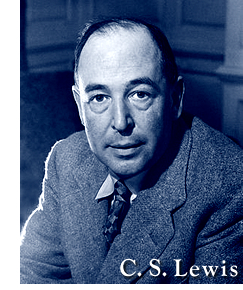
C.S. Lewis Daily – Today’s Reading


Remember that, as I said, the right direction leads not only to peace but to knowledge. When a man is getting better he understands more and more clearly the evil that is still left in him. When a man is getting worse he understands his own badness less and less. A moderately bad man knows he is not very good: a thoroughly bad man thinks he is all right. This is common sense, really. You understand sleep when you are awake, not while you are sleeping. You can see mistakes in arithmetic when your mind is working properly: while you are making them you cannot see them. You can understand the nature of drunkenness when you are sober, not when you are drunk. Good people know about both good and evil: bad people do not know about either.

From Mere Christianity

Compiled in A Year with C.S. Lewis

Charles Stanley – Spiritual Highs: Real or Counterfeit?


Luke 9:28-37

God gives us high spiritual experiences in order to reveal truth about Himself. But how do you know if your experience is authentic or not? Any spiritual event that magnifies itself or some other activity but does not direct your attention to God is, more than likely, counterfeit. When God lifts us up, He does so to focus our thoughts on Him.

That’s what happened at the Mount of Transfiguration: As they stood in the presence of God in human flesh, Peter, James, and John saw Jesus in all His majesty. Observing Him there with Moses and Elijah, who were deceased, the disciples realized there is life after death. The things they learned frightened them, but the Lord was revealing something they would never forget.

Why does God open our hearts and give us glimpses of Himself? By doing so, He strengthens and motivates us for His purposes. At the same time, He helps us to absorb understanding that will transcend any future doubt. Peter and his companions were never the same after the transfiguration. Even when their beloved Lord was taken and crucified, nothing could erase their indelible memories of the miracle they’d witnessed.

The idea that God is somewhere far away from us isn’t scriptural. He wants to unveil Himself to His people and commune through His Holy Spirit. If you have never heard God speak, could it be that there is too much noise in your life distracting you from Him? Next time you are in church, don’t simply go through the motions. God wants to say something to you that will make a difference in your life. If you listen to Him, He will.

Bible in One Year: Zephaniah 1-3, Haggai 1-2

Our Daily Bread — Give It Away


Read: Philippians 2:19-30

Bible in a Year: Isaiah 5-6; Ephesians 1

I think it is necessary to send back to you Epaphroditus, . . . whom you sent to take care of my needs. —Philippians 2:25

Many charities that help people with various needs depend on donations of unwanted clothing and household items from those who have more than enough. And it’s good to give away unused things so they can benefit others. But we are often more reluctant to part with things of value that we use every day.

When Paul was imprisoned in Rome, he needed continuing encouragement and the companionship of trusted friends. Yet he sent two of his closest comrades to help the followers of Jesus in Philippi (Phil. 2:19-30). “I hope in the Lord Jesus to send Timothy to you soon . . . . I have no one else like him, who will show genuine concern for your welfare” (vv. 19-20). And, “I think it is necessary to send back to you Epaphroditus, my brother, co-worker and fellow soldier, who is also your messenger, whom you sent to take care of my needs” (v. 25). Paul freely gave to others what he most needed himself.

Whatever we feel is “most valued” in our lives today could be of great benefit to someone we know. It may be our time, friendship, encouragement, a listening ear, or a helping hand. When we give away what the Lord has given to us, He is honored, others are helped, and we are blessed. —David McCasland

Lord, show me what I cling to. If someone needs it, open my heart and my hands and help me give it away today.

Giving freely honors the Lord, helps others, and blesses us.

INSIGHT: Epaphroditus is mentioned only in today’s passage and in Philippians 4:18. The Philippian church had sent him to minister to Paul, who was in a Roman prison (2:25). He willingly took the role of Paul’s personal servant and also brought gifts from the church (4:18). Paul called him “my brother, co-worker and fellow soldier” (2:25). Epaphroditus had become seriously ill and upon recovery Paul sent him back to Philippi, carrying with him this letter of encouragement (vv. 27-29). Paul asked the church to honor him for his faithfulness and the costliness of the service he had rendered to Christ (v. 30; 1 Thess. 5:12-13). Sim Kay Tee

Ravi Zacharias Ministry – Minds Upset


Wherever one might be in declarations of belief, God is so often not the God these declarations expect, and often it is shocking to discover it. God comes near and offends our sense of understanding; God affronts our categories and overturns our sense of familiarity. Jesus of Nazareth does the same; quite particularly so in the language of the parables. With his stories, he offends the believing and unbelieving, disciples, scribes, and crowds alike. With the same stories, he continues to jar hearers awake and move followers near.

The Greek word for parable literally means “a placing beside.” It is a comparison of one thing beside another, an association of pictures that teaches. In a wider sense, the parable is a figurative discourse, a riddle full of light and shadows. In his parabolic language, Jesus vividly lays a full and layered picture beside us: The kingdom of heaven is like a man who sowed good seed; it is like yeast, or a mustard seed, or a master who prepared a great banquet. His comparisons often offer simple scenes or everyday images, and yet they are bafflingly difficult. How on earth is the kingdom of heaven like a seed?

We are pulled into a parable on multiple levels. At the narrative level, there are countless nuances and peculiarities that compel us to listen and question. We react to the characters before us—to the foolish prodigal son and what almost seems a foolishly loving father, to the master of a great banquet and the guests that cruelly shun him. But we also react to the character of God on some level, his kingdom and its economy. Just what kind of a kingdom is this? How is this forgiving, welcoming father like God? How am I like this wasteful son or this frustrated older brother? And how, then, does this image call me to live? We are jarred awake by a story; but so we are moved to reckon with its implications.

In other words, we are moved to reckon with nothing less than the kingdom itself and the one proclaiming it. The parables were not just spoken by anyone; they were spoken by Jesus of Nazareth, whose preaching fulfilled the ancient cry of Isaiah and the promise of a savior:

“[T]he people living in darkness

have seen a great light;

on those living in the land of the shadow of death

a light has dawned.”(1)

As with his preaching, the parables of Jesus call hearers to respond to the presence of God today, the kingdom in our midst, the person standing before us. We are remiss to interpret the parabolic language of Christ apart from his entire ministry, his shocking narratives apart from his shocking death, or the peculiar notion of the kingdom he describes apart from the unfathomable notion of his resurrection, which touches both this world and the next. And like Isaiah before the throne, our visions of God are undone by the God in our midst.


Craig Hawkins, Blind C., oil on canvas, 72 x 80 inches.

God will not let us remain blinded by our ideas of who God is. A prayer by Walter Brueggemann expresses the power of our expectations and the danger of clinging to them:

We are your people and mostly we don’t mind,

except that you do not fit any of our categories.

We keep pushing and pulling and twisting and turning,

trying to make you fit the God we would rather have

and every time we distort you that way

we end up with an idol more congenial to us.(2)

The parables draw pictures that, like Jesus, turn everything upside down, exposing idols that look curiously like us. It is in the light of his words that we see the insufficiencies of our own perceptions and the incongruence of our behavior. Like the one who voiced them, the parables order a mandatory reframing of perspective. “Thus it is with the kingdom of God,” Jesus declares, and he overturns our worlds and kingdoms like the money-changers’ tables. Jesus calls those who will see to see, and sometimes it is a call for a different way of thinking. Other times it demands an entirely new frame of reference. But he is always calling. For who God is in our minds must always be shattered by who God is.

Jill Carattini is managing editor of A Slice of Infinity at Ravi Zacharias International Ministries in Atlanta, Georgia.

(1) Isaiah 9:1-2, Matthew 4:16.

(2) Walter Brueggemann, Awed to Heaven, Rooted in Earth (Minneapolis: Augsburg Fortress, 2003), 35.

 

Alistair Begg – Stooping Down


The Lord looks down from Heaven; he sees all the children of man. Psalm 33:13

Perhaps no figure of speech represents God in a more gracious light than when He is spoken of as stooping from His throne and coming down from heaven to attend to the needs and to behold the woes of mankind. We love Him who, when Sodom and Gomorrah were full of iniquity, would not destroy those cities until He had made a personal visitation to them. We cannot help pouring out our heart in affection for our Lord who turns His ear from the highest glory and puts it to the lip of the dying sinner, whose failing heart longs for reconciliation. How can we do anything but love Him when we know that He numbers the very hairs of our heads, marks our path, and orders our ways?

This great truth is brought especially near to our heart when we realize how attentive He is, not merely to the passing interests of His creatures, but to their spiritual concerns. Though vast distances lie between the finite creature and the infinite Creator, yet there are links uniting both. When a tear is wept by you, do not think that God does not see it; for “As a father shows compassion to his children, so the LORD shows compassion to those who fear him.”1 Your sigh is able to move the heart of Jehovah; your whisper can incline His ear to you; your prayer can stay His hand; your faith can move His arm. Do not think that God sits on high taking no account of you. Remember that however poor and needy you are, still the Lord thinks of you. “For the eyes of the LORD run to and fro throughout the whole earth, to give strong support to those whose heart is blameless toward him.”2

Oh! then repeat the truth that never tires;

No God is like the God my soul desires;

He at whose voice heaven trembles, even He,

Great as He is, knows how to stoop to me.

1) Psalm 103:32) 2 Chronicles 16:9

The Family Bible Reading Plan

  • 2 Samuel 24
  • Galatians 4

Devotional material is taken from “Morning and Evening,” written by C.H. Spurgeon, revised and updated by Alistair Begg.

Charles Spurgeon – The great Supreme


“Ascribe ye greatness unto our God.” Deuteronomy 32:3

Suggested Further Reading: 1 Corinthians 3:1-9

In Protestant countries there is a very strong tendency to priestcraft still. Though we do not bow down and worship images, and do not professedly put our souls into the hands of priests, yet, I am sorry to say it, there is scarce a congregation that is free from that error of ascribing greatness to their minister. If souls are converted, how very prone we are to think there is something marvellous in the man; and if saints are fed and satisfied with marrow and fatness, how prone we are to suppose that the preacher has something about him by which these wondrous things are done; and if a revival takes place in any part of the vineyard, it matters not in what denomination, there is an aptness in the human mind to ascribe some part of the glory and the praise to the mere human agency. Oh, beloved, I am sure that every right-minded minister will scorn the thought. We are but your servants for Christ’s sake. We speak to you, as God helps us, what we believe to be God’s truth; but ascribe not to us any honour or any glory. If a soul is saved, God from first to last has done it. If your souls are fed, thank the Master; be respectful and grateful to the servant as you will be, but most of all thank him who puts the word into the mouths of his servants, and who applies it to your heart. “Oh, down with priestcraft!” even I myself must down with it. “Down with it!” I cry. If I myself like Samson fall beneath its roof, let me fall myself and be crushed, well content in having pulled down or contributed to remove one solitary brick in that colossal house of Satan. Take care, friends, that you put no honour upon any man that you ought to have ascribed unto his Sovereign. “Ascribe ye greatness unto our God.”

For meditation: Why are you using these daily readings? We should thank God for Spurgeon, but many go too far and venerate Spurgeon himself. He reminds us that he too was a man (Acts 10:26) and that the glory belongs not to him but to his and our God (Psalm 115:1).

Sermon no. 367

28 September (1856)

John MacArthur – Knowing God


“With all prayer and petition pray at all times in the Spirit, and with this in view, be on the alert with all perseverance and petition for all the saints” (Eph. 6:18).

Your desire to know God should motivate you toward fervent prayer.

Man’s highest purpose is to know God. Jesus prayed to the Father, saying, “This is eternal life, that they may know Thee, the only true God, and Jesus Christ whom Thou hast sent” (John 17:3). Of us He said, “I am the good shepherd; and I know My own, and My own know Me” (John 10:14). John added that “we know that the Son of God has come, and has given us understanding, in order that we might know Him who is true, and we are in Him who is true, in His Son Jesus Christ” (1 John 5:20).

Every Christian knows God through salvation, but beyond that lies an intimate knowledge of God. That should be the quest of every believer. Moses prayed, “Let me know Thy ways, that I may know Thee, so that I may find favor in Thy sight” (Ex. 33:13). David entreated his son Solomon to “know the God of [his] father, and serve Him with a whole heart and a willing mind” (1 Chron. 28:9). Even the apostle Paul, who perhaps knew Christ more intimately than any human being thus far, never lost his passion for an even deeper knowledge (Phil. 3:10).

Such passion is the driving force behind powerful prayer. Those who know God best pray most often and most fervently. Their love for Him compels them to know and serve Him better.

How about you? Is your knowledge of God intimate? Does the character of your prayers reveal that you’re in the process of knowing God?

Paul’s admonitions to “pray at all times in the Spirit” and “be on the alert with all perseverance and petition for all the saints” (Eph. 6:18) presuppose that you know God and desire to see His will fulfilled in His people. If not, you’ll never appreciate the importance of interceding on behalf of others.

Suggestions for Prayer

The martyred missionary Jim Elliot once prayed, “Lord, make my life a testimony to the value of knowing you.” Let that be your prayer each day.

For Further Study

Read 1 Chronicles 28.

  • What did God forbid David to do?
  • What would happen to Solomon if he failed to know and serve God?

Campus Crusade for Christ; Bill Bright – So He May Forgive Us


“And when ye stand praying, forgive, if ye have aught against any: that your Father also which is in heaven may forgive you your trespasses” (Mark 11:25, KJV).

You and I have a way by which we can be absolutely certain of God’s forgiveness. It is two-fold.

First, we must be sure that we have forgiven anyone and everyone against whom we may have anything or hold any resentment.

Second, we must believe His Word unquestioningly – and His Word does indeed tell us we will be forgiven when we ask under these conditions.

Most familiar, of course, is the glorious promise of 1 John 1:9, “If we confess our sins, He is faithful and just to forgive our sins, and to cleanse us from all unrighteousness” (KJV).

Though today’s verse uses the word stand in reference to praying, Scripture clearly states that the posture in prayer was sometimes standing. God, however, looks on the heart rather than on our position as we pray.

If the heart is right, any posture may be proper. All other things being equal, however, the kneeling position seems more in keeping with the proper attitude of humility in our approach to God. (Physical condition, of course, sometimes makes this inadvisable or impossible.)

Most important, we are to forgive before we pray. That much is certain.

Bible Reading: Matthew 6:9-15

TODAY’S ACTION POINT: I will examine my heart throughout the day to be sure I have forgiven any who should be forgiven – before I pray.

Greg Laurie – Disqualified


“Behold, I am coming quickly! Hold fast what you have, that no one may take your crown.”—Revelation 3:11

The life of Saul, the first king of Israel, is really a study in contrasts. In some ways he was big, and in other ways he was very little. In some ways he was strikingly handsome, and in other ways he was decidedly ugly. He was both a hero and a renegade. He began his life in victory and ended in humiliating defeat. He lost his character, his power, his crown, and his very life.

Saul stands as a warning that it is impossible for us to rebel against God without having to face the consequences—maybe not today, maybe not next month, or maybe not even next year. But sooner or later, we will have to face the music.

As Chuck Swindoll has pointed out, “Remember that the end of a life reveals more than the beginning.”

Here is what Saul said about himself: “I have played the fool and erred exceedingly” (1 Samuel 26:21). Saul had tremendous potential, but he squandered it.

Revelation 3:11 reminds us to hold fast to what we have so that no one will take our crown. Saul did not hold fast to what he had, and his crown was taken away. He made the wrong decisions.

The apostle Paul said, “I discipline my body and bring it into subjection, lest, when I have preached to others, I myself should become disqualified” (1 Corinthians 9:27). Paul wanted to play by God’s rules.

Every day when we get up, we are faced with choices—choices to do the right thing or the wrong thing. No one is exempt from these choices. These choices will have consequences, and some even will have far-reaching consequences. We need to think very carefully about the choices we make, because we make our choices—and then our choices make us.

Max Lucado – Claim Your Inheritance


We are in the middle of our 4 week Scripture Memory Challenge. This week’s verse is John 1:12.“Yet to all who did receive Him, to those who believed in His name, He gave the right to become children of God.”

Claim your inheritance! As a child of God you have the power of God in you to fight any battle you face. He set us free so he could raise us up. The gift has been given. Will you trust it?

God said to Joshua, “Every place that the sole of your foot will tread upon I have given you, as I said to Moses.” The people of Moses’ day chose the wilderness. Don’t make the same mistake! Joshua didn’t. He took God at his word and set about the task of inheriting the land! I encourage you to do the same!

Get started at GloryDaysToday.com.


Night Light for Couples – The Trouble Paradox


“Carry each other’s burdens, and in this way you will fulfill the law of Christ.” Galatians 6:2

When troubles line up in what seems like an endless parade, feelings of despair or helplessness can be overwhelming. One way out of this downward spiral toward depression is to reach out to someone else. Our own difficulties seem less threatening and all‐consuming when we are busy helping someone else handle theirs. The possibilities for helping others are limitless. Visit the sick. Bake something for your neighbors. Do household chores for an elderly shut‐in. Use your car for those without transportation. And, perhaps most important, be a good listener. Sometimes what a person needs most of all is simply a friend who will share his or her life for a few moments.

This is one of the powerful paradoxes of the Christian life: When we share someone else’s pain, we often shed some of our own. When we help others, we end up helping ourselves. When we lift another’s burdens, ours lighten.

Just between us…

  • What do you do when you’re discouraged or depressed?
  • Am I helpful to you when you’re feeling down?
  • In what ways did Jesus minister to the downhearted? Is there someone in a difficult situation who could use our help?

Dear God, thank You for Your goodness during trouble. Increasingly, make us Your instruments to help others in need. Help us to share Your comfort and testify to Your great faithfulness. Thank You that we’ll be blessed in doing so. Amen.

From Night Light For Couples, by Dr. James & Shirley Dobson

Charles Stanley – Jesus Christ: The Son of God


John 1:1-2

Have you ever heard someone deny that Jesus claimed to be God? Such a statement simply does not make sense. Repeatedly, Jesus placed Himself on equal footing with the Father and the Holy Spirit (John 10:30; John 14:6-14). Scripture gives us a clear picture of Jesus’ eternal, intimate relationship with the heavenly Father.

Why is it important for us to believe this? Because Jesus did something that had never been done before: He enabled men and women to see God in a new way. In Colossians 1:15, Paul explains that Jesus is the “image of the invisible God.” No one has ever looked upon the face of the Almighty. In the Old Testament, some people were confronted with God, but they were never able to look fully upon His glory. In fact, even Moses, who is called a friend of God (Ex. 33:11), could not look directly at Him. At best, Moses had the opportunity to look upon God’s back as He passed by, but never saw His face (Ex. 33:18-23).

The reason Jesus came, however, was to bridge the gap between God’s glory and mankind’s sinful nature. In the original Greek text, the word for “image” is directly related to the English word icon. Just as an icon on your computer screen directs you to the main program, Jesus directs believers to the fullness of God’s glory. As the “icon,” Jesus is the exact, flawless replica of God. Therefore, Jesus could say, “He who has seen Me has seen the Father” (John 14:9).

What has Jesus taught you about the Father? How can you share that insight with someone today?

Bible in One Year: Habakkuk 1-3


Our Daily Bread — Consider the Poor


Read: Matthew 25:31-40

Bible in a Year: Isaiah 3-4; Galatians 6

The righteous care about justice for the poor, but the wicked have no such concern. —Proverbs 29:7

The year was 1780, and Robert Raikes had a burden for the poor, illiterate children in his London neighborhood. He noticed that nothing was being done to help these children, so he set out to make a difference.

He hired some women to set up schools for them on Sunday. Using the Bible as their textbook, the teachers taught the poorest children of London to read and introduced them to the wisdom of the Bible. Soon about 100 children were attending these classes and enjoying lunch in a safe, clean environment. These “Sunday schools,” as they were soon called, eventually touched the lives of thousands of boys and girls. By 1831, Sunday schools in Great Britain reached more than a million children—all because one man understood this truth: “The righteous considers the cause of the poor” (Prov. 29:7 NKJV).

It’s no secret that Jesus cares greatly for those who struggle. In Matthew 25, He suggests that followers of Christ show a readiness for the Lord’s return by helping the hungry to get food, helping the thirsty to get a drink, helping the homeless to find a home, helping the naked to get clothes, and helping the sick or imprisoned to receive comfort (vv. 35-36).

As we bear witness that Christ is in our hearts, we honor our compassionate Savior by considering those on God’s heart. —Dave Branon

Awaken my heart, Lord, to those You care about, including the poor and helpless, the hungry and homeless, the troubled and hopeless in our world.

Open your heart to God to learn compassion, and open your hand to give help.

INSIGHT: Today’s Bible reading is a portion of what is sometimes referred to as the Olivet Discourse, our Lord’s last recorded public sermon before going to the cross. Matthew 24:3 says that Jesus led His disciples to the Mount of Olives, where He delivered this message on the future judgment and the establishment of the kingdom. Jesus spoke to them of tribulation, of the coming of the King, and of the need to have a prepared heart. It’s a sober message, yet one that ends with Jesus calling His followers to a heart of service that reaches out to hurting people with compassion and generosity. Bill Crowder

Alistair Begg – Are You Happy Today?


Happy are you, O Israel! Who is like you, a people saved by the Lord. Deuteronomy 33:29

The person who declares that Christianity makes men miserable is himself an utter stranger to it. It would be strange indeed if it made us wretched; consider to what a position it exalts us!

It makes us sons of God. Do you suppose that God will give all the happiness to His enemies and reserve all the mourning for His own family? Will His foes have laughter and joy, while His home-born children inherit sorrow and wretchedness? Will the sinner, who has no part in Christ, call himself rich in happiness, while we go mourning as if we were penniless beggars? No; we will rejoice in the Lord always and glory in our inheritance, for we “did not receive the spirit of slavery to fall back into fear, but you have received the Spirit of adoption as sons, by whom we cry, ‘Abba! Father!'”1 The rod of discipline must rest upon us in our measure, but it works for us the comfortable fruits of righteousness; and therefore by the help of the divine Comforter, we, a “people saved by the LORD,” will rejoice in the God of our salvation.

We are married to Christ; and will our great Bridegroom permit His spouse to linger in constant grief? Our hearts are knit to Him: We are His members, and though for a while we may suffer as our Head once suffered, yet even now we are blessed with heavenly blessings in Him.

We have the promise of our inheritance in the comforts of the Spirit, which are neither few nor small. Inheritors of joy forever, we have foretastes of our portion. There are streaks of the light of joy to herald our eternal sunrise. Our riches are beyond the sea; our city with firm foundations lies on the other side of the river; gleams of glory from the spirit-world cheer our hearts and urge us onward.

It is truly said of us, “Happy are you, O Israel! Who is like you, a people saved by the LORD.”

1) Romans 8:15

The Family Bible Reading Plan

  • 2 Samuel 23
  • Galatians 3

Devotional material is taken from “Morning and Evening,” written by C.H. Spurgeon, revised and updated by Alistair Begg.

Charles Spurgeon – The mysteries of the brazen serpent


“And as Moses lifted up the serpent in the wilderness, even so must the Son of man be lifted up: That whosoever believeth in him should not perish, but have eternal life.” John 3:14,15

Suggested Further Reading: John 12:20-36

Let each of us who are called to the solemn work of the ministry remember, that we are not called to lift up doctrine, or church governments, or particular denominations; our business is to lift up Christ Jesus and to preach him fully. There may be times when church government is to be discussed, and peculiar doctrines are to be vindicated. God forbid that we should silence any part of truth: but the main work of the ministry—its every day work—is just exhibiting Christ, and crying out to sinners, “Believe, believe, believe on him who is the Lamb of God that taketh away the sins of the world.” And let it be remembered, that if the minister preaches Christ plainly, that is all he has to do; if with affection and prayer he preaches Christ fully, if there were never a soul saved—which I believe would be impossible—he would have done his work, and his Master would say, “Well done.” I have gone away from this hall, after preaching upon various doctrines, and though many have complimented me, foolishly, I have said to myself, “I can but groan that I had such a subject at all.” And at another time, when I have been faltering in my delivery, and committed a thousand blunders in my speech, I have gone away as happy as a prince, because I have said, “I did preach Christ.” There was enough for sinners to be saved by; and if all the papers in the world should abuse me, and all the men in the world should say ‘cry him down’; he will still live and still breathe as long as he feels in himself, “I have preached to sinners, and Christ has been preached to them, so as they could understand and lay hold on him and be saved.”

For meditation: “We would see Jesus” (John 12:21) is not just something to say to the preacher, but something to pray for the preacher (Colossians 4:3,4).

Sermon no. 153

27 September (1857)